
Primate Conservation Learning Outcomes Why should we conserve

- Slides: 10
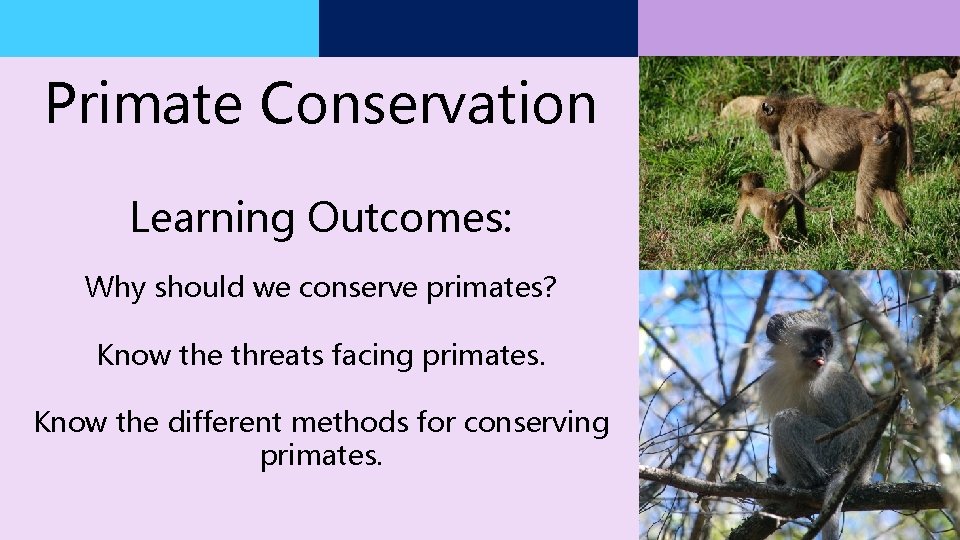
Primate Conservation Learning Outcomes: Why should we conserve primates? Know the threats facing primates. Know the different methods for conserving primates.
Primate Conservation The Field Notebook: Scientists use field books as tools to keep a record of their observations in the field. They may be used for drawings, to collect data or develop questions. Your field book contains activity and information pages for you to complete during the lesson. Take the field book home with you and complete any activities you did not finish in the lesson.
Threats to Primates: Scale of extinction risk + Extinct - Extinction Risk Extinct in the wild Critically Endangered Vulnerable Near Threatened Large Sloth Lemur Gorilla Chimpanzee Guereza Least concern
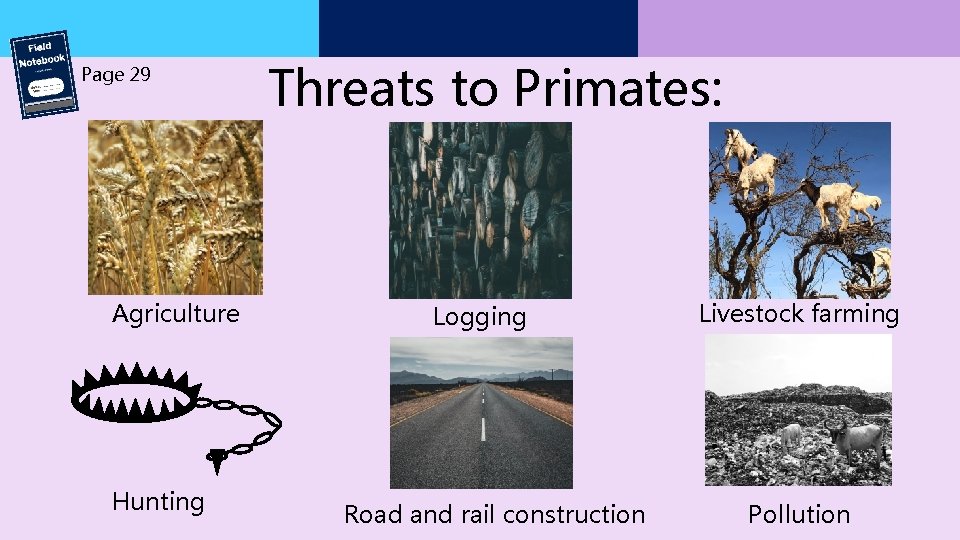
Page 29 Agriculture Hunting Threats to Primates: Logging Road and rail construction Livestock farming Pollution
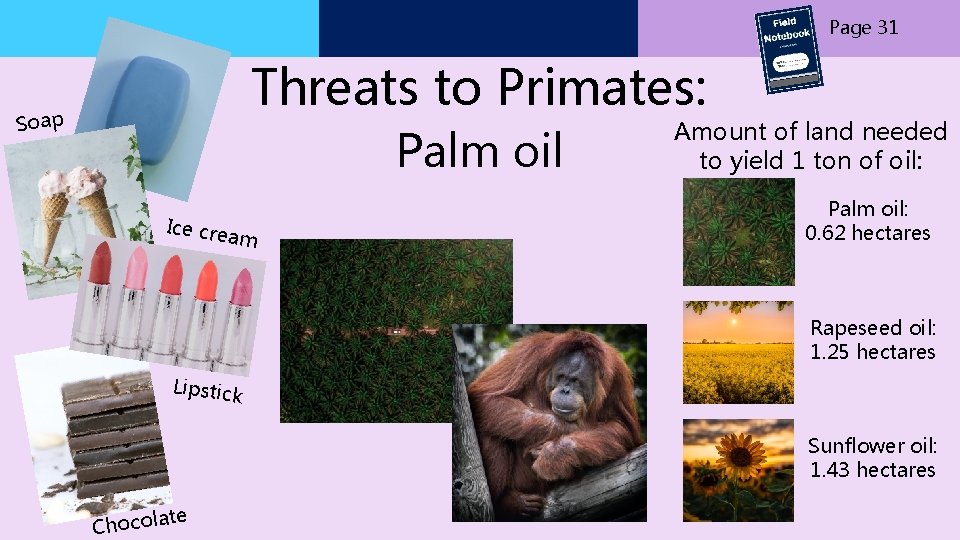
Page 31 Threats to Primates: Soap Palm oil Ice cre am Amount of land needed to yield 1 ton of oil: Palm oil: 0. 62 hectares Rapeseed oil: 1. 25 hectares Lipstick Sunflower oil: 1. 43 hectares Chocola te
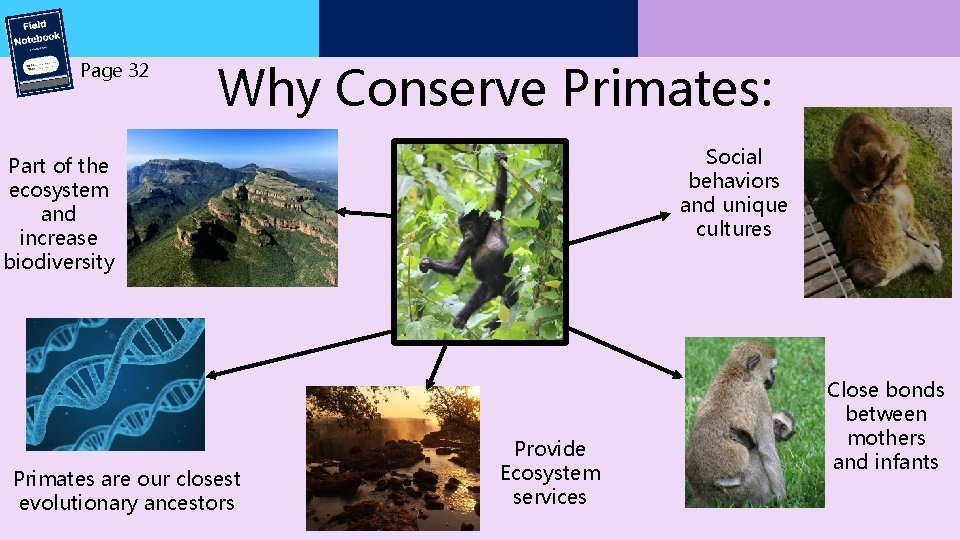
Page 32 Why Conserve Primates: Social behaviors and unique cultures Part of the ecosystem and increase biodiversity Primates are our closest evolutionary ancestors Provide Ecosystem services Close bonds between mothers and infants
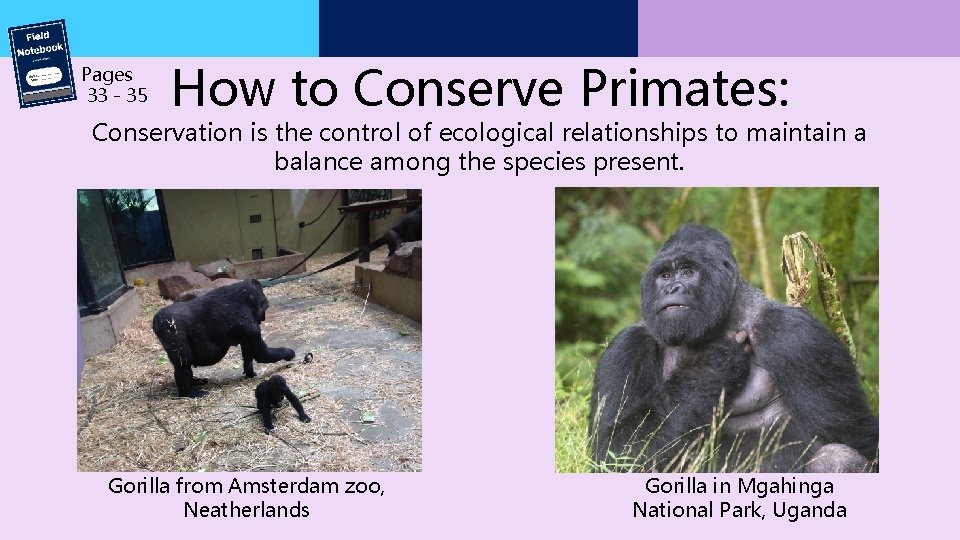
Pages 33 - 35 How to Conserve Primates: Conservation is the control of ecological relationships to maintain a balance among the species present. Gorilla from Amsterdam zoo, Neatherlands Gorilla in Mgahinga National Park, Uganda
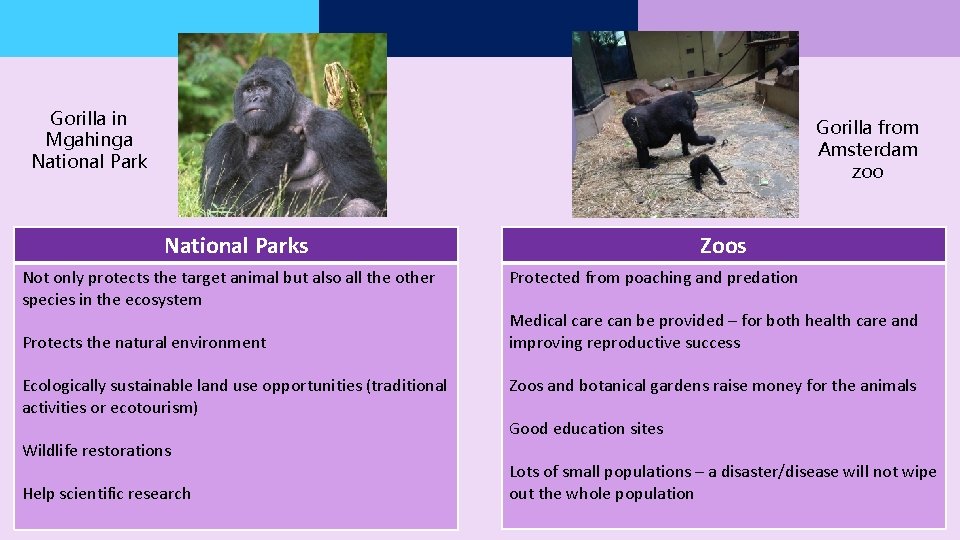
Gorilla in Mgahinga National Park Gorilla from Amsterdam zoo National Parks Not only protects the target animal but also all the other species in the ecosystem Protects the natural environment Ecologically sustainable land use opportunities (traditional activities or ecotourism) Wildlife restorations Help scientific research Zoos Protected from poaching and predation Medical care can be provided – for both health care and improving reproductive success Zoos and botanical gardens raise money for the animals Good education sites Lots of small populations – a disaster/disease will not wipe out the whole population
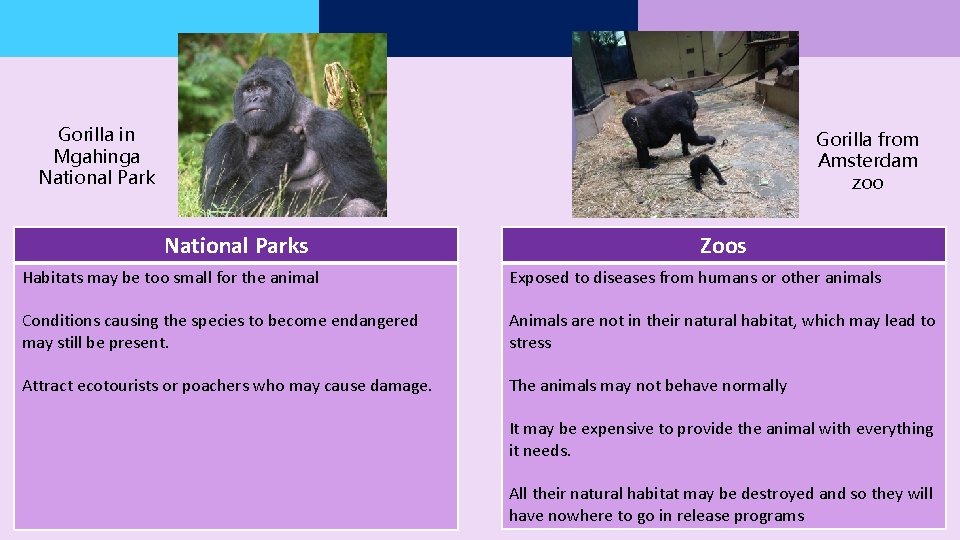
Gorilla in Mgahinga National Park Gorilla from Amsterdam zoo National Parks Zoos Habitats may be too small for the animal Exposed to diseases from humans or other animals Conditions causing the species to become endangered may still be present. Animals are not in their natural habitat, which may lead to stress Attract ecotourists or poachers who may cause damage. The animals may not behave normally It may be expensive to provide the animal with everything it needs. All their natural habitat may be destroyed and so they will have nowhere to go in release programs
What Have I Learnt? : I know what is meant by extinction and understand the extinction risk scale used in conservation. I know some of the threats to primates. I can describe why we should conserve primates. I know the advantages and disadvantages of conserving primates in zoos and National Parks.