
Primary versus Secondary SOURCES What is the difference


- Slides: 20
Primary versus Secondary SOURCES
What is the difference? Secondary sources are created AFTER the fact, while primary sources are "created" DURING the event.
Let’s watch a video � Primary vs Secondary Sources
Primary Sources What are some examples? Published documents - books, newspapers, pamphlets, advertisements, laws, etc. 2. Unpublished documents - letters, diaries, financial records, etc. 3. Visual documents and artifacts – photos, video, etc. 4. Interviews and speeches 1.
Secondary Sources What are some examples? 1. 2. 3. 4. 5. 6. Dictionaries and encyclopedias Textbooks Journal articles (depending on when it was written) Magazine and newspaper articles Books, other than fiction and autobiography Web sites
Let’s watch another video � Primary vs Secondary Sources
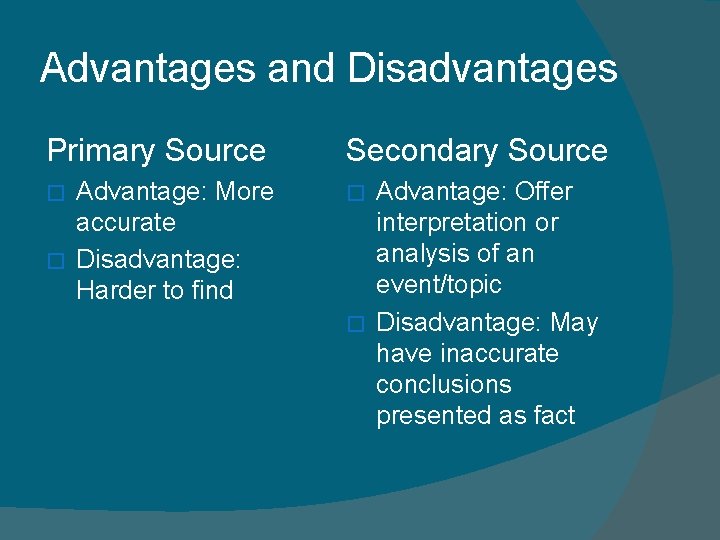
Advantages and Disadvantages Primary Source Secondary Source Advantage: More accurate � Disadvantage: Harder to find � � Advantage: Offer interpretation or analysis of an event/topic � Disadvantage: May have inaccurate conclusions presented as fact
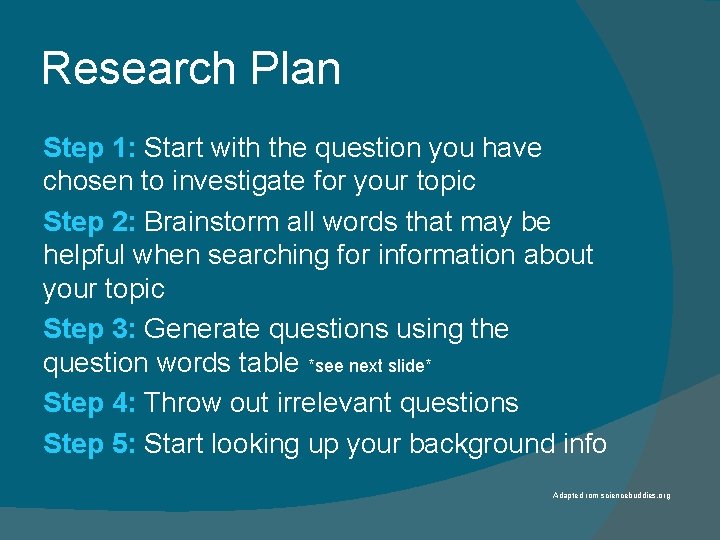
Research Plan Step 1: Start with the question you have chosen to investigate for your topic Step 2: Brainstorm all words that may be helpful when searching for information about your topic Step 3: Generate questions using the question words table *see next slide* Step 4: Throw out irrelevant questions Step 5: Start looking up your background info Adapted rom sciencebuddies. org
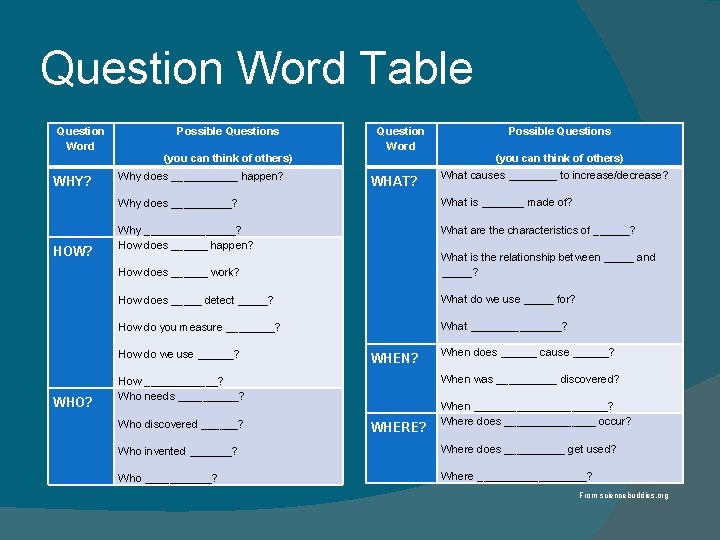
Question Word Table Question Word WHY? HOW? Possible Questions (you can think of others) Why does ______ happen? WHAT? Possible Questions (you can think of others) What causes ____ to increase/decrease? Why does _____? What is _______ made of? Why ________? How does ______ happen? What are the characteristics of ______? How does ______ work? What is the relationship between _____ and _____? How does _____ detect _____? What do we use _____ for? How do you measure ____? What ________? How do we use ______? WHO? Question Word WHEN? When was _____ discovered? How ______? Who needs _____? Who discovered ______? When does ______ cause ______? WHERE? When ___________? Where does ________ occur? Who invented _______? Where does _____ get used? Who ______? Where _________? From sciencebuddies. org
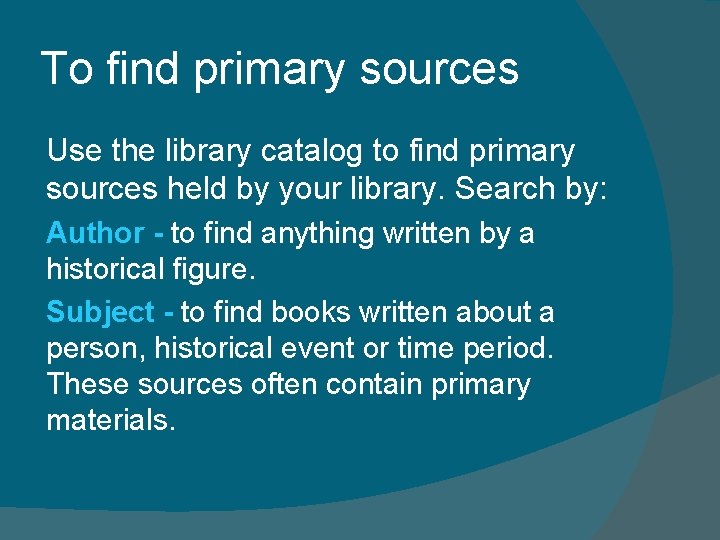
To find primary sources Use the library catalog to find primary sources held by your library. Search by: Author - to find anything written by a historical figure. Subject - to find books written about a person, historical event or time period. These sources often contain primary materials.
Where to find good information � Textbooks � Books in the KLO (or public) library � World Book online � Easy. Bib (research section) � Internet (from website you have evaluated as credible)
World Book Online www. worldbookonline. com � When at school you don`t need a password. � See your teacher or ask the teacher librarian for the password if you will be using logging in from home
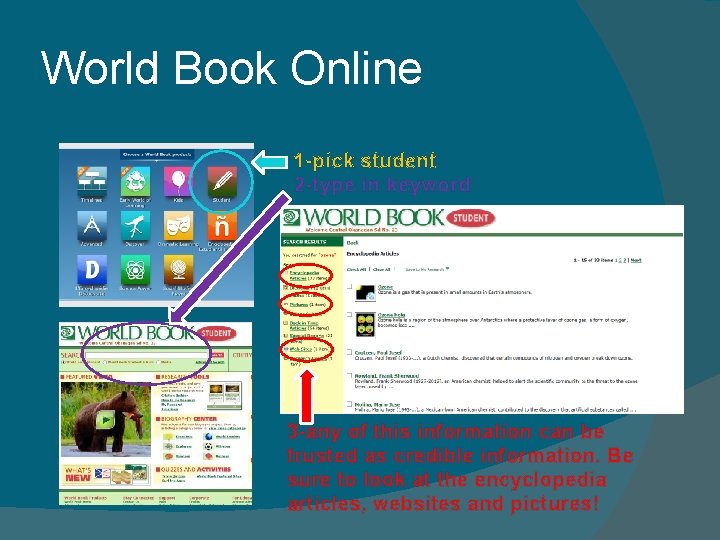
World Book Online 1 -pick student 2 -type in keyword 3 -any of this information can be trusted as credible information. Be sure to look at the encyclopedia articles, websites and pictures!
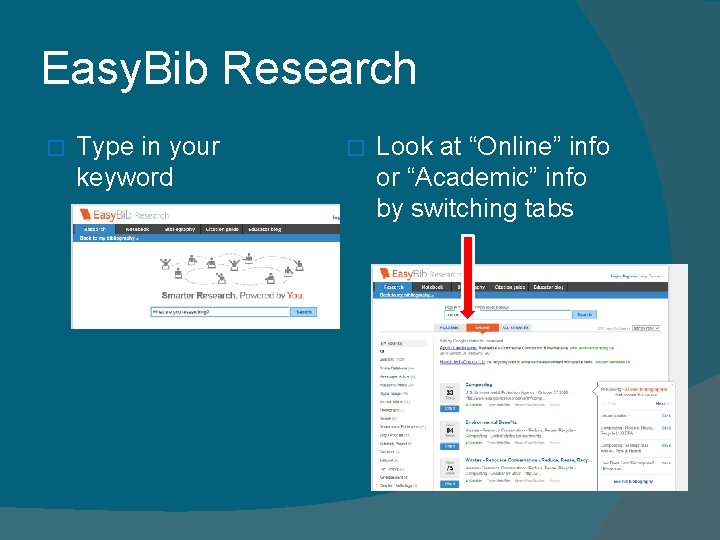
Easy. Bib Research research. easybib. com � Use the research section to find articles the bibliography section for correctly formatting your sources
Easy. Bib Research � Type in your keyword � Look at “Online” info or “Academic” info by switching tabs
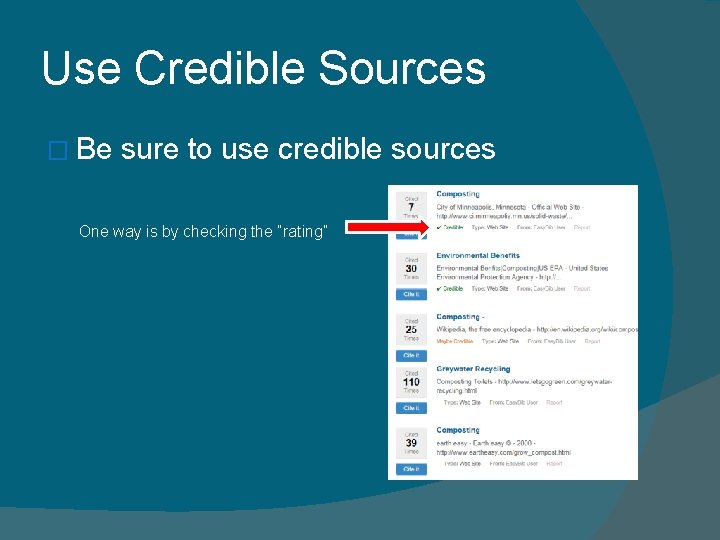
Use Credible Sources � Be sure to use credible sources One way is by checking the “rating”
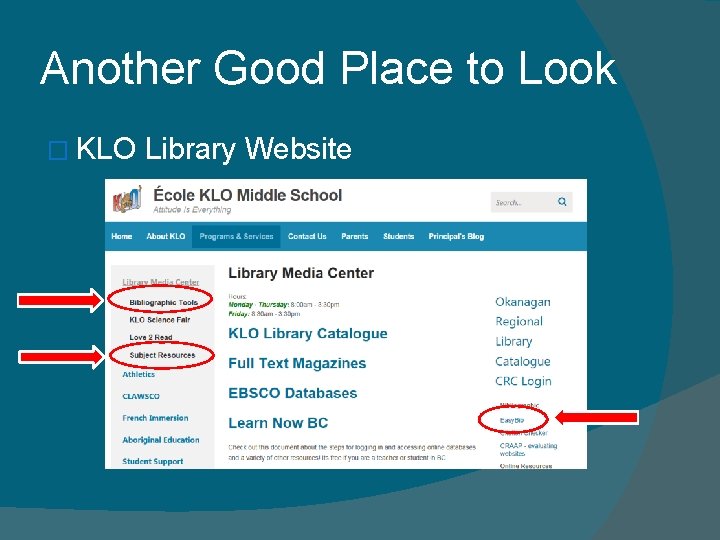
Another Good Place to Look � KLO Library Website
But Remember � Wherever you find your info be sure you understand it! � If you don’t know some of the vocabulary either look it up OR find a different source of information at YOUR GRADE LEVEL � Make sure you cite your sources (Easy. Bib is a great tool to use for this)
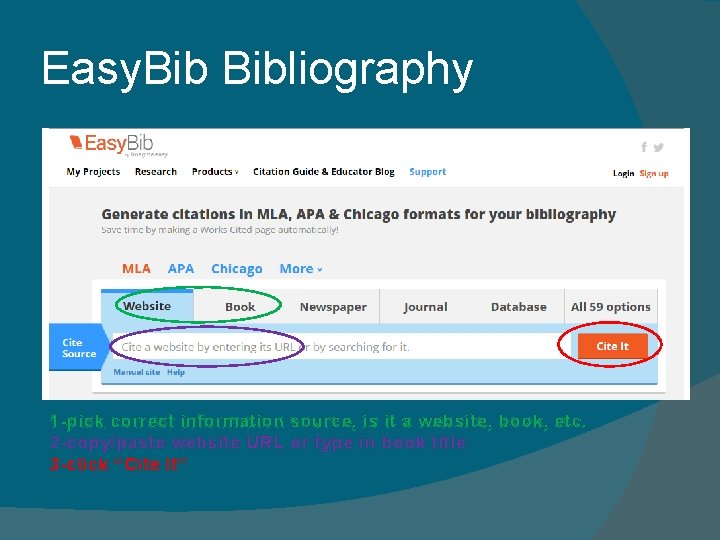
Easy. Bibliography 1 -pick correct information source, is it a website, book, etc. 2 -copy/paste website URL or type in book title 3 -click “Cite It”
Some extra videos Primary vs Secondary (You Tube) Is Wikipedia a credible source? (You Tube)