
Primary Two Paired Reading Scheme Welcome Language and
- Slides: 20
Primary Two Paired Reading Scheme Welcome
“Language and literacy are of personal, social and economic importance. Our ability to use language lies at the centre of the development and expression of our emotions, our thinking, our learning and our sense of personal identity. Literacy is fundamental to all areas of learning, as it unlocks access to the wider curriculum. ” (Literacy and English: principles and practice, A Curriculum for Excellence) Scottish Executive 2009
Introduction n Reading is a life skill Parents play a crucial role in developing reading skills The Paired Reading Scheme complements current reading programmes at Elrick.
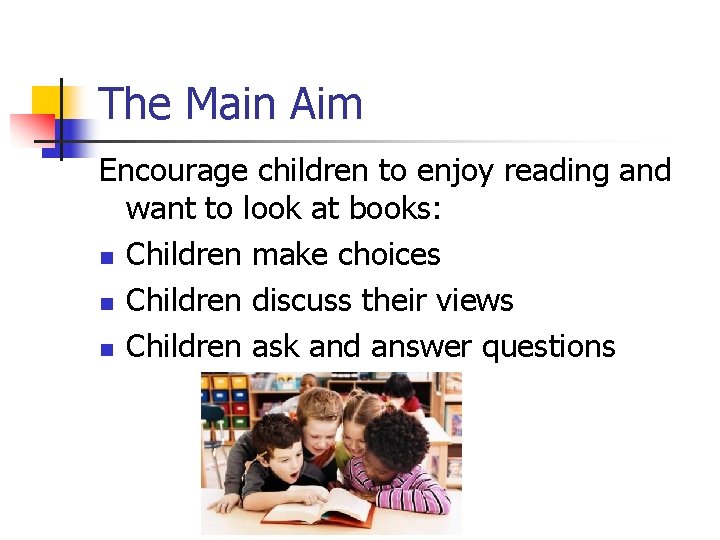
The Main Aim Encourage children to enjoy reading and want to look at books: n Children make choices n Children discuss their views n Children ask and answer questions
Benefits n Tried and tested scheme The Paired Reading Scheme can improve: n n n Motivation and enjoyment of reading Self confidence and self esteem of pupils Reading achievement of pupils
Duration of Scheme n n The scheme runs for 6 weeks. Approximately 50 minutes should be spent on activities each week.
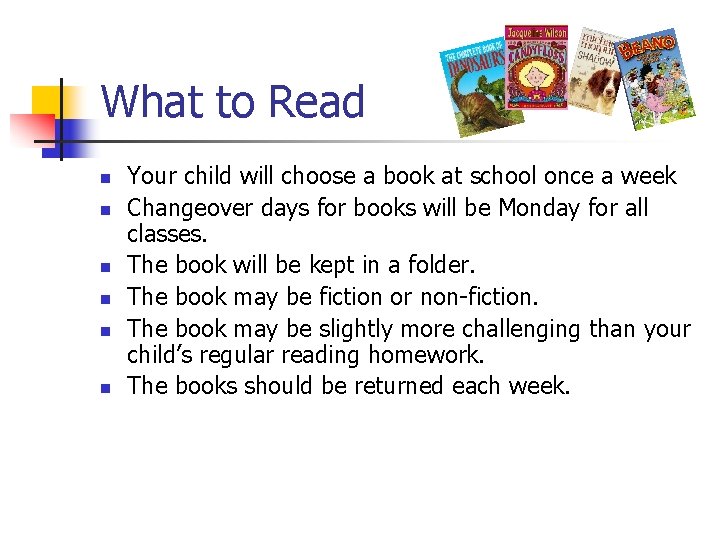
What to Read n n n Your child will choose a book at school once a week Changeover days for books will be Monday for all classes. The book will be kept in a folder. The book may be fiction or non-fiction. The book may be slightly more challenging than your child’s regular reading homework. The books should be returned each week.
Time n n What is best for your child? Little and often or more extended periods of reading? Sessions no longer than 30 minutes. Other adults or older siblings can help too. Your child should have undivided attention during this session.
Your role… n n To share the book by talking about it To share the reading by reading together To encourage, praise and develop a love of reading To support reading alone and selfcorrection
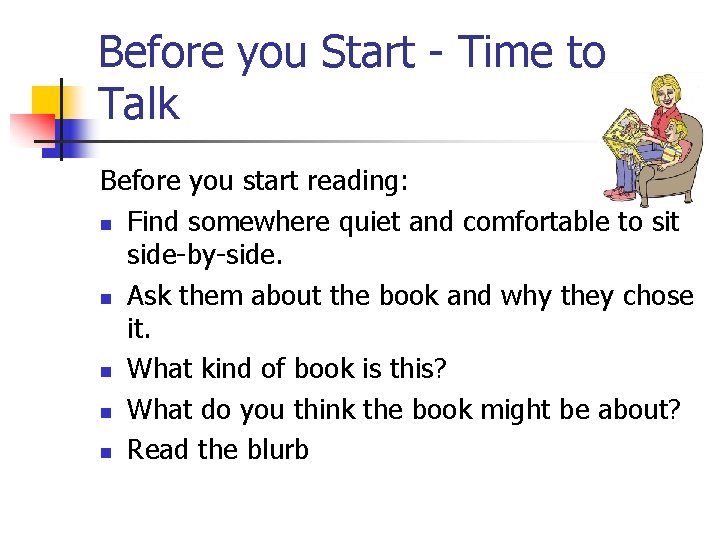
Before you Start - Time to Talk Before you start reading: n Find somewhere quiet and comfortable to sit side-by-side. n Ask them about the book and why they chose it. n What kind of book is this? n What do you think the book might be about? n Read the blurb
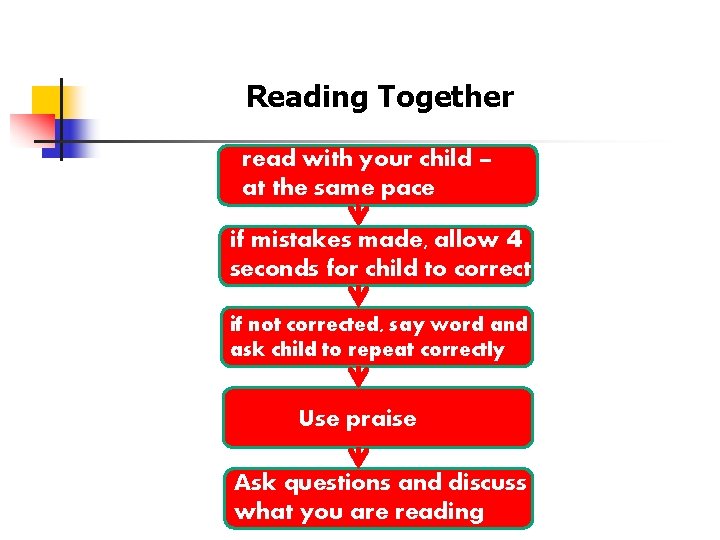
Time to read n n n Start by reading together – try to get them to mirror your pace. If your child makes a mistake give them a few seconds to self-correct the word. If they don’t manage, say the word back to them and get them to repeat it. Every so often pause and ask questions about what you are reading. Try to ask open ‘who’ ‘what’ or ‘why’ questions to get them to think more about what they are reading.
Reading Together read with your child – at the same pace if mistakes made, allow 4 seconds for child to correct if not corrected, say word and ask child to repeat correctly Use praise Ask questions and discuss what you are reading
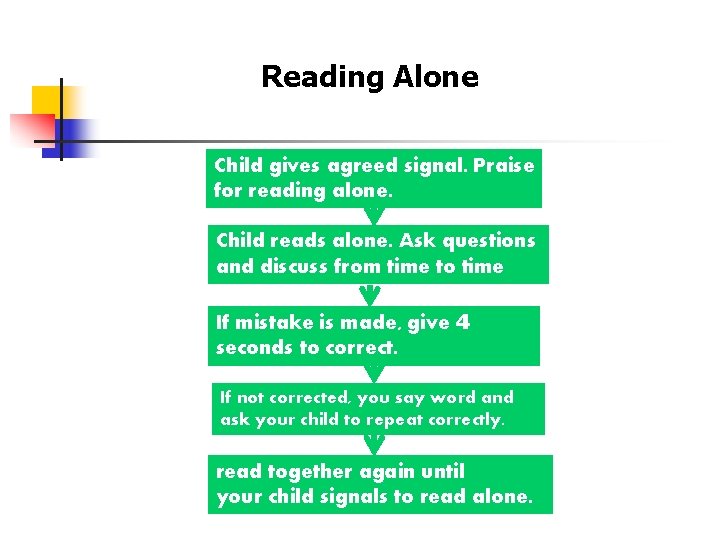
Time to read alone n At some point, your child might want to read alone. They can simply tell you they want to do this or you can agree on a signal such as a knock on the table or a tap on your arm. When they are ready they give the signal and continue to read on their own.
Reading Alone Child gives agreed signal. Praise for reading alone. Child reads alone. Ask questions and discuss from time to time If mistake is made, give 4 seconds to correct. If not corrected, you say word and ask your child to repeat correctly. read together again until your child signals to read alone.
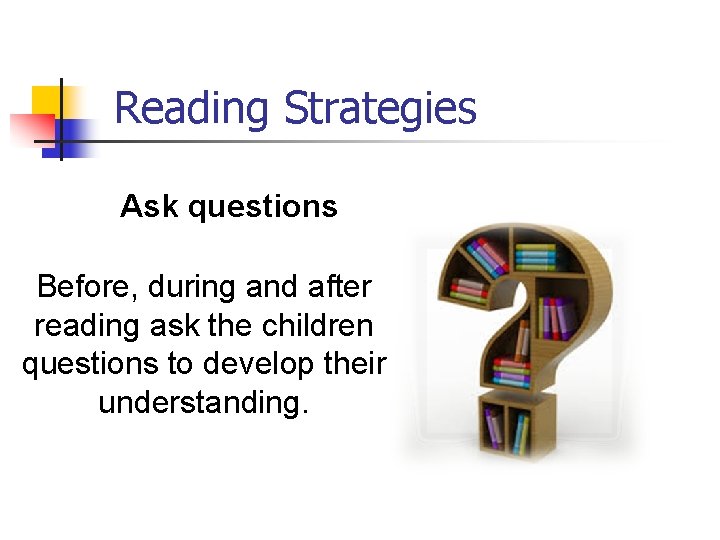
Reading Strategies Ask questions Before, during and after reading ask the children questions to develop their understanding.
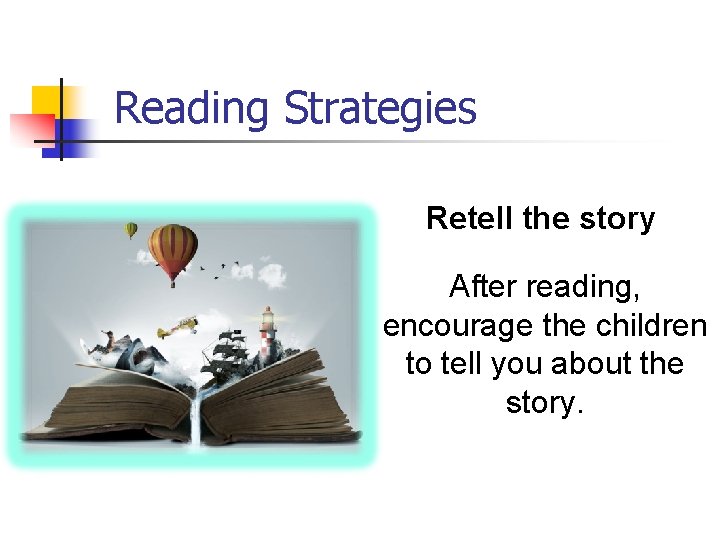
Reading Strategies Retell the story After reading, encourage the children to tell you about the story.
This process should be FUN and ENJOYABLE for all involved!
Let’s see it in action https: //education. gov. scot/improvement/lear ningresources/Scotland%20 Reads: %20 Paired%20 r eading%20 partners n
Your turn… • Find a partner • Select a book • Take turns to be the parent and ‘child’ for a few minutes each, putting into practise the strategies shared tonight. • Don’t be shy – have a go!