
PRIMARY SOURCES What is a primary source Why
- Slides: 27
PRIMARY SOURCES What is a primary source? Why is this type of document important to the study of history?
What is a primary source? • A primary source is a document or object that was created during the time period you are studying. • This could be an original document, creative works, or relics/artifacts from the time period. • Examples: • Diary of Anne Frank • United States Constitution • Weavings and pottery • Plato’s Republic
What is a secondary source? • A secondary source INTERPRETS and ANALYZES primary sources. • Examples • A magazine article which interprets or reviews previous findings • A history textbook • A book about the effects of WWI
Why do we need primary sources? • Secondary sources give you someone’s interpretation and, sometimes, opinions on primary sources. You are reading or viewing someone else’s point of view about a document, person, or event. • When you study primary sources, you are able to analyze events, people, and documents on your own. This allows for you to form your own opinions.
S. P. I. C. E. How do analyze written documents
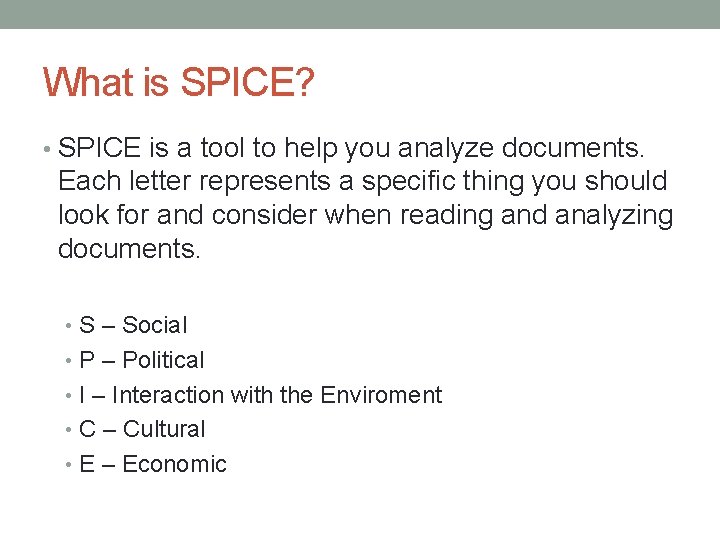
What is SPICE? • SPICE is a tool to help you analyze documents. Each letter represents a specific thing you should look for and consider when reading and analyzing documents. • S – Social • P – Political • I – Interaction with the Enviroment • C – Cultural • E – Economic
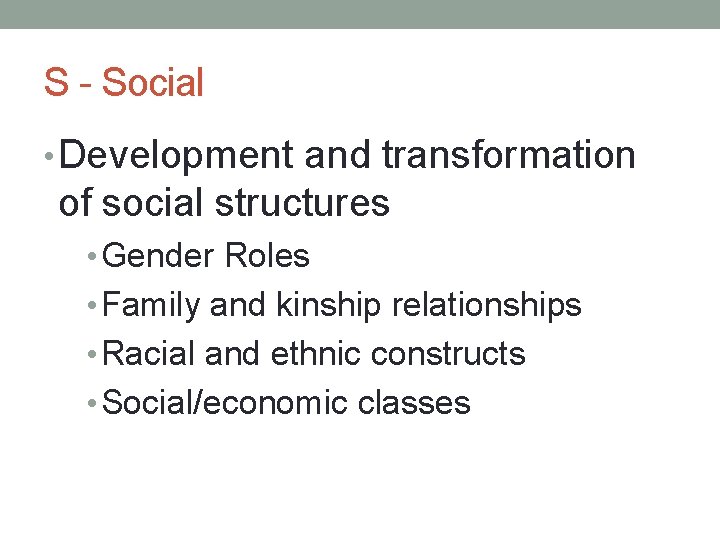
S - Social • Development and transformation of social structures • Gender Roles • Family and kinship relationships • Racial and ethnic constructs • Social/economic classes
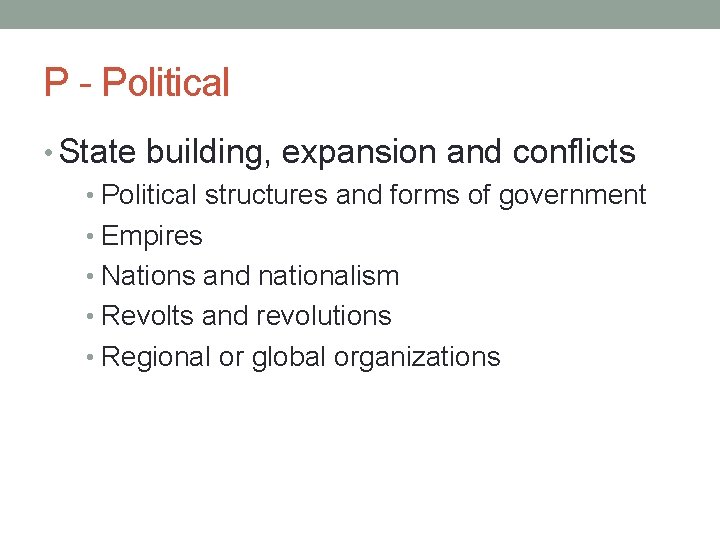
P - Political • State building, expansion and conflicts • Political structures and forms of government • Empires • Nations and nationalism • Revolts and revolutions • Regional or global organizations
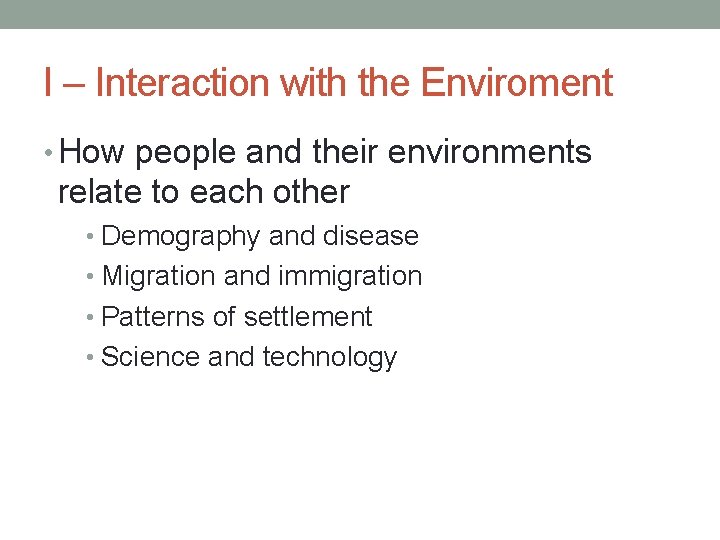
I – Interaction with the Enviroment • How people and their environments relate to each other • Demography and disease • Migration and immigration • Patterns of settlement • Science and technology
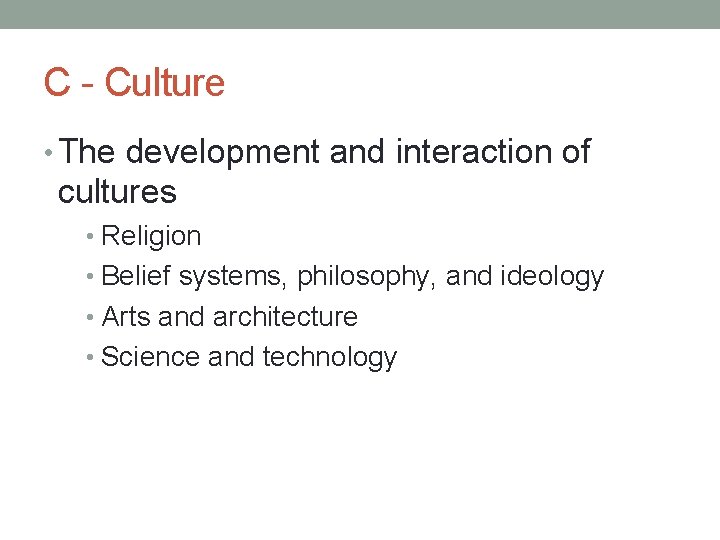
C - Culture • The development and interaction of cultures • Religion • Belief systems, philosophy, and ideology • Arts and architecture • Science and technology
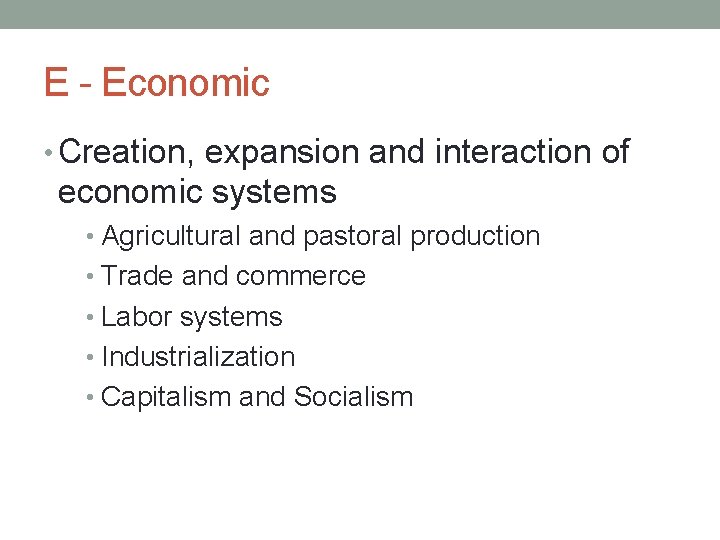
E - Economic • Creation, expansion and interaction of economic systems • Agricultural and pastoral production • Trade and commerce • Labor systems • Industrialization • Capitalism and Socialism
H. I. P. P. How do analyze written documents
What is HIPP? • HIPP is another tool to help you analyze documents. Each letter represents a specific thing you should look for and consider when reading and analyzing documents. • H – Historical Context • I – Intended Audience • P – Purpose • P – Point of View
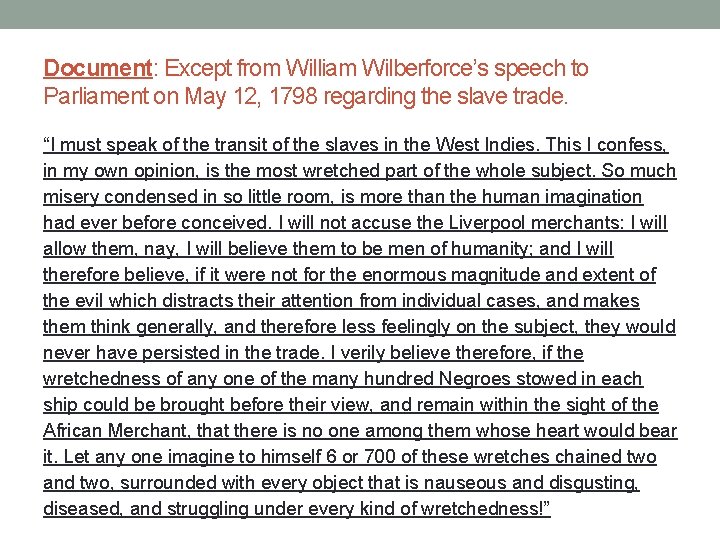
Document: Except from William Wilberforce’s speech to Parliament on May 12, 1798 regarding the slave trade. “I must speak of the transit of the slaves in the West Indies. This I confess, in my own opinion, is the most wretched part of the whole subject. So much misery condensed in so little room, is more than the human imagination had ever before conceived. I will not accuse the Liverpool merchants: I will allow them, nay, I will believe them to be men of humanity; and I will therefore believe, if it were not for the enormous magnitude and extent of the evil which distracts their attention from individual cases, and makes them think generally, and therefore less feelingly on the subject, they would never have persisted in the trade. I verily believe therefore, if the wretchedness of any one of the many hundred Negroes stowed in each ship could be brought before their view, and remain within the sight of the African Merchant, that there is no one among them whose heart would bear it. Let any one imagine to himself 6 or 700 of these wretches chained two and two, surrounded with every object that is nauseous and disgusting, diseased, and struggling under every kind of wretchedness!”
H – Historical Context • What is the main topic of idea of this document? • You should be able to summarize the main idea in one sentence and no more. • What is the subject of Wilberforce’s speech? • Where and when was the document produced? • What was happening at the time period? • Where and when was Wilberforce’s speech given? • What do you already know about this time period?
I – Intended Audience • For whom was the document written/produced? • How might an audience have received this document and why? • Who did Wilberforce create this speech for? • How might his audience react to his speech?
P - Purpose • Why was the document produced? • What did the producer hope to accomplish through his words? • Why did Wilberforce produce this document? • What did Wilberforce hope to accomplish by giving this speech?
P – Point of View • What does the writer or producer believe? • Interpret his/her writing and tell me why he/she holds these views. • Based on this passage, what does Wilberforce believe about slavery? • How do you know this? Use the passage as your evidence. • Who is the speaker or producer? • What can you tell me about his/her background? • How might his/her personal background have influenced his work? • Who is William Wilberforce?
Tone • What feeling or attitude does this document express? • Use descriptive adjectives and adverbs. • Describe the tone of Wilberforce’s speech.
O. P. T. I. C. How to evaluate visuals
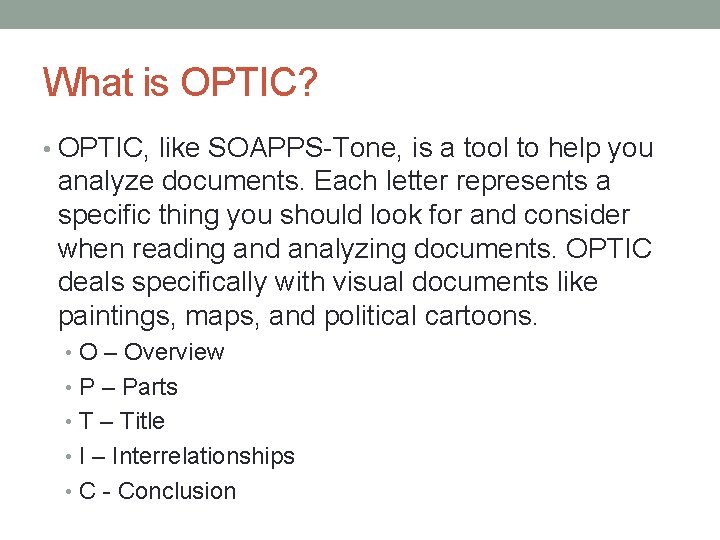
What is OPTIC? • OPTIC, like SOAPPS-Tone, is a tool to help you analyze documents. Each letter represents a specific thing you should look for and consider when reading and analyzing documents. OPTIC deals specifically with visual documents like paintings, maps, and political cartoons. • O – Overview • P – Parts • T – Title • I – Interrelationships • C - Conclusion
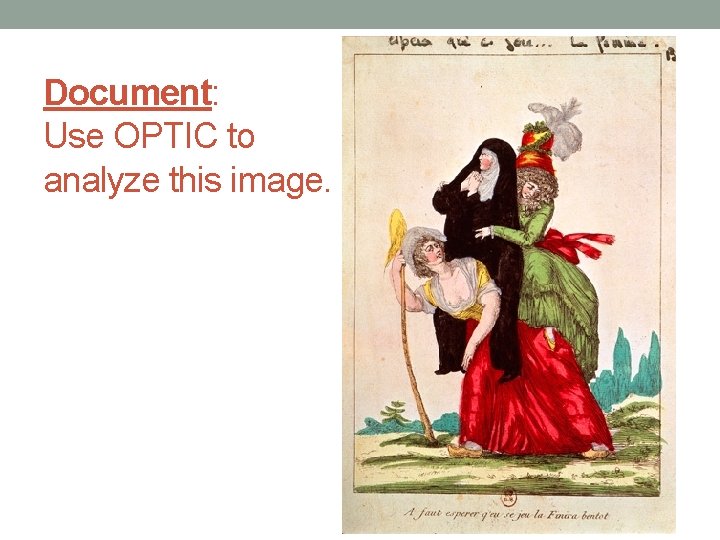
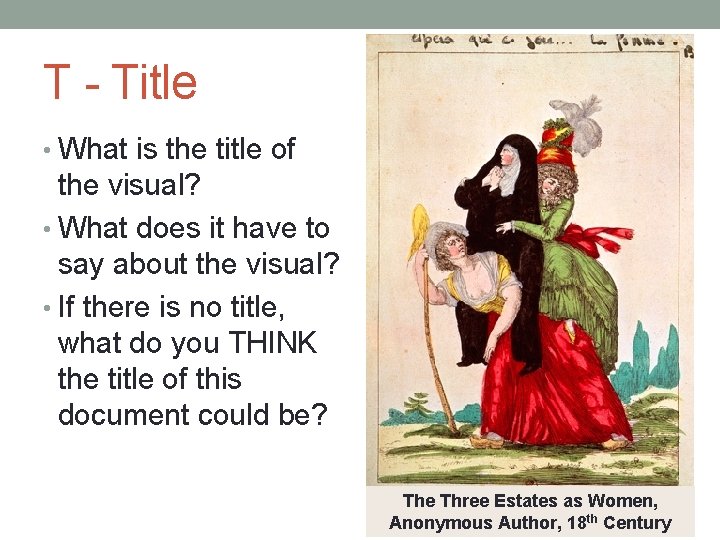
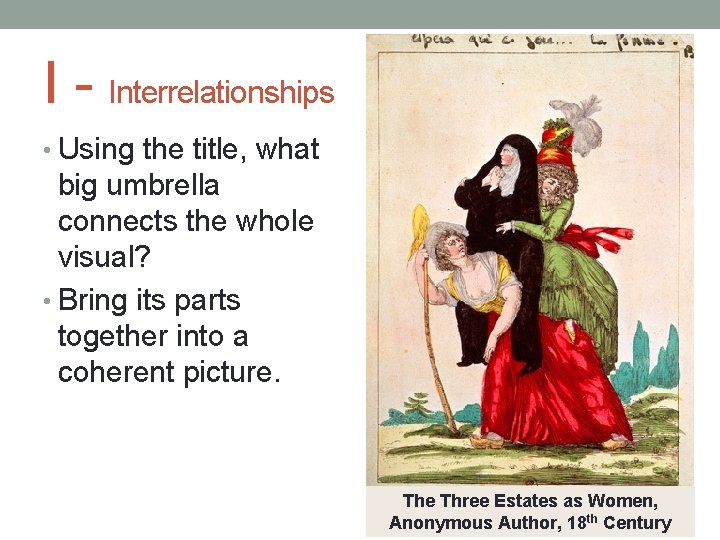
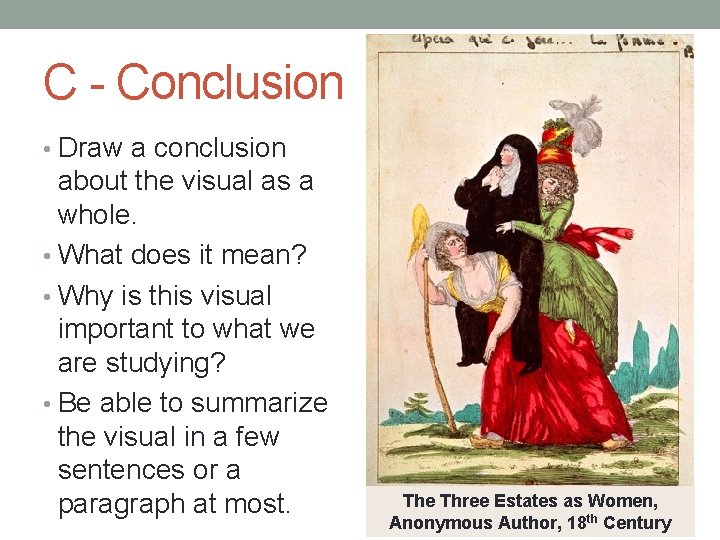
Document: Use OPTIC to analyze this image.
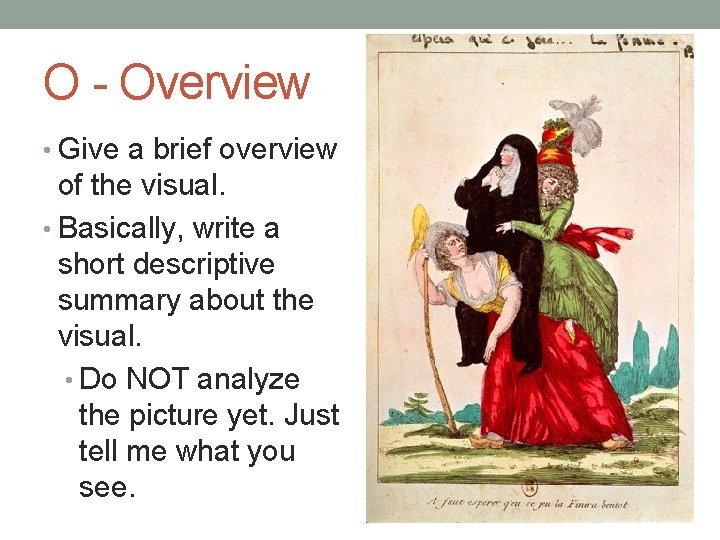
O - Overview • Give a brief overview of the visual. • Basically, write a short descriptive summary about the visual. • Do NOT analyze the picture yet. Just tell me what you see.
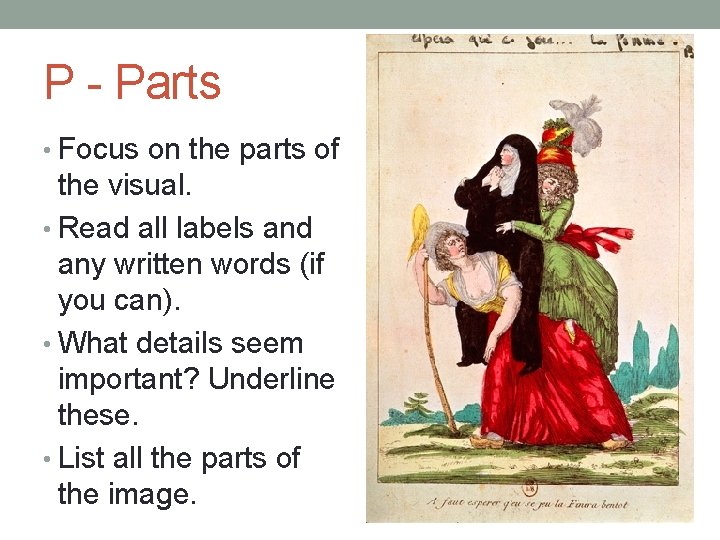
P - Parts • Focus on the parts of the visual. • Read all labels and any written words (if you can). • What details seem important? Underline these. • List all the parts of the image.
T - Title • What is the title of the visual? • What does it have to say about the visual? • If there is no title, what do you THINK the title of this document could be? The Three Estates as Women, Anonymous Author, 18 th Century
I - Interrelationships • Using the title, what big umbrella connects the whole visual? • Bring its parts together into a coherent picture. The Three Estates as Women, Anonymous Author, 18 th Century
C - Conclusion • Draw a conclusion about the visual as a whole. • What does it mean? • Why is this visual important to what we are studying? • Be able to summarize the visual in a few sentences or a paragraph at most. The Three Estates as Women, Anonymous Author, 18 th Century