
Primary Secondary Structures Puberty Reproductive structures mature and
Primary & Secondary Structures
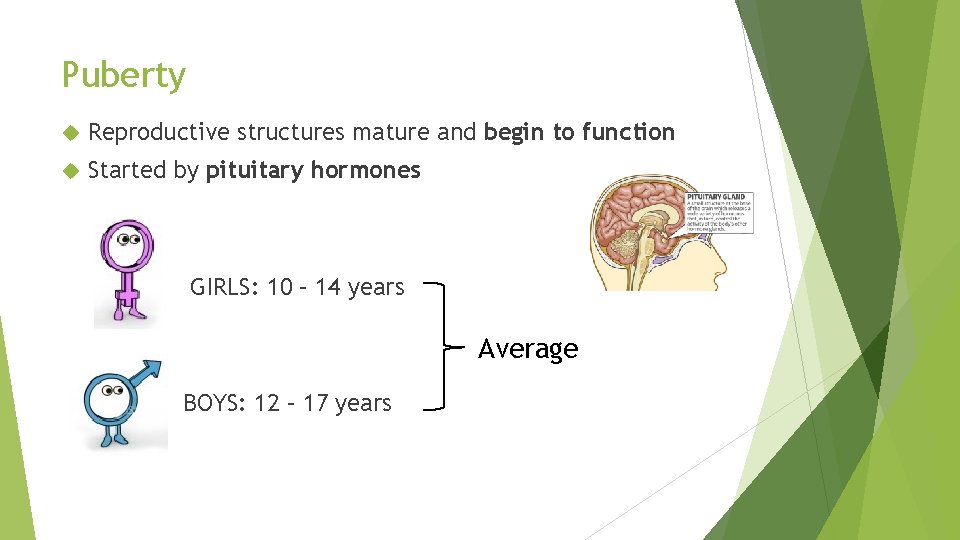
Puberty Reproductive structures mature and begin to function Started by pituitary hormones GIRLS: 10 – 14 years Average BOYS: 12 – 17 years
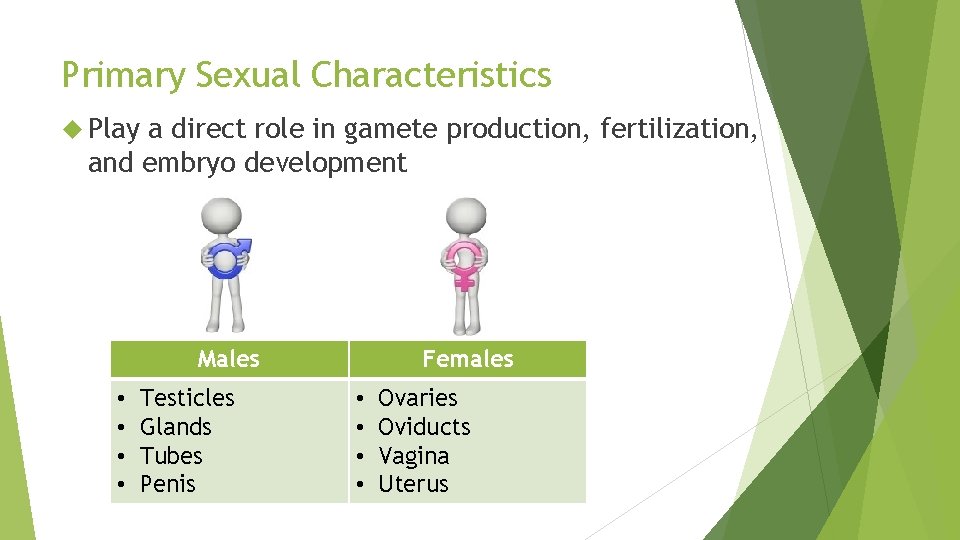
Primary Sexual Characteristics Play a direct role in gamete production, fertilization, and embryo development Males • • Testicles Glands Tubes Penis Females • • Ovaries Oviducts Vagina Uterus

Secondary Sexual Characteristics Allow us to tell the men from the boys, and the men from the women! Evolved to give an individual an advantage in mating by making the individual more attractive to mates Allows the individual to defeat rivals in competition for mates
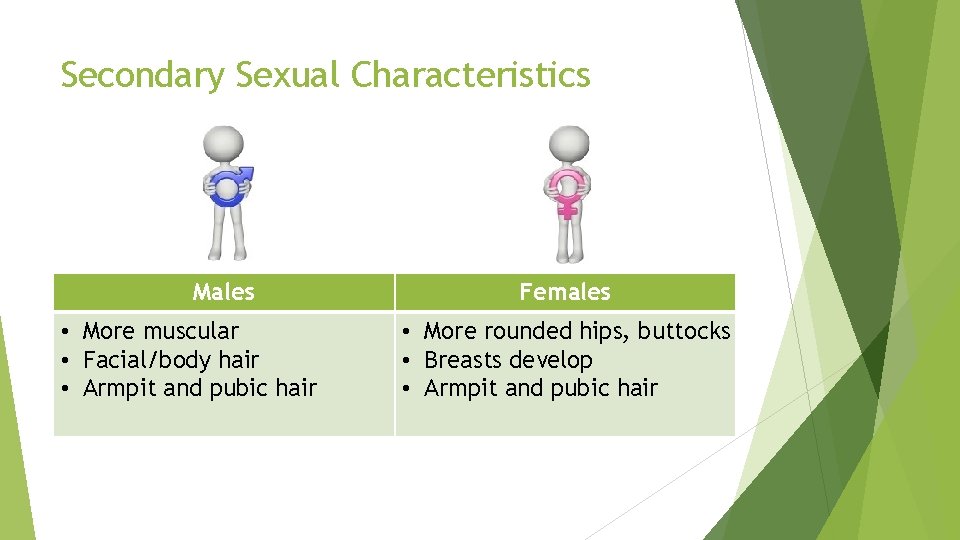
Secondary Sexual Characteristics Males • More muscular • Facial/body hair • Armpit and pubic hair Females • More rounded hips, buttocks • Breasts develop • Armpit and pubic hair
Asexual VS Sexual Reproduction
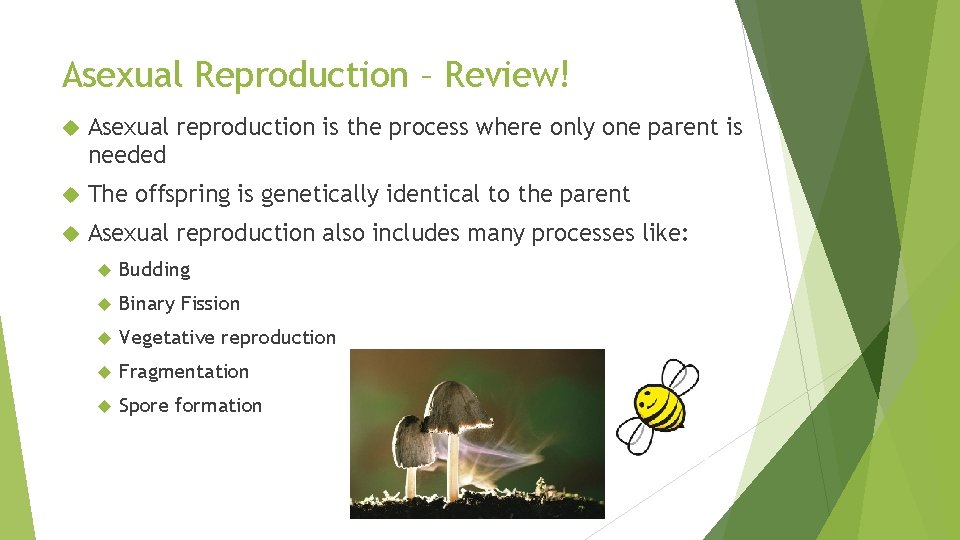
Asexual Reproduction – Review! Asexual reproduction is the process where only one parent is needed The offspring is genetically identical to the parent Asexual reproduction also includes many processes like: Budding Binary Fission Vegetative reproduction Fragmentation Spore formation
Sexual Reproduction – A Review! Usually occurs in most complex organisms. Combining genetic information from two parents and creating a new organism The organism needs to undergo meiosis to produce sex cells called gametes which contain half the number of chromosomes In meiosis homologous chromosome cross over and form a completely new chromosome
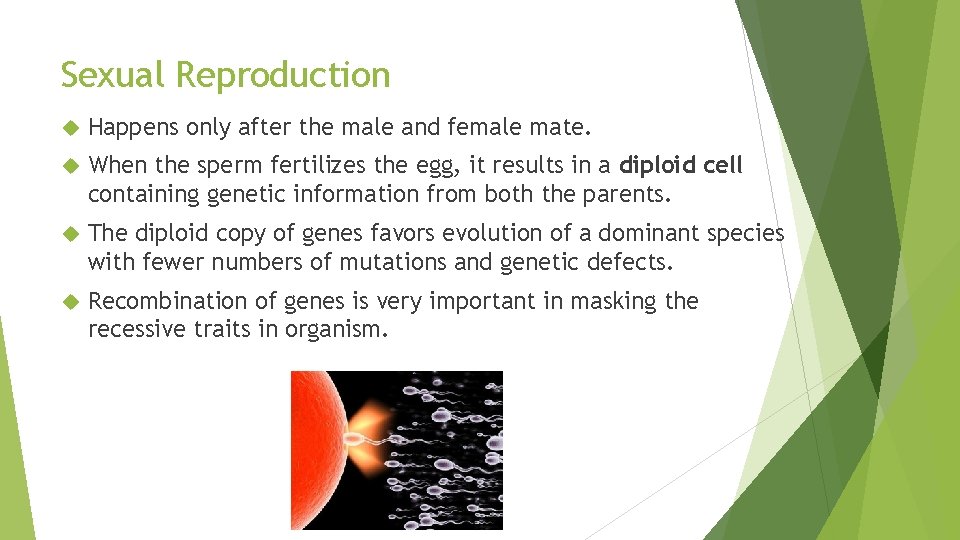
Sexual Reproduction Happens only after the male and female mate. When the sperm fertilizes the egg, it results in a diploid cell containing genetic information from both the parents. The diploid copy of genes favors evolution of a dominant species with fewer numbers of mutations and genetic defects. Recombination of genes is very important in masking the recessive traits in organism.
Asexual Reproduction Advantages Only one parent is needed to complete the process of asexual reproduction. In majority of the cases offspring will be produced. The gestation period or growth period is very short. As there is no cross over or recombination of genes involved, chance of mutation is very less.
Asexual Reproduction Disadvantages As the genetic material from parent is directly passed on to the offspring, it causes all the diseases and defects to be passed on to the offspring as well. Offspring are clones so they are all equally susceptible to negative changes in their environment As no recombination of genes occurs, chances of evolution are very low.

Sexual Reproduction Advantages The fusion of gametes caused mixing and combination of the genetic material. The recombination of genes helps increase the chances of organisms evolving into a healthier and more adaptable species. Combination of genes helps decrease chance of diseases and defects in the parents being passed on to their children.
Sexual Reproduction Disadvantages Slower; need to mature first then find/compete for a mate Reproduction cannot occur until and unless gametes from both parents fuse together. There is no guarantee that the nucleus of the male gamete will fuse with the female gamete after mating. The time taken to produce an offspring by sexual reproduction is very long. Only half of the population is capable of pregnancy.
- Slides: 13