
PRIMARY SECONDARY SKIN LESIONS By Prof Dr Essam
PRIMARY& SECONDARY SKIN LESIONS By Prof. Dr. Essam Bakr Professor of Dermatology, Venereology and Andrology Faculty of Medicine. Al-Azhar University
Primary Skin Lesions Macule Patch Papule Nodule Tumor Plaque Vesicle Pustule Bullae Wheal Telangiectasia Abscess Petechiae, purpura & ecchymosis
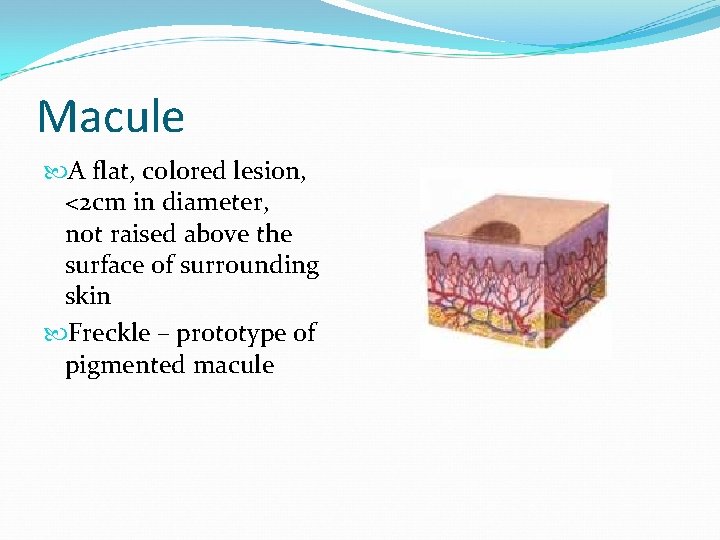
Macule A flat, colored lesion, <2 cm in diameter, not raised above the surface of surrounding skin Freckle – prototype of pigmented macule
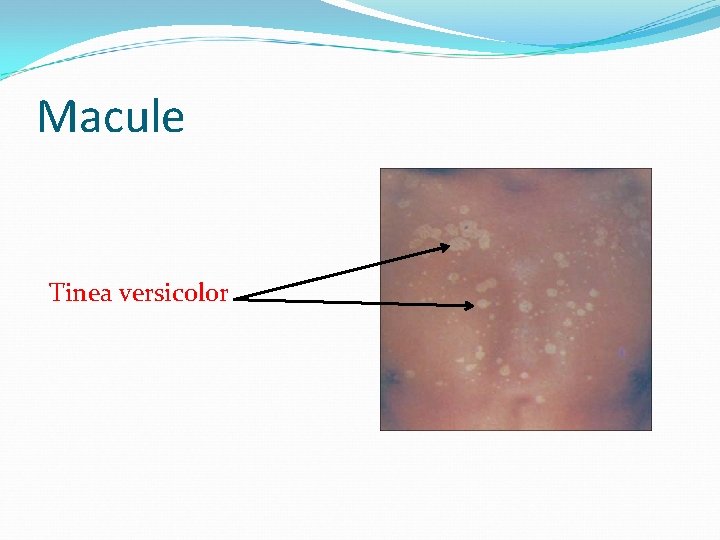
Macule Tinea versicolor
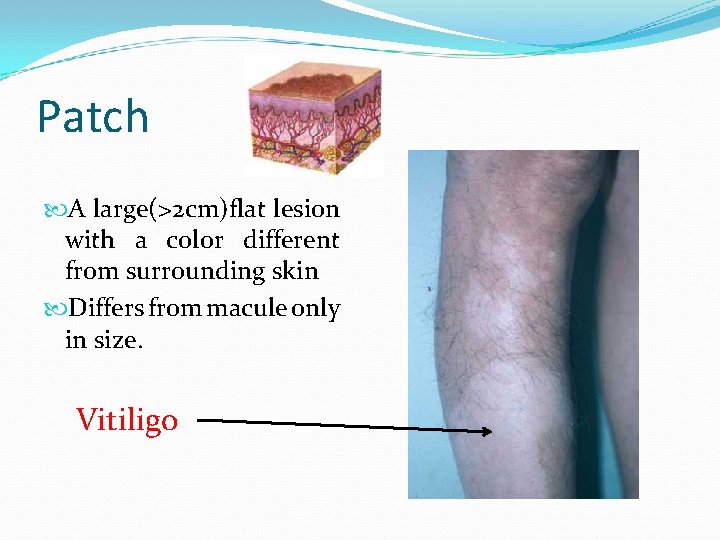
Patch A large(>2 cm)flat lesion with a color different from surrounding skin Differs from macule only in size. Vitiligo
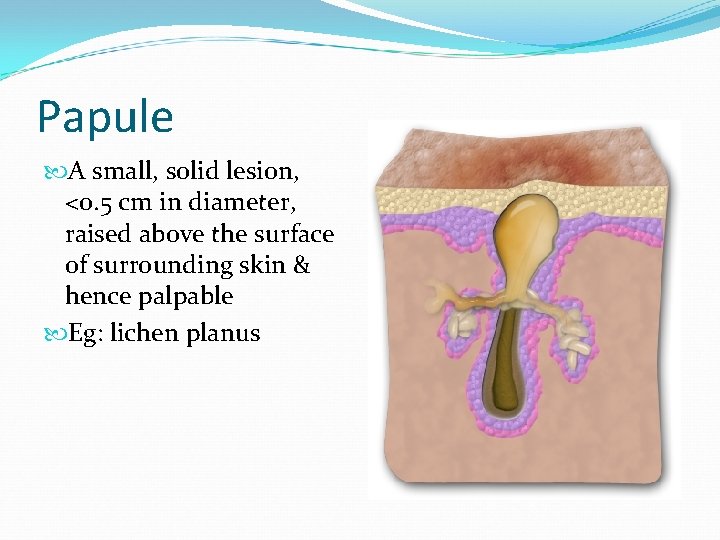
Papule A small, solid lesion, <0. 5 cm in diameter, raised above the surface of surrounding skin & hence palpable Eg: lichen planus
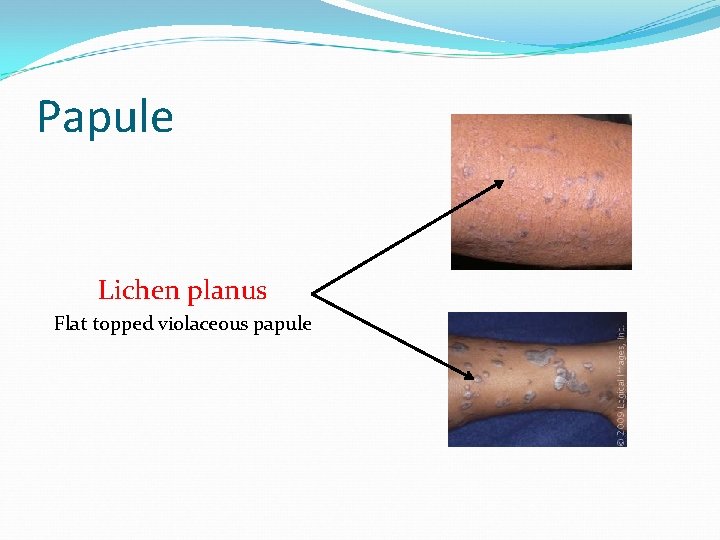
Papule Lichen planus Flat topped violaceous papule
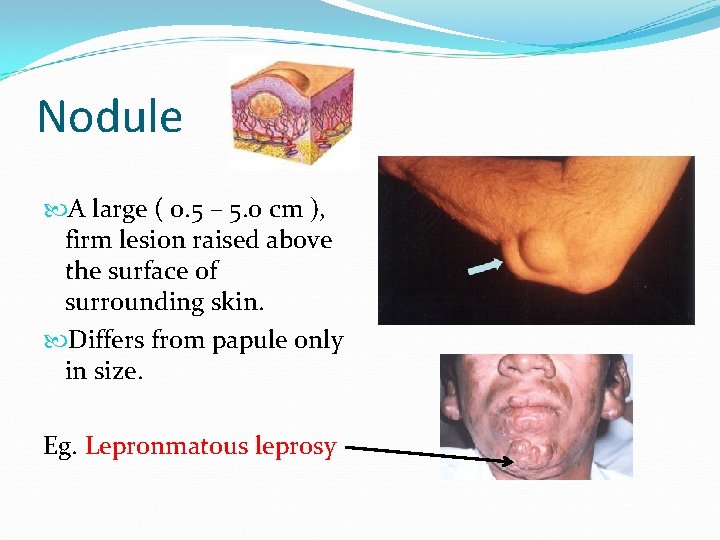
Nodule A large ( 0. 5 – 5. 0 cm ), firm lesion raised above the surface of surrounding skin. Differs from papule only in size. Eg. Lepronmatous leprosy
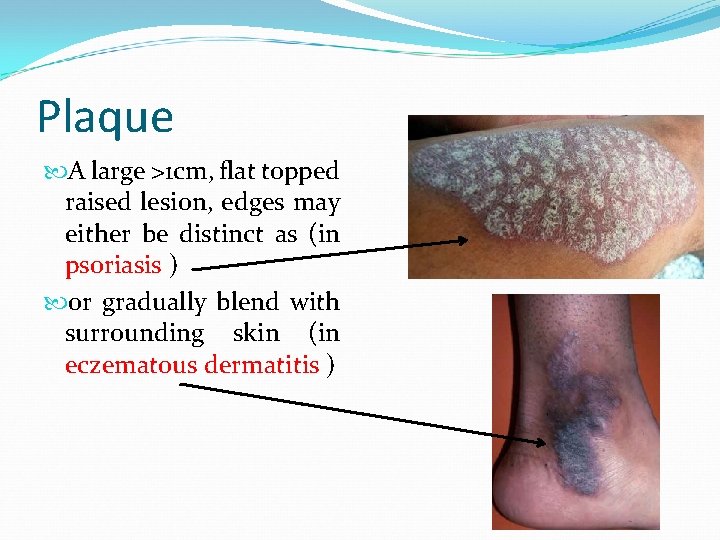
Plaque A large >1 cm, flat topped raised lesion, edges may either be distinct as (in psoriasis ) or gradually blend with surrounding skin (in eczematous dermatitis )
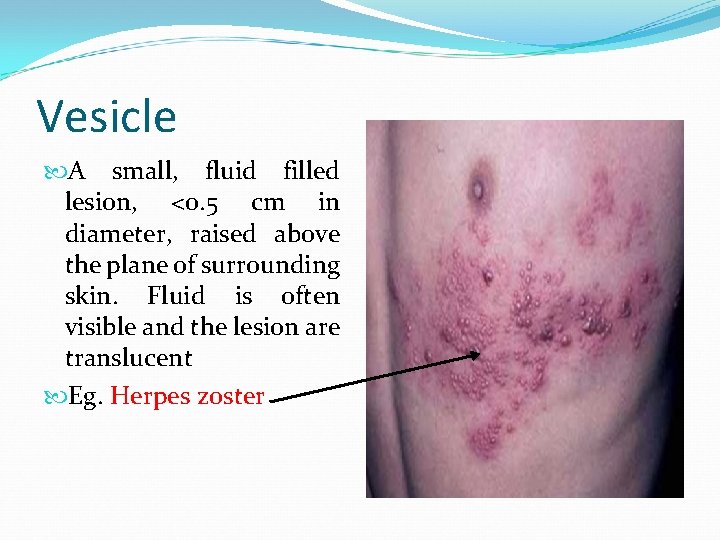
Vesicle A small, fluid filled lesion, <0. 5 cm in diameter, raised above the plane of surrounding skin. Fluid is often visible and the lesion are translucent Eg. Herpes zoster
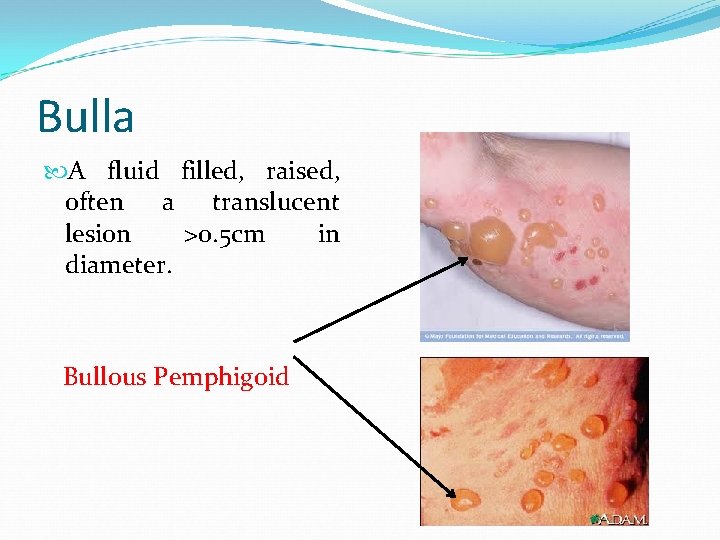
Bulla A fluid filled, raised, often a translucent lesion >0. 5 cm in diameter. Bullous Pemphigoid
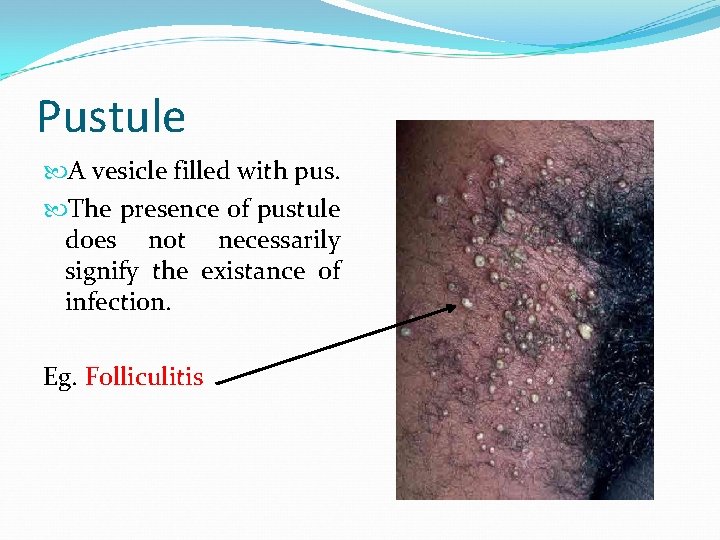
Pustule A vesicle filled with pus. The presence of pustule does not necessarily signify the existance of infection. Eg. Folliculitis
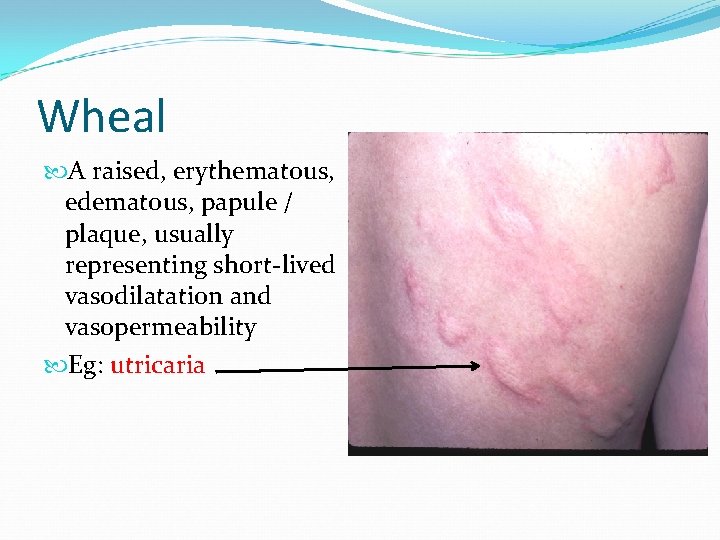
Wheal A raised, erythematous, edematous, papule / plaque, usually representing short-lived vasodilatation and vasopermeability Eg: utricaria
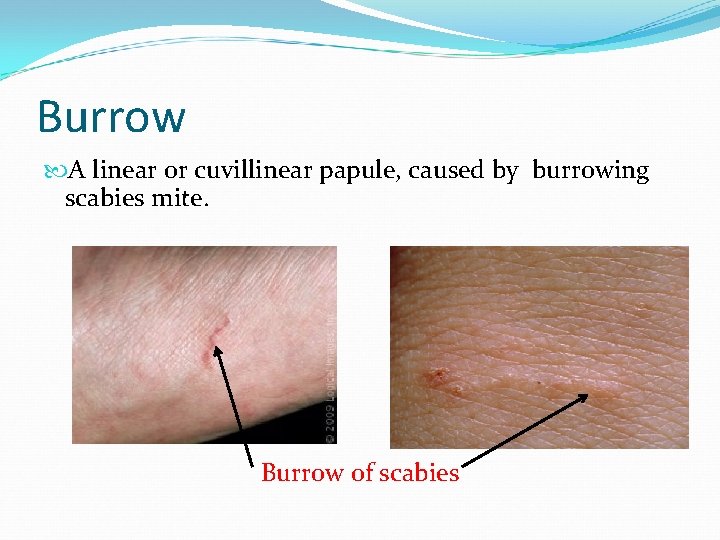
Burrow A linear or cuvillinear papule, caused by burrowing scabies mite. Burrow of scabies
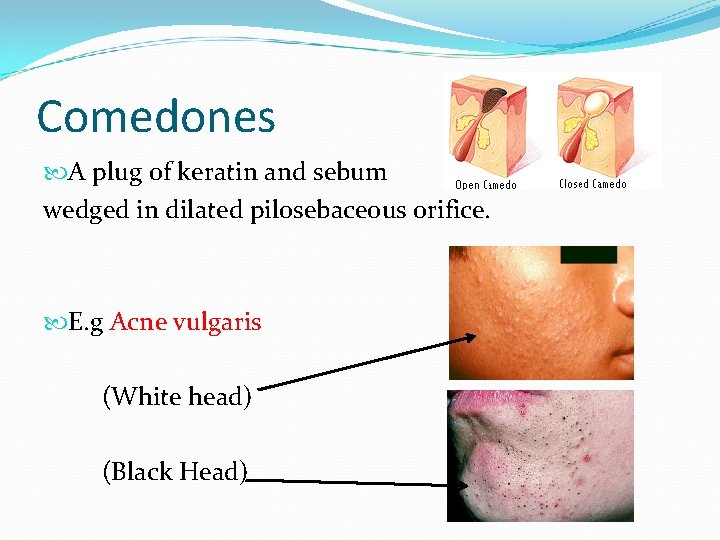
Comedones A plug of keratin and sebum wedged in dilated pilosebaceous orifice. E. g Acne vulgaris (White head) (Black Head)
Secondary Skin Lesions Scale Crust Excoriation Erosion Fissure Sinus Scar Atrophy Striae Lichenification
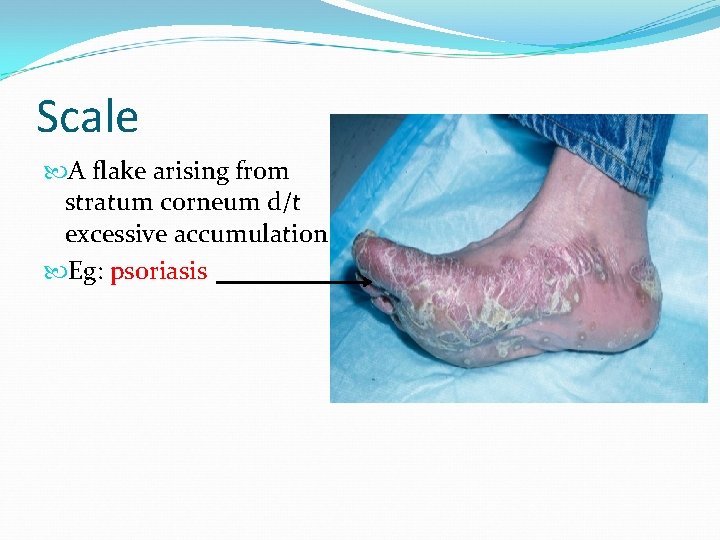
Scale A flake arising from stratum corneum d/t excessive accumulation. Eg: psoriasis
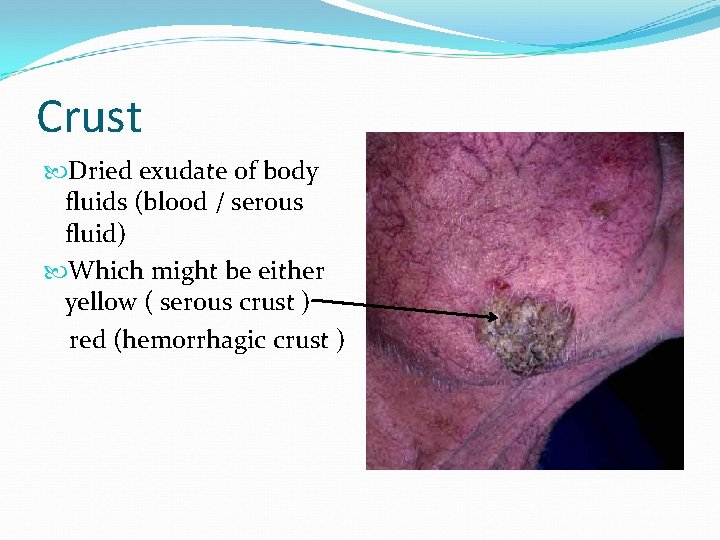
Crust Dried exudate of body fluids (blood / serous fluid) Which might be either yellow ( serous crust ) red (hemorrhagic crust )
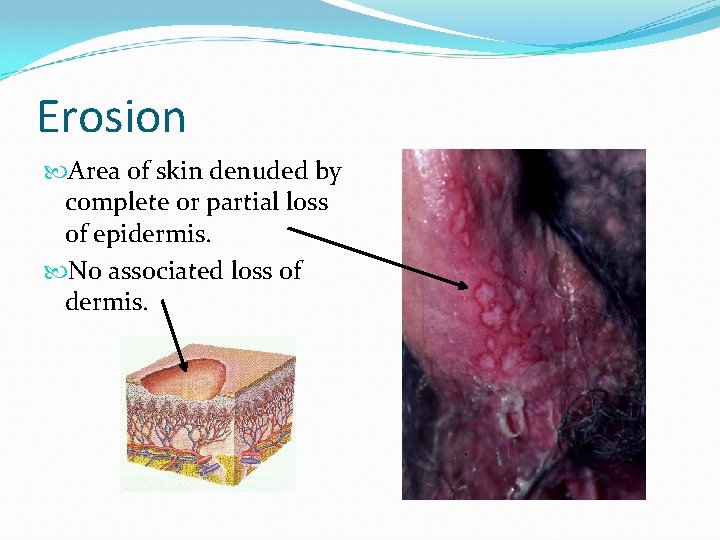
Erosion Area of skin denuded by complete or partial loss of epidermis. No associated loss of dermis.
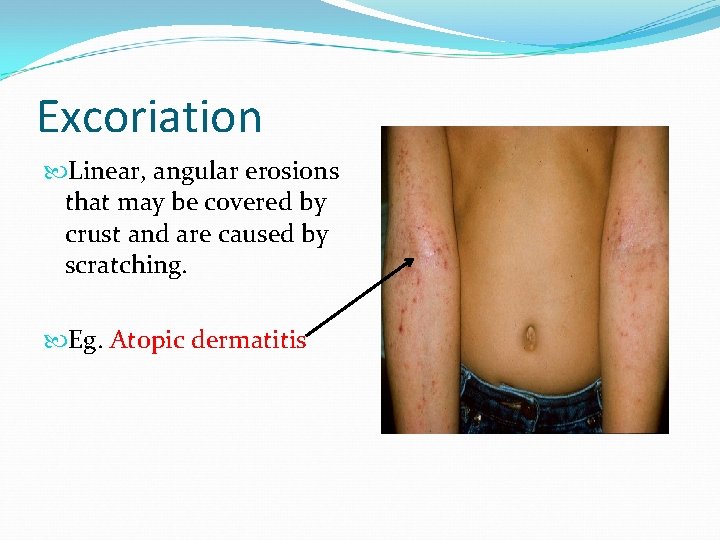
Excoriation Linear, angular erosions that may be covered by crust and are caused by scratching. Eg. Atopic dermatitis
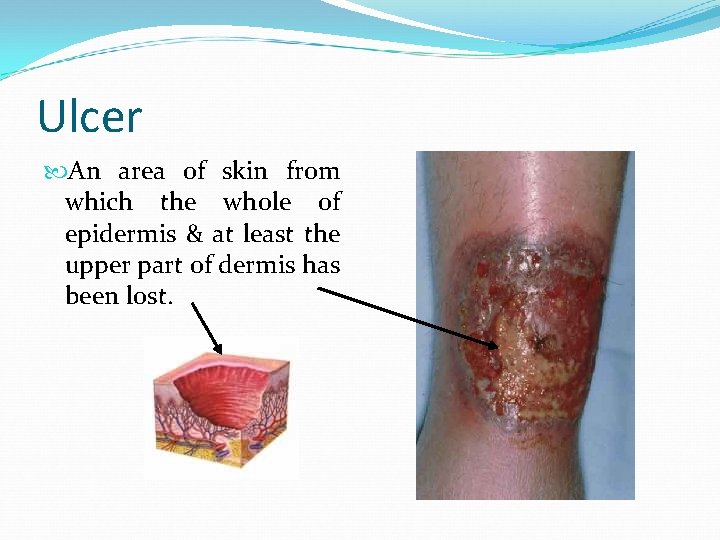
Ulcer An area of skin from which the whole of epidermis & at least the upper part of dermis has been lost.
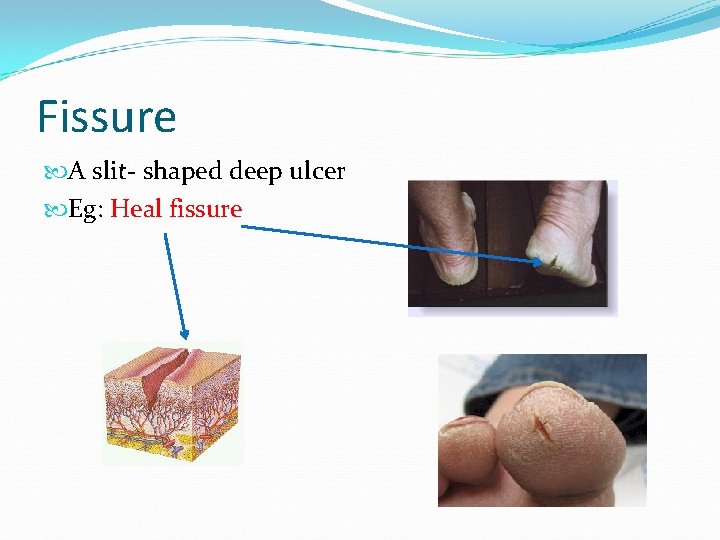
Fissure A slit- shaped deep ulcer Eg: Heal fissure
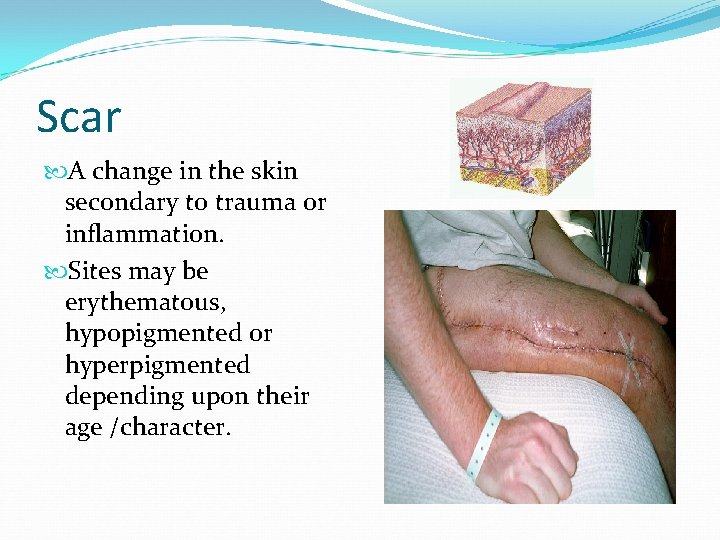
Scar A change in the skin secondary to trauma or inflammation. Sites may be erythematous, hypopigmented or hyperpigmented depending upon their age /character.
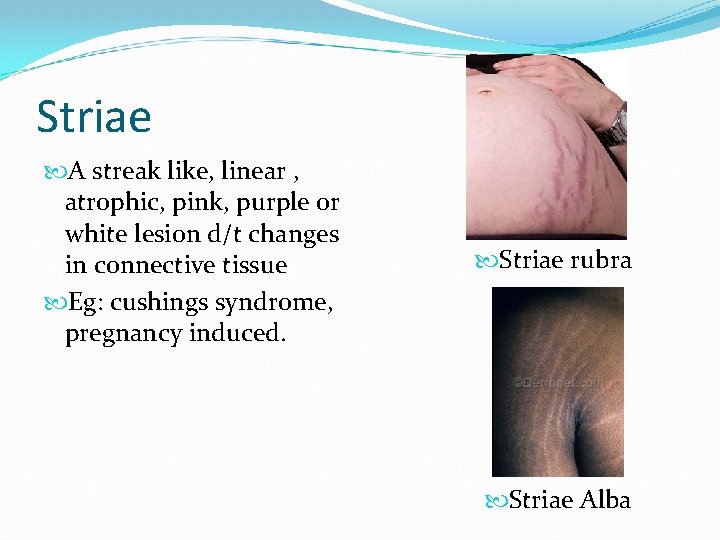
Striae A streak like, linear , atrophic, pink, purple or white lesion d/t changes in connective tissue Eg: cushings syndrome, pregnancy induced. Striae rubra Striae Alba
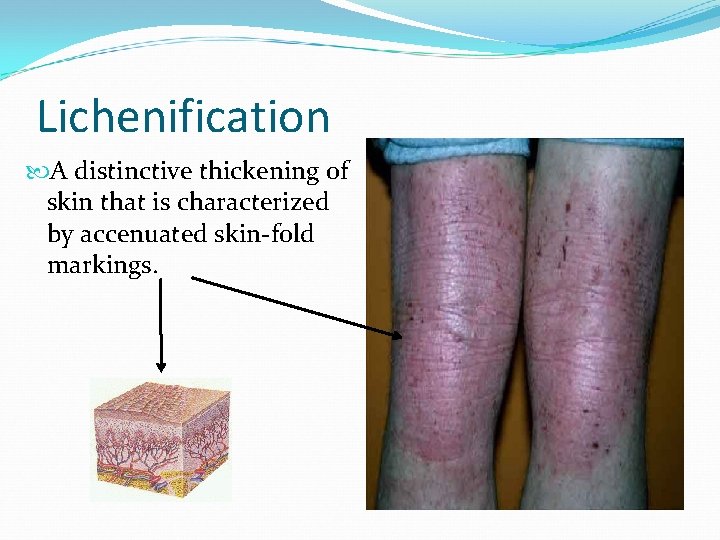
Lichenification A distinctive thickening of skin that is characterized by accenuated skin-fold markings.
ULCERATIVE LESIONS OF THE ORAL CAVITY
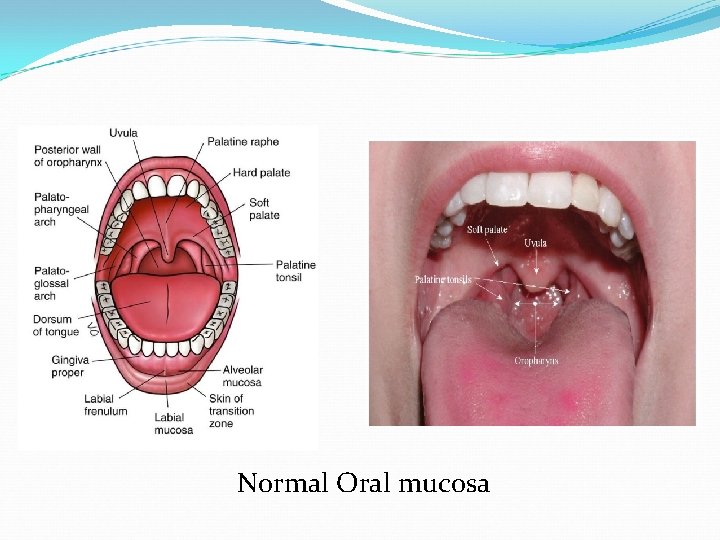
Normal Oral mucosa
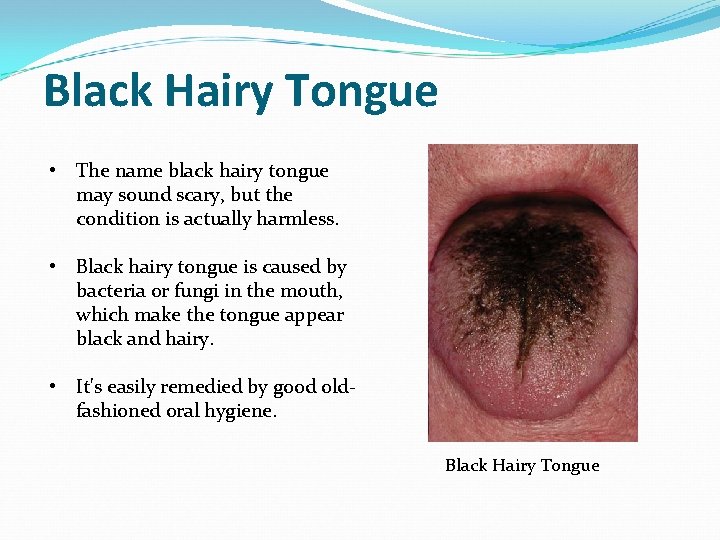
Black Hairy Tongue • The name black hairy tongue may sound scary, but the condition is actually harmless. • Black hairy tongue is caused by bacteria or fungi in the mouth, which make the tongue appear black and hairy. • It's easily remedied by good oldfashioned oral hygiene. Black Hairy Tongue
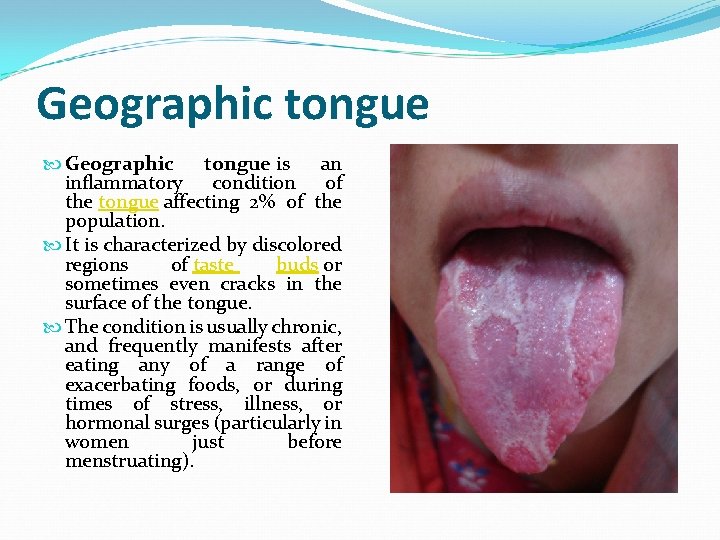
Geographic tongue is an inflammatory condition of the tongue affecting 2% of the population. It is characterized by discolored regions of taste buds or sometimes even cracks in the surface of the tongue. The condition is usually chronic, and frequently manifests after eating any of a range of exacerbating foods, or during times of stress, illness, or hormonal surges (particularly in women just before menstruating).
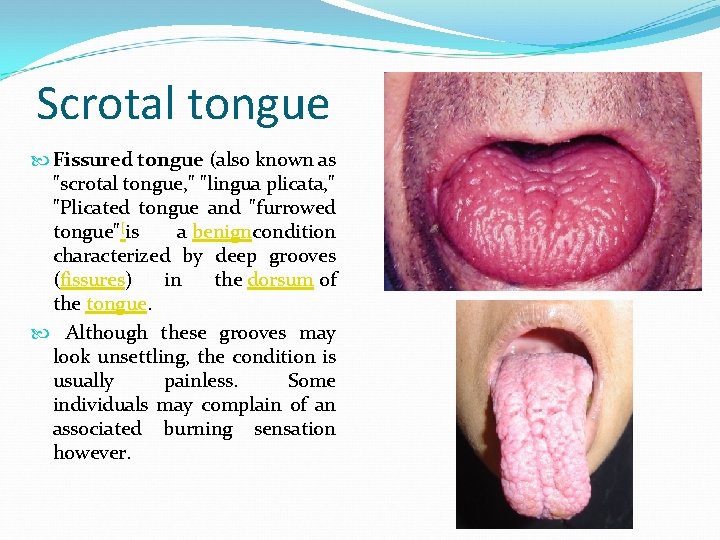
Scrotal tongue Fissured tongue (also known as "scrotal tongue, " "lingua plicata, " "Plicated tongue and "furrowed tongue"[is a benigncondition characterized by deep grooves (fissures) in the dorsum of the tongue. Although these grooves may look unsettling, the condition is usually painless. Some individuals may complain of an associated burning sensation however.
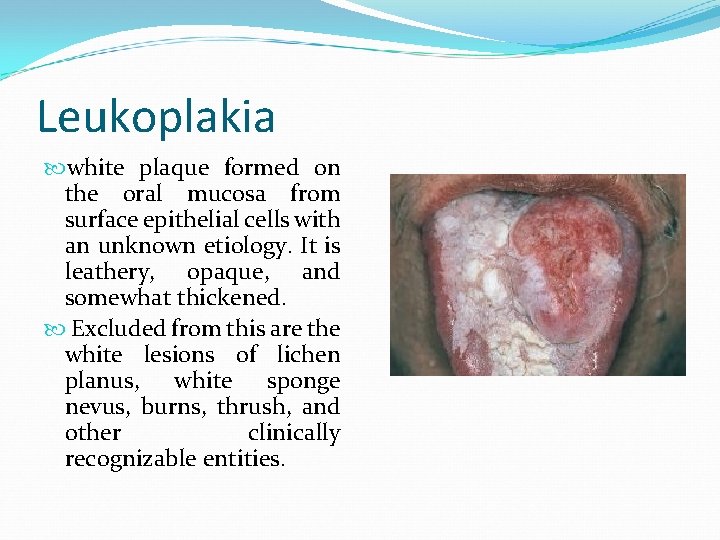
Leukoplakia white plaque formed on the oral mucosa from surface epithelial cells with an unknown etiology. It is leathery, opaque, and somewhat thickened. Excluded from this are the white lesions of lichen planus, white sponge nevus, burns, thrush, and other clinically recognizable entities.
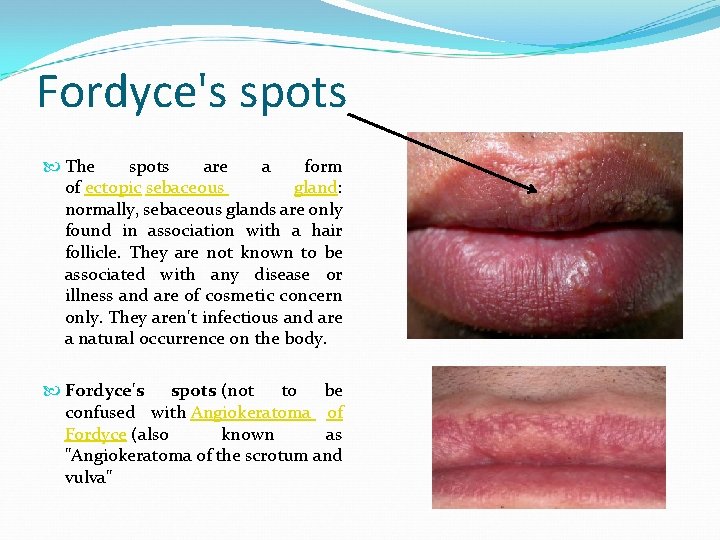
Fordyce's spots The spots are a form of ectopic sebaceous gland: normally, sebaceous glands are only found in association with a hair follicle. They are not known to be associated with any disease or illness and are of cosmetic concern only. They aren't infectious and are a natural occurrence on the body. Fordyce's spots (not to be confused with Angiokeratoma of Fordyce (also known as "Angiokeratoma of the scrotum and vulva"
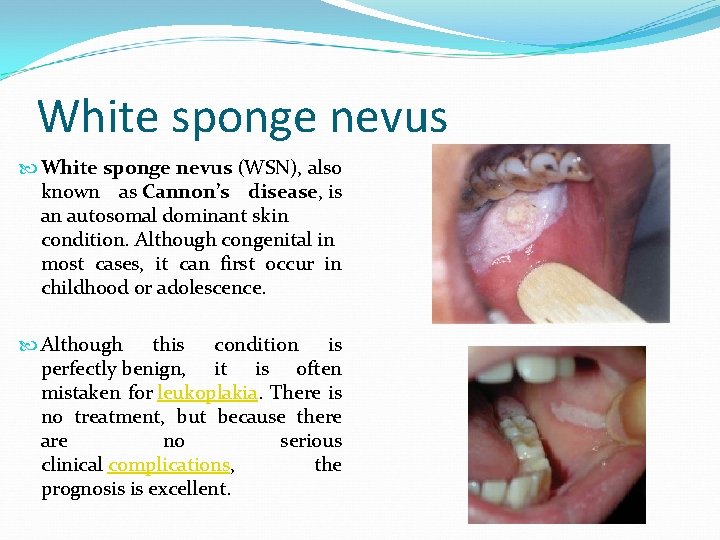
White sponge nevus (WSN), also known as Cannon’s disease, is an autosomal dominant skin condition. Although congenital in most cases, it can first occur in childhood or adolescence. Although this condition is perfectly benign, it is often mistaken for leukoplakia. There is no treatment, but because there are no serious clinical complications, the prognosis is excellent.
Recurrent Aphthous Stomatitis(RAS) Most common ulcerative lesion of oral cavity Recurrent, painful ulcers Confined to soft mucosa Subdivided into three types: Minor aphthae Major aphthae Herpetiform aphthae
Recurrent Aphthous Stomatitis(RAS) Minor aphthae: Less than 1 cm Heal completely in 7 -10 days without scarring Painful Prodromal stage Shallow and round to oval Gray to yellow membrane Clusters of up to 5 ulcers Steroids
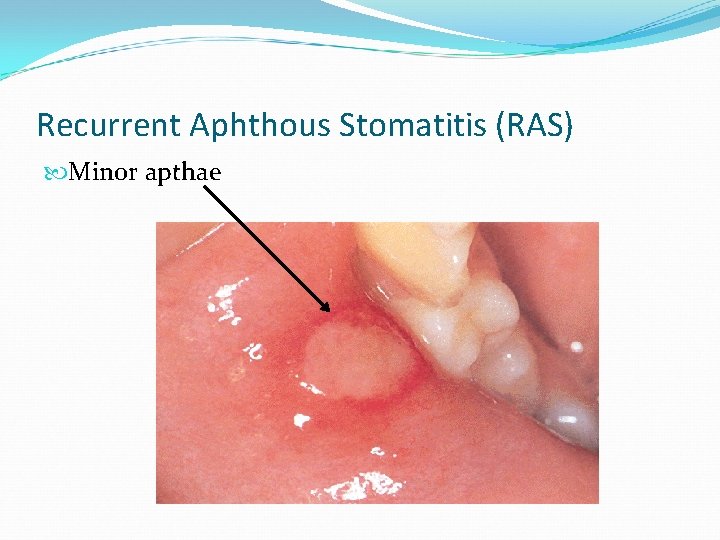
Recurrent Aphthous Stomatitis (RAS) Minor apthae
Recurrent Aphthous Stomatitis (RAS) Major Aphthae Uncommon Irregular, deep ulcers 1 -3 cm in size Raised borders Heal in 4 -6 weeks Extensive scarring and distortion BIOPSY!! Steroids
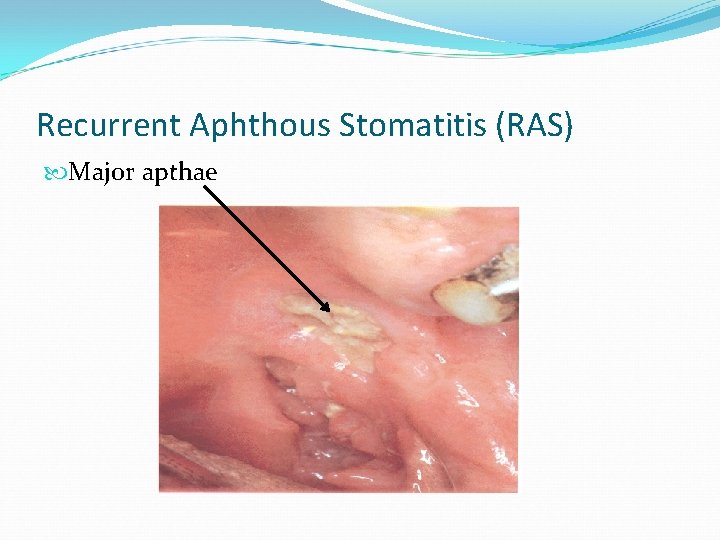
Recurrent Aphthous Stomatitis (RAS) Major apthae
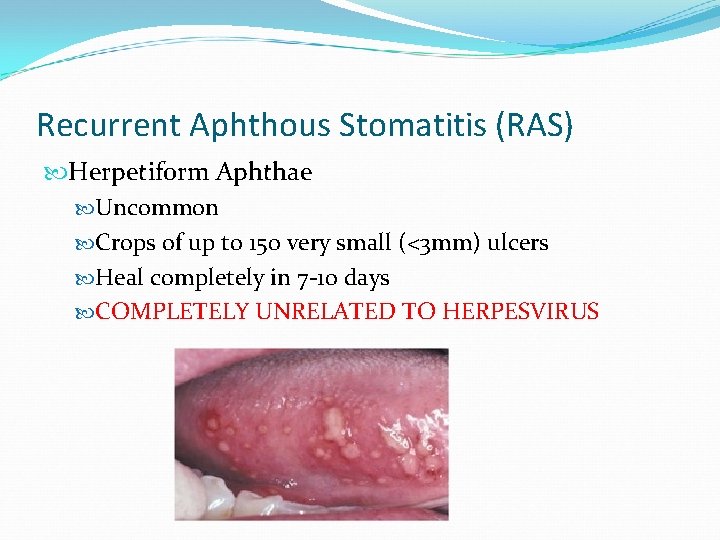
Recurrent Aphthous Stomatitis (RAS) Herpetiform Aphthae Uncommon Crops of up to 150 very small (<3 mm) ulcers Heal completely in 7 -10 days COMPLETELY UNRELATED TO HERPESVIRUS
Behcet’s (Oculo-oral-Genital syndrome) Symptom complex of: Recurrent aphthous ulcers of the mouth Painful genital ulcers Uveitis or conjuctivitis
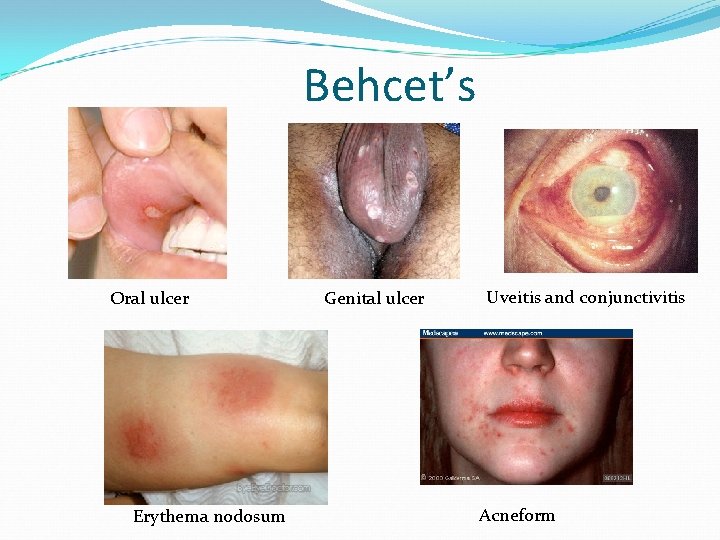
Behcet’s Oral ulcer Erythema nodosum Genital ulcer Uveitis and conjunctivitis Acneform
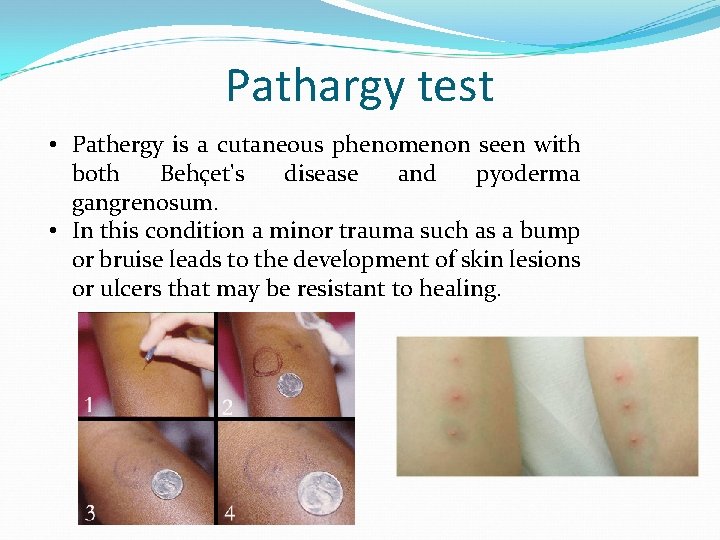
Pathargy test • Pathergy is a cutaneous phenomenon seen with both Behçet's disease and pyoderma gangrenosum. • In this condition a minor trauma such as a bump or bruise leads to the development of skin lesions or ulcers that may be resistant to healing.
Herpesvirus Infection HSV-1 and/or HSV-2 Primary Infection Secondary Infection Varicella zoster virus (HHV-3)
Herpesvirus Infection Primary Infection Herpetic gingivostomatitis Younger patients Often asymptomatic May be associated with fever, chills, malaise Vesicles-ulcers-crusting Anywhere in the oral cavity
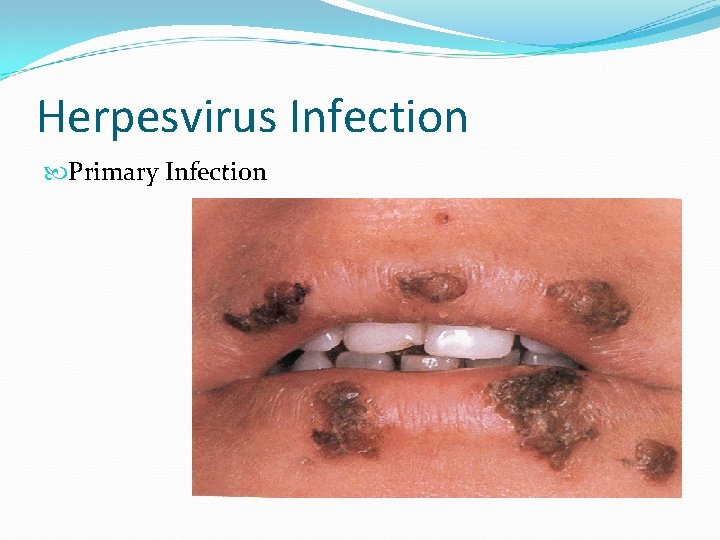
Herpesvirus Infection Primary Infection
Herpesvirus Infection Secondary Infection Reactivation of latent virus Not associated with systemic symptoms Small vesicles Occur only on the hard palate and gingiva Prodromal signs
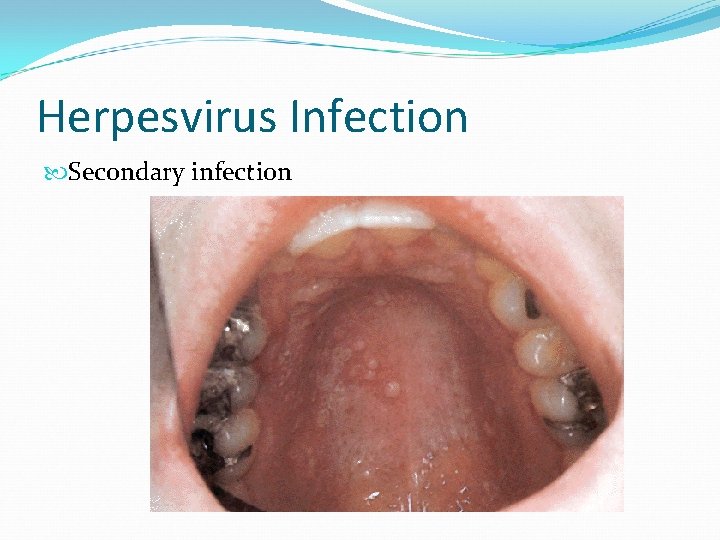
Herpesvirus Infection Secondary infection
Herpesvirus Infection Varicella zoster virus (HHV-3) Latent infection Oral ulcers Dermatomal distribution
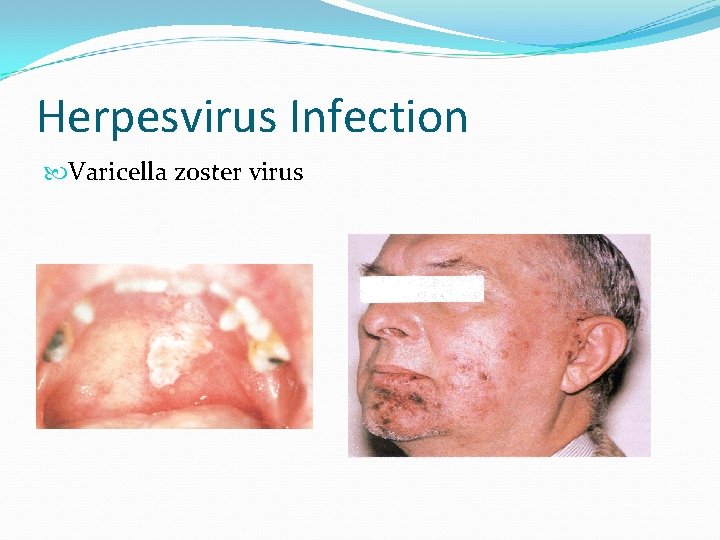
Herpesvirus Infection Varicella zoster virus
Herpangina NOT caused by Herpesvirus Coxsackie A virus Children < 10 years of age Common in summer and fall Often subclinical presentation Headache/Abdominal pain 48 hrs prior to papulovesicular lesions on tonsils and uvula. Sore throat
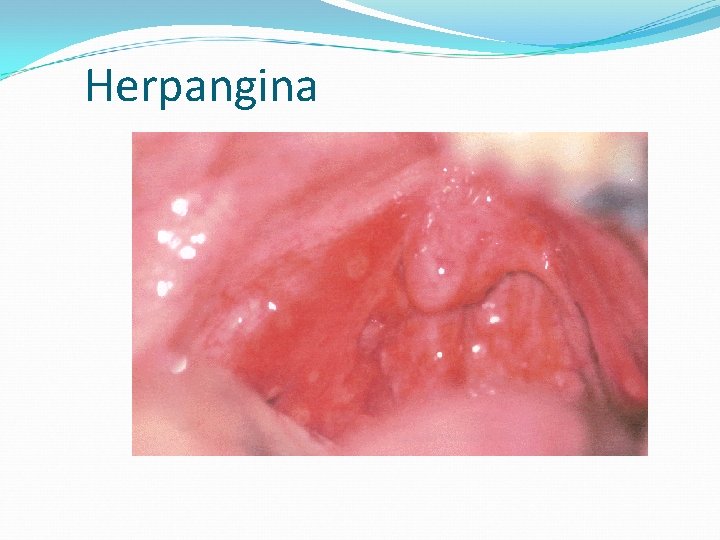
Herpangina
Infection Rare HIV/AIDS patients Bacterial Deep mycotic infection Candida
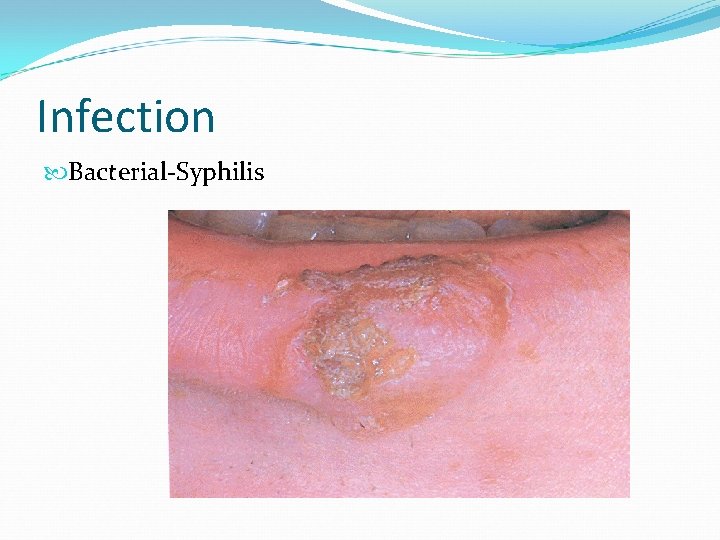
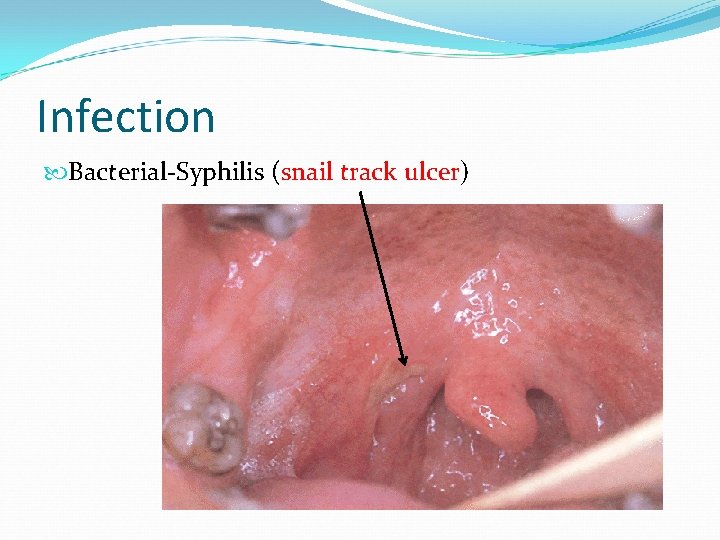
Infection Bacterial Usually secondary infection Primary infection: syphilis, tuberculous, or actinomycosis
Infection Bacterial-Syphilis
Infection Bacterial-Syphilis (snail track ulcer)
Infection Candida albicans Most common Normal flora White creamy patches KOH prep Nystatin oral suspension
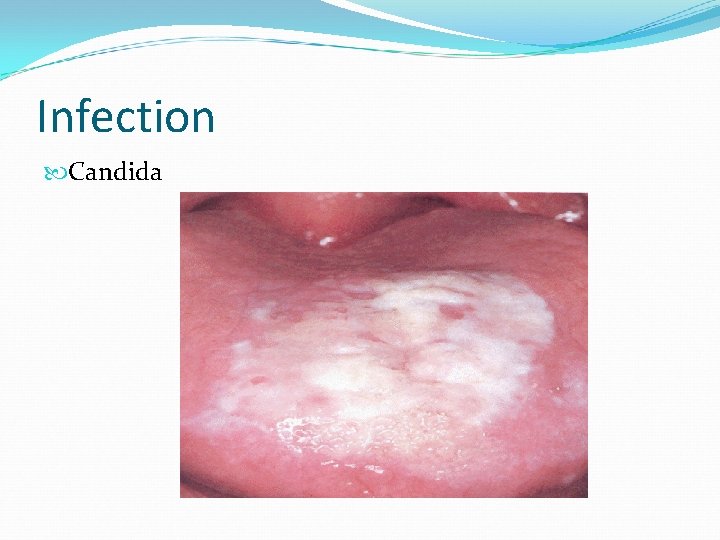
Infection Candida
Dermatologic Disorders with cutaneous and oral manifestations Erythema multiforme Lichen planus Benign mucous membrane pemphigoid Bullous pemphigoid Pemphigus vulgaris
Dermatologic Disorders Erythema multiforme Rapidly progressive Antigen-antibody complex deposition in vessels of the dermis Target lesions of the skin Diffuse ulceration, crusting of lips, tongue, buccal mucosa Self-limited, heal without scarring
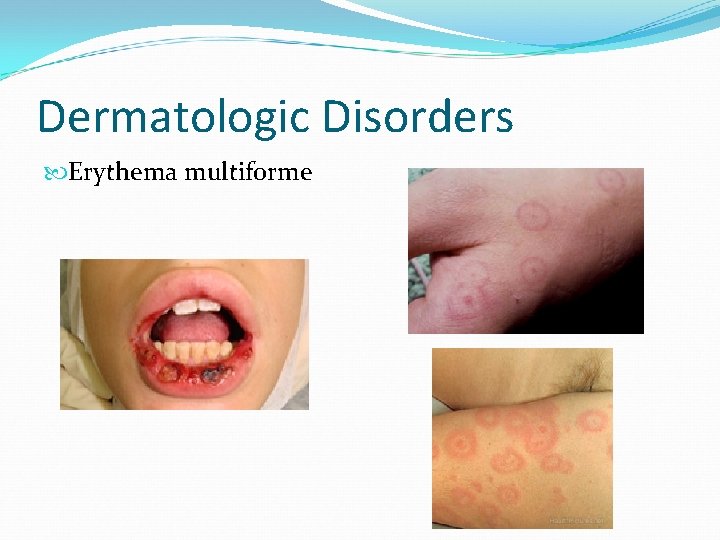
Dermatologic Disorders Erythema multiforme
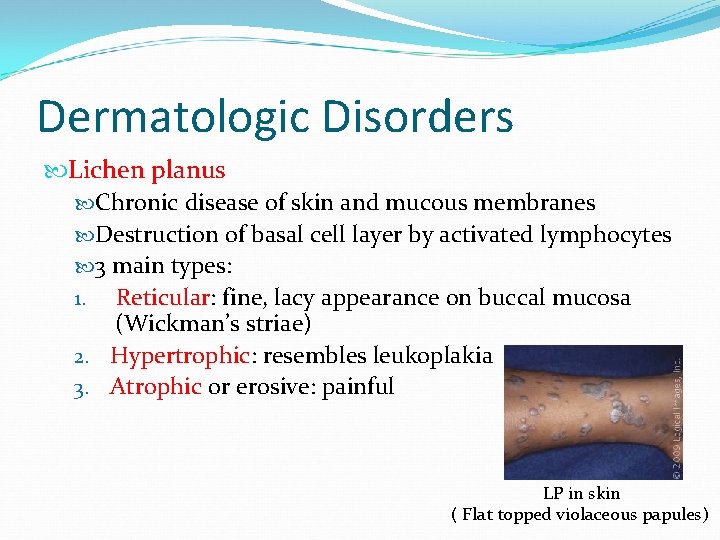
Dermatologic Disorders Lichen planus Chronic disease of skin and mucous membranes Destruction of basal cell layer by activated lymphocytes 3 main types: 1. Reticular: fine, lacy appearance on buccal mucosa (Wickman’s striae) 2. Hypertrophic: resembles leukoplakia 3. Atrophic or erosive: painful LP in skin ( Flat topped violaceous papules)
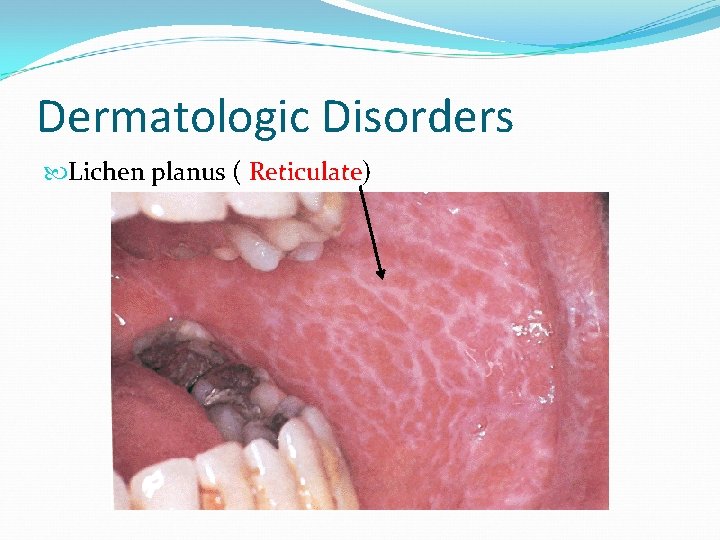
Dermatologic Disorders Lichen planus ( Reticulate)
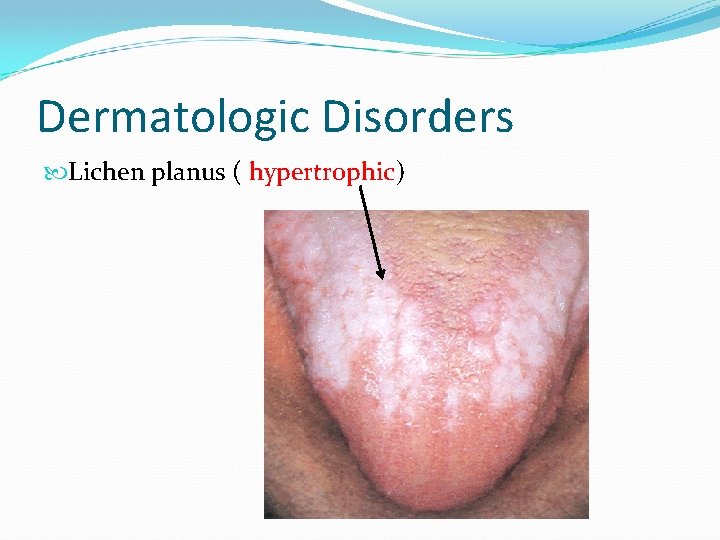
Dermatologic Disorders Lichen planus ( hypertrophic)
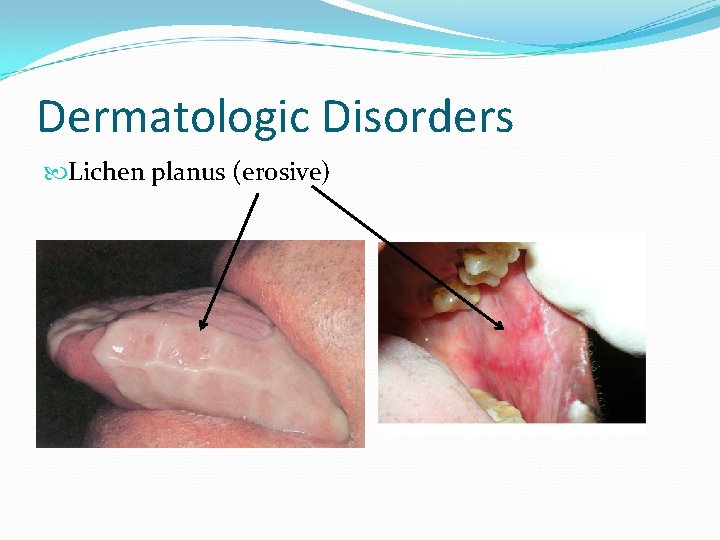
Dermatologic Disorders Lichen planus (erosive)
Dermatologic Disorders Benign mucous membrane pemphigoid Tense subepithelial bullae of skin and mucous membranes Rupture, large erosions, heal without scarring Sloughing (Nikolsky sign) Bullous pemphigoid Cutaneous lesions more common Both show subepithelial clefting with dissolution of the basement membrane Ig. G in basement membrane
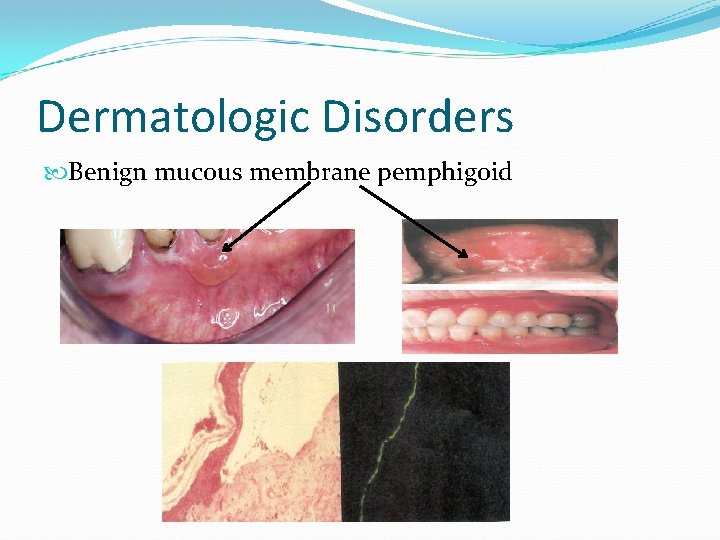
Dermatologic Disorders Benign mucous membrane pemphigoid
Dermatologic Disorders Pemphigus vulgaris Severe, potentially fatal Jewish and Italians Intraepithelial bullae and acantholysis Nikolsky’s sign Loss of intracellular bridges Autoimmune response to desmoglein 3 Intraepithelial clefting
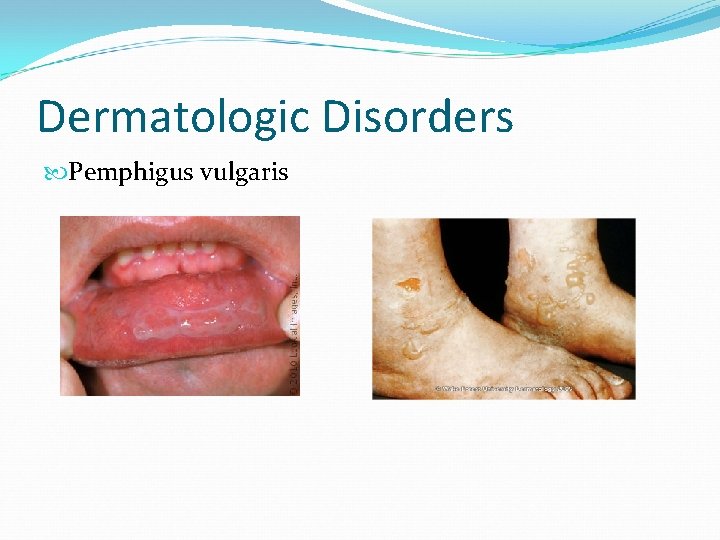
Dermatologic Disorders Pemphigus vulgaris
Quinn’s Rule for Stomatitis “Call it aphthous stomatitis. Treat it for two weeks. If it is still there, biopsy it. ”
- Slides: 69