
Primary School Curriculum Presentation to SDPI Post primary
- Slides: 43
Primary School Curriculum Presentation to SDPI Post primary, NUI Galway, 21 st June 2007 Mary Mac Donald, Assistant National Co-ordinator, PCSP
Primary School Curriculum
Aim To give an overview of the principles, changes of emphases and active learning methodologies of the Primary School Curriculum
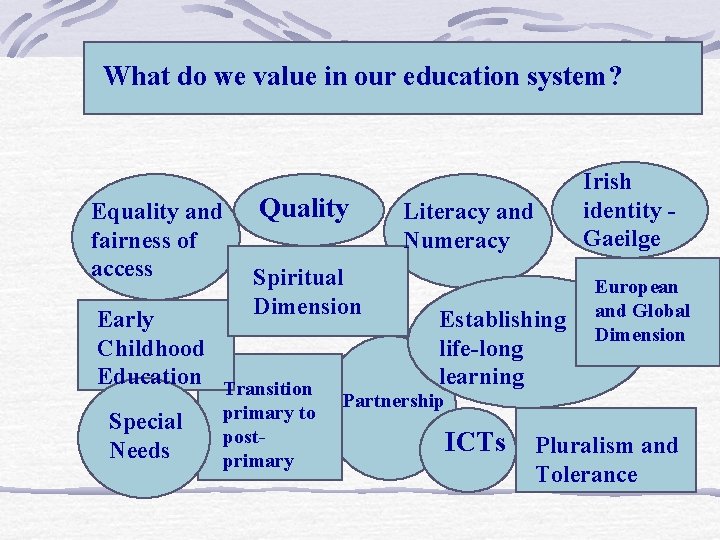
What do we value in our education system? Equality and fairness of access Quality Spiritual Dimension Early Childhood Education Transition primary to Special post. Needs primary Irish identity Gaeilge Literacy and Numeracy Establishing life-long learning European and Global Dimension Partnership ICTs Pluralism and Tolerance
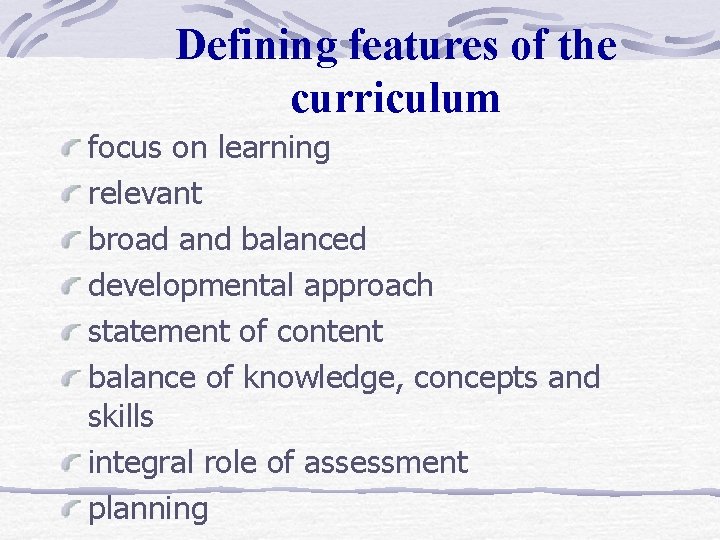
Defining features of the curriculum focus on learning relevant broad and balanced developmental approach statement of content balance of knowledge, concepts and skills integral role of assessment planning
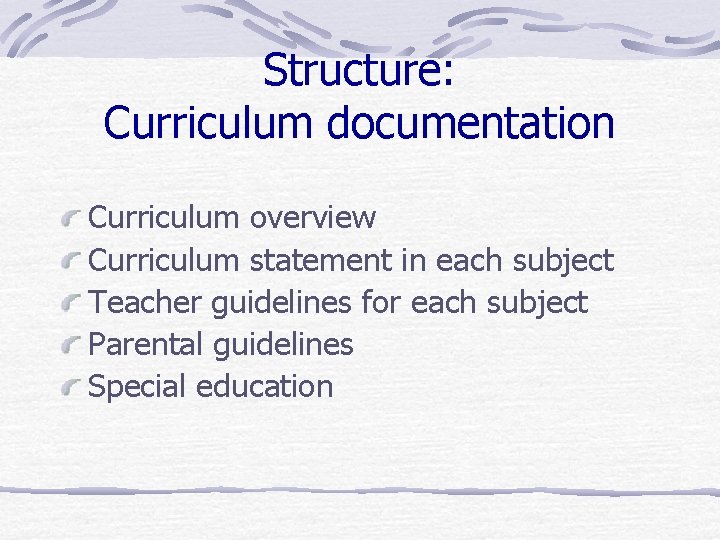
Structure: Curriculum documentation Curriculum overview Curriculum statement in each subject Teacher guidelines for each subject Parental guidelines Special education
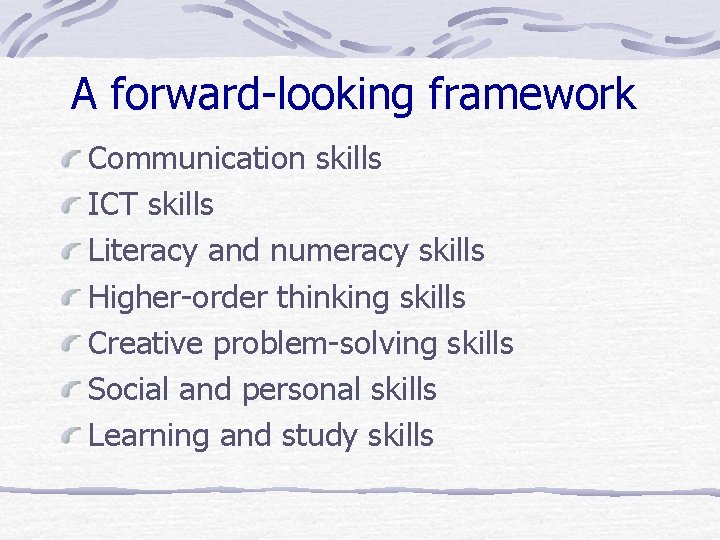
A forward-looking framework Communication skills ICT skills Literacy and numeracy skills Higher-order thinking skills Creative problem-solving skills Social and personal skills Learning and study skills
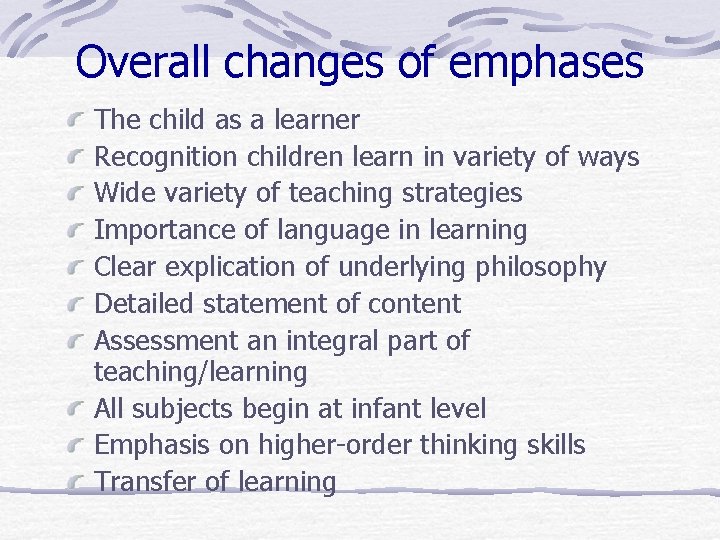
Overall changes of emphases The child as a learner Recognition children learn in variety of ways Wide variety of teaching strategies Importance of language in learning Clear explication of underlying philosophy Detailed statement of content Assessment an integral part of teaching/learning All subjects begin at infant level Emphasis on higher-order thinking skills Transfer of learning
Children have a variety of intelligences and learn in a variety of ways linguistic logical/mathematical spatial musical bodily/kinaesthetic inter-personal intra-personal
Central Methodologies Active learning Talk and discussion Collaborative learning Problem solving Skills through content Authentic learning
Principles of the Curriculum child’s sense of wonder immediate environment integrated learning developmental learning existing knowledge and experience individual difference transfer of learning higher-order thinking and problem solving
Principles of the Curriculum child as active agent activity and guided discovery collaborative learning assessment – integral centrality of language aesthetic dimension social and emotional dimension
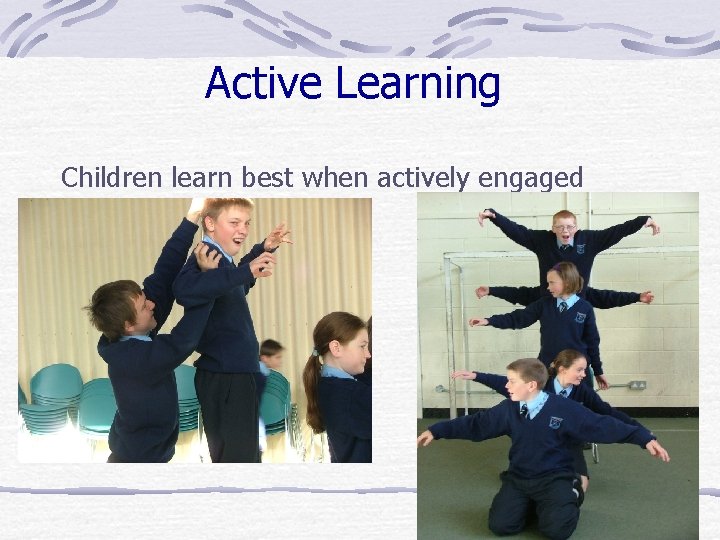
Active Learning Children learn best when actively engaged
Assessment central element of this curriculum integral part of teaching and learning process formal statement in Curriculum Statement for every subject outlining purpose areas to be assessed methods and tools of assessment further guidelines in Teacher Guidelines for each subject
Problem Solving Skills observe collate evaluate evidence ask relevant questions identify essential information recognise essence of problem suggest solutions make informed judgements
Learning as a group develops… sense of purpose learning from/with others language skills sense of democracy interpersonal skills higher-order thinking skills ability to operate as a social unit accountability / responsibility acceptance of others respect for individual difference
Language: English importance of oral language and process writing for different purposes and audiences print-rich environment informal reading activities in Junior Infants
Oral language listener / speaker relationships good range of vocabulary wide variety of social contexts conversation – initiate, sustain, conclude, debate a point, present contexts – home, school, environment, books, TV, play, story, pictures strategies – pairs, groups, class
Teanga: Gaeilge páistelárnach - téamaí cumarsáid a bheith mar sprioc taitneamhach 7 réalaíoch don pháiste an páiste gníomhach san fhoghlaim níos mó saoirse - ábhar -straitéisí teagaisc agus foghlama léitheoireacht – Rang 2 scríbhneoireacht – Rang 2
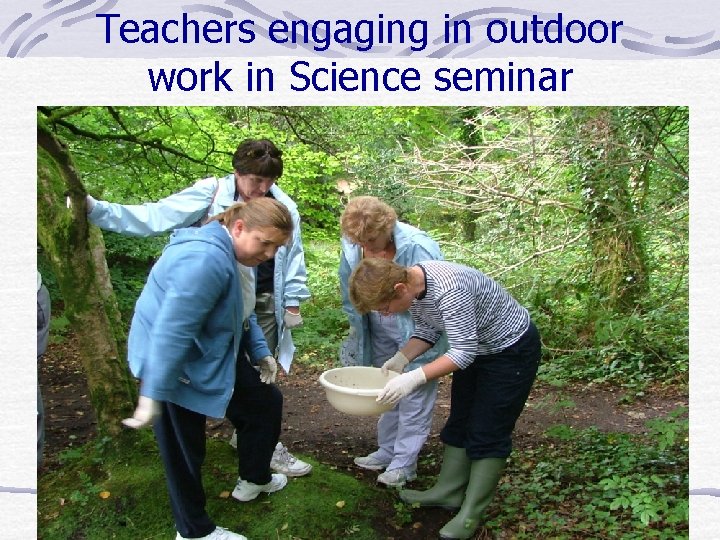
Social, Environmental and Scientific Education (SESE) History Geography Science introduced in infant classes balanced developed of skills and knowledge working as a scientist, historian and geographer emphasis on local environment handling and examining real evidence integration
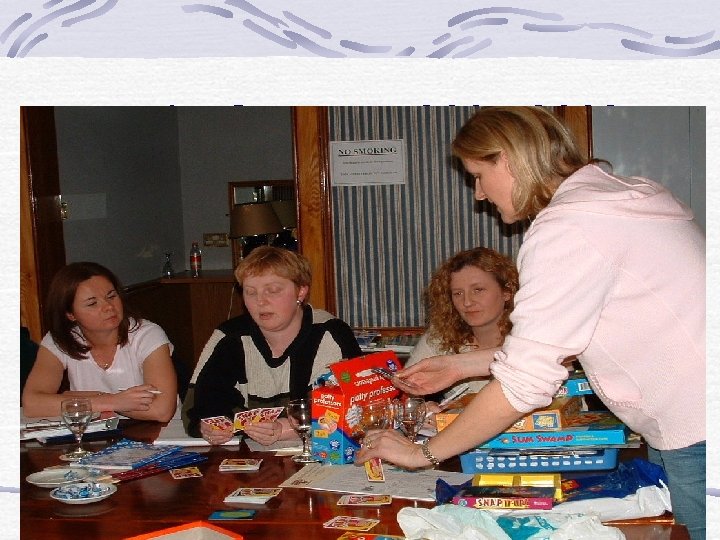
Teachers engaging in outdoor work in Science seminar (2002/2003)
Arts Education Visual Arts making art and responding to art creative process in making art rather than the product balance between two and three dimensional activities developing a sense of beauty and discrimination – art critic centrality of drawing
Arts Education Drama importance of making drama rather than performing drama importance of story/poetry using the elements of drama reflecting on drama make-believe play/improvisation
Arts Education Music listening and responding to a wide range of musical styles and traditions participation of all children – enjoyment song-singing as a basis home-made and commercial instruments exploring sound, simple composition recording - children’s own images less emphasis on technical skills
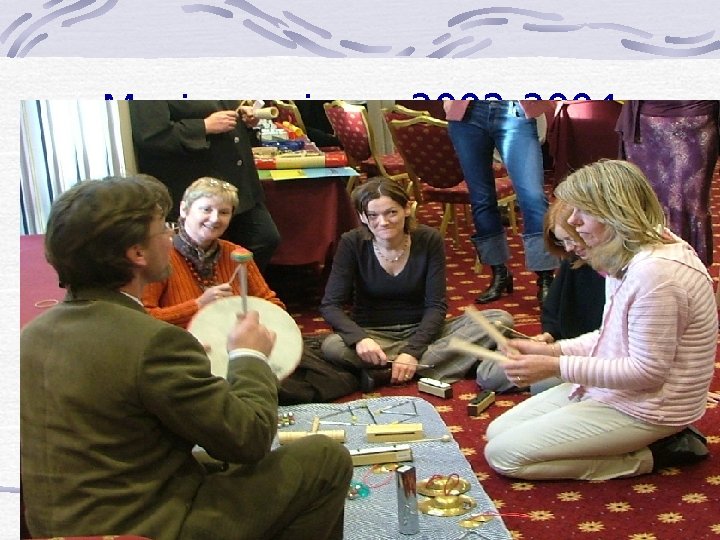
Music seminars 2003 -2004
Social, Personal and Health Education (SPHE) lifelong process shared responsibility - home/school/community generic approach needs of children spiral in nature combination of contexts active learning approaches
Physical Education athletics – a broader range of activities dance – creative and folk dance gymnastics - movement games – skills development outdoor and adventure activities aquatics – competence & confidence a balanced approach to competition achieving personal physical goals
Mathematics algebra from infants number limits new area – chance fractions – simplified calculators from 4 th class real-life problem-solving and estimation concrete materials to 6 th class mathematical trails long division – 5 th class
Maths Seminars 2001 -2002
Skills through Content: Looking and Responding to Art Responses can be confined to oral work…but children can be asked to respond in a variety of ways…create a piece of art, a drama, a poem or a piece of written work.
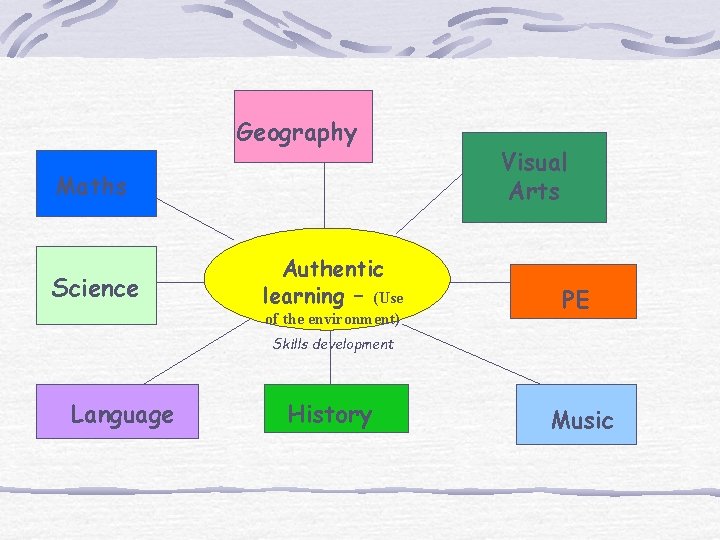
Geography Maths Science Authentic learning – (Use of the environment) Visual Arts PE Skills development Language History Music
Successful learning linked to building high self-esteem and confidence creating a safe and secure context for learning affirmation encouragement recognition reward
Plans for 07/08 Cuiditheoireacht service to be continued DEIS to continue to support schools Gaeilge and Tús Maith teams now together
New initiatives 2007 2008 Active Schools’ Awards Lifetime Lab Aqua TT
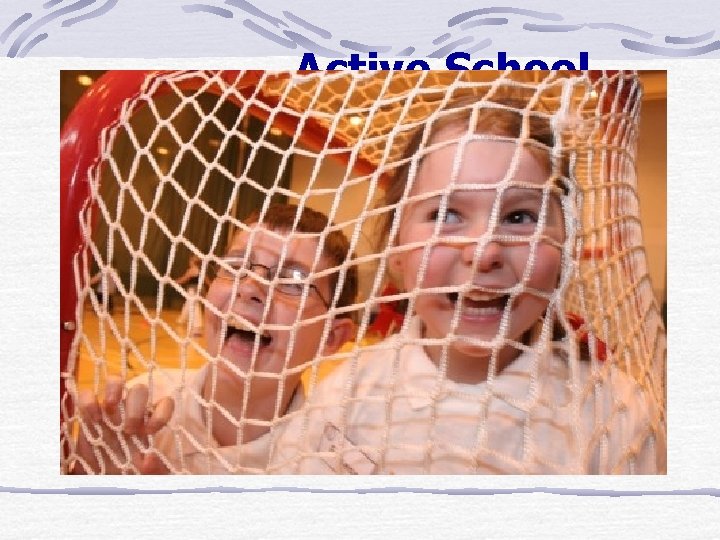
Active School Awards 2007
ICT and Literacy Partnership between NCTE, NCCA and PCSP September 2005 -2007 10 schools Cuiditheoirí and ICT advisor support Evaluation: External, Teacher selfevaluation, Assessment tools
DEIS literacy and numeracy 14 Cuiditheoirí First Steps Participating schools: over 200 Summer courses: 12 Teachers attending evening courses: c. 300 First Steps Tutors: 50 (25 to be trained in June) Regional Tutor Networks
Reading Recovery 52 DEIS Band 1 schools 88 DEIS Band 2 Schools 5 Training centres (Galway, Cork, Limerick, Monaghan and Dublin) 2 additional centres (Dublin West and Kilkenny) 60 additional schools in the next academic year
Maths Recovery Overview identification of the lowest-attainers usually at first class level provision of intensive programme of individualised or small group teaching Information seminar for principals of 60 Band 1 schools in May
Ready, Set, Go-Maths Planning for introduction of Ready Set Go-Maths in DEIS Band 1 schools in September. Focus on key concepts and skills in early number four related strands - sorting, relationships and operations, counting and understanding number targeted at infant teachers to assist schools in addressing early intervention
Enhancing Teaching and Learning in the Multi-grade classroom Region 4: Education Centres the region) Cork West Cork Tralee Limerick IN/OUT model Monthly evening workshops Follow up in-school support (20 schools across
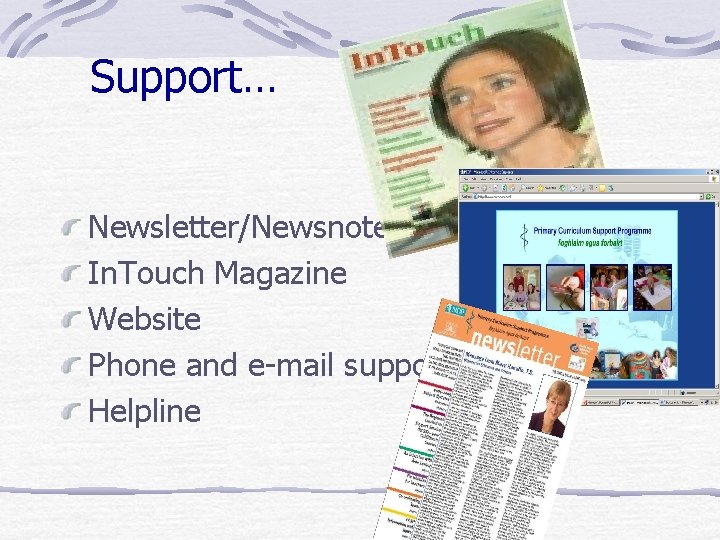
Support… Newsletter/Newsnote In. Touch Magazine Website Phone and e-mail support Helpline