
Primary Prevention of Lead Poisoning Shifting the Paradigm
- Slides: 19
Primary Prevention of Lead Poisoning: Shifting the Paradigm A Community-Based Initiative Michael A. Noll, M. D. Walden University School of Health Sciences November 12, 2009
Welcome! Prenatal Services: You are literally on the Front Lines of Medicine You can Affect Meaningful Positive Changes Preventive Measures are Key to Healthy Families and Children
Our Focus Today: Preventing Exposure to Lead in Children n What We Know n Toxic Effects of Lead Exposure n Special Focus of Neurodevelopmental Issues Sources of Exposure n Current Preventive Measures n n Changing the Status Quo
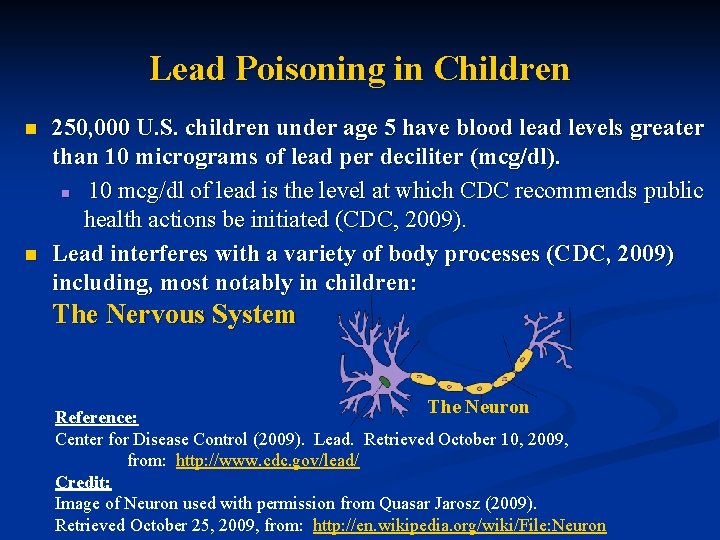
Lead Poisoning in Children n n 250, 000 U. S. children under age 5 have blood lead levels greater than 10 micrograms of lead per deciliter (mcg/dl). n 10 mcg/dl of lead is the level at which CDC recommends public health actions be initiated (CDC, 2009). Lead interferes with a variety of body processes (CDC, 2009) including, most notably in children: The Nervous System The Neuron Reference: Center for Disease Control (2009). Lead. Retrieved October 10, 2009, from: http: //www. cdc. gov/lead/ Credit: Image of Neuron used with permission from Quasar Jarosz (2009). Retrieved October 25, 2009, from: http: //en. wikipedia. org/wiki/File: Neuron
Neurotoxic Effects n High levels of exposure can lead to: n n Seizures, coma and death (Cecil, 2008). Exposure has been linked to: n n n Learning Disabilities (Meyer & Mc. Geehim, 2003) Aggression and Delinquency (Needleman, 2004) ADHD & antisocial behavior (Bellinger, 2008). References Bellinger, C (2008). Very low lead exposures and children's neurodevelopment. Current Opinio Pediatrics, 20 (2): 172– 177 Cecil, M, et al. (2008). Decreased brain volume in adults with childhood lead exposure. PLo. S Medicine, 5 (5): 112. Meyer PA; Mcgeehin F (2003). A global approach to childhood lead poisoning prevention. International Journal of Hygiene and Environmental Health, 206 (4 -5): 363– 9 Needleman, H. (2004). Lead poisoning. Annual Review of Medicine, 55; 209– 222.
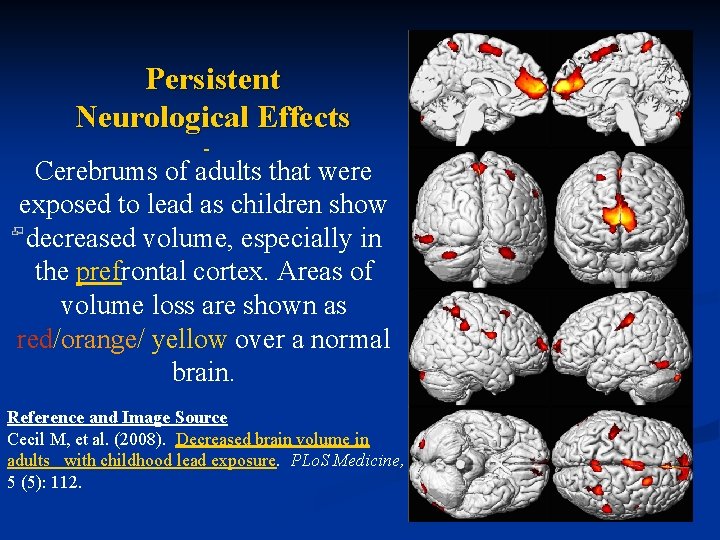
Persistent Neurological Effects Cerebrums of adults that were exposed to lead as children show decreased volume, especially in the prefrontal cortex. Areas of volume loss are shown as red/orange/ yellow over a normal brain. Reference and Image Source Cecil M, et al. (2008). Decreased brain volume in adults with childhood lead exposure. PLo. S Medicine, 5 (5): 112.
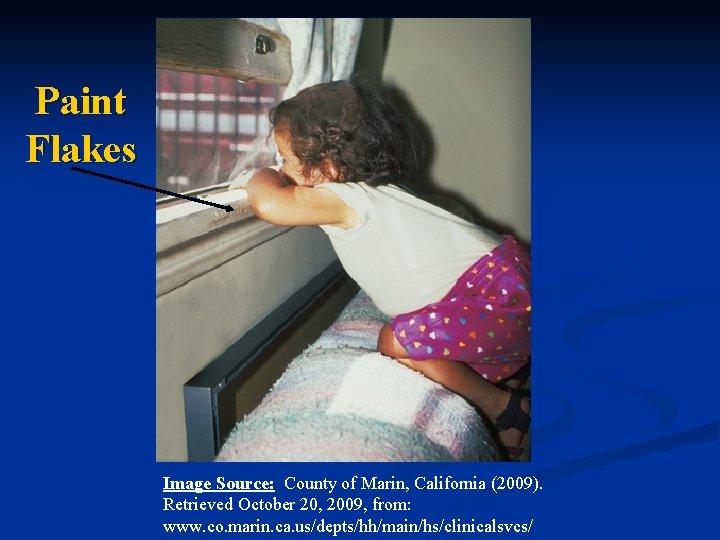
Exposure to Lead n n n Lead-based paint and lead-contaminated dust in older homes are the most common sources of lead poisoning in children (CDC, 2009) Although lead was banned for use in paints in 1978, 98% of homes built before 1940 still contain lead (HUD, 2009) More than 30 million homes, roughly 1/3 of the homes in the US are at least 50 years old (Solomon, 2009). References: Center for Disease Control (2009). Lead. Retrieved October 12, 2009, from www. . cdc. gov/nceh/lead Solomon C (2009). This old (dangerous? ) house. Microsoft Network Real Estate. Retrieved October 25, 2009, from http: //realestate. msn. com/article. aspx? cp-documentid=21917660 US Dept. of Housing and Urban Development (HUD) (2009). Retrieved October 20, 2009 from: www. hud. gov/offices/lead/enforcement/lshr. cfm
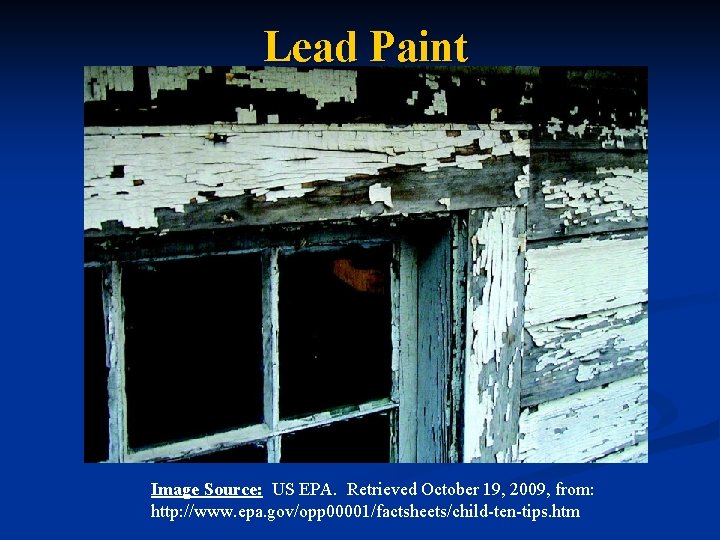
Lead Paint Image Source: US EPA. Retrieved October 19, 2009, from: http: //www. epa. gov/opp 00001/factsheets/child-ten-tips. htm
Paint Flakes Image Source: County of Marin, California (2009). Retrieved October 20, 2009, from: www. co. marin. ca. us/depts/hh/main/hs/clinicalsvcs/
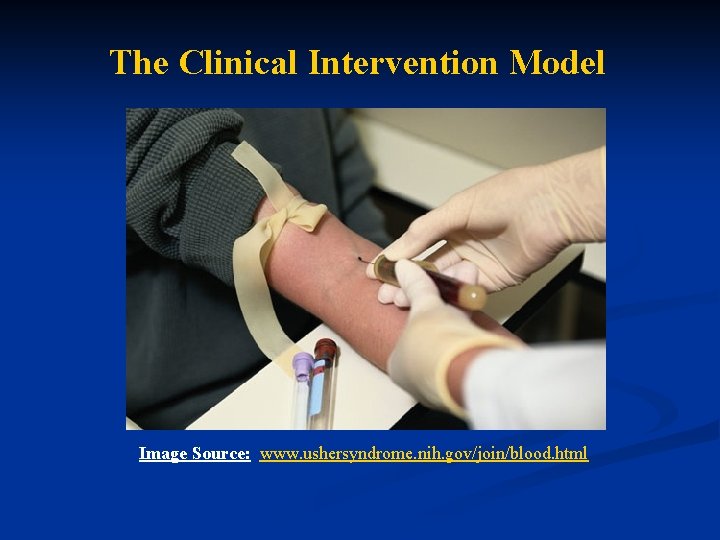
Primary Prevention: The Status Quo. n Current Recommendations: n “Screen 12 -month-old infants for lead poisoning if they live in communities in which the prevalence of lead levels requiring intervention is high or undefined” (AAP, 2005) n n Reference: American Academy of Pediatrics (2005). Lead exposure in children: prevention, detection, and management. Pediatrics 2005; 116: 1036 -46. “All children should receive a screening blood lead test at 12 months and 24 months of age; children between the ages of 36 months and 72 months of age must receive a screening blood lead test if they have not been previously screened for lead poisoning” (CDC, 2005) n Reference: Centers for Disease Control and Prevention. Blood Lead Levels - United States, 1999 -2002. MMWR 2005; 54(20): 513 -6.
The Clinical Intervention Model Image Source: www. ushersyndrome. nih. gov/join/blood. html
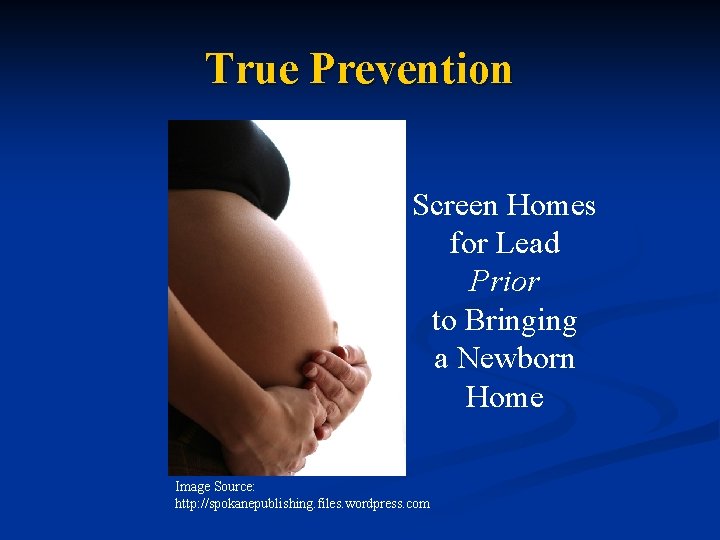
True Prevention Screen Homes for Lead Prior to Bringing a Newborn Home Image Source: http: //spokanepublishing. files. wordpress. com
Community and Clinic-Based Intervention Image Source: www. ksre. ksu Let us Truly Prevent the Problem
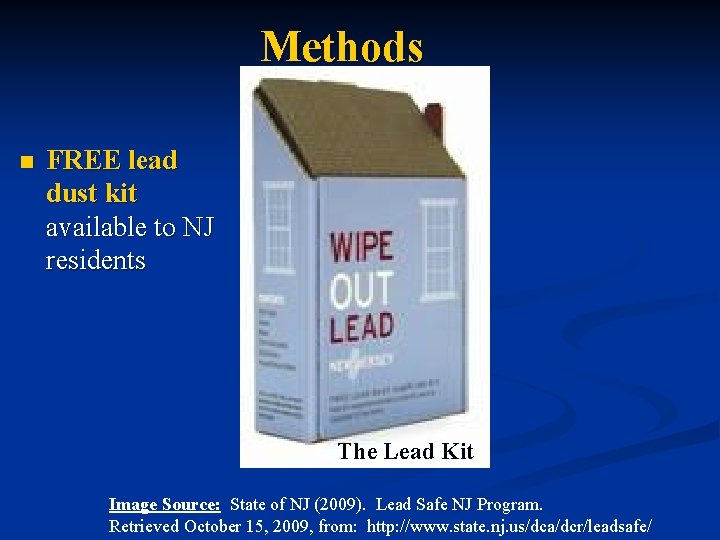
Methods n FREE lead dust kit available to NJ residents The Lead Kit Image Source: State of NJ (2009). Lead Safe NJ Program. Retrieved October 15, 2009, from: http: //www. state. nj. us/dca/dcr/leadsafe/
If Lead is Detected in the Home n n n Hire a Certified Lead Abatement Contractor NJ Lead Abatement Hot -line at (609) 633 -6224. Financial assistance is available. Image source: http: //rwss. ap. nic. in/pred/images/contractor. gif Reference: State of NJ (2009). Lead Safe NJ Program. Retrieved October 15, 2009, from: http: //www. state. nj. us/dca/dcr/leadsafe/
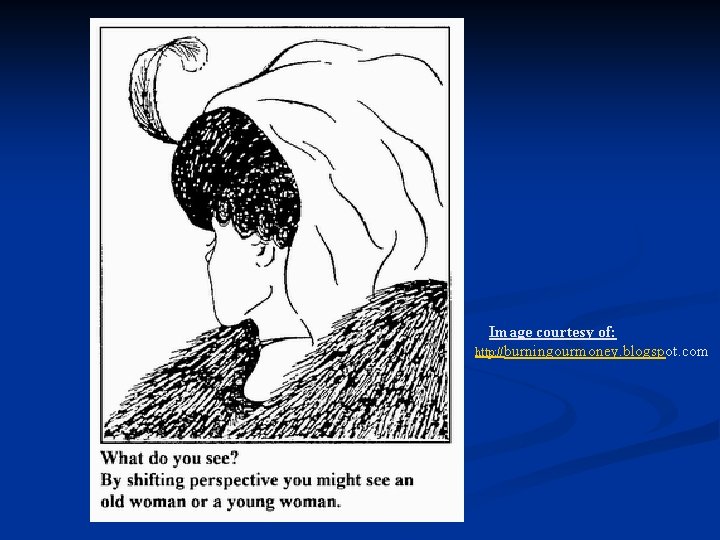
Image courtesy of: http: //burningourmoney. blogspot. com
For Further Information EPA Website: www. epa. gov/lead n EPA (New Jersey regional) info: (732) 3216671 n CDC Childhood Lead Poisoning Prevention Program: www. cdc. gov/nceh/lead/about/program n National Lead Info Center: 800 -424 -LEAD n Lead Safe NJ Program (To Obtain the Free Lead Detection Kit): 856 -665 -6000 ext 327 n
References: n n n American Academy of Pediatrics (2005). Lead exposure in children: prevention, detection, and management. Pediatrics, 116: 1036 -46. Bellinger, C (2008). Very low lead exposures and children's neurodevelopment. Current Opinions in Pediatrics, 20 (2): 172– 177 Cecil, M, et al. (2008). Decreased brain volume in adults with childhood lead exposure. PLo. S Medicine, 5 (5): 112. Centers for Disease Control and Prevention. Blood Lead Levels - United States, 1999 -2002. MMWR; 54(20): 513 -6. Center for Disease Control (2009). Lead. Retrieved October 10, 2009, from: www. cdc. gov/lead/ n n Environmental Protection Agency (EPA) 2009. Lead. Retrieved October 12, 2009, from: http: //www. epa. gov/lead/pubs/rrpamph. pdf Meyer PA; Mcgeehin F (2003). A global approach to childhood lead poisoning prevention. International Journal of Hygiene and Environmental Health, 206 (4 -5): 363– 9.
References (continued) n n n Moeller, DW (2005). Environmental Health (3 rd ed. ). Boston: Harvard University Press. Needleman, H. (2004). Lead poisoning. Annual Review of Medicine, 55; 209– 222. Solomon C (2009). This old (dangerous? ) house. Microsoft Network Real Estate. Retrieved October 26, 2009, from: http: //realestate. msn. com/article. aspx? cp-documentid=21917660 State of NJ (2009). Lead Safe NJ Program. Retrieved October 15, 2009, from: http: //www. state. nj. us/dca/dcr/leadsafe/ US Dept. of Housing and Urban Development (HUD) (2009). Retrieved October 20, 2009 from: www. hud. gov/offices/lead/enforcement/lshr. cfm