
Primary and Secondary Data Secondary Data Preexisting data

- Slides: 25
Primary and Secondary Data
Secondary Data Pre-existing data not gathered for purposes of the current research Not ‘new’ data – ‘second hand’ Secondary data ‘Back up’ data – secondary in use
• Data gathered by another source (e. g. research study, survey, interview) • Secondary data is gathered BEFORE primary data. WHY? • Because you want to find out what is already known about a subject before you decline into your own investigation. WHY? • Because some of your questions can possibly have been already answered by other investigators or authors.
Advantages and Disadvantages Advantages • Resource implications – usually easier to gather than primary data • Unobtrusive – already collected • Longitudinal study may be possible • Quality and permanence of data – eg. government surveys Disadvantages • Suitability • Cost and access – may still be difficult in spite of resource advantages • Validity of some secondary data (eg. Internet sources)
Primary Data • Data never gathered before. • Advantage: find data you need to suit your purpose • Disadvantage: usually more costly and time consuming than collecting secondary data • Collected after secondary data is collected
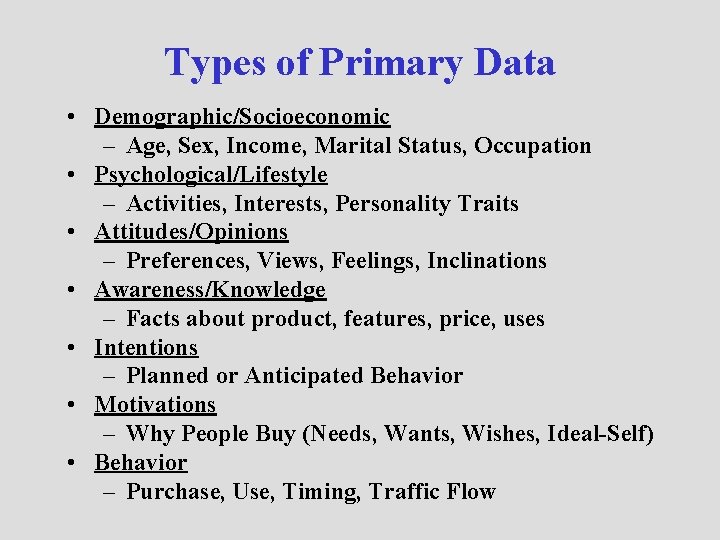
Types of Primary Data • Demographic/Socioeconomic – Age, Sex, Income, Marital Status, Occupation • Psychological/Lifestyle – Activities, Interests, Personality Traits • Attitudes/Opinions – Preferences, Views, Feelings, Inclinations • Awareness/Knowledge – Facts about product, features, price, uses • Intentions – Planned or Anticipated Behavior • Motivations – Why People Buy (Needs, Wants, Wishes, Ideal-Self) • Behavior – Purchase, Use, Timing, Traffic Flow
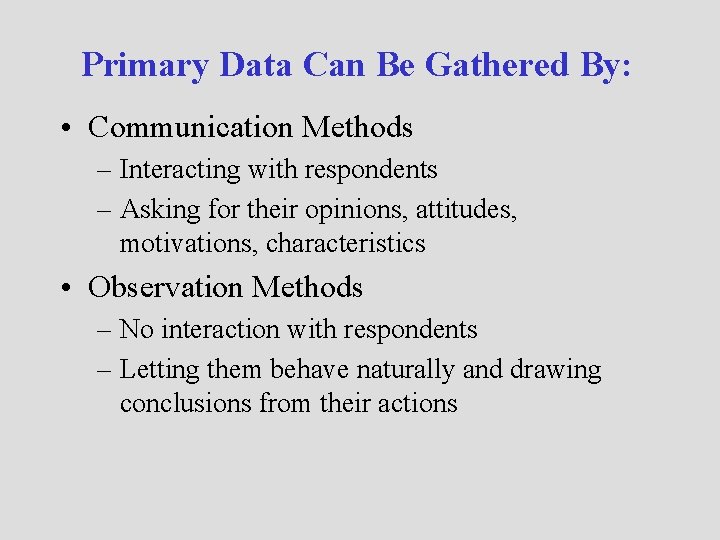
Primary Data Can Be Gathered By: • Communication Methods – Interacting with respondents – Asking for their opinions, attitudes, motivations, characteristics • Observation Methods – No interaction with respondents – Letting them behave naturally and drawing conclusions from their actions
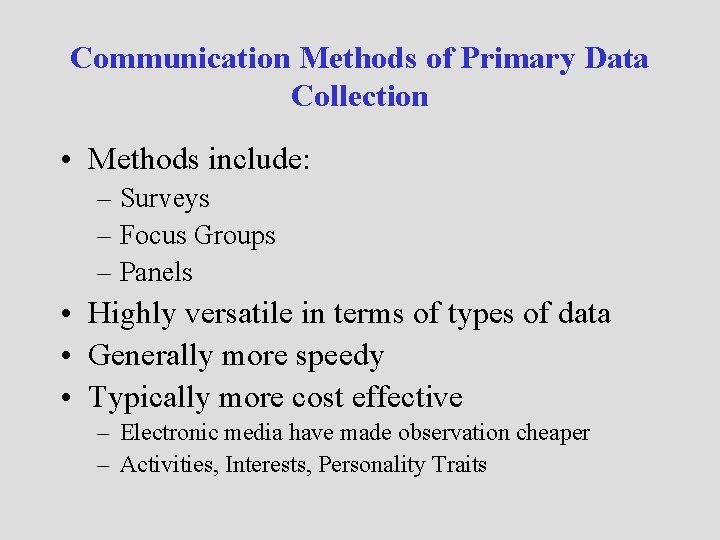
Communication Methods of Primary Data Collection • Methods include: – Surveys – Focus Groups – Panels • Highly versatile in terms of types of data • Generally more speedy • Typically more cost effective – Electronic media have made observation cheaper – Activities, Interests, Personality Traits
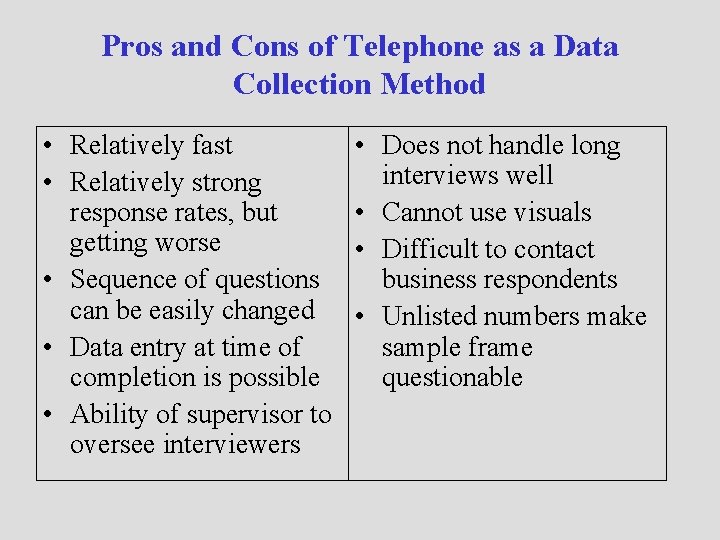
Pros and Cons of Telephone as a Data Collection Method • Relatively fast • Relatively strong response rates, but getting worse • Sequence of questions can be easily changed • Data entry at time of completion is possible • Ability of supervisor to oversee interviewers • Does not handle long interviews well • Cannot use visuals • Difficult to contact business respondents • Unlisted numbers make sample frame questionable
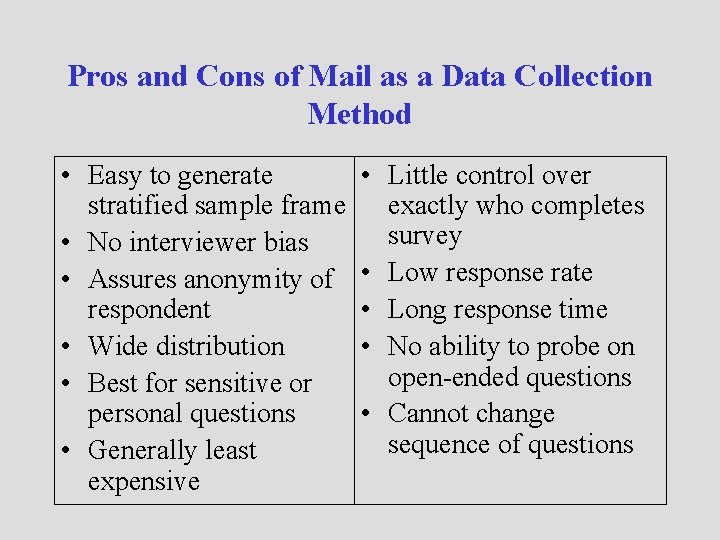
Pros and Cons of Mail as a Data Collection Method • Easy to generate stratified sample frame • No interviewer bias • Assures anonymity of respondent • Wide distribution • Best for sensitive or personal questions • Generally least expensive • Little control over exactly who completes survey • Low response rate • Long response time • No ability to probe on open-ended questions • Cannot change sequence of questions
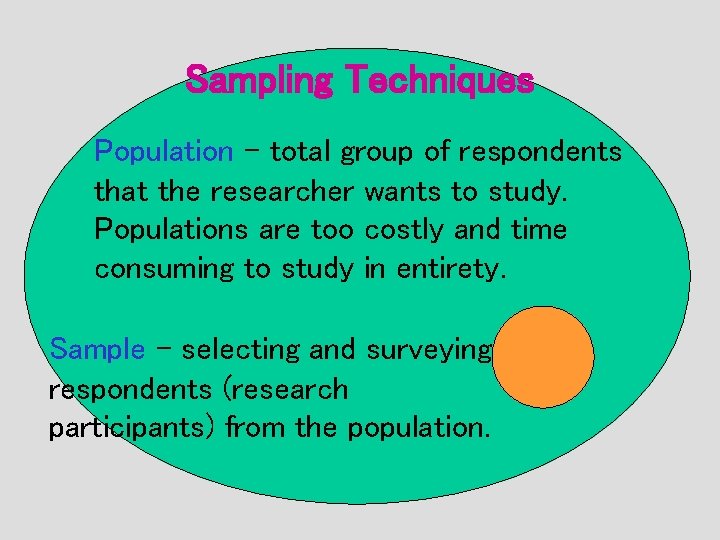
Sampling Techniques Population - total group of respondents that the researcher wants to study. Populations are too costly and time consuming to study in entirety. Sample - selecting and surveying respondents (research participants) from the population.
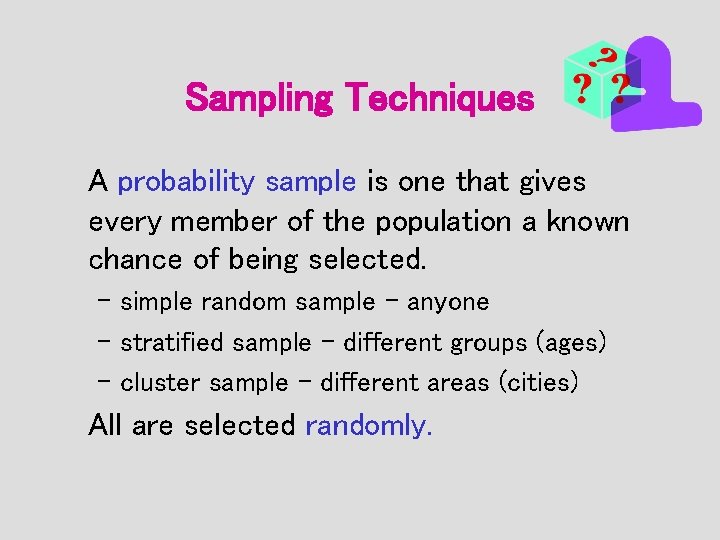
Sampling Techniques A probability sample is one that gives every member of the population a known chance of being selected. – simple random sample - anyone – stratified sample - different groups (ages) – cluster sample - different areas (cities) All are selected randomly.
Sampling Techniques A non-probability sample is an arbitrary grouping that limits the use of some statistical tests. It is not selected randomly. • convenience sample - readily available • quota sample - maintain representation
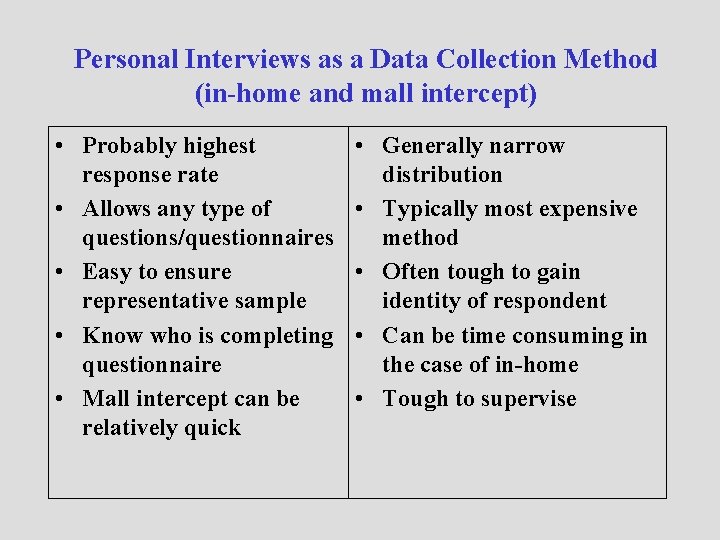
Personal Interviews as a Data Collection Method (in-home and mall intercept) • Probably highest response rate • Allows any type of questions/questionnaires • Easy to ensure representative sample • Know who is completing questionnaire • Mall intercept can be relatively quick • Generally narrow distribution • Typically most expensive method • Often tough to gain identity of respondent • Can be time consuming in the case of in-home • Tough to supervise
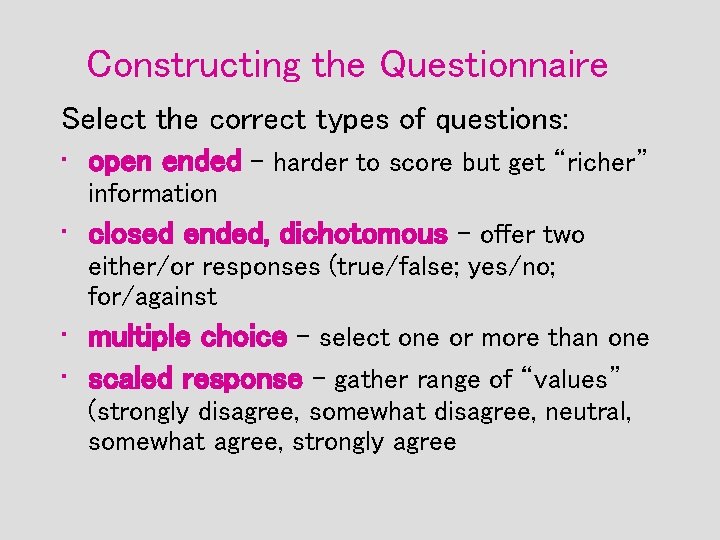
Constructing the Questionnaire Select the correct types of questions: • open ended – harder to score but get “richer” information • closed ended, dichotomous – offer two either/or responses (true/false; yes/no; for/against • multiple choice – select one or more than one • scaled response – gather range of “values” (strongly disagree, somewhat disagree, neutral, somewhat agree, strongly agree
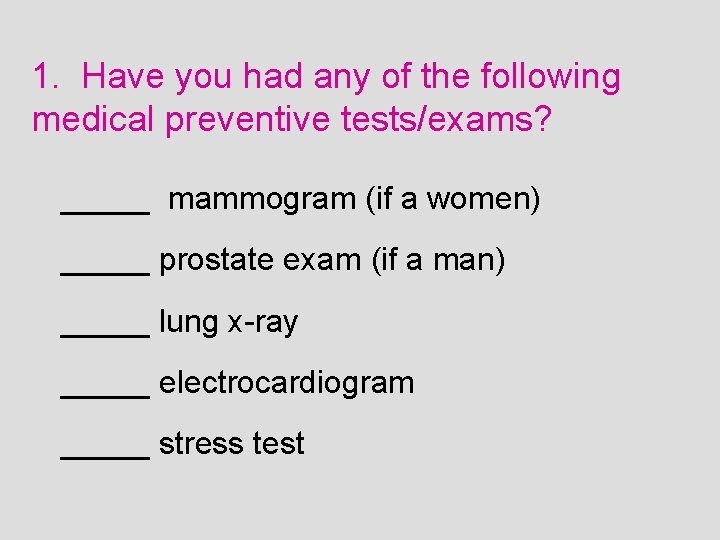
1. Have you had any of the following medical preventive tests/exams? _____ mammogram (if a women) _____ prostate exam (if a man) _____ lung x-ray _____ electrocardiogram _____ stress test
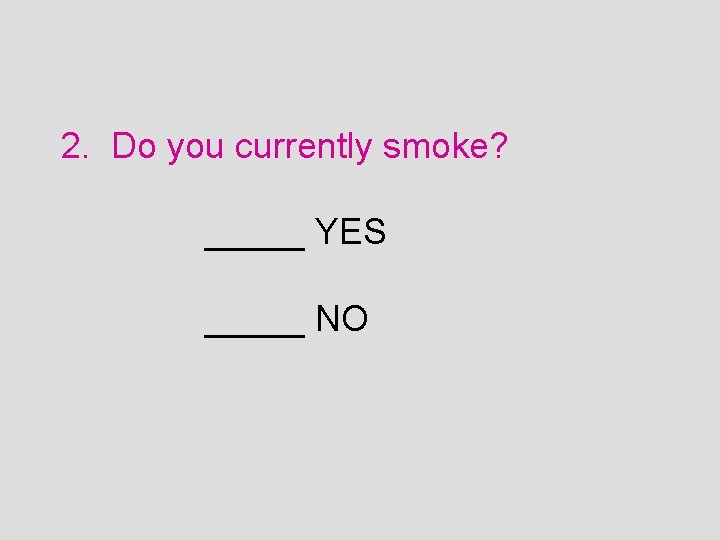
2. Do you currently smoke? _____ YES _____ NO
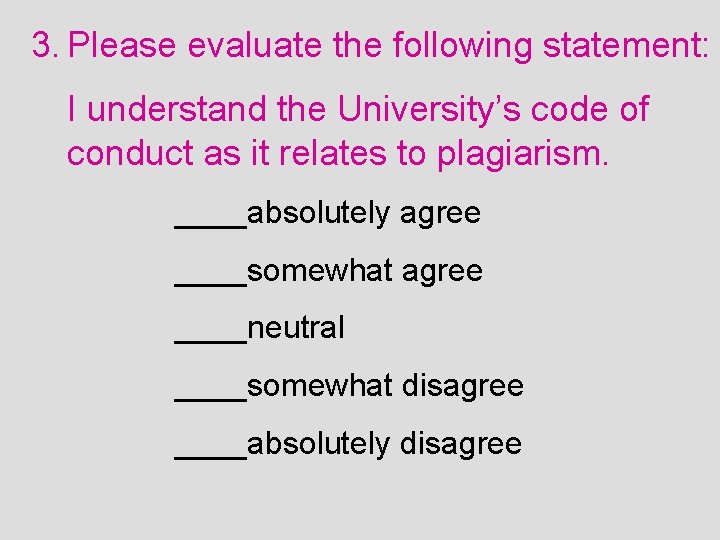
3. Please evaluate the following statement: I understand the University’s code of conduct as it relates to plagiarism. ____absolutely agree ____somewhat agree ____neutral ____somewhat disagree ____absolutely disagree
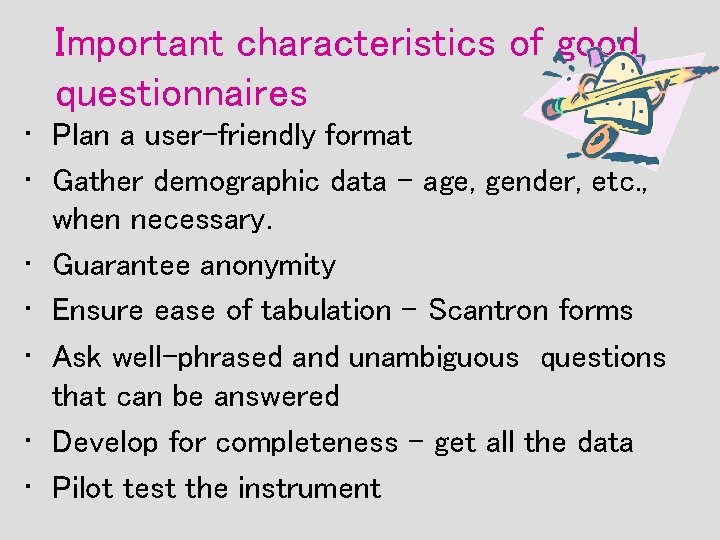
Important characteristics of good questionnaires • Plan a user-friendly format • Gather demographic data – age, gender, etc. , when necessary. • Guarantee anonymity • Ensure ease of tabulation – Scantron forms • Ask well-phrased and unambiguous questions that can be answered • Develop for completeness – get all the data • Pilot test the instrument
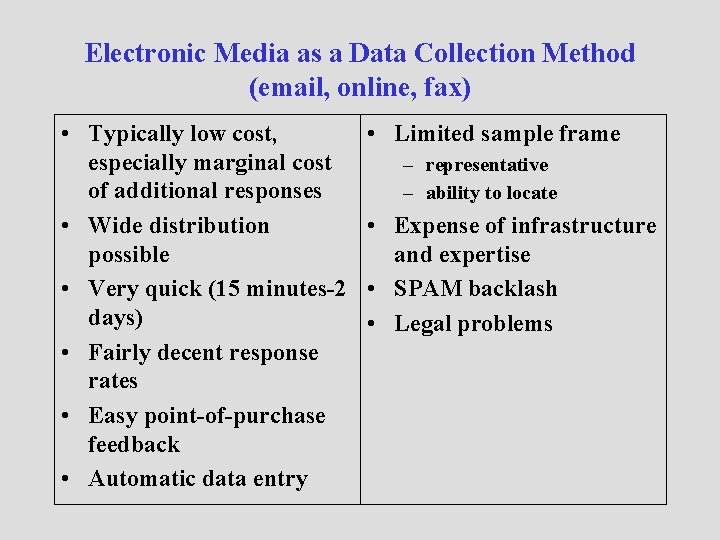
Electronic Media as a Data Collection Method (email, online, fax) • Typically low cost, especially marginal cost of additional responses • Wide distribution possible • Very quick (15 minutes-2 days) • Fairly decent response rates • Easy point-of-purchase feedback • Automatic data entry • Limited sample frame – representative – ability to locate • Expense of infrastructure and expertise • SPAM backlash • Legal problems
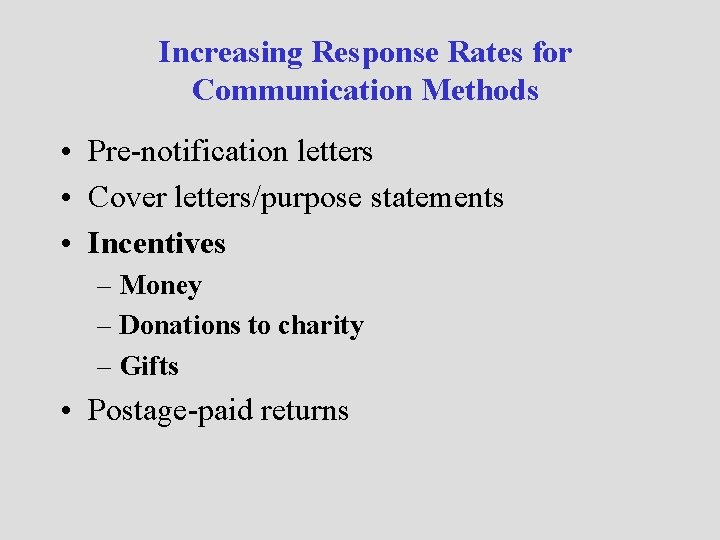
Increasing Response Rates for Communication Methods • Pre-notification letters • Cover letters/purpose statements • Incentives – Money – Donations to charity – Gifts • Postage-paid returns
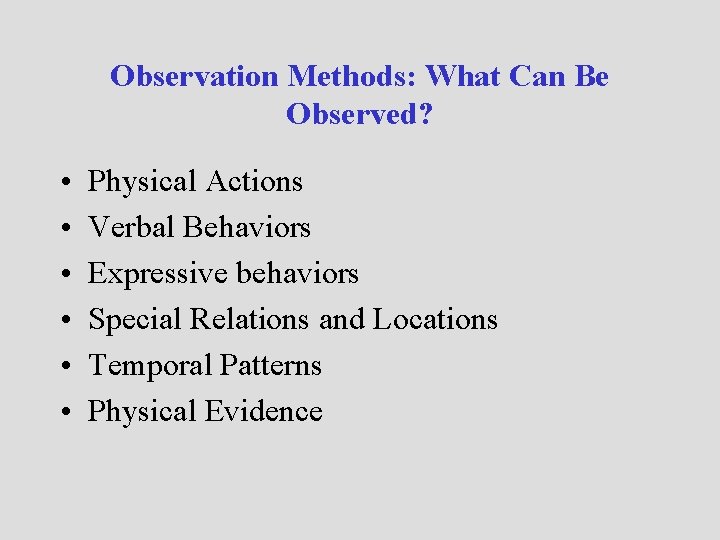
Observation Methods: What Can Be Observed? • • • Physical Actions Verbal Behaviors Expressive behaviors Special Relations and Locations Temporal Patterns Physical Evidence
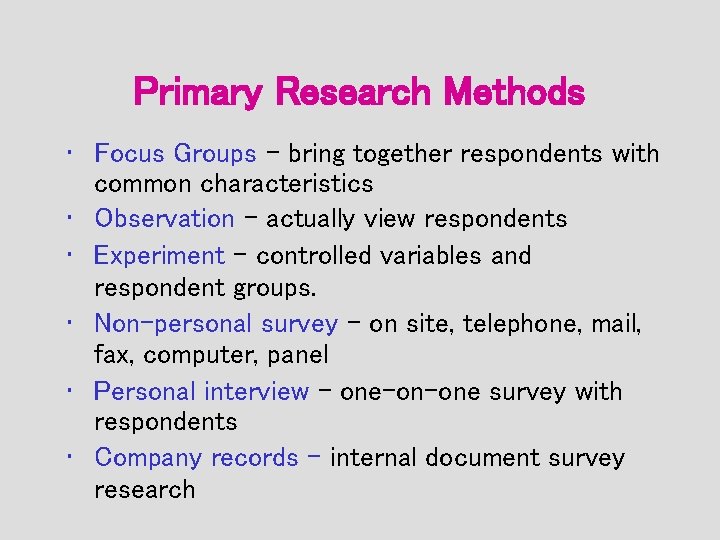
Primary Research Methods • Focus Groups – bring together respondents with common characteristics • Observation - actually view respondents • Experiment - controlled variables and respondent groups. • Non-personal survey – on site, telephone, mail, fax, computer, panel • Personal interview - one-on-one survey with respondents • Company records – internal document survey research
THANKYOU