
Pricing the Product Chapter Objectives Explain the importance
Pricing the Product
Chapter Objectives • Explain the importance of pricing and how prices can take both monetary and nonmonetary forms • Understand the pricing objectives marketers typically have in planning pricing strategies • Describe how marketers use costs, demands, and revenue to make pricing decisions • Understand some of the environmental factors that affect pricing strategies 2
Chapter Objectives (cont’d) • Understand key pricing strategies • Explain pricing tactics for single and multiple products, and for pricing on the Internet • Understand the opportunities for Internet pricing strategies • Describe the psychological, legal, and ethical aspects of pricing 3

“Yes, but what does it cost? ” • Price: the assignment of value, or the amount the consumer must exchange to receive the offering Money, goods, services, favors, votes, or anything else that has value to the other party 4

Figure 11. 1: Steps in Price Planning 5
Step 1: Develop Pricing Objectives • Sales or market share objectives Ø Pricing strategy change to support a 5% increase in sales • Profit objectives Ø Prices should increase profit 8%. . etc. important for Fad products. • Competitive effect objectives Ø Alter pricing to increase sales during competitors entering the market / maintain low-price to stop new entrants. • Customer satisfaction objectives Ø Match expectations/ simplify price structure to simplify decision making. • Image enhancement objectives Ø Reflect the increased emphasis on product’s quality image. 6
Step 2: Estimate Demand • Demand: customers’ desires for a product How much of a product are customers willing to buy as its price goes up or down? 7
Demand Curves • Law of demand: as price goes up, quantity demanded goes down. • For prestige products, a price increase may actually result in an increase in quantity demanded. 8
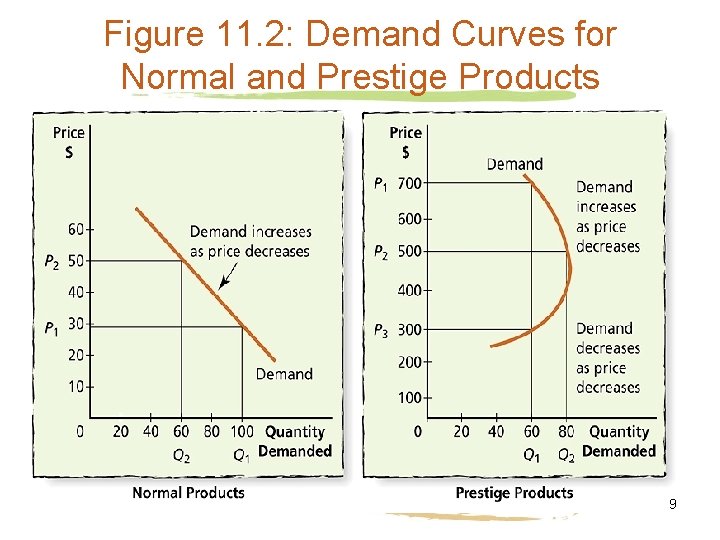
Figure 11. 2: Demand Curves for Normal and Prestige Products 9
Shifts in Demand Curve Changes in marketing strategy (improved product, new advertising) or non-marketing activities can cause upward or downward shifts in demand. At a given price, demand is greater or less than before the shift. 10
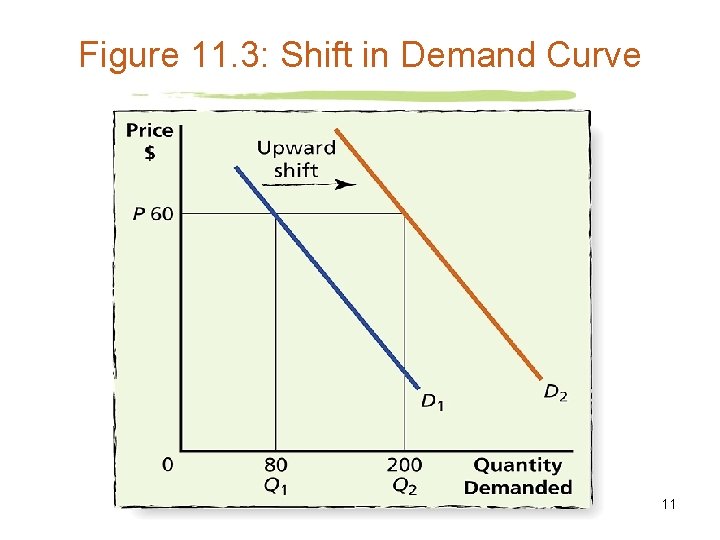
Figure 11. 3: Shift in Demand Curve 11
Estimating Demand • Marketers predict total demand by estimating potential buyers for a product, then multiplying number of buyers times average amount of each buyer’s purchase. • Then they predict what the company’s share of the total market will be. 12
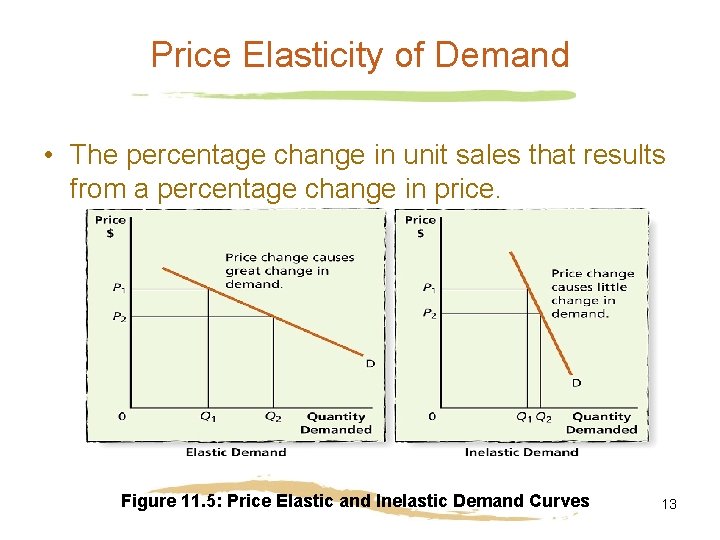
Price Elasticity of Demand • The percentage change in unit sales that results from a percentage change in price. Figure 11. 5: Price Elastic and Inelastic Demand Curves 13
Elastic Demand • A change in price results in a substantial change in quantity demanded. - If price is increased, revenues decrease, and vice-versa. - Non-necessities (pizza) generate elastic demand. - Availability of close substitute products facilitates elastic demand. 14
Inelastic Demand • A change in price has little or no effect on quantity demanded. Ø If price is increased, revenues increase. Ø The demand for necessities (food and electricity) is generally inelastic. 15
Cross-elasticity of Demand • Changes in prices of other products affect a product’s demand. Ø Products are substitutes: increase in price of one will increase demand for other (bananas vs. strawberries). Ø One product is essential for use of second: increase in price of one decreases demand for other (increasing price of gas lowers demand for tires). 16
Step 3: Determine Costs • Variable costs: costs of production that are tied to and vary depending on the number of units produced. Ø Average variable costs may change as the number of products produced changes. 17
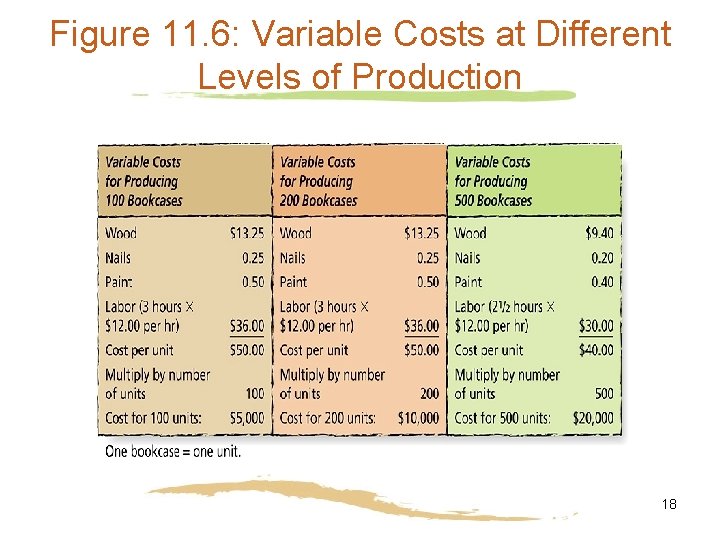
Figure 11. 6: Variable Costs at Different Levels of Production 18
Step 3: Determine Costs (cont’d) • Fixed costs: costs of production that don’t change with number of units produced Rent, cost of owning/maintaining factory, utilities, equipment, fixed salaries of firm’s executives Average fixed cost: fixed cost per unit (total fixed costs divided by number of units produced) will decrease as number of units produced increases. 19
Step 3: Determine Costs (cont’d) • Total costs: total of fixed costs and variable costs for a set number of units produced. 20
Break-Even Analysis • A method for determining the number of units a firm must produce and sell at a given price to cover all its costs. • Break-even point: point at which a firm doesn’t lose any money and doesn’t make any profit. 21
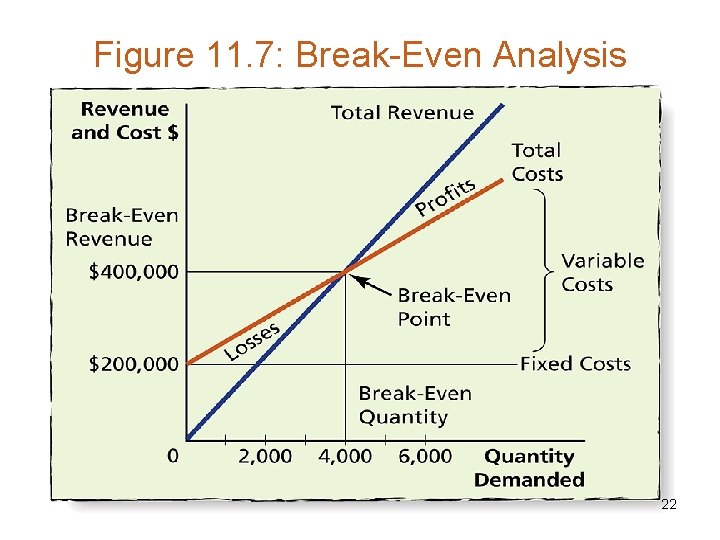
Figure 11. 7: Break-Even Analysis 22
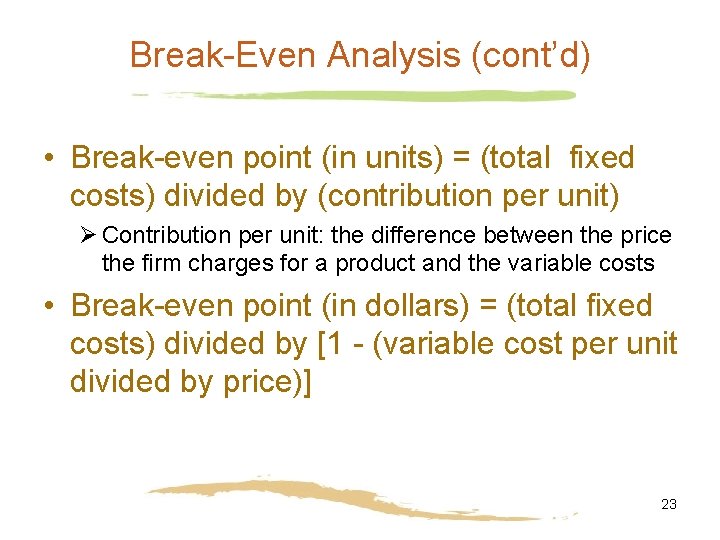
Break-Even Analysis (cont’d) • Break-even point (in units) = (total fixed costs) divided by (contribution per unit) Ø Contribution per unit: the difference between the price the firm charges for a product and the variable costs • Break-even point (in dollars) = (total fixed costs) divided by [1 - (variable cost per unit divided by price)] 23
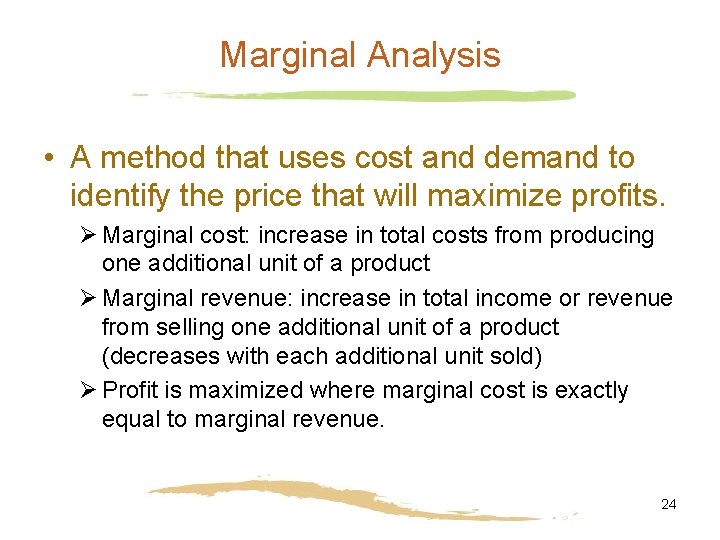
Marginal Analysis • A method that uses cost and demand to identify the price that will maximize profits. Ø Marginal cost: increase in total costs from producing one additional unit of a product Ø Marginal revenue: increase in total income or revenue from selling one additional unit of a product (decreases with each additional unit sold) Ø Profit is maximized where marginal cost is exactly equal to marginal revenue. 24
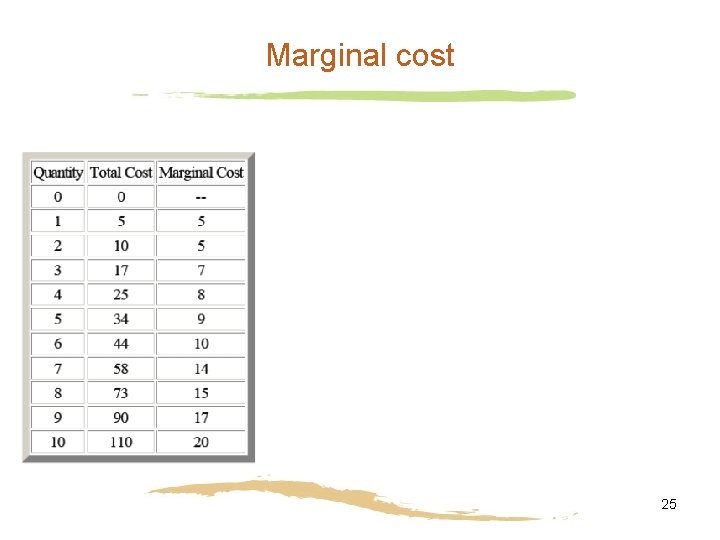
Marginal cost 25
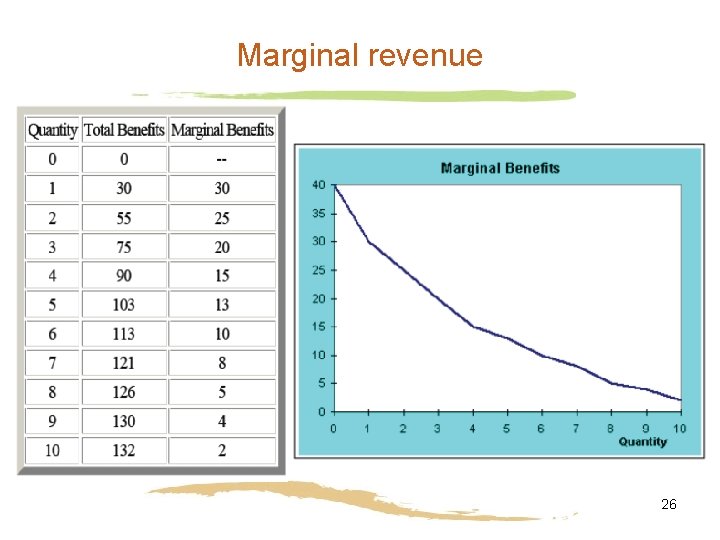
Marginal revenue 26
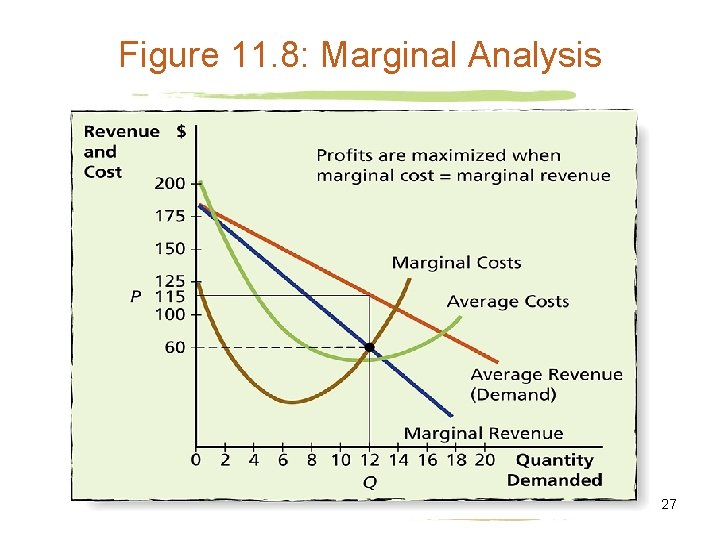
Figure 11. 8: Marginal Analysis 27
Marketing Math Activity • You and your friend have decided to go into business together manufacturing handbags. Ø --You know fixed costs will be $120, 000 a year, and you expect variable costs to be $28 per bag. Ø --If you plan to sell the bags to retail stores for $35, how many must you sell to break even? 28
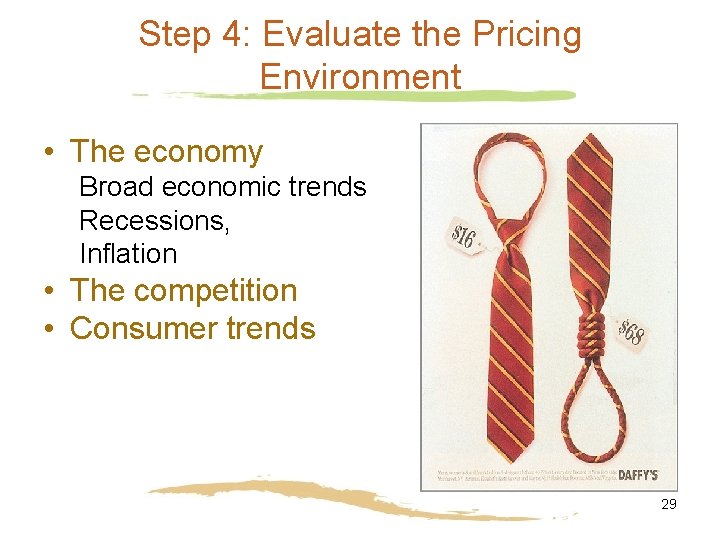
Step 4: Evaluate the Pricing Environment • The economy Broad economic trends Recessions, Inflation • The competition • Consumer trends 29
Step 5: Choose a Price Strategy • Pricing strategies based on cost Simple to calculate and relatively risk free Cost-plus pricing: total all product costs and add markup 30
Step 5: Choose a Price Strategy (cont’d) • Pricing strategies based on demand Ø Based on estimate of quantity a firm can sell at different prices Ø Target costing: identify quality and functionality customers need and price they’re willing to pay before designing product. Ø Yield management pricing: charge different prices to different customers to manage capacity PRICELINE. COM 31
Step 5: Choose a Price Strategy (cont’d) • Pricing strategies based on the competition Ø Pricing near, at, above, or below the competition Ø Price leadership strategy: industry giant announces price, and competitors get in line or drop out 32
Step 5: Choose a Price Strategy (cont’d) • Pricing strategies based on customers’ needs Ø Value pricing or everyday low pricing (EDLP): pricing strategy in which a firm sets prices that provide ultimate value to customers. 33
Step 5: Choose a Price Strategy (cont’d) • New-product pricing Skimming price: a very high premium price Penetration pricing: a very low price to encourage more customers to purchase Trial pricing: low price for a limited period of time HP FINANCIAL CALCULATORS 34
Discussion • In pricing new products, marketers may choose a skimming or a penetration pricing strategy. Ø --What is the advantage or disadvantage of this practice for consumers? Ø --For the industry as a whole? 35

Step 6: Develop Pricing Tactics • Pricing for individual products Two-part pricing: offering two separate types of payments to purchase the product Payment pricing: breaking total price into smaller amounts payable over time 36
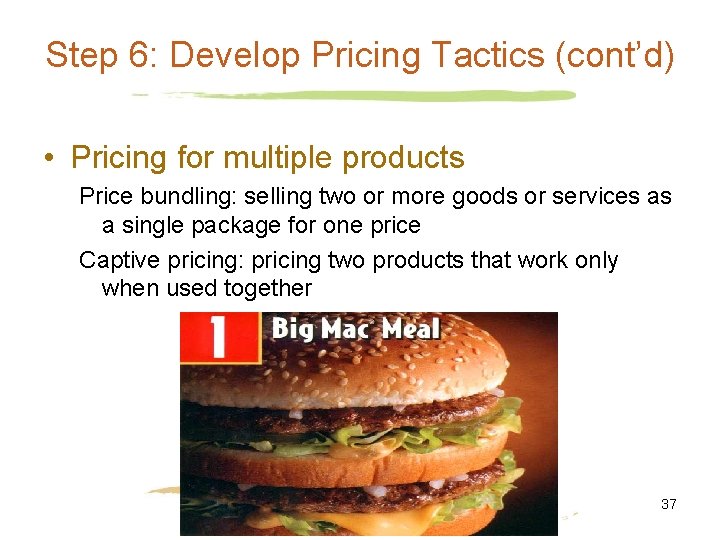
Step 6: Develop Pricing Tactics (cont’d) • Pricing for multiple products Price bundling: selling two or more goods or services as a single package for one price Captive pricing: pricing two products that work only when used together 37
Step 6: Develop Pricing Tactics (cont’d) • Distribution-based pricing Ø F. O. B. (free on board) origin pricing Ø F. O. B delivered pricing Ø CIF (Cost, insurance, freight) Ø CFR (Cost & freight) Ø CIP (Carriage and insurance paid to) CPT (carriage paid to) Ø Basing-point pricing Ø Uniform delivered pricing Ø Freight absorption pricing 38
Step 6: Develop Pricing Tactics (cont’d) • Discounting for channel members Ø List price (suggested retail price): price that manufacturer sets as appropriate for end consumer to pay Ø Trade or functional discounts: set percentage discounts off list price for each channel level Ø Quantity discounts: reduced prices for purchases of larger quantities 39
Step 6: Develop Pricing Tactics (cont’d) • Discounting for channel members (continued) Cash discounts: enticements to customers to pay bills quickly (2% 10 days, net 30 days) Seasonal discounts: price reductions offered during certain times of year 40
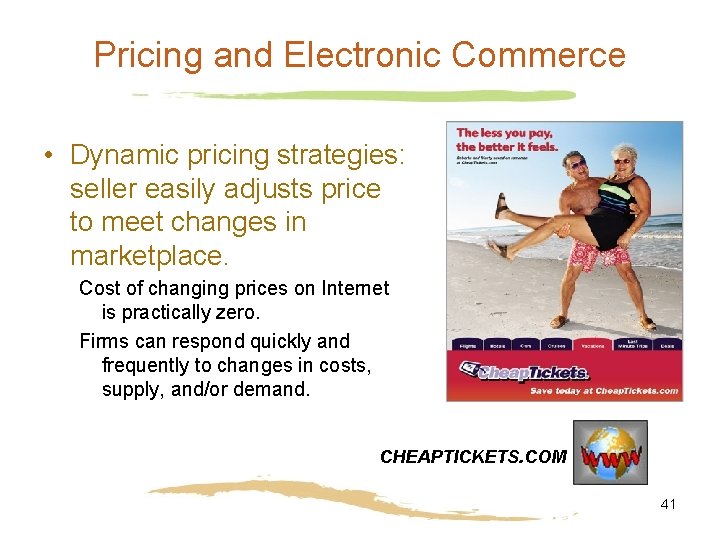
Pricing and Electronic Commerce • Dynamic pricing strategies: seller easily adjusts price to meet changes in marketplace. Cost of changing prices on Internet is practically zero. Firms can respond quickly and frequently to changes in costs, supply, and/or demand. CHEAPTICKETS. COM 41
Pricing and Electronic Commerce (cont’d) • Online auctions (e. Bay. com) Ø E-commerce allows shoppers to purchase products through online bidding. • Pricing advantages for online shoppers Ø Consumers gain control. Ø Search engines and “shopbots” make customers more price-sensitive. Ø Consumers have more negotiating power. 42
Psychological Issues in Pricing • Buyer’s pricing expectation Ø Internal reference price: consumers use a price/price range to evaluate product’s cost. • Assimilation effect • Contrast effect Ø Price/quality inferences: consumers assume higherpriced product has higher quality. 43
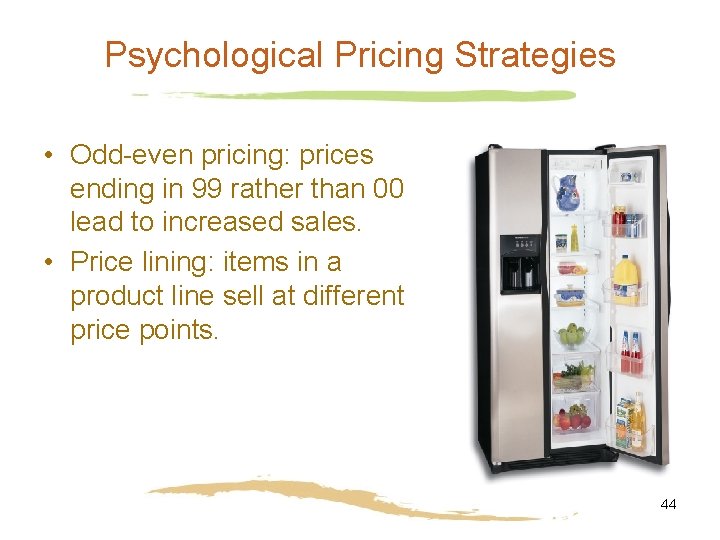
Psychological Pricing Strategies • Odd-even pricing: prices ending in 99 rather than 00 lead to increased sales. • Price lining: items in a product line sell at different price points. 44

Legal and Ethical Considerations in Pricing • Deceptive pricing practices Ø Going-out-of-business sale Ø Bait-and-switch • Unfair sales acts Ø Loss-leader pricing Ø Unfair sales acts • Illegal business-to-business price discrimination 45
Discussion • In loss-leader pricing, retailers advertise and sell an item below cost to get customers into the store. Ø --Do you consider this an unethical practice? Ø --Who benefits and who is hurt by it? Ø --Should the practice be made illegal (some states have done so)? Ø --How is loss-leader pricing different from bait-andswitch pricing? 46
Legal and Ethical Considerations in Pricing (cont’d) • Price fixing: two or more companies conspire to keep prices at a certain level Horizontal price fixing Vertical price fixing • Predatory pricing: company sets a very low price for purpose of driving competitors out of business 47
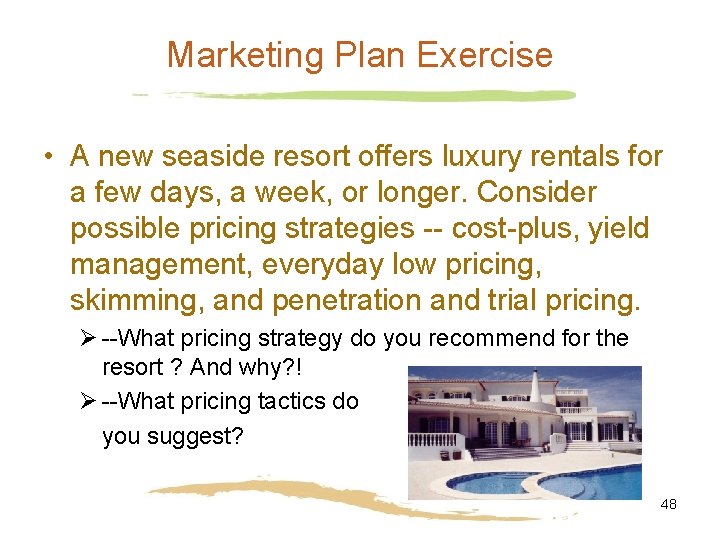
Marketing Plan Exercise • A new seaside resort offers luxury rentals for a few days, a week, or longer. Consider possible pricing strategies -- cost-plus, yield management, everyday low pricing, skimming, and penetration and trial pricing. Ø --What pricing strategy do you recommend for the resort ? And why? ! Ø --What pricing tactics do you suggest? 48
- Slides: 48