
Pricing Products Pricing Considerations Approaches and Strategy 2006
- Slides: 29
Pricing Products: Pricing Considerations, Approaches, and Strategy © 2006 Pearson Education, Inc. Upper Saddle River, NJ 07458 Marketing for Hospitality and Tourism, 4 th edition Kotler, Bowen, and Makens
PRICE • Price is the amount of money charged for a good or service • The only marketing mix element that produces revenue • Changing too much chases away potential customers, charging too little cuts revenue © 2006 Pearson Education, Inc. Upper Saddle River, NJ 07458 Marketing for Hospitality and Tourism, 4 th edition Kotler, Bowen, and Makens
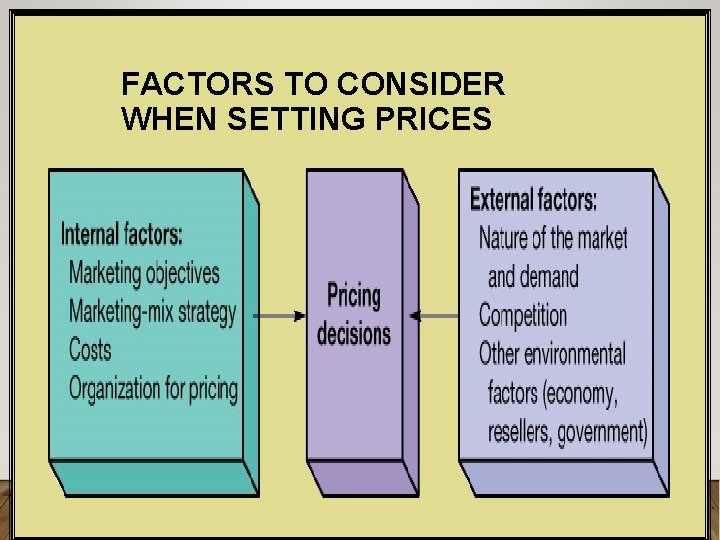
FACTORS TO CONSIDER WHEN SETTING PRICES © 2006 Pearson Education, Inc. Upper Saddle River, NJ 07458 Marketing for Hospitality and Tourism, 4 th edition Kotler, Bowen, and Makens
INTERNAL FACTORS • Marketing Objectives • Survival • Current Profit Maximization • Market-Share Leadership • Brand Equity Growth • Product-Quality Leadership © 2006 Pearson Education, Inc. Upper Saddle River, NJ 07458 Marketing for Hospitality and Tourism, 4 th edition Kotler, Bowen, and Makens
INTERNAL FACTORS • Marketing Mix Strategy • Costs • Fixed vs. Variable Costs • Organizational Considerations © 2006 Pearson Education, Inc. Upper Saddle River, NJ 07458 Marketing for Hospitality and Tourism, 4 th edition Kotler, Bowen, and Makens
EXTERNAL FACTORS AFFECTING PRICING DECISIONS • Market and Demand • Cross Selling and Up-selling • Consumer Perceptions of Price and Value © 2006 Pearson Education, Inc. Upper Saddle River, NJ 07458 Marketing for Hospitality and Tourism, 4 th edition Kotler, Bowen, and Makens
EXTERNAL FACTORS AFFECTING PRICING DECISIONS • Analyzing the Price – Demand Relationship • Price Elasticity of Demand • Factors Affecting Price Sensitivity © 2006 Pearson Education, Inc. Upper Saddle River, NJ 07458 Marketing for Hospitality and Tourism, 4 th edition Kotler, Bowen, and. Makens
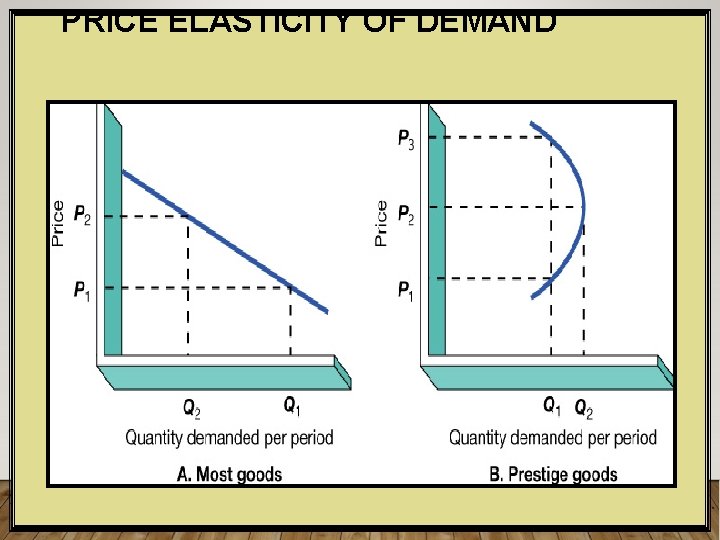
PRICE ELASTICITY OF DEMAND © 2006 Pearson Education, Inc. Upper Saddle River, NJ 07458 Marketing for Hospitality and Tourism, 4 th edition Kotler, Bowen, and Makens
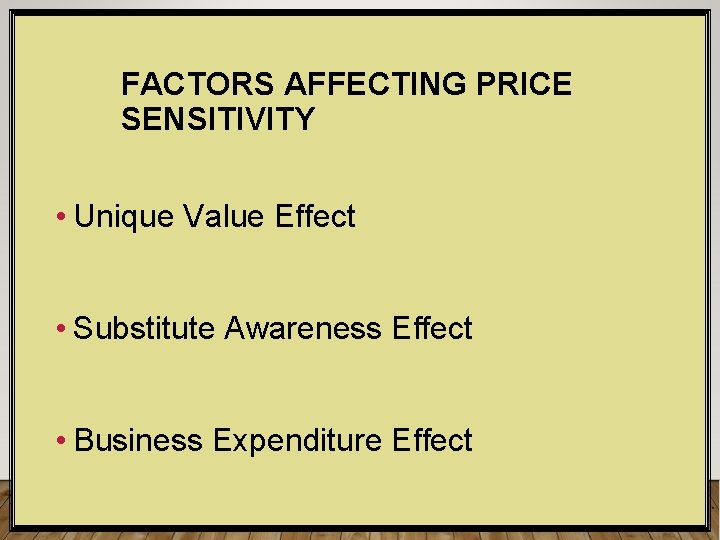
FACTORS AFFECTING PRICE SENSITIVITY • Unique Value Effect • Substitute Awareness Effect • Business Expenditure Effect © 2006 Pearson Education, Inc. Upper Saddle River, NJ 07458 Marketing for Hospitality and Tourism, 4 th edition Kotler, Bowen, and Makens
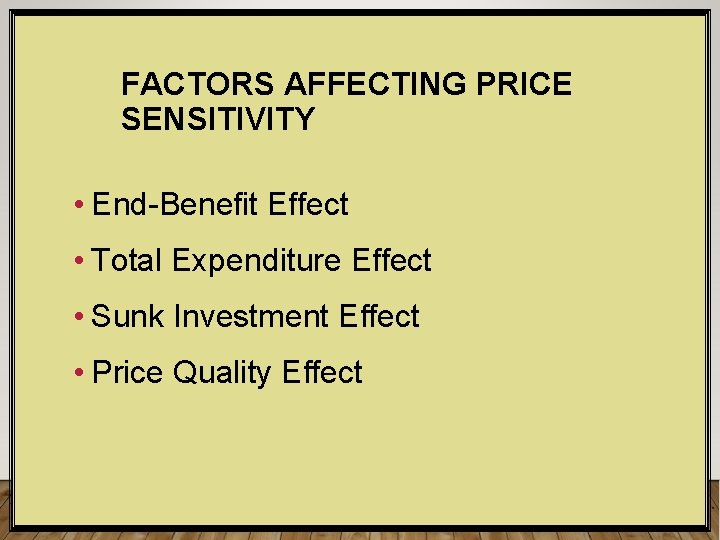
FACTORS AFFECTING PRICE SENSITIVITY • End-Benefit Effect • Total Expenditure Effect • Sunk Investment Effect • Price Quality Effect © 2006 Pearson Education, Inc. Upper Saddle River, NJ 07458 Marketing for Hospitality and Tourism, 4 th edition Kotler, Bowen, and Makens
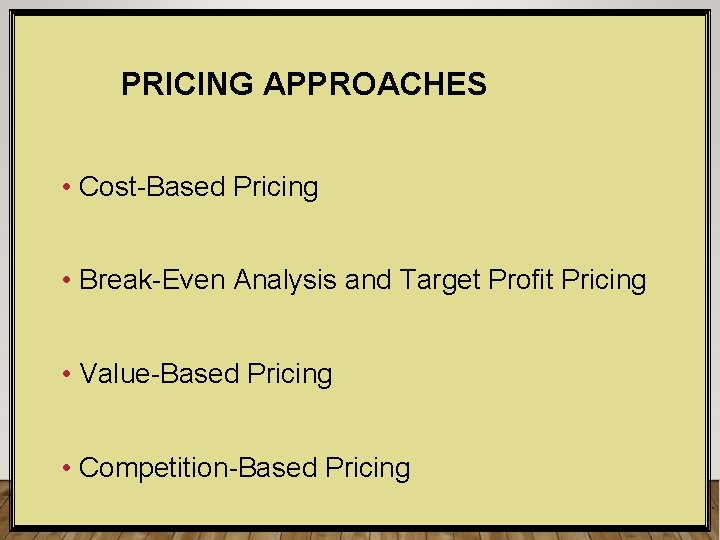
PRICING APPROACHES • Cost-Based Pricing • Break-Even Analysis and Target Profit Pricing • Value-Based Pricing • Competition-Based Pricing © 2006 Pearson Education, Inc. Upper Saddle River, NJ 07458 Marketing for Hospitality and Tourism, 4 th edition Kotler, Bowen, and Makens
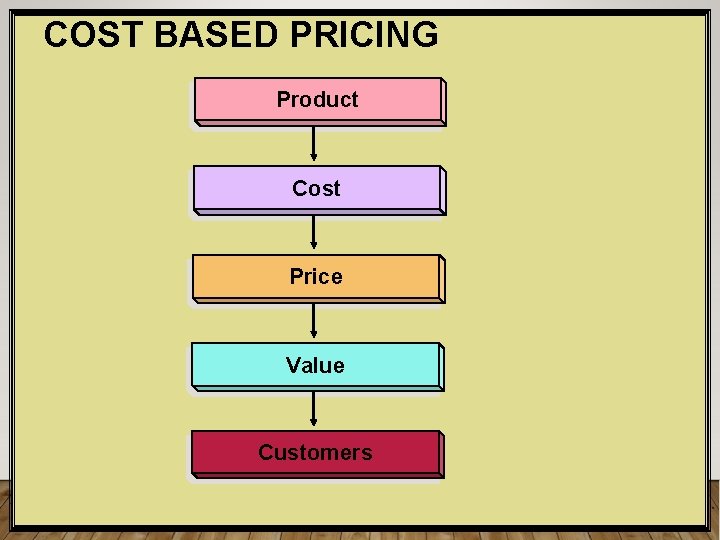
COST BASED PRICING Product Cost Price Value Customers © 2006 Pearson Education, Inc. Upper Saddle River, NJ 07458 Marketing for Hospitality and Tourism, 4 th edition Kotler, Bowen, and Makens
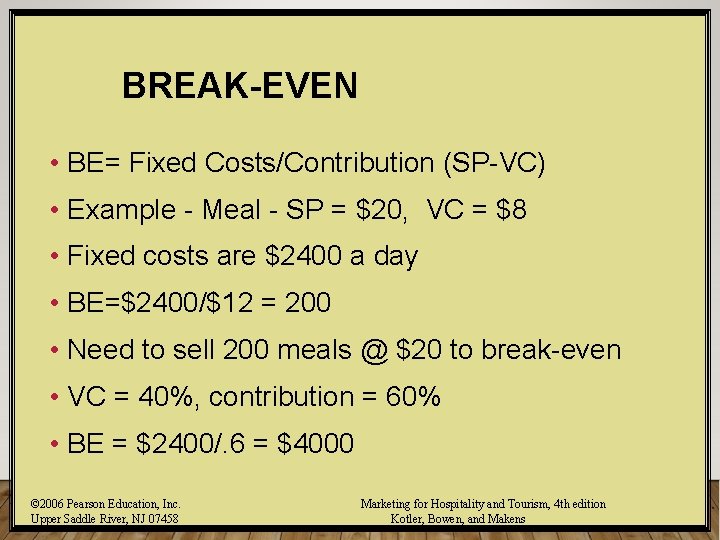
BREAK-EVEN • BE= Fixed Costs/Contribution (SP-VC) • Example - Meal - SP = $20, VC = $8 • Fixed costs are $2400 a day • BE=$2400/$12 = 200 • Need to sell 200 meals @ $20 to break-even • VC = 40%, contribution = 60% • BE = $2400/. 6 = $4000 © 2006 Pearson Education, Inc. Upper Saddle River, NJ 07458 Marketing for Hospitality and Tourism, 4 th edition Kotler, Bowen, and. Makens
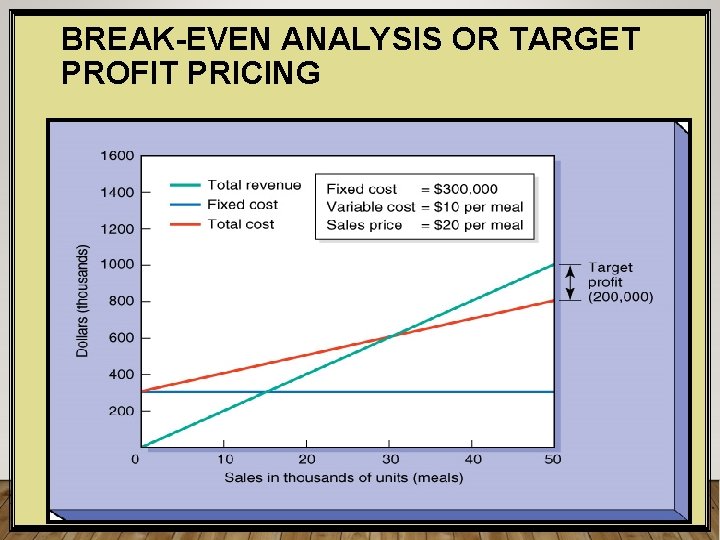
BREAK-EVEN ANALYSIS OR TARGET PROFIT PRICING © 2006 Pearson Education, Inc. Upper Saddle River, NJ 07458 Marketing for Hospitality and Tourism, 4 th edition Kotler, Bowen, and Makens
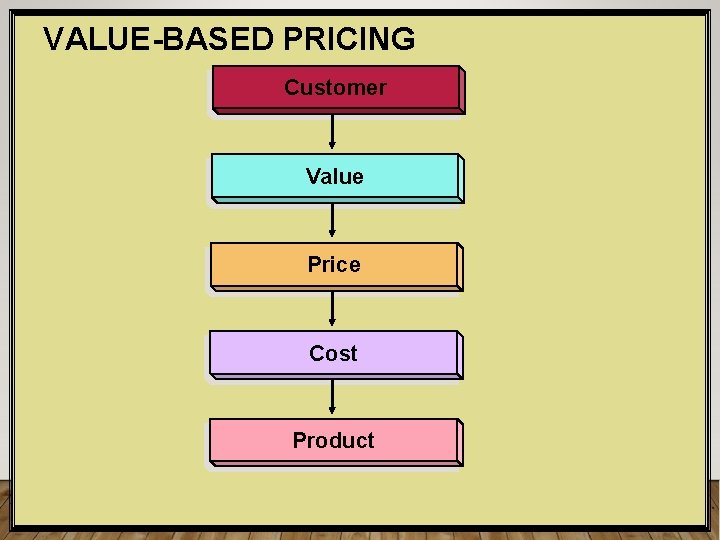
VALUE-BASED PRICING Customer Value Price Cost Product © 2006 Pearson Education, Inc. Upper Saddle River, NJ 07458 Marketing for Hospitality and Tourism, 4 th edition Kotler, Bowen, and Makens
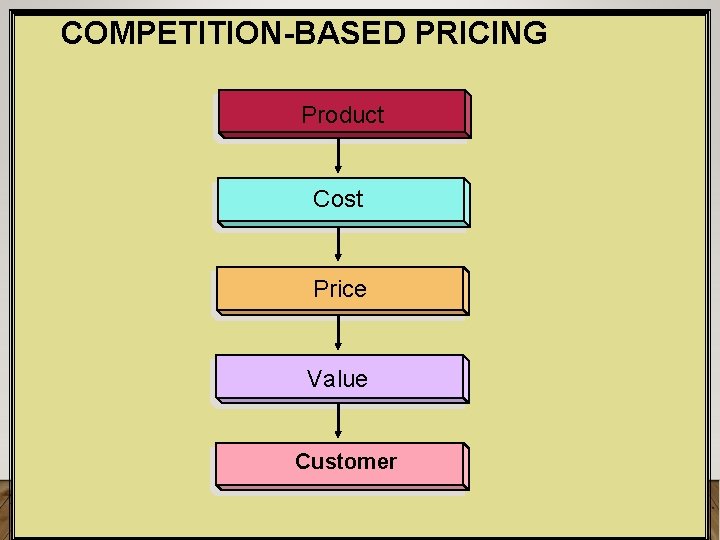
COMPETITION-BASED PRICING Product Cost Price Value Customer © 2006 Pearson Education, Inc. Upper Saddle River, NJ 07458 Marketing for Hospitality and Tourism, 4 th edition Kotler, Bowen, and Makens
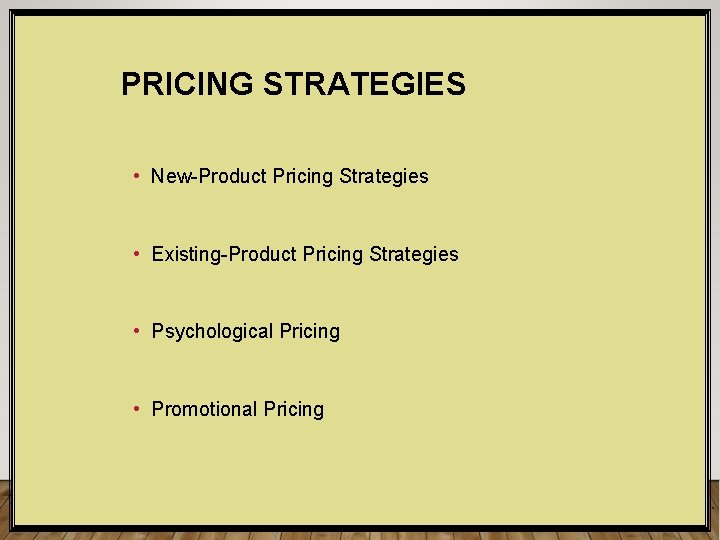
PRICING STRATEGIES • New-Product Pricing Strategies • Existing-Product Pricing Strategies • Psychological Pricing • Promotional Pricing © 2006 Pearson Education, Inc. Upper Saddle River, NJ 07458 Marketing for Hospitality and Tourism, 4 th edition Kotler, Bowen, and Makens
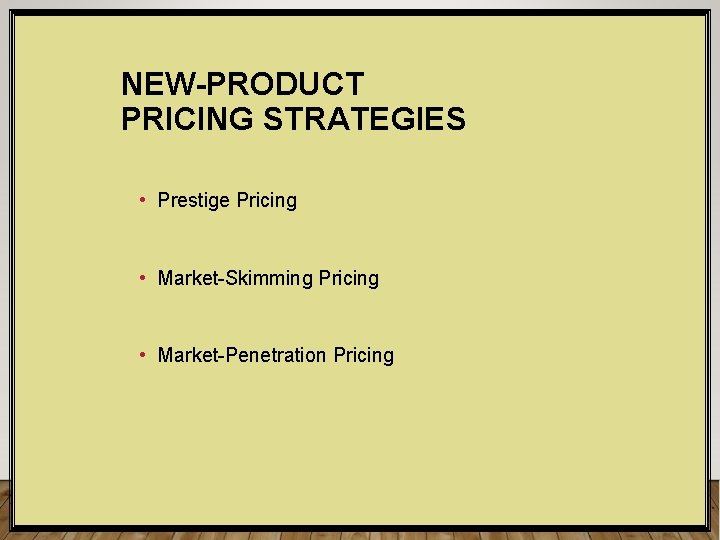
NEW-PRODUCT PRICING STRATEGIES • Prestige Pricing • Market-Skimming Pricing • Market-Penetration Pricing © 2006 Pearson Education, Inc. Upper Saddle River, NJ 07458 Marketing for Hospitality and Tourism, 4 th edition Kotler, Bowen, and Makens
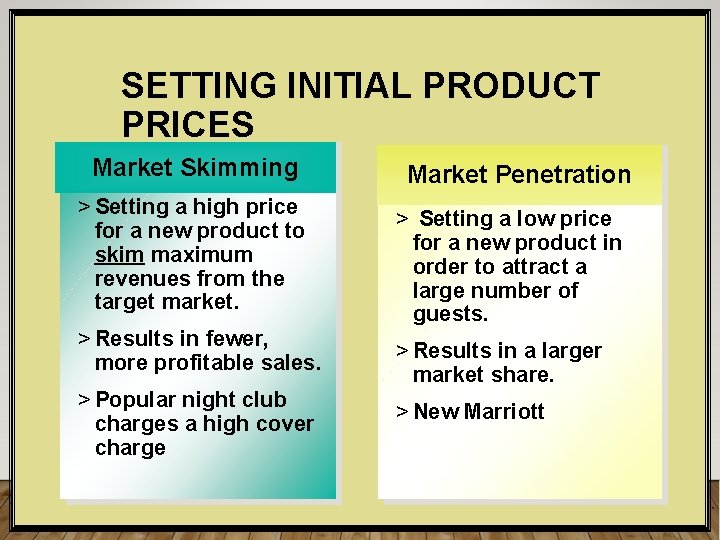
SETTING INITIAL PRODUCT PRICES Market Skimming > Setting a high price for a new product to skim maximum revenues from the target market. > Results in fewer, more profitable sales. > Popular night club charges a high cover charge © 2006 Pearson Education, Inc. Upper Saddle River, NJ 07458 Market Penetration > Setting a low price for a new product in order to attract a large number of guests. > Results in a larger market share. > New Marriott Marketing for Hospitality and Tourism, 4 th edition Kotler, Bowen, and Makens
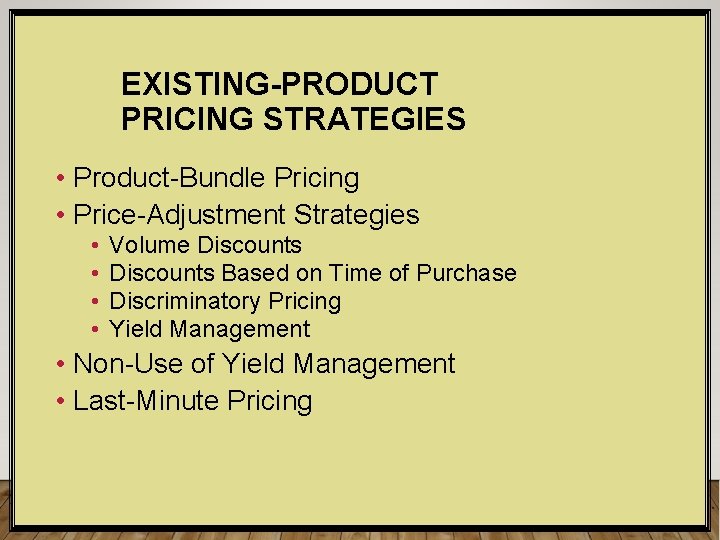
EXISTING-PRODUCT PRICING STRATEGIES • Product-Bundle Pricing • Price-Adjustment Strategies • • Volume Discounts Based on Time of Purchase Discriminatory Pricing Yield Management • Non-Use of Yield Management • Last-Minute Pricing © 2006 Pearson Education, Inc. Upper Saddle River, NJ 07458 Marketing for Hospitality and Tourism, 4 th edition Kotler, Bowen, and Makens
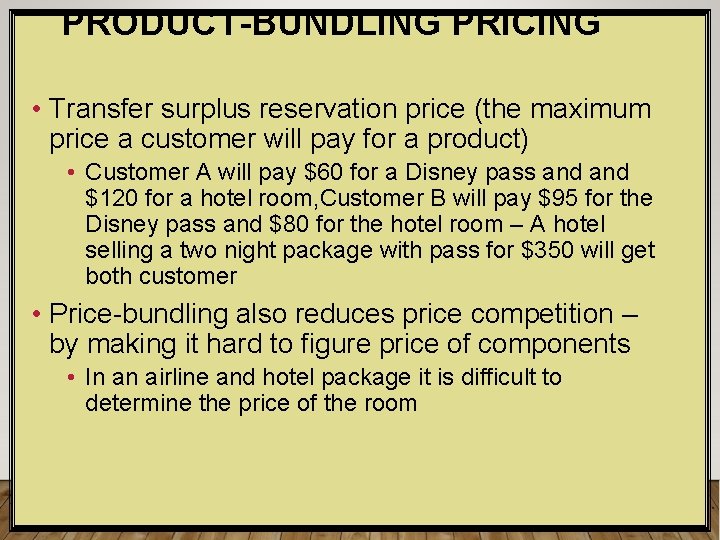
PRODUCT-BUNDLING PRICING • Transfer surplus reservation price (the maximum price a customer will pay for a product) • Customer A will pay $60 for a Disney pass and $120 for a hotel room, Customer B will pay $95 for the Disney pass and $80 for the hotel room – A hotel selling a two night package with pass for $350 will get both customer • Price-bundling also reduces price competition – by making it hard to figure price of components • In an airline and hotel package it is difficult to determine the price of the room © 2006 Pearson Education, Inc. Upper Saddle River, NJ 07458 Marketing for Hospitality and Tourism, 4 th edition Kotler, Bowen, and Makens
PSYCHOLOGICAL PRICING • Price-quality relationship • Reference prices • Rounding • Length of the field © 2006 Pearson Education, Inc. Upper Saddle River, NJ 07458 Marketing for Hospitality and Tourism, 4 th edition Kotler, Bowen, and Makens
PROMOTIONAL PRICING • Temporary pricing of products below list price and sometimes below cost • Value Pricing • Price Sensitivity Measurement © 2006 Pearson Education, Inc. Upper Saddle River, NJ 07458 Marketing for Hospitality and Tourism, 4 th edition Kotler, Bowen, and Makens
PRICE SENSITIVITY MEASUREMENT • Price Sensitivity Measurement (PSM) helps to establish a balance of price with product or service value based on consumer’s perceptions of that value. • The product or service to be cheap? • The product or service to be expensive? • The product or service to be too expensive, so expensive that you will not consider buying it? • The product or service to be too cheap, so cheap that you would question the quality? © 2006 Pearson Education, Inc. Upper Saddle River, NJ 07458 Marketing for Hospitality and Tourism, 4 th edition Kotler, Bowen, and Makens
OTHER PRICING CONSIDERATIONS • Price Spread Effect • “The highest price menu item should not be more the 2. 5 times the price of the lowest” • Price Points © 2006 Pearson Education, Inc. Upper Saddle River, NJ 07458 Marketing for Hospitality and Tourism, 4 th edition Kotler, Bowen, and Makens
INITIATING PRICE CUTS • Excess capacity • Dominate market • Increase market share © 2006 Pearson Education, Inc. Upper Saddle River, NJ 07458 Marketing for Hospitality and Tourism, 4 th edition Kotler, Bowen, and Makens
INITIATING PRICE INCREASES • Increase profits • Cost inflation • Excess demand © 2006 Pearson Education, Inc. Upper Saddle River, NJ 07458 Marketing for Hospitality and Tourism, 4 th edition Kotler, Bowen, and Makens
REACTIONS TO PRICES CHANGES • Buyer’s reaction • Competitor’s reaction • Trade Ally’s reaction © 2006 Pearson Education, Inc. Upper Saddle River, NJ 07458 Marketing for Hospitality and Tourism, 4 th edition Kotler, Bowen, and Makens
RESPONDING TO PRICE CHANGES • Why did competitor change price? • To gain market share? Use excess capacity? • Where is my product in its life cycle? • What is its importance in the company’s product mix? © 2006 Pearson Education, Inc. Upper Saddle River, NJ 07458 Marketing for Hospitality and Tourism, 4 th edition Kotler, Bowen, and Makens