
Pricing Concepts Setting the Right Price 1 The


- Slides: 33
Pricing Concepts & Setting the Right Price 1
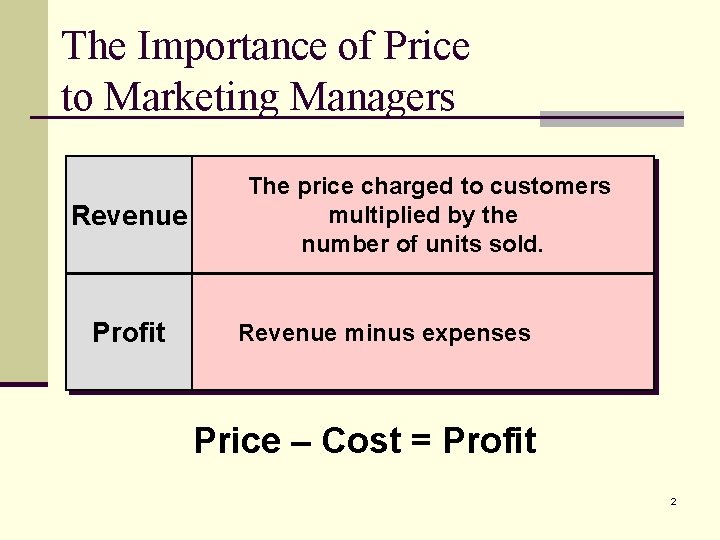
The Importance of Price to Marketing Managers Revenue Profit The price charged to customers multiplied by the number of units sold. Revenue minus expenses Price – Cost = Profit 2
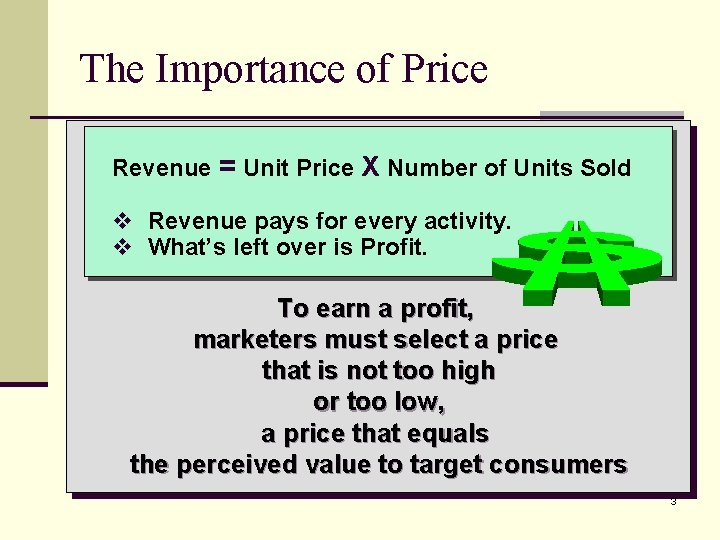
The Importance of Price Revenue = Unit Price X Number of Units Sold v Revenue pays for every activity. v What’s left over is Profit. To earn a profit, marketers must select a price that is not too high or too low, a price that equals the perceived value to target consumers 3
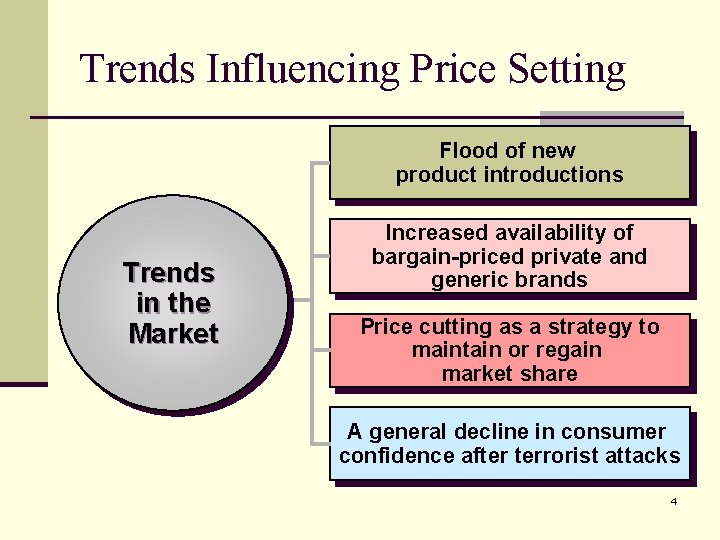
Trends Influencing Price Setting Flood of new product introductions Trends in the Market Increased availability of bargain-priced private and generic brands Price cutting as a strategy to maintain or regain market share A general decline in consumer confidence after terrorist attacks 4
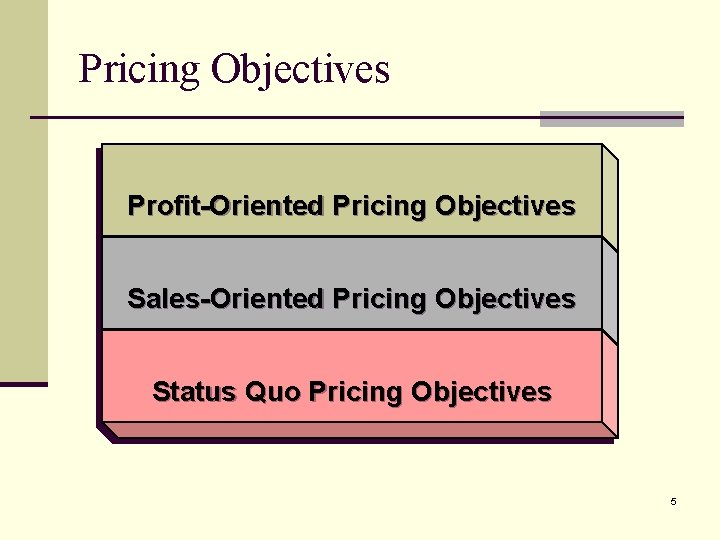
Pricing Objectives Profit-Oriented Pricing Objectives Sales-Oriented Pricing Objectives Status Quo Pricing Objectives 5
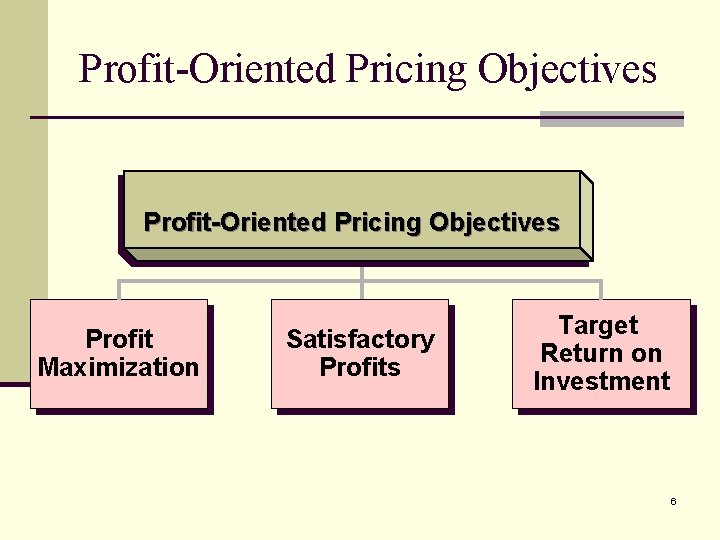
Profit-Oriented Pricing Objectives Profit Maximization Satisfactory Profits Target Return on Investment 6
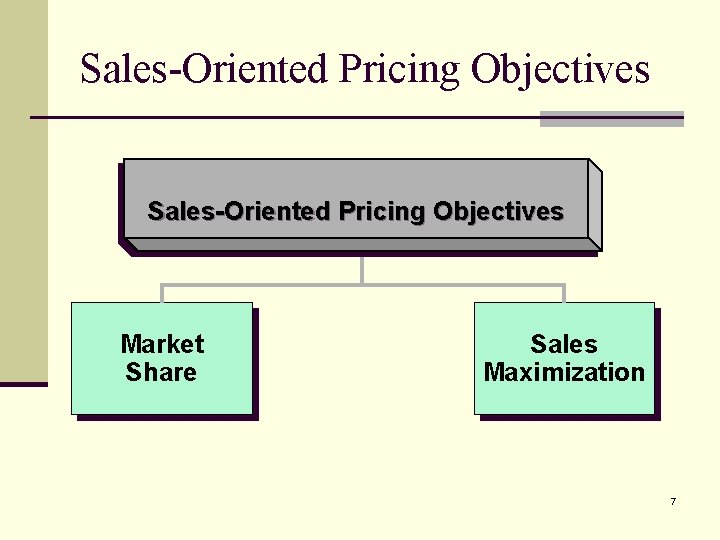
Sales-Oriented Pricing Objectives Market Share Sales Maximization 7
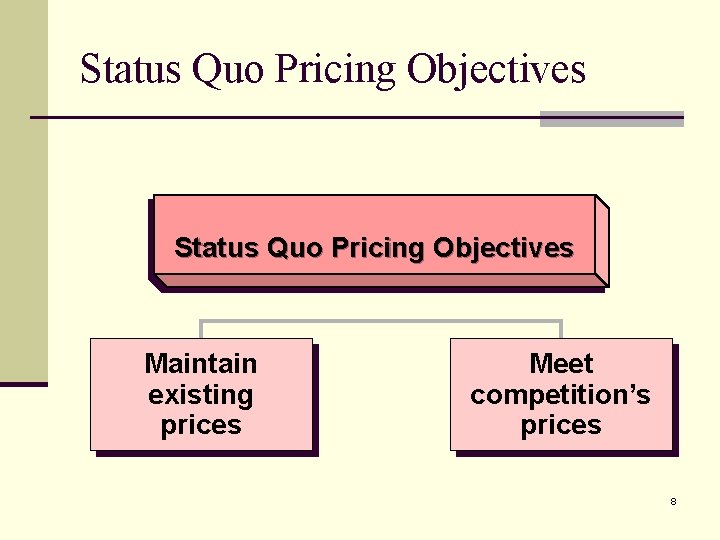
Status Quo Pricing Objectives Maintain existing prices Meet competition’s prices 8
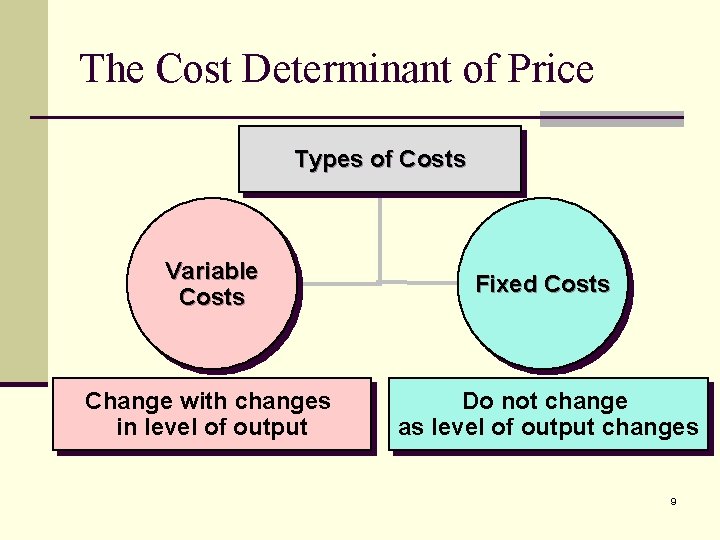
The Cost Determinant of Price Types of Costs Variable Costs Fixed Costs Change with changes in level of output Do not change as level of output changes 9
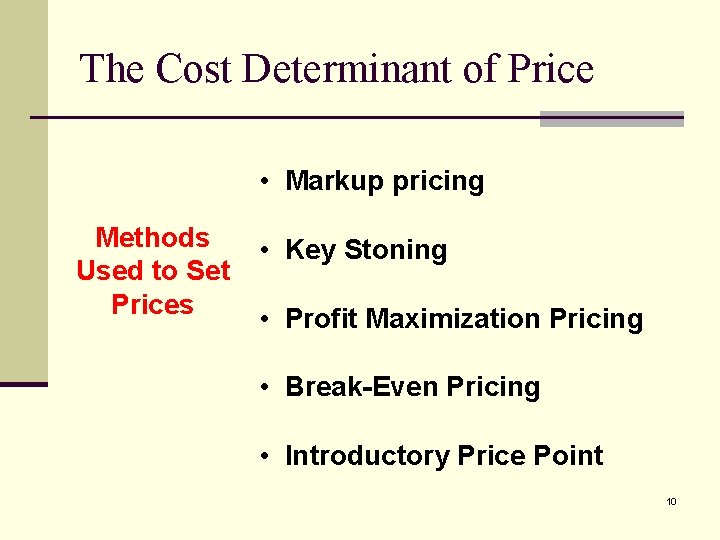
The Cost Determinant of Price • Markup pricing Methods Used to Set Prices • Key Stoning • Profit Maximization Pricing • Break-Even Pricing • Introductory Price Point 10
Markup Pricing Keystoning The cost of buying the product from the producer plus amounts for profit and for expenses not otherwise accounted for. The practice of marking up prices by 100%, or doubling the cost. 11
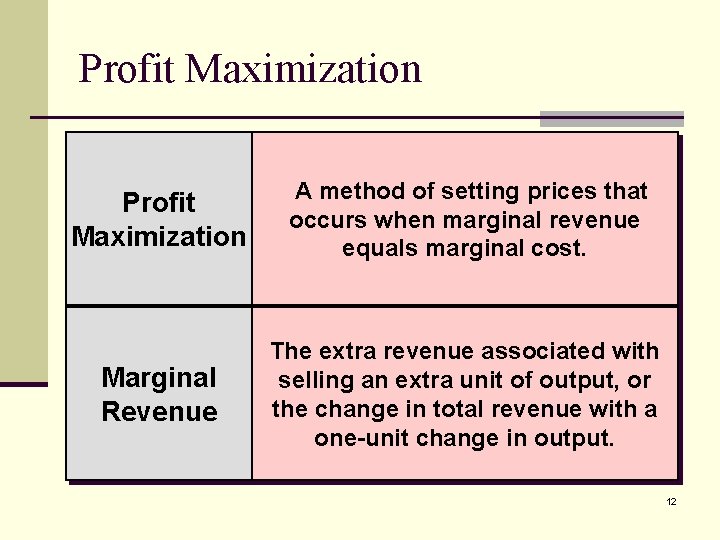
Profit Maximization A method of setting prices that occurs when marginal revenue equals marginal cost. Marginal Revenue The extra revenue associated with selling an extra unit of output, or the change in total revenue with a one-unit change in output. 12
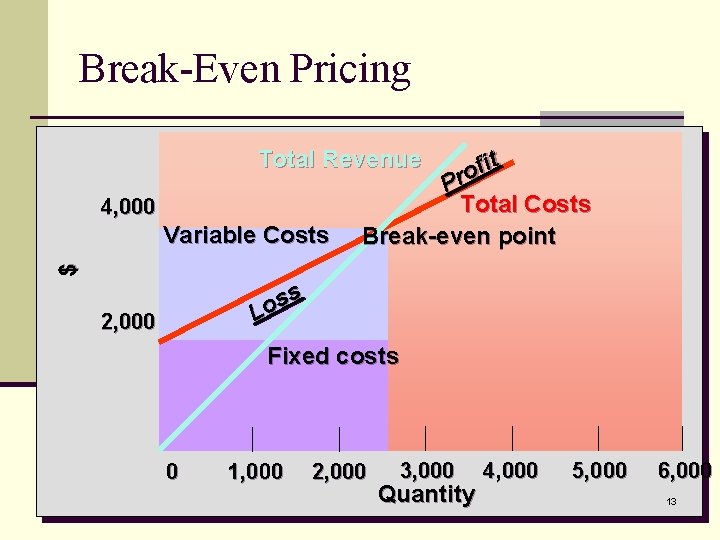
Break-Even Pricing Total Revenue 4, 000 $ Variable Costs t i f Pro Total Costs Break-even point ss o L 2, 000 Fixed costs 0 1, 000 2, 000 3, 000 Quantity 4, 000 5, 000 6, 000 13
Fixed and Variable Costs n Fixed costs do not change as production or sales quantity changes. n Variable costs change as production changes 14
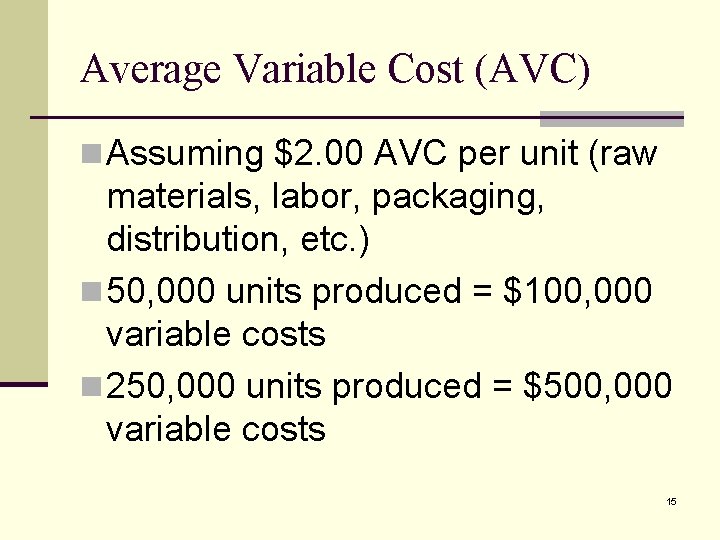
Average Variable Cost (AVC) n Assuming $2. 00 AVC per unit (raw materials, labor, packaging, distribution, etc. ) n 50, 000 units produced = $100, 000 variable costs n 250, 000 units produced = $500, 000 variable costs 15
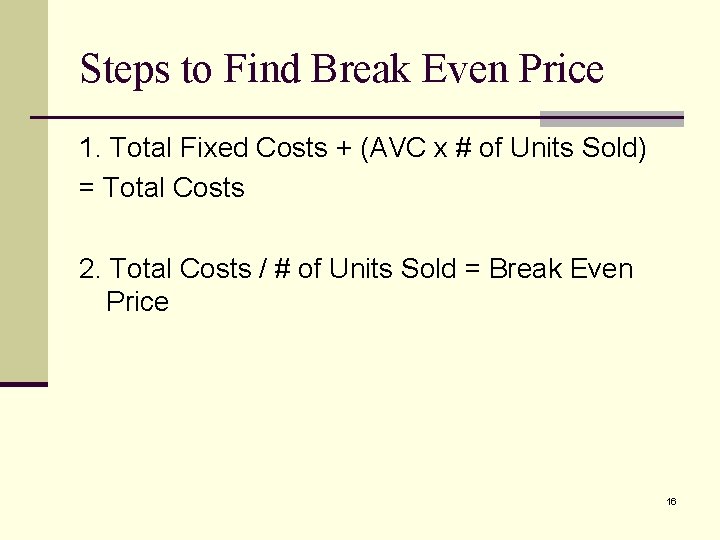
Steps to Find Break Even Price 1. Total Fixed Costs + (AVC x # of Units Sold) = Total Costs 2. Total Costs / # of Units Sold = Break Even Price 16
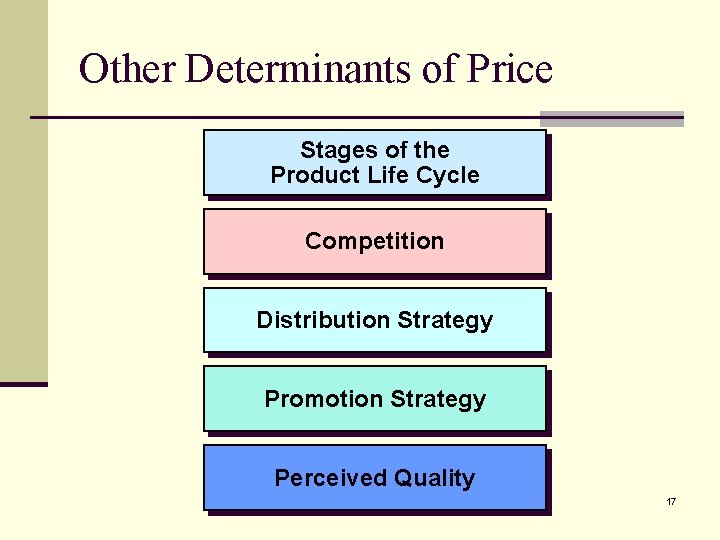
Other Determinants of Price Stages of the Product Life Cycle Competition Distribution Strategy Promotion Strategy Perceived Quality 17
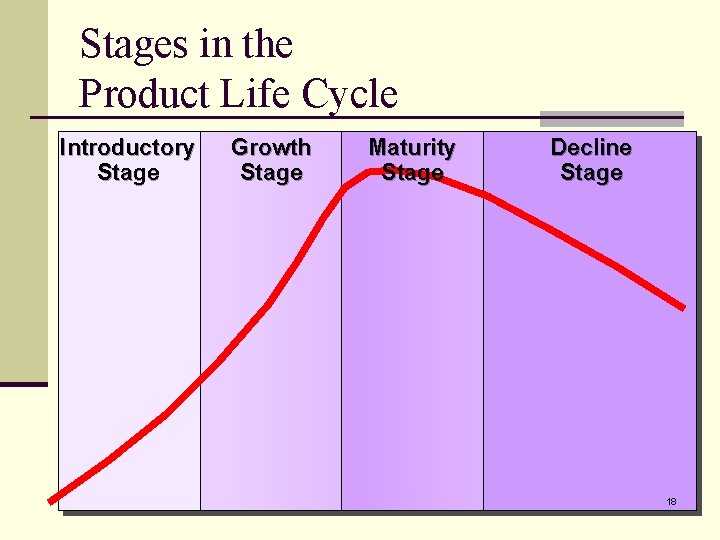
Stages in the Product Life Cycle Introductory Stage Growth Stage Maturity Stage Decline Stage 18
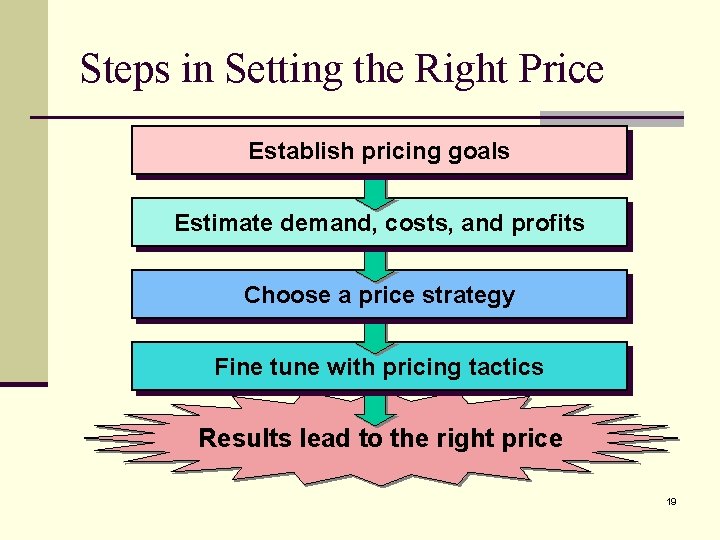
Steps in Setting the Right Price Establish pricing goals Estimate demand, costs, and profits Choose a price strategy Fine tune with pricing tactics Results lead to the right price 19
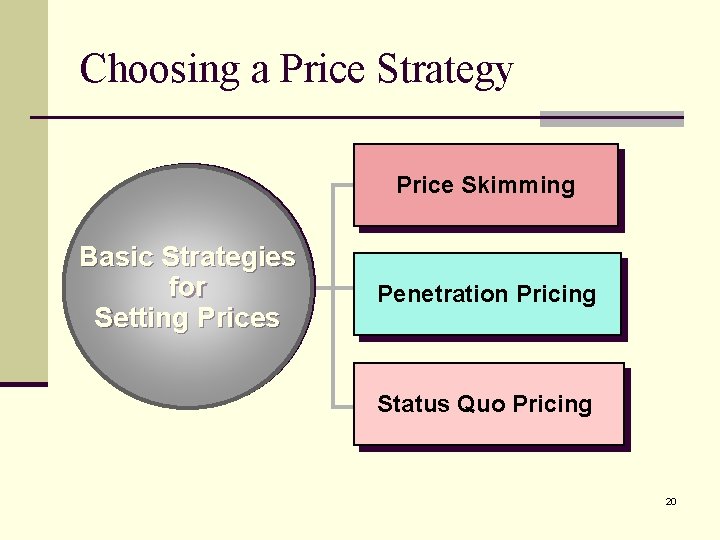
Choosing a Price Strategy Price Skimming Basic Strategies for Setting Prices Penetration Pricing Status Quo Pricing 20
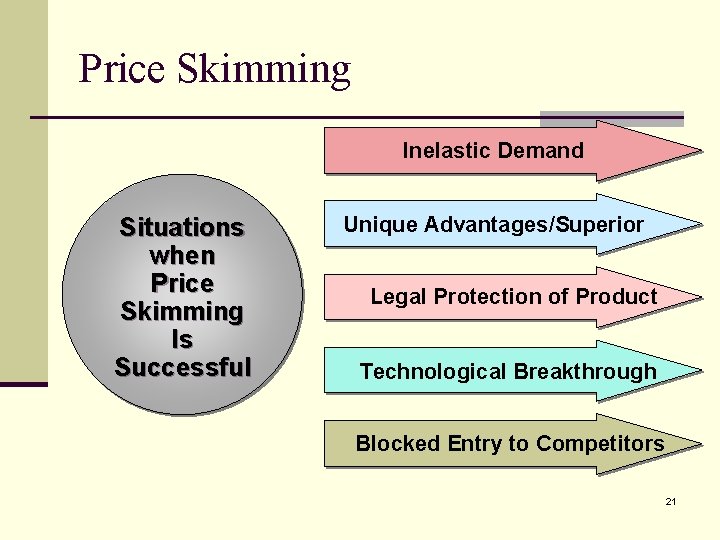
Price Skimming Inelastic Demand Situations when Price Skimming Is Successful Unique Advantages/Superior Legal Protection of Product Technological Breakthrough Blocked Entry to Competitors 21
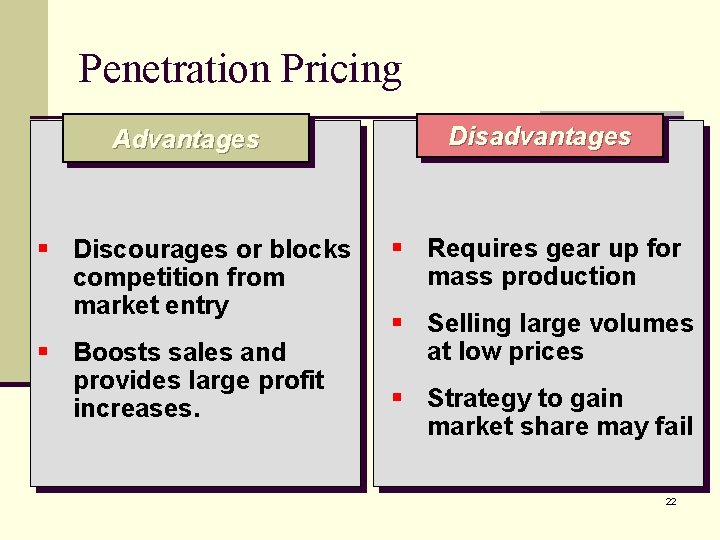
Penetration Pricing Advantages § Discourages or blocks competition from market entry § Boosts sales and provides large profit increases. Disadvantages § Requires gear up for mass production § Selling large volumes at low prices § Strategy to gain market share may fail 22
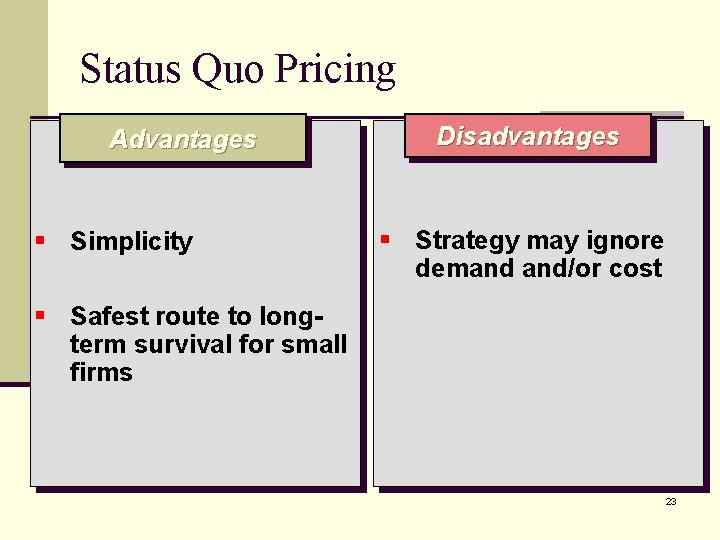
Status Quo Pricing Advantages § Simplicity Disadvantages § Strategy may ignore demand and/or cost § Safest route to longterm survival for small firms 23
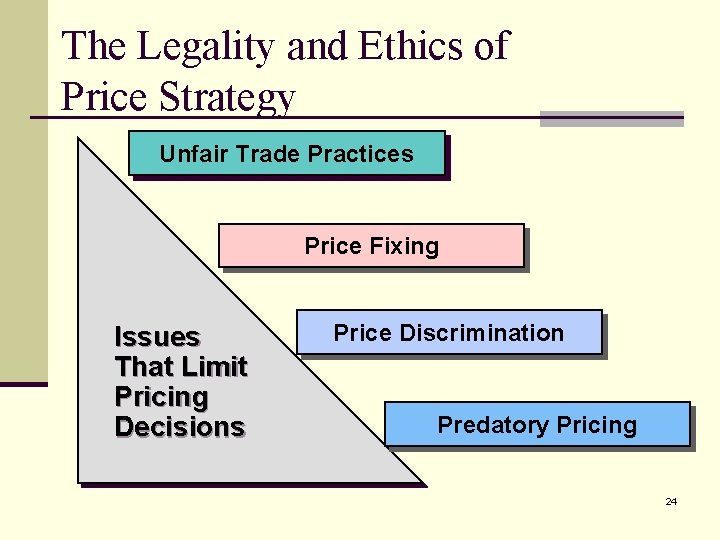
The Legality and Ethics of Price Strategy Unfair Trade Practices Price Fixing Issues That Limit Pricing Decisions Price Discrimination Predatory Pricing 24
Price Fixing An agreement between two or more firms on the price they will charge for a product. 25
Price Discrimination The Robinson-Patman Act of 1936: Prohibits any firm from selling to two or more different buyers at different prices if the result would lessen competition 26
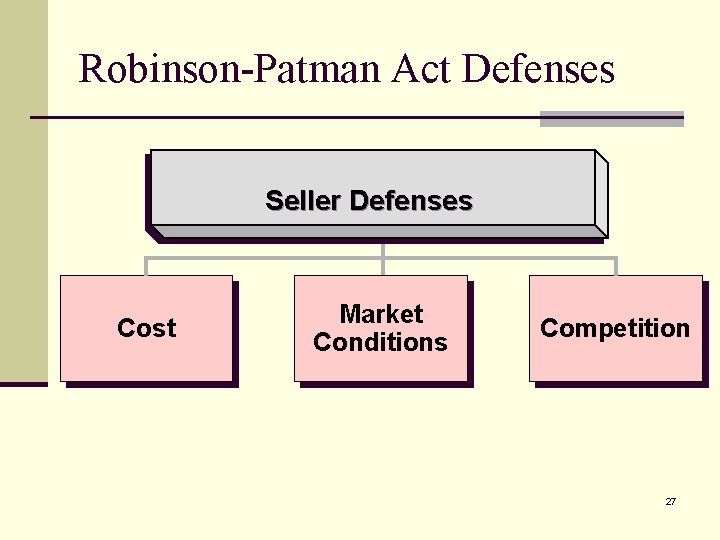
Robinson-Patman Act Defenses Seller Defenses Cost Market Conditions Competition 27
Predatory Pricing The practice of charging a very low price for a product with the intent of driving competitors out of business or out of a market. 28
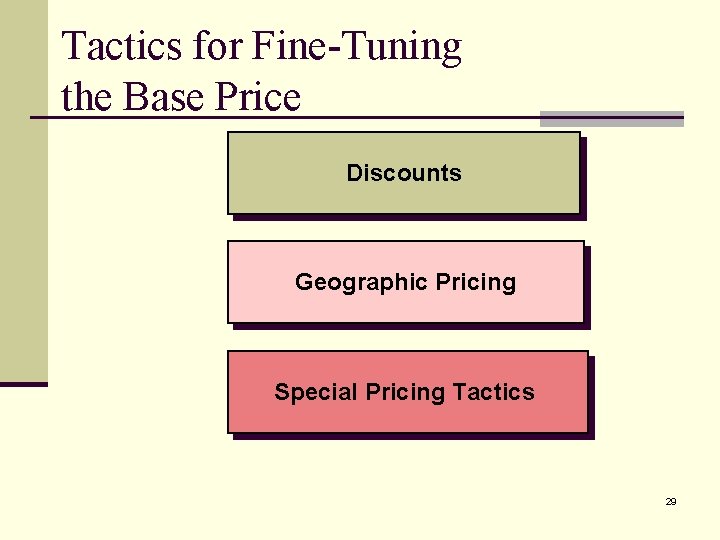
Tactics for Fine-Tuning the Base Price Discounts Geographic Pricing Special Pricing Tactics 29
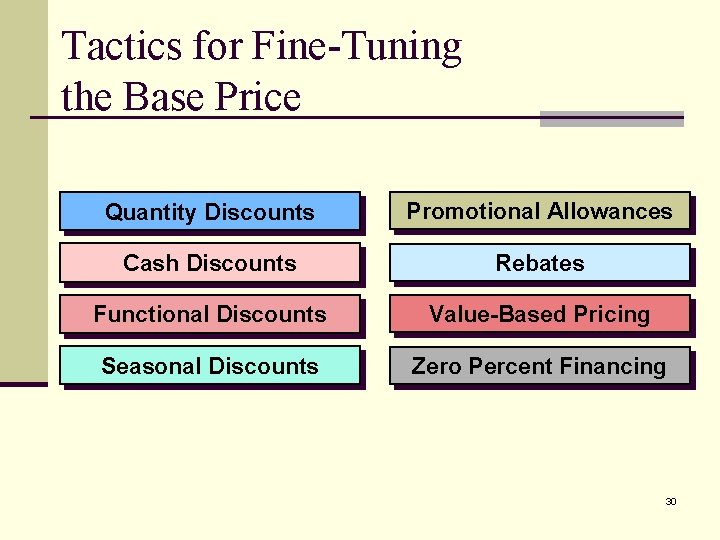
Tactics for Fine-Tuning the Base Price Quantity Discounts Promotional Allowances Cash Discounts Rebates Functional Discounts Value-Based Pricing Seasonal Discounts Zero Percent Financing 30
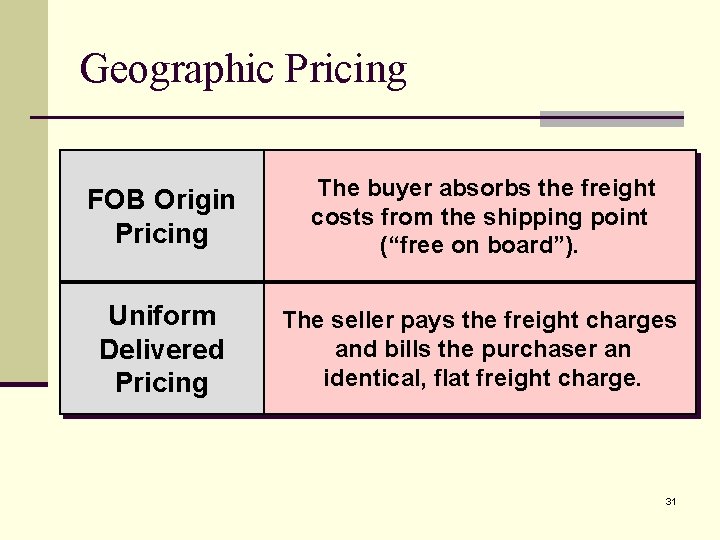
Geographic Pricing FOB Origin Pricing The buyer absorbs the freight costs from the shipping point (“free on board”). Uniform Delivered Pricing The seller pays the freight charges and bills the purchaser an identical, flat freight charge. 31
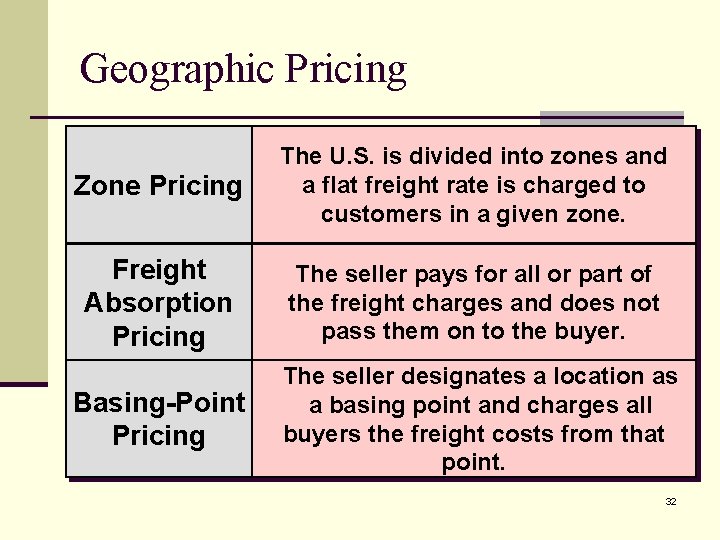
Geographic Pricing Zone Pricing The U. S. is divided into zones and a flat freight rate is charged to customers in a given zone. Freight Absorption Pricing The seller pays for all or part of the freight charges and does not pass them on to the buyer. Basing-Point Pricing The seller designates a location as a basing point and charges all buyers the freight costs from that point. 32
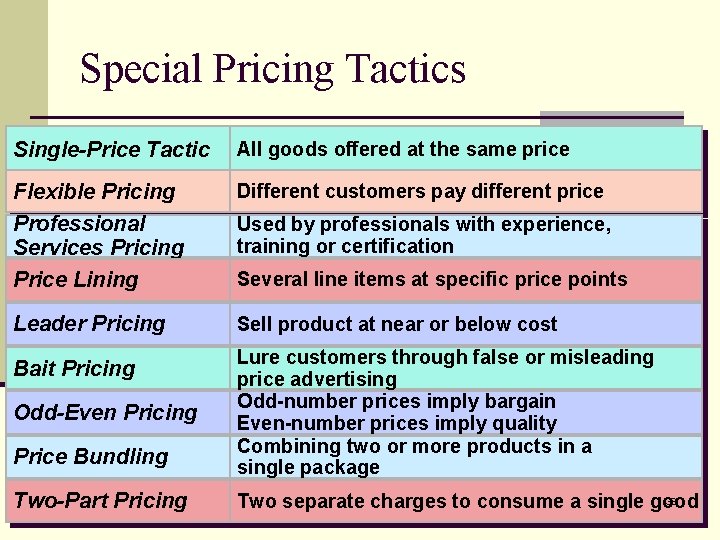
Special Pricing Tactics Single-Price Tactic All goods offered at the same price Flexible Pricing Professional Services Pricing Price Lining Different customers pay different price Leader Pricing Sell product at near or below cost Bait Pricing Lure customers through false or misleading price advertising Odd-number prices imply bargain Even-number prices imply quality Combining two or more products in a single package Odd-Even Pricing Price Bundling Two-Part Pricing Used by professionals with experience, training or certification Several line items at specific price points 33 Two separate charges to consume a single good