
PRICE TO BOOK VALUE PBV The PBV ratio
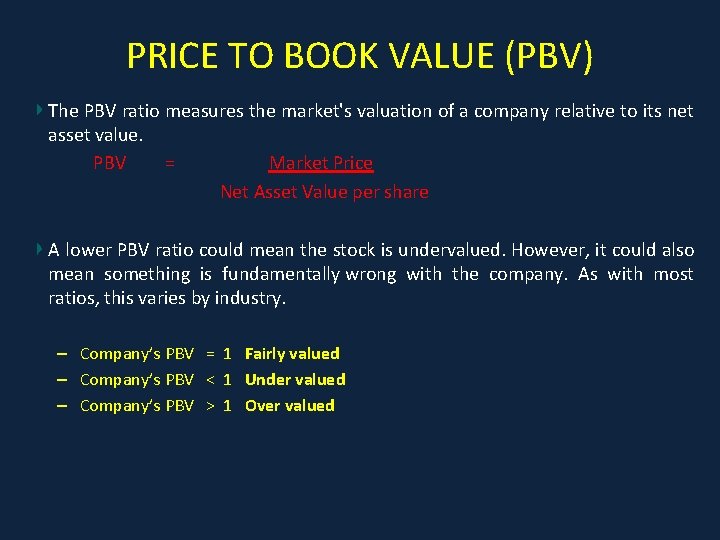
PRICE TO BOOK VALUE (PBV) The PBV ratio measures the market's valuation of a company relative to its net asset value. PBV = Market Price Net Asset Value per share A lower PBV ratio could mean the stock is undervalued. However, it could also mean something is fundamentally wrong with the company. As with most ratios, this varies by industry. – Company’s PBV = 1 Fairly valued – Company’s PBV < 1 Under valued – Company’s PBV > 1 Over valued
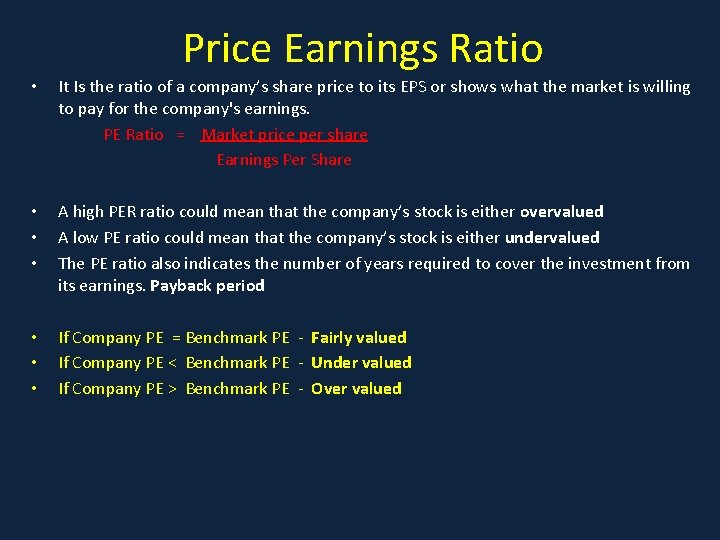
Price Earnings Ratio • It Is the ratio of a company’s share price to its EPS or shows what the market is willing to pay for the company's earnings. PE Ratio = Market price per share Earnings Per Share • • • A high PER ratio could mean that the company’s stock is either overvalued A low PE ratio could mean that the company’s stock is either undervalued The PE ratio also indicates the number of years required to cover the investment from its earnings. Payback period • • • If Company PE = Benchmark PE - Fairly valued If Company PE < Benchmark PE - Under valued If Company PE > Benchmark PE - Over valued
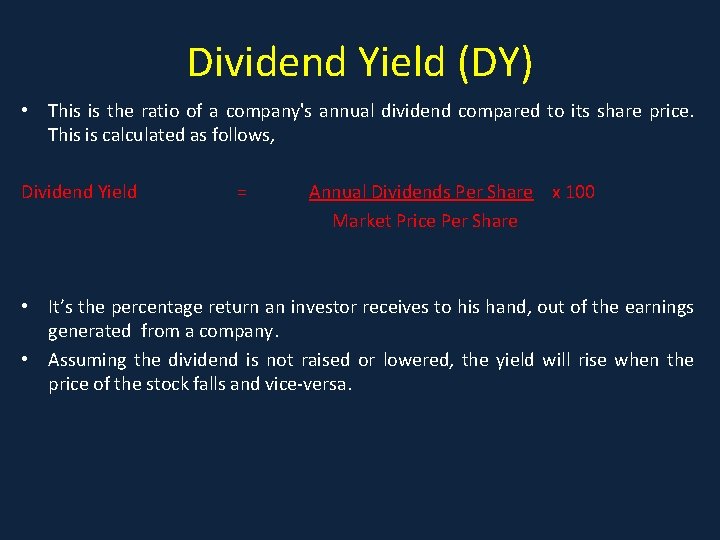
Dividend Yield (DY) • This is the ratio of a company's annual dividend compared to its share price. This is calculated as follows, Dividend Yield = Annual Dividends Per Share x 100 Market Price Per Share • It’s the percentage return an investor receives to his hand, out of the earnings generated from a company. • Assuming the dividend is not raised or lowered, the yield will rise when the price of the stock falls and vice-versa.
- Slides: 3