
Prey Predator Senses Objectives 1 Describe senses that
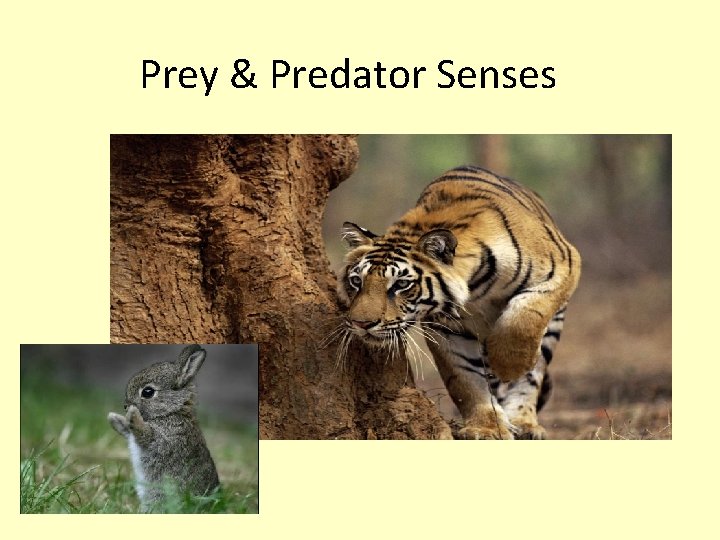
Prey & Predator Senses
Objectives 1. Describe senses that prey have 2. Describe senses that predators have 3. Explain differences and similarities in senses of prey and predators 4. Design a predator or prey, identifying key details about its senses
D 4: Analyse the differences in sensory organs between selected predator and prey species • Write an article that analyses the differences in sensory organs between 1 predator and 1 prey species. • You need to cover: – How the senses are influenced by their environment (e. g. are they nocturnal, diurnal or crepuscular) – How the senses are influenced by their lifestyle (e. g. digging animals, flying animals) – How the senses are influenced by their status as predator or prey • Minimum 600 words
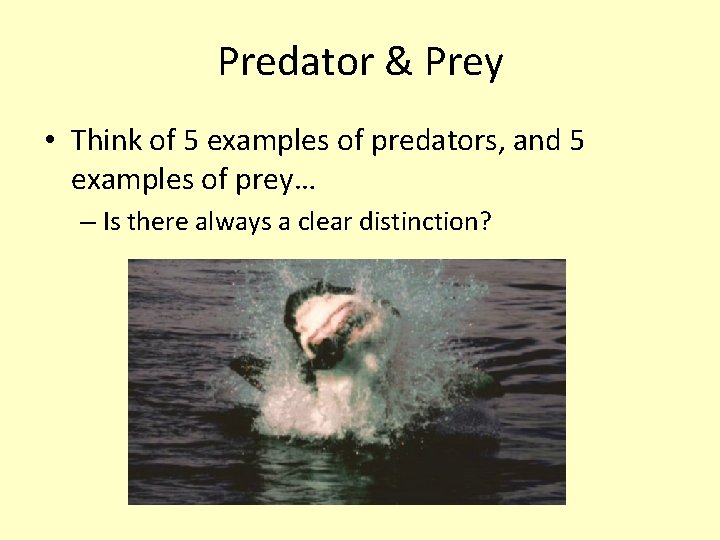
Predator & Prey • Think of 5 examples of predators, and 5 examples of prey… – Is there always a clear distinction?
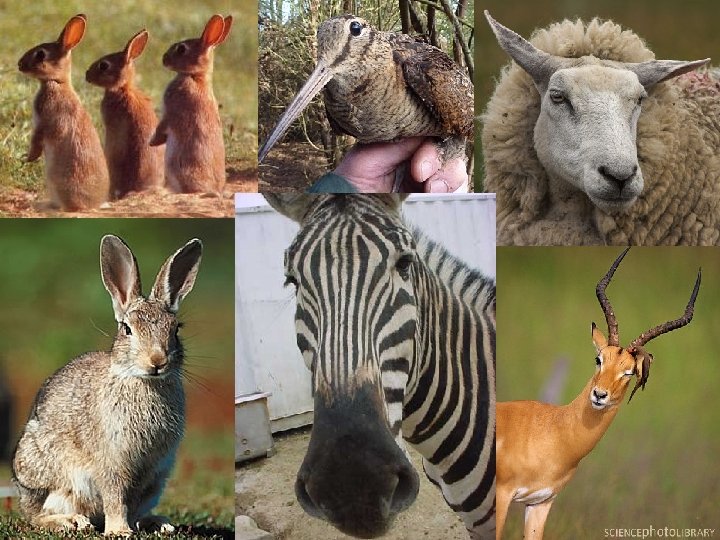
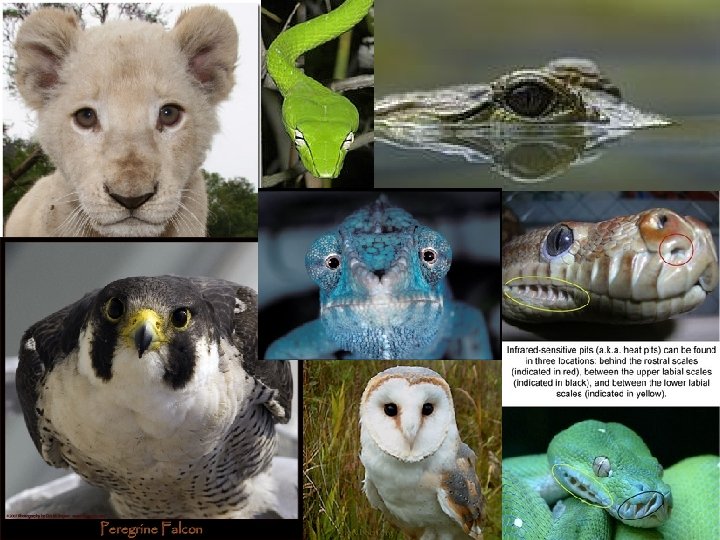
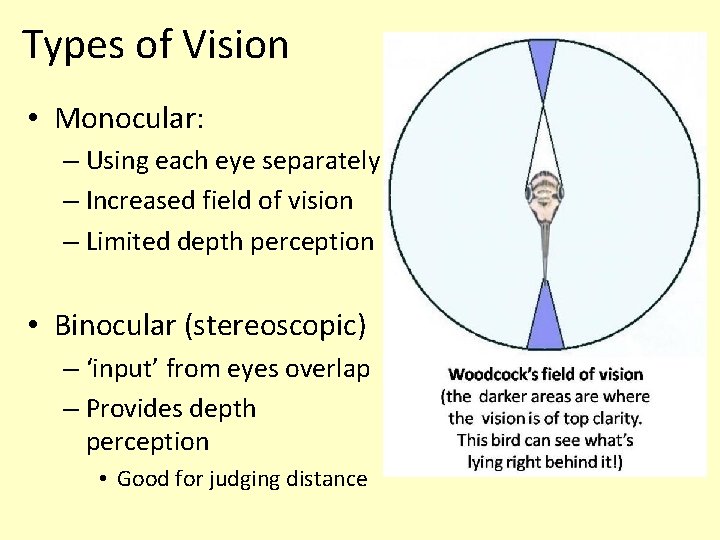
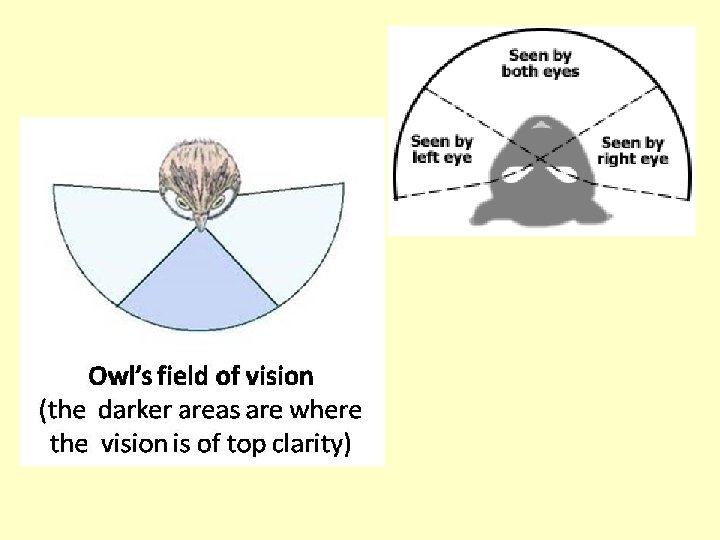
Types of Vision • Monocular: – Using each eye separately – Increased field of vision – Limited depth perception • Binocular (stereoscopic) – ‘input’ from eyes overlap – Provides depth perception • Good for judging distance
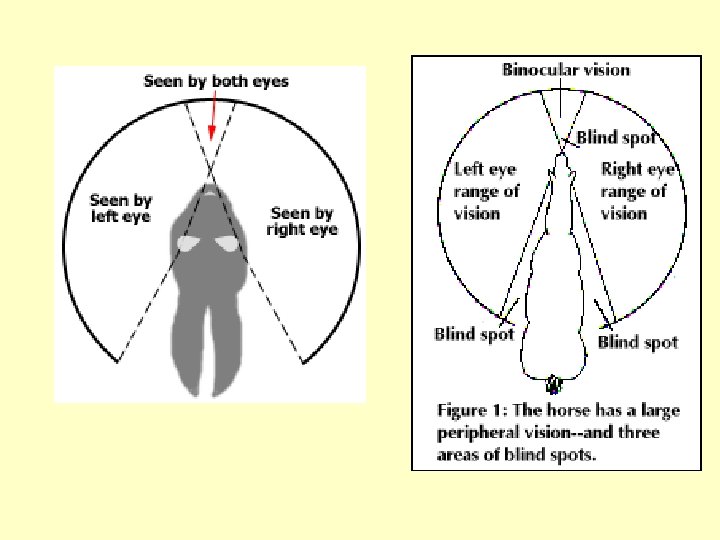
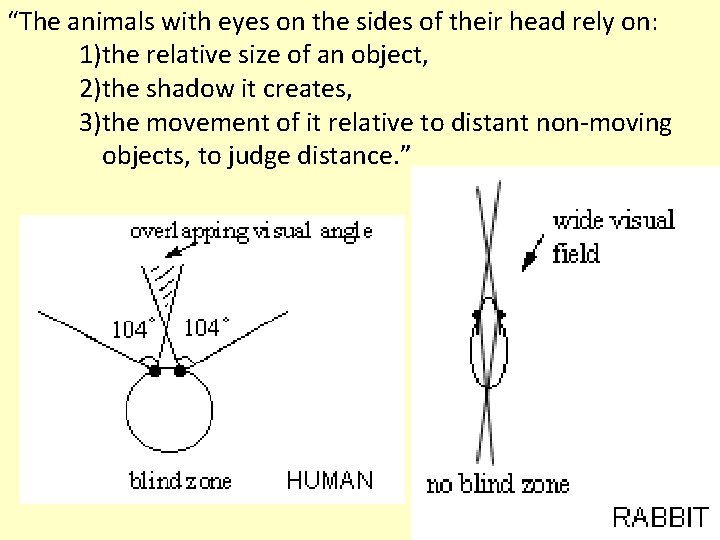
“The animals with eyes on the sides of their head rely on: 1)the relative size of an object, 2)the shadow it creates, 3)the movement of it relative to distant non-moving objects, to judge distance. ”
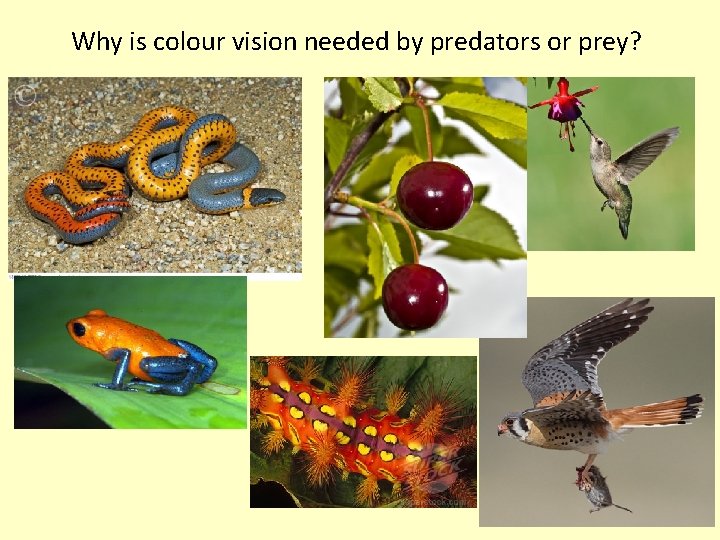
Why is colour vision needed by predators or prey?
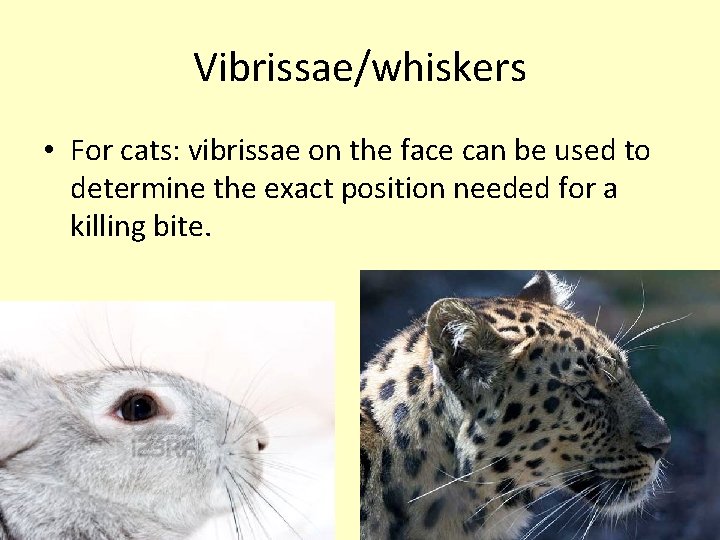
Vibrissae/whiskers • For cats: vibrissae on the face can be used to determine the exact position needed for a killing bite.
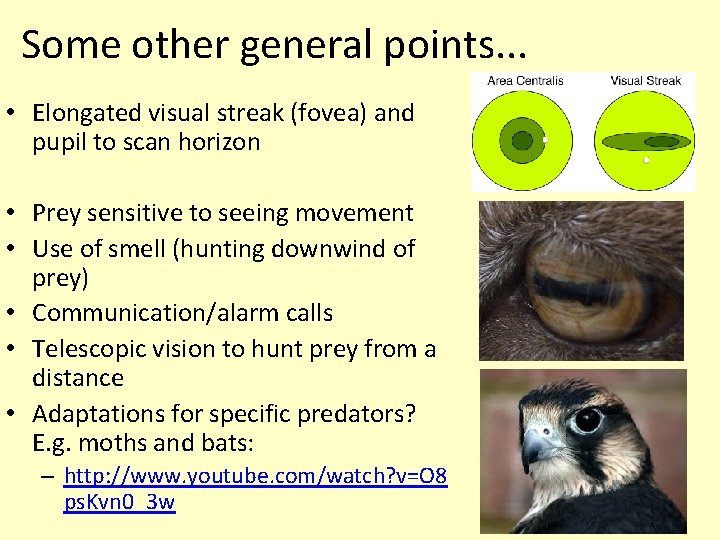
Some other general points. . . • Elongated visual streak (fovea) and pupil to scan horizon • Prey sensitive to seeing movement • Use of smell (hunting downwind of prey) • Communication/alarm calls • Telescopic vision to hunt prey from a distance • Adaptations for specific predators? E. g. moths and bats: – http: //www. youtube. com/watch? v=O 8 ps. Kvn 0_3 w
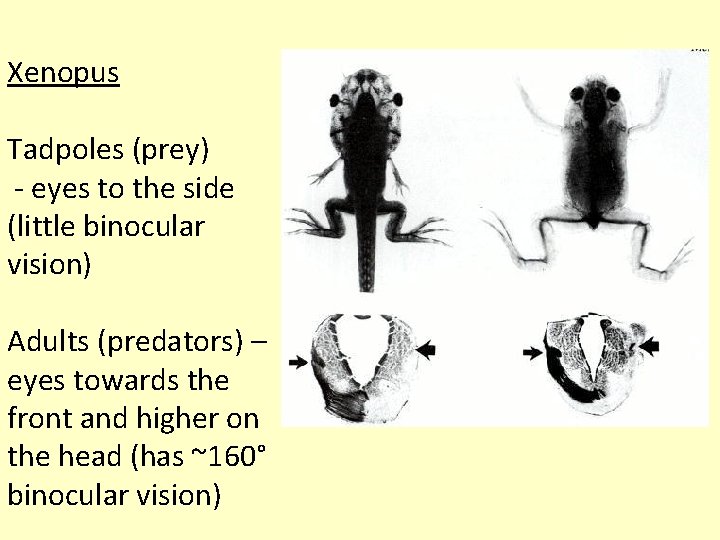
Xenopus Tadpoles (prey) - eyes to the side (little binocular vision) Adults (predators) – eyes towards the front and higher on the head (has ~160° binocular vision)
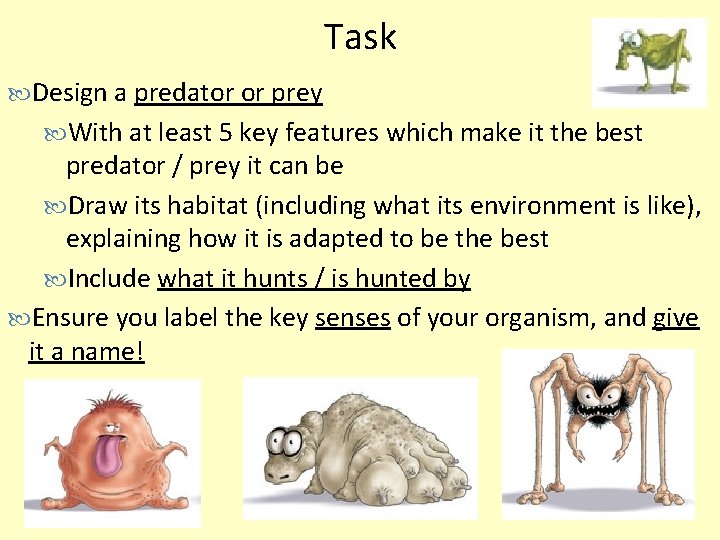
Task Design a predator or prey With at least 5 key features which make it the best predator / prey it can be Draw its habitat (including what its environment is like), explaining how it is adapted to be the best Include what it hunts / is hunted by Ensure you label the key senses of your organism, and give it a name!
- Slides: 16