
Prewriting Writing and Proofreading The Writing Process Successful
- Slides: 12
Prewriting, Writing and Proofreading
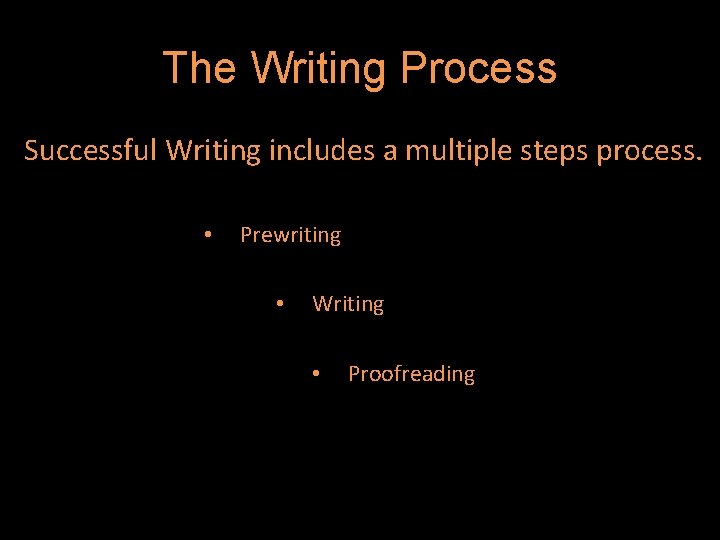
The Writing Process Successful Writing includes a multiple steps process. • Prewriting • Writing • Proofreading
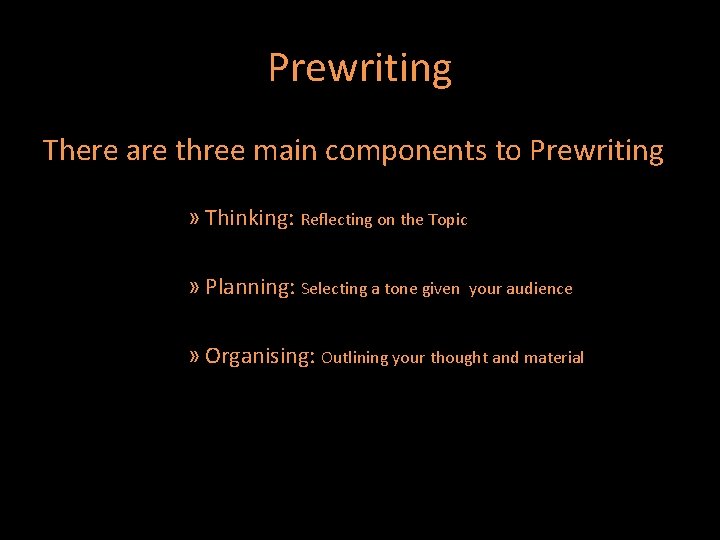
Prewriting There are three main components to Prewriting » Thinking: Reflecting on the Topic » Planning: Selecting a tone given your audience » Organising: Outlining your thought and material
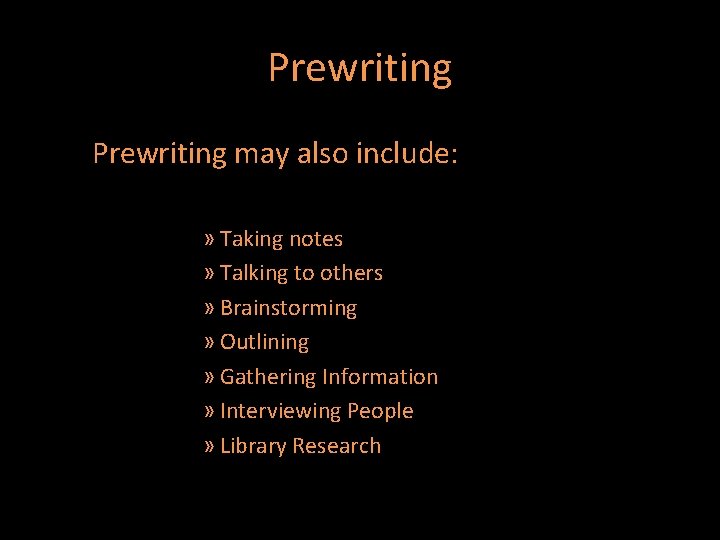
Prewriting • Prewriting may also include: » Taking notes » Talking to others » Brainstorming » Outlining » Gathering Information » Interviewing People » Library Research
Writing This section is typically Writer Centered • The focus in this section is on what the writer wishes to express
Writing The author takes their ideals and places them into • Paragraphs • Sentences
Writing At this stage in the process the author will » Explain their thoughts » Support the point of view » Connect the main ideas to the key points
Proofreading This section is typically reader centered • The focus in this section is typically on the reader needs and the readers expectation
Proofreading This phase is composed on two section » Revising » Editing
Proofreading • Revising consists of effectively – Meeting the readers Need – Meeting the readers Expectations – Having enough point to support argument – Using the correct terms – Having the proper organisation
Proofreading • Editing consist of effectively » Using proper Grammar » Verifying the spelling » Using a mechanical spell-check devise
10 Key Point 1. Analyze/Determine the purpose of the letter 2. Anticipate/Determine audience 3. Adapt to method of delivery; direct vs indirect (active vs passive) 4. Brainstorm ideas to be conveyed in letter 5. Research/Gather the facts that you wish to convey in letters 6. Organize: Prepare a concept map to structure main ideas 7. Compose: write a draft, compose paragraphs 8. Revise: eliminate abbreviation(s) of jargon, review the tone, improve clarity by organizing and structuring thoughts eliminate wordiness. 9. Proofread: Review message looking for grammar spelling, punctuation, verify facts 10. Evaluate: Reread the letter from your audiences perspective to determine if it will deliver the message effectively given the letters' purpose.