
Preventive and Bleaching Materials DEN 256 Chapter 8
Preventive and Bleaching Materials DEN 256 Chapter 8 Copyright © 2011 by Saunders, an imprint of Elsevier Inc.

Teeth Bleaching �Teeth bleaching has become an active part of many dental practices. �Patients request it, to make their teeth white. �Bleaching may be done in the office or at home. �Most bleaching agents are peroxide-
How Teeth Bleaching Works � The enamel on the tooth crown is composed almost entirely of mineral (97% by weight), with microscopic spaces between the enamel rods that contain water and organic material. � Stains accumulate within these small spaces in the enamel over time. � Teeth bleaching occurs when the hydrogen peroxide or non-peroxide bleaching material passes through the spaces in the enamel and oxidizes the stains, producing a lighter color.
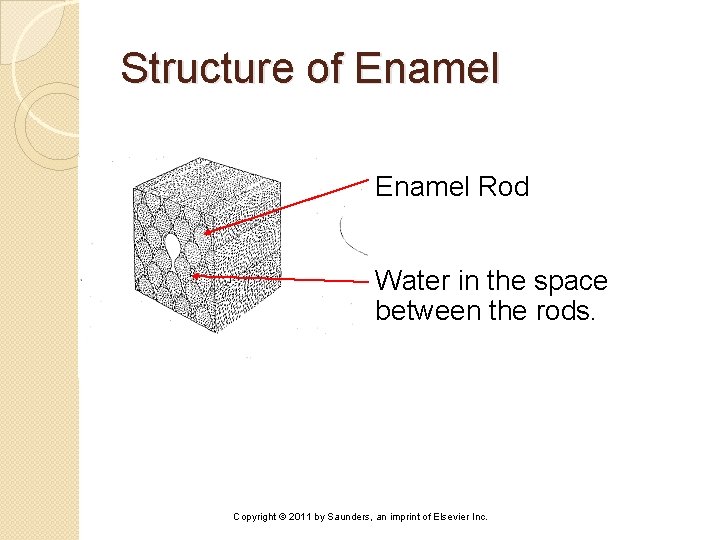
Structure of Enamel Rod Water in the space between the rods. Copyright © 2011 by Saunders, an imprint of Elsevier Inc.
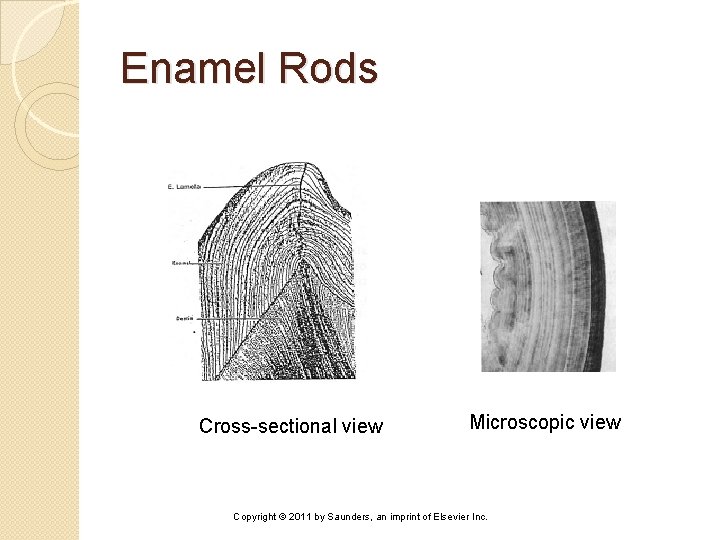
Enamel Rods Cross-sectional view Microscopic view Copyright © 2011 by Saunders, an imprint of Elsevier Inc.
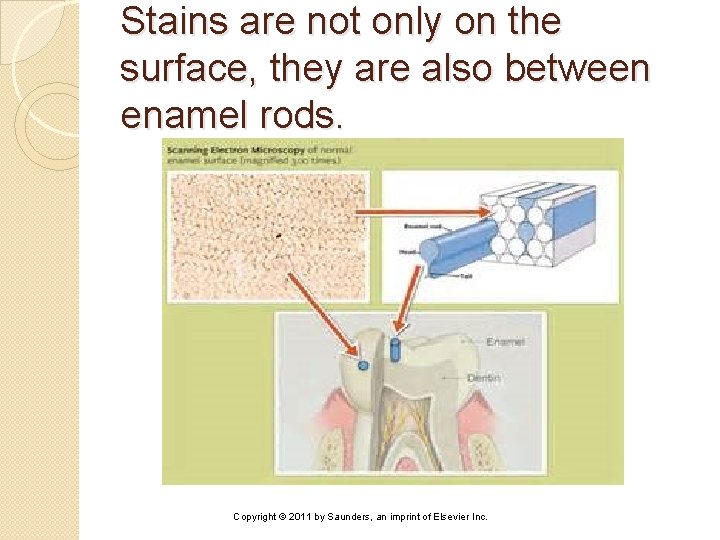
Stains are not only on the surface, they are also between enamel rods. Copyright © 2011 by Saunders, an imprint of Elsevier Inc.
Copyright © 2011 by Saunders, an imprint of Elsevier Inc.
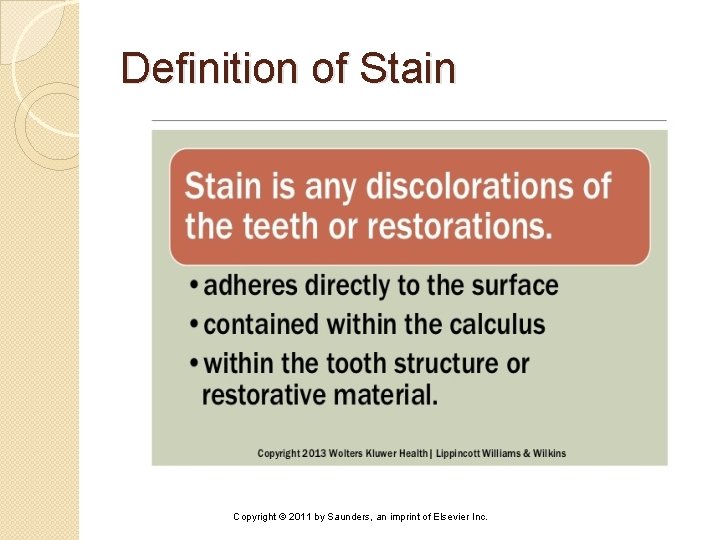
Definition of Stain Copyright © 2011 by Saunders, an imprint of Elsevier Inc.
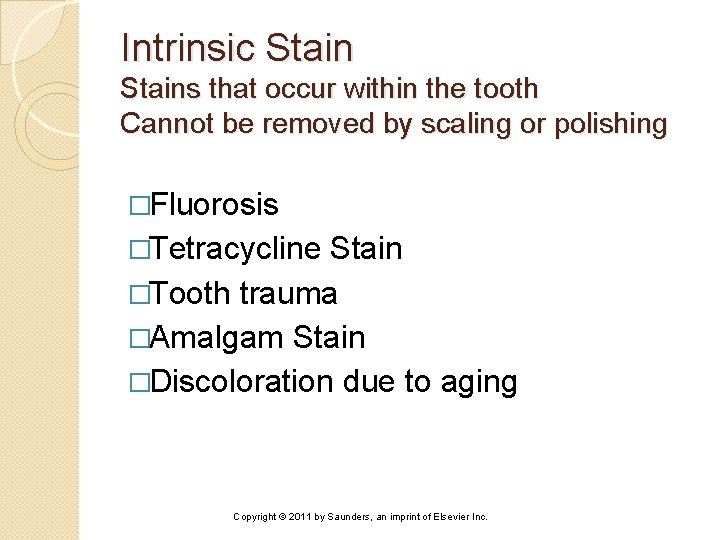
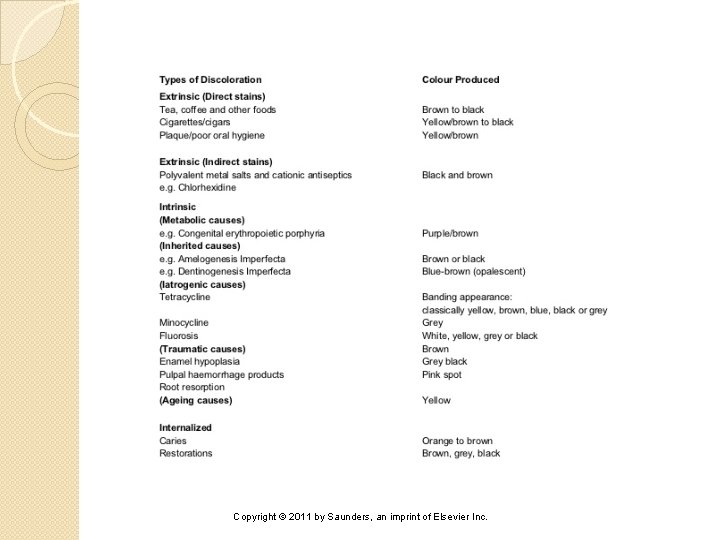
Intrinsic Stains that occur within the tooth Cannot be removed by scaling or polishing �Fluorosis �Tetracycline Stain �Tooth trauma �Amalgam Stain �Discoloration due to aging Copyright © 2011 by Saunders, an imprint of Elsevier Inc.
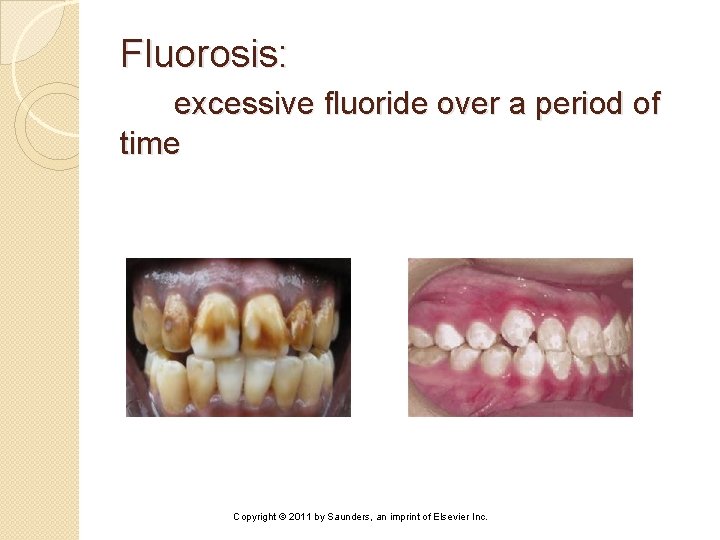
Fluorosis: excessive fluoride over a period of time Copyright © 2011 by Saunders, an imprint of Elsevier Inc.
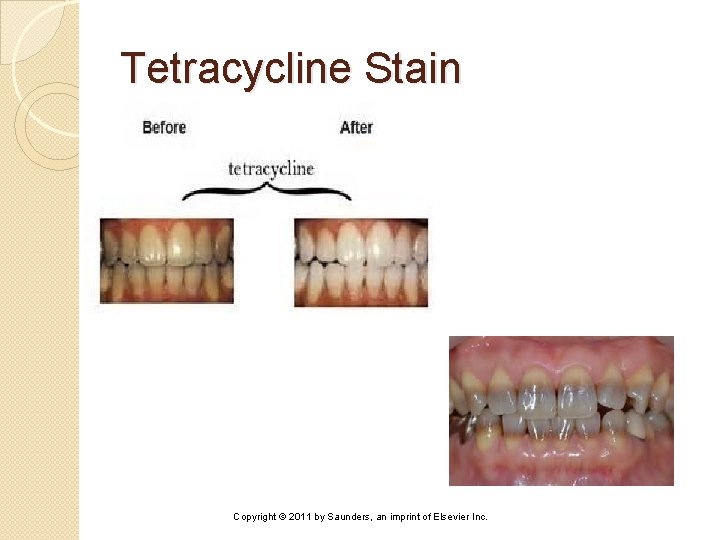
Tetracycline Stain Copyright © 2011 by Saunders, an imprint of Elsevier Inc.
Extrinsic Stain -Stains that occur from outside sources such as foods, liquids or acids. -Can be removed by toothbrushing, flossing, scaling or polishing. �Coffee, tea �Smoking �Wine �Black Line Stain �White spots after braces �Diet Copyright © 2011 by Saunders, an imprint of Elsevier Inc.
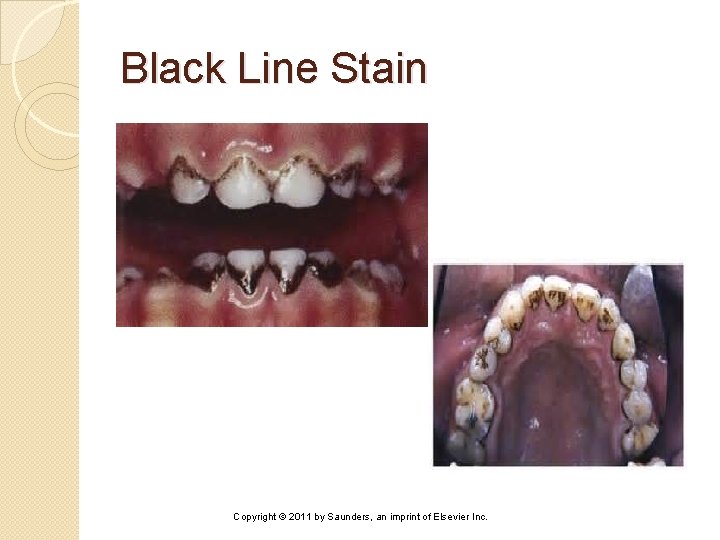
Black Line Stain Copyright © 2011 by Saunders, an imprint of Elsevier Inc.
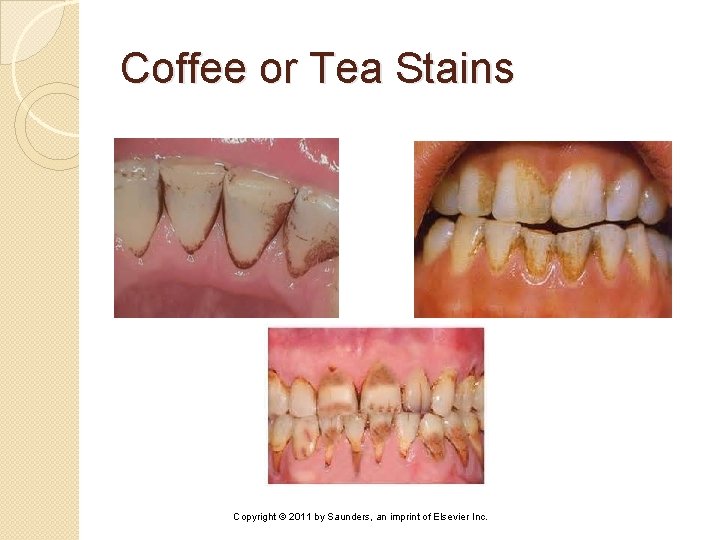
Coffee or Tea Stains Copyright © 2011 by Saunders, an imprint of Elsevier Inc.
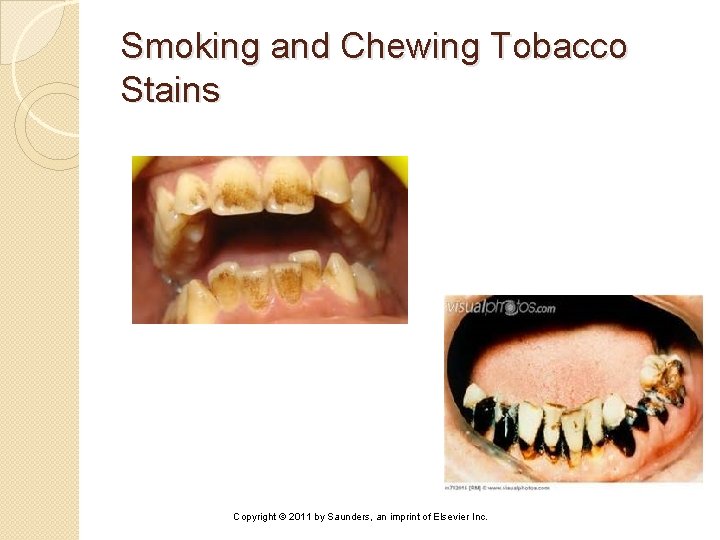
Smoking and Chewing Tobacco Stains Copyright © 2011 by Saunders, an imprint of Elsevier Inc.
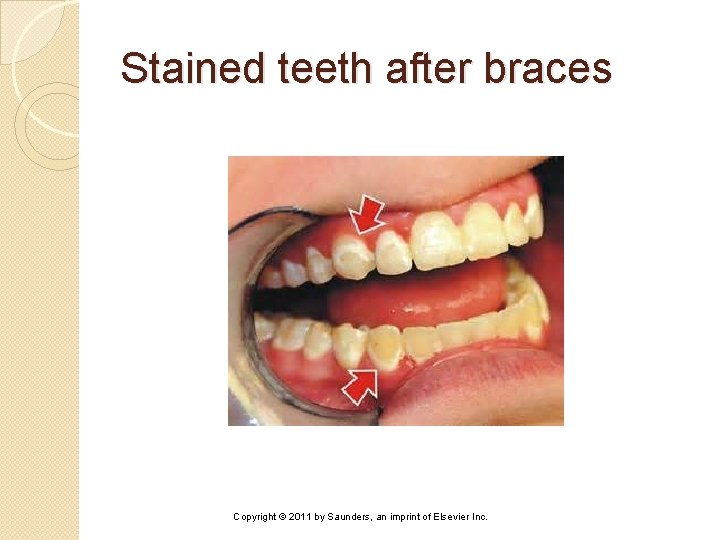
Stained teeth after braces Copyright © 2011 by Saunders, an imprint of Elsevier Inc.
Bleaching of Nonvital Teeth �Teeth that have lost their blood supply (root canal) will turn dark. �This type of bleaching is isolated to one tooth. �Bleaching material is placed inside the pulp chamber, where it stays for several days. �Bleaching sometimes takes several applications.
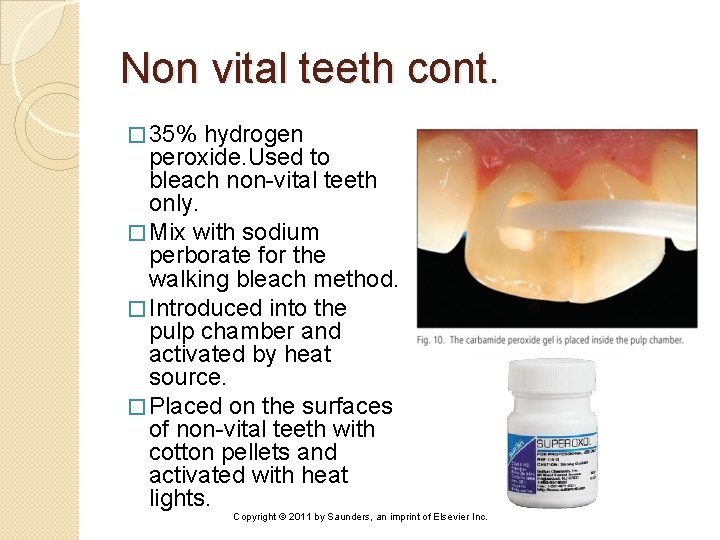
Non vital teeth cont. � 35% hydrogen peroxide. Used to bleach non-vital teeth only. � Mix with sodium perborate for the walking bleach method. � Introduced into the pulp chamber and activated by heat source. � Placed on the surfaces of non-vital teeth with cotton pellets and activated with heat lights. Copyright © 2011 by Saunders, an imprint of Elsevier Inc.
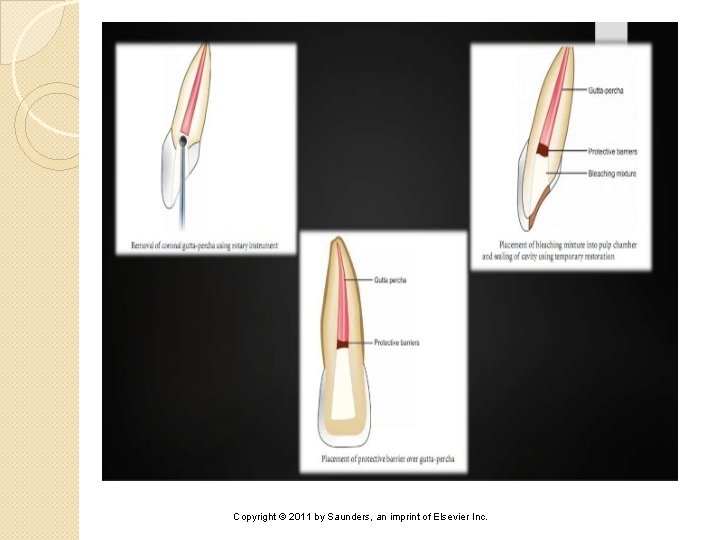
Copyright © 2011 by Saunders, an imprint of Elsevier Inc.
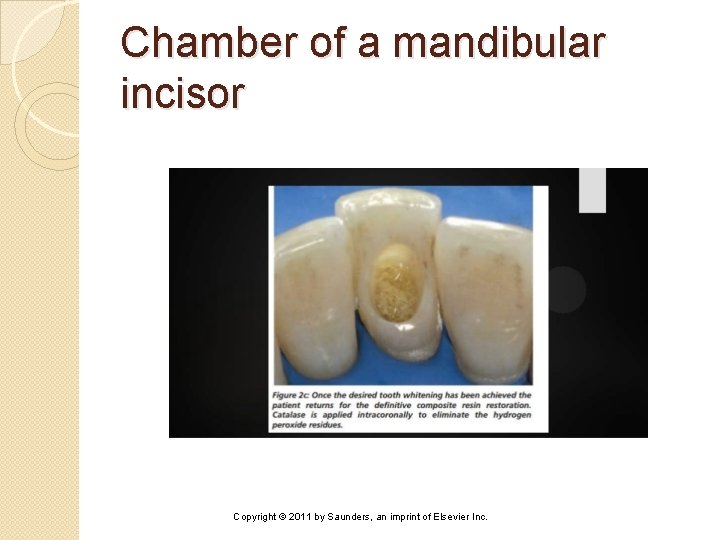
Chamber of a mandibular incisor Copyright © 2011 by Saunders, an imprint of Elsevier Inc.
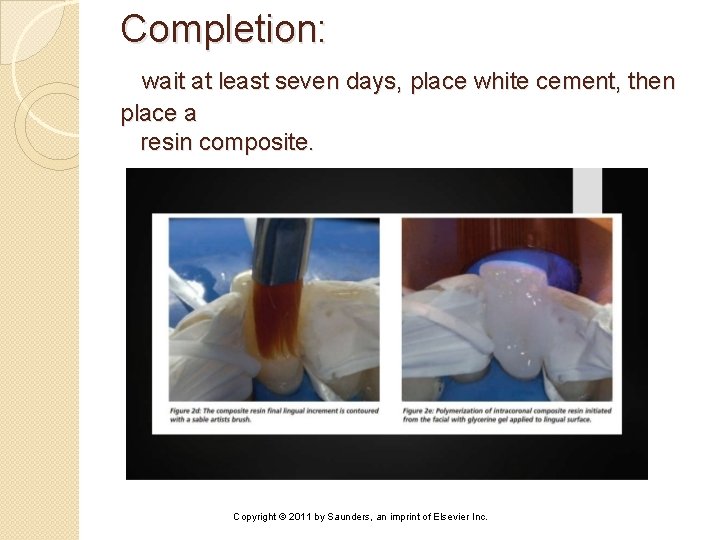
Completion: wait at least seven days, place white cement, then place a resin composite. Copyright © 2011 by Saunders, an imprint of Elsevier Inc.
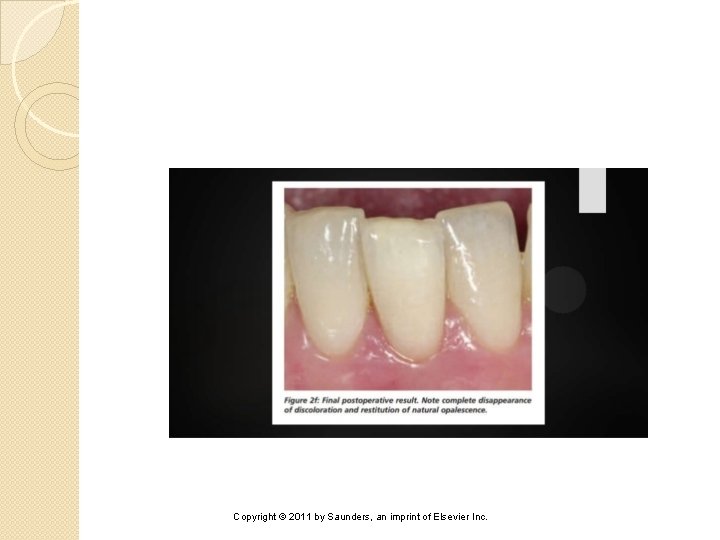
Copyright © 2011 by Saunders, an imprint of Elsevier Inc.
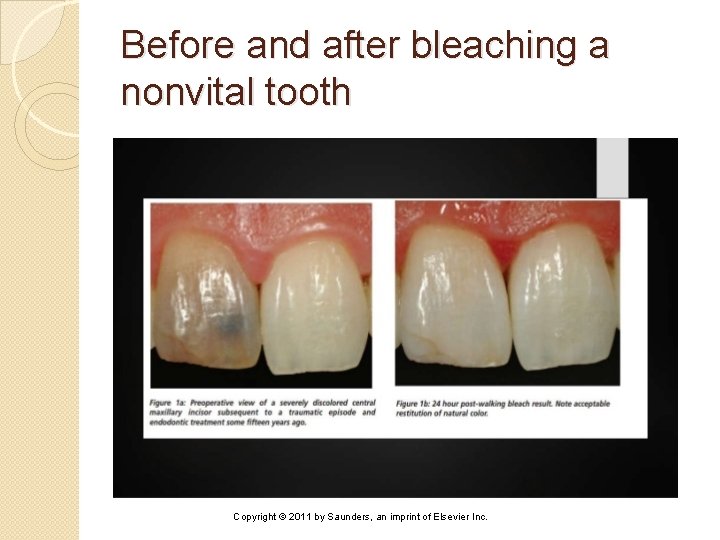
Before and after bleaching a nonvital tooth Copyright © 2011 by Saunders, an imprint of Elsevier Inc.
Bleaching of Vital Teeth �Vital teeth have a healthy blood supply. �When a person has his or her teeth whitened in the dental office, a much stronger solution is used. �“Power” bleaching materials typically are similar to home bleaching materials but are much stronger. �These materials often are coupled with a dental light.
Over-the-Counter Products �Types ◦ Bleaching strips ◦ Paint-on pastes ◦ Pre-loaded gel trays �Less caustic materials �Do not cause as much �Are less effective sensitivity
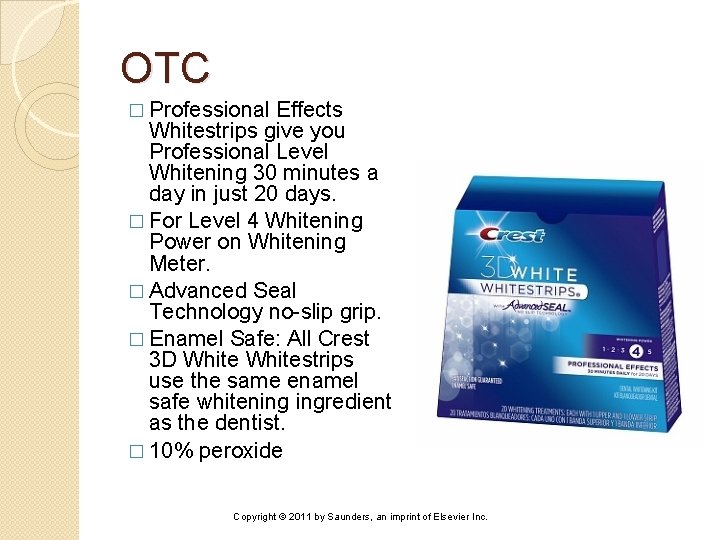
OTC � Professional Effects Whitestrips give you Professional Level Whitening 30 minutes a day in just 20 days. � For Level 4 Whitening Power on Whitening Meter. � Advanced Seal Technology no-slip grip. � Enamel Safe: All Crest 3 D Whitestrips use the same enamel safe whitening ingredient as the dentist. � 10% peroxide Copyright © 2011 by Saunders, an imprint of Elsevier Inc.
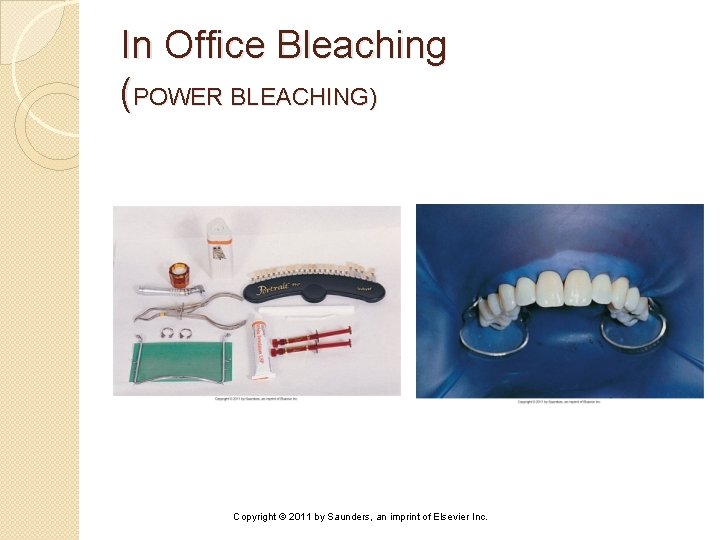
In Office Bleaching (POWER BLEACHING) Copyright © 2011 by Saunders, an imprint of Elsevier Inc.
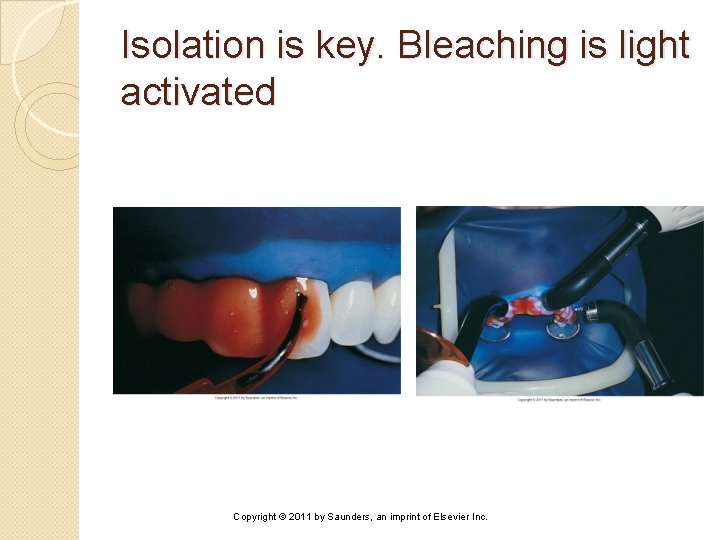
Isolation is key. Bleaching is light activated Copyright © 2011 by Saunders, an imprint of Elsevier Inc.
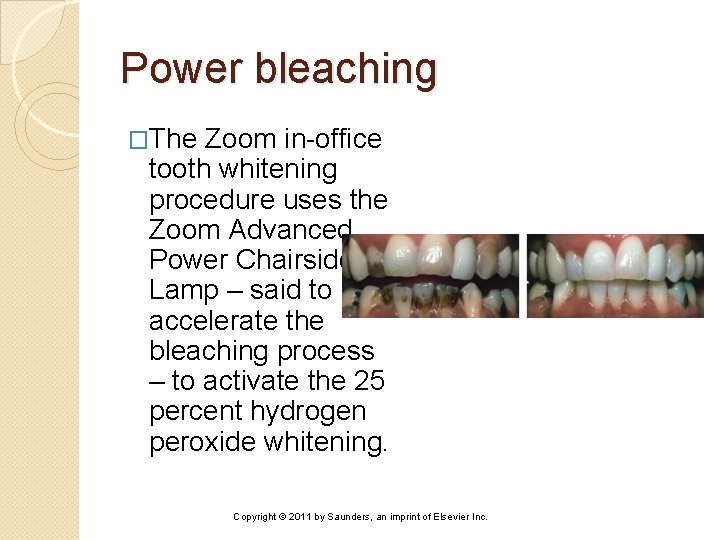
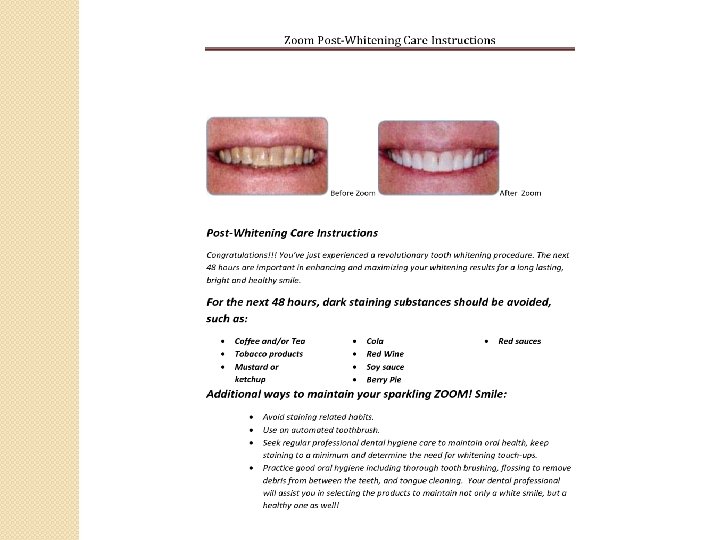
Power bleaching �The Zoom in-office tooth whitening procedure uses the Zoom Advanced Power Chairside Lamp – said to accelerate the bleaching process – to activate the 25 percent hydrogen peroxide whitening. Copyright © 2011 by Saunders, an imprint of Elsevier Inc.
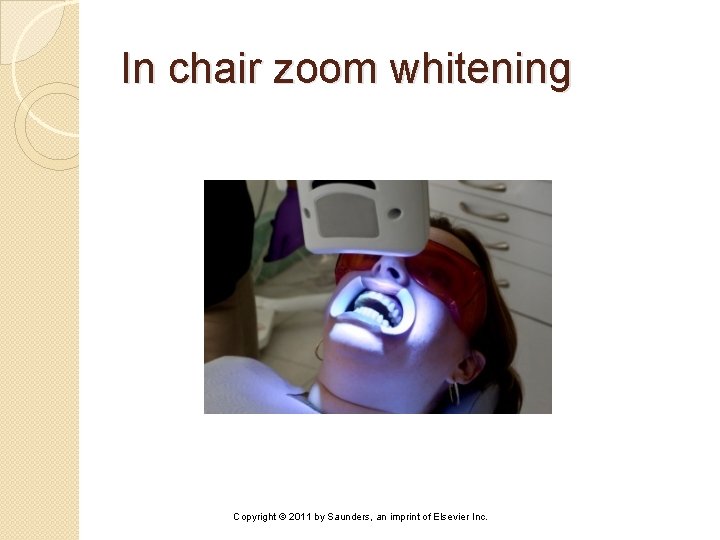
In chair zoom whitening Copyright © 2011 by Saunders, an imprint of Elsevier Inc.
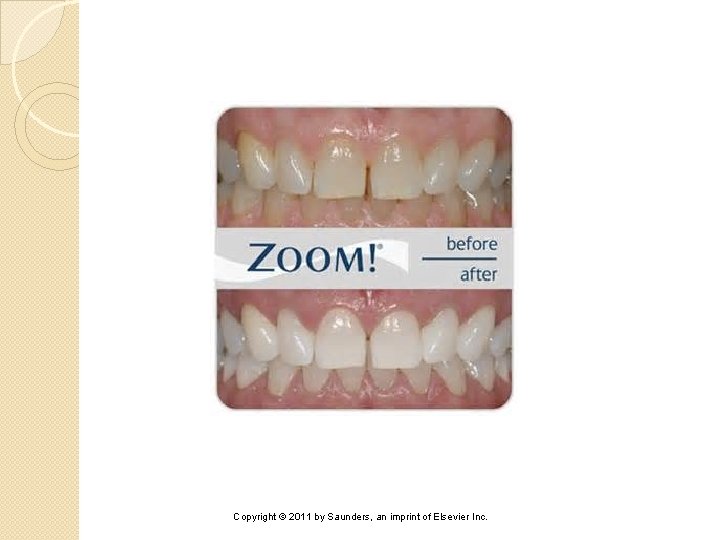
Copyright © 2011 by Saunders, an imprint of Elsevier Inc.
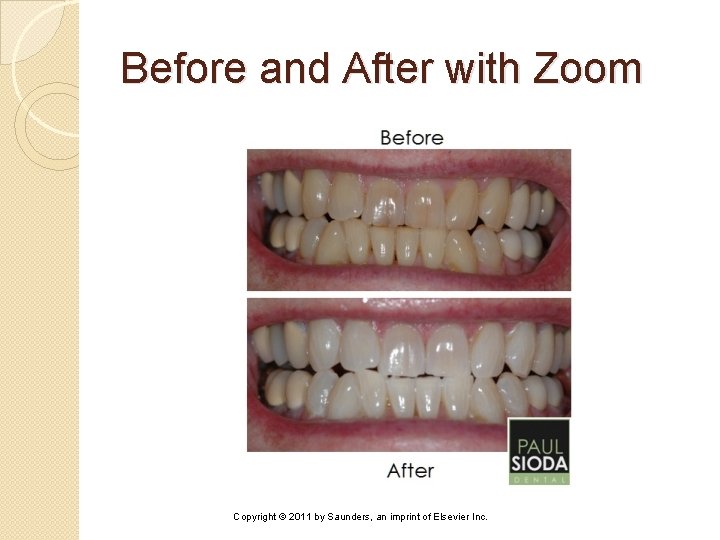
Before and After with Zoom Copyright © 2011 by Saunders, an imprint of Elsevier Inc.
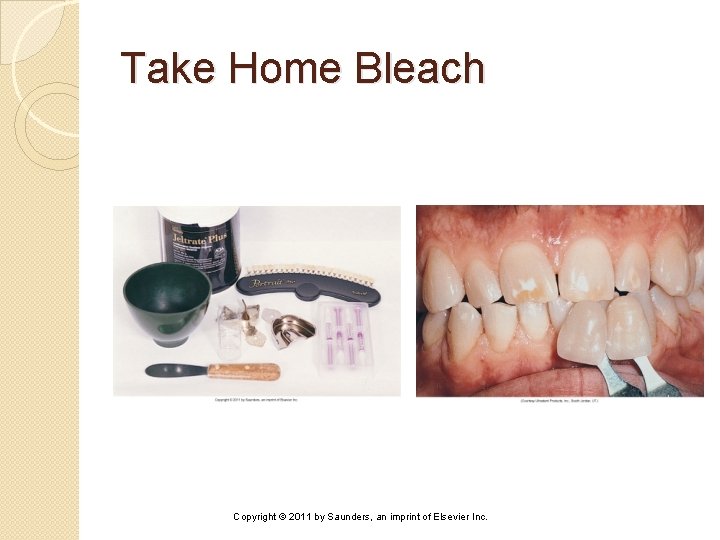
Take Home Bleach Copyright © 2011 by Saunders, an imprint of Elsevier Inc.
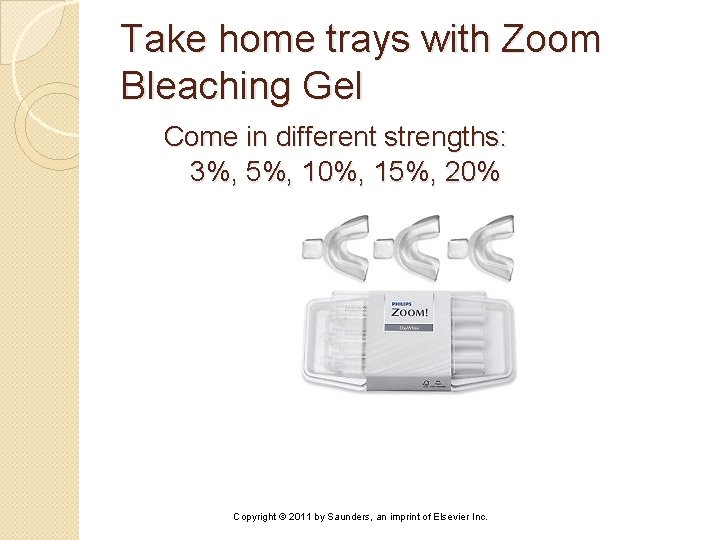
Take home trays with Zoom Bleaching Gel Come in different strengths: 3%, 5%, 10%, 15%, 20% Copyright © 2011 by Saunders, an imprint of Elsevier Inc.
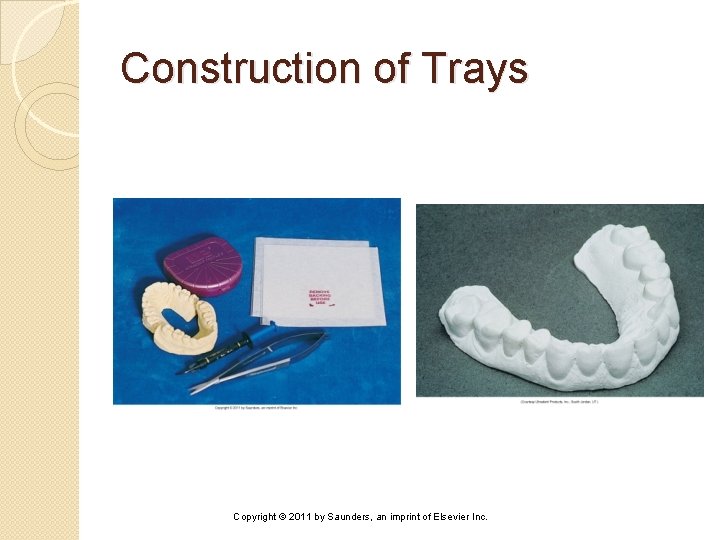
Construction of Trays Copyright © 2011 by Saunders, an imprint of Elsevier Inc.
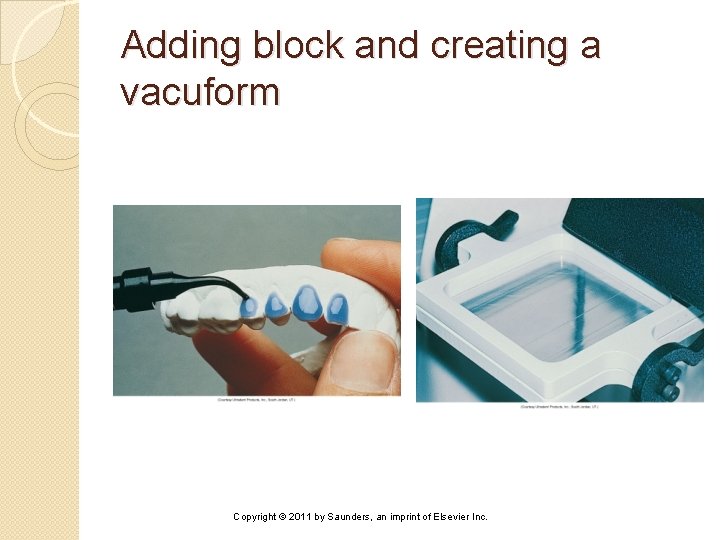
Adding block and creating a vacuform Copyright © 2011 by Saunders, an imprint of Elsevier Inc.
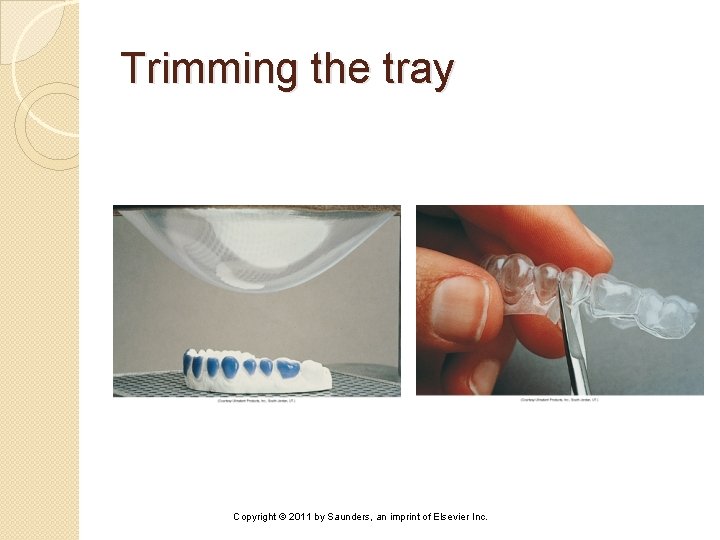
Trimming the tray Copyright © 2011 by Saunders, an imprint of Elsevier Inc.
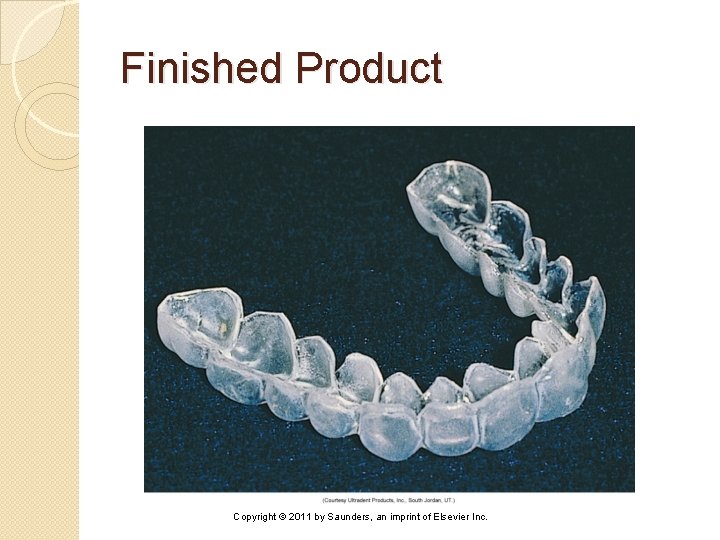
Finished Product Copyright © 2011 by Saunders, an imprint of Elsevier Inc.
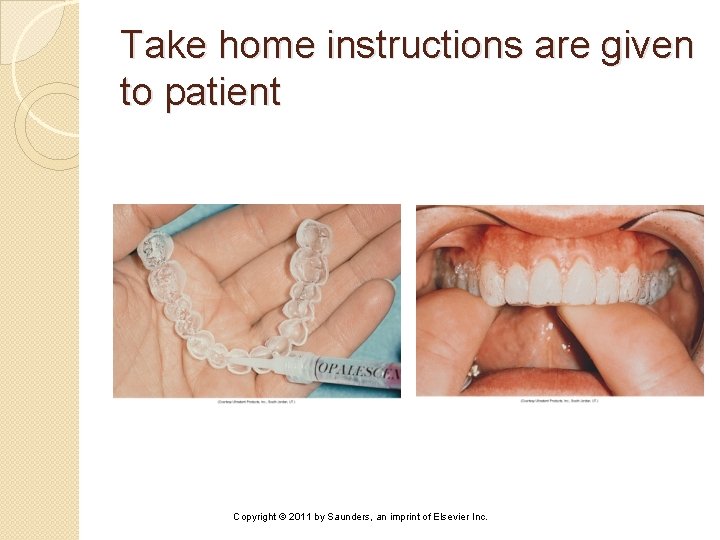
Take home instructions are given to patient Copyright © 2011 by Saunders, an imprint of Elsevier Inc.
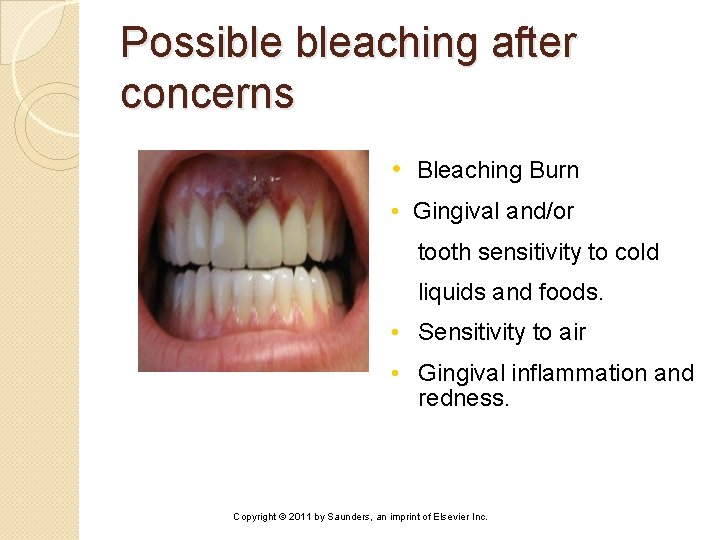
Possible bleaching after concerns • Bleaching Burn • Gingival and/or tooth sensitivity to cold liquids and foods. • Sensitivity to air • Gingival inflammation and redness. Copyright © 2011 by Saunders, an imprint of Elsevier Inc.
Contraindications �Bleaching is not for everyone. �Some patients may be allergic to components of the bleaching material. �Sensitive teeth may exacerbate the problem. �Patients may have unrealistic expectations.
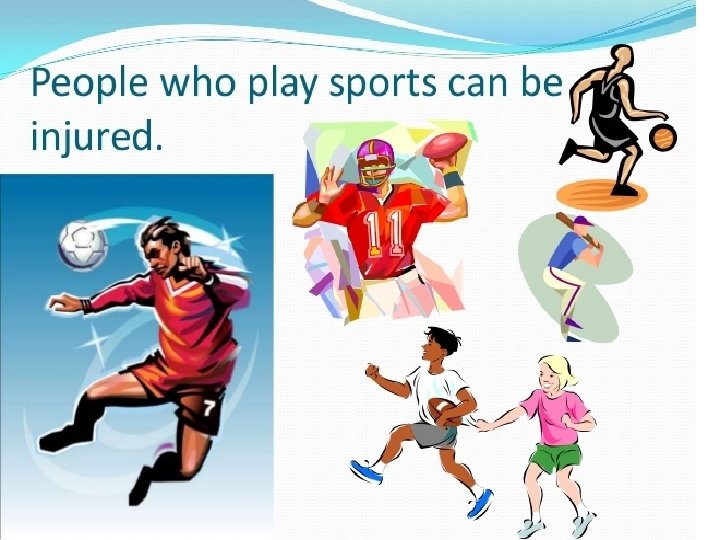
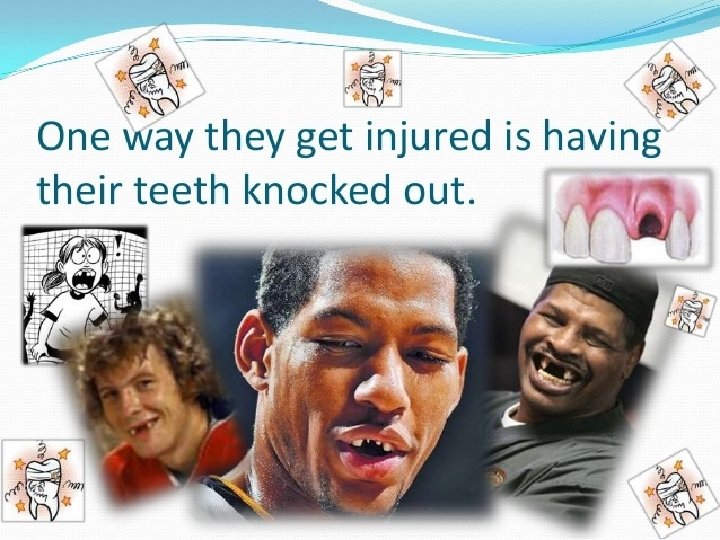
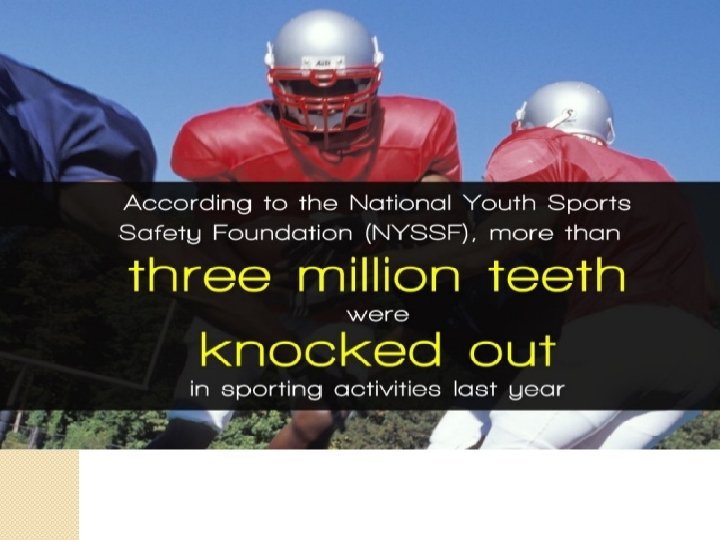
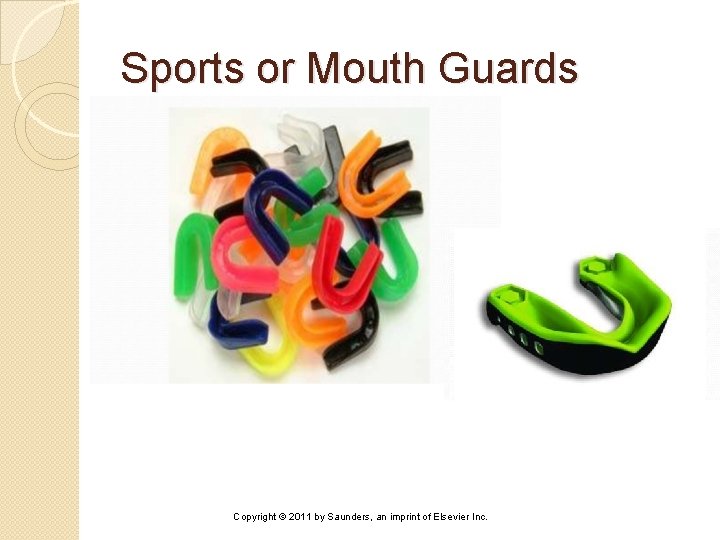
Sports or Mouth Guards Copyright © 2011 by Saunders, an imprint of Elsevier Inc.
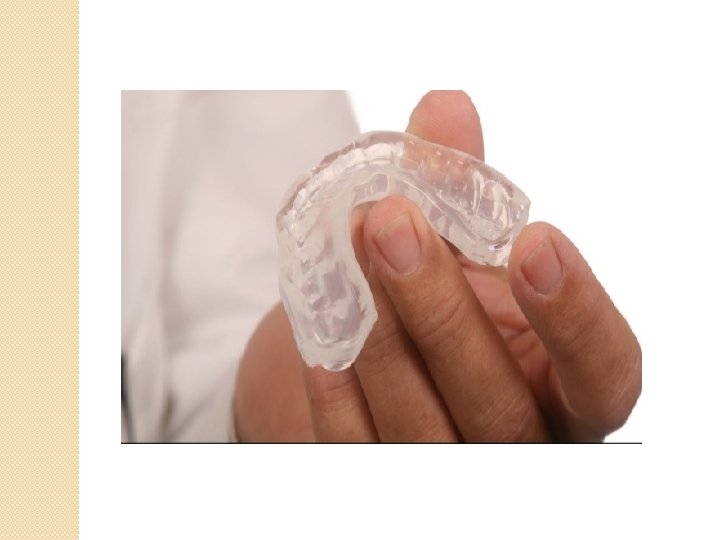
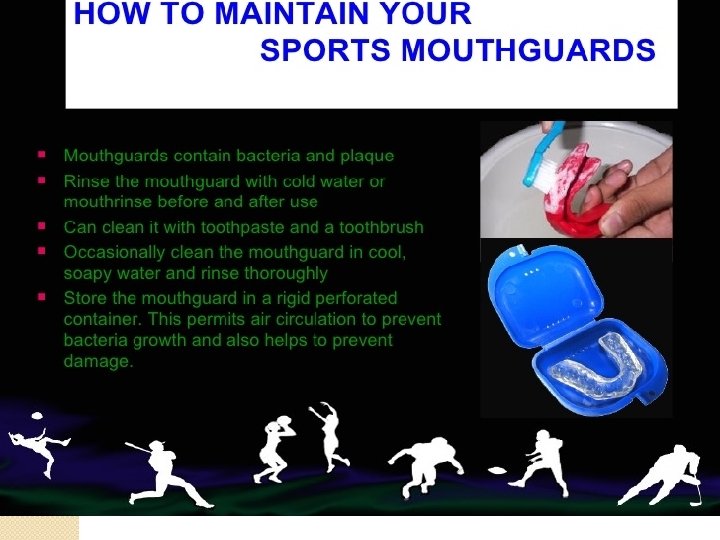
Mouth Guards and Splints �The purpose of mouth guards and splints is to protect the teeth and their supporting structures. �Mouth guards are recommended for ◦ Athletics (not just contact sports) ◦ Use as night guards
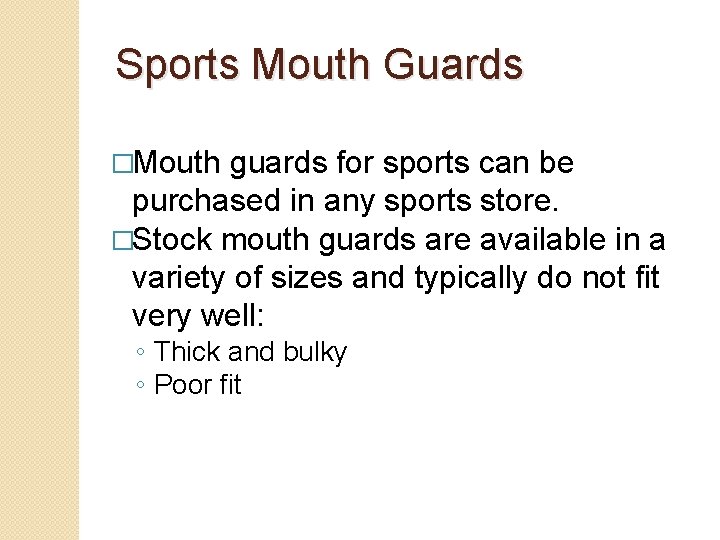
Sports Mouth Guards �Mouth guards for sports can be purchased in any sports store. �Stock mouth guards are available in a variety of sizes and typically do not fit very well: ◦ Thick and bulky ◦ Poor fit
Sports Mouth Guards (cont’d) �Ideally, a good mouth guard is custom made in the dental office: ◦ Custom fit ◦ Much more comfortable ◦ Athlete much more likely to wear it
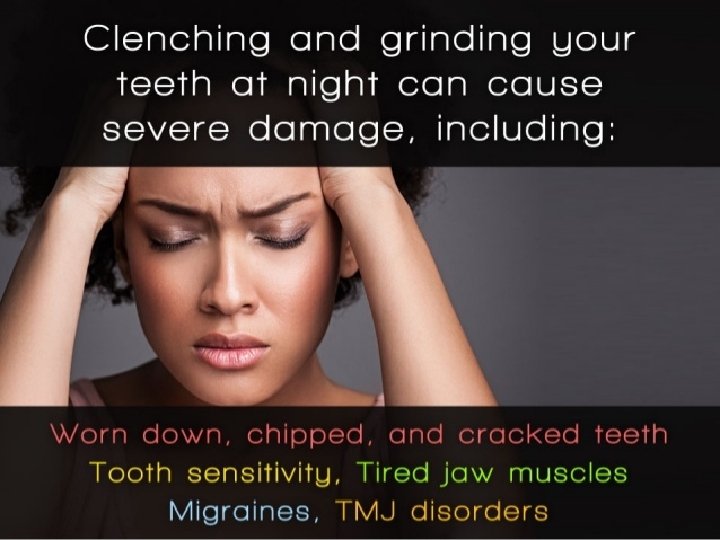
Night Guards �Many patients grind their teeth (bruxing). �Most bruxing occurs during sleep. �Other patients clench their teeth during stressful times. �A guard does not stop the habit, but it does relieve the stress placed on the jaw joint.
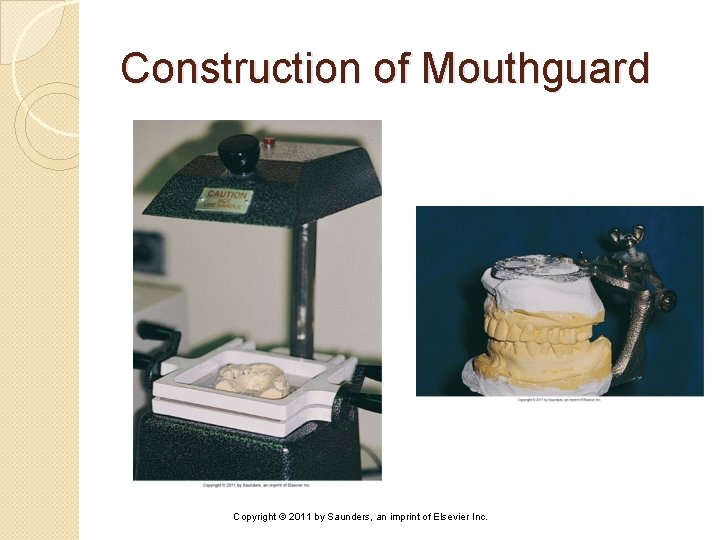
Construction of Mouthguard Copyright © 2011 by Saunders, an imprint of Elsevier Inc.
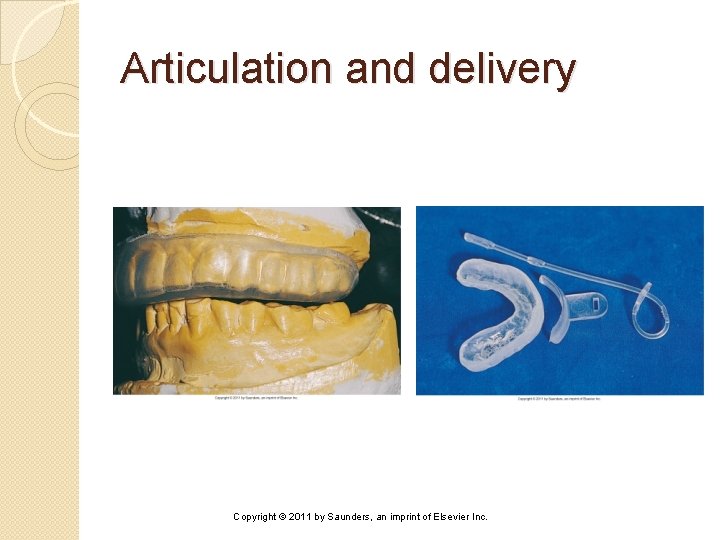
Articulation and delivery Copyright © 2011 by Saunders, an imprint of Elsevier Inc.
Summary �Preventive practices in dentistry extend far beyond normal cleaning and fluoride application every 6 months. �Prevention involves the disease process and extends to injury, habit avoidance, and esthetics.
- Slides: 56