
PREVENTION OF STROKE IN PATIENTS WITH AF IN


- Slides: 52
PREVENTION OF STROKE IN PATIENTS WITH AF IN CHINA Dayi Hu Peking University
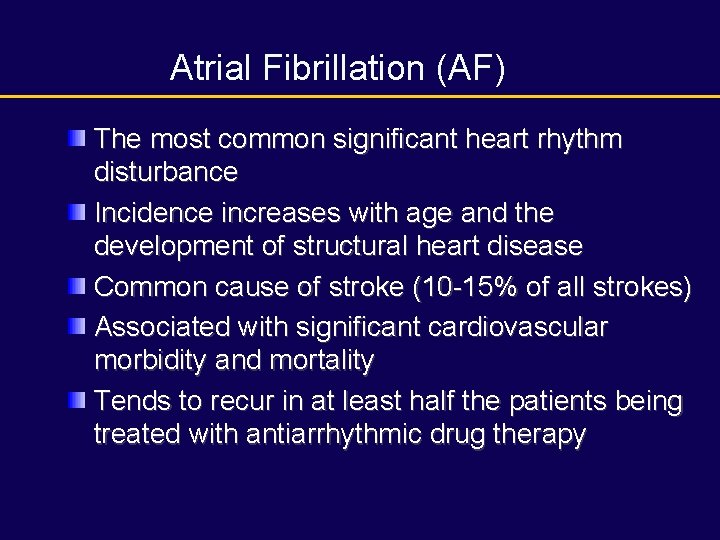
Atrial Fibrillation (AF) The most common significant heart rhythm disturbance Incidence increases with age and the development of structural heart disease Common cause of stroke (10 -15% of all strokes) Associated with significant cardiovascular morbidity and mortality Tends to recur in at least half the patients being treated with antiarrhythmic drug therapy
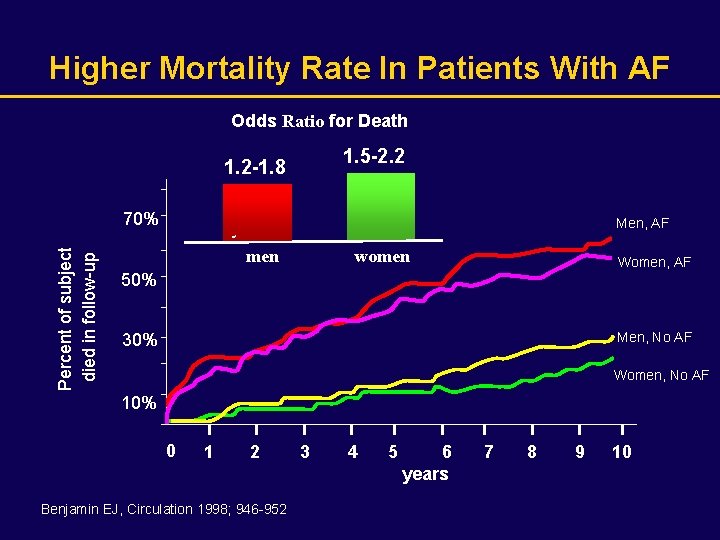
Higher Mortality Rate In Patients With AF Odds Ratio for Death 1. 5 -2. 2 1. 2 -1. 8 Percent of subject died in follow-up 70% Men, AF men women Women, AF 50% Men, No AF 30% Women, No AF 10% 0 1 2 Benjamin EJ, Circulation 1998; 946 -952 3 4 5 6 years 7 8 9 10
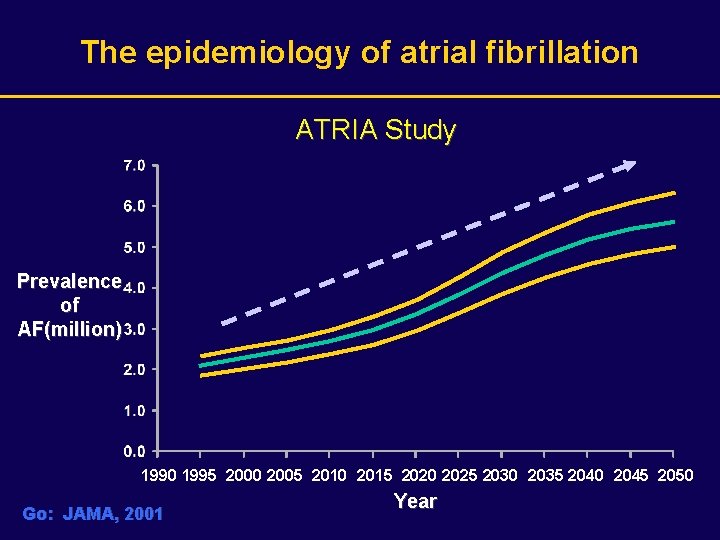
The epidemiology of atrial fibrillation ATRIA Study Prevalence of AF(million) 1990 1995 2000 2005 2010 2015 2020 2025 2030 2035 2040 2045 2050 Go: JAMA, 2001 Year
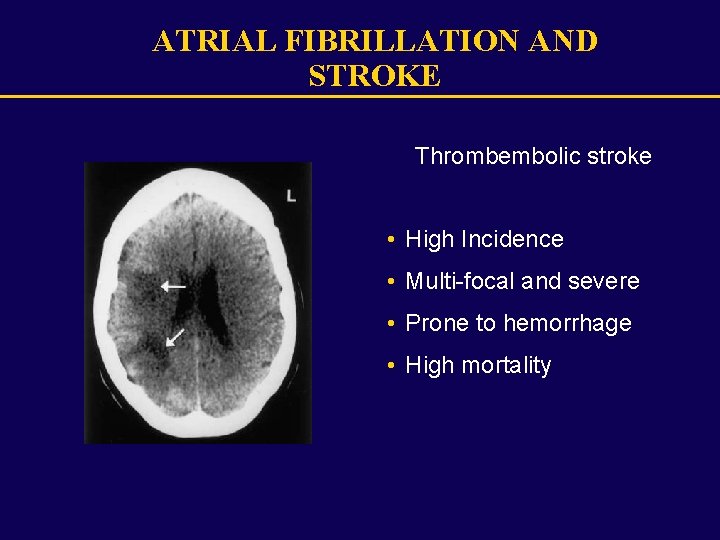
ATRIAL FIBRILLATION AND STROKE Thrombembolic stroke • High Incidence • Multi-focal and severe • Prone to hemorrhage • High mortality
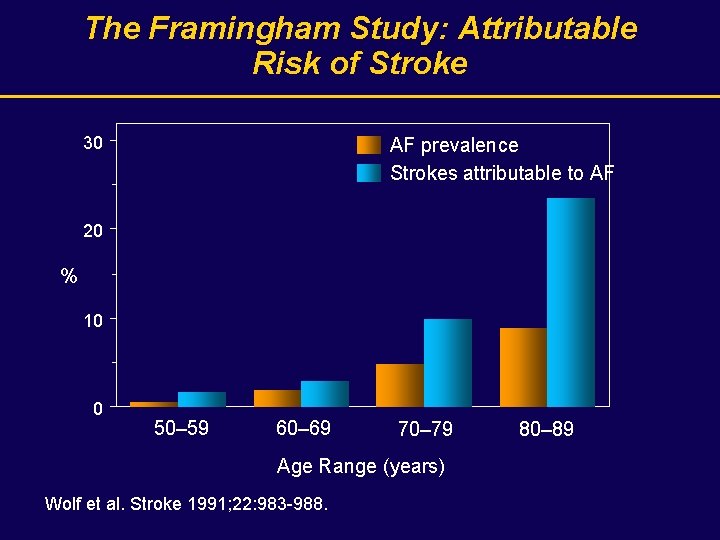
The Framingham Study: Attributable Risk of Stroke 30 AF prevalence Strokes attributable to AF 20 % 10 0 50– 59 60– 69 70– 79 Age Range (years) Wolf et al. Stroke 1991; 22: 983 -988. 80– 89
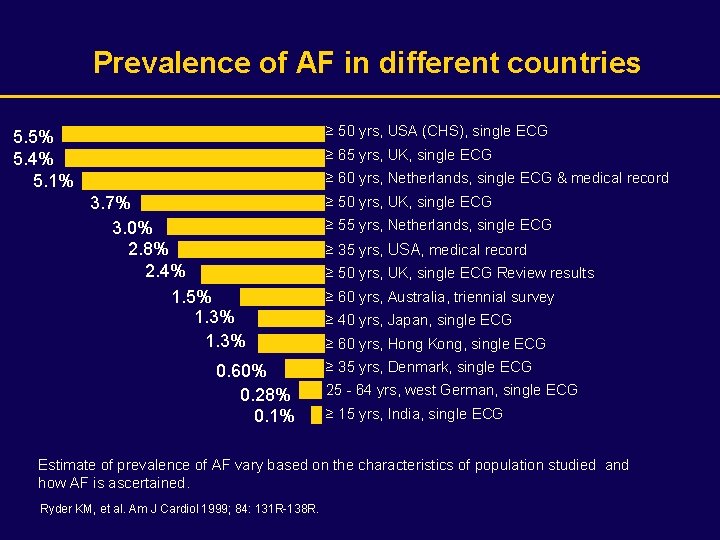
Prevalence of AF in different countries ≥ 50 yrs, USA (CHS), single ECG 5. 5% 5. 4% 5. 1% ≥ 65 yrs, UK, single ECG ≥ 60 yrs, Netherlands, single ECG & medical record 3. 7% 3. 0% 2. 8% 2. 4% 1. 5% 1. 3% 0. 60% 0. 28% 0. 1% ≥ 50 yrs, UK, single ECG ≥ 55 yrs, Netherlands, single ECG ≥ 35 yrs, USA, medical record ≥ 50 yrs, UK, single ECG Review results ≥ 60 yrs, Australia, triennial survey ≥ 40 yrs, Japan, single ECG ≥ 60 yrs, Hong Kong, single ECG ≥ 35 yrs, Denmark, single ECG 25 - 64 yrs, west German, single ECG ≥ 15 yrs, India, single ECG Estimate of prevalence of AF vary based on the characteristics of population studied and how AF is ascertained. Ryder KM, et al. Am J Cardiol 1999; 84: 131 R-138 R.
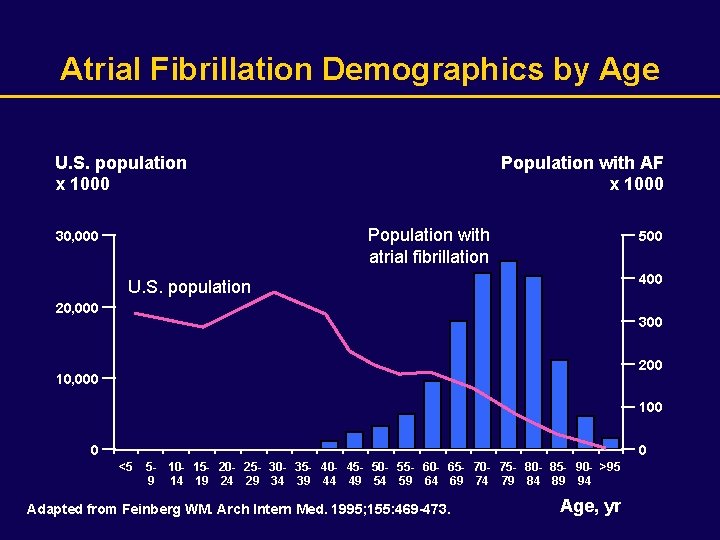
Atrial Fibrillation Demographics by Age U. S. population x 1000 Population with AF x 1000 Population with atrial fibrillation 30, 000 500 400 U. S. population 20, 000 300 200 10, 000 100 0 0 <5 5 - 10 - 15 - 20 - 25 - 30 - 35 - 40 - 45 - 50 - 55 - 60 - 65 - 70 - 75 - 80 - 85 - 90 - >95 9 14 19 24 29 34 39 44 49 54 59 64 69 74 79 84 89 94 Adapted from Feinberg WM. Arch Intern Med. 1995; 155: 469 -473. Age, yr
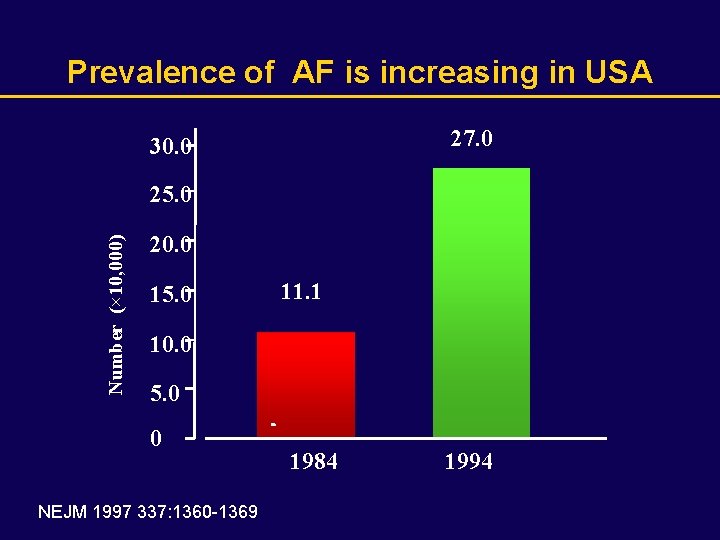
Prevalence of AF is increasing in USA 27. 0 30. 0 Number (× 10, 000) 25. 0 20. 0 15. 0 11. 1 10. 0 5. 0 0 NEJM 1997 337: 1360 -1369 1984 1994
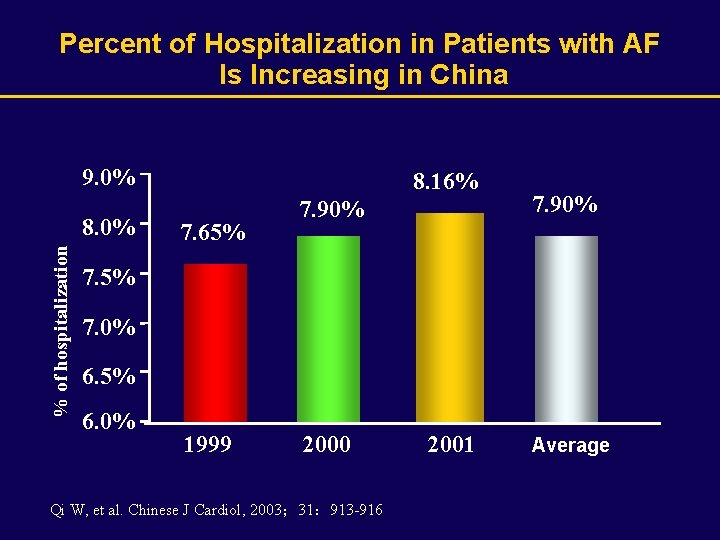
Percent of Hospitalization in Patients with AF Is Increasing in China 9. 0% % of hospitalization 8. 0% 8. 16% 7. 65% 7. 90% 7. 5% 7. 0% 6. 5% 6. 0% 1999 2000 Qi W, et al. Chinese J Cardiol, 2003; 31: 913 -916 2001 Average
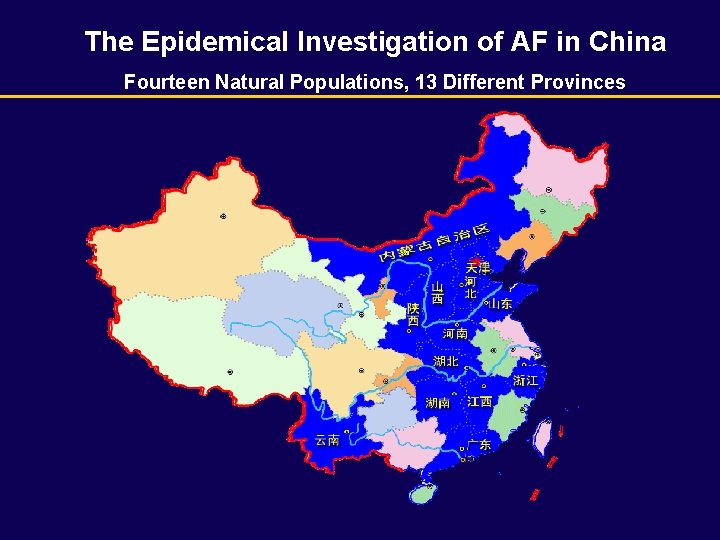
The Epidemical Investigation of AF in China Fourteen Natural Populations, 13 Different Provinces
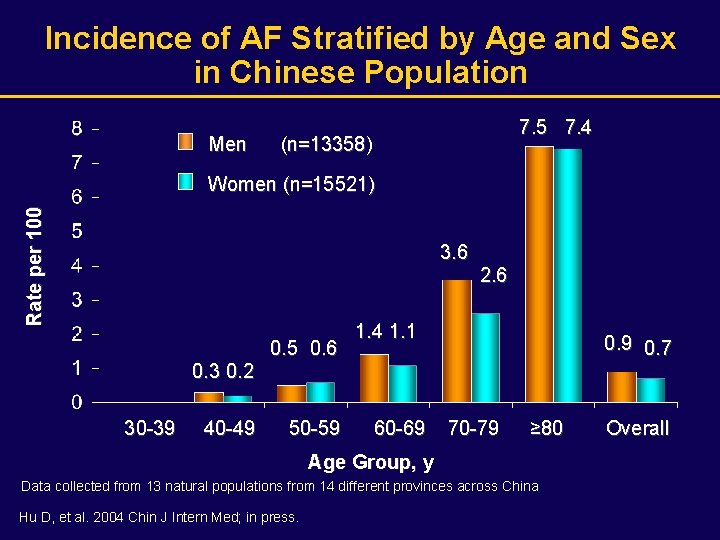
Incidence of AF Stratified by Age and Sex in Chinese Population Men 7. 5 7. 4 (n=13358) Rate per 100 Women (n=15521) 3. 6 0. 3 0. 2 30 -39 40 -49 0. 5 0. 6 50 -59 2. 6 1. 4 1. 1 60 -69 0. 7 70 -79 ≥ 80 Age Group, y Data collected from 13 natural populations from 14 different provinces across China Hu D, et al. 2004 Chin J Intern Med; in press. Overall
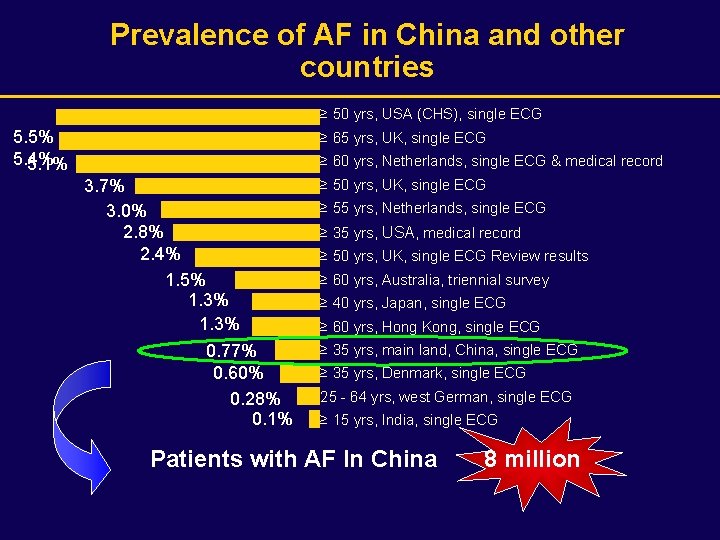
Prevalence of AF in China and other countries ≥ 50 yrs, USA (CHS), single ECG 5. 5% 5. 4% 5. 1% ≥ 65 yrs, UK, single ECG ≥ 60 yrs, Netherlands, single ECG & medical record 3. 7% 3. 0% 2. 8% 2. 4% 1. 5% 1. 3% 0. 77% 0. 60% 0. 28% 0. 1% ≥ 50 yrs, UK, single ECG ≥ 55 yrs, Netherlands, single ECG ≥ 35 yrs, USA, medical record ≥ 50 yrs, UK, single ECG Review results ≥ 60 yrs, Australia, triennial survey ≥ 40 yrs, Japan, single ECG ≥ 60 yrs, Hong Kong, single ECG ≥ 35 yrs, main land, China, single ECG ≥ 35 yrs, Denmark, single ECG 25 - 64 yrs, west German, single ECG ≥ 15 yrs, India, single ECG Patients with AF In China 8 million
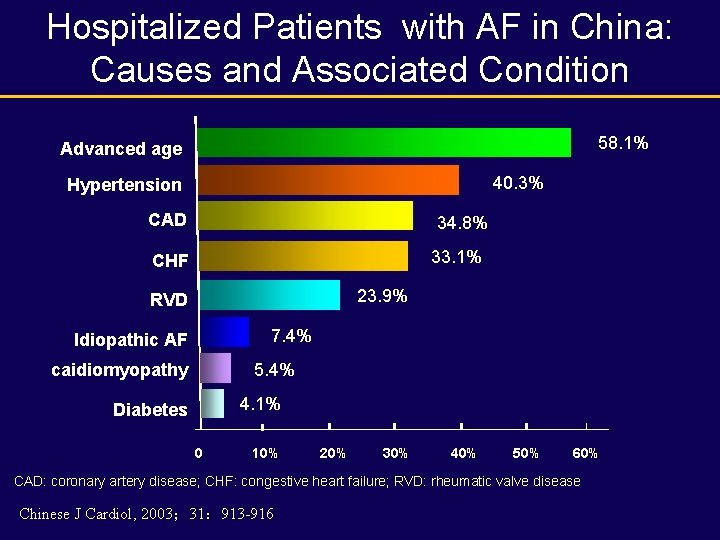
Hospitalized Patients with AF in China: Causes and Associated Condition 58. 1% Advanced age 40. 3% Hypertension CAD 34. 8% 33. 1% CHF 23. 9% RVD 7. 4% Idiopathic AF caidiomyopathy 5. 4% 4. 1% Diabetes 0 10% 20% 30% 40% 50% 60% CAD: coronary artery disease; CHF: congestive heart failure; RVD: rheumatic valve disease Chinese J Cardiol, 2003; 31: 913 -916
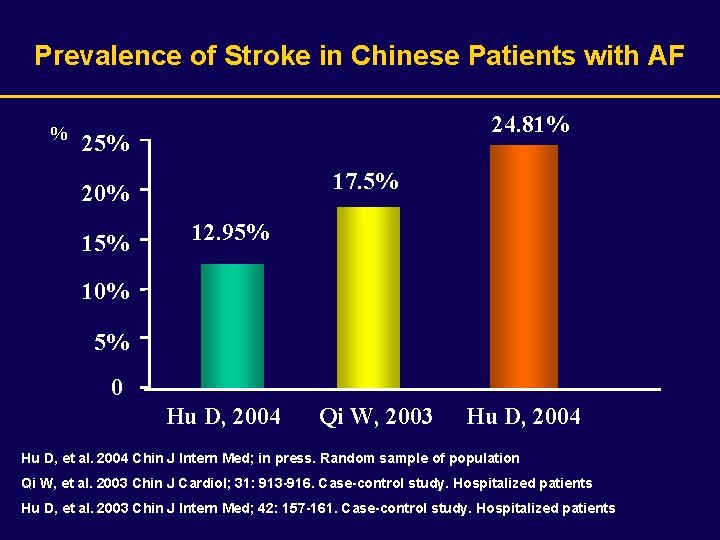
Prevalence of Stroke in Chinese Patients with AF % 24. 81% 25% 17. 5% 20% 15% 12. 95% 10% 5% 0 Hu D, 2004 Qi W, 2003 Hu D, 2004 Hu D, et al. 2004 Chin J Intern Med; in press. Random sample of population Qi W, et al. 2003 Chin J Cardiol; 31: 913 -916. Case-control study. Hospitalized patients Hu D, et al. 2003 Chin J Intern Med; 42: 157 -161. Case-control study. Hospitalized patients
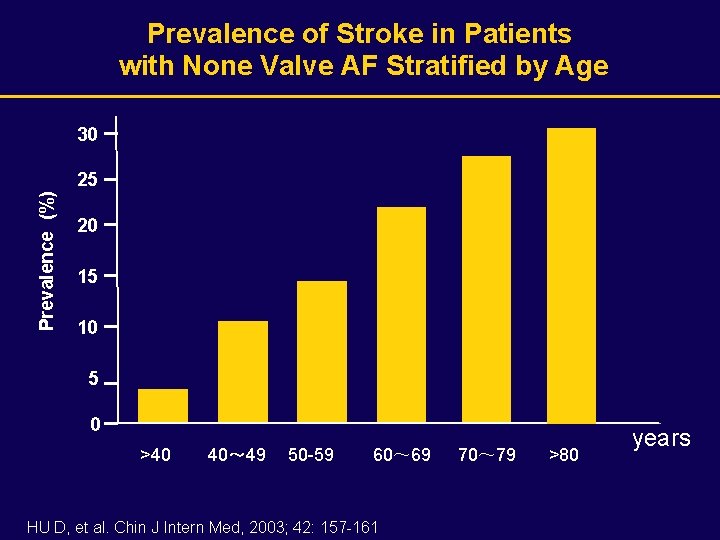
Prevalence of Stroke in Patients with None Valve AF Stratified by Age 30 Prevalence (%) 25 20 15 10 5 0 >40 40~ 49 50 -59 60~ 69 HU D, et al. Chin J Intern Med, 2003; 42: 157 -161 70~ 79 >80 years
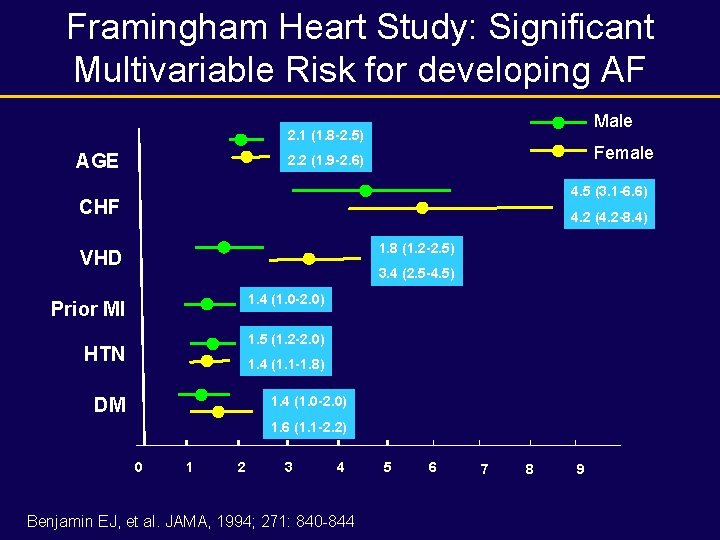
Framingham Heart Study: Significant Multivariable Risk for developing AF Male 2. 1 (1. 8 -2. 5) AGE Female 2. 2 (1. 9 -2. 6) 4. 5 (3. 1 -6. 6) CHF 4. 2 (4. 2 -8. 4) 1. 8 (1. 2 -2. 5) VHD 3. 4 (2. 5 -4. 5) 1. 4 (1. 0 -2. 0) Prior MI 1. 5 (1. 2 -2. 0) HTN 1. 4 (1. 1 -1. 8) 1. 4 (1. 0 -2. 0) DM 1. 6 (1. 1 -2. 2) 0 1 2 3 4 Benjamin EJ, et al. JAMA, 1994; 271: 840 -844 5 6 7 8 9
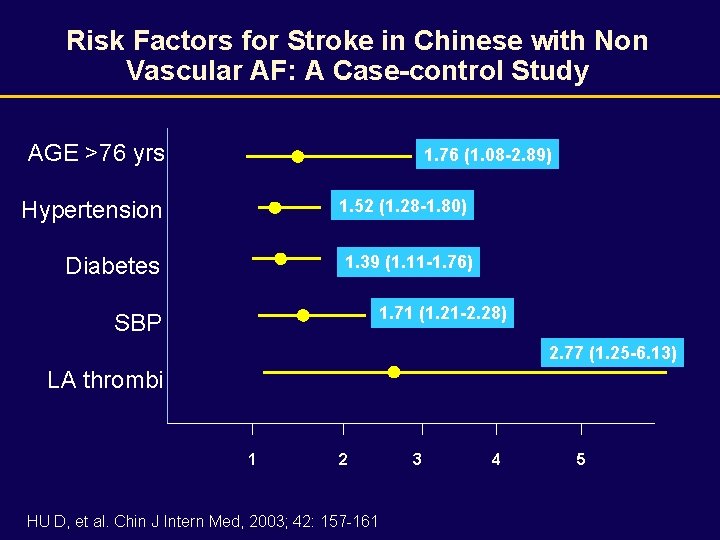
Risk Factors for Stroke in Chinese with Non Vascular AF: A Case-control Study AGE >76 yrs 1. 76 (1. 08 -2. 89) 1. 52 (1. 28 -1. 80) Hypertension 1. 39 (1. 11 -1. 76) Diabetes 1. 71 (1. 21 -2. 28) SBP 2. 77 (1. 25 -6. 13) LA thrombi 1 2 HU D, et al. Chin J Intern Med, 2003; 42: 157 -161 3 4 5
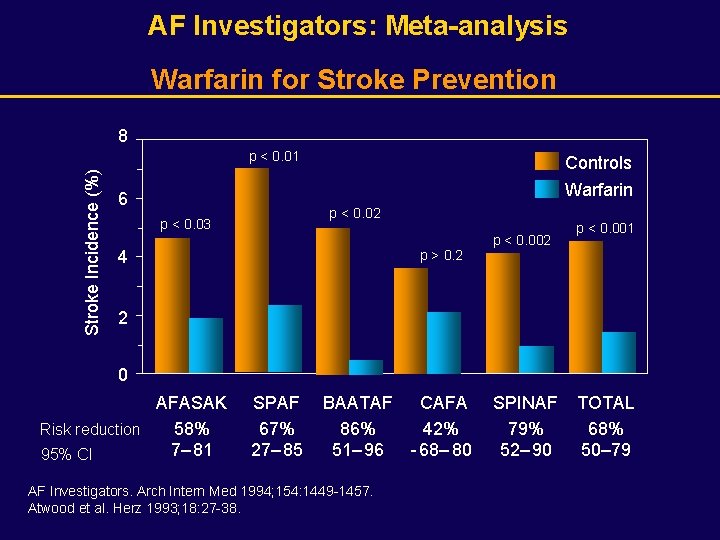
AF Investigators: Meta-analysis Warfarin for Stroke Prevention 8 Stroke Incidence (%) p < 0. 01 Controls Warfarin 6 p < 0. 02 p < 0. 03 4 p > 0. 2 p < 0. 001 2 0 AFASAK 58% Risk reduction 7– 81 95% CI SPAF 67% 27– 85 BAATAF 86% 51– 96 AF Investigators. Arch Intern Med 1994; 154: 1449 -1457. Atwood et al. Herz 1993; 18: 27 -38. CAFA 42% - 68– 80 SPINAF 79% 52– 90 TOTAL 68% 50– 79
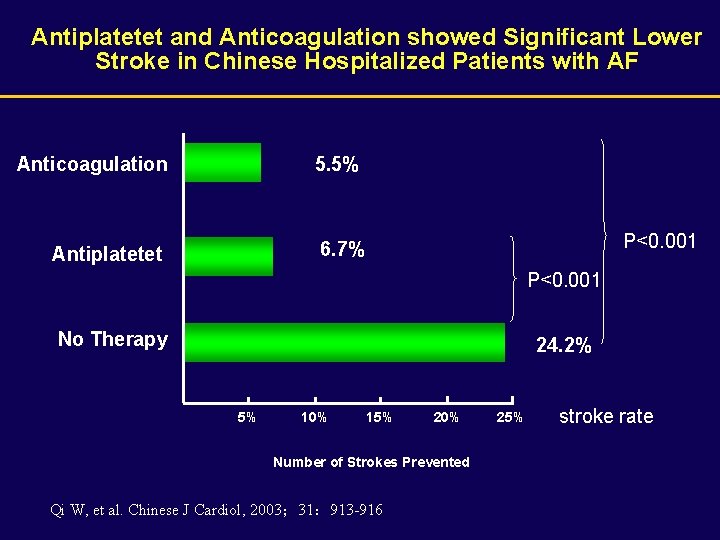
Antiplatetet and Anticoagulation showed Significant Lower Stroke in Chinese Hospitalized Patients with AF Anticoagulation 5. 5% Antiplatetet 6. 7% P<0. 001 No Therapy 24. 2% 0 5% 10% 15% 20% Number of Strokes Prevented Qi W, et al. Chinese J Cardiol, 2003; 31: 913 -916 25% stroke rate
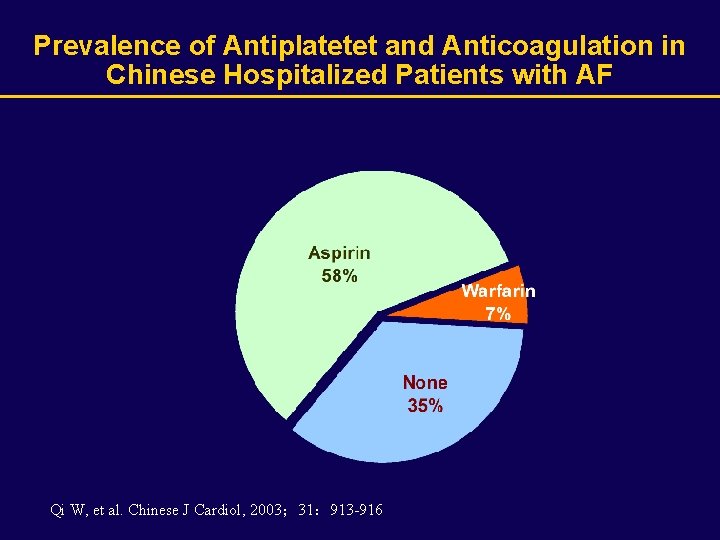
Prevalence of Antiplatetet and Anticoagulation in Chinese Hospitalized Patients with AF Qi W, et al. Chinese J Cardiol, 2003; 31: 913 -916
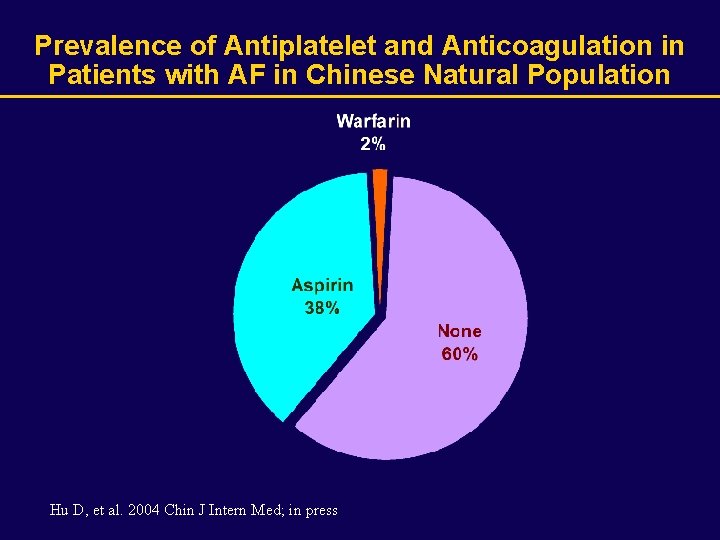
Prevalence of Antiplatelet and Anticoagulation in Patients with AF in Chinese Natural Population Hu D, et al. 2004 Chin J Intern Med; in press
For Chinese, Is Warfarin Better than Aspirin? If So What is the Optimal INR?
For Chinese, Is Warfarin Better than Aspirin? If So What is the Optimal INR?
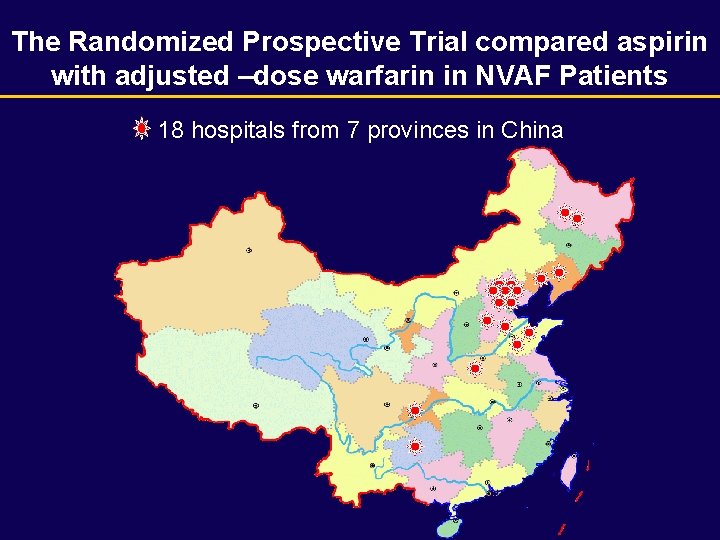
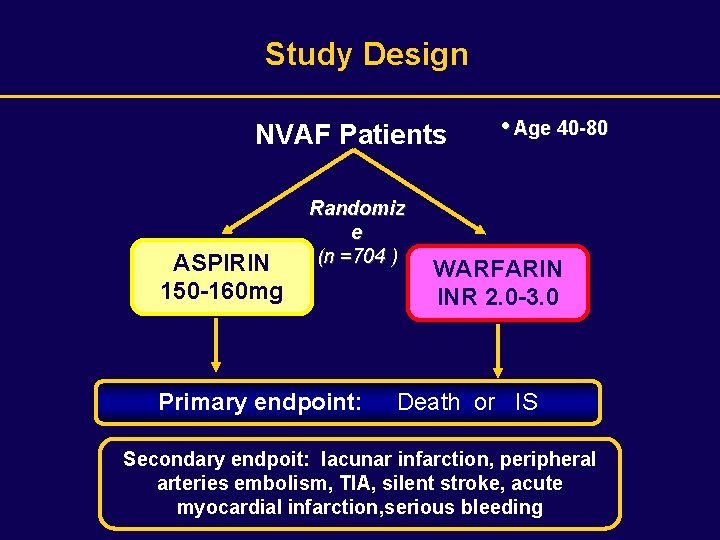
The Randomized Prospective Trial compared aspirin with adjusted –dose warfarin in NVAF Patients 18 hospitals from 7 provinces in China
Study Design NVAF Patients ASPIRIN 150 -160 mg Randomiz e (n =704 ) Primary endpoint: • Age 40 -80 WARFARIN INR 2. 0 -3. 0 Death or IS Secondary endpoit: lacunar infarction, peripheral arteries embolism, TIA, silent stroke, acute myocardial infarction, serious bleeding
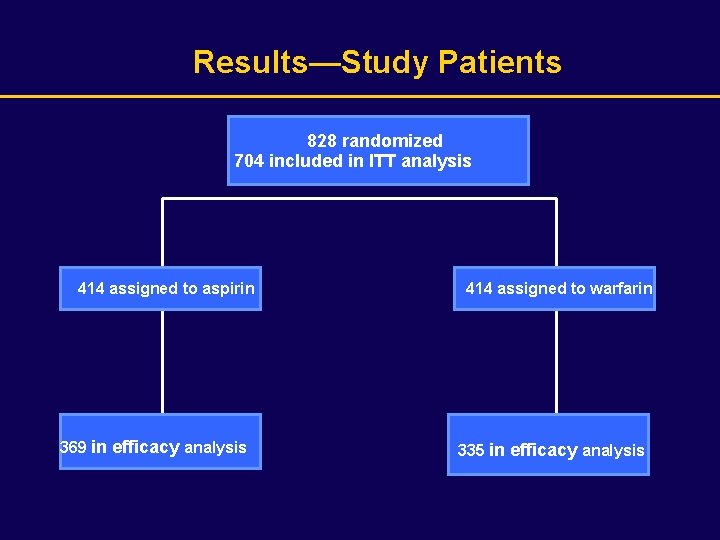
Results—Study Patients 828 randomized 704 included in ITT analysis 414 assigned to aspirin 369 in efficacy analysis 414 assigned to warfarin 335 in efficacy analysis
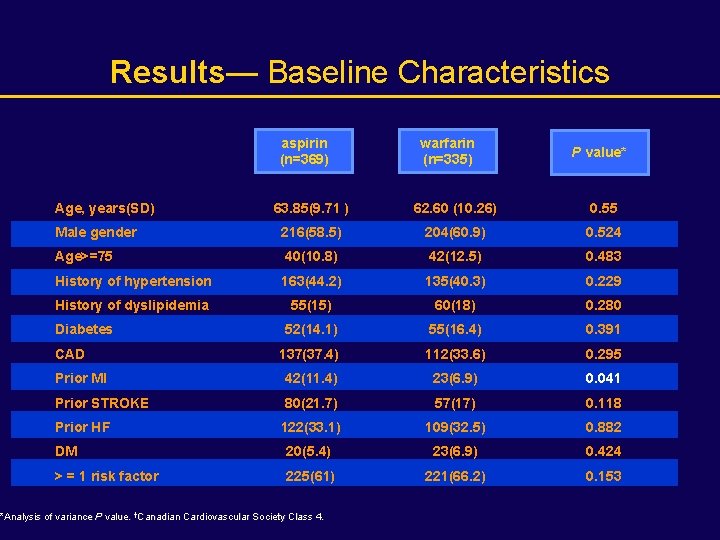
Results— Baseline Characteristics aspirin (n=369) Age, years(SD) warfarin (n=335) P value* 63. 85(9. 71 ) 62. 60 (10. 26) 0. 55 Male gender 216(58. 5) 204(60. 9) 0. 524 Age>=75 40(10. 8) 42(12. 5) 0. 483 History of hypertension 163(44. 2) 135(40. 3) 0. 229 History of dyslipidemia 55(15) 60(18) 0. 280 52(14. 1) 55(16. 4) 0. 391 137(37. 4) 112(33. 6) 0. 295 Prior MI 42(11. 4) 23(6. 9) 0. 041 Prior STROKE 80(21. 7) 57(17) 0. 118 122(33. 1) 109(32. 5) 0. 882 DM 20(5. 4) 23(6. 9) 0. 424 > = 1 risk factor 225(61) 221(66. 2) 0. 153 Diabetes CAD Prior HF *Analysis of variance P value. †Canadian Cardiovascular Society Class 4.
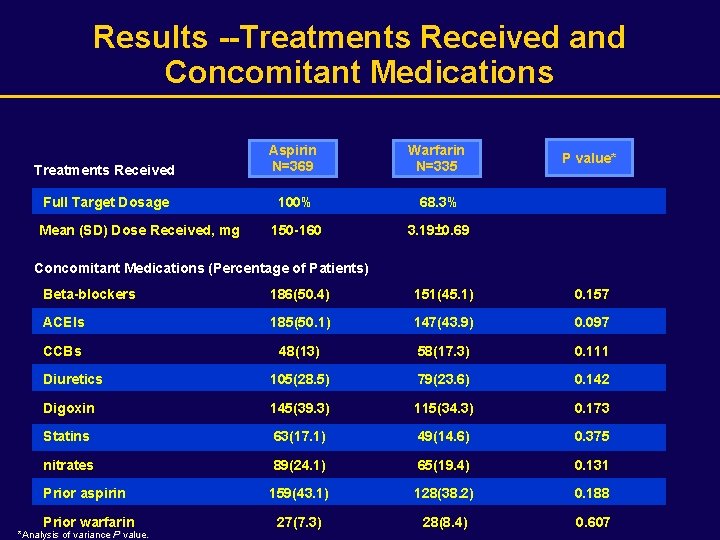
Results --Treatments Received and Concomitant Medications Treatments Received Aspirin N=369 Warfarin N=335 Full Target Dosage 100% 68. 3% 150 -160 3. 19± 0. 69 Mean (SD) Dose Received, mg P value* Concomitant Medications (Percentage of Patients) Beta-blockers 186(50. 4) 151(45. 1) 0. 157 ACEIs 185(50. 1) 147(43. 9) 0. 097 CCBs 48(13) 58(17. 3) 0. 111 Diuretics 105(28. 5) 79(23. 6) 0. 142 Digoxin 145(39. 3) 115(34. 3) 0. 173 Statins 63(17. 1) 49(14. 6) 0. 375 nitrates 89(24. 1) 65(19. 4) 0. 131 159(43. 1) 128(38. 2) 0. 188 27(7. 3) 28(8. 4) 0. 607 Prior aspirin Prior warfarin *Analysis of variance P value.
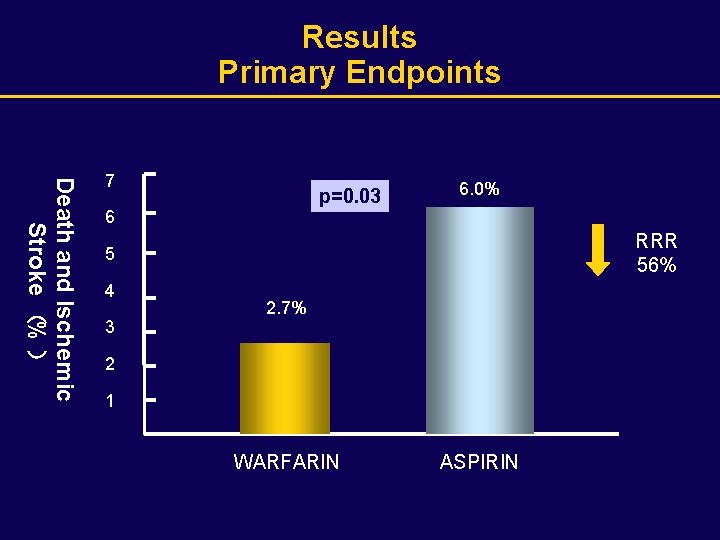
Results Primary Endpoints Death and Ischemic Stroke (% ) 7 p=0. 03 6 6. 0% RRR 56% 5 4 3 2. 7% 2 1 WARFARIN ASPIRIN
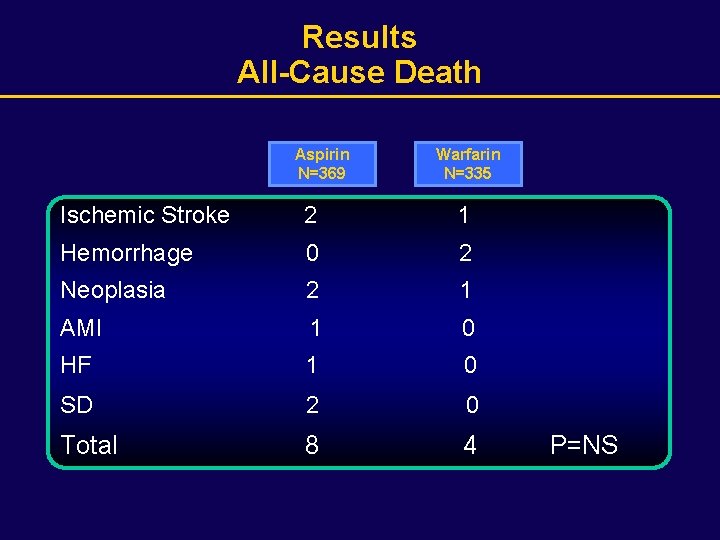
Results All-Cause Death Aspirin N=369 Warfarin N=335 Ischemic Stroke 2 1 Hemorrhage 0 2 Neoplasia 2 1 AMI 1 0 HF 1 0 SD 2 0 Total 8 4 P=NS
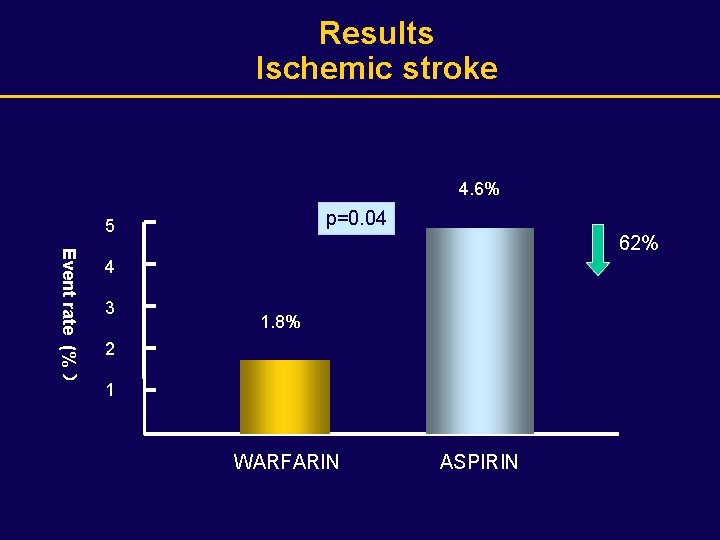
Results Ischemic stroke 4. 6% p=0. 04 5 Event rate (% ) 62% 4 3 1. 8% 2 1 WARFARIN ASPIRIN
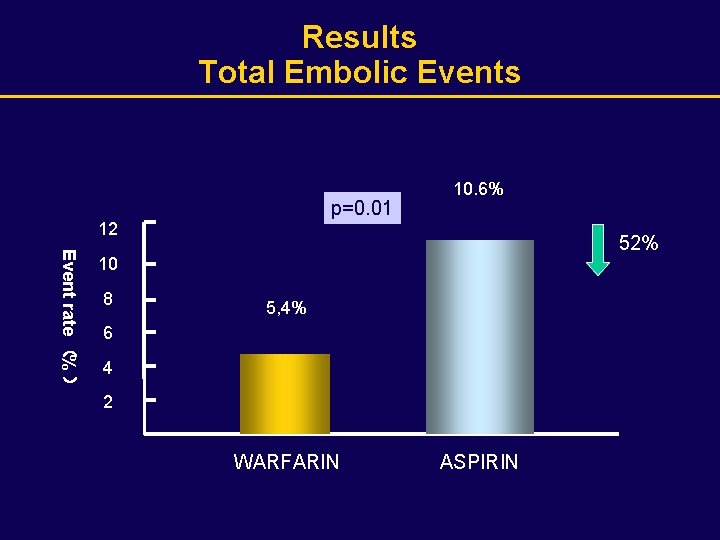
Results Total Embolic Events p=0. 01 12 10. 6% Event rate (% ) 52% 10 8 5, 4% 6 4 2 WARFARIN ASPIRIN
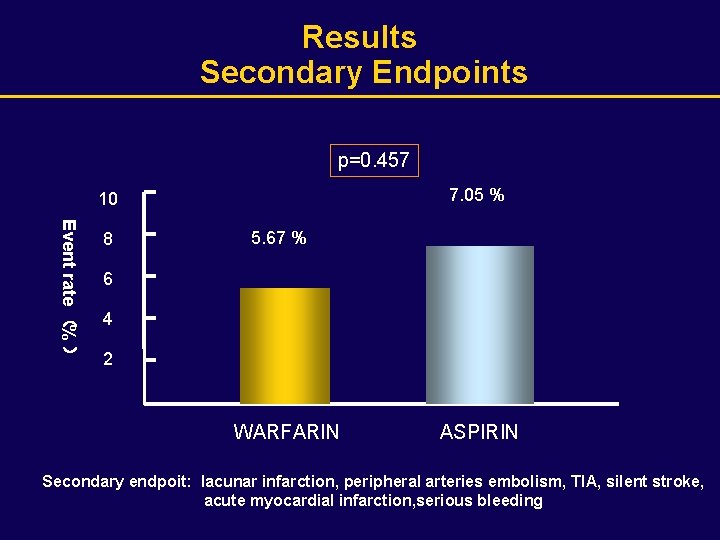
Results Secondary Endpoints p=0. 457 7. 05 % 10 Event rate (% ) 8 5. 67 % 6 4 2 WARFARIN ASPIRIN Secondary endpoit: lacunar infarction, peripheral arteries embolism, TIA, silent stroke, acute myocardial infarction, serious bleeding
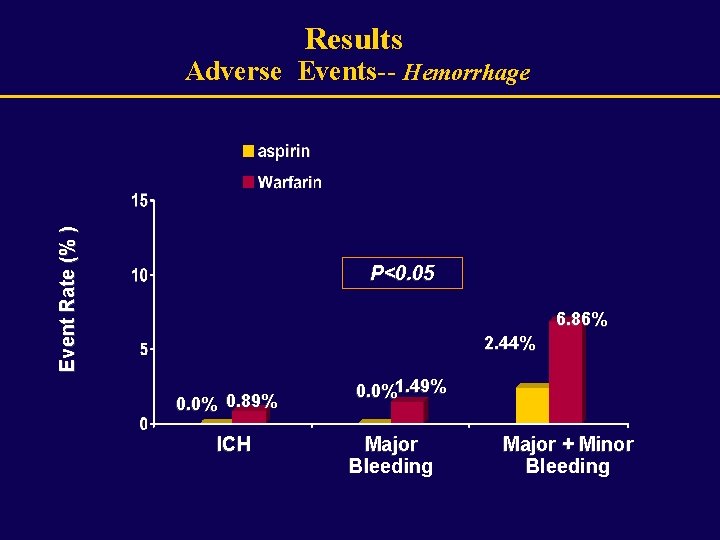
Results Event Rate (% ) Adverse Events-- Hemorrhage P<0. 05 6. 86% 2. 44% 0. 0% 0. 89% ICH 0. 0%1. 49% Major Bleeding Major + Minor Bleeding
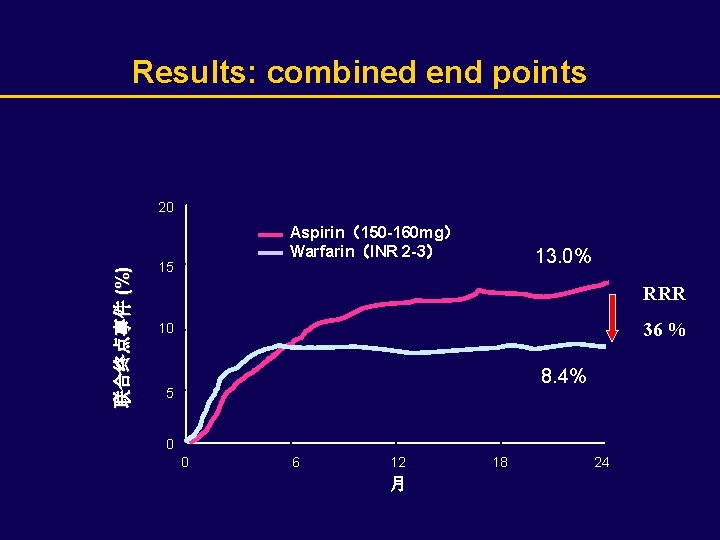
Results: combined end points 非瓣膜房颤 717例,平均随访 19个月。 联合终点事件 (%) 20 Aspirin(150 -160 mg) Warfarin(INR 2 -3) 15 13. 0% RRR 36 % 10 8. 4% 5 0 0 6 12 月 18 24
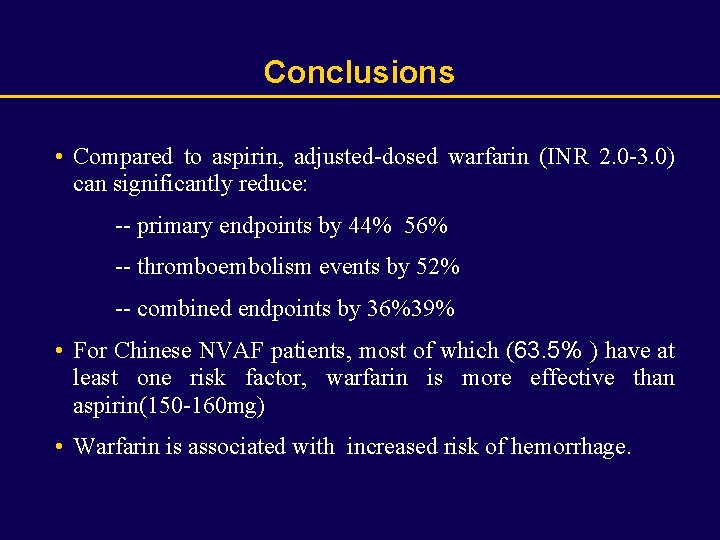
Conclusions • Compared to aspirin, adjusted-dosed warfarin (INR 2. 0 -3. 0) can significantly reduce: -- primary endpoints by 44% 56% -- thromboembolism events by 52% -- combined endpoints by 36%39% • For Chinese NVAF patients, most of which (63. 5% ) have at least one risk factor, warfarin is more effective than aspirin(150 -160 mg) • Warfarin is associated with increased risk of hemorrhage.
For Chinese, Is Warfarin Better than Aspirin? If So What is the Optimal INR?
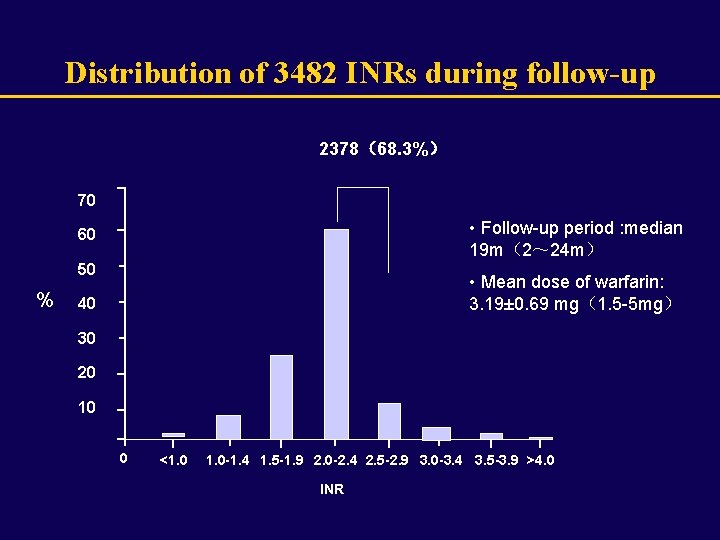
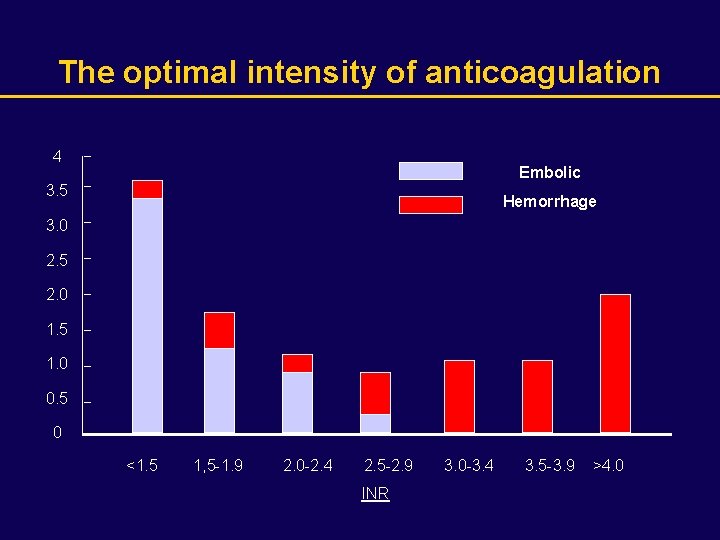
Distribution of 3482 INRs during follow-up 2378(68. 3%) 70 • Follow-up period : median 19 m(2~ 24 m) 60 50 % • Mean dose of warfarin: 3. 19± 0. 69 mg(1. 5 -5 mg) 40 30 20 10 0 <1. 0 -1. 4 1. 5 -1. 9 2. 0 -2. 4 2. 5 -2. 9 3. 0 -3. 4 3. 5 -3. 9 >4. 0 INR
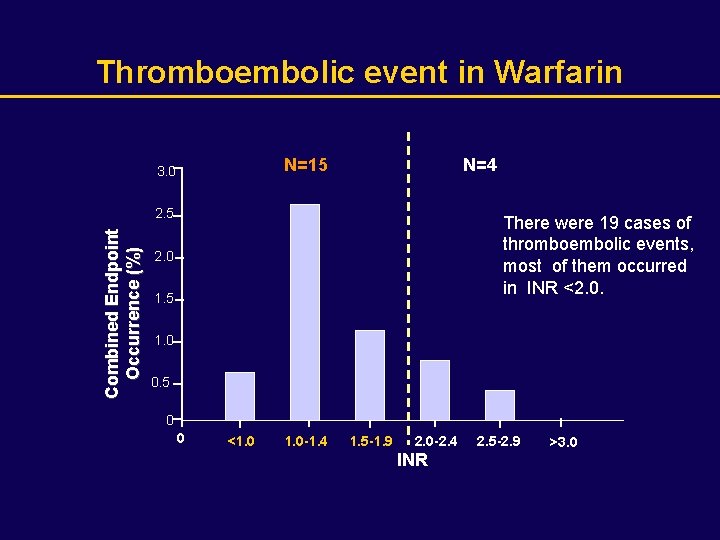
Thromboembolic event in Warfarin N=15 3. 0 N=4 Combined Endpoint Occurrence (%) 2. 5 There were 19 cases of thromboembolic events, most of them occurred in INR <2. 0. 2. 0 1. 5 1. 0 0. 5 0 0 <1. 0 -1. 4 1. 5 -1. 9 2. 0 -2. 4 INR 2. 5 -2. 9 >3. 0
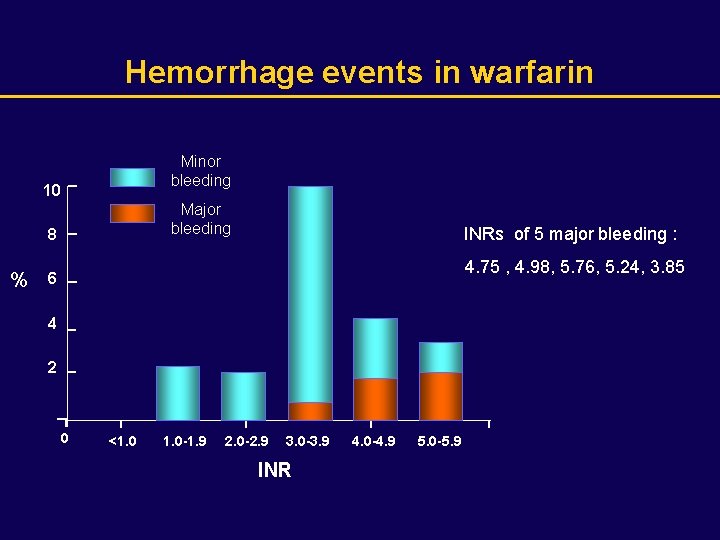
Hemorrhage events in warfarin Minor bleeding 10 Major bleeding 8 % INRs of 5 major bleeding : 4. 75 , 4. 98, 5. 76, 5. 24, 3. 85 6 4 2 0 <1. 0 -1. 9 2. 0 -2. 9 3. 0 -3. 9 INR 4. 0 -4. 9 5. 0 -5. 9
The optimal intensity of anticoagulation 4 Embolic 3. 5 Hemorrhage 3. 0 2. 5 2. 0 1. 5 1. 0 0. 5 0 <1. 5 1, 5 -1. 9 2. 0 -2. 4 2. 5 -2. 9 INR 3. 0 -3. 4 3. 5 -3. 9 >4. 0
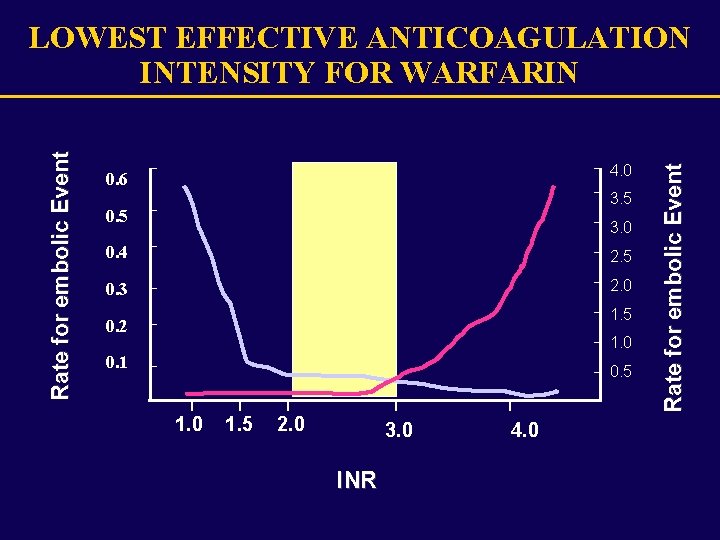
4. 0 0. 6 3. 5 0. 5 3. 0 0. 4 2. 5 0. 3 2. 0 1. 5 0. 2 1. 0 0. 1 0. 5 1. 0 1. 5 2. 0 3. 0 INR 4. 0 Rate for embolic Event LOWEST EFFECTIVE ANTICOAGULATION INTENSITY FOR WARFARIN
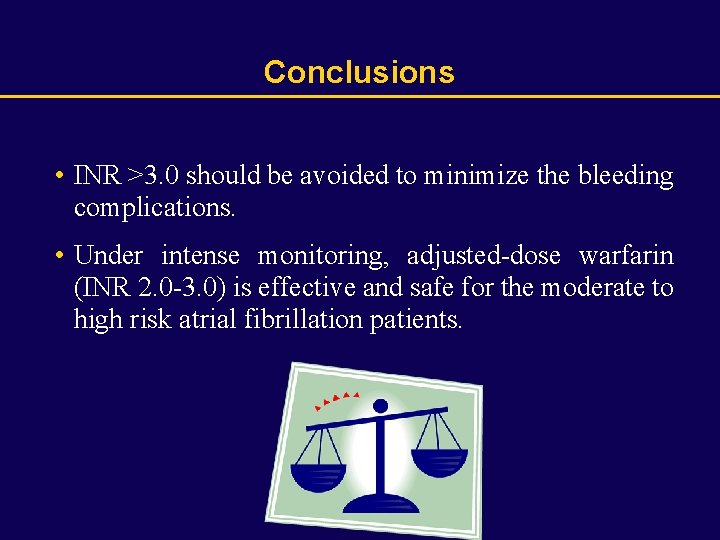
Conclusions • INR >3. 0 should be avoided to minimize the bleeding complications. • Under intense monitoring, adjusted-dose warfarin (INR 2. 0 -3. 0) is effective and safe for the moderate to high risk atrial fibrillation patients.
Atrial fibrillation in China: A Long Way to Go!
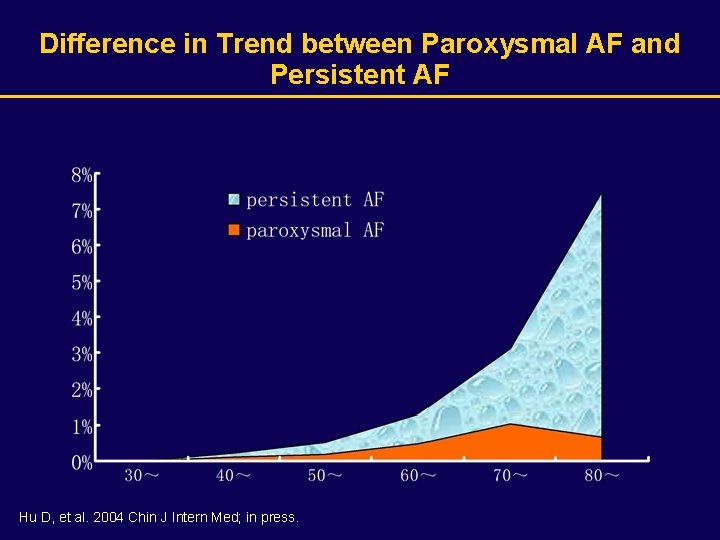
Difference in Trend between Paroxysmal AF and Persistent AF Hu D, et al. 2004 Chin J Intern Med; in press.
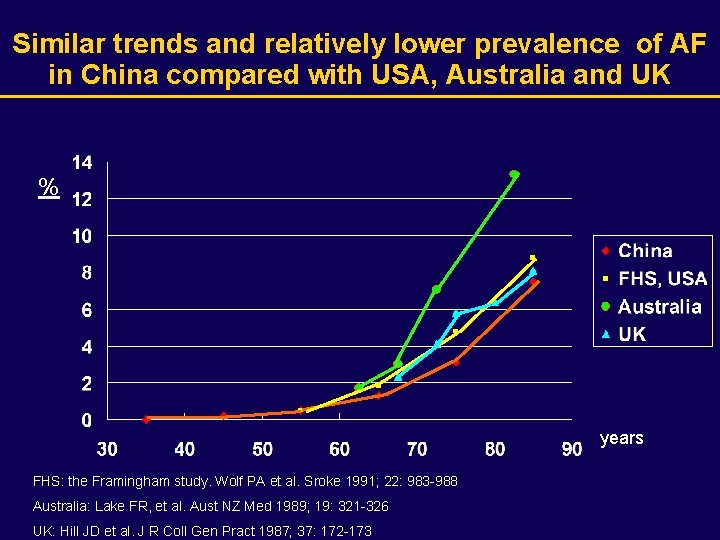
Similar trends and relatively lower prevalence of AF in China compared with USA, Australia and UK % years FHS: the Framingham study. Wolf PA et al. Sroke 1991; 22: 983 -988 Australia: Lake FR, et al. Aust NZ Med 1989; 19: 321 -326 UK: Hill JD et al. J R Coll Gen Pract 1987; 37: 172 -173
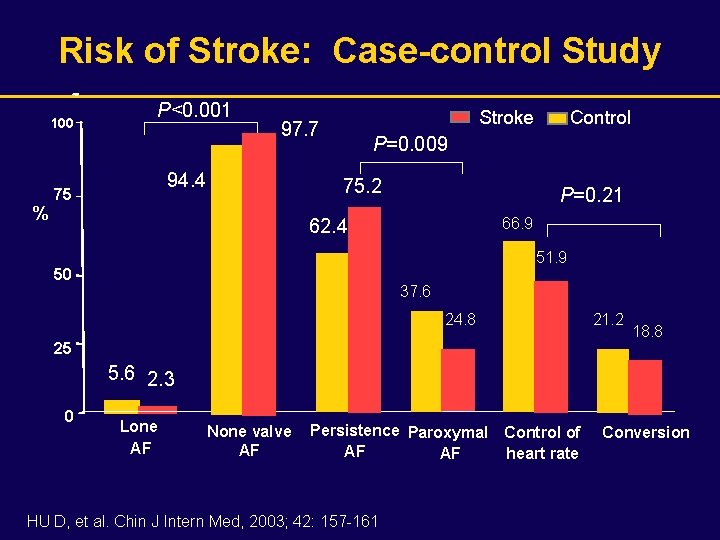
Risk of Stroke: Case-control Study 100 % P<0. 001 97. 7 94. 4 75 Stroke Control P=0. 009 75. 2 P=0. 21 66. 9 62. 4 51. 9 50 37. 6 24. 8 25 21. 2 18. 8 5. 6 2. 3 0 Lone AF None valve AF Persistence Paroxymal Control of AF AF heart rate HU D, et al. Chin J Intern Med, 2003; 42: 157 -161 Conversion
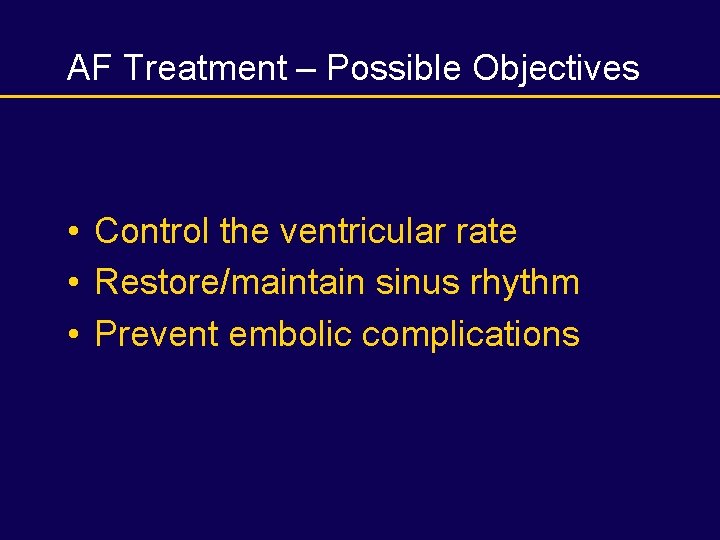
AF Treatment – Possible Objectives • Control the ventricular rate • Restore/maintain sinus rhythm • Prevent embolic complications
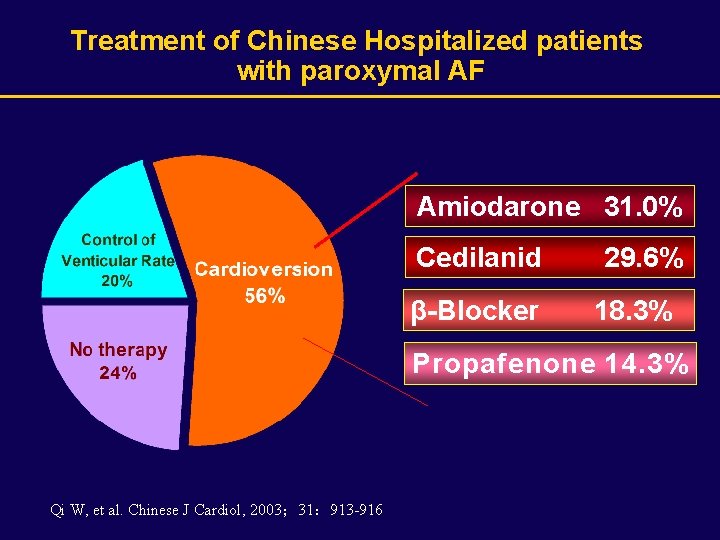
Treatment of Chinese Hospitalized patients with paroxymal AF Amiodarone 31. 0% Cedilanid β-Blocker 29. 6% 18. 3% Propafenone 14. 3% Qi W, et al. Chinese J Cardiol, 2003; 31: 913 -916
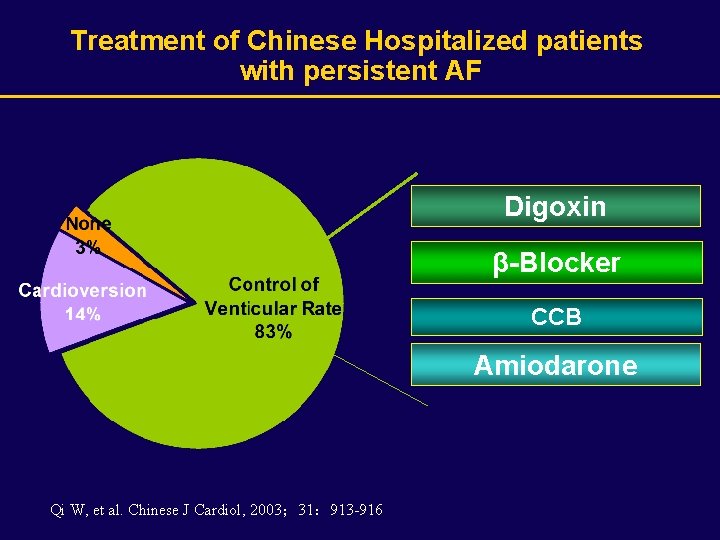
Treatment of Chinese Hospitalized patients with persistent AF Digoxin β-Blocker CCB Amiodarone Qi W, et al. Chinese J Cardiol, 2003; 31: 913 -916