
Prevention of epithelial ingrowth following LASIK enhancement surgery

- Slides: 12
Prevention of epithelial in-growth following LASIK enhancement surgery Mark E Johnston MD FRCSC www. nebraskaeye. com Omaha NE NO FINANCIAL INTERESTS
Purpose • Previous studies have shown that excimer laser ablation of the corneal surface increases adhesion of epithelium to the corneal stroma. • This study was designed to study the rates of epithelial in-growth following LASIK enhancement surgery when the peripheral LASIK bed is protected from excimer laser ablation at the time of enhancement surgery.
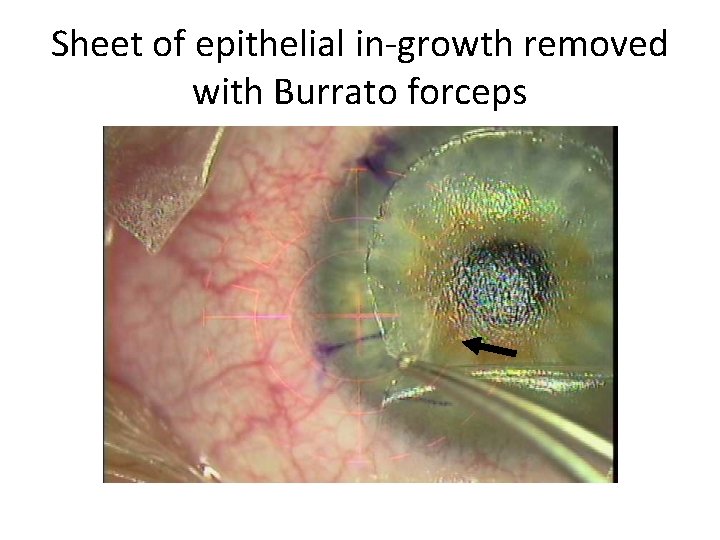
Sheet of epithelial in-growth removed with Burrato forceps
Methods • Clinically significant epithelial in-growth following LASIK enhancement was defined as those cases in which a decision was made to surgically remove the epithelial in-growth. – This decision was usually made because of induced astigmatism and decreased uncorrected visual acuity. • Original surgery was with a Hansatome • Beginning in November 2005, all patients undergoing Lasik enhancement surgery had the peripheral 1. 0 mm of the LASIK bed protected with a BD Visitec ™ Lasik eye drain (Chayet) lightly moistened with BSS.
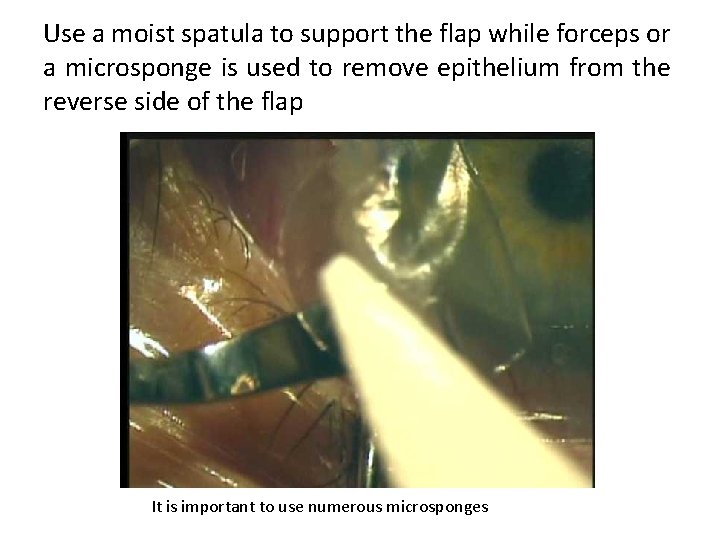
Use a moist spatula to support the flap while forceps or a microsponge is used to remove epithelium from the reverse side of the flap It is important to use numerous microsponges
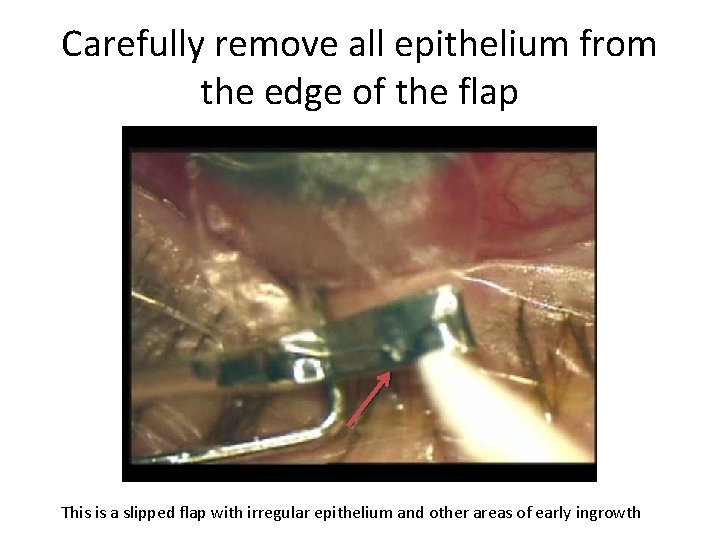
Carefully remove all epithelium from the edge of the flap This is a slipped flap with irregular epithelium and other areas of early ingrowth
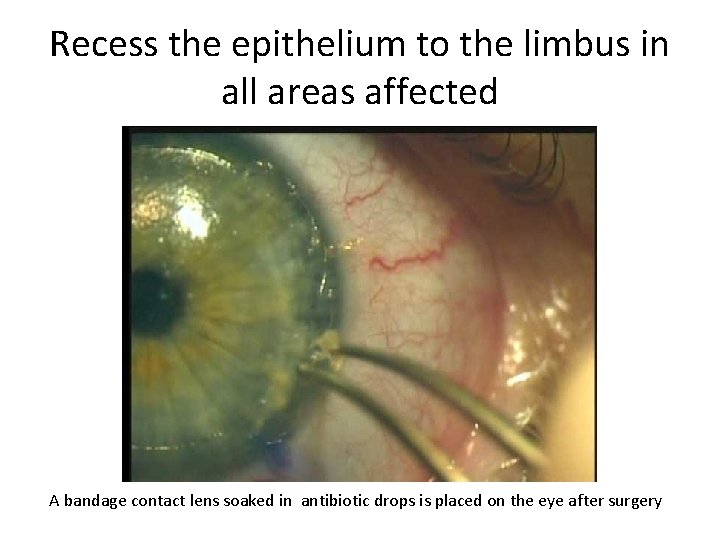
Recess the epithelium to the limbus in all areas affected A bandage contact lens soaked in antibiotic drops is placed on the eye after surgery
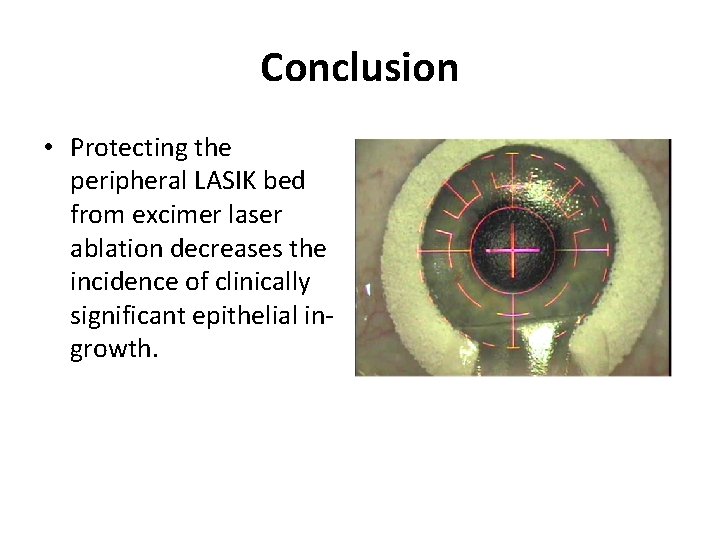
Use a moist Chayet sponge to protect about 1 mm of the peripheral flap bed during the excimer treatment Note how much the tracker is needed in this patient
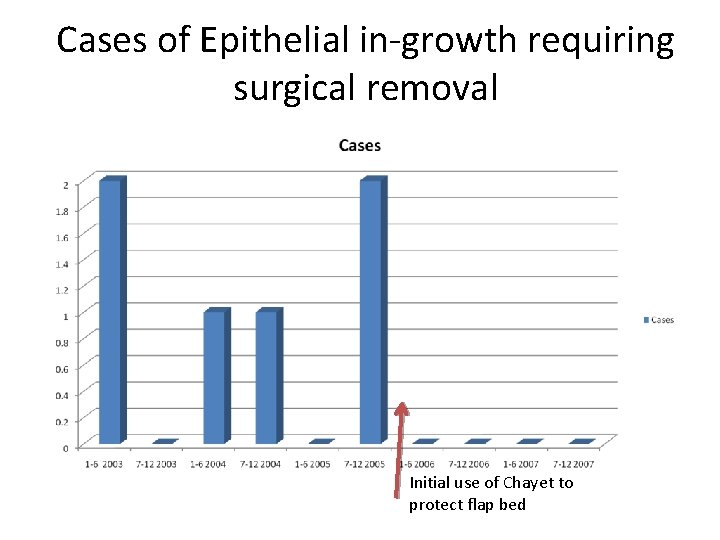
Results • For each of the three years prior to the change in technique, two eyes each year required surgical intervention for epithelial in-growth following LASIK enhancement (1% of all enhancements). – Five of six eyes had hyperopic ablations which directly treated the peripheral LASIK bed. • For the two years since the change in technique, no eyes have required surgical intervention for epithelial in-growth
Cases of Epithelial in-growth requiring surgical removal Initial use of Chayet to protect flap bed
Prevention of epithelial in-growth • Minimize epithelial manipulation and damage – Avoid hypertonic saline – Avoid excessive drying – Avoid using any topical non-steroidal drops • If possible, avoid Wide Zone and Wavefront. Guided Ablations • Protect the peripheral flap bed
Conclusion • Protecting the peripheral LASIK bed from excimer laser ablation decreases the incidence of clinically significant epithelial ingrowth.