
PREVENTION OF CRUELTY TO STRAY ANIMALS OVERVIEW Definition

- Slides: 38
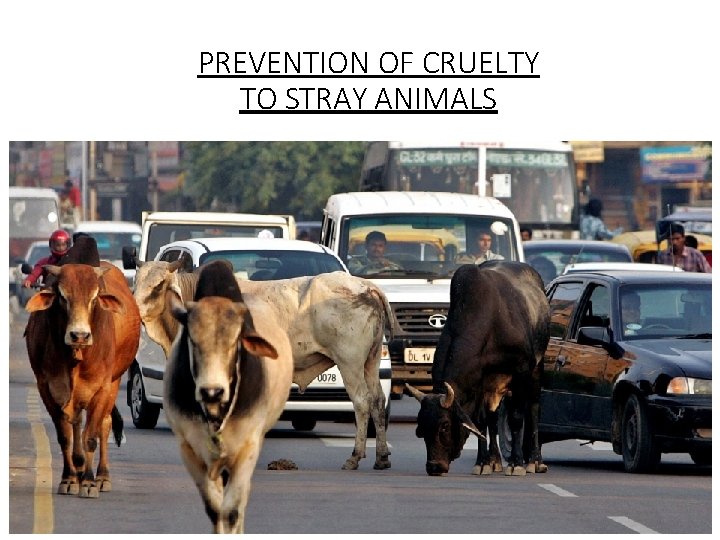
PREVENTION OF CRUELTY TO STRAY ANIMALS
OVERVIEW Definition Problems created for them Problems created by them Control Strategies Laws regarding animal rights • Rehabilitation of Stray Cattle • Prevention of Cruelty to animals act, 1960 • Animal Birth Control (Dogs) Rules, 2001 • Guidelines to Animal Breeders • Stray Pigs • Welfare organizations and initiatives • • •
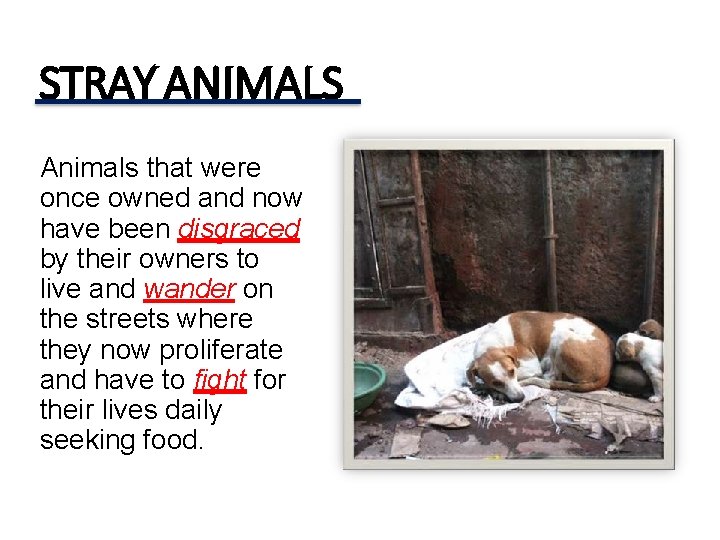
STRAY ANIMALS Animals that were once owned and now have been disgraced by their owners to live and wander on the streets where they now proliferate and have to fight for their lives daily seeking food.
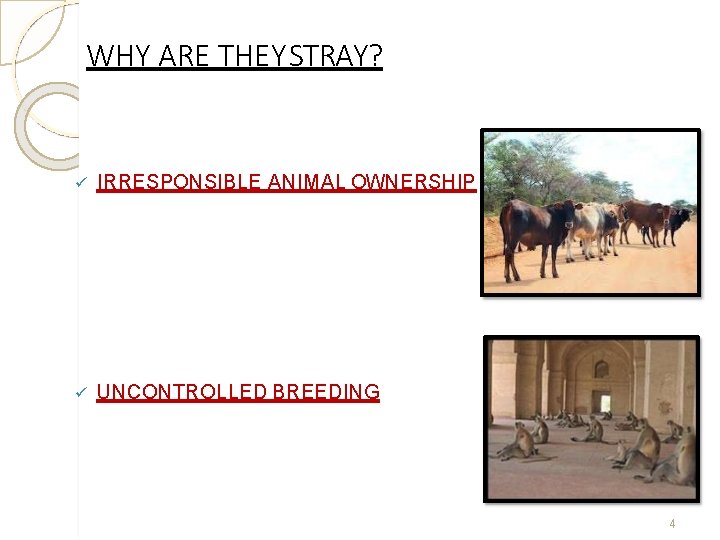
WHY ARE THEY STRAY? IRRESPONSIBLE ANIMAL OWNERSHIP UNCONTROLLED BREEDING 4
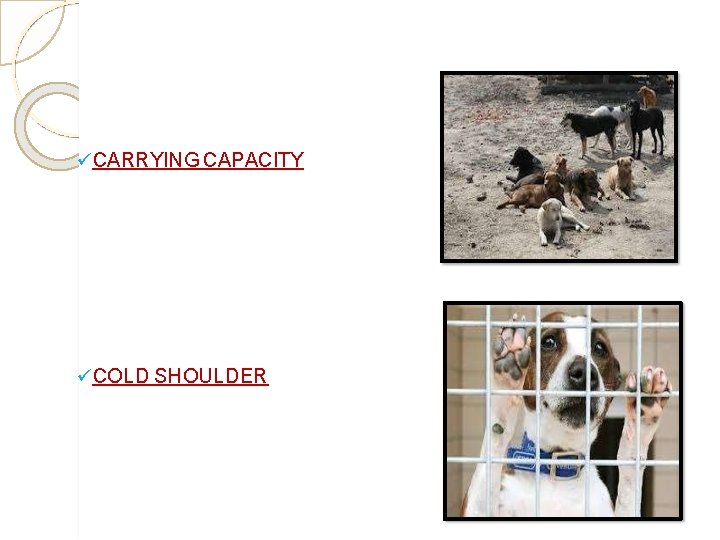
CARRYING CAPACITY COLD SHOULDER
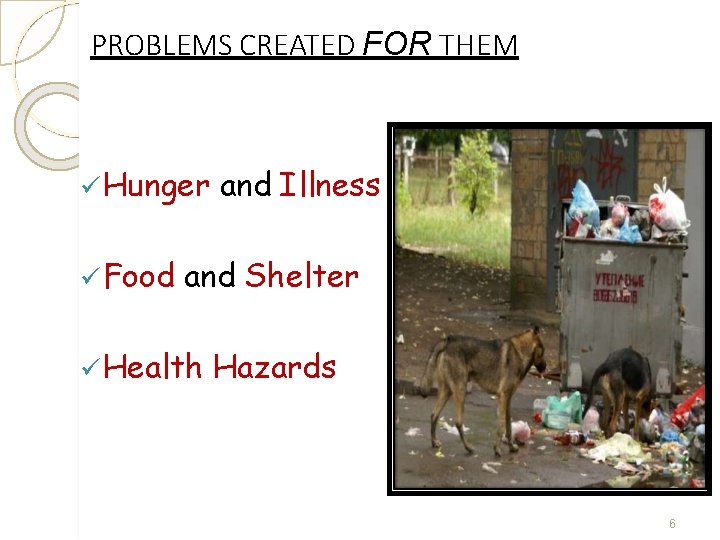
PROBLEMS CREATED FOR THEM Hunger Food and Illness and Shelter Health Hazards 6
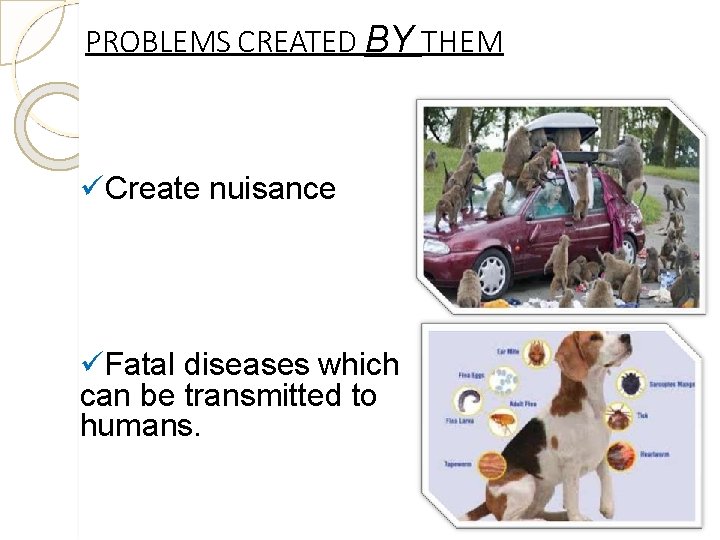
PROBLEMS CREATED BY THEM Create nuisance Fatal diseases which can be transmitted to humans. 7
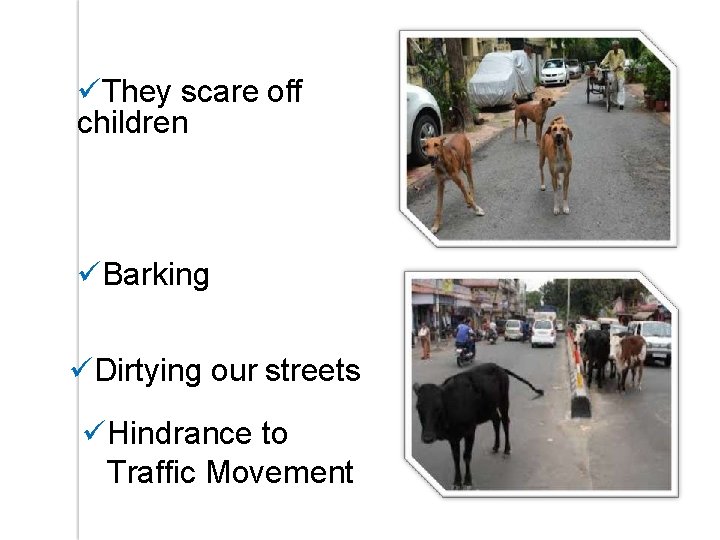
They scare off children Barking Dirtying our streets Hindrance to Traffic Movement
CONTROL STRATEGIES 9
Addressing The Source of Stray Animals Education Neutering/Sterilization of Owned Animals
Reducing Humane Catch Carrying Capacity Euthanasia Neuter and Release (CNR) Programmers
LAWS REGARDING ANIMAL RIGHTS 12
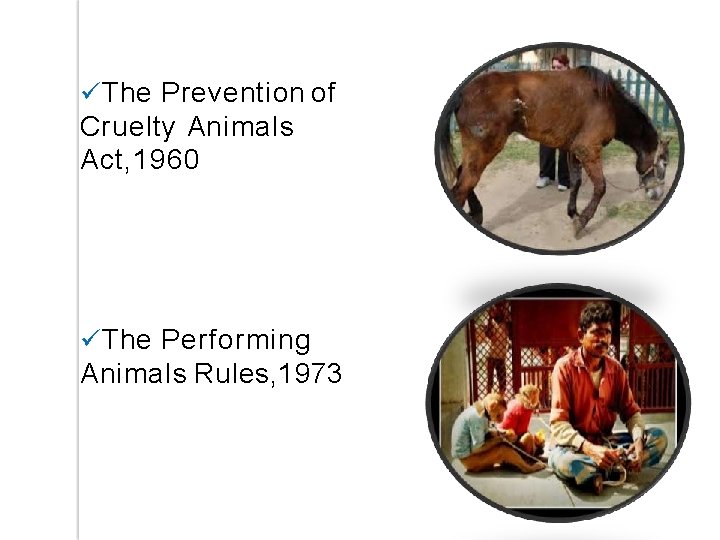
The Prevention of Cruelty Animals Act, 1960 The Performing Animals Rules, 1973
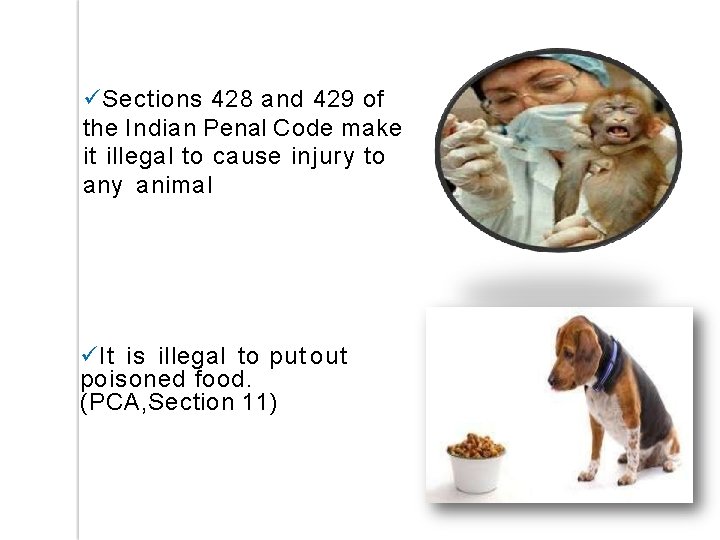
Sections 428 and 429 of the Indian Penal Code make it illegal to cause injury to any animal It is illegal to put out poisoned food. (PCA, Section 11)
WELFARE ORGANIZATIONS PETA STRAW WSPA 15
Rehabilitation of stray cattle • • Section 3 of the Prevention of Cruelty to Animals Act, 1960, it is the duty of every person having care or charge of any animal to take all reasonable measures to ensure the well-being of such animal and to prevent infliction of unnecessary pain and sufferings. Section 11(1) (h) of Prevention of Cruelty to Animals Act, 1960 provides that it is a cruelty, if any person, being the owner of (any animal) fails to provide such animal with sufficient food, drink or shelter.
Contd. . • Section 11 (1)(i) it is a Cruelty, if any person, without reasonable cause, abandons any animal in circumstances which tender it likely that it will suffer pain by reason or starvation, thirst and it is also a punishable offense under PCA Act, 1960.
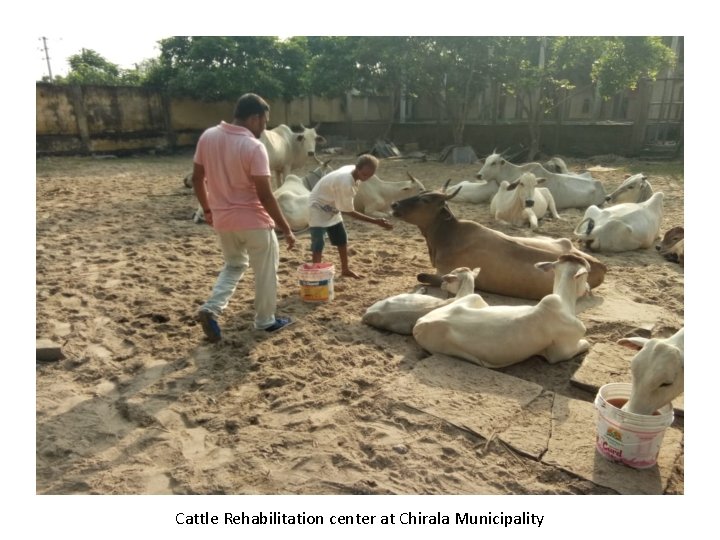
Cattle Rehabilitation center at Chirala Municipality
THE PREVENTION OF CRUELTY TO ANIMALS ACT, 1960 • Establishment of Animal Welfare Board of India: • Animal Welfare Board of India was established by the Central Government, as soon as may be after the commencement of this Act for the promotion of animal welfare generally and for the purpose of protecting animals from being subjected to unnecessary pain or suffering. • Major functions of the Board: Ø to keep the law in force in India for the prevention of cruelty to animals
Contd. . Ø to advise the Central Government on the making of rules under this Act Ø to advise the Government or any local authority or other person in the design of slaughter-houses or in the maintenance of slaughter-houses or in connection with slaughter of animals so that unnecessary pain or suffering Ø to give financial and other assistance to animal welfare organizations functioning
Contd. . Ø to advise the Government on matters relating to the medical care and attention which may be provided in animal, hospitals and to give financial and other assistance to animal hospitals
Animal Birth Control (Dogs) Rules, 2001 • Classification of dogs and their Sterilization: • (1) All dogs shall be classified in one of the following two categories (i) pet dogs, (ii) street dogs. • (2) The owner of pet dogs shall be responsible for the controlled breeding, immunization, sterilization and licensing in accordance with these rules and the law for the time being in force within a specified local area. • (3) The street dogs shall be sterilized and immunized by participation of animal welfare organizations, private individuals and the local authority.
Contd. . • Formation of Committee: A monitoring committee consisting of the following persons shall be constituted by the local authority namely • (a) Commissioner/Chief of the local authority, who shall be the ex-officio Chairman of the Committee. • (b) A representative of the Public Health Department of the local authority. • (c) A representative of the Animal Welfare Department if any of the local authority. • (d) A veterinary doctor
Contd. . (e) A representative of the district Society for Prevention of Cruelty to Animals (SPCA) • (f) At least two representatives from the Animal Welfare Organizations operating within the said local authority. •
Contd. . • Functions of Committee: • (a) Issue instructions for catching, transportation, sheltering, sterilization, vaccination, treatment and release of sterilized vaccinated or treated dogs. • (b) Authorize veterinary doctor to decide on case to case basis the need to put to sleep critically ill or fatally injured or rabid dogs in a painless method by using sodium pentathol. Any other method is strictly prohibited. • (c) Create public awareness, solicit cooperation and funding.
Contd. . • (d) Provide guidelines to pet dog owners and commercial breeders from time to time. • (e) Get a survey done of the number of street dogs by an independent agency. • (f) Take such steps for monitoring the dog bite cases to ascertain the reasons of dog bite, the area where it took place and whether it was from a stray or a pet dog. •
Contd. . • General: • (a) On receipt of specific complaint about nuisance or dog bite the same shall be attended on priority basis, irrespective of the area from which the complaint comes. • (b) Capturing for general purpose will be on such dates and time to be specified by the Committee. • (c) The dog capturing squad shall consist of • (i) The driver of the dog van • (ii) Two or more trained employees of the local authority who are trained in capturing of dogs.
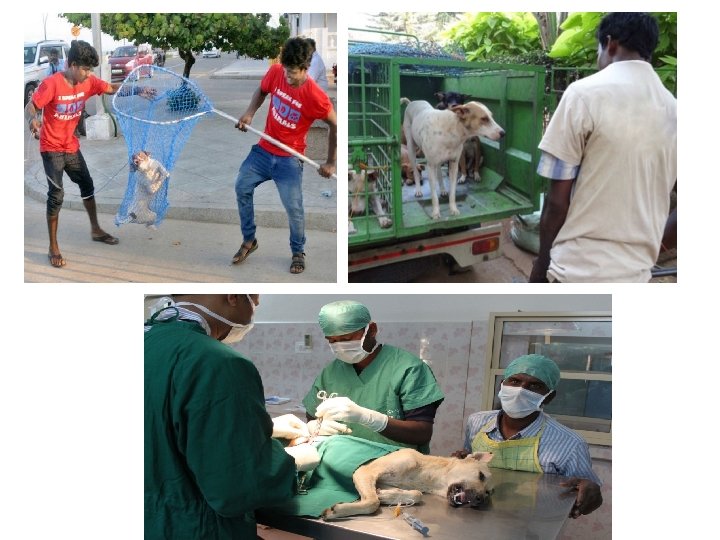
Contd. . • (iii) One representative of any of the animal welfare organization (d) All the dogs caught will be tagged for identification purposes and to ensure that the dogs are released in the same area after sterilization and vaccination. • (e) The dogs shall be captured by using humane methods such as lassoing or soft-loop animal catchers such as those prescribed under the provisions of Prevention of Cruelty (Capture of Animals) Rules, 1979. •
Sterilization & Vaccination programme by state govt. • All the ULBs are formed into several clusters and each cluster will be having a lead ULB. • It is the responsibility of the lead ULB to develop requisite infrastructure to carry out the programme. The infrastructure includes: kennels to keep the dogs caught on the streets, operation theatre, post-operative care unit and other amenities. • Each participant ULB in a cluster will pay `50 per dog to lead ULB for infrastructure and NGO gets paid `700 per dog for sterilization and vaccination. • The NGOs while carrying out sterilization and vaccination programme are supposed to comply with the norms of Central Dog Rules and Standard Operating Procedure recommended by the Animal Welfare Board of India. • The stray dogs which are caught by the dog catchers will be geo-tagged from the moment they are caught until they undergo sterilization and vaccination and release in the place of their origin. • The NGO is supposed to upload pictures online in these three stages to the government website to help it monitor from the place where it is picked up, how it underwent sterilization and vaccination and where it is getting released. This helps no duping by NGO on the whole exercise.
STRAY PIGS Govt. of Andhra Pradesh issued following directions to all the ULBs in the state to follow the guidelines issued by the Hon’ble High court. • Commissioners of ULBs in the state are hereby directed to: • 1. Identify 3 or 4 alternative places outside the limits of the cities, towns and villages for locating the pig establishments and give the choice of selection to the pig owners to move into; • 2. As far as possible the areas should be identified within a distance of 3 to 5 kms from the end of the Municipal or Panchayat limits and the places selected should be such as would ensure proper surroundings for the survival of the pigs; • 3. Take up the matter with the Revenue Department for allotment of the specific extent of land, where it is waste-land, poramboke or otherwise to the petitioners and other pig-owners, either on payment of a specified lease amount or may be sold to them on such terms as may be found mutually acceptable. •
Contd. . • 4. Ensure that once the areas are identified and the petitioners and other pig-owners make a choice they must be allowed to move into the respective places within 3 days. Render all possible help in-coordination with the line departments to them to move out as it is not only a question of moving the pig establishments outside, but even the owners have to move their residences to be in close vicinity of the areas where the pig establishments are located. • 5. Conduct meetings with the pig owners or other any possible mode and ask them to submit applications for written permission/license. • 6. Grant written permission or license within a week from the date of receipt of the applications in accordance with Law. • 7. Supply tokens to the pig-owners to be hung around the neck of the pigs so that any pig not having a token around the neck shall be considered to be an unlicensed pig and it will be open to destroy the same.
Contd. . • 8. Ensure that the field staff concerned should periodically supervise for ensuring that licensed pigs are not straying into the city, town limits. • 9. Educate the pig owners and petitioners in coordination with line departments i. e. , Animal Husbandry Department, Police Department etc. , about their obligation to rear the pigs in a proper manner and comply with the statutory formalities.
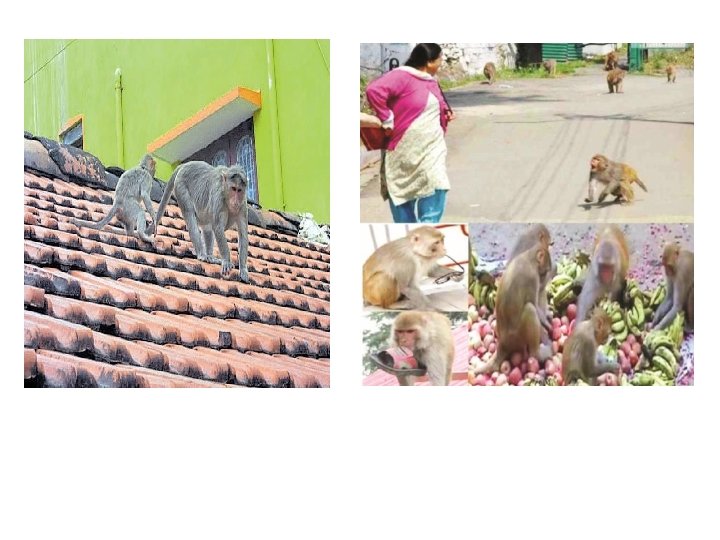
STRAY MONKEYS Wild monkeys can cause problems when they enter residential areas looking for food. It's important to understand the precautions you can take to discourage monkeys from coming into your neighborhood or even your house. If monkeys frequently enter residential areas, there are some things you can do to make it harder for them. • Use fully secured bins: It is most likely that monkeys will be attracted to residential areas if they think they can access food easily. You can secure bin lids with an elastic strap or bungee cord. • Do not feed monkeys or any other wild animals or you will attract them to where you live and make repelling them much harder. • If you are growing vegetables in the ground, be sure to cover them with a strong wire mesh that is designed to resist primates. • As well as securing all the bins, it is also important not to make it easy for monkeys to enter your house to look for food.
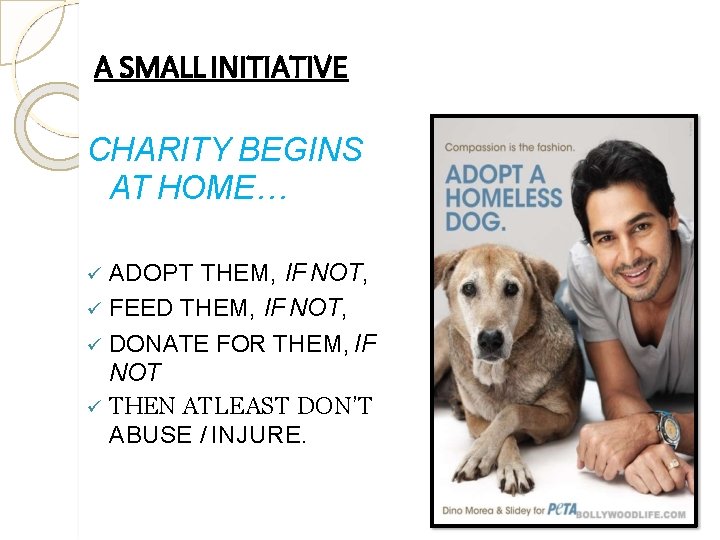
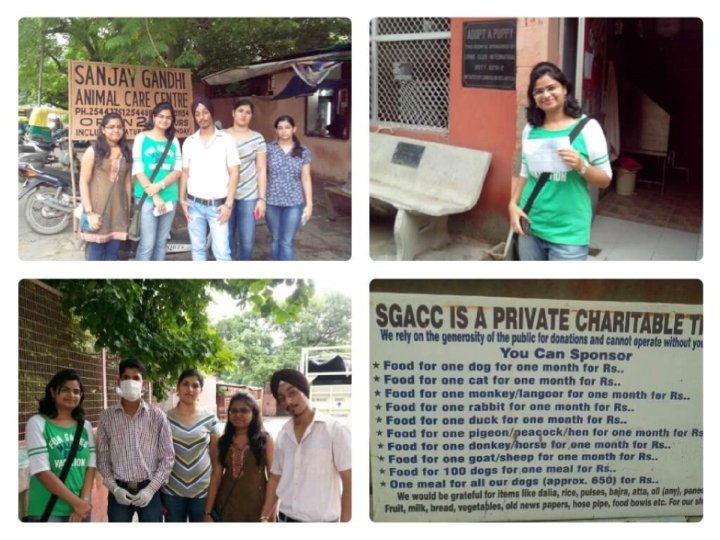
A SMALL INITIATIVE CHARITY BEGINS AT HOME… ADOPT THEM, IF NOT, FEED THEM, IF NOT, DONATE FOR THEM, IF NOT THEN ATLEAST DON’T ABUSE / INJURE. 17
8/29/2013