
Prevention of Communication Disorders ASHAs Prevention Curriculum Guide
- Slides: 20
Prevention of Communication Disorders
ASHA’s Prevention Curriculum Guide for Audiologists and Speech-Language Pathologists
Why is Prevention Important to the Audiologist and Speech-Language Pathologist?
Foundations of Prevention • Prevention – Inhibiting or interrupting the progression of disease, disorder, or disability • Health Promotion/Wellness – The combination of educational and environmental supports for actions and conditions of living conducive to health
The Professional Role of the Speech-Language Pathologist and Audiologist • Competencies and Responsibilities • Prevention Activities • Assisting with National Initiatives – Healthy People 2000 & 2010 Objectives
Levels of Prevention • Primary Prevention • Secondary Prevention • Tertiary Prevention
Primary Prevention • Health Education • Immunization • Genetic Counselling • Prenatal Care • Environmental Change • Vocal Hygiene • Hearing Conservation • Prevention of Secondary Communication Disorders
Secondary Prevention • Screenings – Speech-Language Disorders – Hearing/Balance Disorders • Early Intervention – Hearing/Balance Disorders – Speech-Language-Swallowing Disorders
Tertiary Prevention • Treatment of identified disabilities • Family/caregiver education programs • Patient counseling • Cross-disciplinary consultation
Prevention Science • Epidemiology – Data • Risk – Incidence and prevalence – Relative risk and odds ratio – Population attributable risk ratio
Models of Health Behavior and Health Education • Individual Health Behavior Models • Group Intervention Models • Applying Health Education Models to Communication Disorders
Genetic Influences • Genetics Disorders • Preventive Approaches
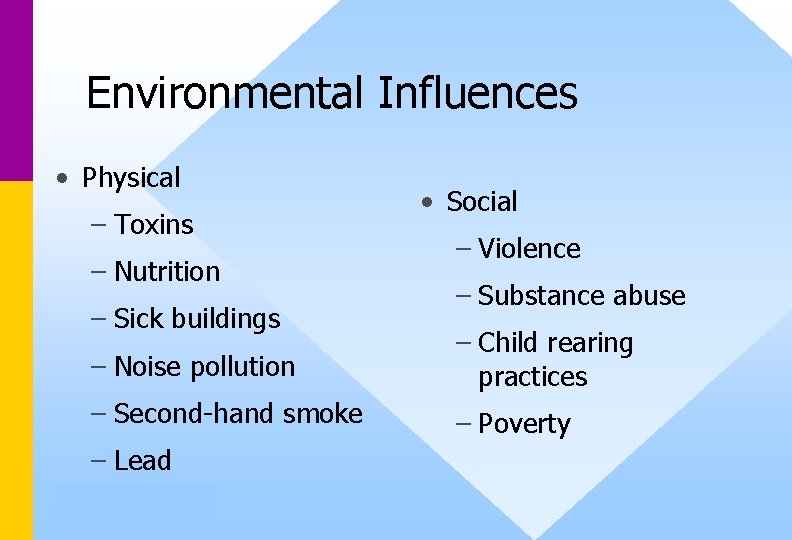
Environmental Influences • Physical – Toxins – Nutrition – Sick buildings • Social – Violence – Substance abuse – Noise pollution – Child rearing practices – Second-hand smoke – Poverty – Lead
Multicultural Influences • Culture • Influences on health, social, and educational behaviors and practices • Planning Prevention Targets
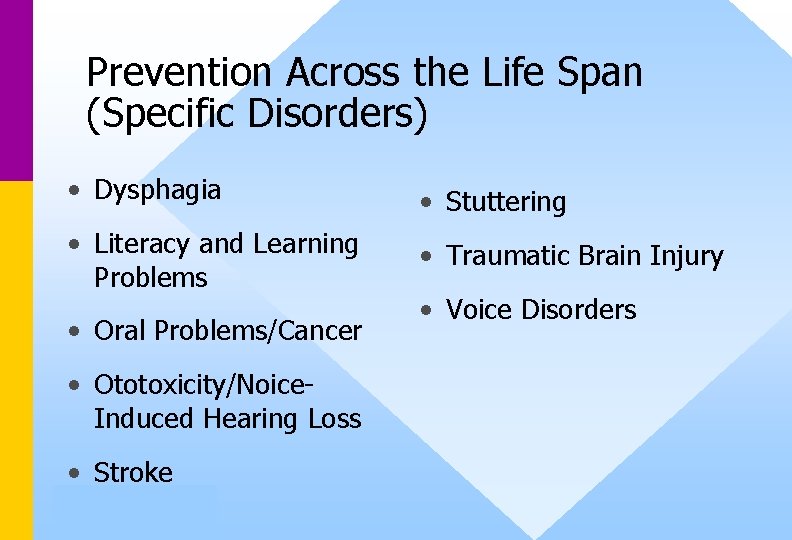
Prevention Across the Life Span (Specific Disorders) • Dysphagia • Stuttering • Literacy and Learning Problems • Traumatic Brain Injury • Oral Problems/Cancer • Ototoxicity/Noice. Induced Hearing Loss • Stroke • Voice Disorders
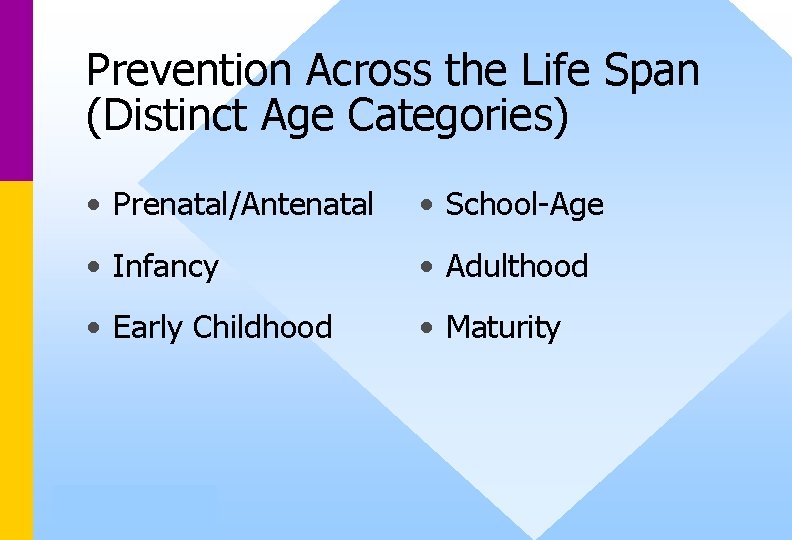
Prevention Across the Life Span (Distinct Age Categories) • Prenatal/Antenatal • School-Age • Infancy • Adulthood • Early Childhood • Maturity
Models of Prevention Program Design • Public Health PRECEDE-PROCEED • Comprehensive Health Education Model (CHEM)
Prevention Program Objectives and Initiatives • Program Objectives • Stating Prevention Outcomes • Implementing the Prevention Program
Determining the Success of Prevention Efforts
Public Policy and Public Health • ASHA Public Policy Agenda for Prevention • Public Health and Professions of Speech. Language Pathology and Audiology Review this Lecture