
Prevention and Treatment of VentilatorInduced Lung Injury with


- Slides: 73
Prevention and Treatment of Ventilator-Induced Lung Injury with HFJV Dawn Rost BS, RRT-NPS Clinical Specialist Bunnell Inc.
Objectives • What is Jet Ventilation, What makes it Unique? • When and Why does it work Better Than other Modes of Ventilation? • How can you Apply HFJV most Effectively?
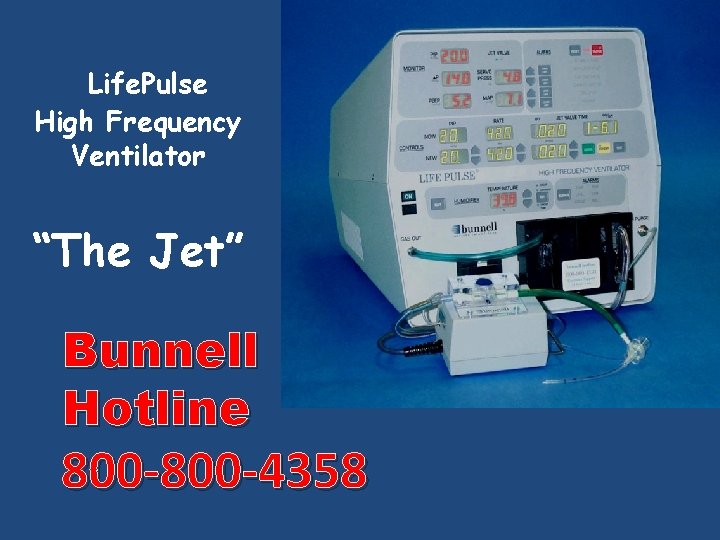
Life. Pulse High Frequency Ventilator “The Jet” Bunnell Hotline 800 -4358
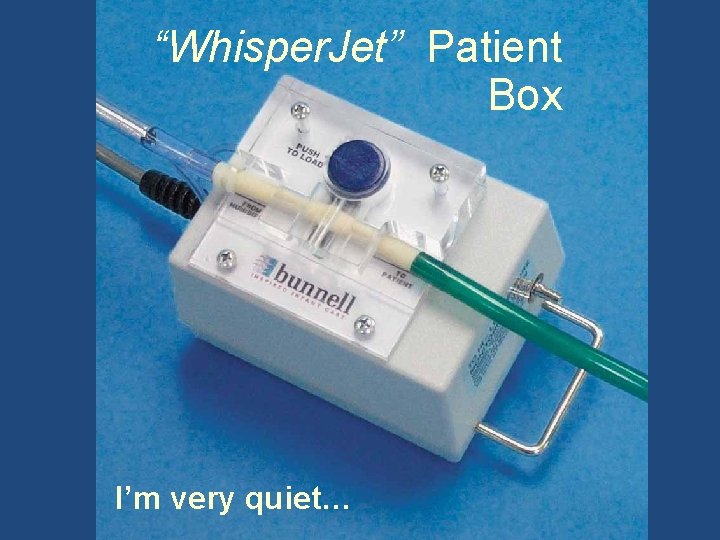
“Whisper. Jet” Patient Box I’m very quiet…
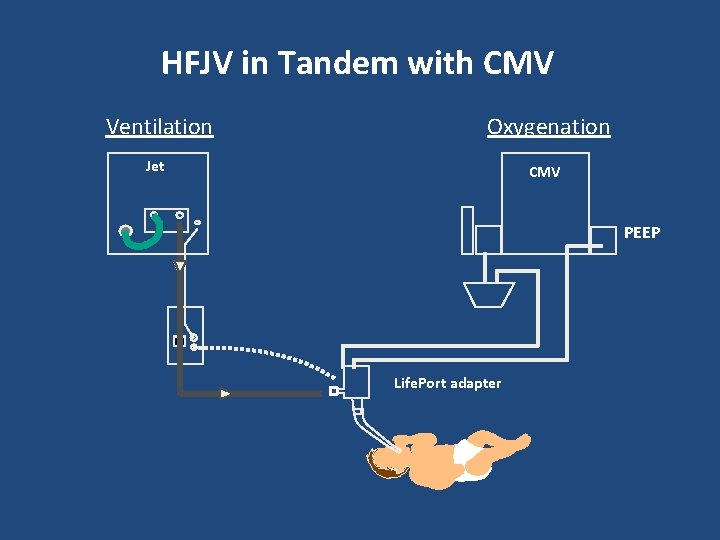
HFJV in Tandem with CMV Ventilation Oxygenation Jet CMV PEEP Life. Port adapter
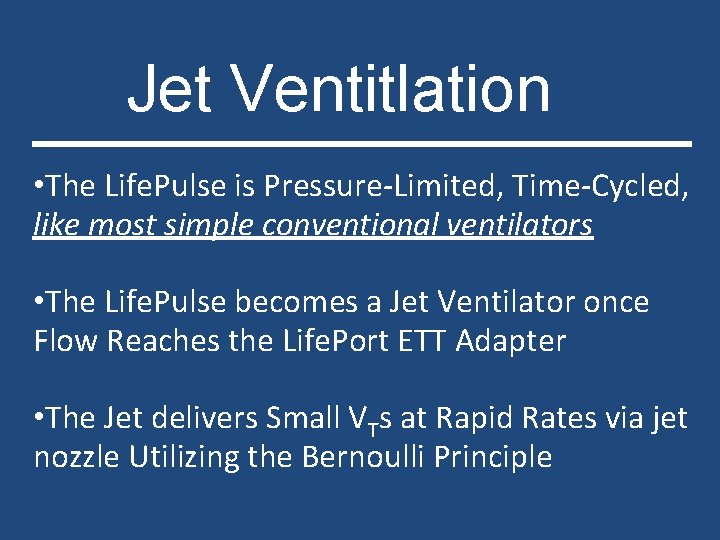
Jet Ventitlation • The Life. Pulse is Pressure-Limited, Time-Cycled, like most simple conventional ventilators • The Life. Pulse becomes a Jet Ventilator once Flow Reaches the Life. Port ETT Adapter • The Jet delivers Small VTs at Rapid Rates via jet nozzle Utilizing the Bernoulli Principle
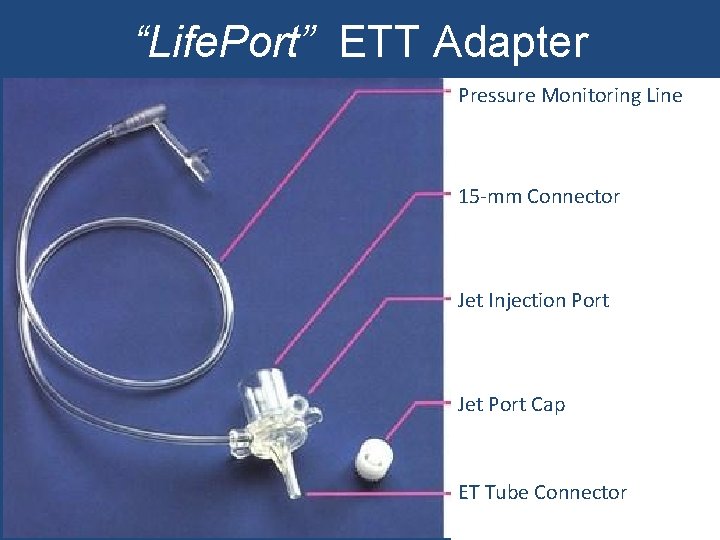
“Life. Port” ETT Adapter Pressure Monitoring Line 15 -mm Connector Jet Injection Port Jet Port Cap ET Tube Connector
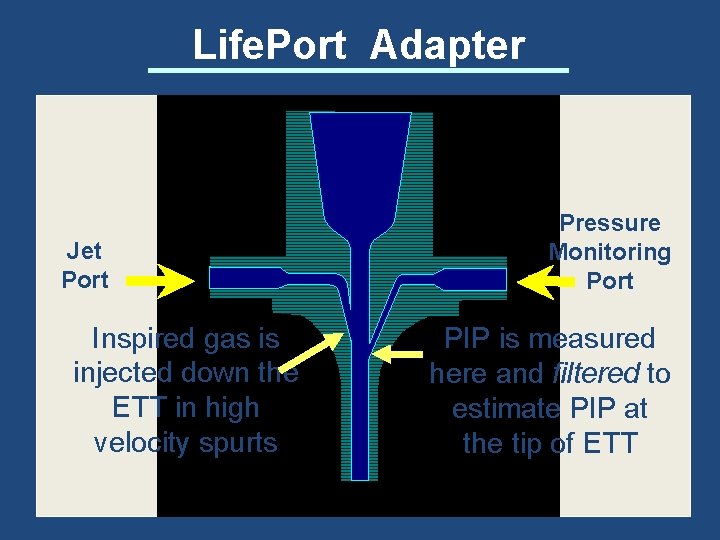
Life. Port Adapter Jet Port Inspired gas is injected down the ETT in high velocity spurts Pressure Monitoring Port PIP is measured here and filtered to estimate PIP at the tip of ETT
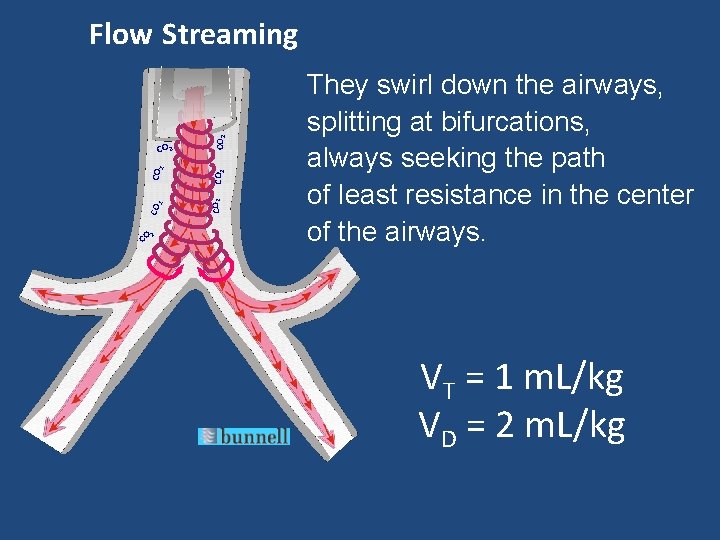
CO 2 CO 2 Flow Streaming They swirl down the airways, splitting at bifurcations, always seeking the path of least resistance in the center of the airways. VT = 1 m. L/kg VD = 2 m. L/kg
Flow Streaming Maintaining a Brief I-time : • Ensures that VT Remains Independent of Rate • Enables longer Expiratory Times • Makes Distribution of Ventilation Dependent on RAW
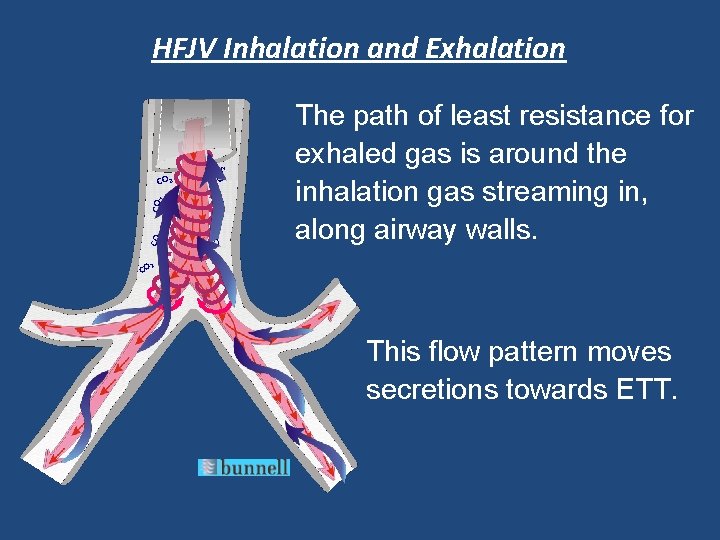
CO CO 2 CO 2 HFJV Inhalation and Exhalation The path of least resistance for exhaled gas is around the inhalation gas streaming in, along airway walls. 2 This flow pattern moves secretions towards ETT.
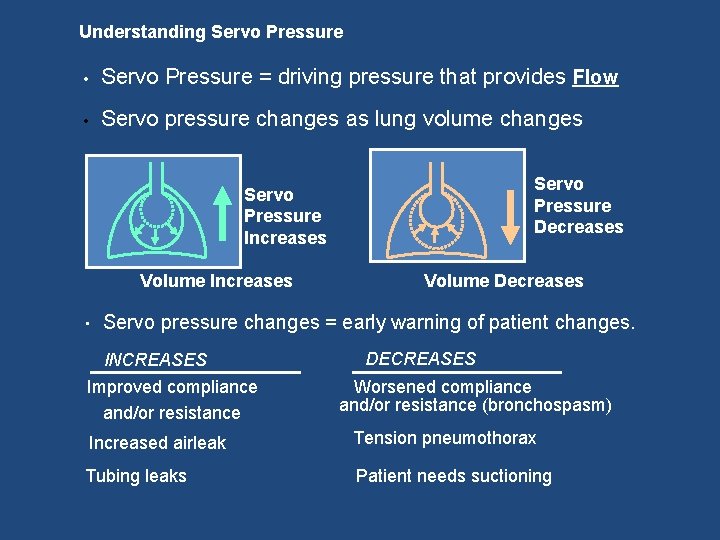
Servo Pressure • Servo Pressure is the Driving Pressure for HFJV • It is Feedback Controlled by the Jets Micro-Processor to Adjust Gas Flow • Monitored PIP is Maintained at Set PIP
Understanding Servo Pressure • Servo Pressure = driving pressure that provides Flow • Servo pressure changes as lung volume changes Servo Pressure Decreases Servo Pressure Increases Volume Increases • Volume Decreases Servo pressure changes = early warning of patient changes. INCREASES Improved compliance and/or resistance DECREASES Worsened compliance and/or resistance (bronchospasm) Increased airleak Tension pneumothorax Tubing leaks Patient needs suctioning
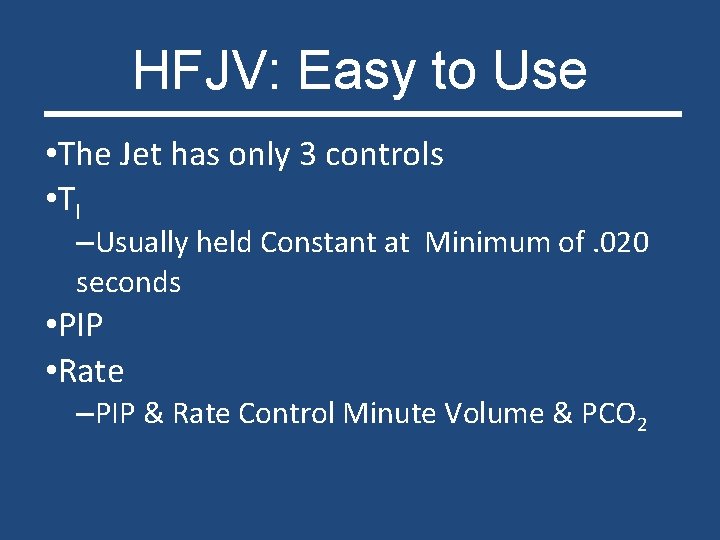
HFJV: Easy to Use • The Jet has only 3 controls • TI –Usually held Constant at Minimum of. 020 seconds • PIP • Rate –PIP & Rate Control Minute Volume & PCO 2
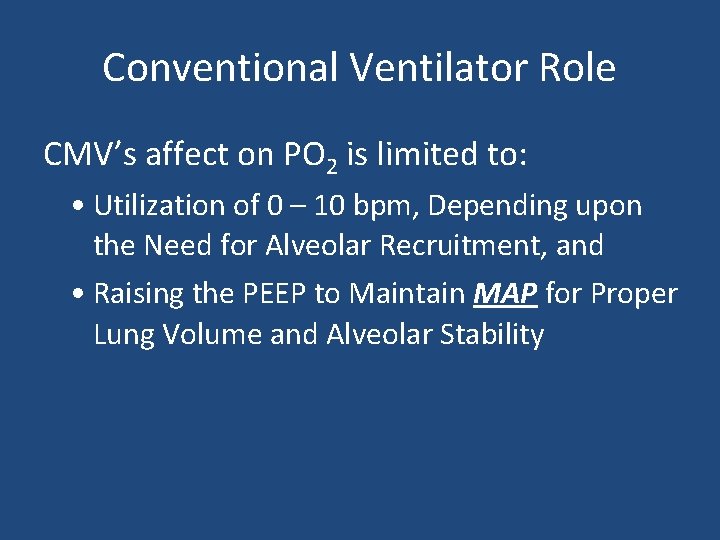
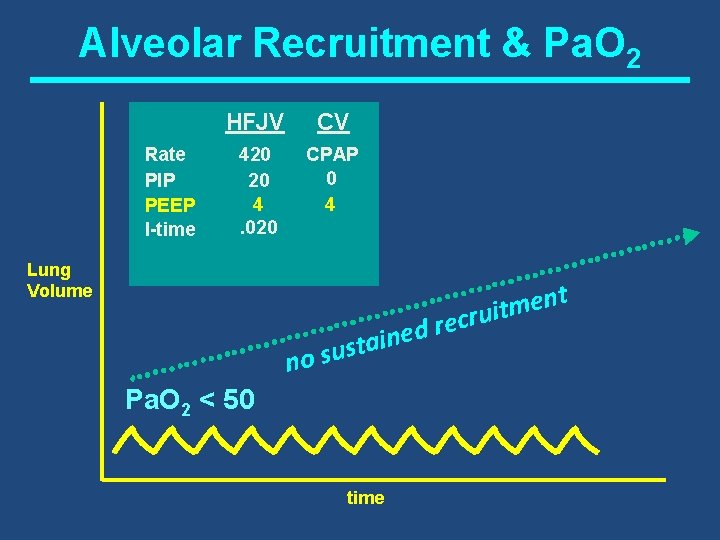
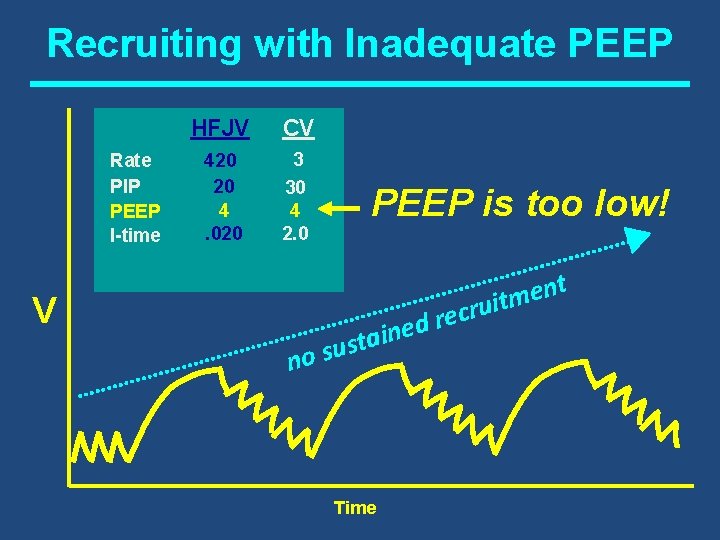
Conventional Ventilator Role CMV’s affect on PO 2 is limited to: • Utilization of 0 – 10 bpm, Depending upon the Need for Alveolar Recruitment, and • Raising the PEEP to Maintain MAP for Proper Lung Volume and Alveolar Stability
Alveolar Recruitment & Pa. O 2 Rate PIP PEEP I-time HFJV CV 420 20 4. 020 CPAP 0 4 Lung Volume t n e uitm r c e r d e n i a t s u s o n Pa. O 2 < 50 time
Recruiting with Inadequate PEEP Rate PIP PEEP I-time V HFJV CV 420 20 4. 020 3 30 4 2. 0 PEEP is too low! t s u s no c e r d aine n e m t rui Time t
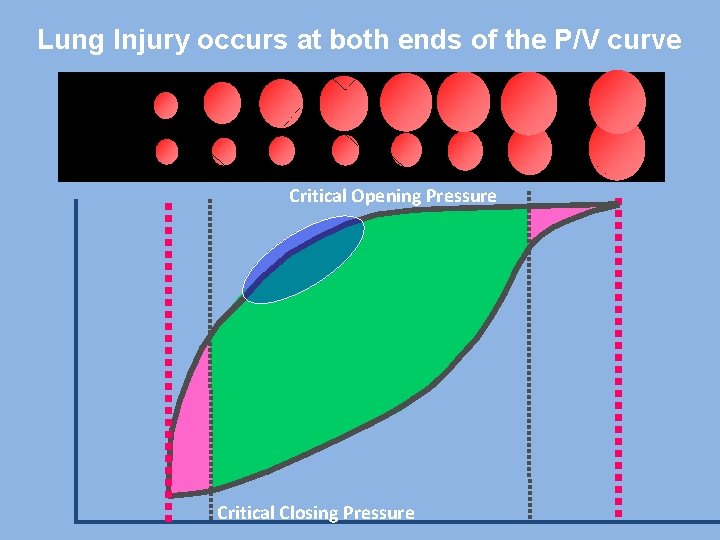
Lung Injury occurs at both ends of the P/V curve Critical Opening Pressure Critical Closing Pressure
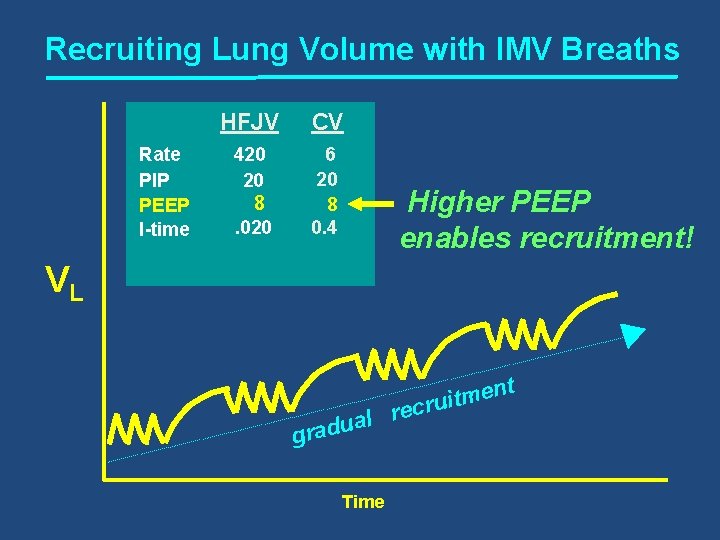
Recruiting Lung Volume with IMV Breaths Rate PIP PEEP I-time HFJV CV 420 20 6 20 8 0. 4 8. 020 Higher PEEP enables recruitment! VL l a u d a gr Time r nt e m t i ecru
CMV Limitations • CMV (“Sigh” breaths) are most useful for alveolar recruitment, but contra-indicated when airleaks are present • Once oxygenation improves, sigh breaths should be discontinued because they increase the risk of causing airleaks
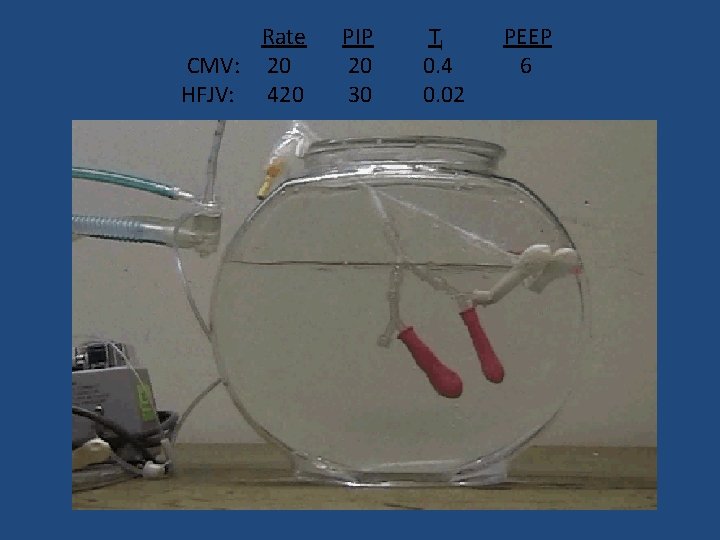
Rate CMV: 20 HFJV: 420 PIP 20 30 TI 0. 4 0. 02 PEEP 6
HFJV vs. CV vs. HFOV One has to understand how lungs work, as well as how HFJV works, to appreciate and predict why HFJV works when other approaches don’t
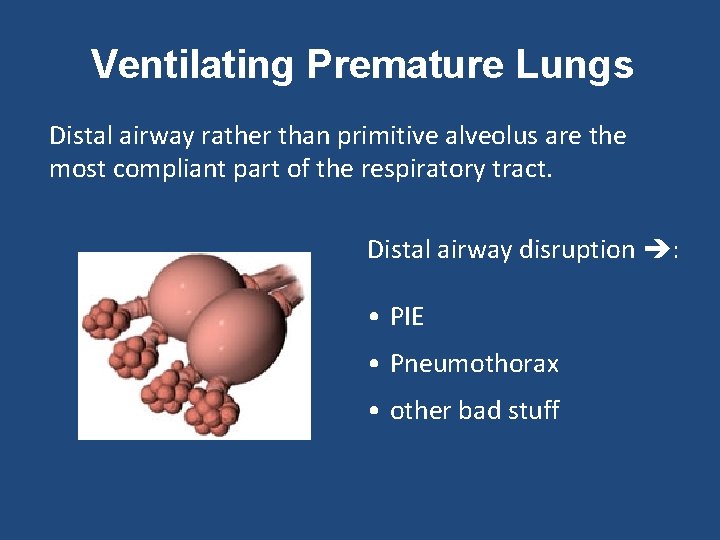
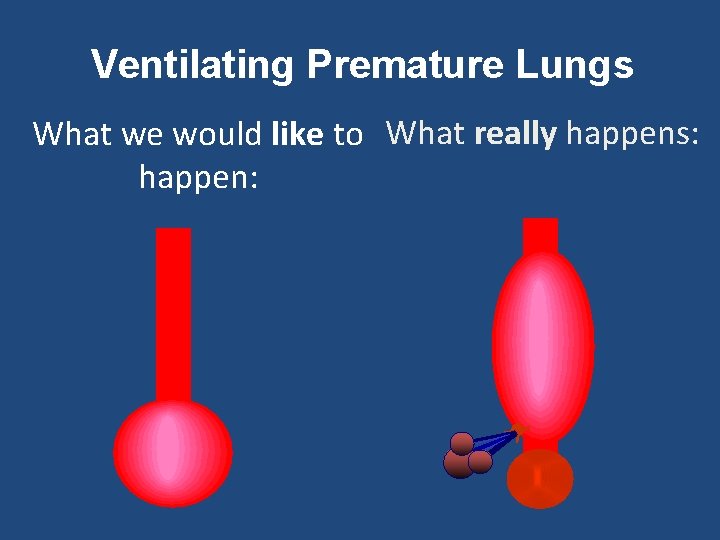
Ventilating Premature Lungs Distal airway rather than primitive alveolus are the most compliant part of the respiratory tract. Distal airway disruption : • PIE • Pneumothorax • other bad stuff
Ventilating Premature Lungs What we would like to What really happens: happen:
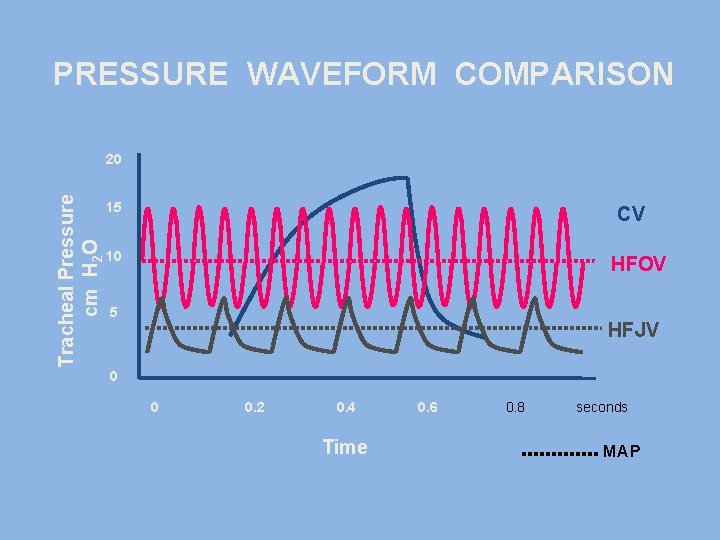
PRESSURE WAVEFORM COMPARISON Tracheal Pressure cm H 2 O 20 15 CV 10 HFOV 5 HFJV 0 0 0. 2 0. 4 Time 0. 6 0. 8 seconds MAP
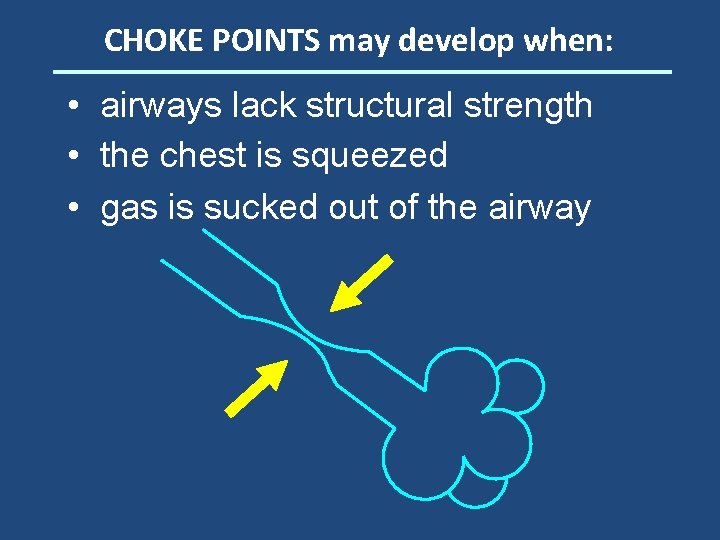
CHOKE POINTS may develop when: • airways lack structural strength • the chest is squeezed • gas is sucked out of the airway
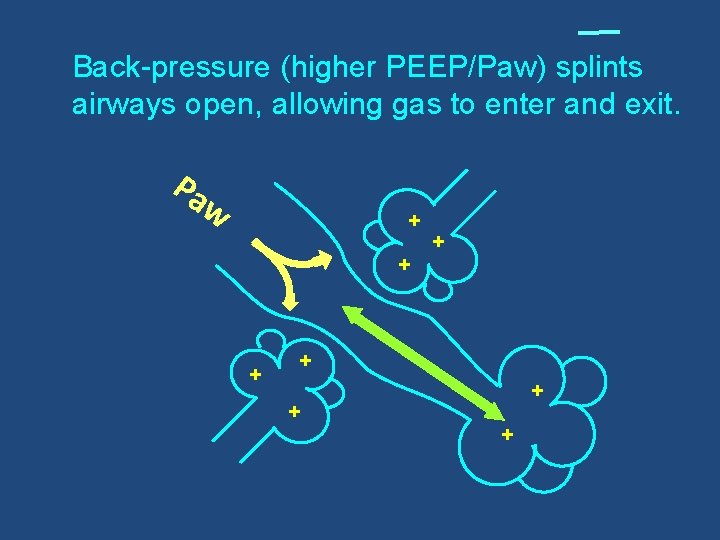
Back-pressure (higher PEEP/Paw) splints airways open, allowing gas to enter and exit. Pa w + + + +
Consequences of Active Exhalation There is a limit to how much Paw can be reduced without causing gas trapping.
Consequences of Passive Exhalation There is a limit to how fast you can ventilate without causing gas trapping. Remember I: E
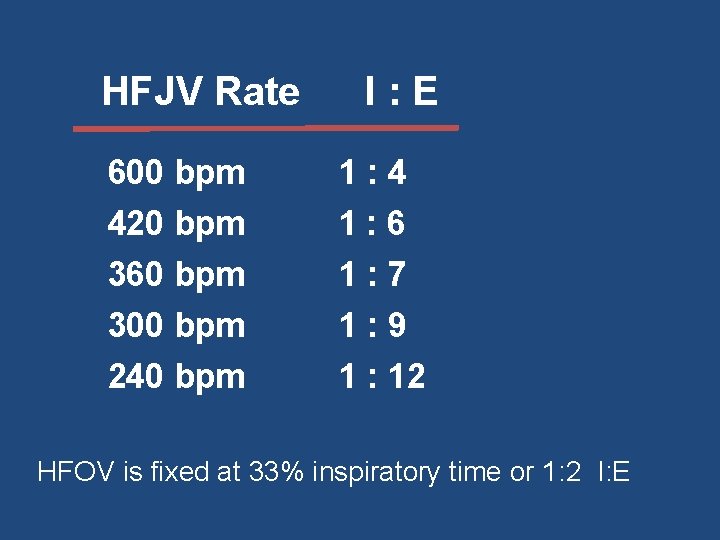
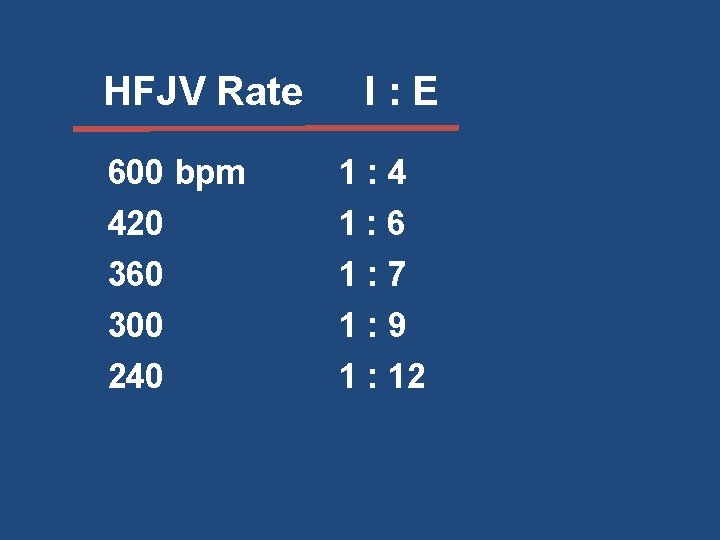
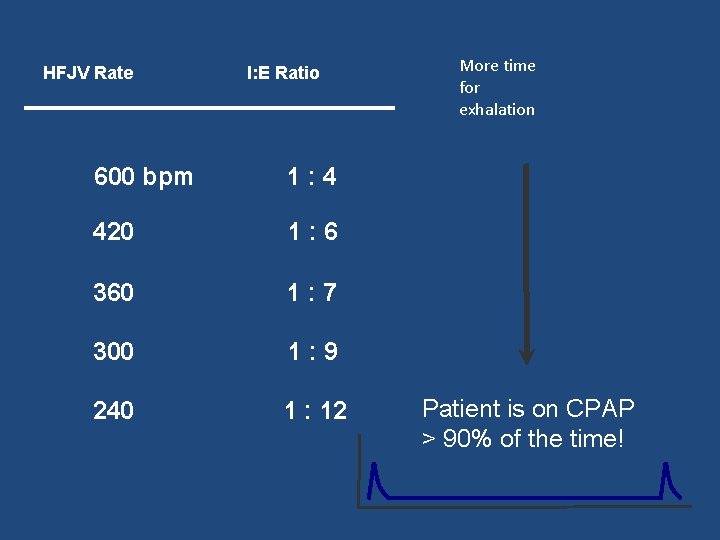
HFJV Rate I: E 600 bpm 420 bpm 360 bpm 1: 4 1: 6 1: 7 300 bpm 240 bpm 1: 9 1 : 12 HFOV is fixed at 33% inspiratory time or 1: 2 I: E
HFJV vs. CV vs. HFOV Consider the injured lung…
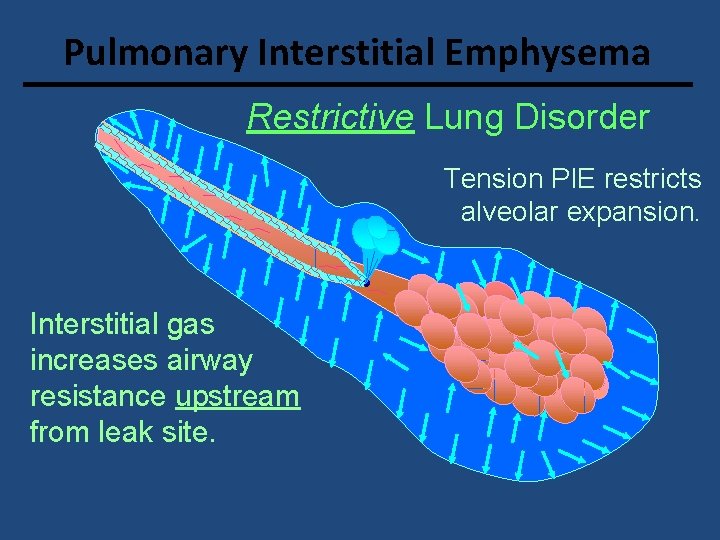
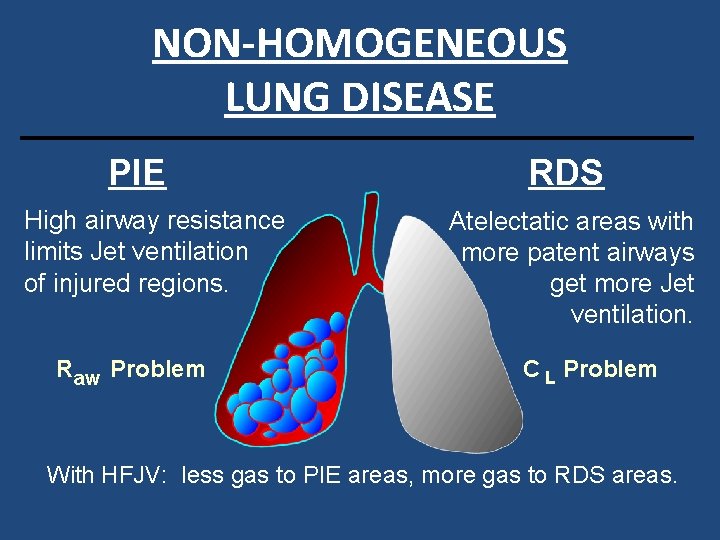
Pulmonary Interstitial Emphysema Restrictive Lung Disorder Tension PIE restricts alveolar expansion. Interstitial gas increases airway resistance upstream from leak site.
NON-HOMOGENEOUS LUNG DISEASE PIE High airway resistance limits Jet ventilation of injured regions. Raw Problem RDS Atelectatic areas with more patent airways get more Jet ventilation. C L Problem With HFJV: less gas to PIE areas, more gas to RDS areas.
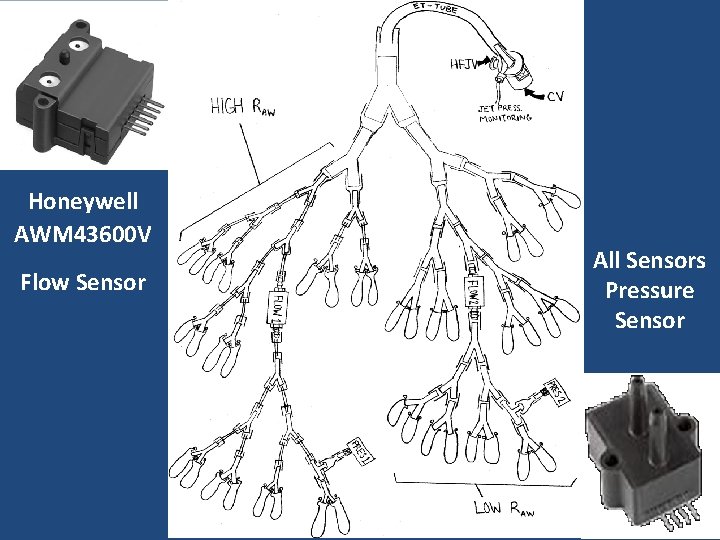
Comparison of HFV and CV in Mechanical Ventilation of a Neonatal Heterogeneous Lung Disease Model Hills SR, Bunnell JB Department of Bioengineering, University of Utah and Bunnell Inc, Salt Lake City, UT, USA Snowbird 2008 “In CV, nearly 100% of set PIP reached the distal airways”
Honeywell AWM 43600 V Flow Sensor All Sensors Pressure Sensor
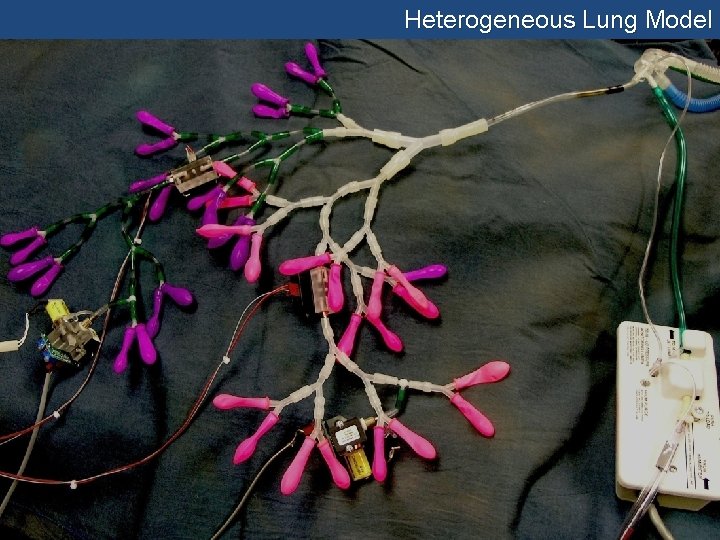
Heterogeneous Lung Model
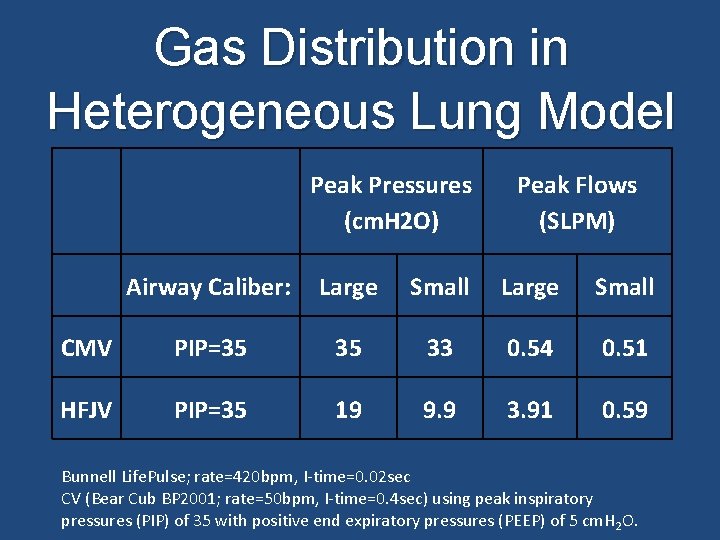
Gas Distribution in Heterogeneous Lung Model Peak Pressures (cm. H 2 O) Airway Caliber: Large Peak Flows (SLPM) Small Large Small CMV PIP=35 35 33 0. 54 0. 51 HFJV PIP=35 19 9. 9 3. 91 0. 59 Bunnell Life. Pulse; rate=420 bpm, I-time=0. 02 sec CV (Bear Cub BP 2001; rate=50 bpm, I-time=0. 4 sec) using peak inspiratory pressures (PIP) of 35 with positive end expiratory pressures (PEEP) of 5 cm. H 2 O.
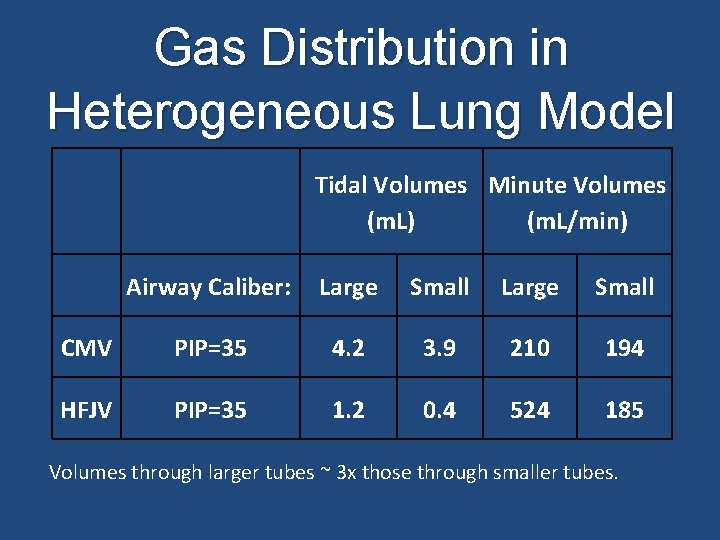
Gas Distribution in Heterogeneous Lung Model Tidal Volumes Minute Volumes (m. L) (m. L/min) Airway Caliber: Large Small CMV PIP=35 4. 2 3. 9 210 194 HFJV PIP=35 1. 2 0. 4 524 185 Volumes through larger tubes ~ 3 x those through smaller tubes.
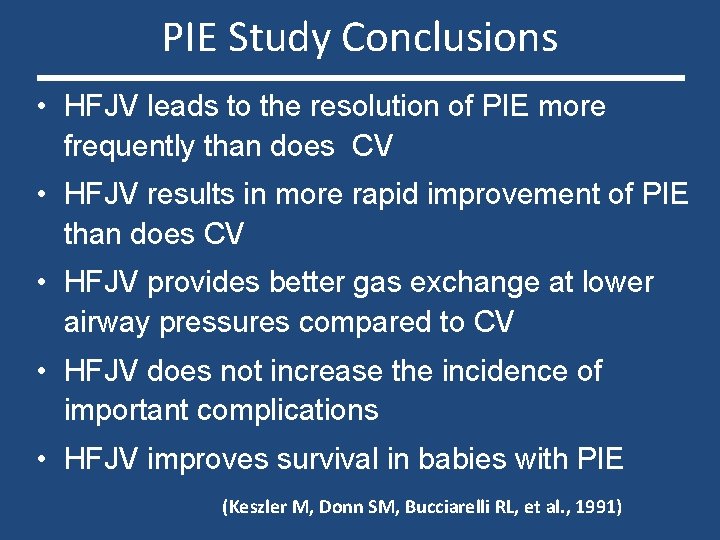
PIE Study Conclusions • HFJV leads to the resolution of PIE more frequently than does CV • HFJV results in more rapid improvement of PIE than does CV • HFJV provides better gas exchange at lower airway pressures compared to CV • HFJV does not increase the incidence of important complications • HFJV improves survival in babies with PIE (Keszler M, Donn SM, Bucciarelli RL, et al. , 1991)
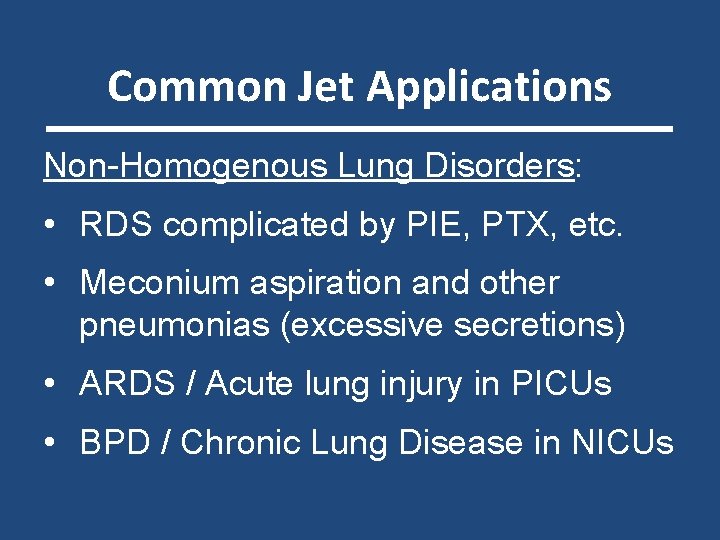
Common Jet Applications Non-Homogenous Lung Disorders: • RDS complicated by PIE, PTX, etc. • Meconium aspiration and other pneumonias (excessive secretions) • ARDS / Acute lung injury in PICUs • BPD / Chronic Lung Disease in NICUs
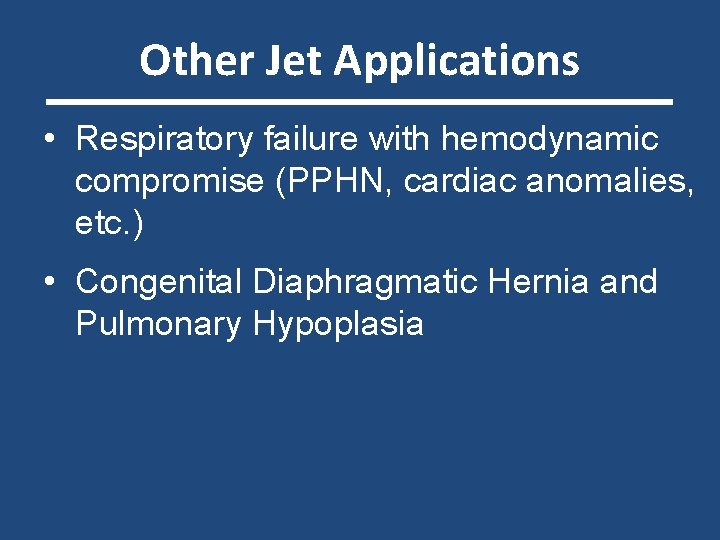
Other Jet Applications • Respiratory failure with hemodynamic compromise (PPHN, cardiac anomalies, etc. ) • Congenital Diaphragmatic Hernia and Pulmonary Hypoplasia
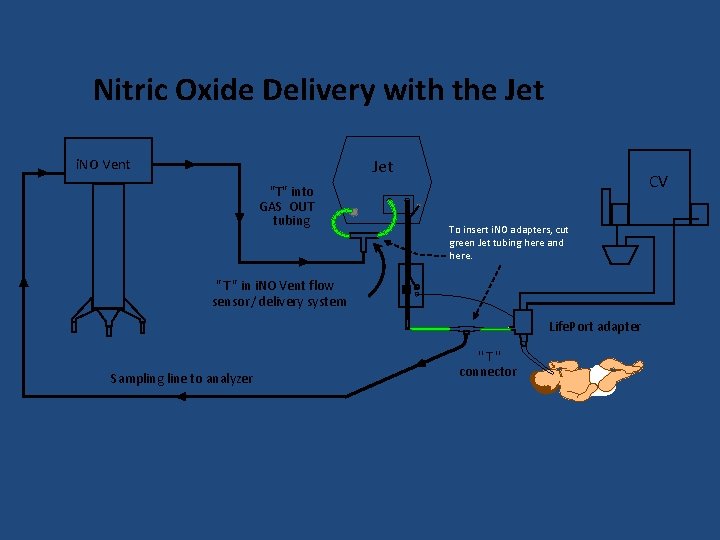
Nitric Oxide Delivery with the Jet i. NO Vent Jet "T" into GAS OUT tubing CV To insert i. NO adapters, cut green Jet tubing here and here. " T " in i. NO Vent flow sensor / delivery system Life. Port adapter " T " Sampling line to analyzer connector
7 Steps to Success Users Guide to Optimizing HFJV
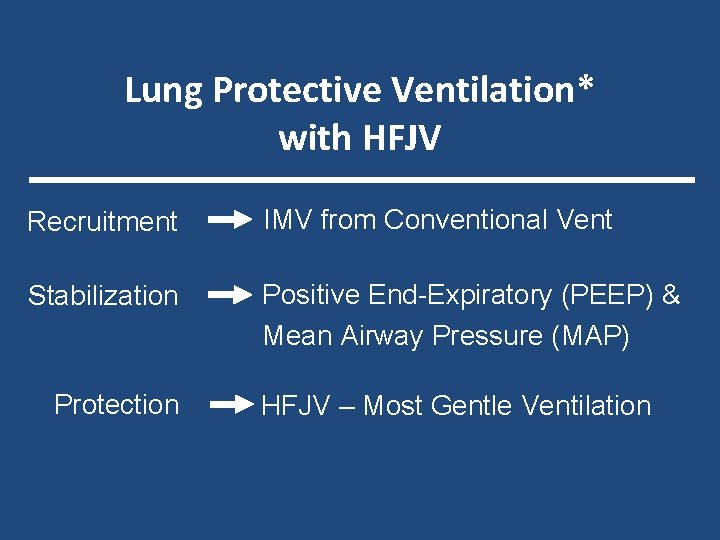
Lung Protective Ventilation* with HFJV Recruitment IMV from Conventional Vent Stabilization Positive End-Expiratory (PEEP) & Mean Airway Pressure (MAP) Protection HFJV – Most Gentle Ventilation
#1 Step to Success “Plan Ahead” When will you start HFJV?
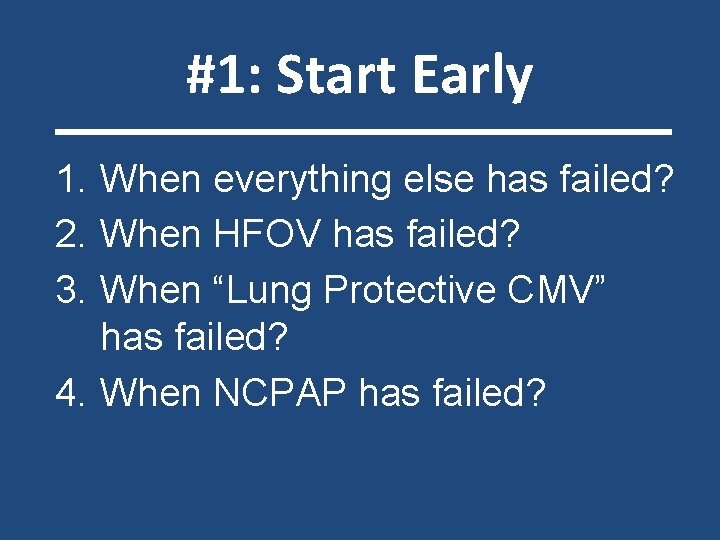
#1: Start Early 1. When everything else has failed? 2. When HFOV has failed? 3. When “Lung Protective CMV” has failed? 4. When NCPAP has failed?
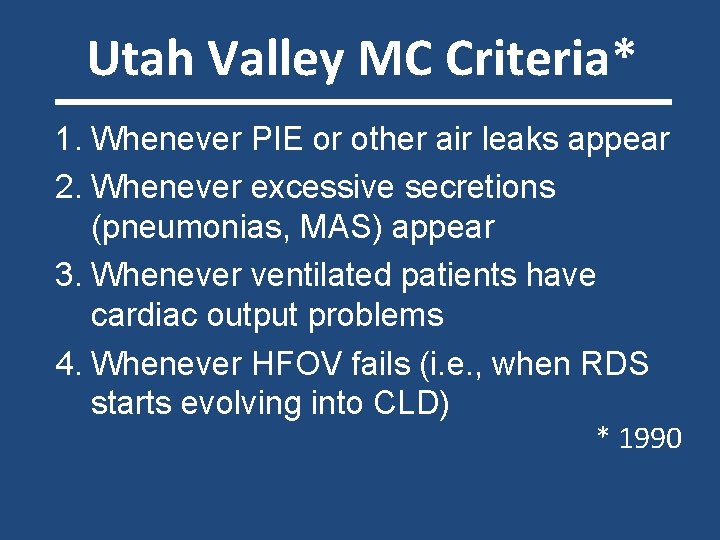
Utah Valley MC Criteria* 1. Whenever PIE or other air leaks appear 2. Whenever excessive secretions (pneumonias, MAS) appear 3. Whenever ventilated patients have cardiac output problems 4. Whenever HFOV fails (i. e. , when RDS starts evolving into CLD) * 1990
#2 Step to Success “Start HFJV with Rational Settings” Choose an HFJV Rate to Match Patient Size and Condition
Higher HFJV Rates The Smaller and stiffer the Lungs, the Faster You Can Go
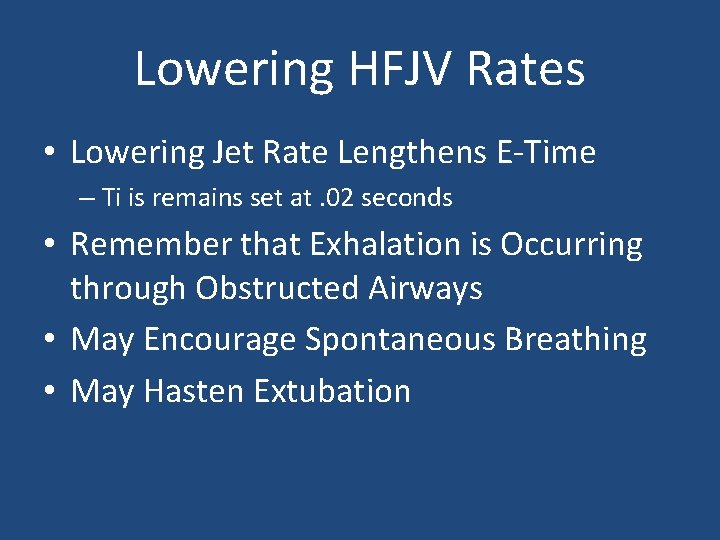
Lowering HFJV Rates • Lowering Jet Rate Lengthens E-Time – Ti is remains set at. 02 seconds • Remember that Exhalation is Occurring through Obstructed Airways • May Encourage Spontaneous Breathing • May Hasten Extubation
HFJV Rate I: E 600 bpm 420 360 1: 4 1: 6 1: 7 300 240 1: 9 1 : 12
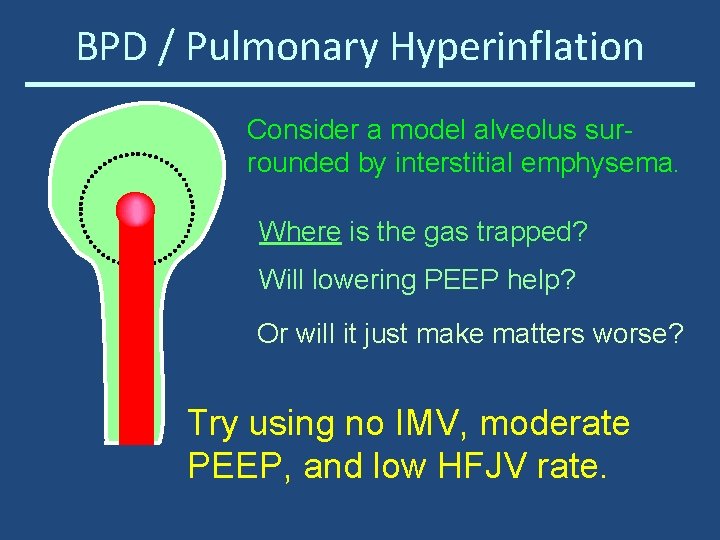
BPD / Pulmonary Hyperinflation Consider a model alveolus surrounded by interstitial emphysema. Where is the gas trapped? Will lowering PEEP help? Or will it just make matters worse? Try using no IMV, moderate PEEP, and low HFJV rate.
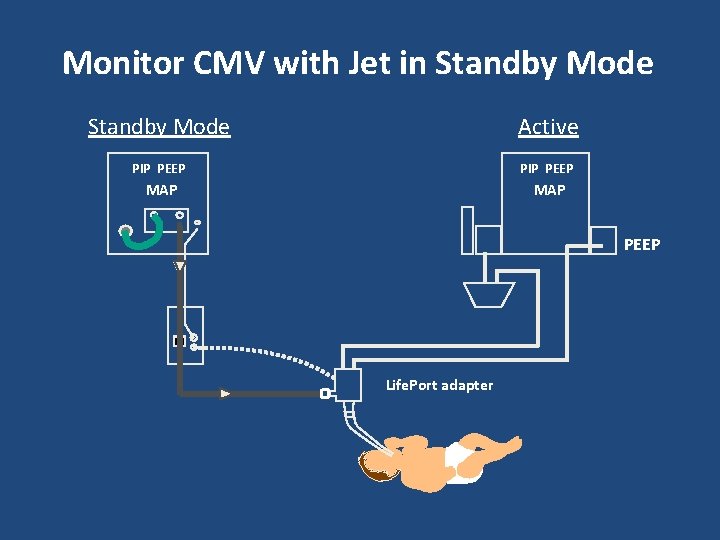
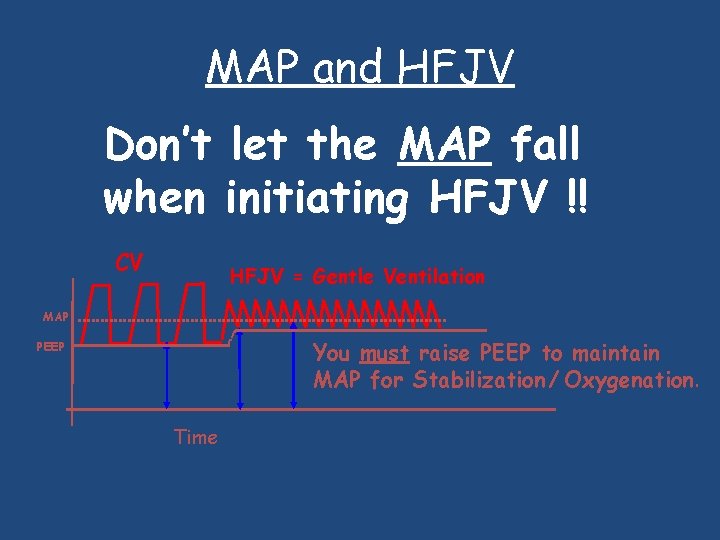
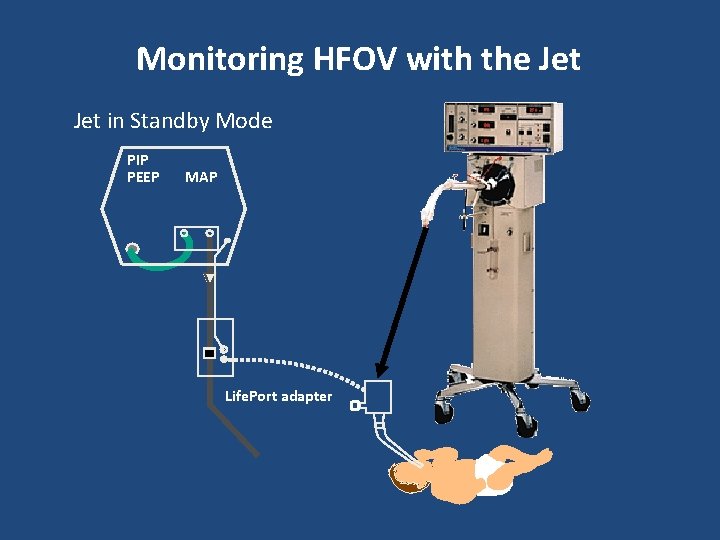
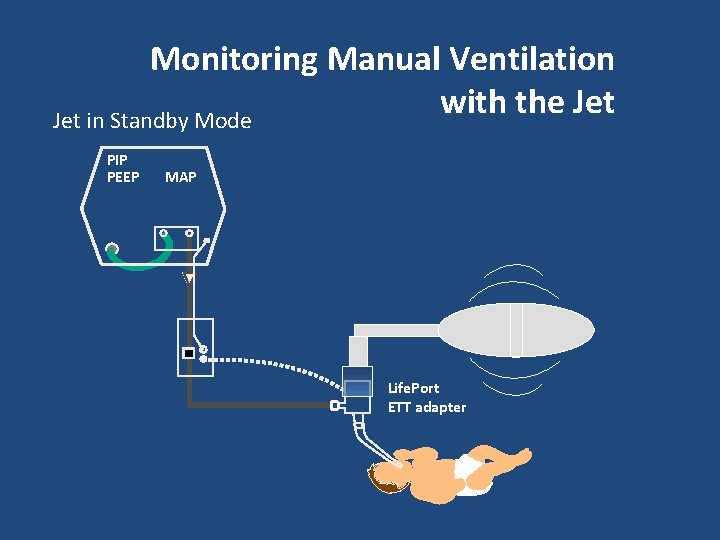
#3 Step to Success “Make a commitment to MAP!” Preserve existing lung volume & oxygenation by not allowing MAP to fall at HFJV initiation
Monitor CMV with Jet in Standby Mode Active PIP PEEP MAP PEEP Life. Port adapter
MAP and HFJV Don’t let the MAP fall when initiating HFJV !! CV HFJV = Gentle Ventilation MAP You must raise PEEP to maintain MAP for Stabilization / Oxygenation. PEEP Time
Monitoring HFOV with the Jet in Standby Mode PIP PEEP MAP Life. Port adapter
Monitoring Manual Ventilation with the Jet in Standby Mode PIP PEEP MAP Life. Port ETT adapter
#4 Step to Success Adjust HFJV PIP to manage Pa. CO 2
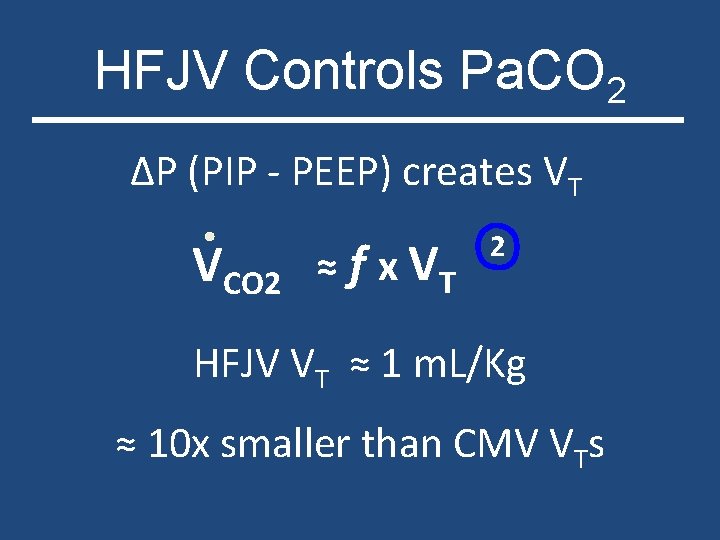
HFJV Controls Pa. CO 2 ∆P (PIP - PEEP) creates VT VCO 2 ≈ f x VT 2 HFJV VT ≈ 1 m. L/Kg ≈ 10 x smaller than CMV VTs
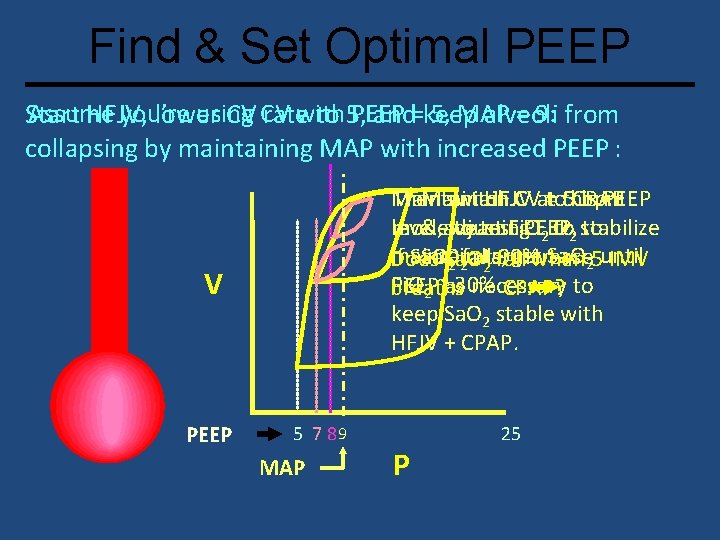
#5 Step to Success “Find & Set Optimal PEEP” Use CMV “sigh” breaths to find optimal PEEP
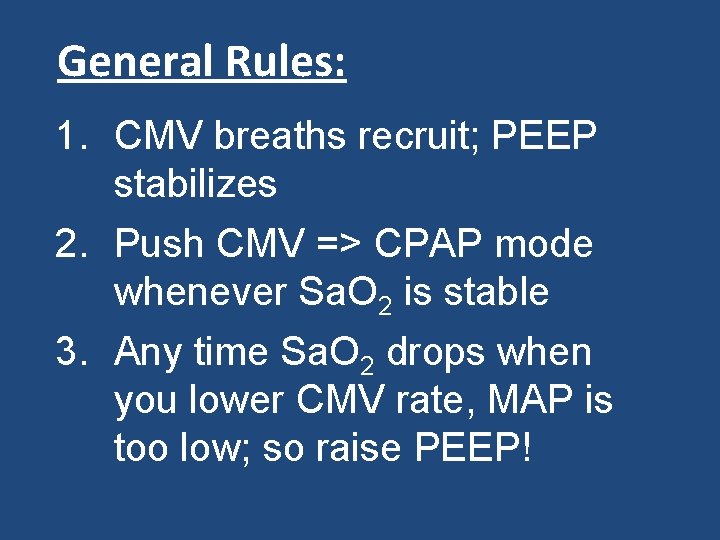
General Rules: 1. CMV breaths recruit; PEEP stabilizes 2. Push CMV => CPAP mode whenever Sa. O 2 is stable 3. Any time Sa. O 2 drops when you lower CMV rate, MAP is too low; so raise PEEP!
Find & Set Optimal PEEP Assume you’re using CV with PEEP = 5, MAP = 9: Start HFJV, lower CV rate to 5, and keep alveoli from collapsing by maintaining MAP with increased PEEP : Maintain HFJV at this PEEP Then switch CV to CPAP Maintain CV = 5 bpm level, weaning Fi. O mode to test PEEP. & adjust Fi. O 2 to stabilize 2 to maintain target Sa. O 2 falls, increase If Sa. O Does Sa. O 2 until 2 at 90%. 2 fall when 5 IMV Fi. O 2 ~ 30%. PEEP as necessary to breaths CPAP? keep Sa. O 2 stable with HFJV + CPAP. V PEEP 5 7 89 MAP P 25
#6 Step to Success “Stay on Track” Monitor Servo Pressure, Pulse Oximetry, and Transcutaneous PCO 2 Be patient!
Monitor Servo Pressure • If S. P. you may need to wean PIP to keep Pa. CO 2 and p. H in target range • If S. P. you may need to suction, reposition ETT, or treat bronchospasms or pneumothoraces…… • If ever in doubt, call us: 800 -HFJV, available 24/7/365
#7 Step to Success “Don’t bail out early!” Wean to nasal CPAP
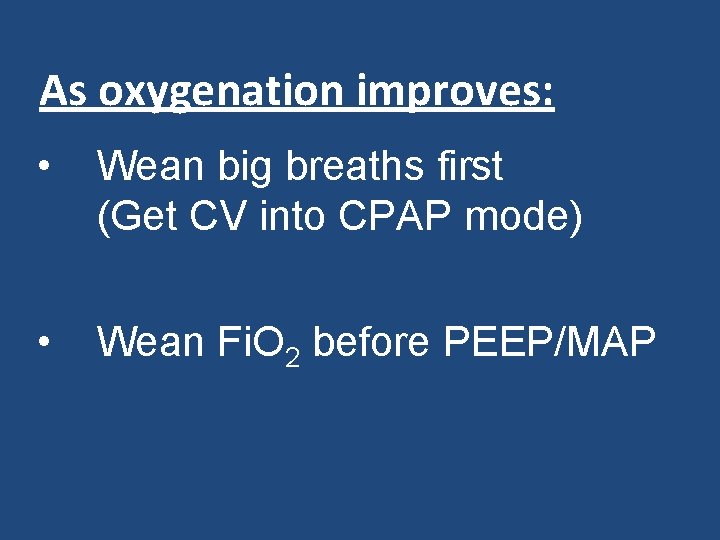
As oxygenation improves: • Wean big breaths first (Get CV into CPAP mode) • Wean Fi. O 2 before PEEP/MAP
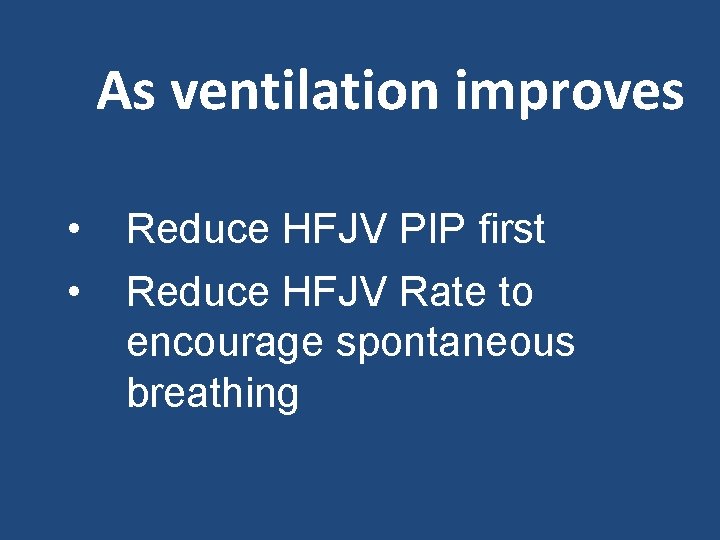
As ventilation improves • • Reduce HFJV PIP first Reduce HFJV Rate to encourage spontaneous breathing
HFJV Rate I: E Ratio 600 bpm 1: 4 420 1: 6 360 1: 7 300 1: 9 240 1 : 12 More time for exhalation Patient is on CPAP > 90% of the time!
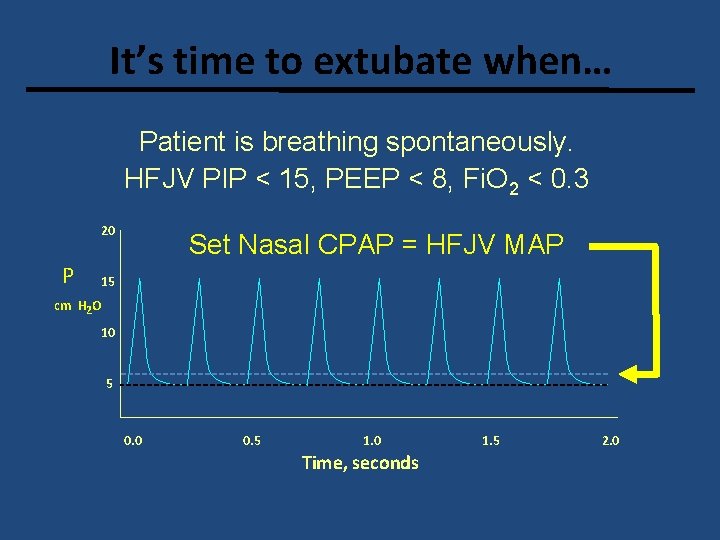
It’s time to extubate when… Patient is breathing spontaneously. HFJV PIP < 15, PEEP < 8, Fi. O 2 < 0. 3 20 P Set Nasal CPAP = HFJV MAP 15 cm H 2 O 10 5 0. 0 0. 5 1. 0 Time, seconds 1. 5 2. 0
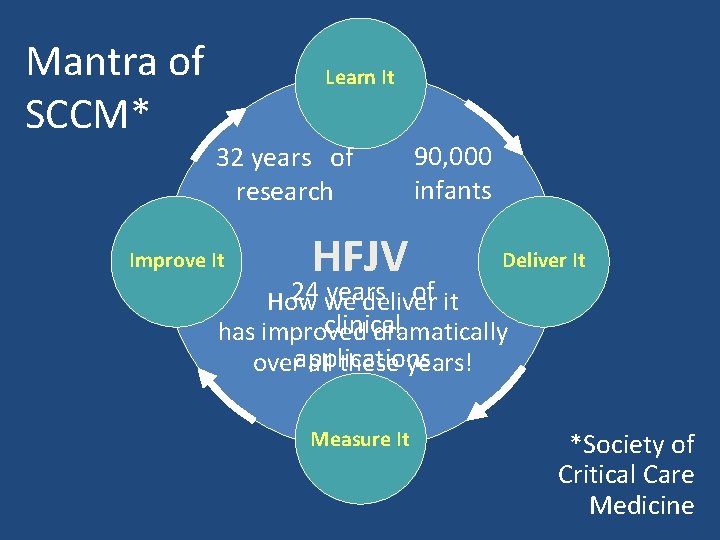
Mantra of SCCM* Learn It 32 years of research Improve It HFJV 90, 000 infants Deliver It 24 years of How we deliver it clinical has improved dramatically applications over all these years! Measure It *Society of Critical Care Medicine
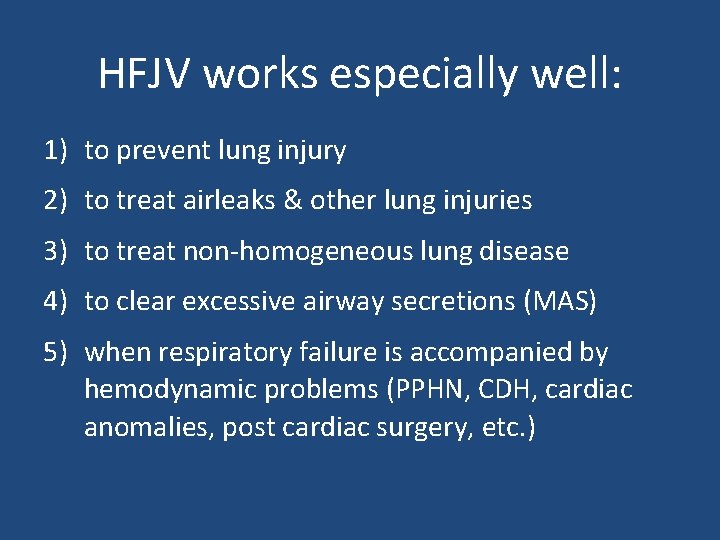
HFJV works especially well: 1) to prevent lung injury 2) to treat airleaks & other lung injuries 3) to treat non-homogeneous lung disease 4) to clear excessive airway secretions (MAS) 5) when respiratory failure is accompanied by hemodynamic problems (PPHN, CDH, cardiac anomalies, post cardiac surgery, etc. )
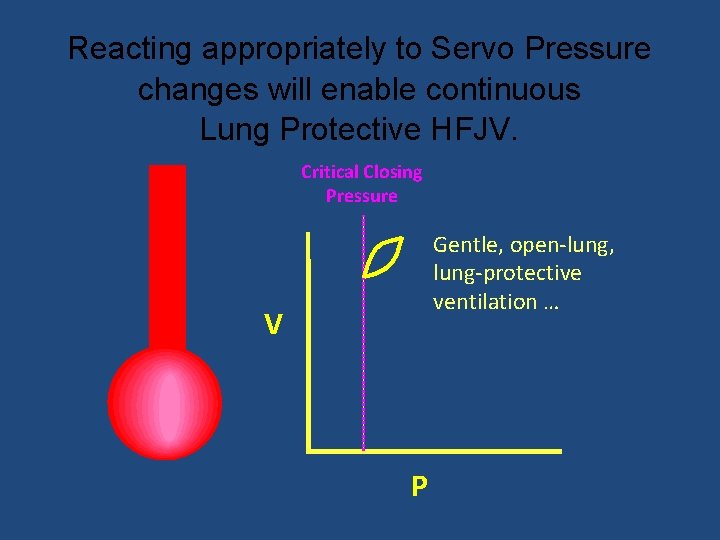
Reacting appropriately to Servo Pressure changes will enable continuous Lung Protective HFJV. Critical Closing Pressure Gentle, open-lung, lung-protective ventilation … V P
Bunnell Inc. • HOTLINE 800 -4358 • Website www. bunl. com • Email: Greg. Shelton@bunl. com Remember KISSKEEP IT SIMPLE SILLY