
Preventing the Spread of Stigma Changing Attitudes and



- Slides: 41
Preventing the Spread of Stigma: Changing Attitudes and the Terminology We use Regarding Substance Use Disorders. - Part 1 September 10, 2019 10: 00 AM CST Phillip Barbour, Master Trainer, Center for Health and Justice at TASC Chuck Klevgaard, CSPS, Prevention Manager (PTTC) 1
Lobby Poll I am interested in stigma because I believe: (Check all that apply) A. Words matter B. Prevention professionals can make a difference C. The opioid crisis has created even more reasons to work on stigma D. All the above
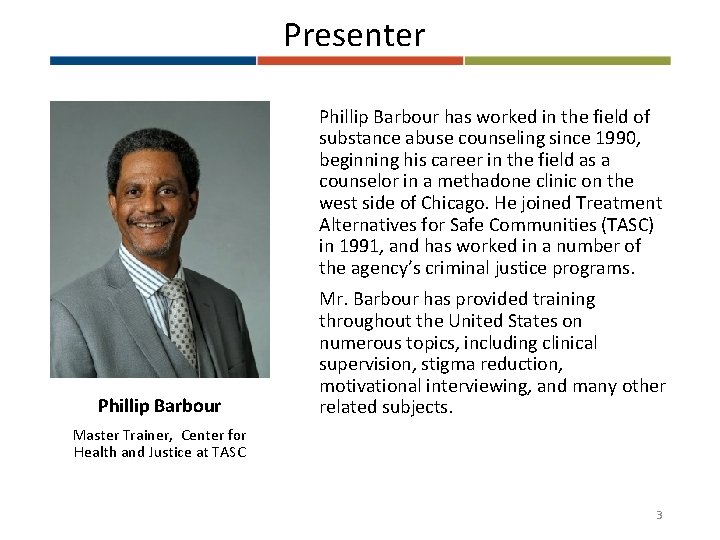
Presenter Phillip Barbour has worked in the field of substance abuse counseling since 1990, beginning his career in the field as a counselor in a methadone clinic on the west side of Chicago. He joined Treatment Alternatives for Safe Communities (TASC) in 1991, and has worked in a number of the agency’s criminal justice programs. Phillip Barbour Mr. Barbour has provided training throughout the United States on numerous topics, including clinical supervision, stigma reduction, motivational interviewing, and many other related subjects. Master Trainer, Center for Health and Justice at TASC 3
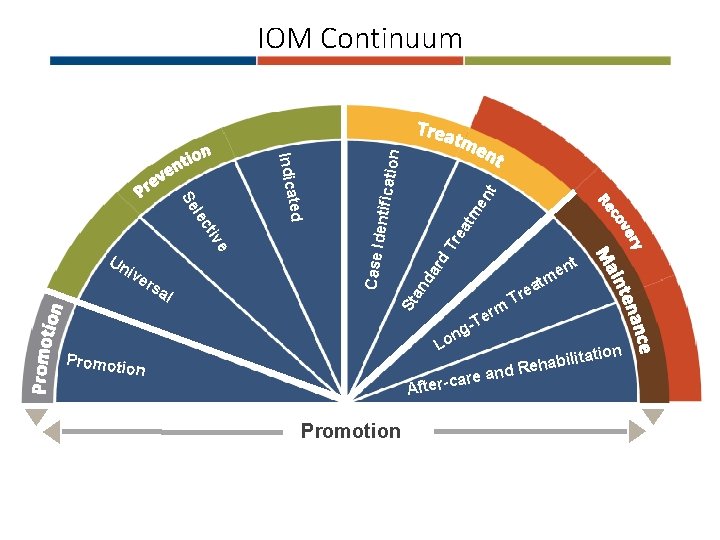
t en tm ea Tr d da r rm e T g- n Promoti nt e m t St an Case I ted e tiv lec ive rs al dentifi Indica Se Un cation IOM Continuum Lo on are After-c Promotion ea Tr an itation l i b a h d Re
Presentation Summary This 90 minute webinar will define stigma for prevention practitioners and the various levels as which it can occur. The webinar will address common myths associated with substance use disorder that can perpetuate stigma for this population and address changes in terminology and attitude that can emphasize the "person-first" rather than dehumanization of this population. 5
Learning Objectives § Define stigma in general and what it looks like in the world of SUD and MH. § Explore some facts and myths about SUD and treatment § How to combat stigma § Language strategies that can reduce stigma 6
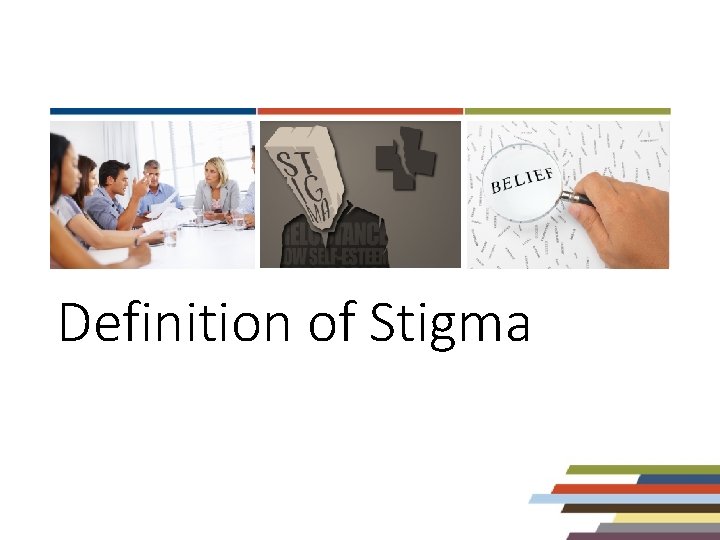
Definition of Stigma
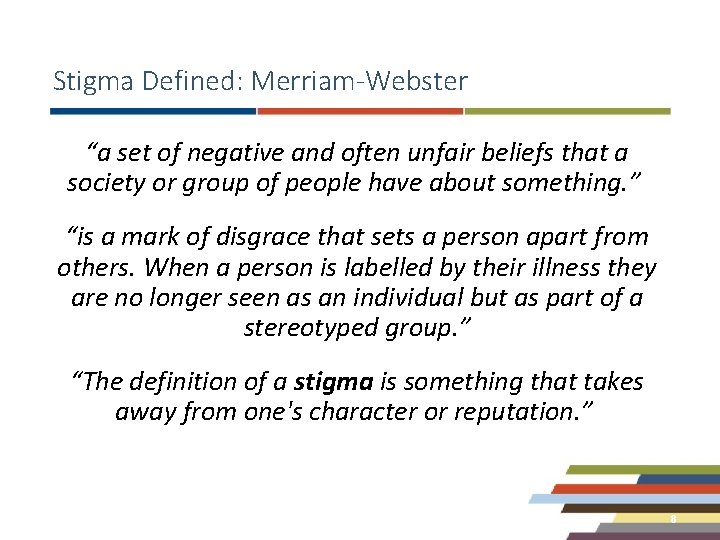
Stigma Defined: Merriam-Webster “a set of negative and often unfair beliefs that a society or group of people have about something. ” “is a mark of disgrace that sets a person apart from others. When a person is labelled by their illness they are no longer seen as an individual but as part of a stereotyped group. ” “The definition of a stigma is something that takes away from one's character or reputation. ” 8
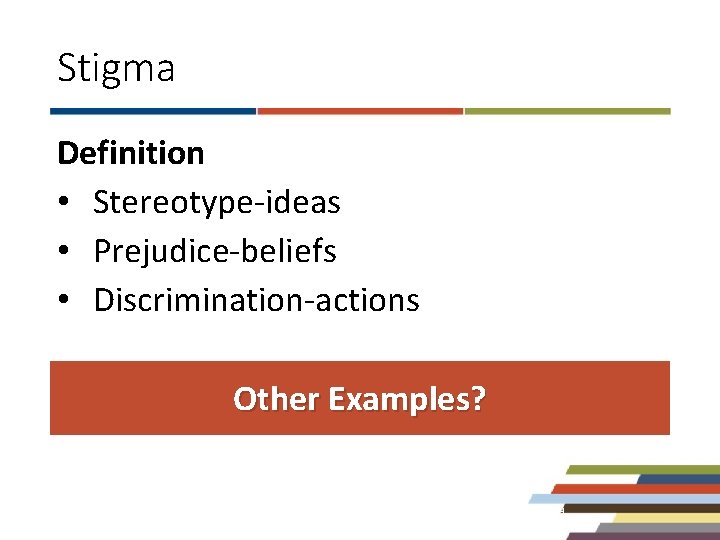
Stigma Definition • Stereotype-ideas • Prejudice-beliefs • Discrimination-actions Other Examples? 9
Levels of Stigma Examples: State health agency boards who make decisions, with no representation of the prevention populations they serve. Neighborhood perspectives regarding the presence of drug activity Believing that you’re not worth treatment National Academies of Sciences, Engineering, and Medicine 2016. Ending Discrimination Against People with Mental and Substance Use Disorders: The Evidence for Stigma Change. Washington, DC: The National Academies Press. https: //doi. org/10. 17226/23442.
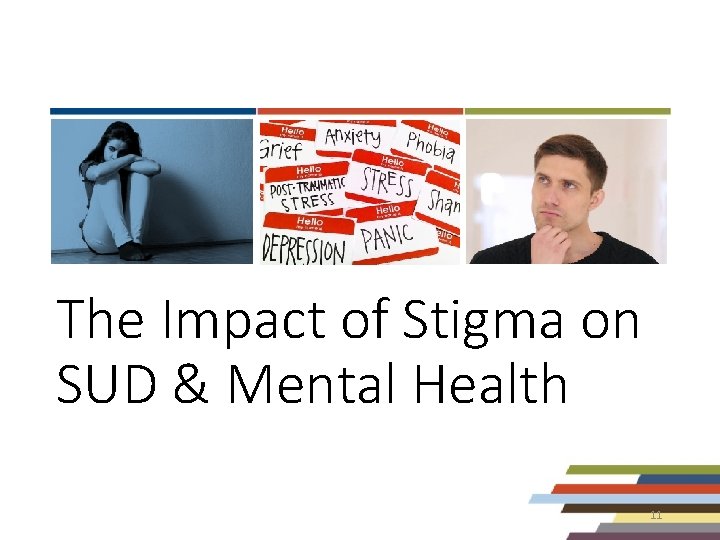
The Impact of Stigma on SUD & Mental Health 11
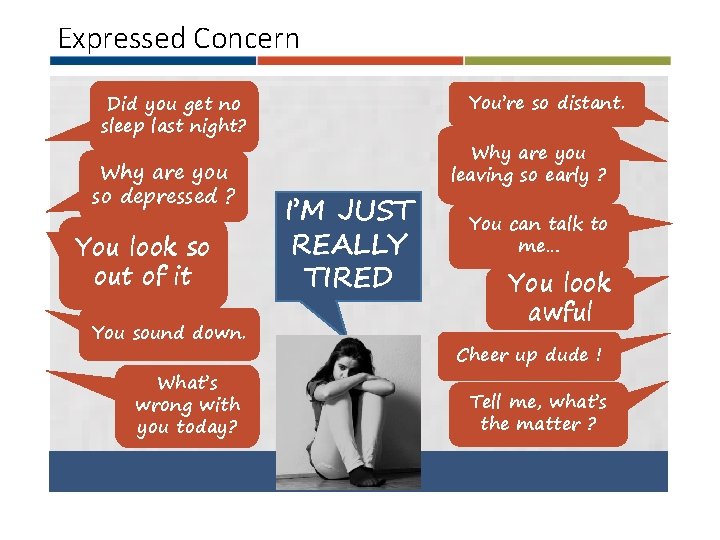
Expressed Concern You’re so distant. Did you get no sleep last night? Why are you so depressed ? You look so out of it You sound down. What’s wrong with you today? I’M JUST REALLY TIRED Why are you leaving so early ? You can talk to me… You look awful Cheer up dude ! Tell me, what’s the matter ? 12
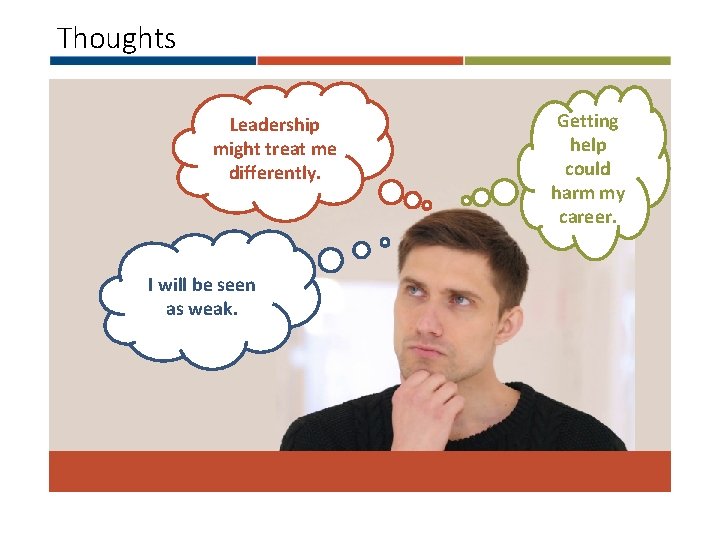
Thoughts Leadership might treat me differently. Getting help could harm my career. I will be seen as weak. 13
Labels 14
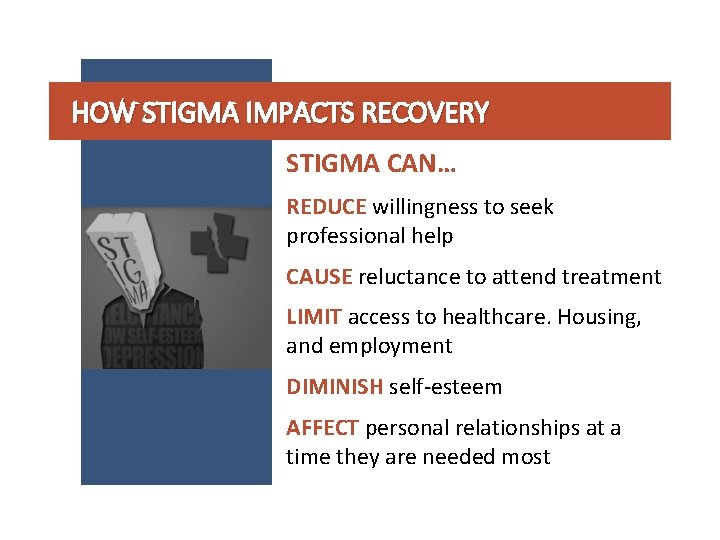
HOW STIGMA IMPACTS RECOVERY STIGMA CAN… REDUCE willingness to seek professional help CAUSE reluctance to attend treatment LIMIT access to healthcare. Housing, and employment DIMINISH self-esteem AFFECT personal relationships at a time they are needed most 15
Chat Question Type in the chat On a scale of 1 -5 how much do you think stigma related to (SUD) affects your prevention work at the state or community level. Type in the chat a number and an example of how stigma impacts your prevention work.
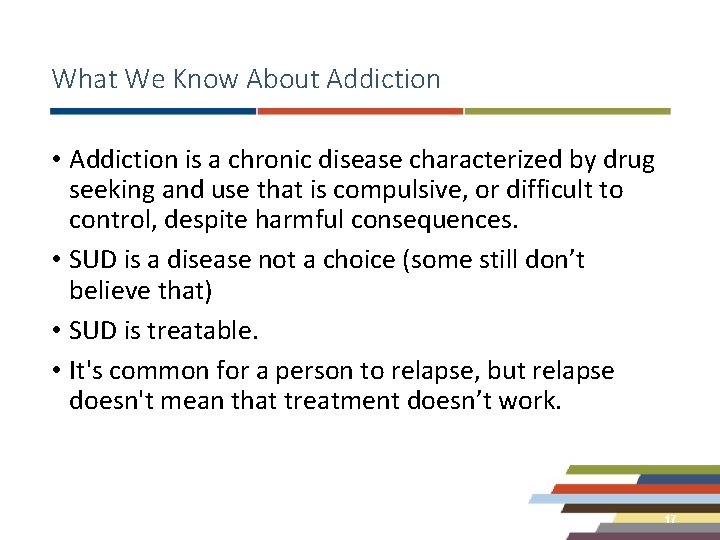
What We Know About Addiction • Addiction is a chronic disease characterized by drug seeking and use that is compulsive, or difficult to control, despite harmful consequences. • SUD is a disease not a choice (some still don’t believe that) • SUD is treatable. • It's common for a person to relapse, but relapse doesn't mean that treatment doesn’t work. 17
MYTHS FACTS Facts and Myths About Drug Addiction 18
MYTH FACT Myth #1: If it’s a prescription, it must be safe; you can’t get addicted to something your doctor prescribes. FACT: Although many medications are perfectly safe if taken in the prescribed dosage for a short period of time, prolonged use can be dangerous—and, yes, addictive.
MYTH FACT Myth #2: “Natural” drugs are safer than synthetic ones. FACT: Marijuana, mushrooms and other “natural” highs still alter brain chemistry and produce dangerous side effects. They aren’t harmless just because they grow in the ground.
MYTH FACT Myth #3: The heroin era (or the crack crisis, the age of ecstasy, etc. ) is over. FACT: Drugs don’t just go away. Although certain drug trends become more popular and available and then seem to diminish in popularity over time, a drug doesn’t pose a lesser threat to you – or your kids – simply because it is associated with the culture of a previous decade.
MYTH FACT Myth #4: If you have a high alcohol tolerance, you don’t have a drinking problem. FACT: If you feel nothing after several drinks, you DO have a problem. A casual drinker wouldn’t be able to finish a couple of six-packs—and if they did, they’d feel very sick. If you’re drinking this much and feeling fine, you need help.
MYTH FACT Myth #5: If you have a stable job and family life, you’re not addicted. FACT: You may still have a job or career, a loving spouse and kids, and still have a drug or alcohol problem. Just ask any physician in recovery—many of them practiced for years without anyone recognizing their drug addiction.
MYTH FACT Myth #6: Drug addiction is a choice. FACT: Drug use is a choice, and prolonged use changes your body and brain chemistry. When that happens, the user no longer appears to have a choice—this is when use and misuse become addiction.
MYTH FACT Myth #7: Detox is all you need. You aren’t addicted after you finish detox. FACT: Detox is difficult and it’s just the beginning. The new “ultra rapid detox” (where sedation is used) programs can be dangerous and even deadly.
MYTH FACT Myth #8: If someone in recovery uses drugs or alcohol again, they’ll be right back where they were when they first quit. FACT: This can be a self-fulfilling prophecy. If you believe that one drink will throw you back to “square one, ” then it will. However, it is entirely possible to relapse, realize your mistake, and get right back in recovery.
MYTH FACT Myth #9: You need to be religious in order to get sober. FACT: Sobriety doesn’t require you to believe in God or subscribe to any organized religion. It helps, however, if you believe in humanity, family, community, and the good aspects of yourself—beliefs that are greater and stronger than your own daily life with drugs.
Myth #10: Addicts are bad people. MYTH FACT: Addicts aren’t “bad” people trying to get “good, ” they’re sick people trying to get well. They don’t belong to a particular race or exist only in certain parts of the country. They are proof that addiction doesn’t discriminate—but, thankfully, neither does recovery.
Chat Question Type in the chat As prevention practitioners, we are in a unique position to reduce the stigma surrounding substance misuse. Type in the chat box examples of how prevention practitioners address stigma where you work.
LANGUAGE MATTERS 30
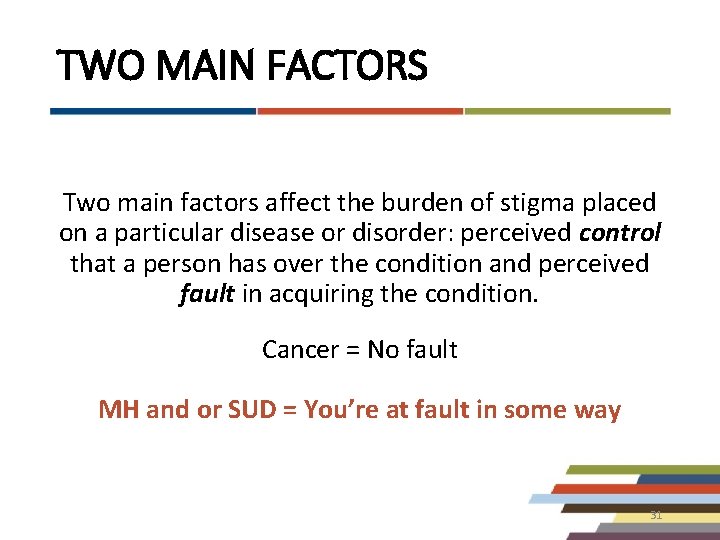
TWO MAIN FACTORS Two main factors affect the burden of stigma placed on a particular disease or disorder: perceived control that a person has over the condition and perceived fault in acquiring the condition. Cancer = No fault MH and or SUD = You’re at fault in some way 31
SOCIETY TREATS PEOPLE WITH SUD DIFFERENT • Substance use disorder is among the most stigmatized conditions in the US and around the world • Health care providers treat patients who have substance use disorders differently • People with a substance use disorder who expect or experience stigma have poorer outcomes 32
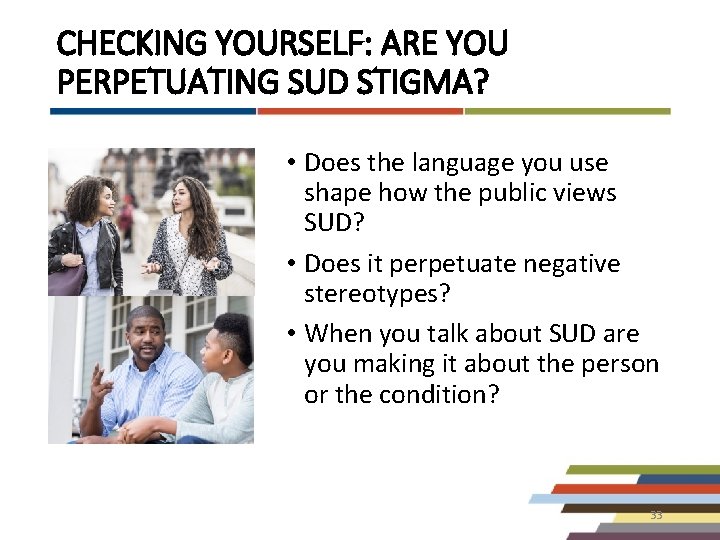
CHECKING YOURSELF: ARE YOU PERPETUATING SUD STIGMA? • Does the language you use shape how the public views SUD? • Does it perpetuate negative stereotypes? • When you talk about SUD are you making it about the person or the condition? 33
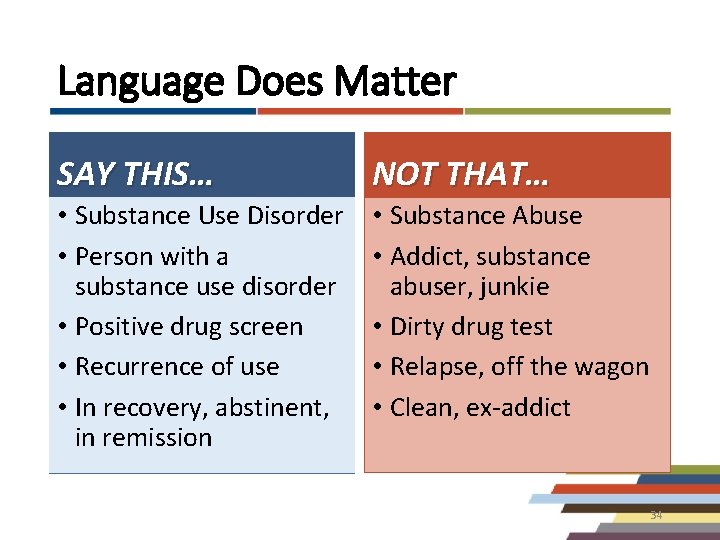
Language Does Matter SAY THIS… NOT THAT… • Substance Use Disorder • Person with a substance use disorder • Positive drug screen • Recurrence of use • In recovery, abstinent, in remission • Substance Abuse • Addict, substance abuser, junkie • Dirty drug test • Relapse, off the wagon • Clean, ex-addict 34
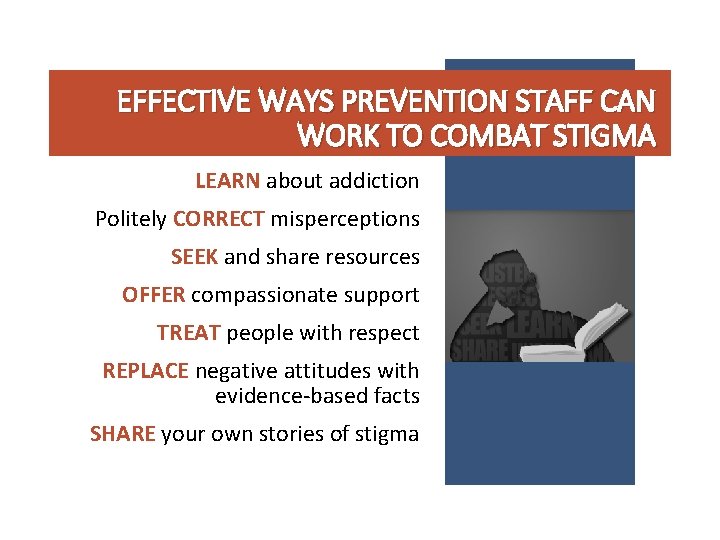
EFFECTIVE WAYS PREVENTION STAFF CAN WORK TO COMBAT STIGMA LEARN about addiction Politely CORRECT misperceptions SEEK and share resources OFFER compassionate support TREAT people with respect REPLACE negative attitudes with evidence-based facts SHARE your own stories of stigma 35
Questions
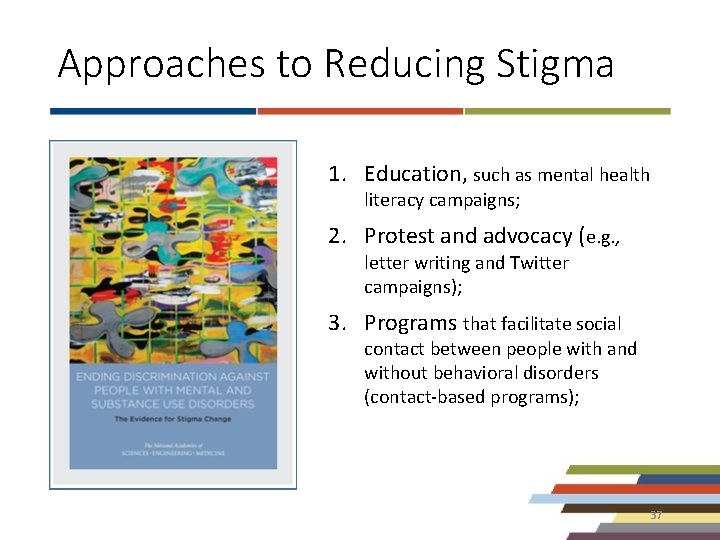
Approaches to Reducing Stigma 1. Education, such as mental health literacy campaigns; 2. Protest and advocacy (e. g. , letter writing and Twitter campaigns); 3. Programs that facilitate social contact between people with and without behavioral disorders (contact-based programs); 37
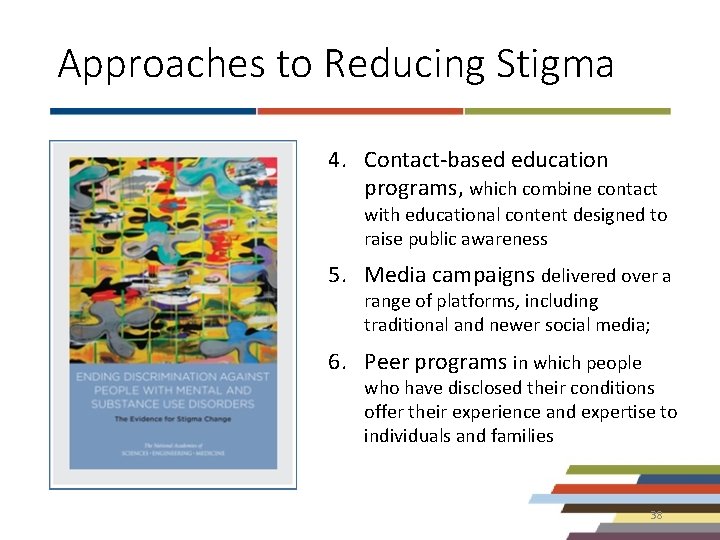
Approaches to Reducing Stigma 4. Contact-based education programs, which combine contact with educational content designed to raise public awareness 5. Media campaigns delivered over a range of platforms, including traditional and newer social media; 6. Peer programs in which people who have disclosed their conditions offer their experience and expertise to individuals and families 38
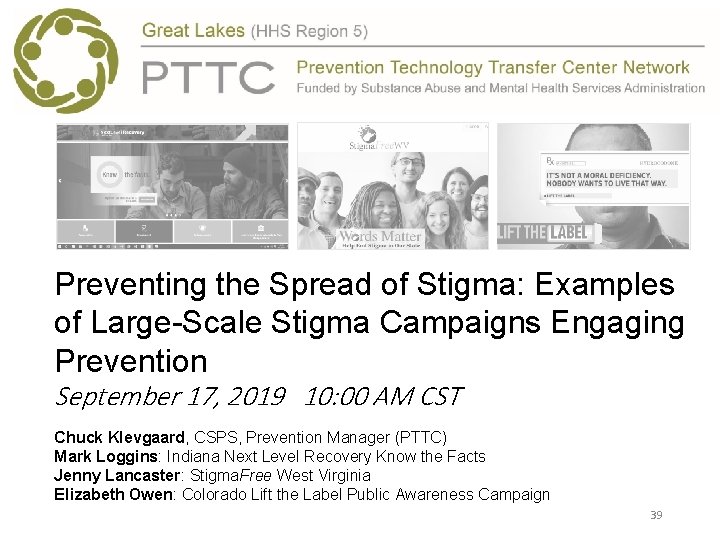
Preventing the Spread of Stigma: Examples of Large-Scale Stigma Campaigns Engaging Prevention September 17, 2019 10: 00 AM CST Chuck Klevgaard, CSPS, Prevention Manager (PTTC) Mark Loggins: Indiana Next Level Recovery Know the Facts Jenny Lancaster: Stigma. Free West Virginia Elizabeth Owen: Colorado Lift the Label Public Awareness Campaign 39
Resources Words Matter, How Language Choice Can Reduce Stigma. https: //preventionsolutions. edc. org/sites/defa ult/files/attachments/Words-Matter-How. Language-Choice-Can-Reduce-Stigma_0. pdf SAMHSA "Overcoming Stigma, Ending Discrimi nation" Resource Guide: https: //www. samhsa. gov/sites/default/files/pr ograms_campaigns/02. _webcast_1_res ources -508. pdf “Addictionary” glossary of nonstigmatizing terms: https: //www. recoveryanswers. org/addictionary/ 40