
Preventing the Spread of Invasive Species on Public
Preventing the Spread of Invasive Species on Public Lands The Basics of Pathway Management and Interdiction Mike Ielmini National Invasive Species Coordinator USDA Forest Service - National Forest System Washington, D. C.

What are the Threats? Invasive Species Threats • Plants • Pathogens • Vertebrates • Invertebrates
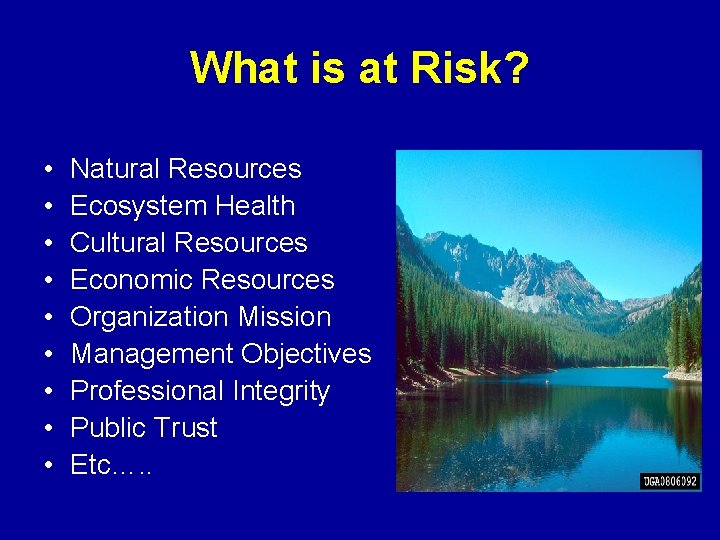
What is at Risk? • • • Natural Resources Ecosystem Health Cultural Resources Economic Resources Organization Mission Management Objectives Professional Integrity Public Trust Etc…. .
Management Pressure Points on Public Lands? Areas of Major Human Interactions with the Resource Area • • • Road systems Trails and Trailheads (foot, horse, ATV, etc) Campgrounds and Picnic Areas Boat ramps Parking areas Shipping and Delivery Areas Visitor centers and contact stations Infrastructure and facilities (maintenance, storage, fuel, water, fire cache, equipment yards, sewage treatment areas, etc. ) Utility corridors (gas, oil, electricity, water, etc) Concession/contractor facilities Aquatic areas – rivers, lakes, estuaries, etc. Etc….
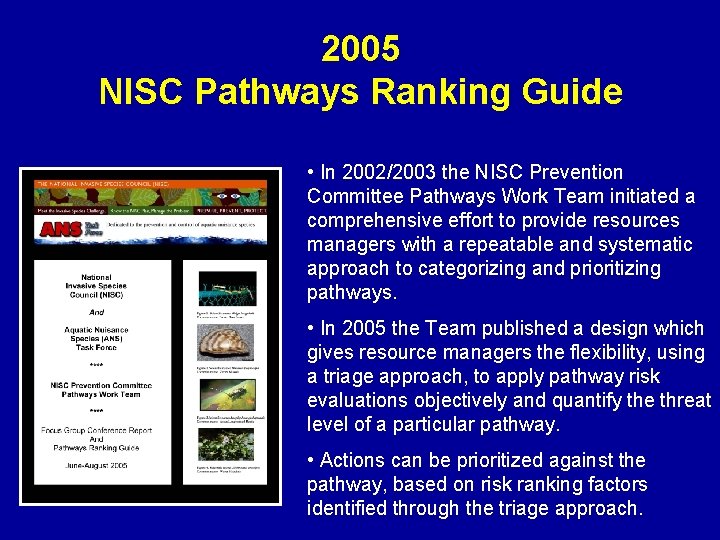
2005 NISC Pathways Ranking Guide • In 2002/2003 the NISC Prevention Committee Pathways Work Team initiated a comprehensive effort to provide resources managers with a repeatable and systematic approach to categorizing and prioritizing pathways. • In 2005 the Team published a design which gives resource managers the flexibility, using a triage approach, to apply pathway risk evaluations objectively and quantify the threat level of a particular pathway. • Actions can be prioritized against the pathway, based on risk ranking factors identified through the triage approach.
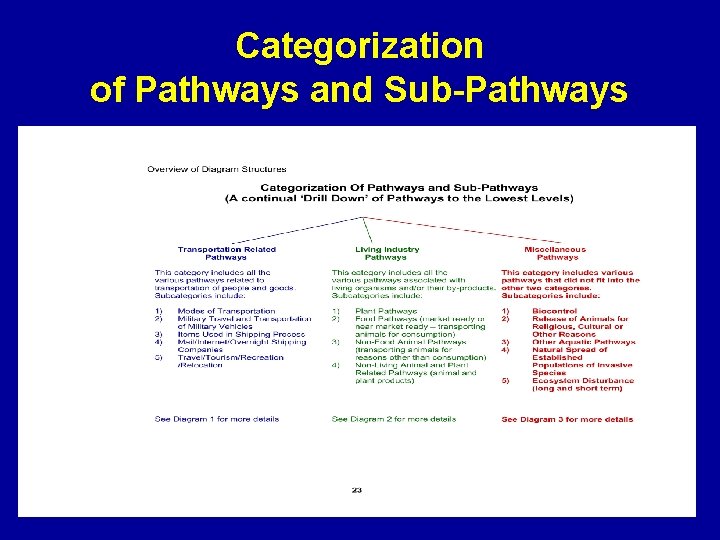
Categorization of Pathways and Sub-Pathways
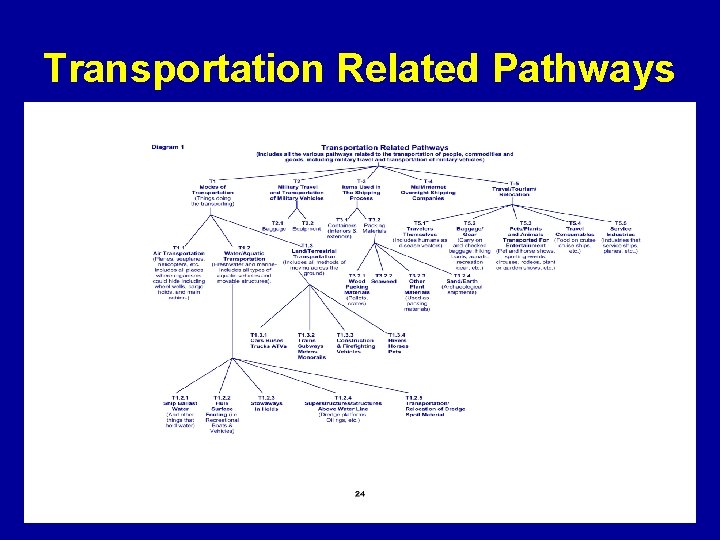
Transportation Related Pathways
Where Do We Start? Effective Actions for the Resource Manager • Identify priority areas to address the problem • Identify priority species to target • Develop baseline information on infestations • Prepare action plans for priority areas and species • Build capacity to detect and respond rapidly to new infestations • Develop communication networks to share information widely
What are Your Roles and Responsibilities? Roles and Responsibilities • Awareness – Keep your eyes open • Proactive Planning – Ahead of the Game • Responsiveness - “Git’R’Done” • Adapt – Don’t Get In A Rut • Vigilance – Keep the Pressure On • Communicator – Teach and Learn
- Slides: 9