
Preventing Slips Trips Falls Bureau of Workers Compensation
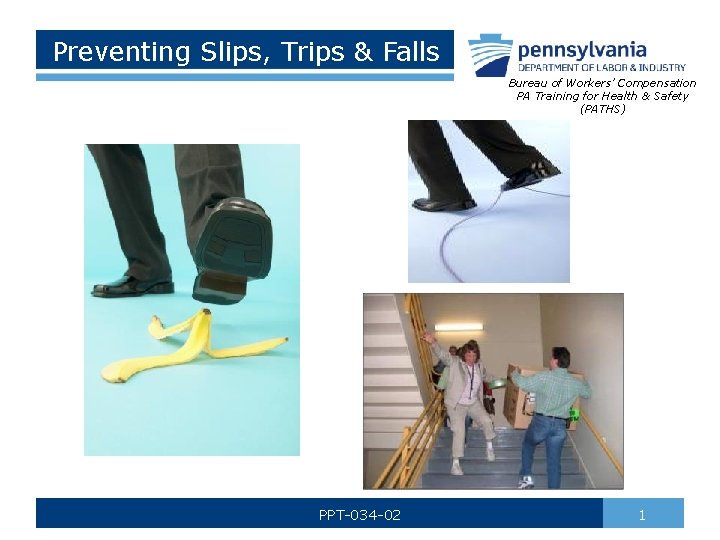
Preventing Slips, Trips & Falls Bureau of Workers’ Compensation PA Training for Health & Safety (PATHS) PPT-034 -02 1
What We’ll Discuss § § § Types of Falls Causes of Falls Prevention Methods/Measures Getting on/off Equipment Falling Properly Hazard Detection PPT-034 -02 2
Public Enemy #1 Slips, Trips and Falls § OSHA estimates slips, trips, and falls cause approximately 15% of accidental deaths. § Second only to motor vehicle accidents. § Account for between 12 -15% of Worker’s Comp costs. § Average cost for one disabling injury now § approaching $30, 000. PPT-034 -02 3
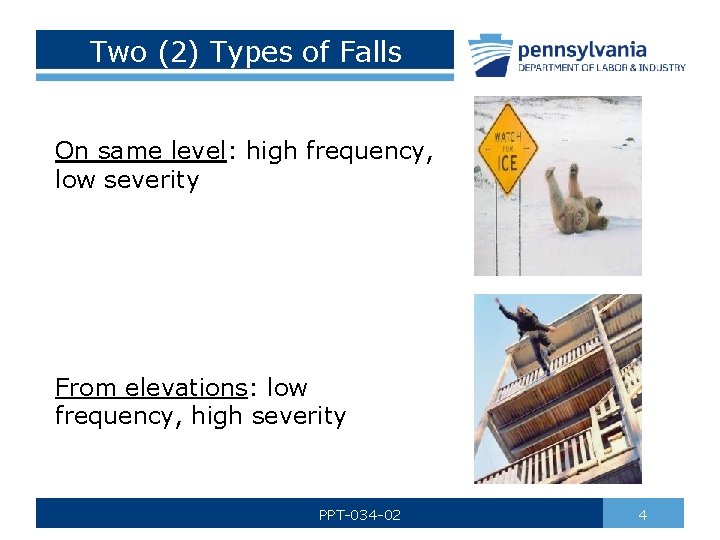
Two (2) Types of Falls On same level: high frequency, low severity From elevations: low frequency, high severity PPT-034 -02 4
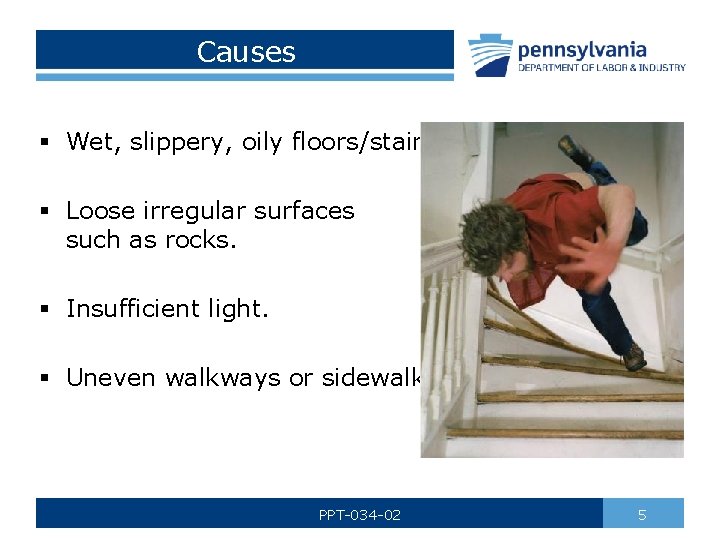
Causes § Wet, slippery, oily floors/stairs. § Loose irregular surfaces such as rocks. § Insufficient light. § Uneven walkways or sidewalks. PPT-034 -02 5
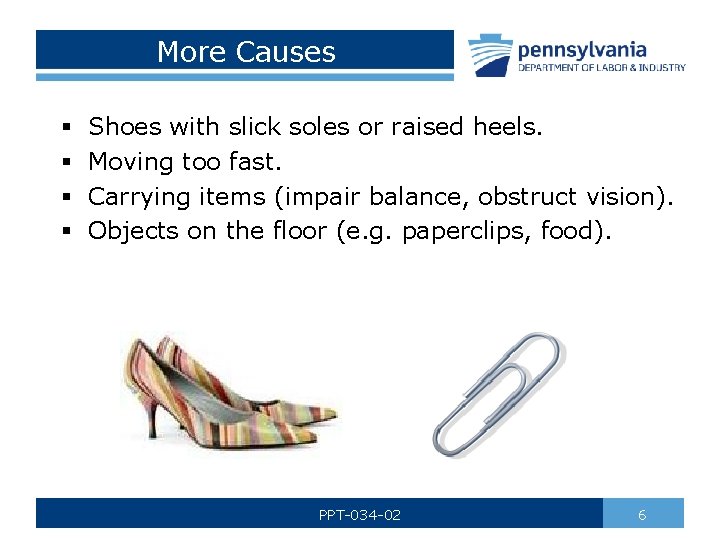
More Causes § § Shoes with slick soles or raised heels. Moving too fast. Carrying items (impair balance, obstruct vision). Objects on the floor (e. g. paperclips, food). PPT-034 -02 6
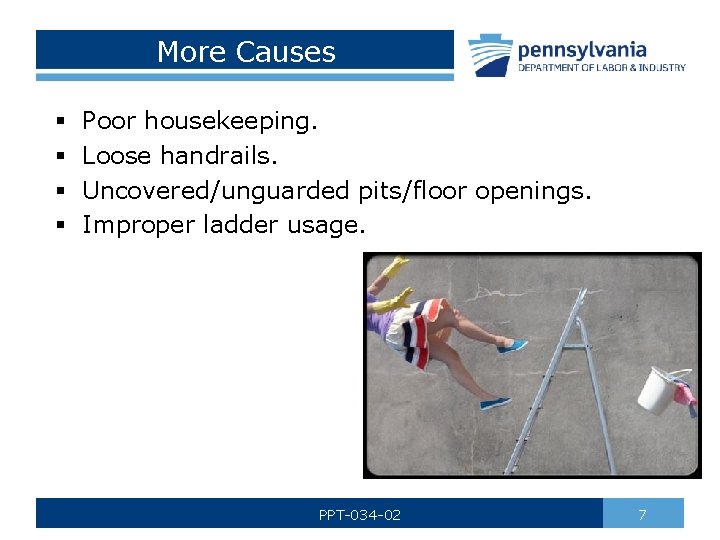
More Causes § § Poor housekeeping. Loose handrails. Uncovered/unguarded pits/floor openings. Improper ladder usage. PPT-034 -02 7
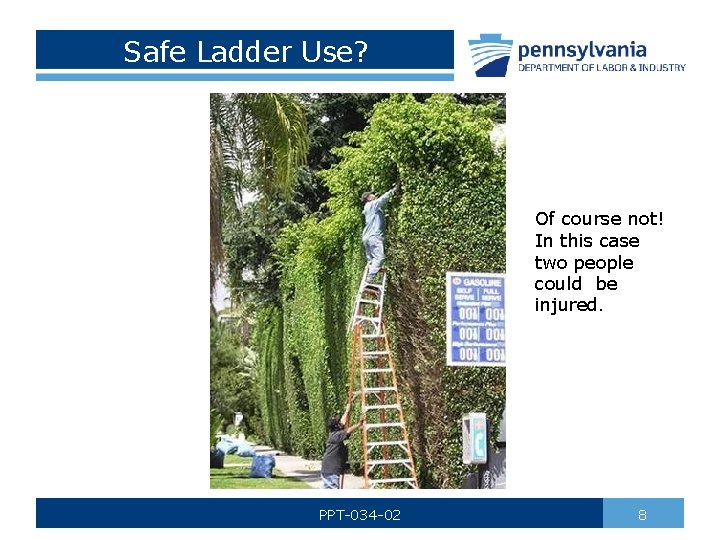
Safe Ladder Use? Of course not! In this case two people could be injured. PPT-034 -02 8
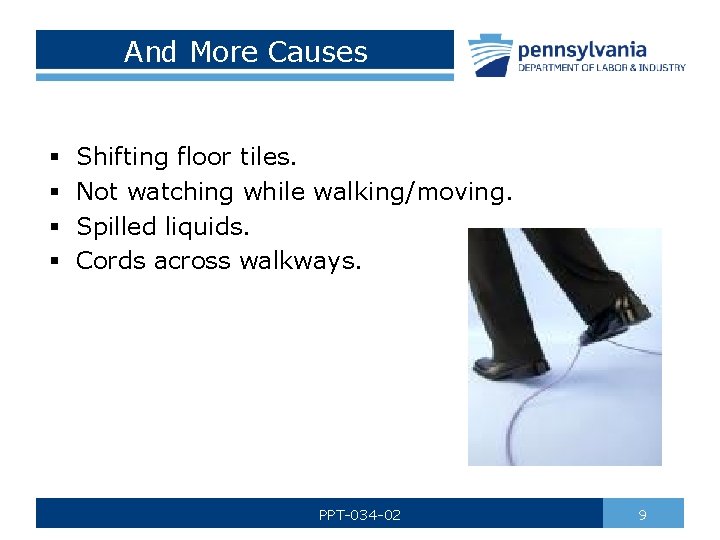
And More Causes § § Shifting floor tiles. Not watching while walking/moving. Spilled liquids. Cords across walkways. PPT-034 -02 9
What to Do? Prevent! PPT-034 -02 10
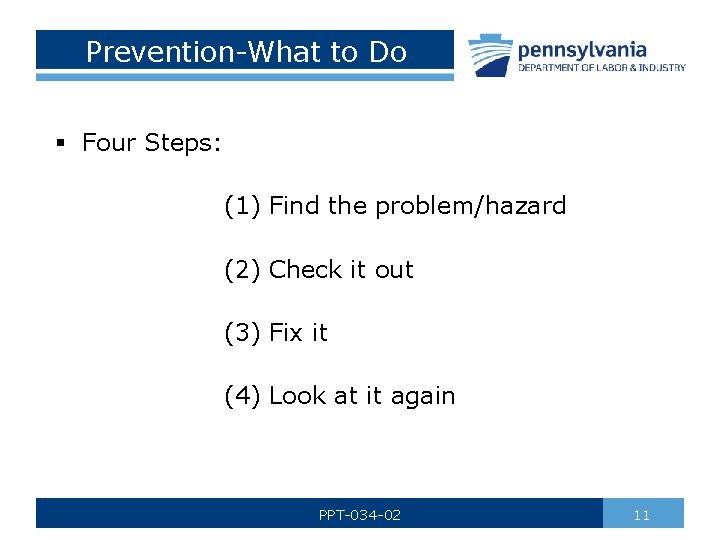
Prevention-What to Do § Four Steps: (1) Find the problem/hazard (2) Check it out (3) Fix it (4) Look at it again PPT-034 -02 11
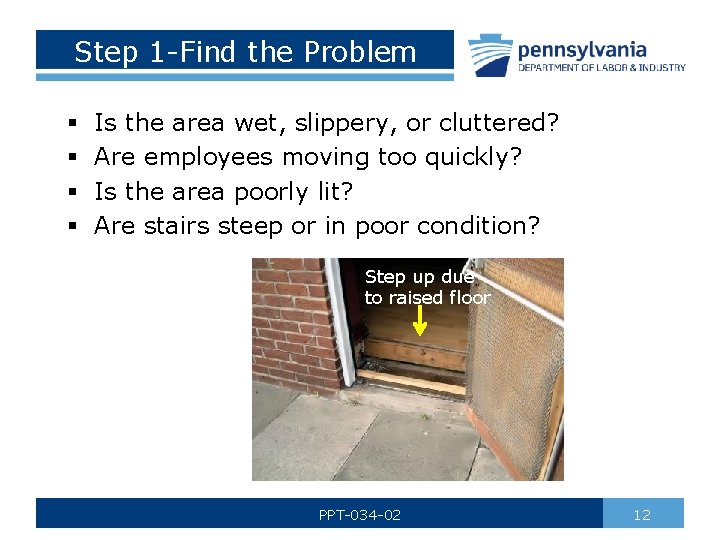
Step 1 -Find the Problem § § Is the area wet, slippery, or cluttered? Are employees moving too quickly? Is the area poorly lit? Are stairs steep or in poor condition? Step up due to raised floor PPT-034 -02 12
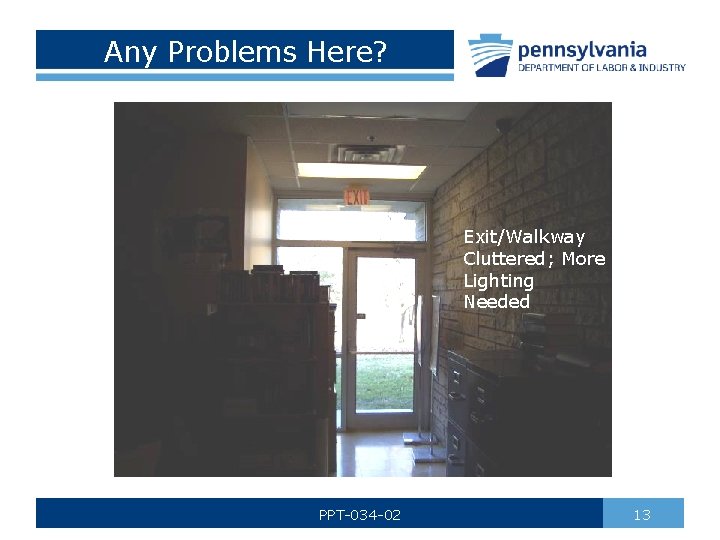
Any Problems Here? Exit/Walkway Cluttered; More Lighting Needed PPT-034 -02 13
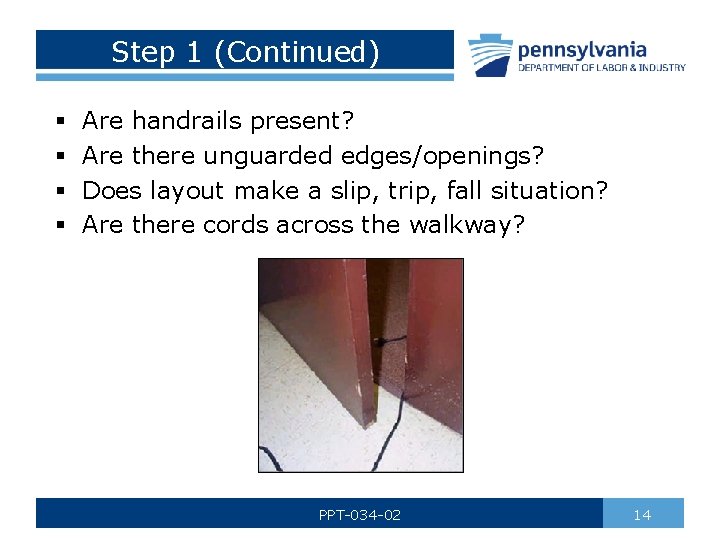
Step 1 (Continued) § § Are handrails present? Are there unguarded edges/openings? Does layout make a slip, trip, fall situation? Are there cords across the walkway? PPT-034 -02 14
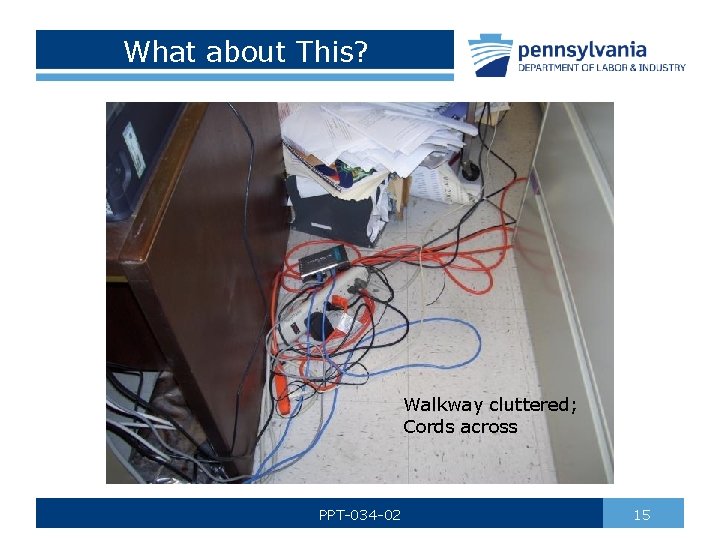
What about This? Walkway cluttered; Cords across PPT-034 -02 15
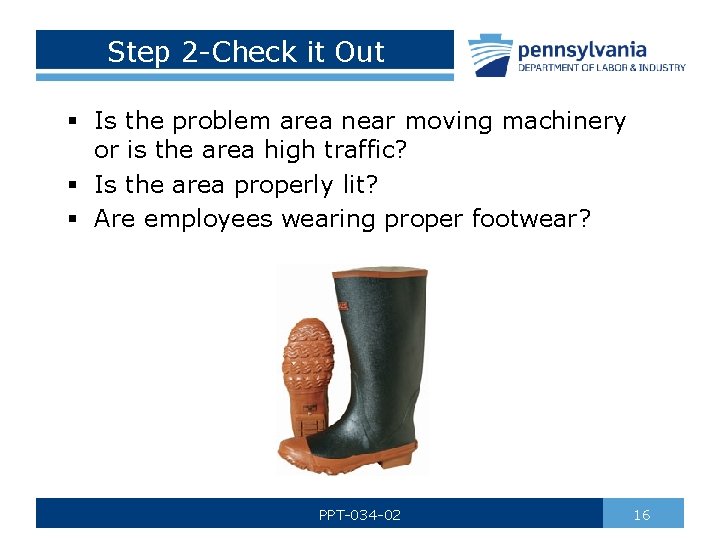
Step 2 -Check it Out § Is the problem area near moving machinery or is the area high traffic? § Is the area properly lit? § Are employees wearing proper footwear? PPT-034 -02 16
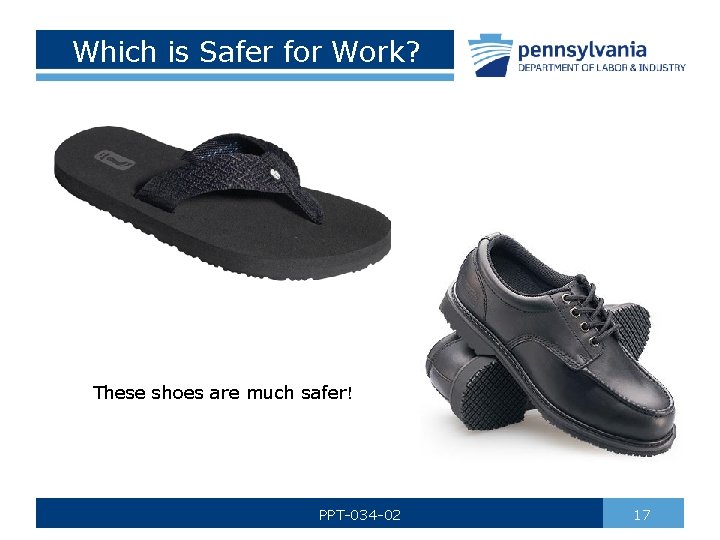
Which is Safer for Work? These shoes are much safer! PPT-034 -02 17
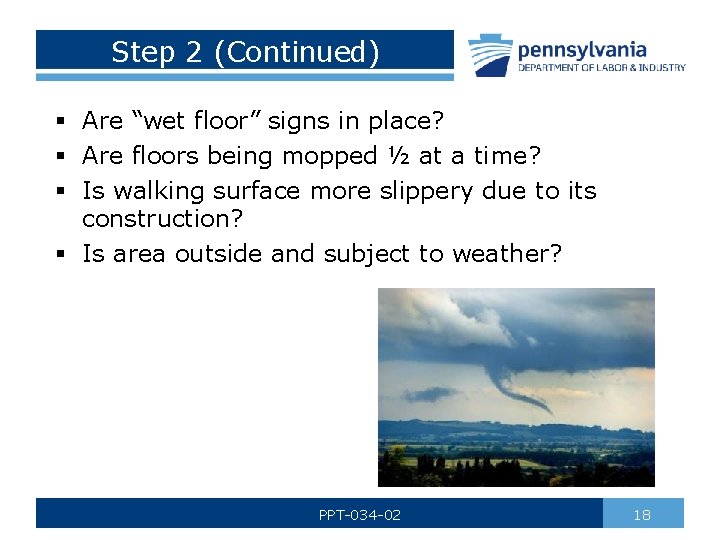
Step 2 (Continued) § Are “wet floor” signs in place? § Are floors being mopped ½ at a time? § Is walking surface more slippery due to its construction? § Is area outside and subject to weather? PPT-034 -02 18
Step 3 - Fix It § If possible, eliminate or control the hazard immediately (e. g. having spills wiped up). § If not possible, take steps to alert people and then determine what can be done to eliminate or control the hazard. PPT-034 -02 19
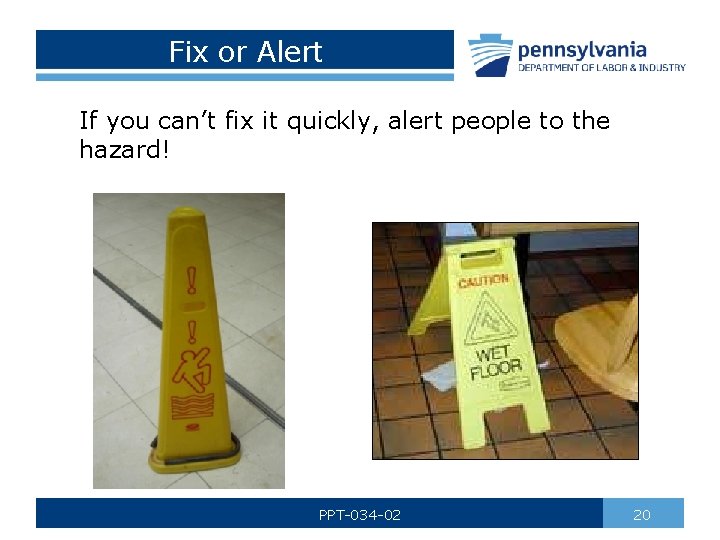
Fix or Alert If you can’t fix it quickly, alert people to the hazard! PPT-034 -02 20
Step 4 -Look at it Again § Ensure the hazard/problem was repaired, eliminated, or controlled. § Does the area have to be checked periodically to ensure the hazard/problem does not return? § Determine if any training is required for affected employees. § Should appropriate signage be posted? PPT-034 -02 21
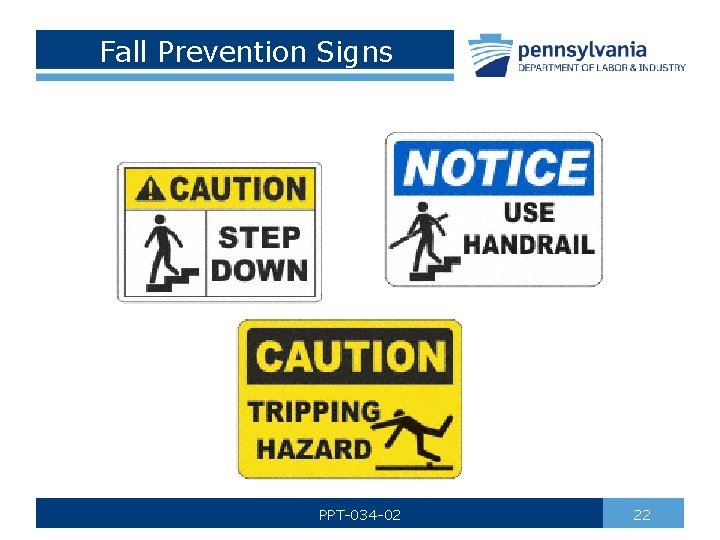
Fall Prevention Signs PPT-034 -02 22
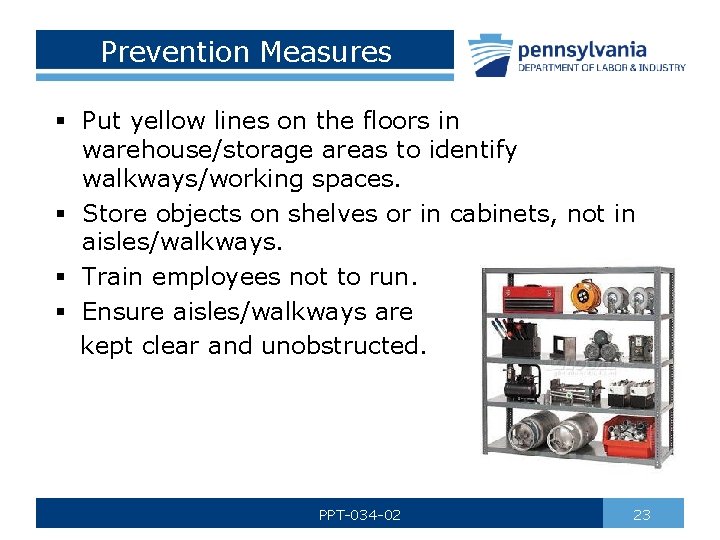
Prevention Measures § Put yellow lines on the floors in warehouse/storage areas to identify walkways/working spaces. § Store objects on shelves or in cabinets, not in aisles/walkways. § Train employees not to run. § Ensure aisles/walkways are kept clear and unobstructed. PPT-034 -02 23
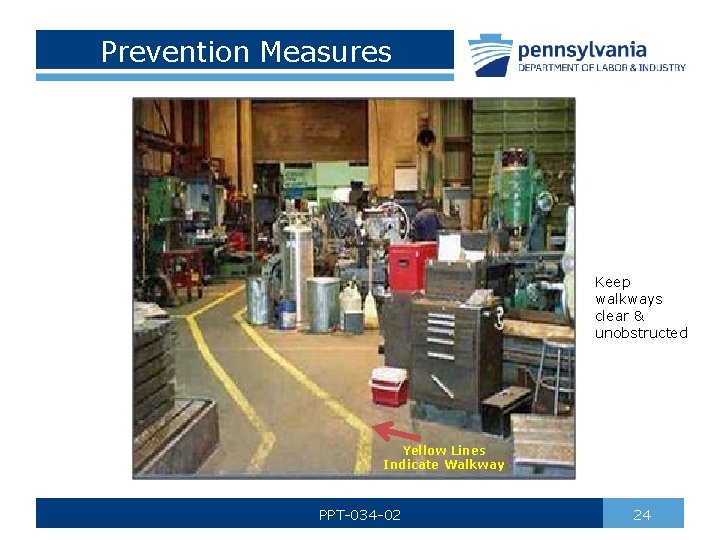
Prevention Measures Keep walkways clear & unobstructed Yellow Lines Indicate Walkway PPT-034 -02 24
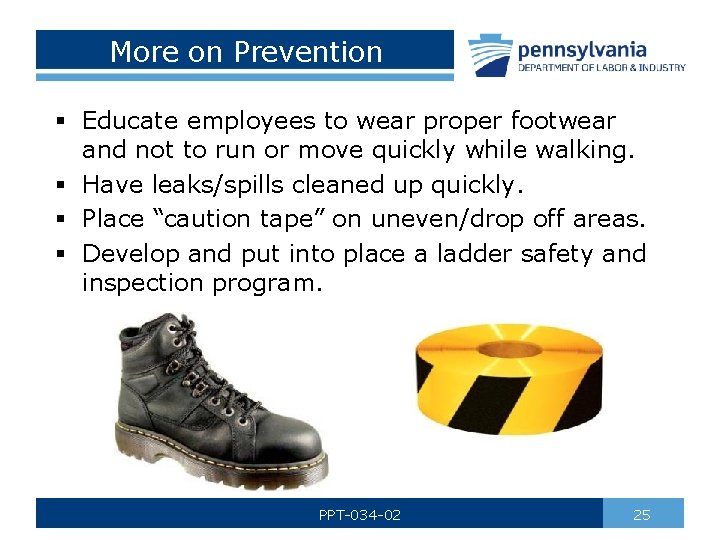
More on Prevention § Educate employees to wear proper footwear and not to run or move quickly while walking. § Have leaks/spills cleaned up quickly. § Place “caution tape” on uneven/drop off areas. § Develop and put into place a ladder safety and inspection program. PPT-034 -02 25
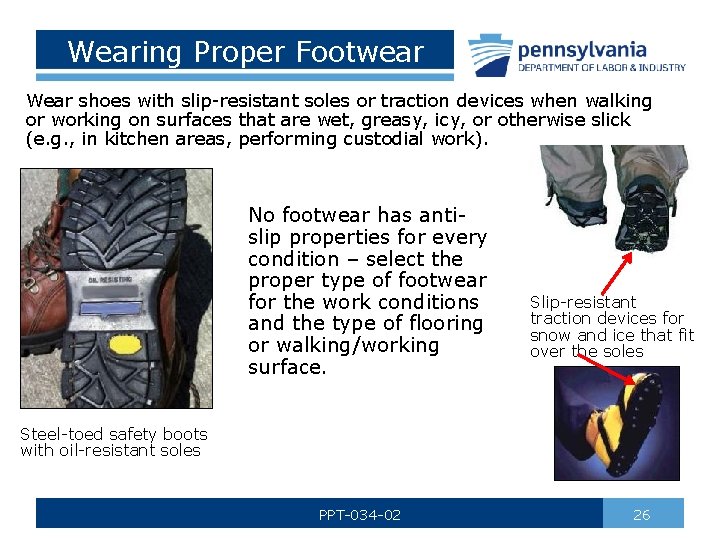
Wearing Proper Footwear Wear shoes with slip-resistant soles or traction devices when walking or working on surfaces that are wet, greasy, icy, or otherwise slick (e. g. , in kitchen areas, performing custodial work). No footwear has antislip properties for every condition – select the proper type of footwear for the work conditions and the type of flooring or walking/working surface. Slip-resistant traction devices for snow and ice that fit over the soles Steel-toed safety boots with oil-resistant soles PPT-034 -02 26
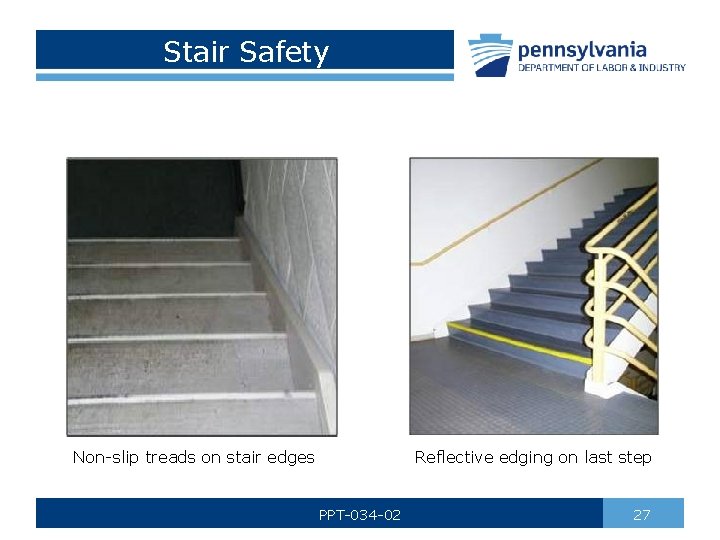
Stair Safety Non-slip treads on stair edges Reflective edging on last step PPT-034 -02 27
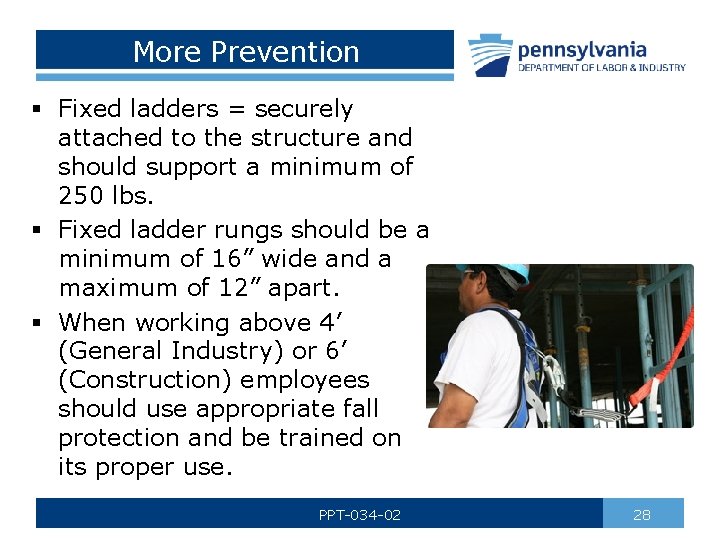
More Prevention § Fixed ladders = securely attached to the structure and should support a minimum of 250 lbs. § Fixed ladder rungs should be a minimum of 16” wide and a maximum of 12” apart. § When working above 4’ (General Industry) or 6’ (Construction) employees should use appropriate fall protection and be trained on its proper use. PPT-034 -02 28
And More Prevention § Have “wet floor” signs posted where necessary. § Thoroughly investigate all slips, trips, and falls. § Apply “non-skid” coating or place “non-skid strips” in areas where floors are likely to be slippery or wet. § Encourage employees to report hazardous situations as soon as possible. PPT-034 -02 29
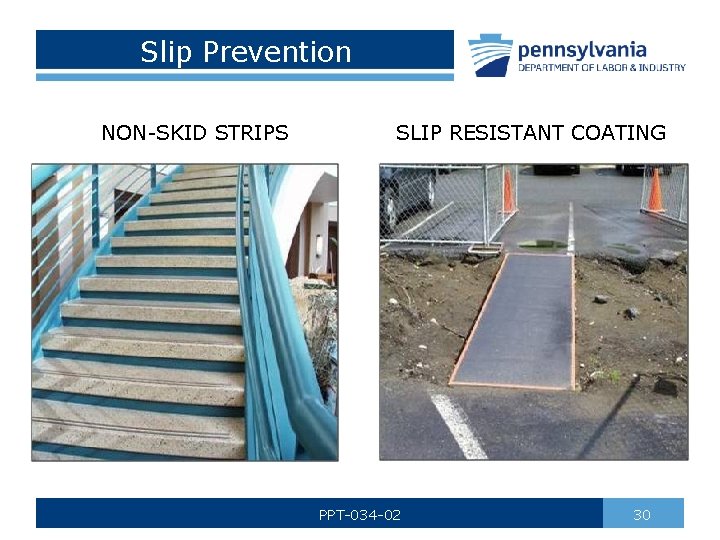
Slip Prevention NON-SKID STRIPS SLIP RESISTANT COATING PPT-034 -02 30
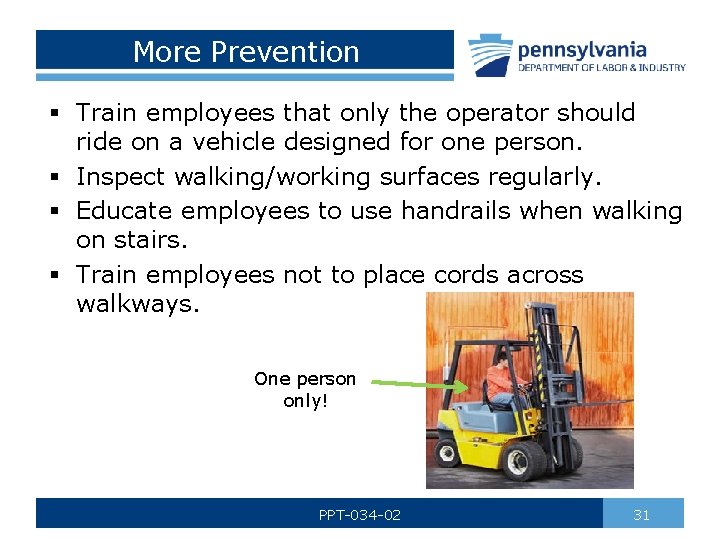
More Prevention § Train employees that only the operator should ride on a vehicle designed for one person. § Inspect walking/working surfaces regularly. § Educate employees to use handrails when walking on stairs. § Train employees not to place cords across walkways. One person only! PPT-034 -02 31
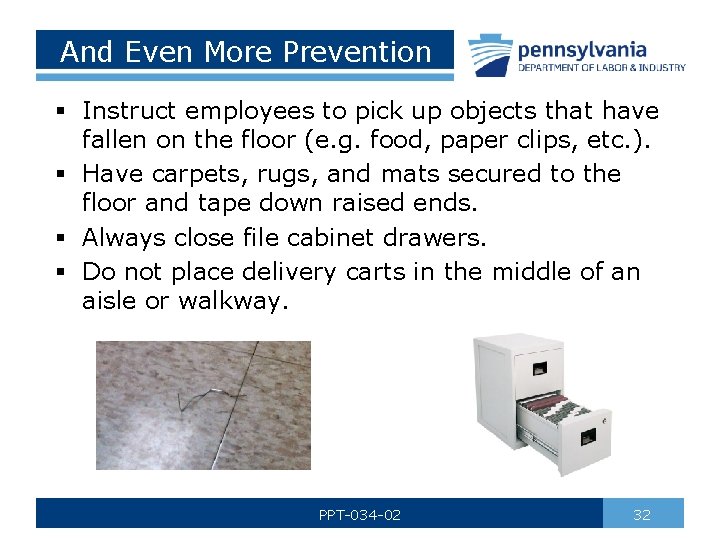
And Even More Prevention § Instruct employees to pick up objects that have fallen on the floor (e. g. food, paper clips, etc. ). § Have carpets, rugs, and mats secured to the floor and tape down raised ends. § Always close file cabinet drawers. § Do not place delivery carts in the middle of an aisle or walkway. PPT-034 -02 32
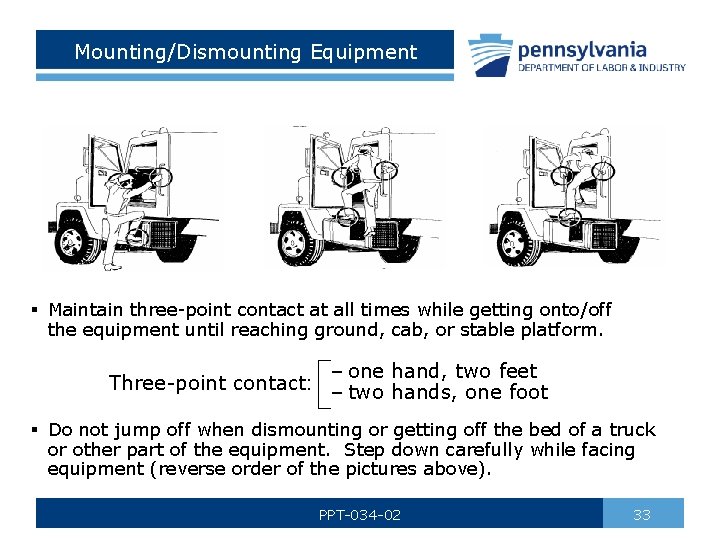
Mounting/Dismounting Equipment § Maintain three-point contact at all times while getting onto/off the equipment until reaching ground, cab, or stable platform. – one hand, two feet Three-point contact: – two hands, one foot § Do not jump off when dismounting or getting off the bed of a truck or other part of the equipment. Step down carefully while facing equipment (reverse order of the pictures above). PPT-034 -02 33
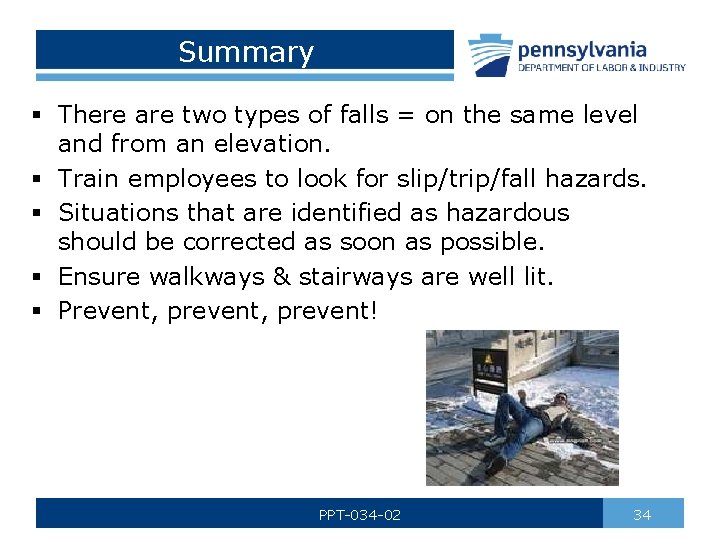
Summary § There are two types of falls = on the same level and from an elevation. § Train employees to look for slip/trip/fall hazards. § Situations that are identified as hazardous should be corrected as soon as possible. § Ensure walkways & stairways are well lit. § Prevent, prevent! PPT-034 -02 34
Falling “Properly” IF YOU DO FALL, YOU CAN REDUCE THE CHANCE OF SERIOUS INJURY IF YOU: § ROLL WITH THE FALL; DON’T REACH OUT. LET YOUR BODY CRUMPLE AND ROLL. § BEND YOUR ELBOWS AND KNEES AND USE YOUR LEGS AND ARMS TO ABSORB THE FALL. § GET MEDICAL ATTENTION AFTER A FALL TO TREAT ANYTHING TORN, SPRAINED, OR BROKEN PPT-034 -02 35
Next: What do You See? PPT-034 -02 36
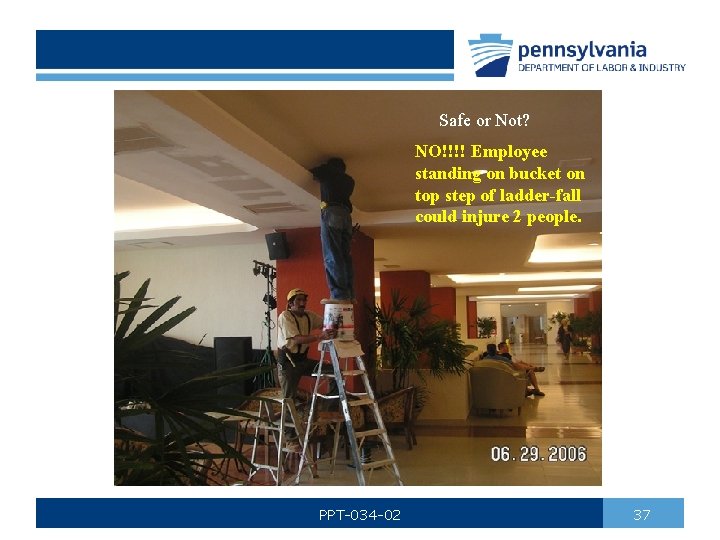
Safe or Not? NO!!!! Employee standing on bucket on top step of ladder-fall could injure 2 people. PPT-034 -02 37
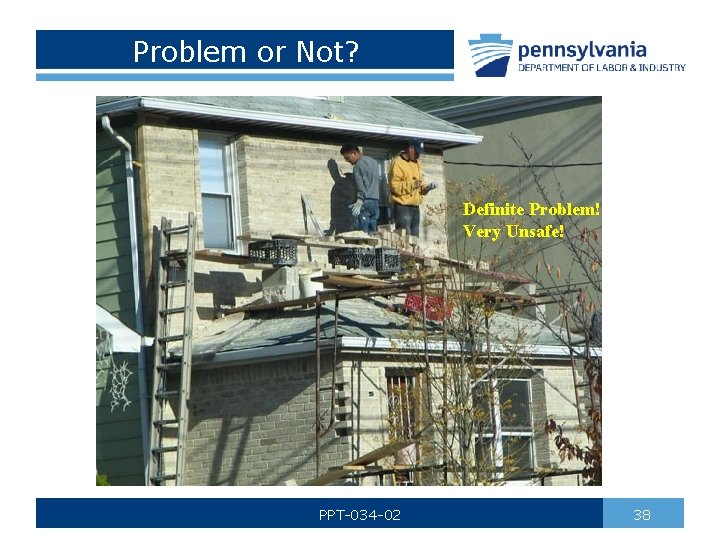
Problem or Not? Definite Problem! Very Unsafe! PPT-034 -02 38
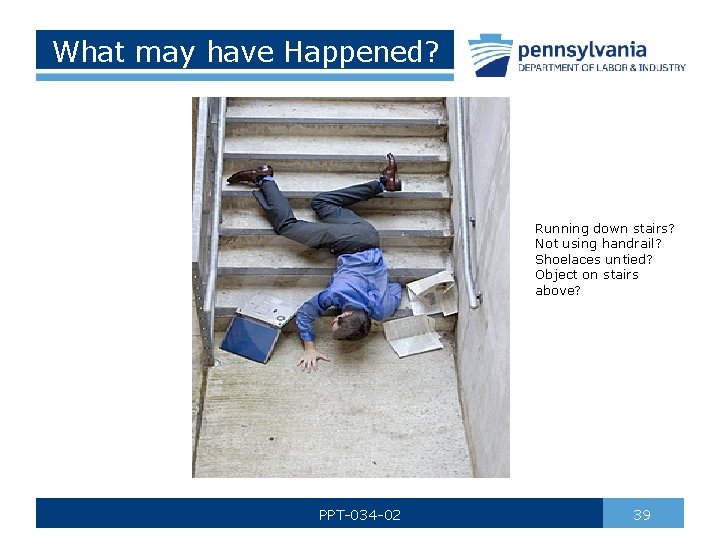
What may have Happened? Running down stairs? Not using handrail? Shoelaces untied? Object on stairs above? PPT-034 -02 39
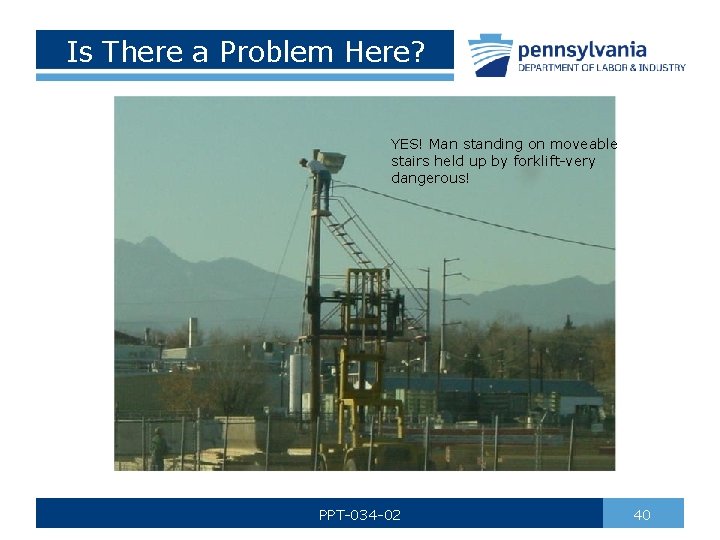
Is There a Problem Here? YES! Man standing on moveable stairs held up by forklift-very dangerous! PPT-034 -02 40
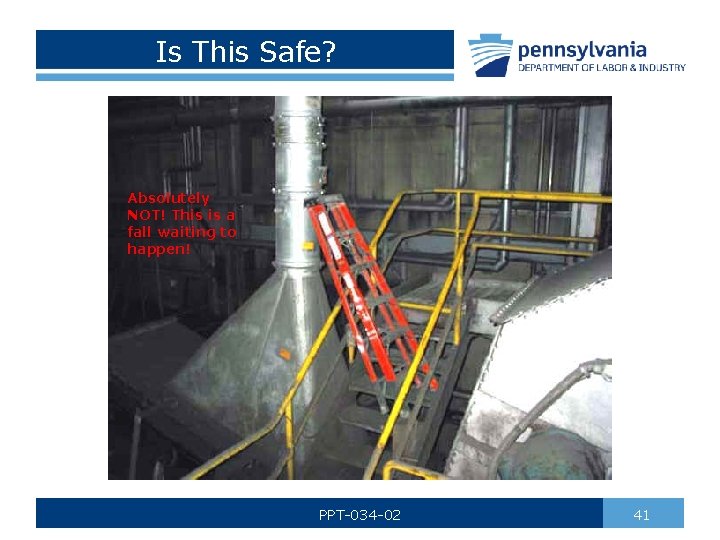
Is This Safe? Absolutely NOT! This is a fall waiting to happen! PPT-034 -02 41
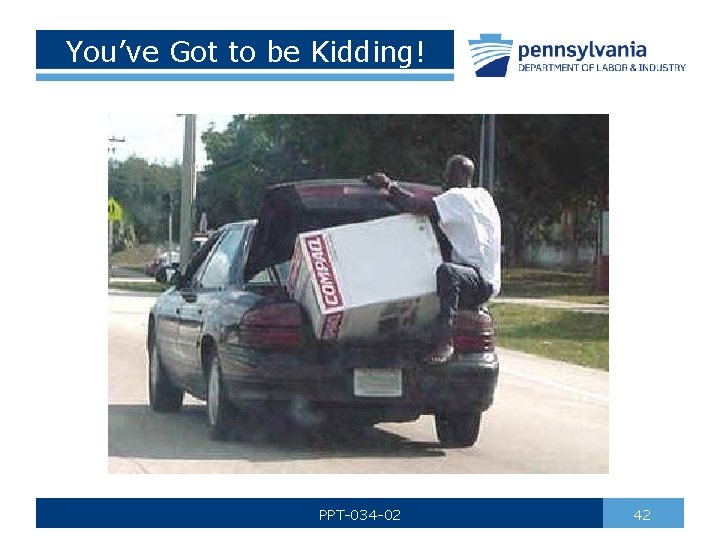
You’ve Got to be Kidding! PPT-034 -02 42
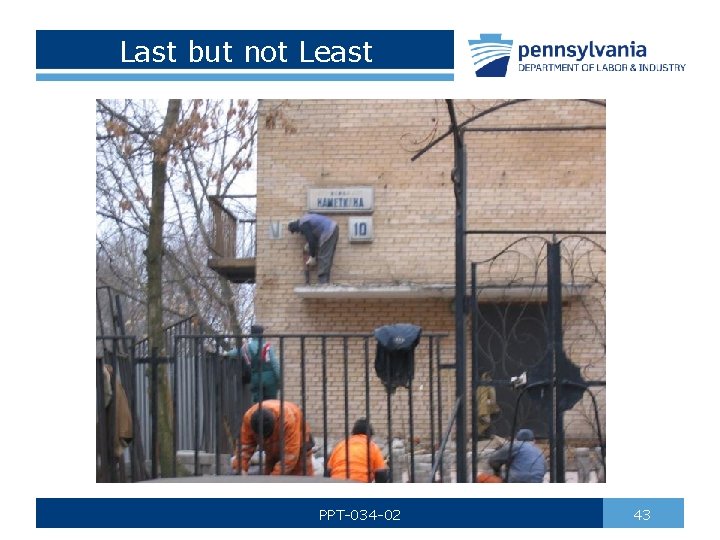
Last but not Least PPT-034 -02 43
Contact Information Health & Safety Training Specialists 1171 South Cameron Street, Room 324 Harrisburg, PA 17104 -2501 (717) 772 -1635 RA-LI-BWC-PATHS@pa. gov Like us on Facebook! https: //www. facebook. com/BWCPATHS PPT-034 -02 44
Any Questions? PPT-034 -02 45
Bibliography http: //www 2 a. cdc. gov/nioshtic 2/Build. Qyr. asp? s 1=20040877&f 1=NN&View=e http: //www. bergenerlaw. com/slip-and-fallaccident-statistics/ https: //www. osha. gov/. . . /fy 07/sh-1662507/slipstripsfalls. ppt Dr. W. Monroe Keyserling, Ph. D. 2000 Consumer Product Safety Commission (CPSC) PPT-034 -02 46
Bibliography Industrial Safety & Occupational Health Markets 5 th edition U. S. Department of Labor, 2011 National Safety Council, 2002: http: //www. nsc. org/safety_home/Homeand. Recre ational. Safety/Falls/Pages/Falls. aspx US Bureau of Labor Statistics, 2002 PPT-034 -02 47
- Slides: 47