
Preventing Serious Injuries and Fatalities SIFs SENY PDC
- Slides: 22
Preventing Serious Injuries and Fatalities (SIF’s) SENY PDC March 19, 2019 Presented By: Mike Csedrik (CSP) and Bob Coffey (CSP)
HSE Vision & Mission HSE Vision Our Vision is to create a culture of Health, Safety & Environmental (HSE) Excellence by empowering all employees to set performance-based goals, developing improvement plans and monitoring our progress in order to become the safest company in our industry. HSE Mission Our Mission is to utilize the Company Principles to develop and implement an integrated HSE Management System that will enable us to protect our People, our Communities and the Environment. 2
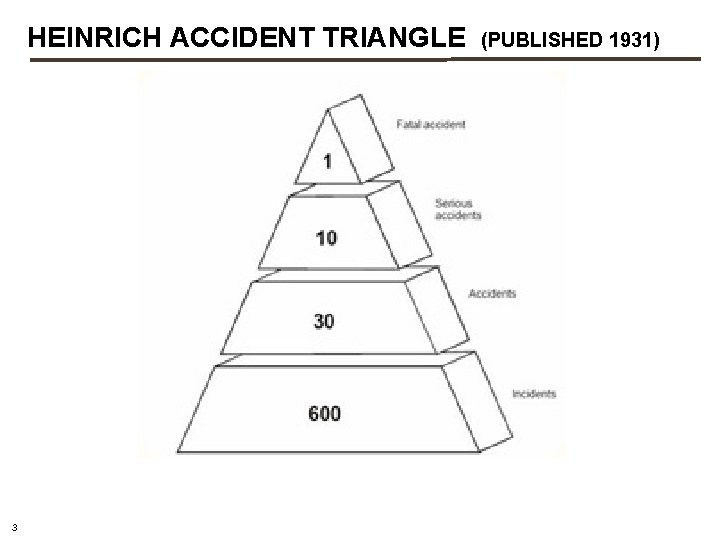
HEINRICH ACCIDENT TRIANGLE (PUBLISHED 1931) 3
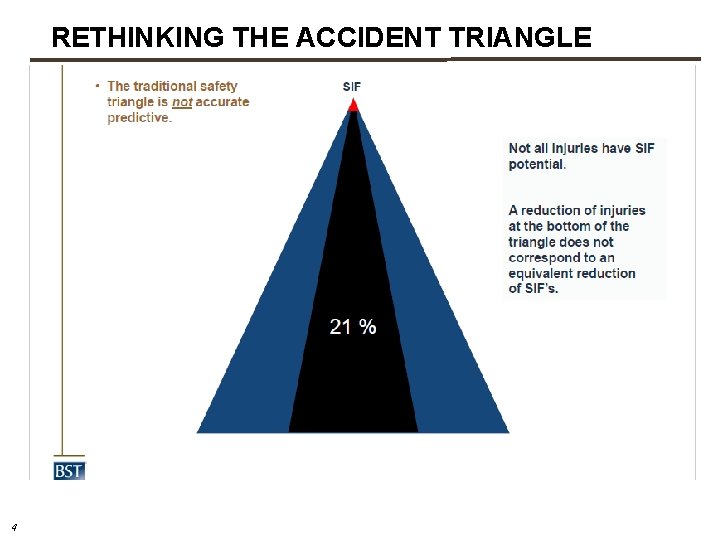
RETHINKING THE ACCIDENT TRIANGLE 4
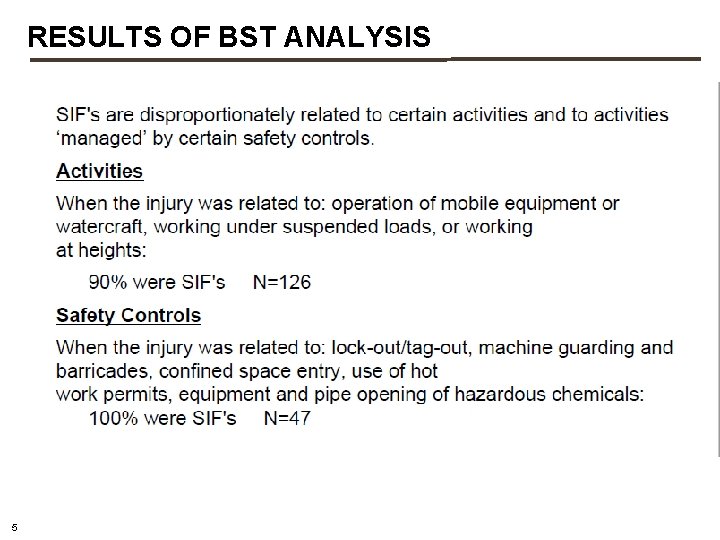
RESULTS OF BST ANALYSIS 5
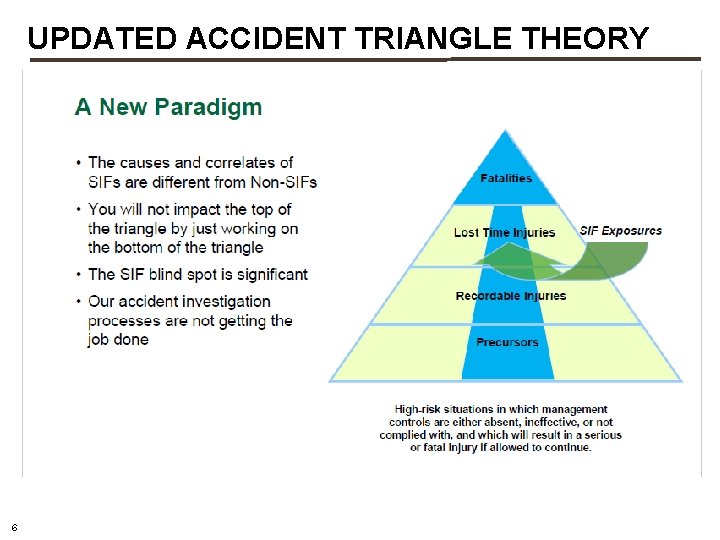
UPDATED ACCIDENT TRIANGLE THEORY 6
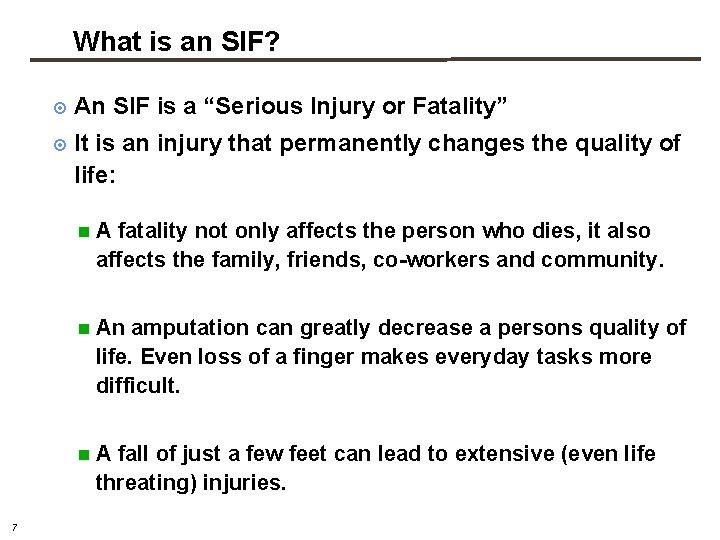
What is an SIF? 7 An SIF is a “Serious Injury or Fatality” It is an injury that permanently changes the quality of life: A fatality not only affects the person who dies, it also affects the family, friends, co-workers and community. An amputation can greatly decrease a persons quality of life. Even loss of a finger makes everyday tasks more difficult. A fall of just a few feet can lead to extensive (even life threating) injuries.
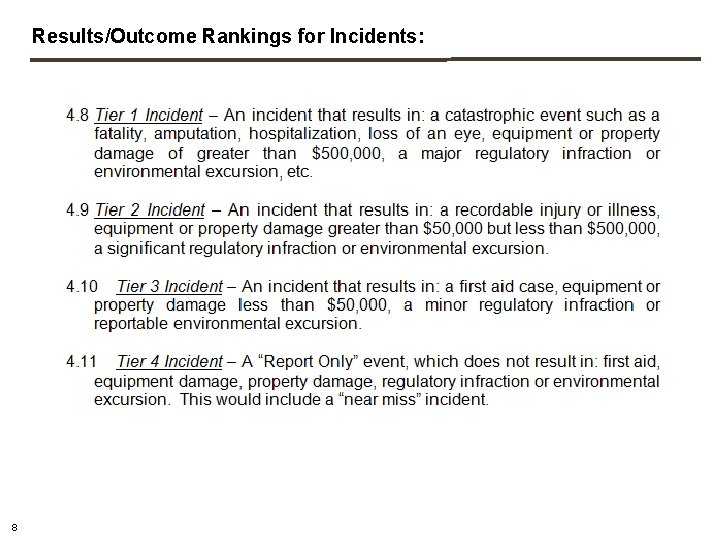
Results/Outcome Rankings for Incidents: 8
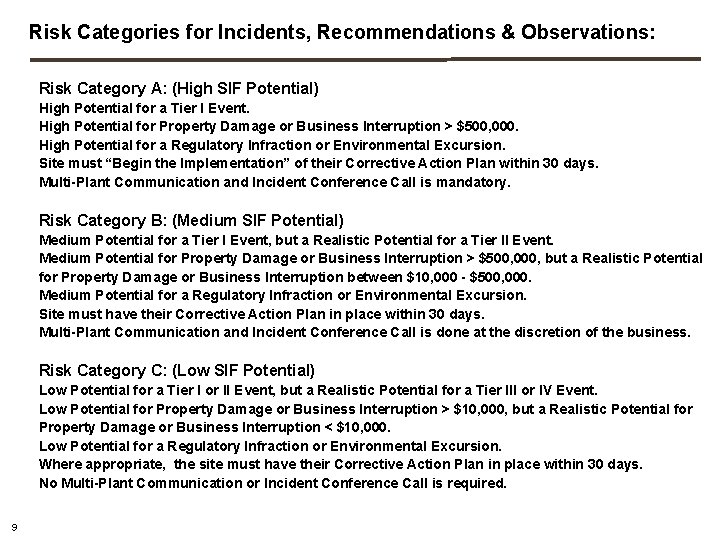
Risk Categories for Incidents, Recommendations & Observations: Risk Category A: (High SIF Potential) High Potential for a Tier I Event. High Potential for Property Damage or Business Interruption > $500, 000. High Potential for a Regulatory Infraction or Environmental Excursion. Site must “Begin the Implementation” of their Corrective Action Plan within 30 days. Multi-Plant Communication and Incident Conference Call is mandatory. Risk Category B: (Medium SIF Potential) Medium Potential for a Tier I Event, but a Realistic Potential for a Tier II Event. Medium Potential for Property Damage or Business Interruption > $500, 000, but a Realistic Potential for Property Damage or Business Interruption between $10, 000 - $500, 000. Medium Potential for a Regulatory Infraction or Environmental Excursion. Site must have their Corrective Action Plan in place within 30 days. Multi-Plant Communication and Incident Conference Call is done at the discretion of the business. Risk Category C: (Low SIF Potential) Low Potential for a Tier I or II Event, but a Realistic Potential for a Tier III or IV Event. Low Potential for Property Damage or Business Interruption > $10, 000, but a Realistic Potential for Property Damage or Business Interruption < $10, 000. Low Potential for a Regulatory Infraction or Environmental Excursion. Where appropriate, the site must have their Corrective Action Plan in place within 30 days. No Multi-Plant Communication or Incident Conference Call is required. 9
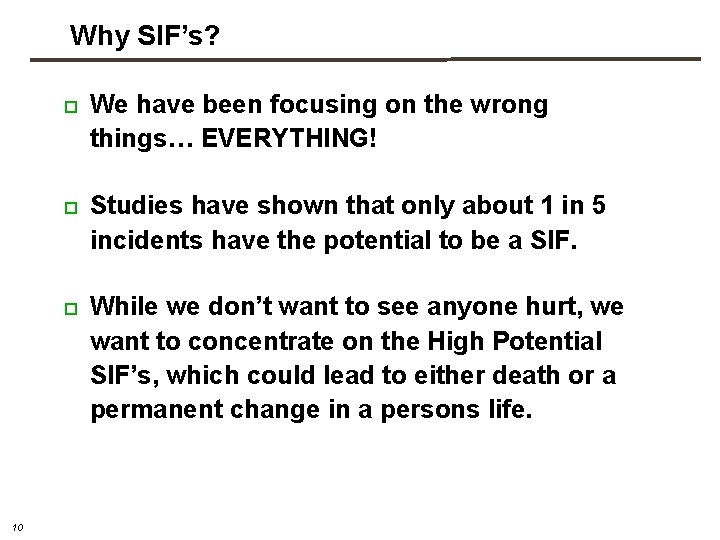
Why SIF’s? SIFs? 10 We have been focusing on the wrong things… EVERYTHING! Studies have shown that only about 1 in 5 incidents have the potential to be a SIF. While we don’t want to see anyone hurt, we want to concentrate on the High Potential SIF’s, which could lead to either death or a permanent change in a persons life.
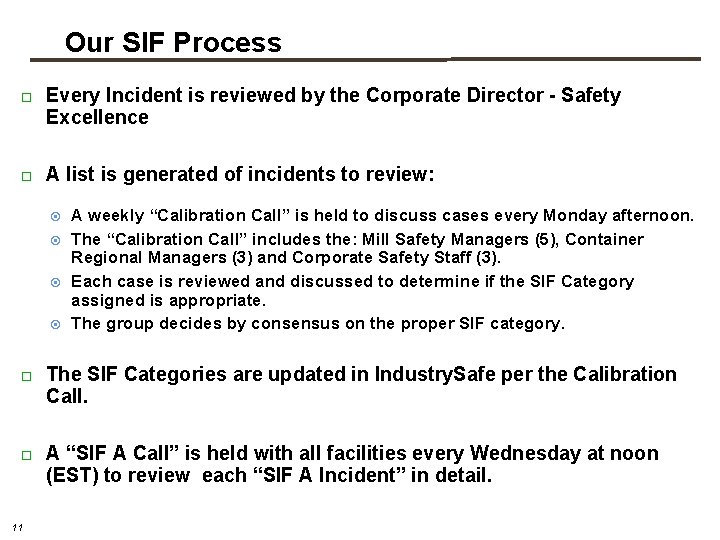
Our SIF Process Every Incident is reviewed by the Corporate Director - Safety Excellence A list is generated of incidents to review: 11 A weekly “Calibration Call” is held to discuss cases every Monday afternoon. The “Calibration Call” includes the: Mill Safety Managers (5), Container Regional Managers (3) and Corporate Safety Staff (3). Each case is reviewed and discussed to determine if the SIF Category assigned is appropriate. The group decides by consensus on the proper SIF category. The SIF Categories are updated in Industry. Safe per the Calibration Call. A “SIF A Call” is held with all facilities every Wednesday at noon (EST) to review each “SIF A Incident” in detail.
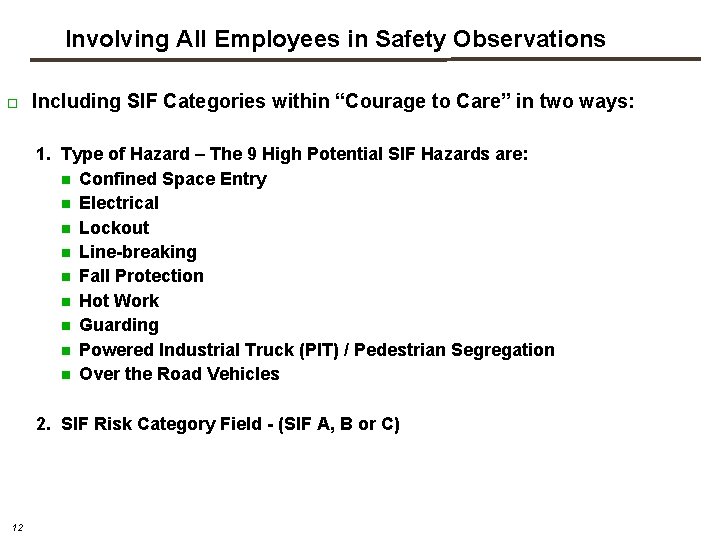
Involving All Employees in Safety Observations we Going with SIF’s? Including SIF Categories within “Courage to Care” in two ways: 1. Type of Hazard – The 9 High Potential SIF Hazards are: Confined Space Entry Electrical Lockout Line-breaking Fall Protection Hot Work Guarding Powered Industrial Truck (PIT) / Pedestrian Segregation Over the Road Vehicles 2. SIF Risk Category Field - (SIF A, B or C) 12
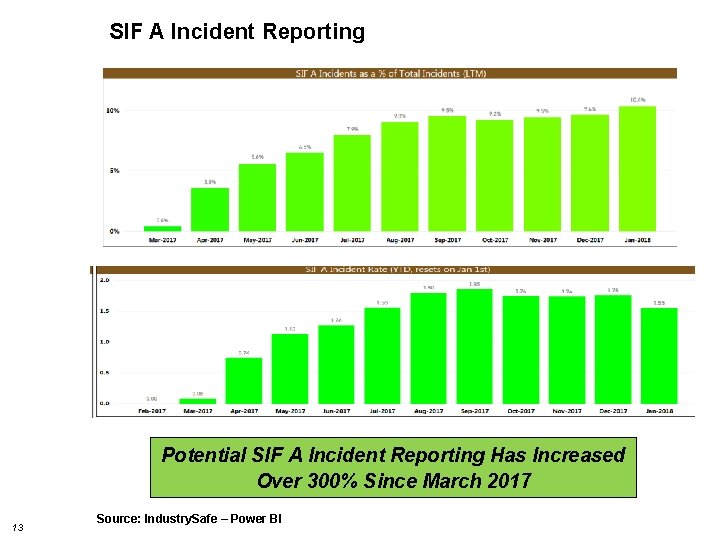
SIF A Incident Reporting Potential SIF A Incident Reporting Has Increased Over 300% Since March 2017 13 Source: Industry. Safe – Power BI
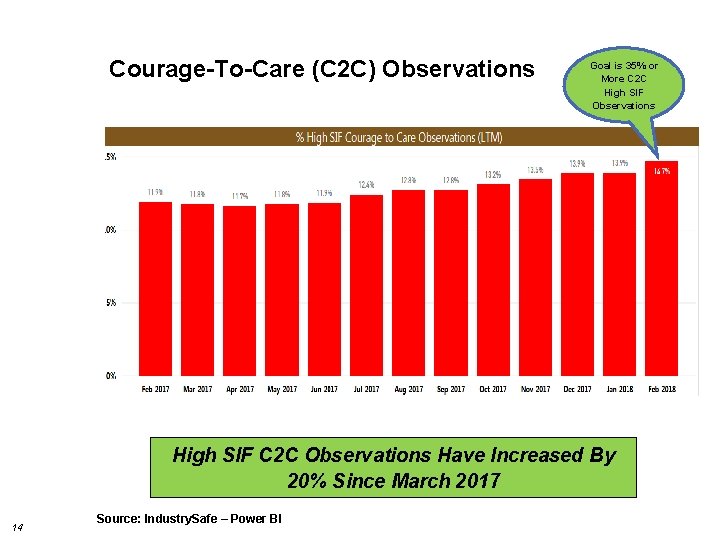
Courage-To-Care (C 2 C) Observations Goal is 35% or More C 2 C High SIF Observations High SIF C 2 C Observations Have Increased By 20% Since March 2017 14 Source: Industry. Safe – Power BI
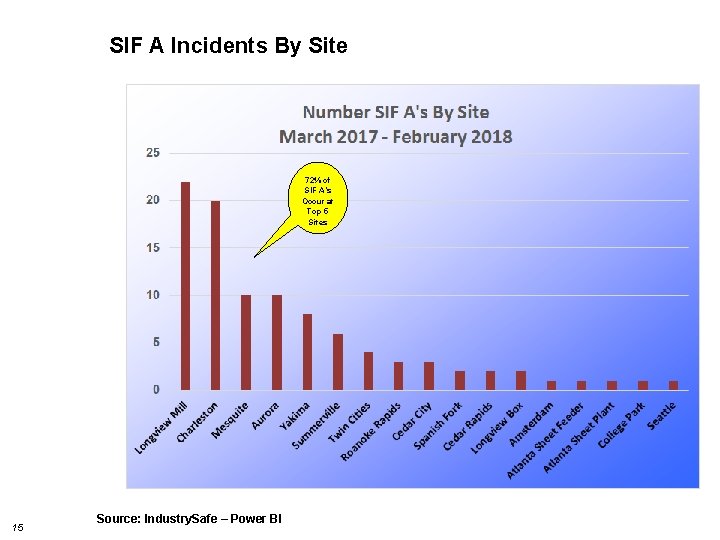
SIF A Incidents By Site 72% of SIF A’s Occur at Top 5 Sites 15 Source: Industry. Safe – Power BI
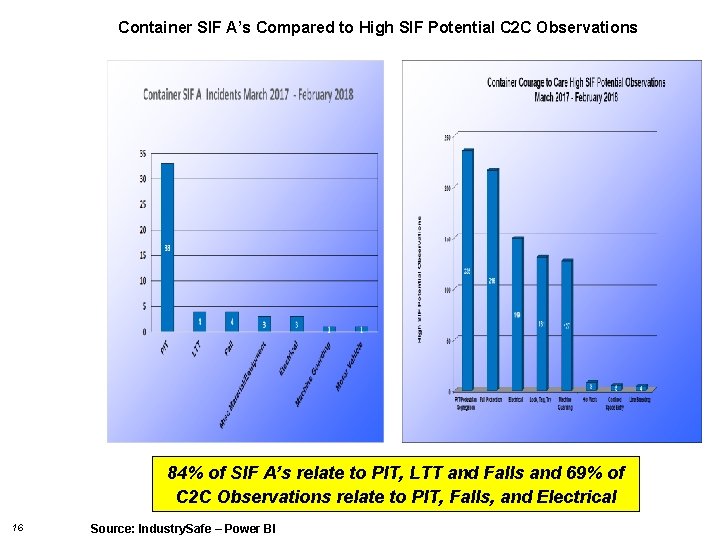
Container SIF A’s Compared to High SIF Potential C 2 C Observations 84% of SIF A’s relate to PIT, LTT and Falls and 69% of C 2 C Observations relate to PIT, Falls, and Electrical 16 Source: Industry. Safe – Power BI
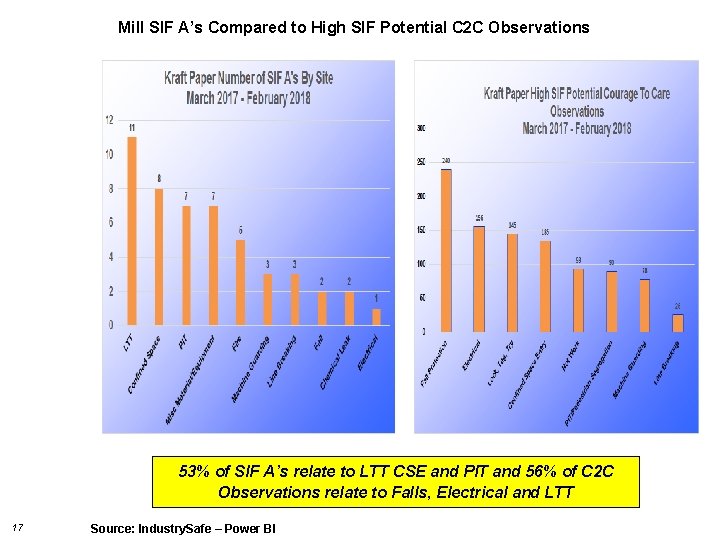
Mill SIF A’s Compared to High SIF Potential C 2 C Observations 53% of SIF A’s relate to LTT CSE and PIT and 56% of C 2 C Observations relate to Falls, Electrical and LTT 17 Source: Industry. Safe – Power BI
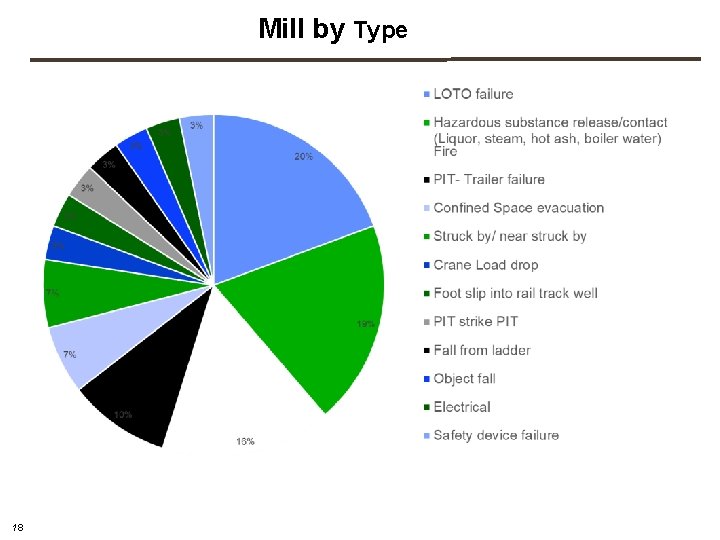
Mill by Type 18
Corrective Action • Quotes to Remember: - “All Admistrative Controls will fail within a certain time-frame” - “Fix the system not task” - “What if one control fails… what if two fail? ” 19
Corrective Action • Corrective Actions should be categorize as per SIF potential • Engineering controls should be prioritized for SIF potential • Two or three point failure should be considered for higher SIF Potential 20
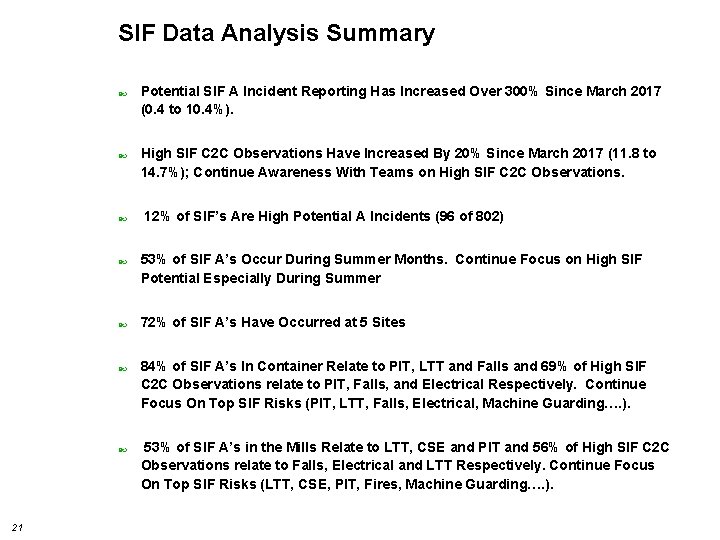
SIF Data Analysis Summary 21 Potential SIF A Incident Reporting Has Increased Over 300% Since March 2017 (0. 4 to 10. 4%). High SIF C 2 C Observations Have Increased By 20% Since March 2017 (11. 8 to 14. 7%); Continue Awareness With Teams on High SIF C 2 C Observations. 12% of SIF’s Are High Potential A Incidents (96 of 802) 53% of SIF A’s Occur During Summer Months. Continue Focus on High SIF Potential Especially During Summer 72% of SIF A’s Have Occurred at 5 Sites 84% of SIF A’s In Container Relate to PIT, LTT and Falls and 69% of High SIF C 2 C Observations relate to PIT, Falls, and Electrical Respectively. Continue Focus On Top SIF Risks (PIT, LTT, Falls, Electrical, Machine Guarding…. ). 53% of SIF A’s in the Mills Relate to LTT, CSE and PIT and 56% of High SIF C 2 C Observations relate to Falls, Electrical and LTT Respectively. Continue Focus On Top SIF Risks (LTT, CSE, PIT, Fires, Machine Guarding…. ).
QUESTIONS? 22