
Preventing Problem Behavior of Young Children Gregory P
Preventing Problem Behavior of Young Children Gregory P. Hanley. Ph. D. , BCBA-D Utah Neuropsychiatric Institute Autism Intervention Program for Professionals November, 2016
Some relevant correlations Non-familial, center-based child care has been linked to problem behavior in young children (NICHD, 2003, 2006, 2011).
Some relevant correlations • Preschoolers are expelled from school at rates exceeding that of K-12 Students (Jacobson, 2005) 6. 7 per 1000 for preschoolers compared to 2. 1 per 1000 for elem, middle, & high school students
What is the root of the problem? Why aren’t children acquiring these functional (life) skills? • Strong emphasis on proactive approaches for dealing with problem behavior in preschools, e. g. : – multiple sets of the same play materials – carefully designed and predictable schedules – child-led free-play activities – frequent choice provision – high levels of noncontingent social praise – developmentally appropriate instruction – instruction embedded in play – incidental and errorless teaching
What is the root of the problem? Why aren’t children acquiring these functional (life) skills? • Situations that typically occasion problem behavior are actively eliminated or weakened …. and these are critical for teaching relevant social responses
To prevent the development of problem behavior: Teach functional skills to produce the reinforcers that maintain problem behavior
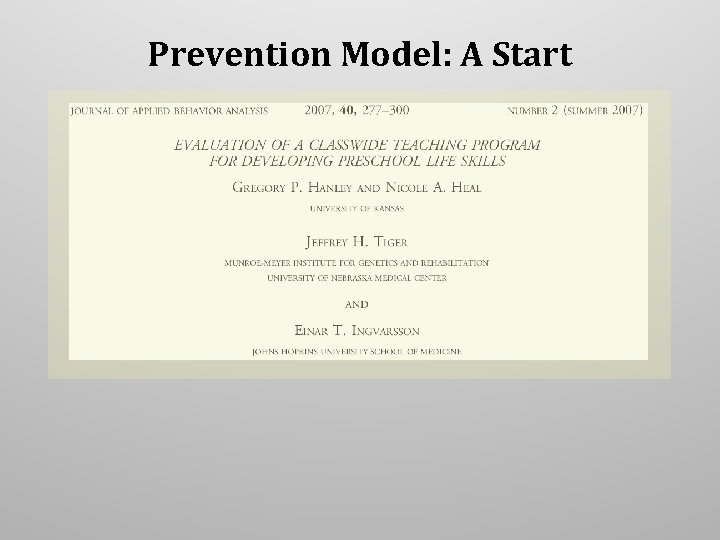
Prevention Model: A Start
Prevention Model: A Start Hanley, Heal, Tiger, & Ingvarsson (JABA, 2007) Repeatedly introduced challenging situations, and taught functionally equivalent skills prior to the development of severe problem behavior (We call them Life Skills)
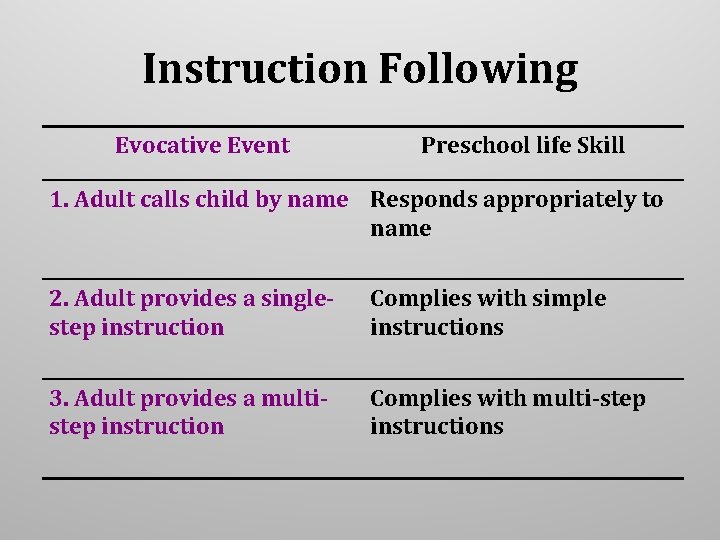
Instruction Following Evocative Event Preschool life Skill 1. Adult calls child by name Responds appropriately to name 2. Adult provides a singlestep instruction Complies with simple instructions 3. Adult provides a multistep instruction Complies with multi-step instructions
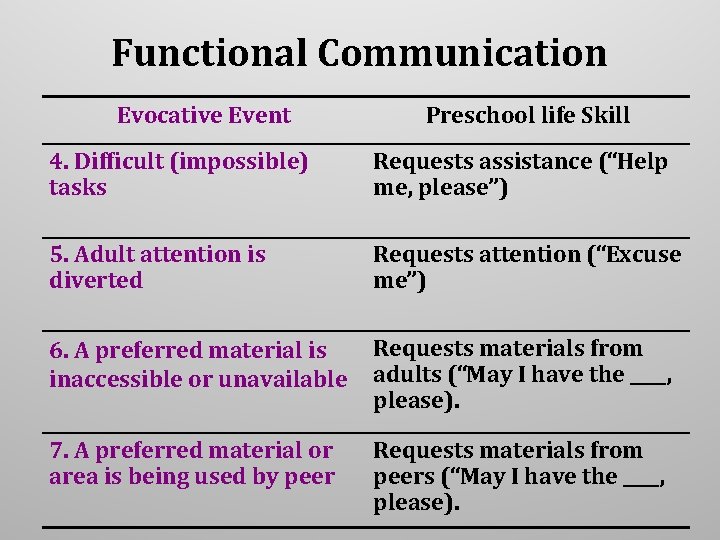
Functional Communication Evocative Event Preschool life Skill 4. Difficult (impossible) tasks Requests assistance (“Help me, please”) 5. Adult attention is diverted Requests attention (“Excuse me”) 6. A preferred material is inaccessible or unavailable Requests materials from adults (“May I have the ____, please). 7. A preferred material or area is being used by peer Requests materials from peers (“May I have the ____, please).
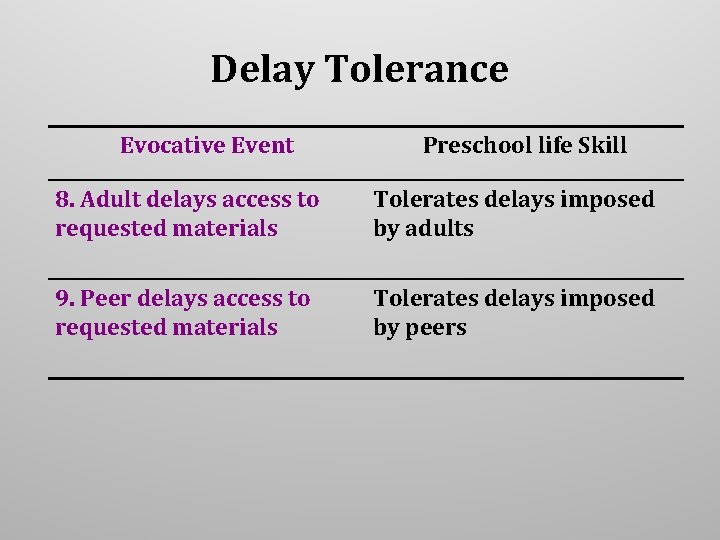
Delay Tolerance Evocative Event Preschool life Skill 8. Adult delays access to requested materials Tolerates delays imposed by adults 9. Peer delays access to requested materials Tolerates delays imposed by peers
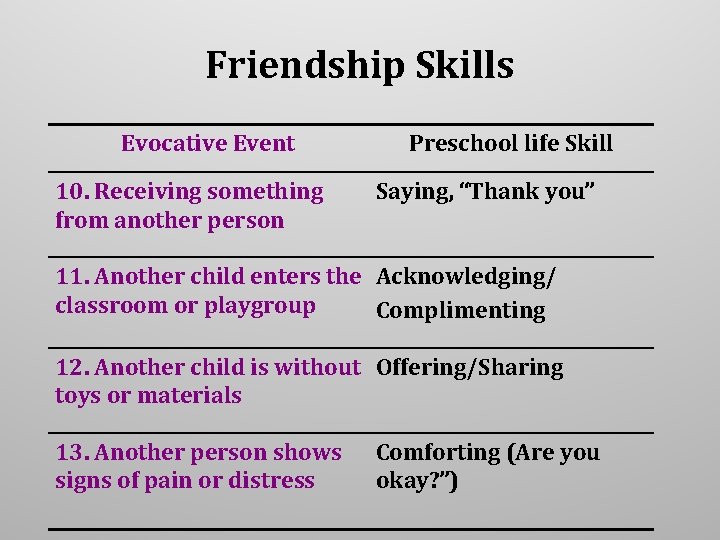
Friendship Skills Evocative Event 10. Receiving something from another person Preschool life Skill Saying, “Thank you” 11. Another child enters the Acknowledging/ classroom or playgroup Complimenting 12. Another child is without Offering/Sharing toys or materials 13. Another person shows signs of pain or distress Comforting (Are you okay? ”)
To whom should these skills be taught? • All children in your homes and classrooms How should these skills be taught?
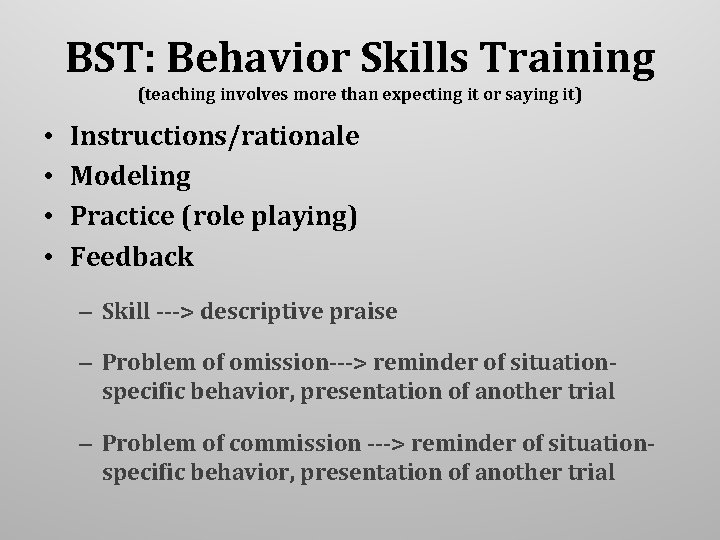
BST: Behavior Skills Training (teaching involves more than expecting it or saying it) • • Instructions/rationale Modeling Practice (role playing) Feedback – Skill ---> descriptive praise – Problem of omission---> reminder of situationspecific behavior, presentation of another trial – Problem of commission ---> reminder of situationspecific behavior, presentation of another trial






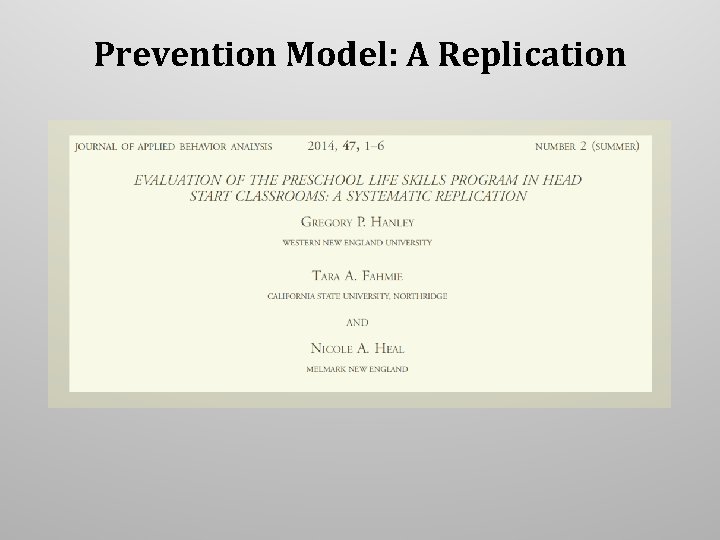
Prevention Model: A Replication
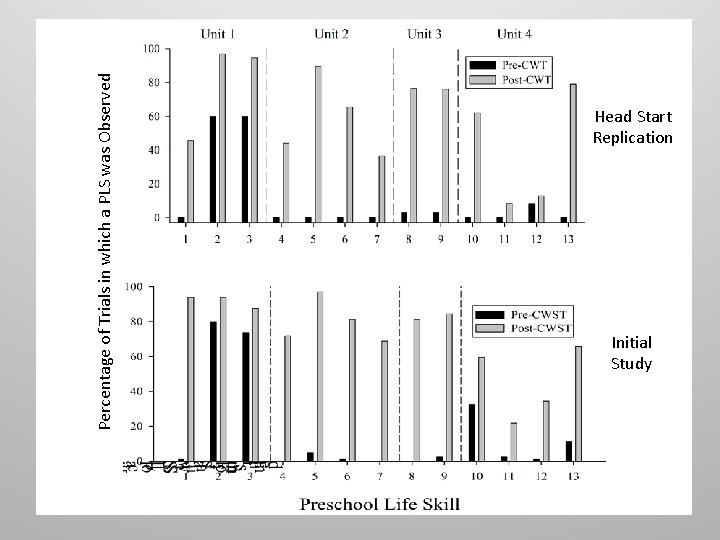
Percentage of Trials in which a PLS was Observed Head Start Replication Initial Study
Percentage of Trials in which a PLS was Observed
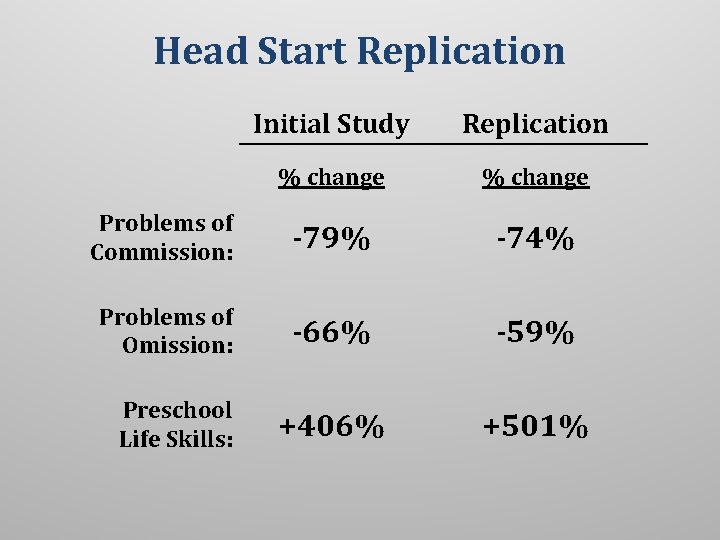
Head Start Replication Initial Study Replication % change Problems of Commission: -79% -74% Problems of Omission: -66% -59% +406% +501% Preschool Life Skills:
Acceptability of Class-wide PLS Program • The eight teachers who implemented the CWPLST were asked the extent of their agreement with 6 close-ended questions regarding the acceptability of CWPLST.
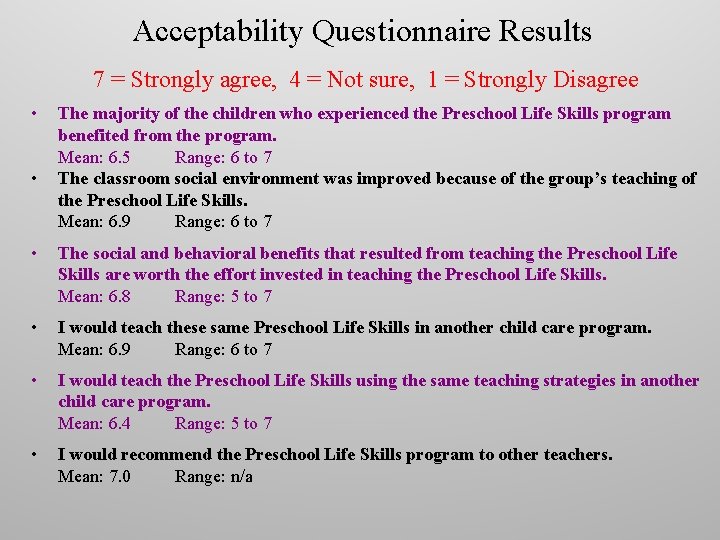
Acceptability Questionnaire Results 7 = Strongly agree, 4 = Not sure, 1 = Strongly Disagree • • The majority of the children who experienced the Preschool Life Skills program benefited from the program. Mean: 6. 5 Range: 6 to 7 The classroom social environment was improved because of the group’s teaching of the Preschool Life Skills. Mean: 6. 9 Range: 6 to 7 • The social and behavioral benefits that resulted from teaching the Preschool Life Skills are worth the effort invested in teaching the Preschool Life Skills. Mean: 6. 8 Range: 5 to 7 • I would teach these same Preschool Life Skills in another child care program. Mean: 6. 9 Range: 6 to 7 • I would teach the Preschool Life Skills using the same teaching strategies in another child care program. Mean: 6. 4 Range: 5 to 7 • I would recommend the Preschool Life Skills program to other teachers. Mean: 7. 0 Range: n/a
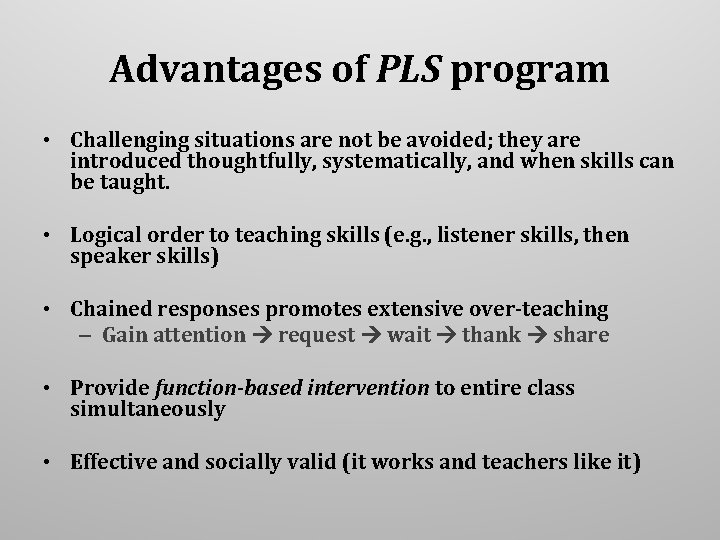
Advantages of PLS program • Challenging situations are not be avoided; they are introduced thoughtfully, systematically, and when skills can be taught. • Logical order to teaching skills (e. g. , listener skills, then speaker skills) • Chained responses promotes extensive over-teaching – Gain attention request wait thank share • Provide function-based intervention to entire class simultaneously • Effective and socially valid (it works and teachers like it)
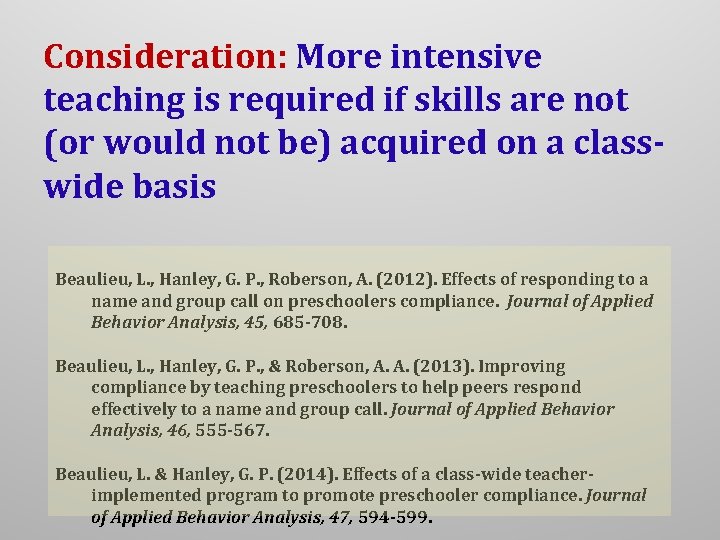
Consideration: More intensive teaching is required if skills are not (or would not be) acquired on a classwide basis Beaulieu, L. , Hanley, G. P. , Roberson, A. (2012). Effects of responding to a name and group call on preschoolers compliance. Journal of Applied Behavior Analysis, 45, 685 -708. Beaulieu, L. , Hanley, G. P. , & Roberson, A. A. (2013). Improving compliance by teaching preschoolers to help peers respond effectively to a name and group call. Journal of Applied Behavior Analysis, 46, 555 -567. Beaulieu, L. & Hanley, G. P. (2014). Effects of a class-wide teacherimplemented program to promote preschooler compliance. Journal of Applied Behavior Analysis, 47, 594 -599.
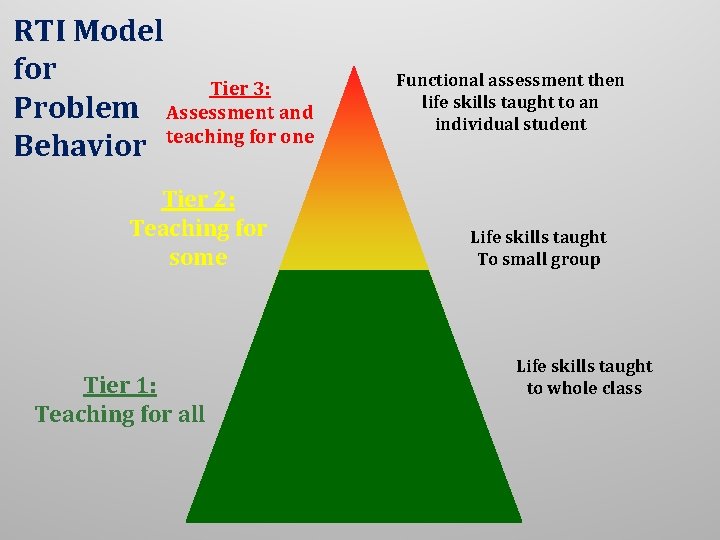
RTI Model for Tier 3: Problem Assessment and Behavior teaching for one Tier 2: Teaching for some Tier 1: Teaching for all Functional assessment then life skills taught to an individual student Life skills taught To small group Life skills taught to whole class

Precursor = Responding effectively to one’s name = stopping activity, looking at teacher, saying, “Yes, ” and waiting until teacher says something.

Precursor = Responding effectively to one’s name = stopping activity, looking at teacher, saying, “Yes, ” and waiting until teacher says something. Compliance = completing an instruction within 6 s


Take home point • Children who respond to their name by stopping what they are doing, look up at you and say ‘Yes’ comply with teacher instructions
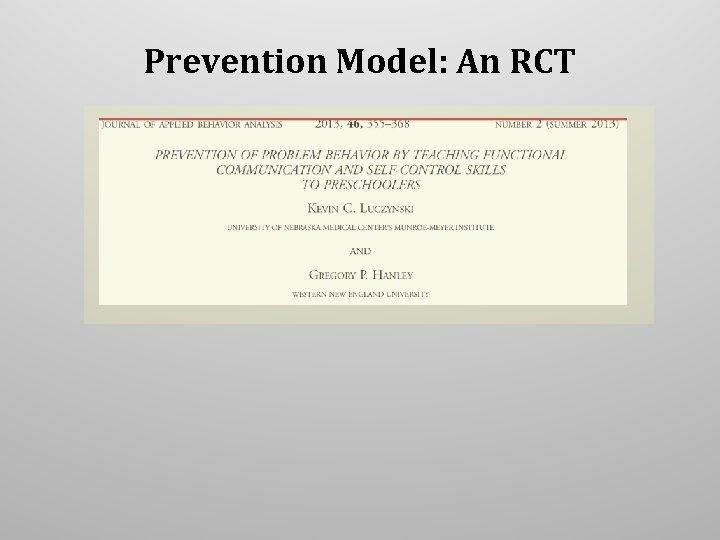
Prevention Model: An RCT
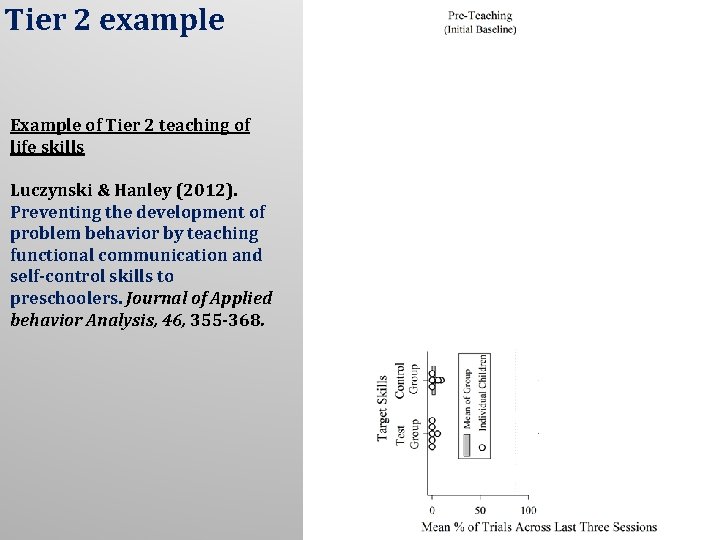
Tier 2 example Example of Tier 2 teaching of life skills Luczynski & Hanley (2012). Preventing the development of problem behavior by teaching functional communication and self-control skills to preschoolers. Journal of Applied behavior Analysis, 46, 355 -368.
Data for one child in treatment group
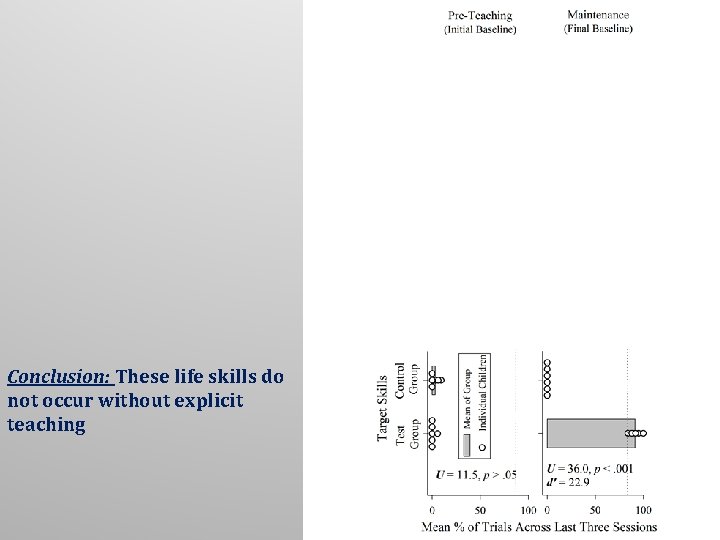
Conclusion: These life skills do not occur without explicit teaching
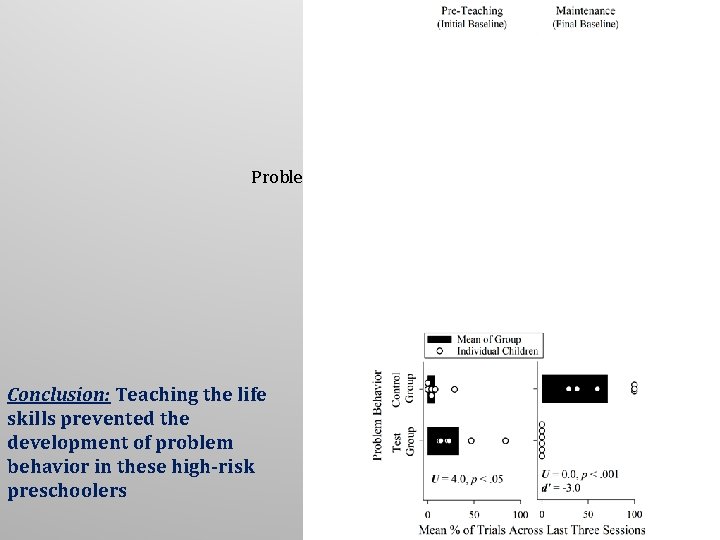
Problem Behavior Conclusion: Teaching the life skills prevented the development of problem behavior in these high-risk preschoolers
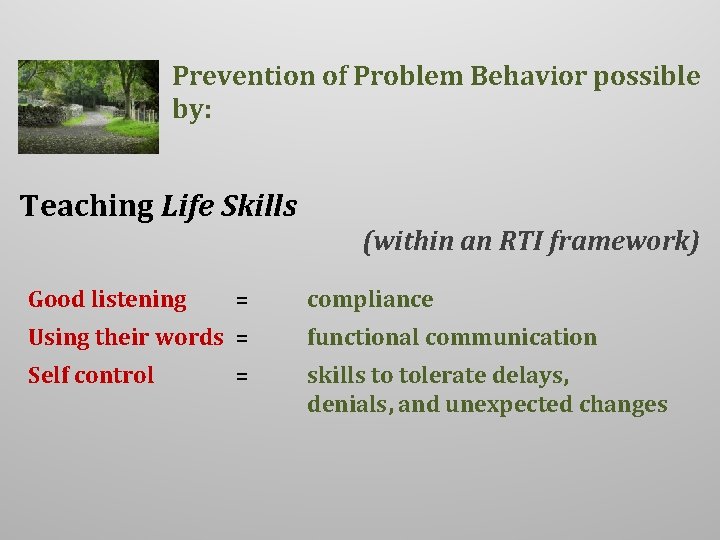
Prevention of Problem Behavior possible by: Teaching Life Skills (within an RTI framework) Good listening = compliance Using their words = functional communication Self control skills to tolerate delays, denials, and unexpected changes =
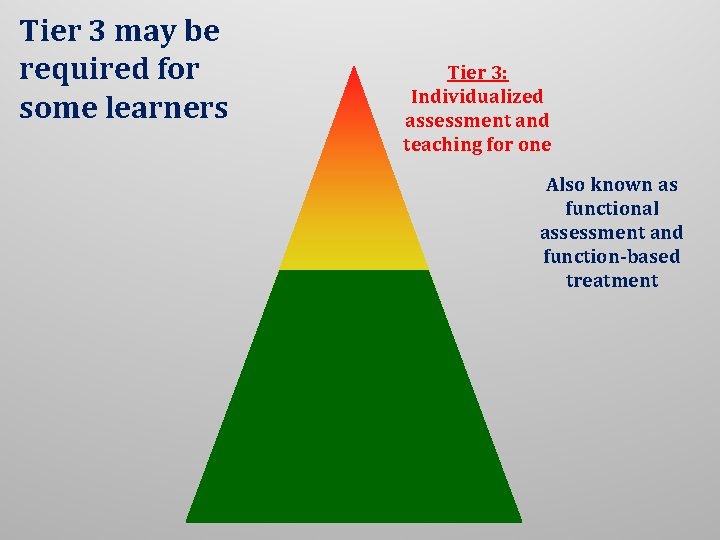
Tier 3 may be required for some learners Tier 3: Individualized assessment and teaching for one Also known as functional assessment and function-based treatment
Good luck with all that you do for all who you teach and provide care For more information go to: www. practicalfunctionalassessment. com Contact info. : Gregory P. Hanley, Ph. D. , BCBA-D Psychology Department Western New England University 1215 Wilbraham Road Springfield, Massachusetts 01119 ghanley@wne. edu
- Slides: 42