
PREVENTING PLAGIARISM Chris Thresher Whats the worst that
- Slides: 29
PREVENTING PLAGIARISM Chris Thresher
What’s the worst that can happen?
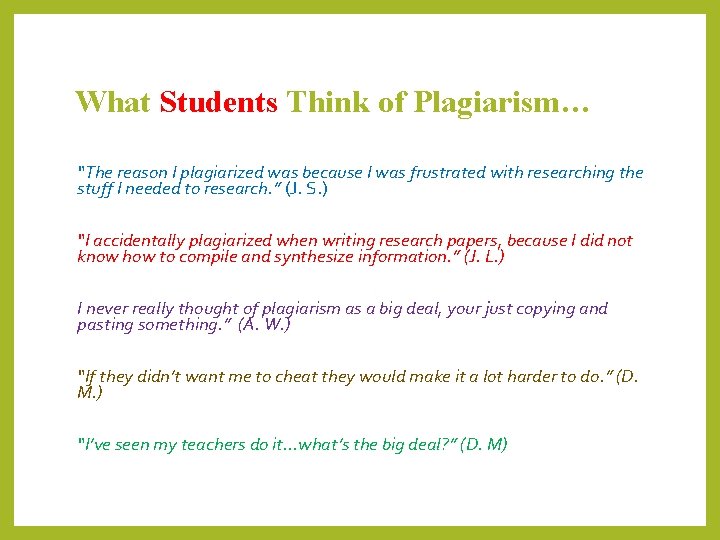
What Students Think of Plagiarism… “The reason I plagiarized was because I was frustrated with researching the stuff I needed to research. ” (J. S. ) “I accidentally plagiarized when writing research papers, because I did not know how to compile and synthesize information. ” (J. L. ) I never really thought of plagiarism as a big deal, your just copying and pasting something. ” (A. W. ) “If they didn’t want me to cheat they would make it a lot harder to do. ” (D. M. ) “I’ve seen my teachers do it…what’s the big deal? ” (D. M)
Where is the Disconnect?
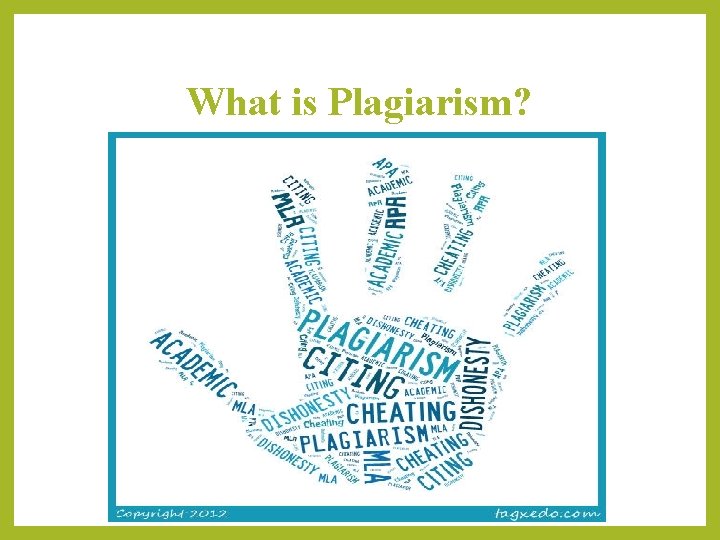
What is Plagiarism?
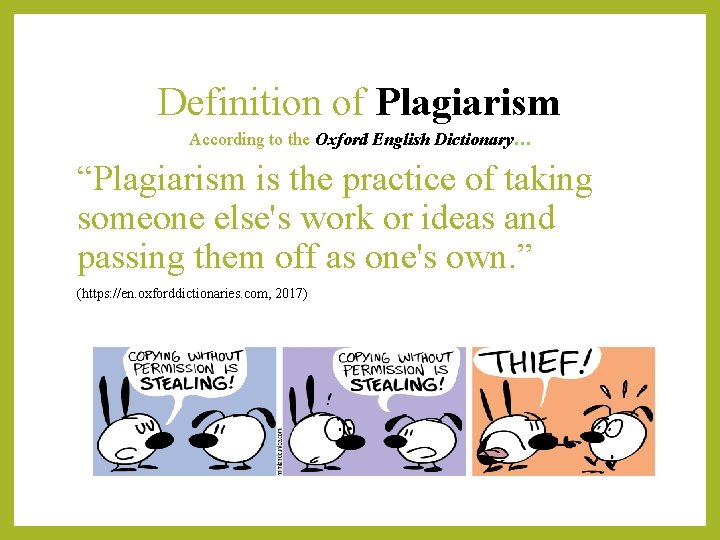
Definition of Plagiarism According to the Oxford English Dictionary… “Plagiarism is the practice of taking someone else's work or ideas and passing them off as one's own. ” (https: //en. oxforddictionaries. com, 2017)
Intentional Plagiarism • Copying someone's work • Buying or borrowing papers • Cutting and pasting text
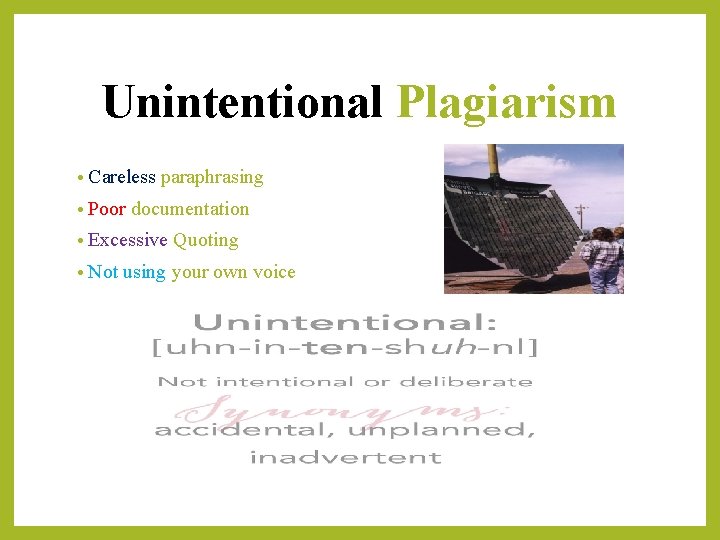
Unintentional Plagiarism • Careless • Poor paraphrasing documentation • Excessive • Not Quoting using your own voice
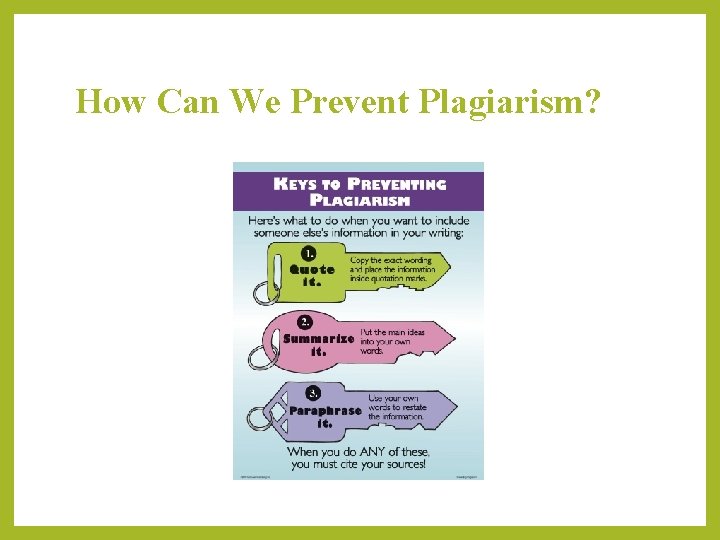
How Can We Prevent Plagiarism?
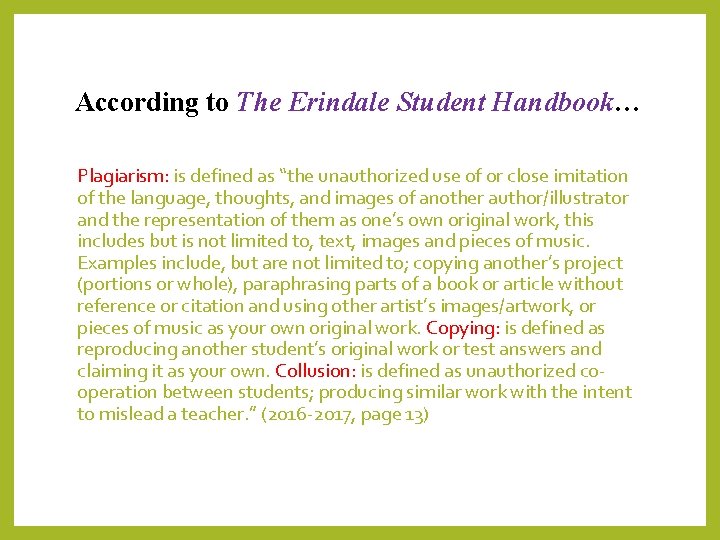
According to The Erindale Student Handbook… Plagiarism: is defined as “the unauthorized use of or close imitation of the language, thoughts, and images of another author/illustrator and the representation of them as one’s own original work, this includes but is not limited to, text, images and pieces of music. Examples include, but are not limited to; copying another’s project (portions or whole), paraphrasing parts of a book or article without reference or citation and using other artist’s images/artwork, or pieces of music as your own original work. Copying: is defined as reproducing another student’s original work or test answers and claiming it as your own. Collusion: is defined as unauthorized cooperation between students; producing similar work with the intent to mislead a teacher. ” (2016 -2017, page 13)
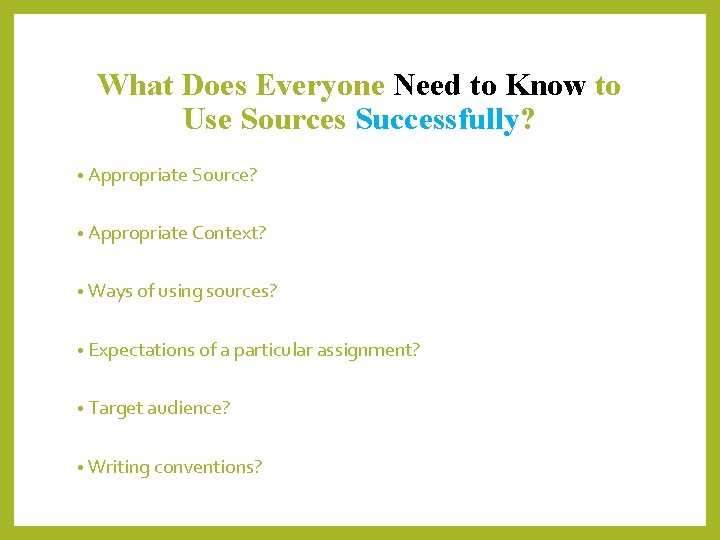
What Does Everyone Need to Know to Use Sources Successfully? • Appropriate Source? • Appropriate Context? • Ways of using sources? • Expectations of a particular assignment? • Target audience? • Writing conventions?
Strategies to Prevent Plagiarism • Explicitly teach plagiarism at the start of the semester. Teacher Librarians can do this for you. • Include the excerpt on Plagiarism/Academic Honesty from the Erindale Student Handbook in your course outline
More Help from LLC… • Did you know that the LLC has many resources at you disposal on our website to assist with this.
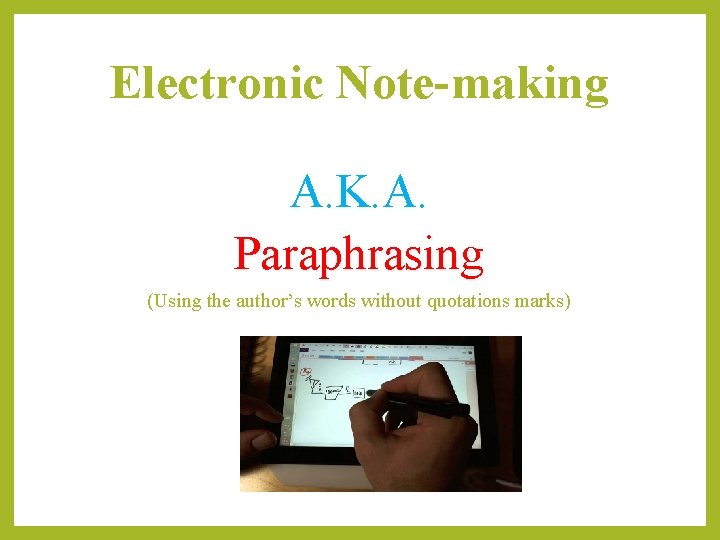
Electronic Note-making A. K. A. Paraphrasing (Using the author’s words without quotations marks)
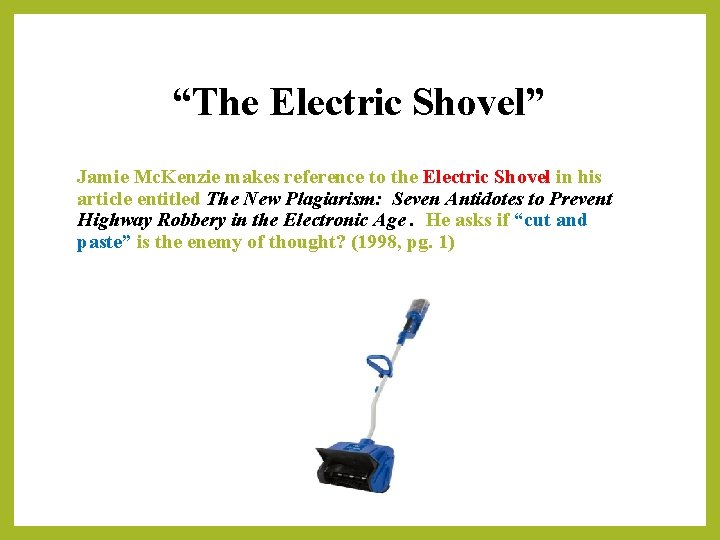
“The Electric Shovel” Jamie Mc. Kenzie makes reference to the Electric Shovel in his article entitled The New Plagiarism: Seven Antidotes to Prevent Highway Robbery in the Electronic Age. He asks if “cut and paste” is the enemy of thought? (1998, pg. 1)
Why not ask your teacher librarian for help with teaching students… …. how to access and use electronic note-taking sheets
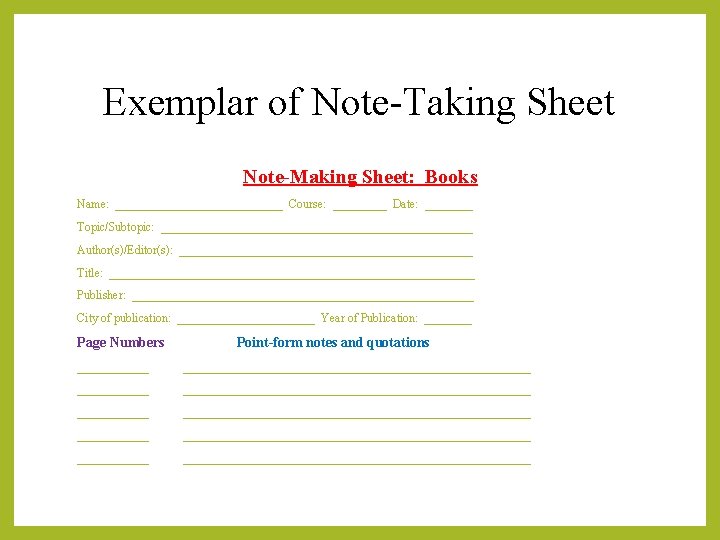
Exemplar of Note-Taking Sheet Note-Making Sheet: Books Name: ______________ Course: _____ Date: ____ Topic/Subtopic: __________________________ Author(s)/Editor(s): _________________________ Title: _______________________________ Publisher: _____________________________ City of publication: ____________ Year of Publication: ____ Page Numbers Point-form notes and quotations ____________ __________________________________________________________ ___________________________________
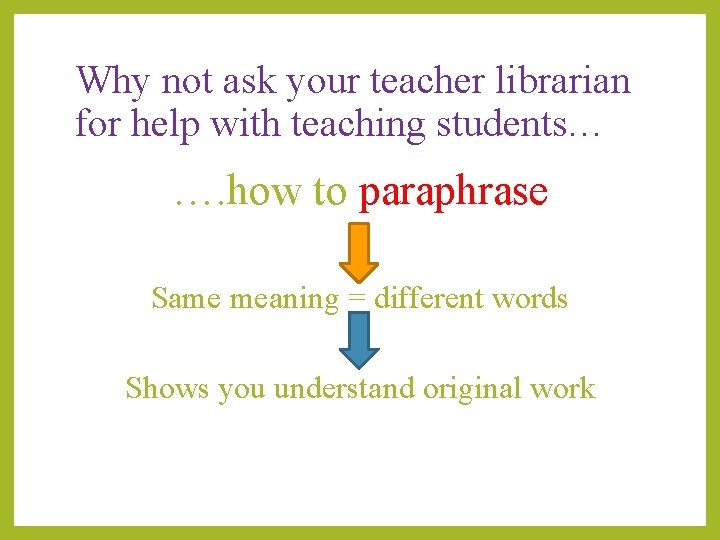
Why not ask your teacher librarian for help with teaching students… …. how to paraphrase Same meaning = different words Shows you understand original work
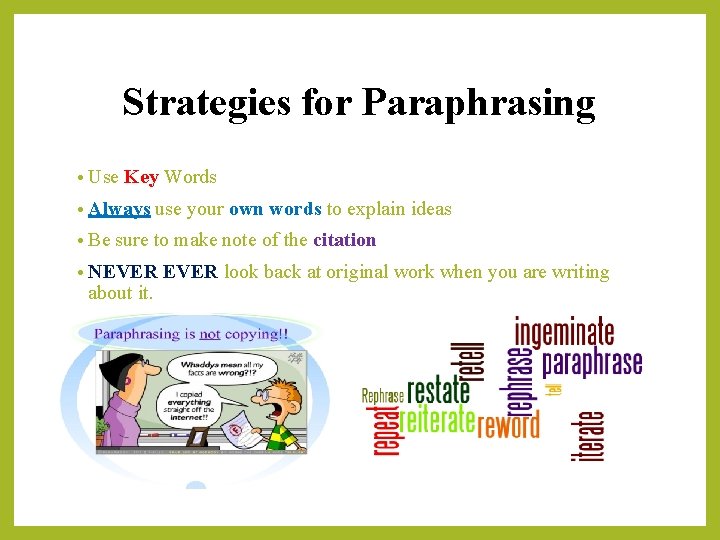
Strategies for Paraphrasing • Use Key Words • Always • Be use your own words to explain ideas sure to make note of the citation • NEVER about it. EVER look back at original work when you are writing
Remember…. . Use quotation Marks “…” to identify words you borrowed. You don’t understand it…then DON’T include it!
Prevention is the Best Medicine We need more focus on… What to Do rather than what NOT to do.
Feedback is Key It helps students see and fix their mistakes. This is How they LEARN!!
How do you Provide FEEDBACK?
Turnitin • This resource is available all staff
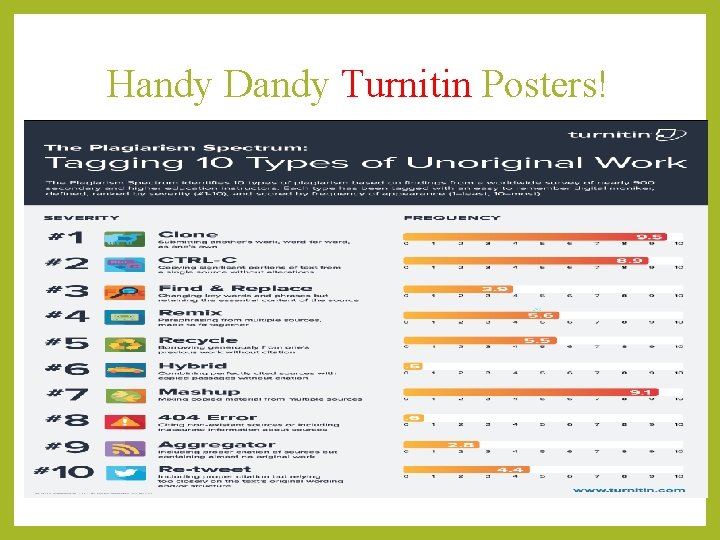
Handy Dandy Turnitin Posters!
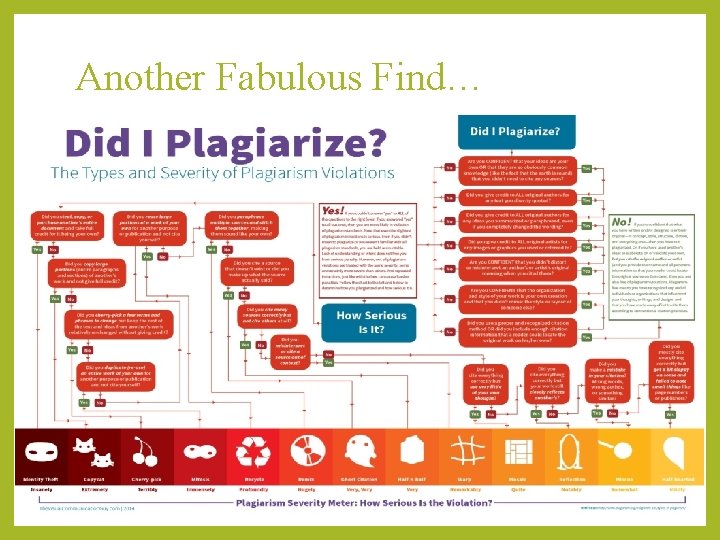
Another Fabulous Find…
To Use or Not to Use Most students will go to Wikipedia automatically. They need to realize that Wikipedia is a Springboard NOT an Academic Source.
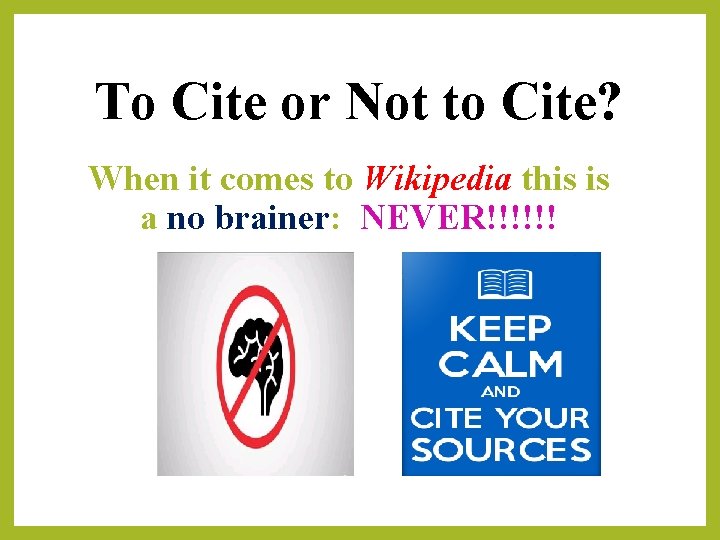
To Cite or Not to Cite? When it comes to Wikipedia this is a no brainer: NEVER!!!!!!