
Preventing gambling harm in the ACT A public
Preventing gambling harm in the ACT: A public health approach David Snowden Chief Executive Officer, ACT Gambling and Racing Commission International Association of Gambling Regulators Conference September 2018
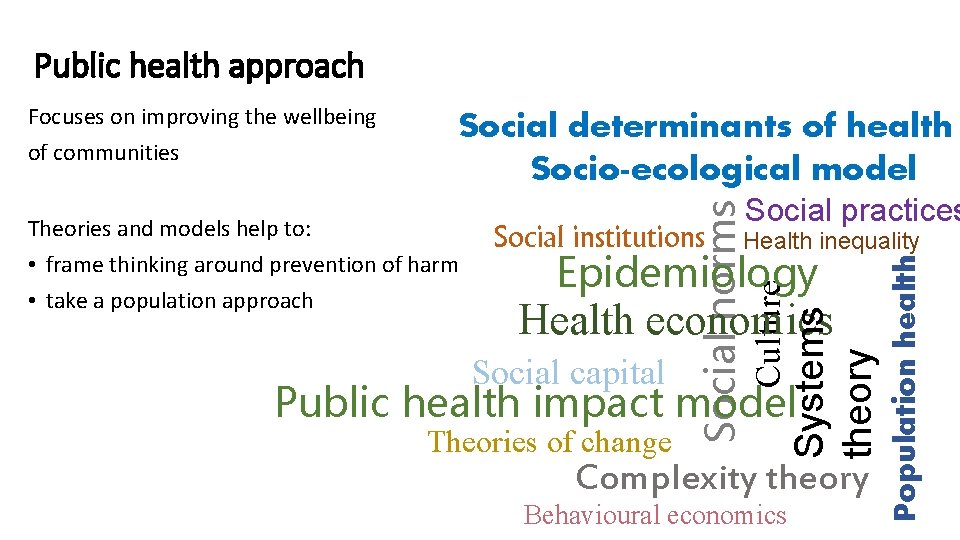
Public health approach Social determinants of health Socio-ecological model Health inequality Epidemiology Social capital Systems theory Health economics Public health impact model Theories of change Complexity theory Behavioural economics Population health Social institutions Social practices Culture Theories and models help to: • frame thinking around prevention of harm • take a population approach Social norms Focuses on improving the wellbeing of communities
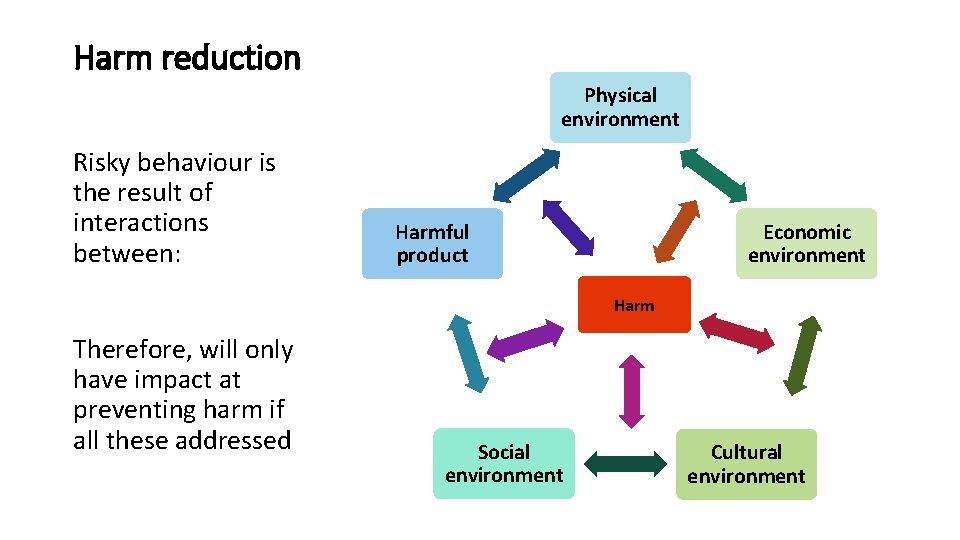
Harm reduction Physical environment Risky behaviour is the result of interactions between: Harmful product Economic environment Harm Therefore, will only have impact at preventing harm if all these addressed Social environment Cultural environment
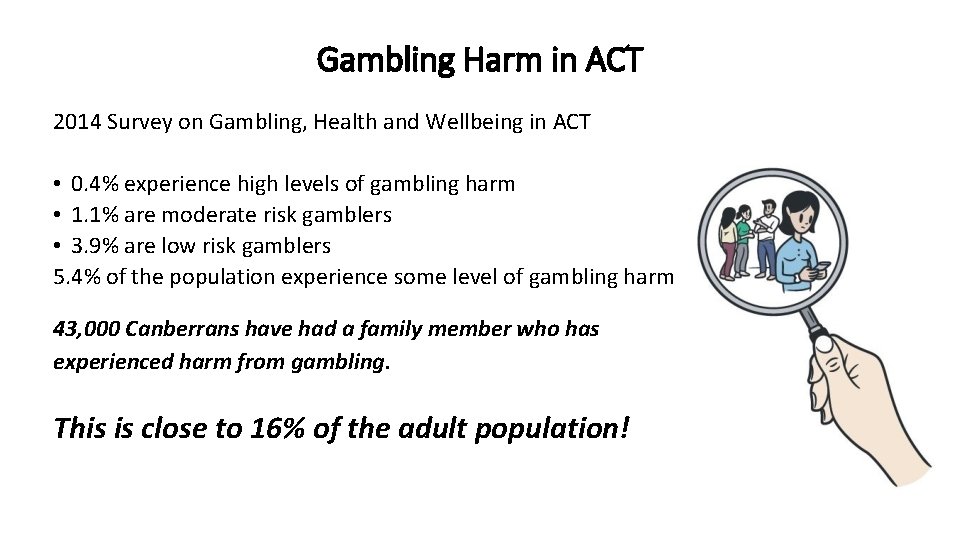
Gambling Harm in ACT 2014 Survey on Gambling, Health and Wellbeing in ACT • 0. 4% experience high levels of gambling harm • 1. 1% are moderate risk gamblers • 3. 9% are low risk gamblers 5. 4% of the population experience some level of gambling harm 43, 000 Canberrans have had a family member who has experienced harm from gambling. This is close to 16% of the adult population!
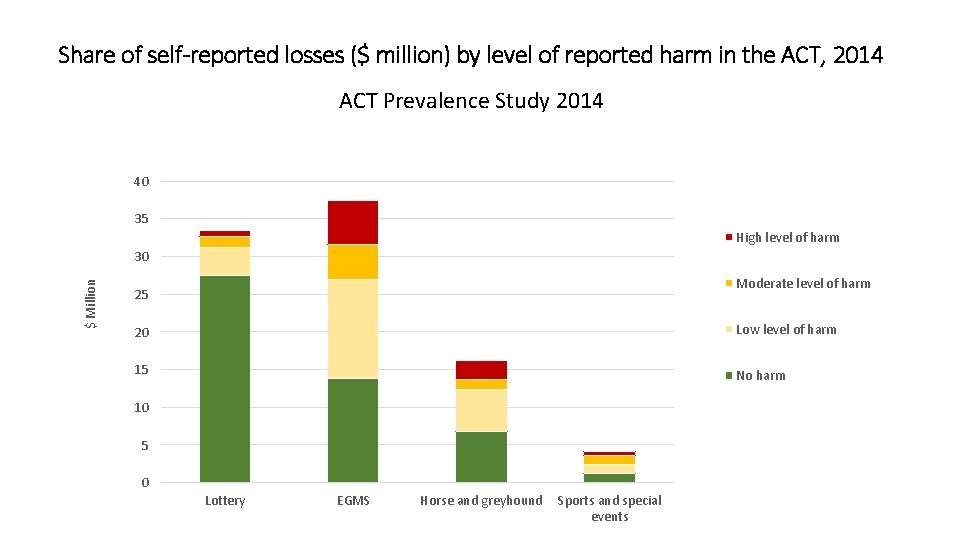
Share of self-reported losses ($ million) by level of reported harm in the ACT, 2014 ACT Prevalence Study 2014 40 35 High level of harm $ Million 30 Moderate level of harm 25 20 Low level of harm 15 No harm 10 5 0 Lottery EGMS Horse and greyhound Sports and special events
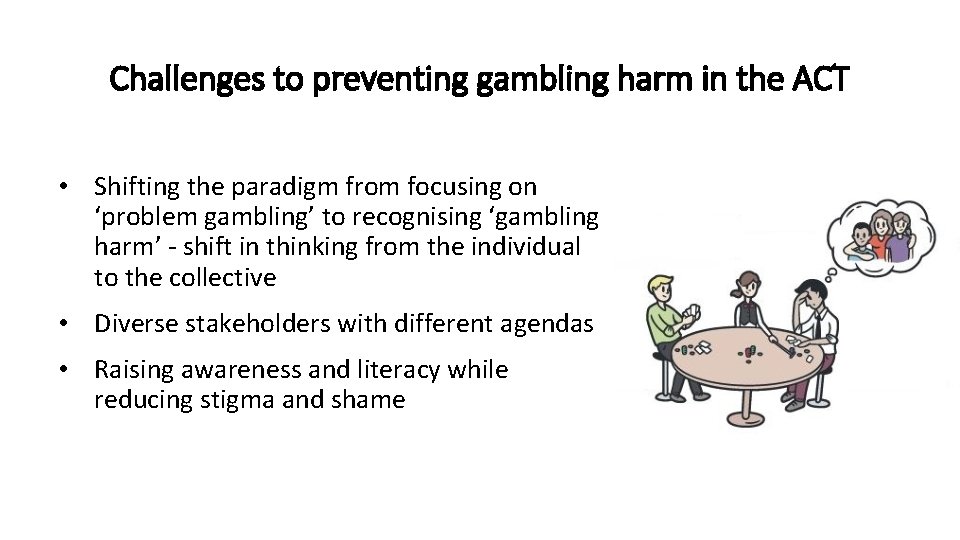
Challenges to preventing gambling harm in the ACT • Shifting the paradigm from focusing on ‘problem gambling’ to recognising ‘gambling harm’ - shift in thinking from the individual to the collective • Diverse stakeholders with different agendas • Raising awareness and literacy while reducing stigma and shame
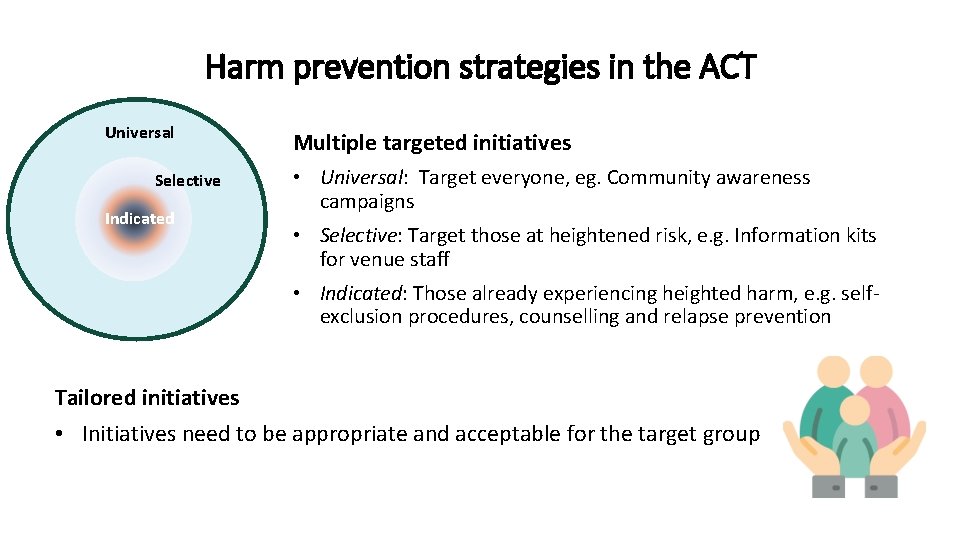
Harm prevention strategies in the ACT Universal Selective Indicated Multiple targeted initiatives • Universal: Target everyone, eg. Community awareness campaigns • Selective: Target those at heightened risk, e. g. Information kits for venue staff • Indicated: Those already experiencing heighted harm, e. g. selfexclusion procedures, counselling and relapse prevention Tailored initiatives • Initiatives need to be appropriate and acceptable for the target group
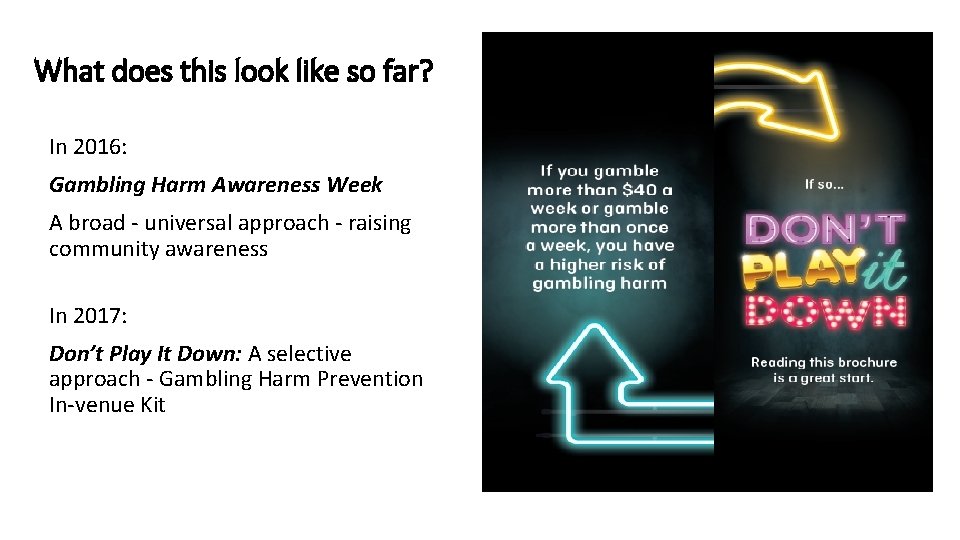
What does this look like so far? In 2016: Gambling Harm Awareness Week A broad - universal approach - raising community awareness In 2017: Don’t Play It Down: A selective approach - Gambling Harm Prevention In-venue Kit
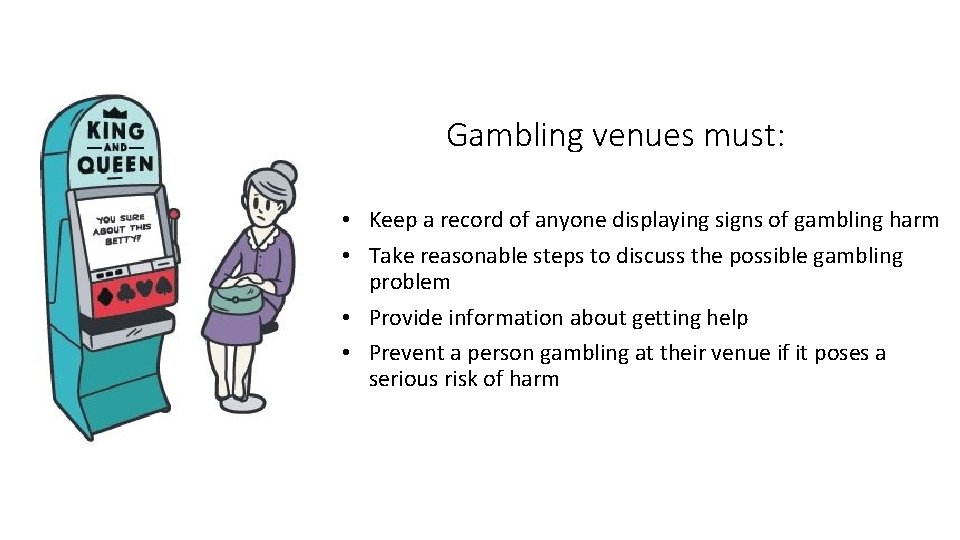
Gambling venues must: • Keep a record of anyone displaying signs of gambling harm • Take reasonable steps to discuss the possible gambling problem • Provide information about getting help • Prevent a person gambling at their venue if it poses a serious risk of harm
Compliance and enforcement Aims • Ensure community safety through regulation and licensing • Safeguard the integrity of the industry, and minimise burden on business How • Engagement, education and enforcement • Risk based approach • Direct resources where they are needed most • A comprehensive compliance program: Audits, Information exchange and investigation • Take action when required
Recent Court Case Complaint: Highly educated female lost $230, 000 on gaming machines over 18 months. Many signs of low level gambling harm. Complainant claimed it should have been obvious and acted upon by venue staff. Investigation: No incidents were recorded in the incident gambling register Venue’s defence: Aware of previous exclusion but did not link current and past behaviour • Pleasant, not distressed, highly educated, financial difficulties not evident • Only required to offer assistance if thought of as ‘problem gambler’ Case outcome: Breached the law - failed to record gambling incidents • $60, 000 donation to gambling harm related charity • Procedures and training in recording gambling incidents to be externally audited
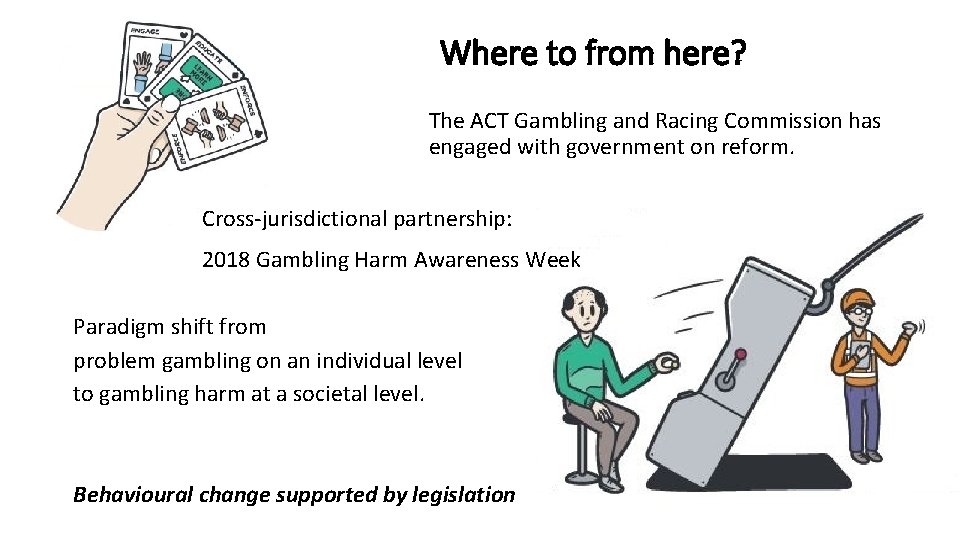
Where to from here? The ACT Gambling and Racing Commission has engaged with government on reform. Cross-jurisdictional partnership: 2018 Gambling Harm Awareness Week Paradigm shift from problem gambling on an individual level to gambling harm at a societal level. Behavioural change supported by legislation
The Commission’s vision is of a Canberra free of gambling harm.
- Slides: 14