
Preventing Concussions Dehydration Overuse Injuries in Youth Sports
- Slides: 12
Preventing Concussions, Dehydration & Overuse Injuries in Youth Sports Injury Prevention Task Force
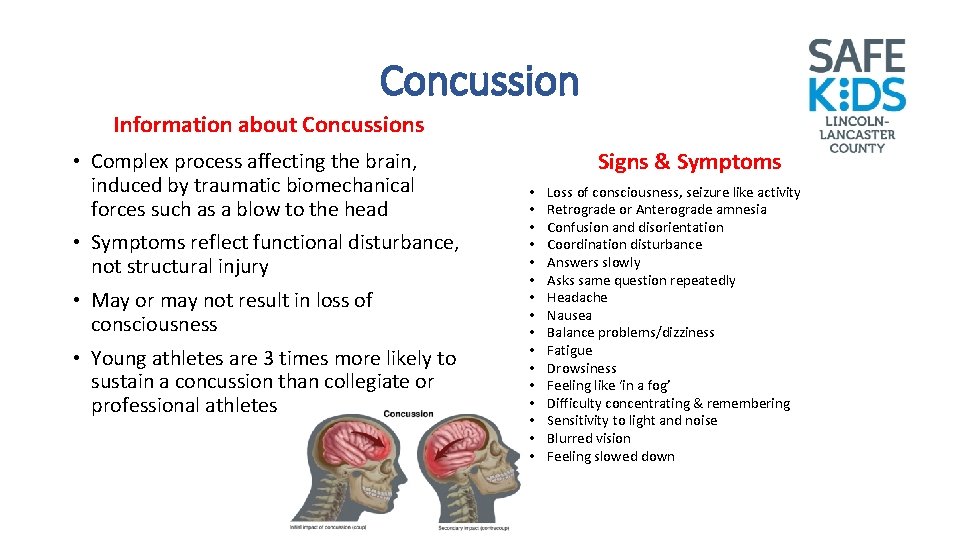
Concussion Information about Concussions • Complex process affecting the brain, induced by traumatic biomechanical forces such as a blow to the head • Symptoms reflect functional disturbance, not structural injury • May or may not result in loss of consciousness • Young athletes are 3 times more likely to sustain a concussion than collegiate or professional athletes Signs & Symptoms • • • • Loss of consciousness, seizure like activity Retrograde or Anterograde amnesia Confusion and disorientation Coordination disturbance Answers slowly Asks same question repeatedly Headache Nausea Balance problems/dizziness Fatigue Drowsiness Feeling like ‘in a fog’ Difficulty concentrating & remembering Sensitivity to light and noise Blurred vision Feeling slowed down
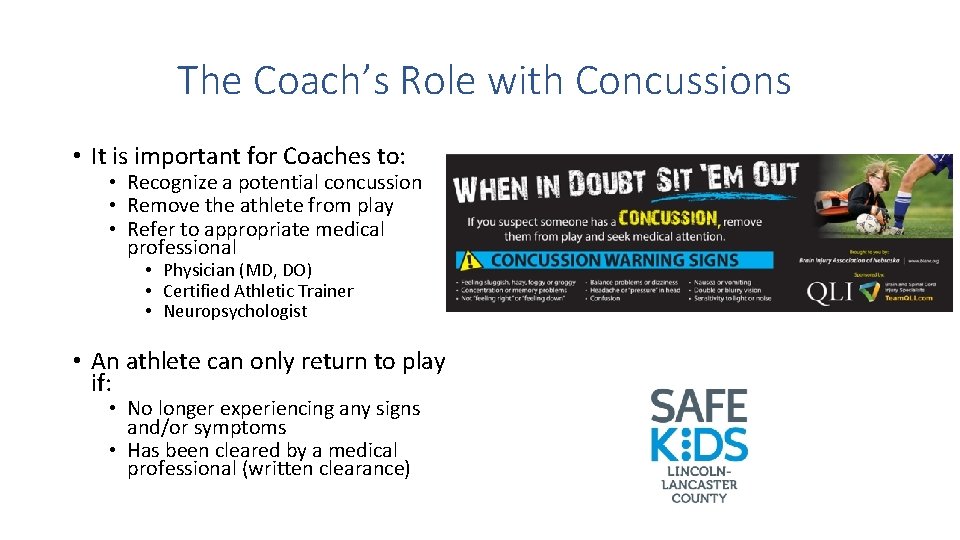
The Coach’s Role with Concussions • It is important for Coaches to: • Recognize a potential concussion • Remove the athlete from play • Refer to appropriate medical professional • Physician (MD, DO) • Certified Athletic Trainer • Neuropsychologist • An athlete can only return to play if: • No longer experiencing any signs and/or symptoms • Has been cleared by a medical professional (written clearance)
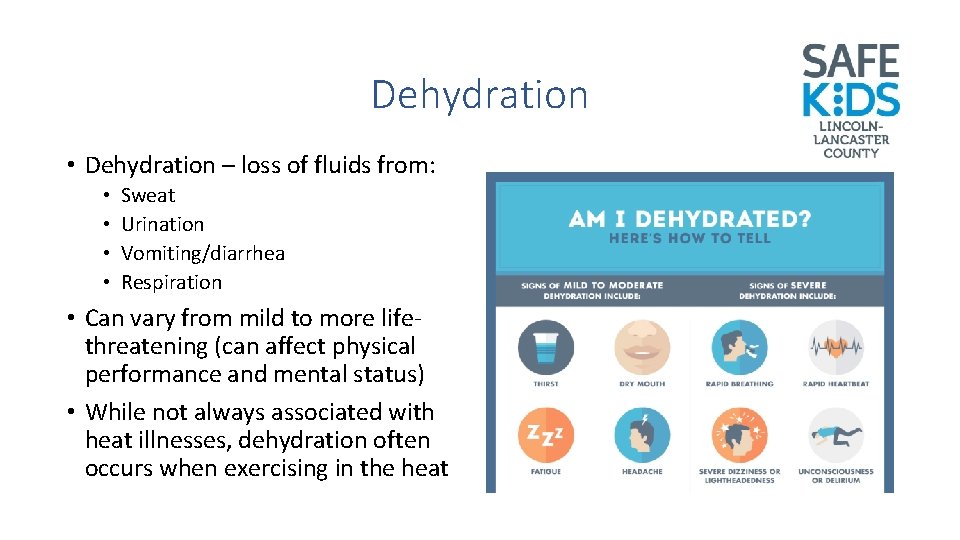
Dehydration • Dehydration – loss of fluids from: • • Sweat Urination Vomiting/diarrhea Respiration • Can vary from mild to more lifethreatening (can affect physical performance and mental status) • While not always associated with heat illnesses, dehydration often occurs when exercising in the heat
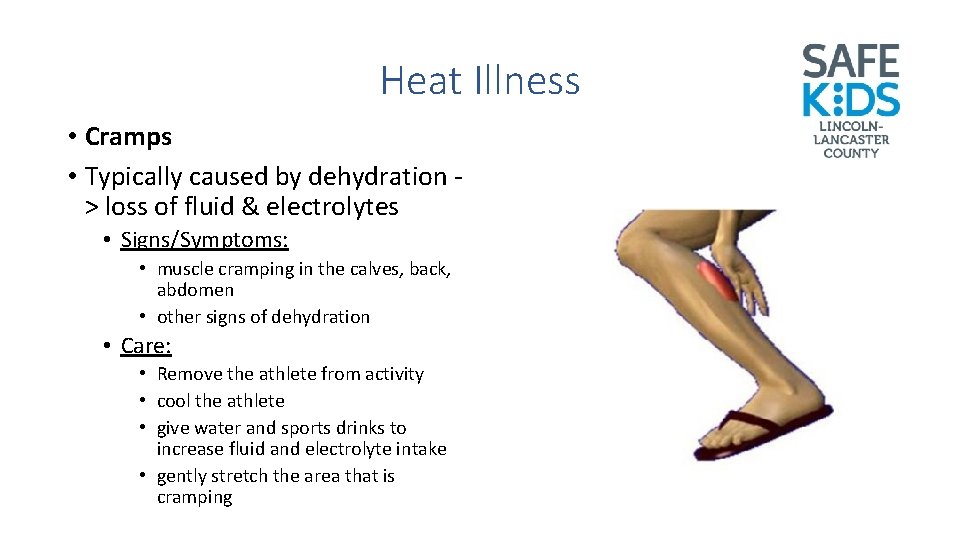
Heat Illness • Cramps • Typically caused by dehydration > loss of fluid & electrolytes • Signs/Symptoms: • muscle cramping in the calves, back, abdomen • other signs of dehydration • Care: • Remove the athlete from activity • cool the athlete • give water and sports drinks to increase fluid and electrolyte intake • gently stretch the area that is cramping
• Heat Exhaustion • Signs/Symptoms: • • • Heat Illness pale or ashen skin heavy sweating rapid, weak pulse fatigue nausea/vomiting Headache • Care: • remove from activity • move to a cool place • loosen or remove any tight or overly wet clothing (traps the heat) • cool the athlete by fanning, spraying with cold water • give water to drink • watch for worsening conditions
• Heat Stroke • Signs/Symptoms: Heat Illness • flushed, hot skin • not sweating • decreased heart rate & blood pressure • increased respiration • faint/dizzy • confused/combative • loss of consciousness • increased core body temperature • Care: • Remove from activity • Call 911 • Immediately immerse the athlete in cold water up to the neck in order to lower the body temperature prior to the ambulance arriving
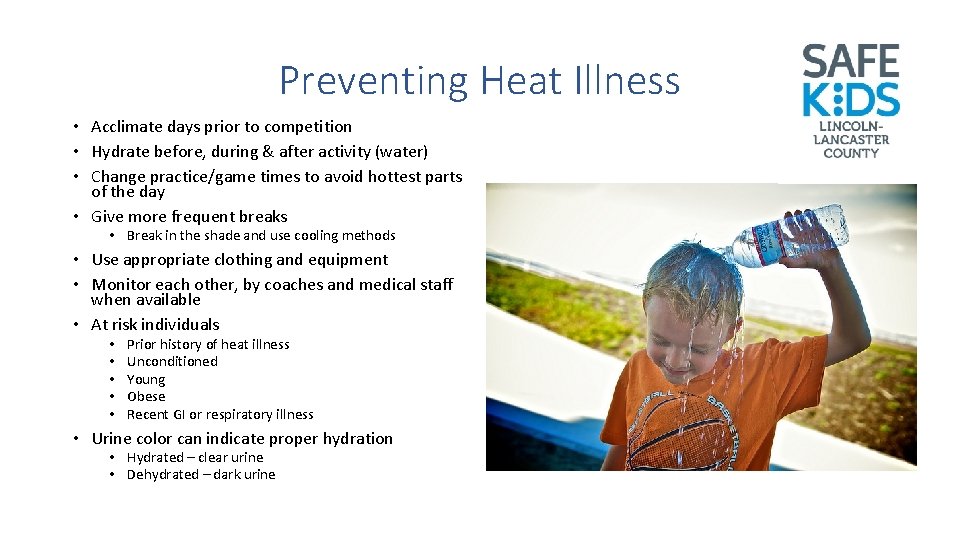
Preventing Heat Illness • Acclimate days prior to competition • Hydrate before, during & after activity (water) • Change practice/game times to avoid hottest parts of the day • Give more frequent breaks • Break in the shade and use cooling methods • Use appropriate clothing and equipment • Monitor each other, by coaches and medical staff when available • At risk individuals • • • Prior history of heat illness Unconditioned Young Obese Recent GI or respiratory illness • Urine color can indicate proper hydration • Hydrated – clear urine • Dehydrated – dark urine
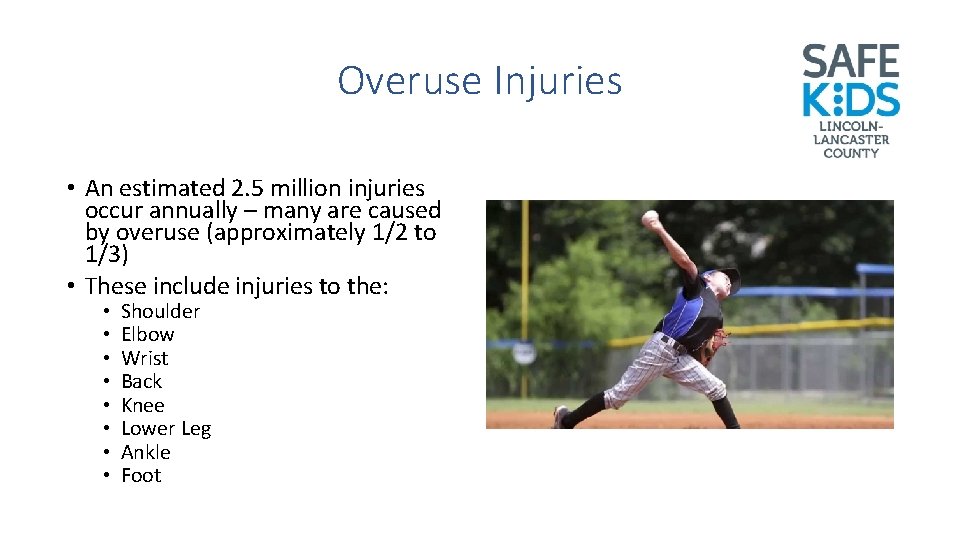
Overuse Injuries • An estimated 2. 5 million injuries occur annually – many are caused by overuse (approximately 1/2 to 1/3) • These include injuries to the: • • Shoulder Elbow Wrist Back Knee Lower Leg Ankle Foot
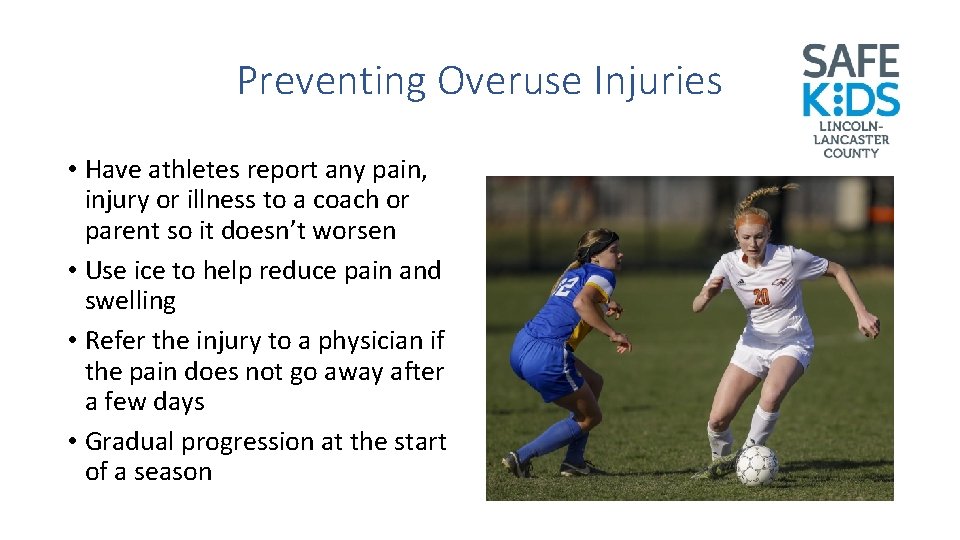
Preventing Overuse Injuries • Have athletes report any pain, injury or illness to a coach or parent so it doesn’t worsen • Use ice to help reduce pain and swelling • Refer the injury to a physician if the pain does not go away after a few days • Gradual progression at the start of a season
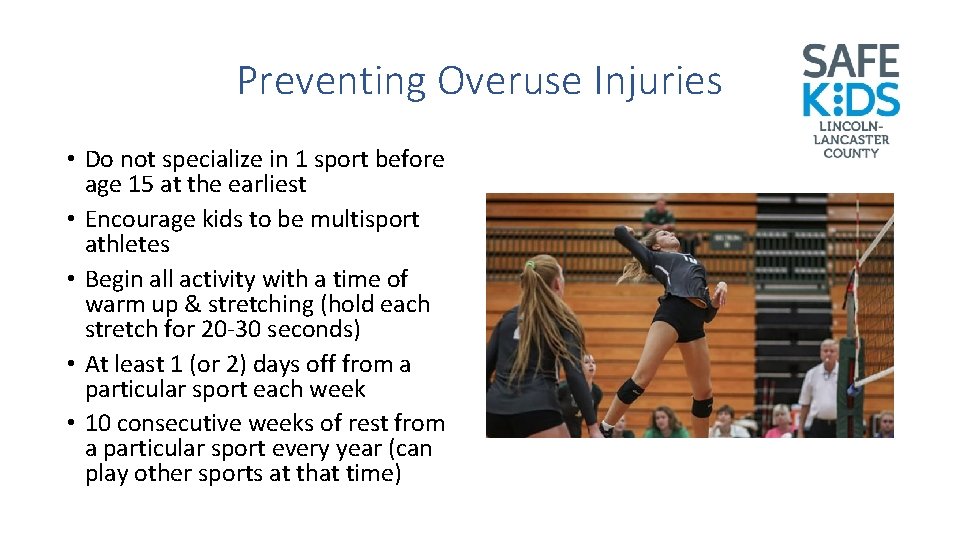
Preventing Overuse Injuries • Do not specialize in 1 sport before age 15 at the earliest • Encourage kids to be multisport athletes • Begin all activity with a time of warm up & stretching (hold each stretch for 20 -30 seconds) • At least 1 (or 2) days off from a particular sport each week • 10 consecutive weeks of rest from a particular sport every year (can play other sports at that time)
For More Information www. safekidslincoln. org/sports-injury-prevention/ Sports Injury Prevention Task Force