
PREVALENCE OF URINARY TRACT INFECTIONS THEIR BACTERIAL ETIOLOGY

PREVALENCE OF URINARY TRACT INFECTIONS, THEIR BACTERIAL ETIOLOGY AND ANTIBIOGRAM - A STUDY Kiran Ghimire, Baral B. , Karna S. , Baral M. P. Ph. D B. P. Koirala Institute Of Health Sciences Dharan, Nepal.
INTRODUCTION • Urinary tract infection is any type of urothelial inflammatory response resulting from microbial invasion of the urinary tract defined microbiologically as the detection of both bacteriuria 105 CFU/ml and pyuria >10 leucocytes/HPF (Astal et al. , 2002) • It represents one of the most common diseases encountered in medical practice today and occurring from the neonates to the geriatric age group • Symptomatic UTI are either uncomplicated or

BACKGROUND • Common pathogens causing UTI are • Gram negative Bacteria: • Escherichia coli, Klebsiella spp. , Proteus mirabilis, Proteus vulgaris, Enterobacter spp. • Gram positive Bacteria • Staphylococcus aureus, Staphylococcus saprophyticus, Enterococcus faecalis, Group B streptococci. • Other pathogens: • Chlamydia trachomatis, Mycoplasma (Ureaplasma urealyticum), Candida spp
QQ BACKGROUND • UTI is common in women, uncommon in men. • Recurrent infection causes considerable morbidity; if complicated, it can cause severe renal diseases including end-stage renal failure. • It is also a common source of life threating Gramnegative septicemia (Kumar and Clark, 2002).
RATIONALE • Antibiotics in the treatment of UTI are usually given empirically without proper antibiotic susceptibility testing in Nepal. • This is one of the major causes for the development of multi-drug resistant (MDR) urinary pathogens. • To ensure appropriate and specific therapy, current knowledge of the microorganisms that cause UTI and their antibiotic susceptibility is mandatory.
OBJECTIVES • To determine the prevalence of UTI among different patients attending a healthcare center in Kathmandu, Nepal. • To isolate and identify the etiological agent from urine sample. • To determine the antibiotic susceptibility pattern of the isolates.
MATERIALS & METHODS • Study design: Comparative, Cross – Sectional Study • Study Area: Kathmandu Hospital, Kathmandu, Nepal • Sample Size: 521 • Study period: 6 months
MATERIALS & METHODS (CONTD…. ) • We collected mid-stream urine samples from 521 different patients from both out-patient and inpatient departments. • The patients were properly instructed and a sterile, dry, wide-necked leak-proof container was given to them and requested for 10 -20 ml mid-stream urine sample. • The urine samples were processed and assessed in microbiology laboratory. • Then antibiotic susceptibility test was performed to identify the prevalence of drug resistant
RESULTS • The primary results are depicted in the following pictures:
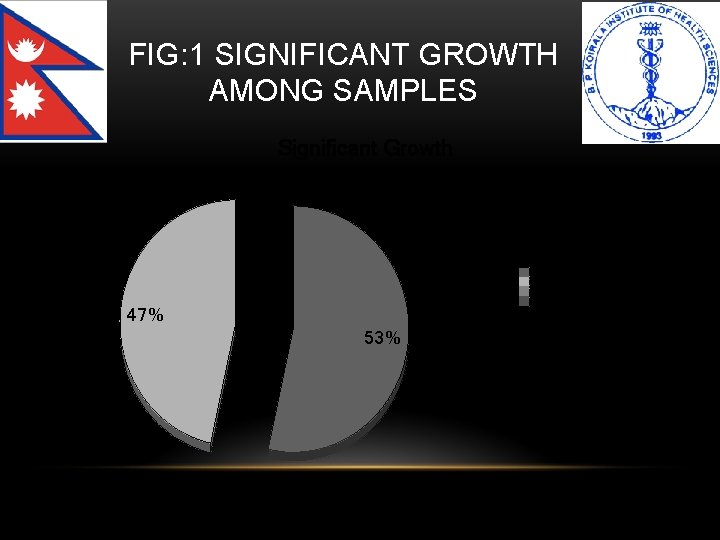
FIG: 1 SIGNIFICANT GROWTH AMONG SAMPLES Significant Growth No Significant growth 47% 53%
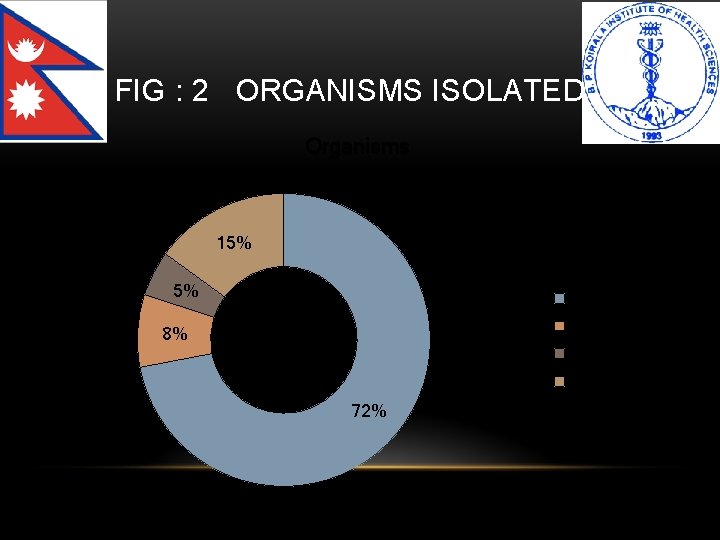
FIG : 2 ORGANISMS ISOLATED Organisms 15% 5% E. Coli Kleibsella 8% Pseudomonas Others 72%
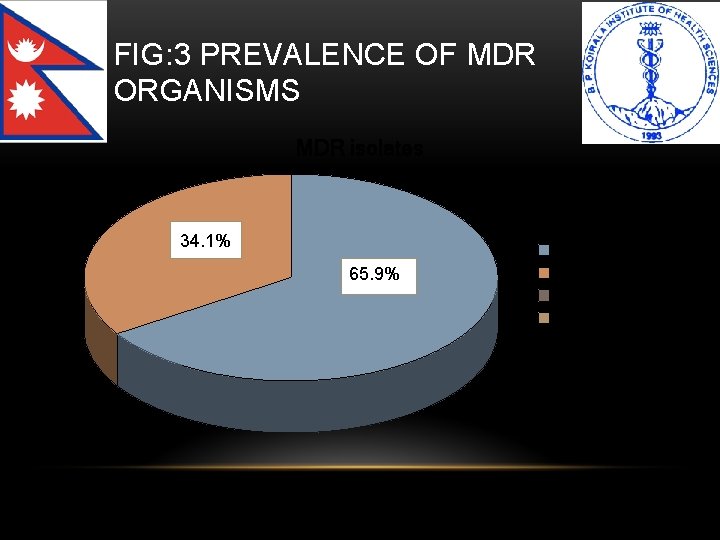
FIG: 3 PREVALENCE OF MDR ORGANISMS MDR isolates 34. 1% 65. 9% MDR isolates MDS isolates
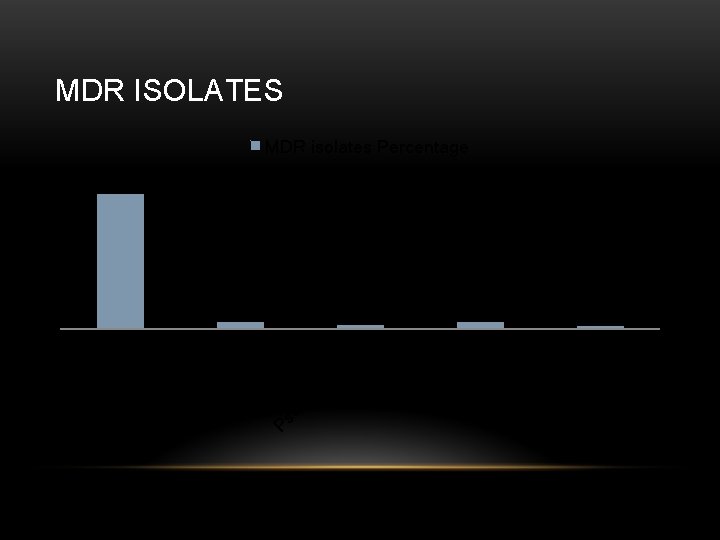
MDR ISOLATES MDR isolates Percentage 77, 6 4, 34 cc us te r 1, 86 St ap h yl oc o ob ac C itr eu do m on as 2, 45 Ps Kl ei bs el la E. C ol i 4, 3
CONCLUSION • There is an increasing trend in the incidence of UTIs • Because of the increasing drug resistance which is in turn caused by prescribing antibiotics inadvertently without proper susceptibility testing. • So proper identification of the pathogens before commencing therapy in case of UTIs and rational use of antimicrobials is mandatory to control this emerging problem.

ACKNOWLEDGEMENTS • I WOULD LIKE TO THANK THE FOLLOWING PEOPLE WITHOUT WHOSE LOVE AND SUPPORT THIS WOULD NOT HAVE BEEN POSSIBLE: • MY SUPERVISOR: DR. MADHAV P BARAL • MY CO- RESEARCHERS: B. BARAL, S. KARNA • MY FAMILY FOR THEIR SUPPORT AND BLESSINGS
THANK YOU FOR YOUR ATTENTION
- Slides: 16