
Preterm Labor and Birth UNM Family Medicine Resident

Preterm Labor and Birth UNM Family Medicine Resident School 11/7/2018 Kira Paisley Poll Everywhere TEXT: KIRAPAISLEY 625 to 22333 once to join, then text your answers when it’s time
Learning Objectives • Understand key Epidemiology • Answer the question “Why do we care? ” • Identify who is at RISK for preterm delivery • Identify evidence based PREVENTION strategies • Confidently DIAGNOSE and MANAGE initial presentation of Preterm Labor and PPROM
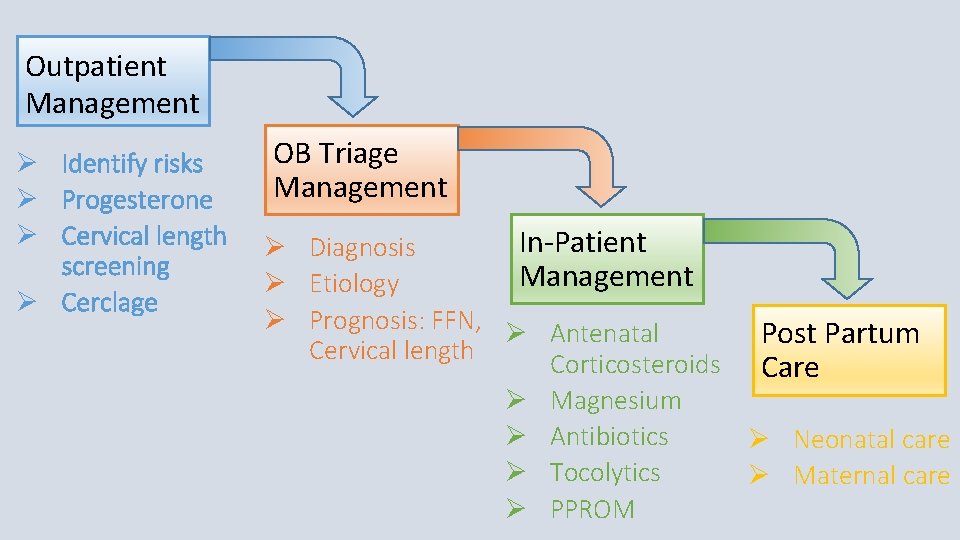
Outpatient Management Ø Identify risks Ø Progesterone Ø Cervical length screening Ø Cerclage OB Triage Management In-Patient Ø Diagnosis Management Ø Etiology Ø Prognosis: FFN, Ø Antenatal Cervical length Corticosteroids Ø Ø Magnesium Antibiotics Tocolytics PPROM Post Partum Care Ø Neonatal care Ø Maternal care
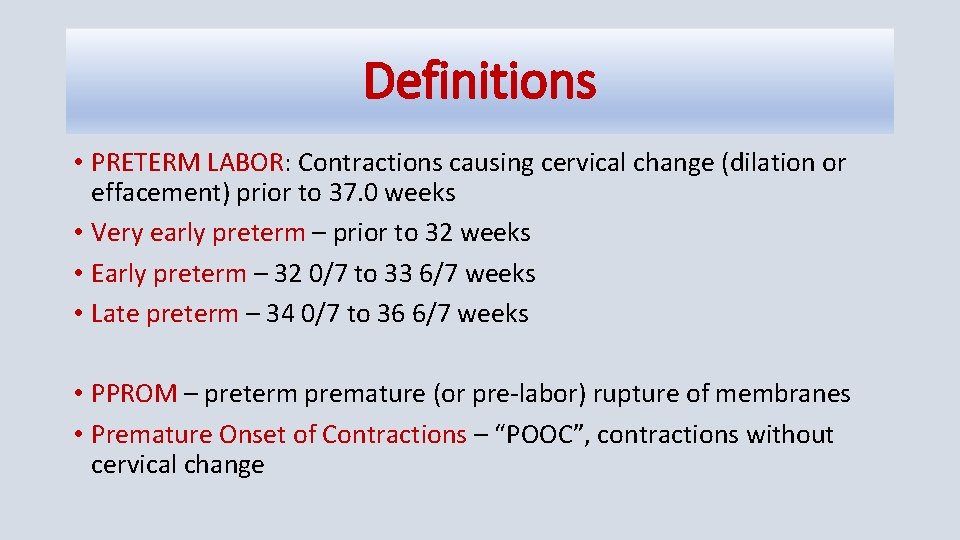
Definitions • PRETERM LABOR: Contractions causing cervical change (dilation or effacement) prior to 37. 0 weeks • Very early preterm – prior to 32 weeks • Early preterm – 32 0/7 to 33 6/7 weeks • Late preterm – 34 0/7 to 36 6/7 weeks • PPROM – preterm premature (or pre-labor) rupture of membranes • Premature Onset of Contractions – “POOC”, contractions without cervical change
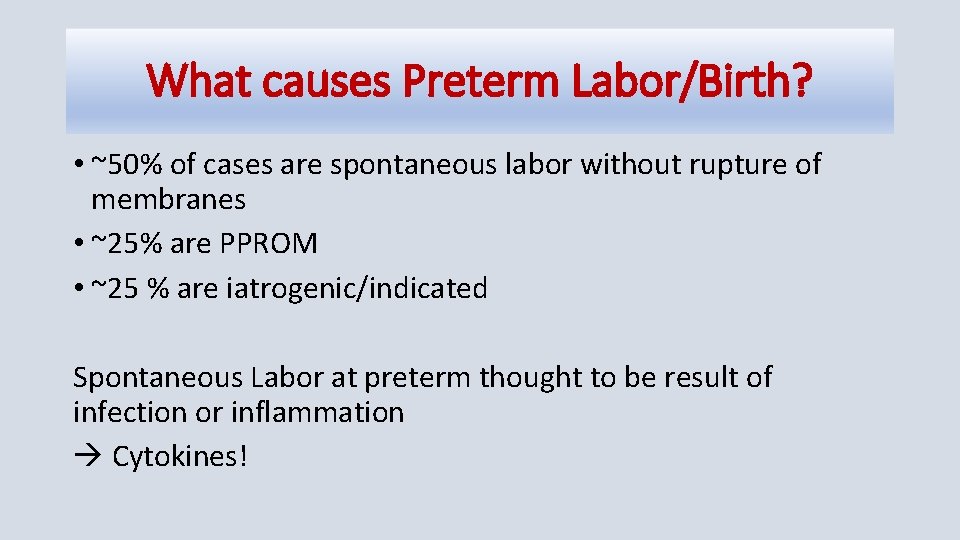
What causes Preterm Labor/Birth? • ~50% of cases are spontaneous labor without rupture of membranes • ~25% are PPROM • ~25 % are iatrogenic/indicated Spontaneous Labor at preterm thought to be result of infection or inflammation Cytokines!
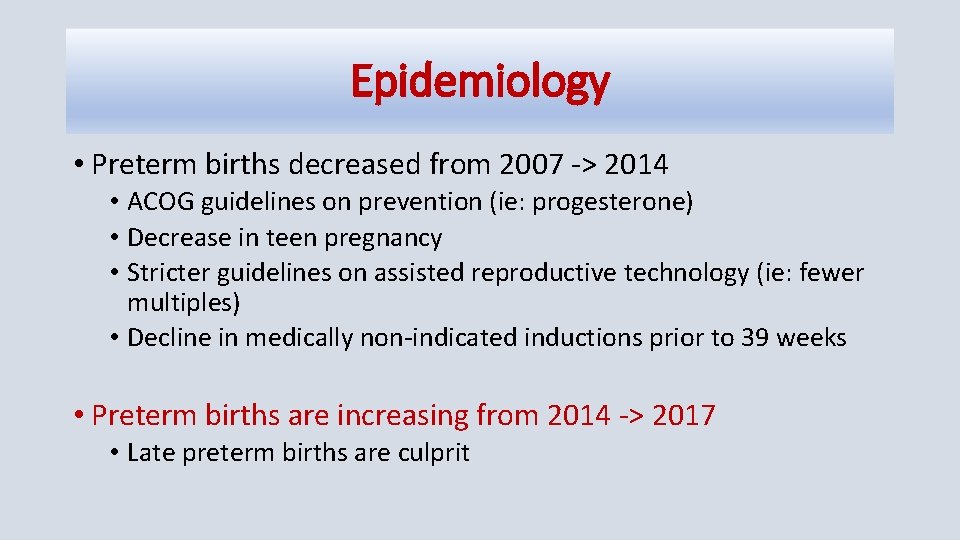
Epidemiology • Preterm births decreased from 2007 -> 2014 • ACOG guidelines on prevention (ie: progesterone) • Decrease in teen pregnancy • Stricter guidelines on assisted reproductive technology (ie: fewer multiples) • Decline in medically non-indicated inductions prior to 39 weeks • Preterm births are increasing from 2014 -> 2017 • Late preterm births are culprit
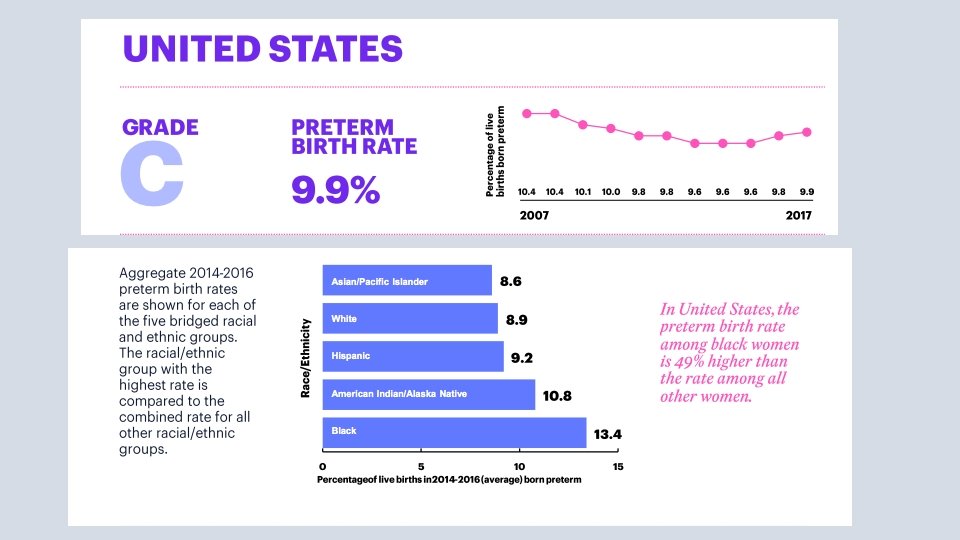
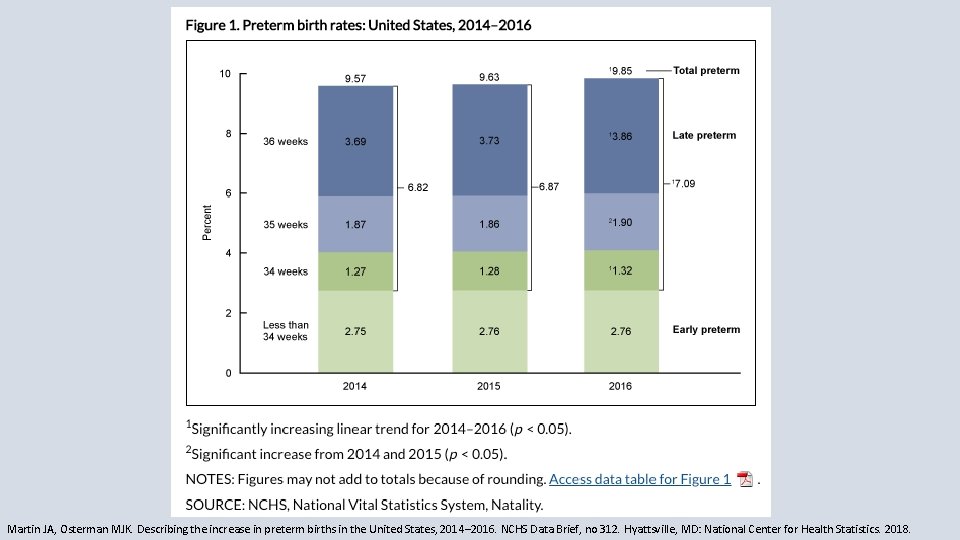
Martin JA, Osterman MJK. Describing the increase in preterm births in the United States, 2014– 2016. NCHS Data Brief, no 312. Hyattsville, MD: National Center for Health Statistics. 2018.
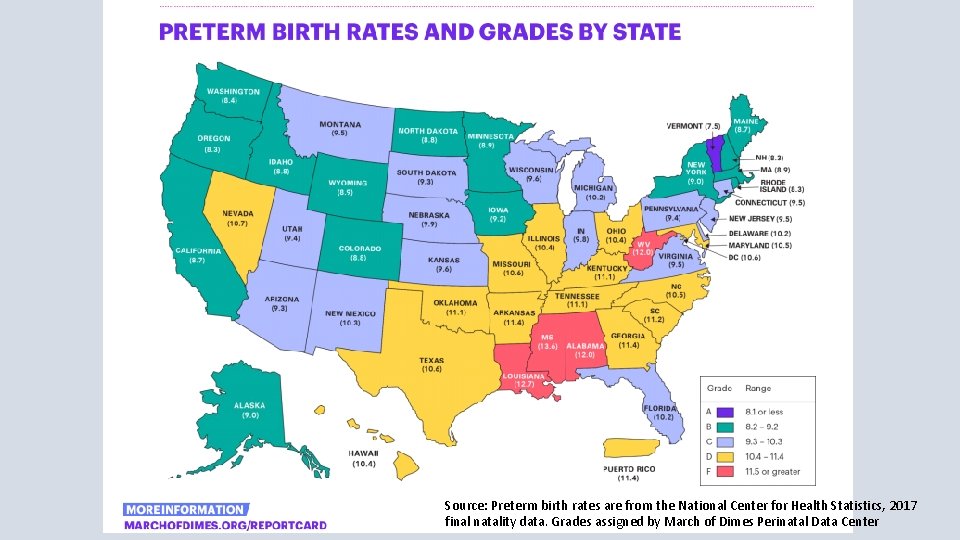
Source: Preterm birth rates are from the National Center for Health Statistics, 2017 final natality data. Grades assigned by March of Dimes Perinatal Data Center
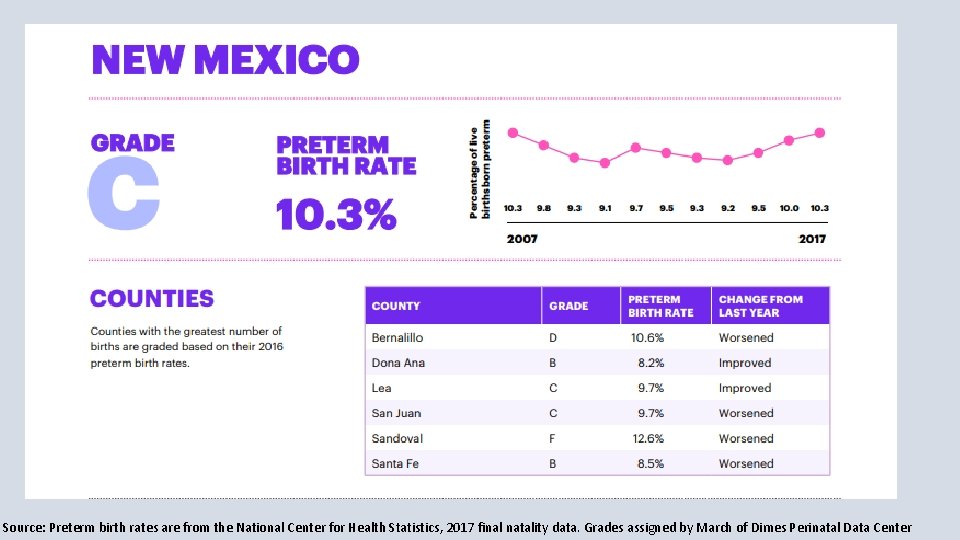
Source: Preterm birth rates are from the National Center for Health Statistics, 2017 final natality data. Grades assigned by March of Dimes Perinatal Data Center
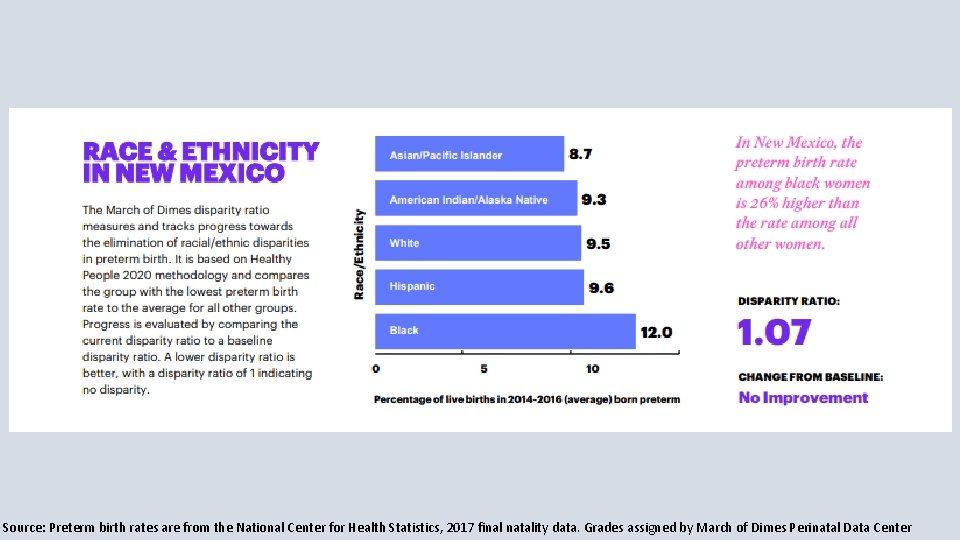
Source: Preterm birth rates are from the National Center for Health Statistics, 2017 final natality data. Grades assigned by March of Dimes Perinatal Data Center
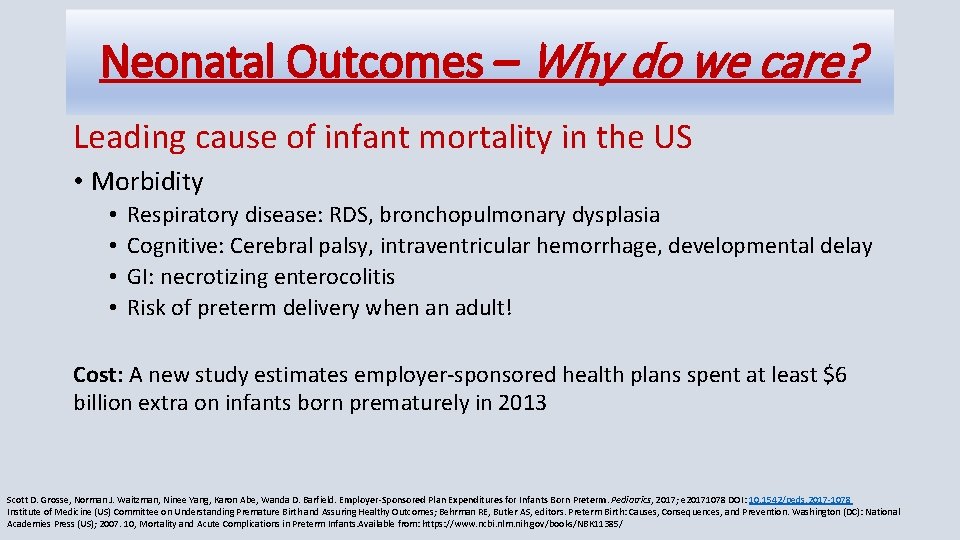
Neonatal Outcomes – Why do we care? Leading cause of infant mortality in the US • Morbidity • • Respiratory disease: RDS, bronchopulmonary dysplasia Cognitive: Cerebral palsy, intraventricular hemorrhage, developmental delay GI: necrotizing enterocolitis Risk of preterm delivery when an adult! Cost: A new study estimates employer-sponsored health plans spent at least $6 billion extra on infants born prematurely in 2013 Scott D. Grosse, Norman J. Waitzman, Ninee Yang, Karon Abe, Wanda D. Barfield. Employer-Sponsored Plan Expenditures for Infants Born Preterm. Pediatrics, 2017; e 20171078 DOI: 10. 1542/peds. 2017 -1078 Institute of Medicine (US) Committee on Understanding Premature Birth and Assuring Healthy Outcomes; Behrman RE, Butler AS, editors. Preterm Birth: Causes, Consequences, and Prevention. Washington (DC): National Academies Press (US); 2007. 10, Mortality and Acute Complications in Preterm Infants. Available from: https: //www. ncbi. nlm. nih. gov/books/NBK 11385/
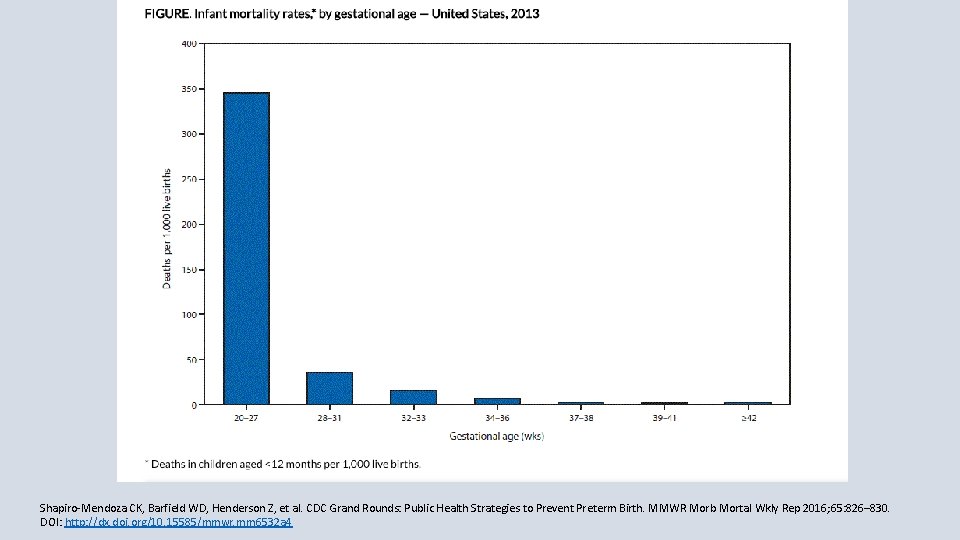
Shapiro-Mendoza CK, Barfield WD, Henderson Z, et al. CDC Grand Rounds: Public Health Strategies to Prevent Preterm Birth. MMWR Morb Mortal Wkly Rep 2016; 65: 826– 830. DOI: http: //dx. doi. org/10. 15585/mmwr. mm 6532 a 4
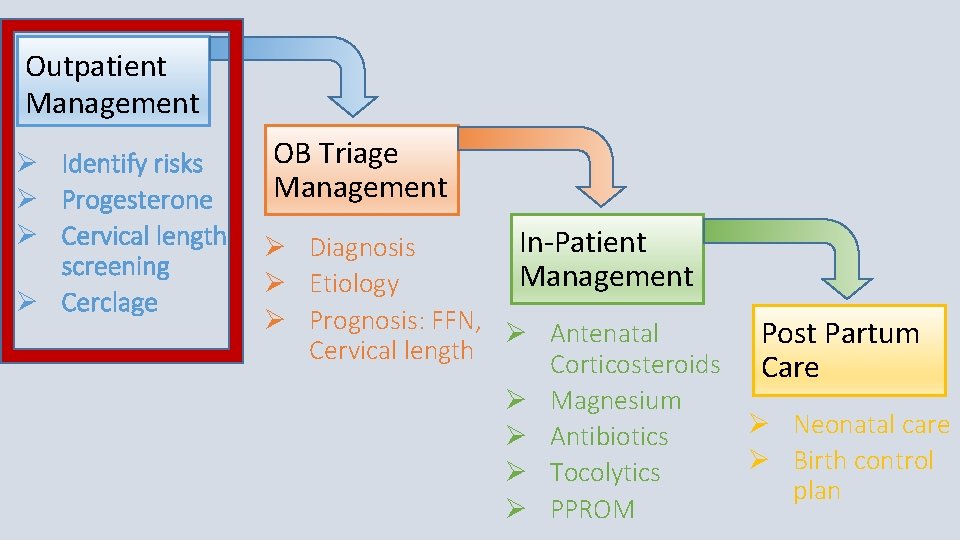
Outpatient Management Ø Identify risks Ø Progesterone Ø Cervical length screening Ø Cerclage OB Triage Management In-Patient Ø Diagnosis Management Ø Etiology Ø Prognosis: FFN, Ø Antenatal Cervical length Corticosteroids Ø Ø Magnesium Antibiotics Tocolytics PPROM Post Partum Care Ø Neonatal care Ø Birth control plan
Name the Risk factors… • Poll Everywhere
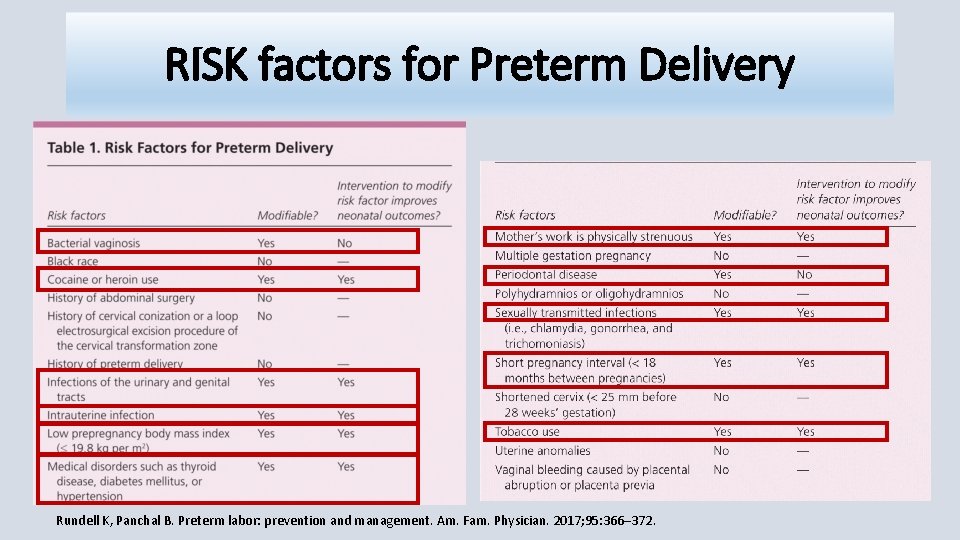
RISK factors for Preterm Delivery Rundell K, Panchal B. Preterm labor: prevention and management. Am. Fam. Physician. 2017; 95: 366– 372.
Ways to intervene? • Tobacco Cessation programs can help • Treatment of Asymptomatic bacteruria is successful • Screening and treatment for BV controversial • USPSTF says insufficient evidence • If symptomatic, should treat • Educate women on short interval pregnancy • Preconception control of chronic disease
Progesterone • Contributes to pregnancy in multiple ways: • Functional withdrawal of progesterone occurs around onset of labor • Prevents apoptosis in fetal membrane explants under pro-inflammatory conditions ? alteration of immune response 2013 – Data became overwhelming that Progesterone prevents Preterm Birth
Progesterone • 2013 Meta-analysis with 39 randomized trials; treatment with progesterone showed LOWER RISK for: • • • Birth < 34 weeks, RR 0. 31 Birth < 37 weeks, RR 0. 55 Neonatal death, RR 0. 45 Use of assisted ventilation in neonate, RR 0. 40 Necrotizing enterocolitis in neonate, RR 0. 30 NICU admission, RR 0. 24
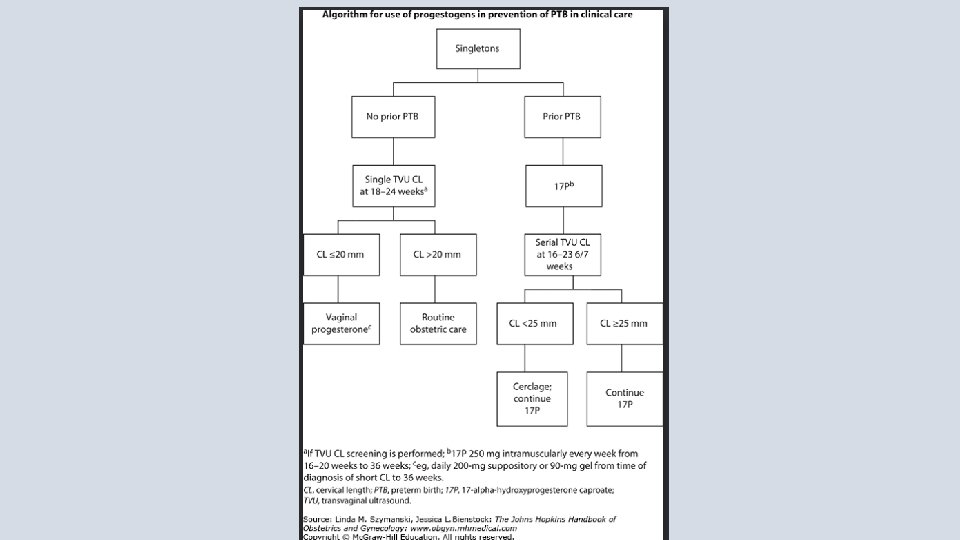
Progesterone – Recommended! For PREVENTION of Preterm Birth Singleton pregnancy with prior preterm birth (<37 weeks) IM progesterone recommended Ø 17 Alpha-Hydroxyprogesterone Caproate) 250 mg IM weekly ØRequires a prior auth, so work with your RN Ø Home or in-clinic injections, can get through home health Ø Initiate between 16 -24 weeks, until 36 weeks Missed doses may increase risk of Preterm Birth – pts should be counseled prior to starting
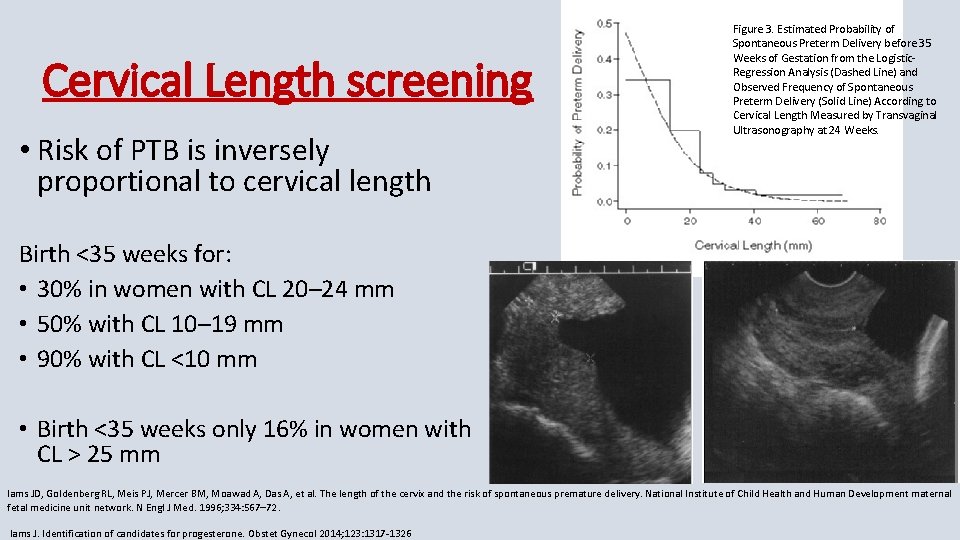
Cervical Length screening • Risk of PTB is inversely proportional to cervical length Figure 3. Estimated Probability of Spontaneous Preterm Delivery before 35 Weeks of Gestation from the Logistic. Regression Analysis (Dashed Line) and Observed Frequency of Spontaneous Preterm Delivery (Solid Line) According to Cervical Length Measured by Transvaginal Ultrasonography at 24 Weeks. Birth <35 weeks for: • 30% in women with CL 20– 24 mm • 50% with CL 10– 19 mm • 90% with CL <10 mm • Birth <35 weeks only 16% in women with CL > 25 mm Iams JD, Goldenberg RL, Meis PJ, Mercer BM, Moawad A, Das A, et al. The length of the cervix and the risk of spontaneous premature delivery. National Institute of Child Health and Human Development maternal fetal medicine unit network. N Engl J Med. 1996; 334: 567– 72. Iams J. Identification of candidates for progesterone. Obstet Gynecol 2014; 123: 1317 -1326
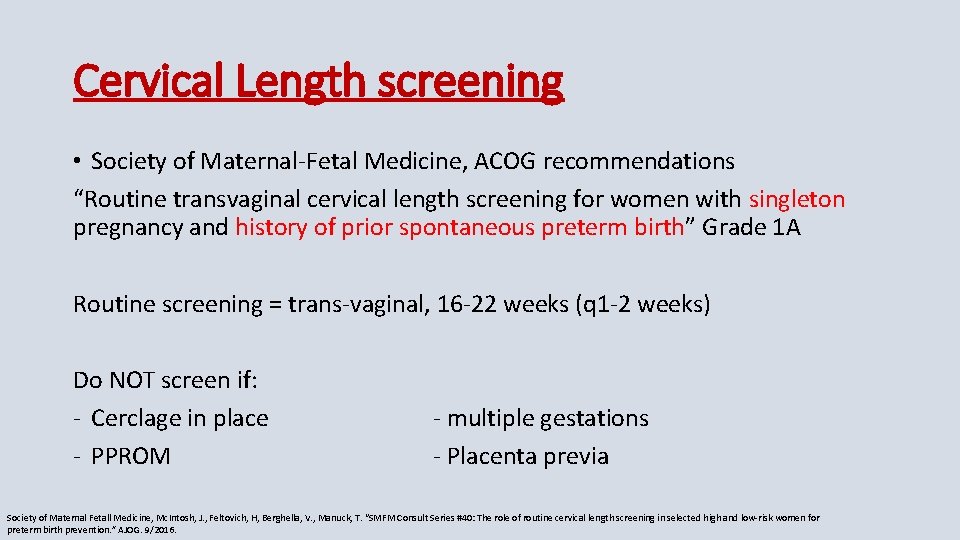
Cervical Length screening • Society of Maternal-Fetal Medicine, ACOG recommendations “Routine transvaginal cervical length screening for women with singleton pregnancy and history of prior spontaneous preterm birth” Grade 1 A Routine screening = trans-vaginal, 16 -22 weeks (q 1 -2 weeks) Do NOT screen if: - Cerclage in place - PPROM - multiple gestations - Placenta previa Society of Maternal Fetall Medicine, Mc. Intosh, J. , Feltovich, H, Berghella, V. , Manuck, T. “SMFM Consult Series #40: The role of routine cervical length screening in selected high and low-risk women for preterm birth prevention. ” AJOG. 9/2016.
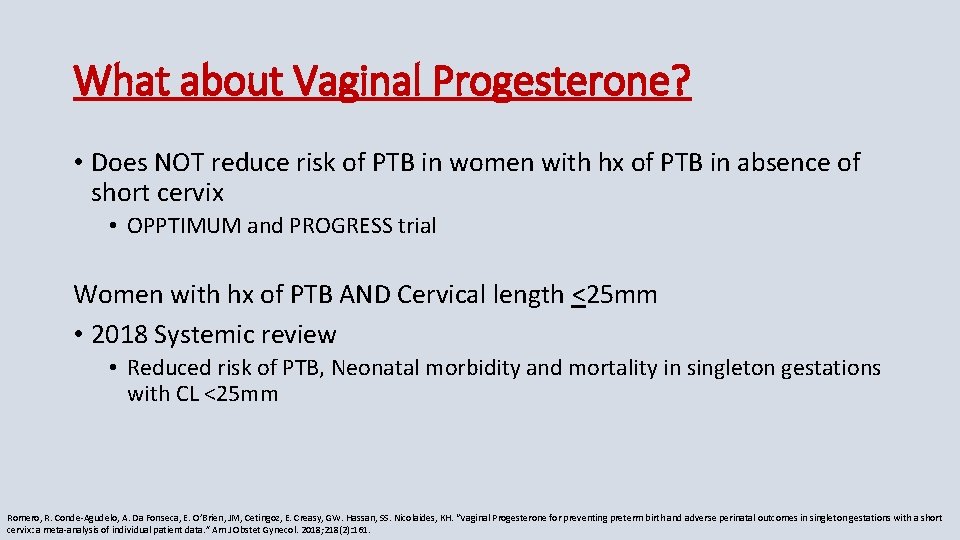
What about Vaginal Progesterone? • Does NOT reduce risk of PTB in women with hx of PTB in absence of short cervix • OPPTIMUM and PROGRESS trial Women with hx of PTB AND Cervical length <25 mm • 2018 Systemic review • Reduced risk of PTB, Neonatal morbidity and mortality in singleton gestations with CL <25 mm Romero, R. Conde-Agudelo, A. Da Fonseca, E. O’Brien, JM, Cetingoz, E. Creasy, GW. Hassan, SS. Nicolaides, KH. “Vaginal Progesterone for preventing preterm birth and adverse perinatal outcomes in singleton gestations with a short cervix: a meta-analysis of individual patient data. ” Am J Obstet Gynecol. 2018; 218(2): 161.
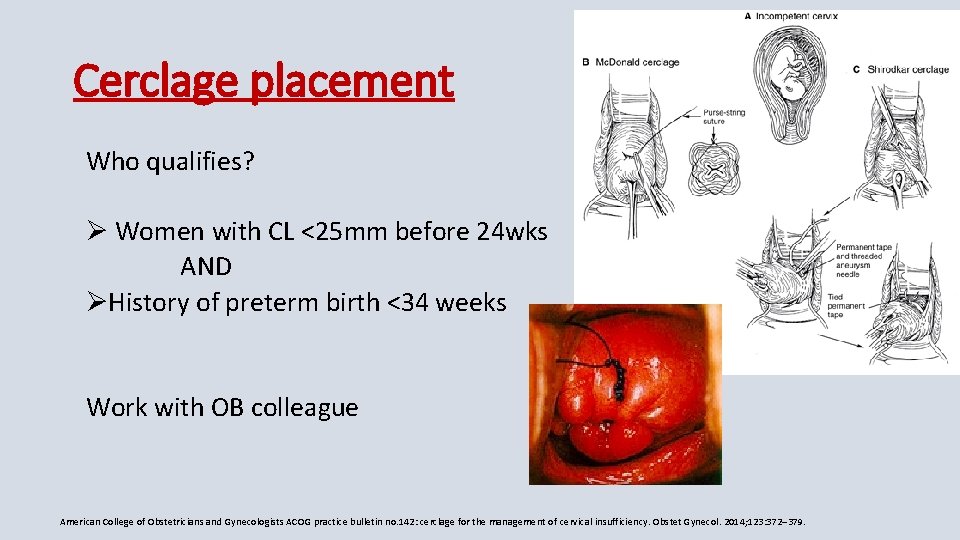
Cerclage placement Who qualifies? Ø Women with CL <25 mm before 24 wks AND ØHistory of preterm birth <34 weeks Work with OB colleague American College of Obstetricians and Gynecologists ACOG practice bulletin no. 142: cerclage for the management of cervical insufficiency. Obstet Gynecol. 2014; 123: 372– 379.
Out Patient Management Cases!
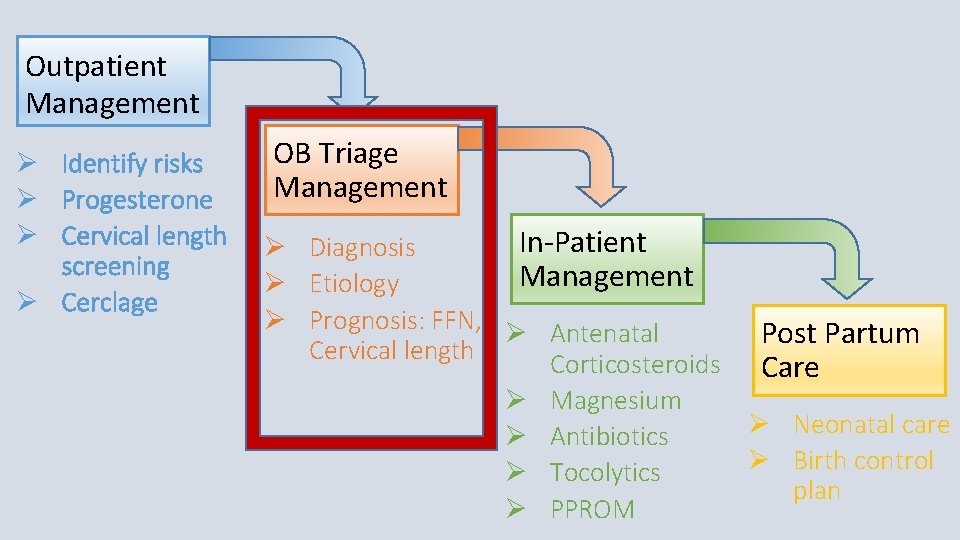
Outpatient Management Ø Identify risks Ø Progesterone Ø Cervical length screening Ø Cerclage OB Triage Management In-Patient Ø Diagnosis Management Ø Etiology Ø Prognosis: FFN, Ø Antenatal Cervical length Corticosteroids Ø Ø Magnesium Antibiotics Tocolytics PPROM Post Partum Care Ø Neonatal care Ø Birth control plan

OB Triage Management It’s your first shift as a 2 nd year Night Float on MCH. You’re senior is delivering their continuity in another room. You get a page from triage: “ 36 yo G 1 at 34 wks contracting, she looks uncomfortable…”
OB Triage Management ØDon’t panic ØAssess the patient as soon as you can ØInvolve your Attending/Senior Resident early ØConsider the following 5 key questions…
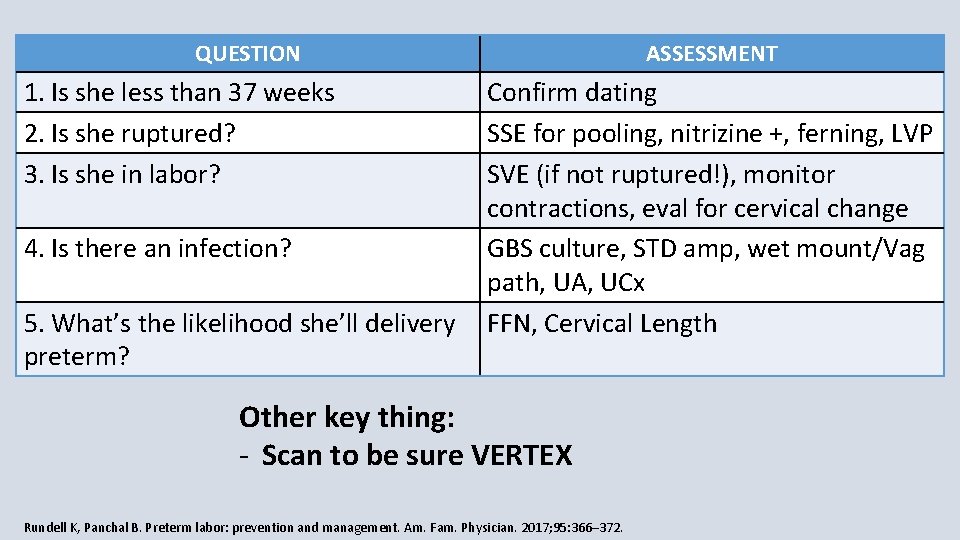
QUESTION 1. Is she less than 37 weeks 2. Is she ruptured? 3. Is she in labor? ASSESSMENT Confirm dating SSE for pooling, nitrizine +, ferning, LVP SVE (if not ruptured!), monitor contractions, eval for cervical change 4. Is there an infection? GBS culture, STD amp, wet mount/Vag path, UA, UCx 5. What’s the likelihood she’ll delivery FFN, Cervical Length preterm? Other key thing: - Scan to be sure VERTEX Rundell K, Panchal B. Preterm labor: prevention and management. Am. Fam. Physician. 2017; 95: 366– 372.
OB Triage Management What is the likelihood she’ll delivery preterm? • Fetal Fibronectin - Negative predictive value 99% for delivery within 14 days - Positive predictive value 13 -30% for delivery in 7 -10 days - Can only be done if NOTHING in vagina in past 24 hrs - False positives with amniotic fluid, blood, vaginal infection - Collect FIRST on your speculum exam
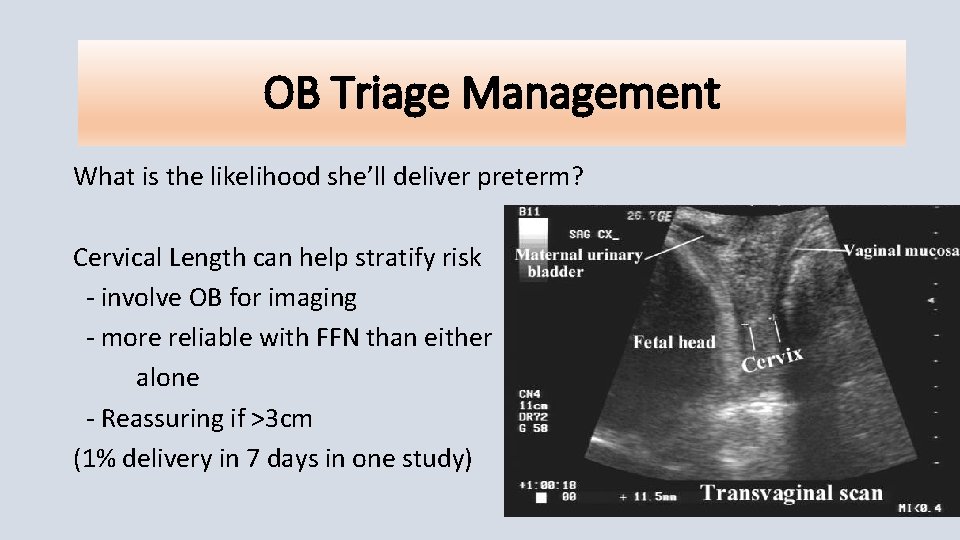
OB Triage Management What is the likelihood she’ll deliver preterm? Cervical Length can help stratify risk - involve OB for imaging - more reliable with FFN than either alone - Reassuring if >3 cm (1% delivery in 7 days in one study)

OB Triage Management 36 yo G 1 at 34 wks contracting, she looks uncomfortable… You confirm her dating, she’s 34 w 1 d SSE, negative for SROM FFN collected and sent UA shows +nitrites, +LE, ketones Toco shows contractions q 3 -5 min, reactive NST 11: 55 PM -- SVE 1 cm/50%/-2 QUESTIONS 1. Is she less than 37 weeks? 2. Is she ruptured? 3. Is she in labor? 4. Is there an infection? 5. What’s the likelihood she’ll delivery preterm?
OB Triage Management You give her 1 L bolus of fluids Premature onset of Contractions FFN comes back Negative without cervical change, “POOC” - only 18% delivery before 37 wks 0230 AM: SSE 1/50%/-2 - only 3% delivery within 2 weeks Her contractions are now q 10 min, mild of triage visit Now what? Send her home, treat for UTI ACOG Practice Bulletin 171, October 2016. Management of Preterm Labor
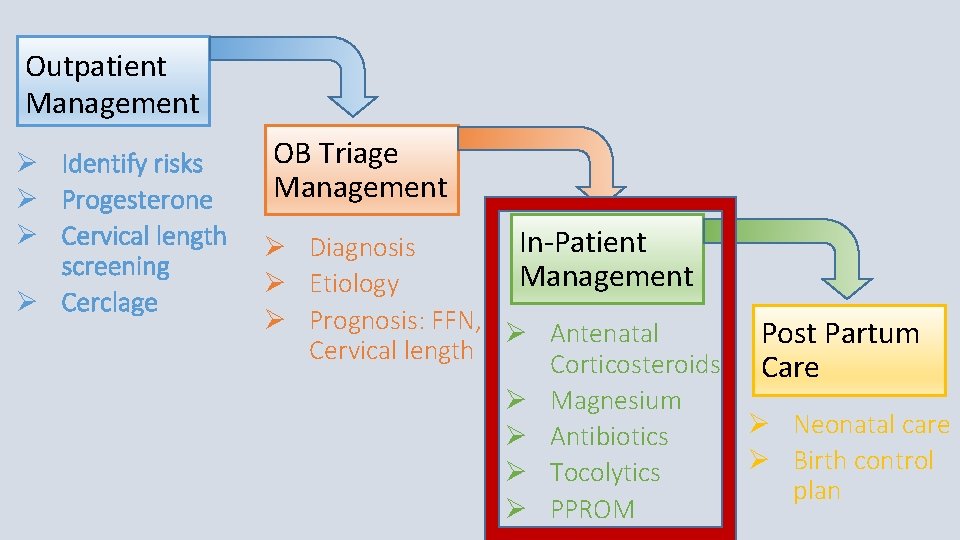
Outpatient Management Ø Identify risks Ø Progesterone Ø Cervical length screening Ø Cerclage OB Triage Management In-Patient Ø Diagnosis Management Ø Etiology Ø Prognosis: FFN, Ø Antenatal Cervical length Corticosteroids Ø Ø Magnesium Antibiotics Tocolytics PPROM Post Partum Care Ø Neonatal care Ø Birth control plan
In-Patient Management It’s your second shift as a 2 nd year Night Float on MCH. You’ve sent your senior to go nap because you’re feeling confident. Page from triage: 22 yo G 5 P 1304 at 31 weeks is presenting with painful contractions…
In-Patient Management • You don’t panic • You alert your attending • You go see the patient • Evaluation: • • SSE neg pooling, no ferning, neg nitrizine; cervix looks slightly open GBS, FFN, STD Amp collected; UDS, Ucx and UA sent, UDATR sent Toco with q 2 -3 min contraction, reactive NST Vertex on US
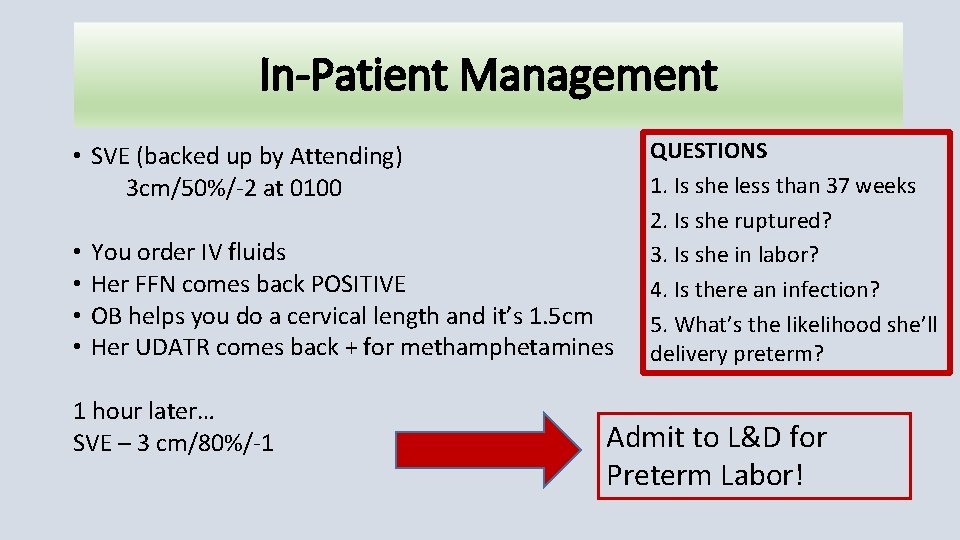
In-Patient Management • SVE (backed up by Attending) 3 cm/50%/-2 at 0100 • • You order IV fluids Her FFN comes back POSITIVE OB helps you do a cervical length and it’s 1. 5 cm Her UDATR comes back + for methamphetamines 1 hour later… SVE – 3 cm/80%/-1 QUESTIONS 1. Is she less than 37 weeks 2. Is she ruptured? 3. Is she in labor? 4. Is there an infection? 5. What’s the likelihood she’ll delivery preterm? Admit to L&D for Preterm Labor!
In-Patient Management QUESTIONS TO CONSIDER 1. Does she need steroids? 2. Does she need IV Magnesium? 3. Does she need PCN? 4. Does she need tocolycis? 5. Does she need antibiotics for PPROM?
In-Patient Management • 30% of preterm labor resolves spontaneously • 50% of women admitted for PTL actually birth at term Interventions must benefit the baby - must be viable - prolonging pregnancy is better than immediate delivery
Antenatal Corticosteroids • Improves neonatal outcomes • Decreases: • • Mortality Incidence and severity of RDS Intraventricular hemorrhage Necrotizing enterocolitis • Single course 24. 0 -33. 6 wks at risk of delivery within 7 days • Betamethasone 12 mg IM q 24 hrs x 2 doses • Dexamethasone 6 mg IM q 12 hr x 4 doses Roberts D, Brown J, Medley N, Dalziel SR. Antenatal corticosteroids for accelerating fetal lung maturation for women at risk of preterm birth. Cochrane Database of Systematic Reviews 2017, Issue 3. Art. No. : CD 004454. DOI: 10. 1002/14651858. CD 004454. pub 3.
Rescue dose Steroids • Studies have shown reduction in Respiratory Distress Syndrome ACOG recommends: - Single repeat course of corticosteroids - < 34 0/7 weeks - At risk of delivery within 7 days - Prior antenatal corticosteroid course was >14 days ago In PPROM, rescue dose steroids is controversial Garite TJ, Kurtzman J, Maurel K, Clark R. Impact of a ‘rescue course’ of antenatal corticosteroids: a multi-center randomized placebo-controlled trial. Obstetrix Collaborative Research Network [published erratum appears in Am J Obstet Gynecol 2009; 201: 428]. Am J Obstet Gynecol 2009; 200: 248. e 1– 9. (Level I)
Late Preterm Steroids • MFMU Network Antenatal Late Preterm Steroids trial • Double-blind, placebo controlled RCT • Excluded – multiple gestations, Pre-gestational diabetes, previous steroids, chorio • Tocolysis was not used Primary outcome: decreased need for respiratory support However – increased hypoglycemia in neonate ACOG Committee Opinion from 2017 recommends - Single course of Betamethasone for women 34 0/7 – 36 6/7 at risk of preterm birth within 7 days Gyamfi-Bannerman C, Thom EA, Blackwell SC, Tita AT, Reddy UM, Saade GR, et al. Antenatal betamethasone for women at risk for late preterm delivery. NICHD Maternal-Fetal Medicine Units Network. N Engl J Med 2016; 374: 1311– 20. ACOG Committee Opinion, Number 713. August 2017. Antenatal Corticosteroid Therapy for Fetal Maturation.
Magnesium Cochrane Review Ø Neuroprotection for delivery < 32 weeks Ø Outcomes - Reduction in cerebral palsy, RR 0. 68 • No evidence for any specific regimen • UNM 4 g loading dose, then 1 g/hr infusion • No evidence that IV Mg prolongs pregnancy Shepherd E, Salam RA, Middleton P, Makrides M, Mc. Intyre S, Badawi N, Crowther CA. Antenatal and intrapartum interventions for preventing cerebral palsy: an overview of Cochrane systematic reviews. Cochrane Database of Systematic Reviews 2017, Issue 8. Art. No. : CD 012077. DOI: 10. 1002/14651858. CD 012077. pub 2. Costantine MM et al. Effects of antenatal exposure to magnesium sulfate on neuroprotection and mortality in preterm infants. NICHD MFM Units Network Obstet Gynecol 2009; 114: 354 -364. Magnesium sulfate before anticipated preterm birth for neuroprotection. ACOG Committee Opinon 455. ACOG and SMFM.
Tocolytics • Used to allow time to give steroids and magnesium, arrange transport if needed Contraindications • • • Pre-viability IUFD Lethal anomaly Non reassuring fetal status Chorioamnionitis • Pre-eclampsia with severe features, eclampsia • Hemodynamic instability of mother • PPROM • Maternal contraindications
Tocolytics • Reduces birth within 48 hrs, but does not improve neonatal outcomes • No evidence of maintenance therapy outside 48 -72 hr window while inpatient and many risks • Magnesium should not be used as a tocolytic • When using for neuroprotection, be aware of interactions with tocolytics
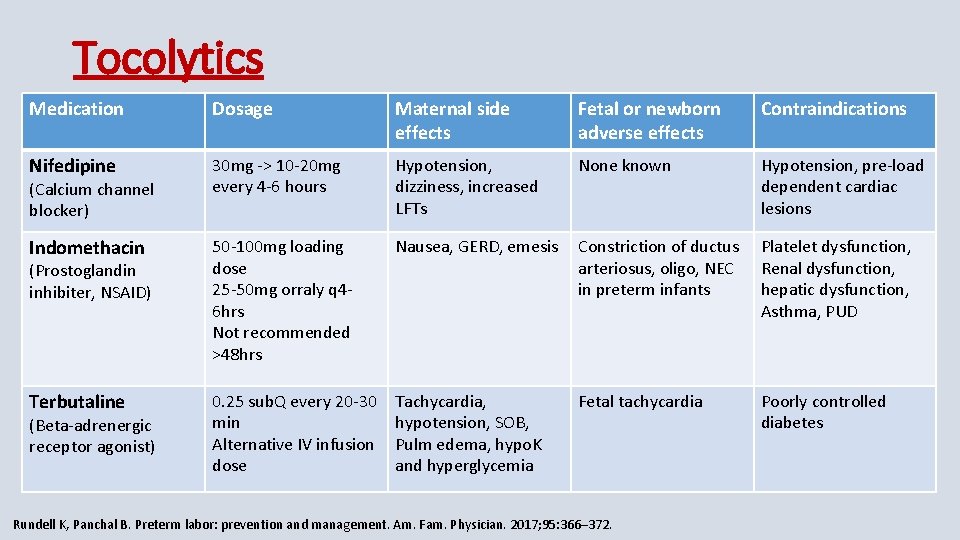
Tocolytics Medication Dosage Maternal side effects Fetal or newborn adverse effects Contraindications Nifedipine 30 mg -> 10 -20 mg every 4 -6 hours Hypotension, dizziness, increased LFTs None known Hypotension, pre-load dependent cardiac lesions Indomethacin 50 -100 mg loading dose 25 -50 mg orraly q 46 hrs Not recommended >48 hrs Nausea, GERD, emesis Constriction of ductus Platelet dysfunction, arteriosus, oligo, NEC Renal dysfunction, in preterm infants hepatic dysfunction, Asthma, PUD Terbutaline 0. 25 sub. Q every 20 -30 min Alternative IV infusion dose Tachycardia, hypotension, SOB, Pulm edema, hypo. K and hyperglycemia Fetal tachycardia (Calcium channel blocker) (Prostoglandin inhibiter, NSAID) (Beta-adrenergic receptor agonist) Rundell K, Panchal B. Preterm labor: prevention and management. Am. Fam. Physician. 2017; 95: 366– 372. Poorly controlled diabetes
Antibiotics • Despite bacterial infections presumed cause for majority of preterm births >32 weeks… • There is no evidence antibiotic therapy prolongs pregnancy or reduces neonatal morbidity or mortality • And there may be some evidence of harm King et al. Prophylactic antibiotics for inhibiting preterm labor with intact membranes. Cochrane Database 2002, Issue 4.
Antibiotics • Meant for prevention of GBS sepsis in newborn only • CDC Recommendations • Penicillin G: 5 million units IV, then 2/5 million units IV q 4 hours until delivery • “Adequate” treatment is >4 hrs/2 doses • Low risk PCN allergy: Cefazolin 2 g IV, then 1 g. IV q 8 hours until delivery • High risk PCN allergy, GBS susceptibilities known: Clindamycin 900 mg IV q 8 hours until delivery • High risk PCN allergy, GBS susceptibilities unknown: Vancomycin 1 g IV q 12 hours until delivery
In-Patient Management • 22 yo G 5 P 1304 at 31. 0 wks • Admitted for cervical change from 3/50/-2 3/80/-1 • Pregnancy has been otherwise complicated by amphetamine use, hx of UTI in early pregnancy without confirmed TOC; no allergies to medications • What interventions are indicated? • • • Steroids! IV Mg for neuroprotection PCN for GBS prophylaxis Consider tocolysis to get her through steroid window NICU consult
In-Patient Management • Your excellent Sub-I finds a scanned report of a 1 st trimester US that shows she’s actually 33 w 4 d. • Does this change your plans? • Does not need IV Magnesium
In-Patient Management Meanwhile in triage… A 38 yo G 4 P 2012 at 29 w 3 d by 8 wk US arrives due to a cat bite. While in triage, the RN hears a “oh F***!” and runs into the room. The patient is standing over a puddle of clear fluid. They page you STAT…
In-Patient Management • What do you do? • • • SSE -- +pooling/nitrizine/+ferning You collect GBS, STD Amp swab, UA, UDATR FFN NOT INDICATED Cervix appears closed LVP 1. 5 cm, vertex Fetal heart tracing without decels, mod variability Admit to L&D for Preterm Labor!
PPROM Management • Preterm Pre-labor (Premature) Rupture of Membranes • Cause of ~25% of Preterm births • At least 50% of patients with PPROM birth within 1 week How does management differ? ACOG Practice Bulletin. Prelabor Rutpure of Membranes. Number 188, January 2018.
PPROM Management • Avoid SVE due to increased risk of infection • Confirm vertex and collect GBS swab (culture) • Management depends on gestational age • Late Preterm (34 0/7 – 36 6/7) -> Proceed to delivery, GBS prophylaxis as indicated • Preterm (24 0/7 – 33 6/7) -> EXPECTANT management • Evaluate for infection, abruption, fetal distress or labor
PPROM Management • EXPECTANT Management 24 0/7 – 33 6/7 weeks • Latency Antibiotics • Single-course corticosteroids • GBS prophylaxis as indicated • Magnesium IV for neuroprotection if <32 0/7 weeks Latency antibiotics Ampicillin 2 g IV q 6 hr and azithromycin 500 mg IV q 24 hrs x 48 hrs Then amoxicillin 250 mg PO q 8 hrs and erythromycin 333 mg PO q 8 hrs x 5 days
In-Patient Management • The 33. 4 wk who you admitted earlier is suddenly feeling a lot of pressure… • SVE is 9. 5 cm/100%/+1 • Fetal tracing still ok Now what? !!
Delivery Management of Preterm Birth • At UNM, < 36 weeks delivery in OR (for NICU team access) • No vacuums <34 weeks • Delayed cord clamping! 1 -2 minutes • • Less need for transfusion Less hypotension Less anemia Less IVH • Milking cord is an option if NICU intervention critical Timing of Umbilical Cord Clamping. ACOG Practice Bulletin 543, December 2012.
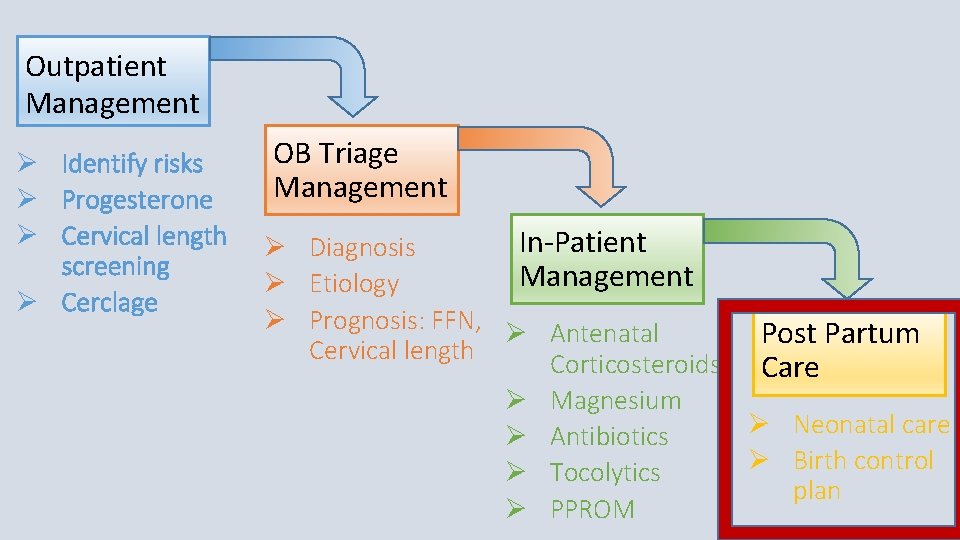
Outpatient Management Ø Identify risks Ø Progesterone Ø Cervical length screening Ø Cerclage OB Triage Management In-Patient Ø Diagnosis Management Ø Etiology Ø Prognosis: FFN, Ø Antenatal Cervical length Corticosteroids Ø Ø Magnesium Antibiotics Tocolytics PPROM Post Partum Care Ø Neonatal care Ø Birth control plan
Post Partum Care • Neonatal care • < 36 weeks admit to ICN 3 vs NICU • >36 weeks to MBU • Preterm infants (even late preterm) struggle with: • • Temperature regulation Hypoglycemia Breast feeding (coordination of suckling, energy) Hyperbilirubinemia (remember, will moderate risk on bili tool!) • Consider early Lactation involvement, breast pump at bedside, supplementation earlier
Post Partum Care • Education of family and mother regarding risk of recurrence • Discussion of avoiding short interval pregnancy • Woman may be at increased risk of Post Partum depression Vigod S, Villegas L, Dennis C-L, Ross L. Prevalence and risk factors for postpartum depression among women with preterm and low-birth-weight infants: a systematic review. BJOG 2010; 117: 540– 550.

Any Questions?
REFERENCES 1. Vigod S, Villegas L, Dennis C-L, Ross L. Prevalence and risk factors for postpartum depression among women with preterm and low-birth-weight infants: a systematic review. BJOG 2010; 117: 540– 550. 2. Shapiro-Mendoza CK, Barfield WD, Henderson Z, et al. CDC Grand Rounds: Public Health Strategies to Prevent Preterm Birth. MMWR Morb Mortal Wkly Rep 2016; 65: 826– 830. DOI: http: //dx. doi. org/10. 15585/mmwr. mm 6532 a 4 3. Scott D. Grosse, Norman J. Waitzman, Ninee Yang, Karon Abe, Wanda D. Barfield. Employer-Sponsored Plan Expenditures for Infants Born Preterm. Pediatrics, 2017; e 20171078 DOI: 10. 1542/peds. 2017 -1078 4. Institute of Medicine (US) Committee on Understanding Premature Birth and Assuring Healthy Outcomes; Behrman RE, Butler AS, editors. Preterm Birth: Causes, Consequences, and Prevention. Washington (DC): National Academies Press (US); 2007. 10, Mortality and Acute Complications in Preterm Infants. Available from: https: //www. ncbi. nlm. nih. gov/books/NBK 11385/ 5. Timing of Umbilical Cord Clamping. ACOG Practice Bulletin number 543, December 2012 6. Prelabor Rupture of Membranes. ACOG Practice Bulletin number 188, January 2018. 7. King et al. Prophylactic antibiotics for inhibiting preterm labor with intact membranes. Cochrane Database 2002, Issue 4 8. Rundell K, Panchal B. Preterm labor: prevention and management. Am. Fam. Physician. 2017; 95: 366– 372 9. Shepherd E, Salam RA, Middleton P, Makrides M, Mc. Intyre S, Badawi N, Crowther CA. Antenatal and intrapartum interventions for preventing cerebral palsy: an overview of Cochrane systematic reviews. Cochrane Database of Systematic Reviews 2017, Issue 8. Art. No. : CD 012077. DOI: 10. 1002/14651858. CD 012077. pub 2. 10. Costantine MM et al. Effects of antenatal exposure to magnesium sulfate on neuroprotection and mortality in preterm infants. NICHD MFM Units Network Obstet Gynecol 2009; 114: 354 -364. 11. Magnesium sulfate before anticipated preterm birth for neuroprotection. ACOG Committee Opinon 455. ACOG and SMFM. 12. Gyamfi-Bannerman C, Thom EA, Blackwell SC, Tita AT, Reddy UM, Saade GR, et al. Antenatal betamethasone for women at risk for late preterm delivery. NICHD Maternal-Fetal Medicine Units Network. N Engl J Med 2016; 374: 1311– 20. 13. Antenatal Corticosteroid Therapy for Fetal Maturation. ACOG Committee Opinion, Number 713. August 2017. 14. Garite TJ, Kurtzman J, Maurel K, Clark R. Impact of a ‘rescue course’ of antenatal corticosteroids: a multi-center randomized placebo-controlled trial. Obstetrix Collaborative Research Network [published erratum appears in Am J Obstet Gynecol 2009; 201: 428]. Am J Obstet Gynecol 2009; 200: 248. e 1– 9. (Level I) 15. Roberts D, Brown J, Medley N, Dalziel SR. Antenatal corticosteroids for accelerating fetal lung maturation for women at risk of preterm birth. Cochrane Database of Systematic Reviews 2017, Issue 3. Art. No. : CD 004454. DOI: 10. 1002/14651858. CD 004454. pub 3. 16. Management of Preterm Labor. ACOG Practice Bulletin 171, October 2016. 17. American College of Obstetricians and Gynecologists ACOG practice bulletin no. 142: cerclage for the management of cervical insufficiency. Obstet Gynecol. 2014; 123: 372– 379. 18. Romero, R. Conde-Agudelo, A. Da Fonseca, E. O’Brien, JM, Cetingoz, E. Creasy, GW. Hassan, SS. Nicolaides, KH. “Vaginal Progesterone for preventing preterm birth and adverse perinatal outcomes in singleton gestations with short cervix: a meta-analysis of individual patient data. ” Am J Obstet Gynecol. 2018; 218(2): 161. 19. Martin JA, Osterman MJK. Describing the increase in preterm births in the United States, 2014– 2016. NCHS Data Brief, no 312. Hyattsville, MD: National Center for Health Statistics. 2018. 20. Source: Preterm birth rates are from the National Center for Health Statistics, 2017 final natality data. Grades assigned by March of Dimes Perinatal Data Center 21. Society of Maternal Fetall Medicine, Mc. Intosh, J. , Feltovich, H, Berghella, V. , Manuck, T. “SMFM Consult Series #40: The role of routine cervical length screening in selected high and low-risk women for preterm birth prevention. ” AJOG. 9/2016. 22. Iams JD, Goldenberg RL, Meis PJ, Mercer BM, Moawad A, Das A, et al. The length of the cervix and the risk of spontaneous premature delivery. National Institute of Child Health and Human Development maternal fetal medicine unit network. N Engl J Med. 1996; 334: 567– 72. 23. Iams J. Identification of candidates for progesterone. Obstet Gynecol 2014; 123: 1317 -1326
- Slides: 63