
Preterite Imperfect and Subjunctive Chris Overview This slide
Preterite, Imperfect, and Subjunctive Chris
Overview This slide show explains the endings, uses, and the irregular verbs for both the preterite and the imperfect tenses. This slide show will also touch base on the basic endings and uses of the present subjunctive.
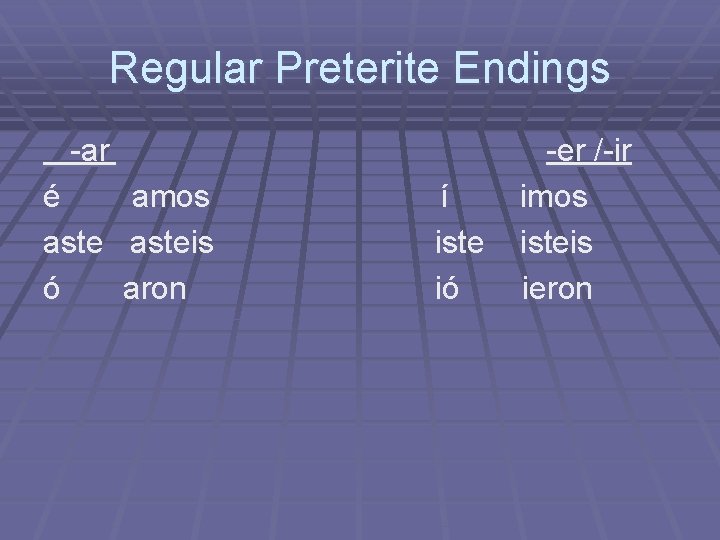
Regular Preterite Endings -ar é aste ó amos asteis aron í iste ió -er /-ir imos isteis ieron
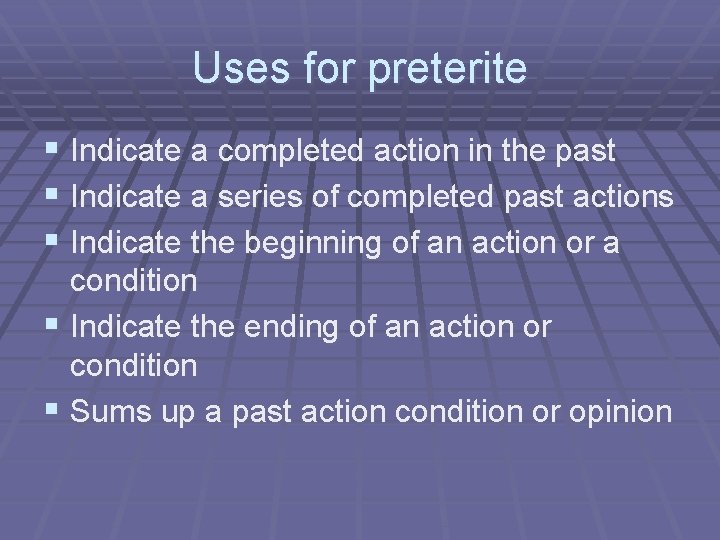
Uses for preterite § Indicate a completed action in the past § Indicate a series of completed past actions § Indicate the beginning of an action or a condition § Indicate the ending of an action or condition § Sums up a past action condition or opinion
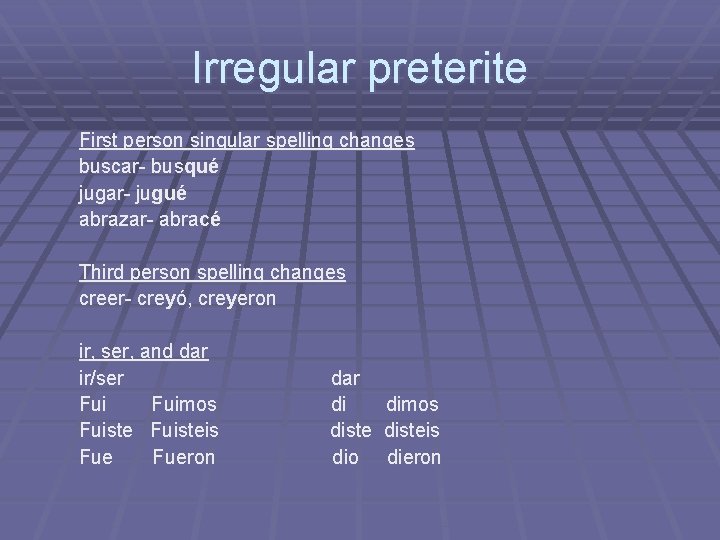
Irregular preterite First person singular spelling changes buscar- busqué jugar- jugué abrazar- abracé Third person spelling changes creer- creyó, creyeron ir, ser, and dar ir/ser Fuimos Fuisteis Fueron dar di diste dio dimos disteis dieron
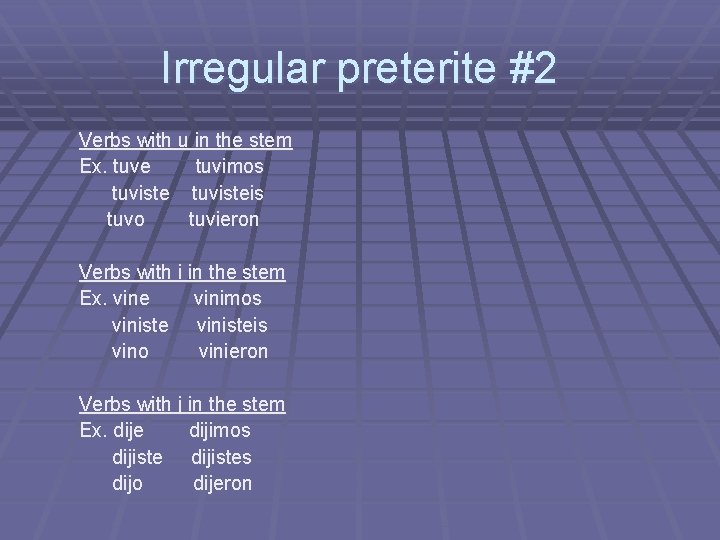
Irregular preterite #2 Verbs with u in the stem Ex. tuve tuvimos tuvisteis tuvo tuvieron Verbs with i in the stem Ex. vine vinimos vinisteis vino vinieron Verbs with j in the stem Ex. dije dijimos dijistes dijo dijeron
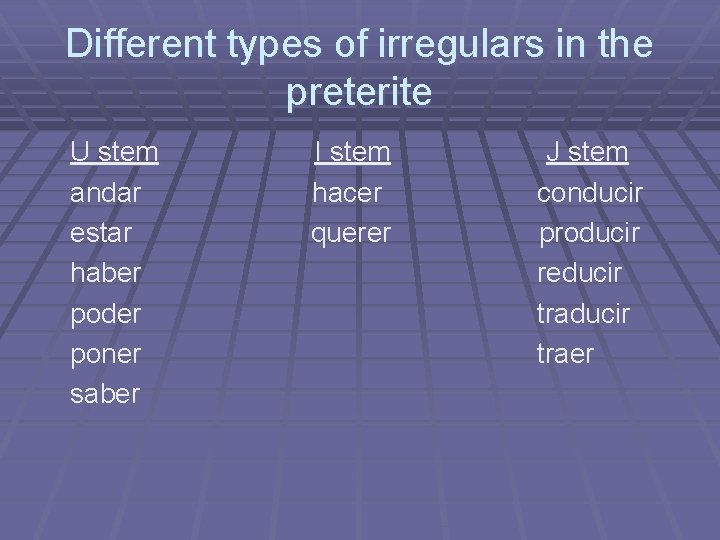
Different types of irregulars in the preterite U stem andar estar haber poder poner saber I stem hacer querer J stem conducir producir reducir traer
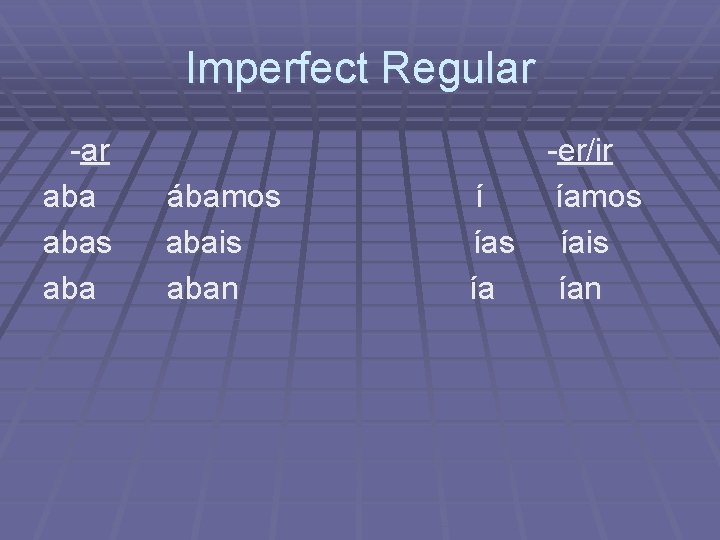
Imperfect Regular -ar abas aba ábamos abais aban -er/ir í íamos íais ía ían
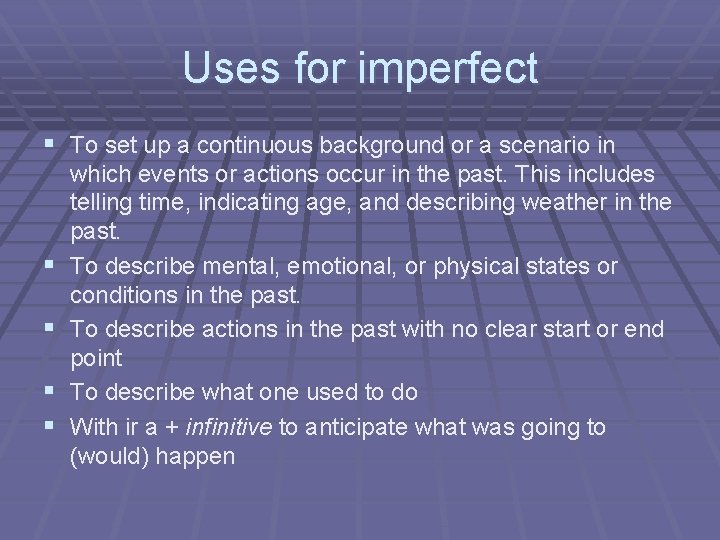
Uses for imperfect § To set up a continuous background or a scenario in § § which events or actions occur in the past. This includes telling time, indicating age, and describing weather in the past. To describe mental, emotional, or physical states or conditions in the past. To describe actions in the past with no clear start or end point To describe what one used to do With ir a + infinitive to anticipate what was going to (would) happen
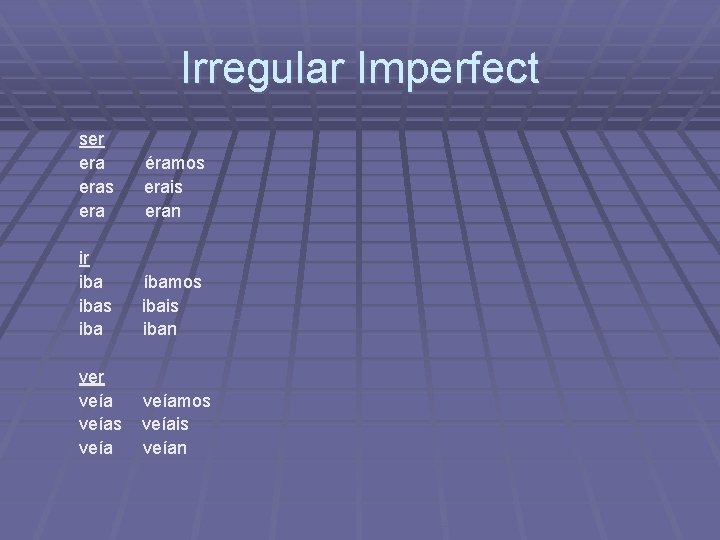
Irregular Imperfect ser eras era éramos erais eran ir ibas iba íbamos ibais iban ver veías veíamos veíais veían
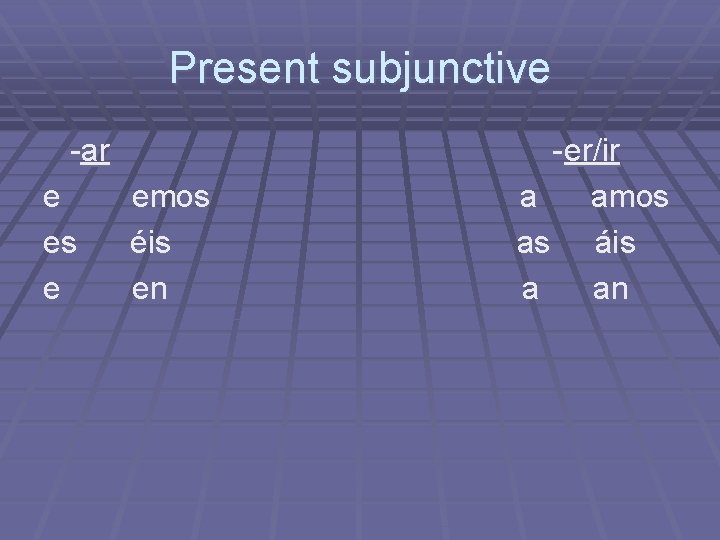
Present subjunctive -ar e es e emos éis en - er/ir a amos as áis a an
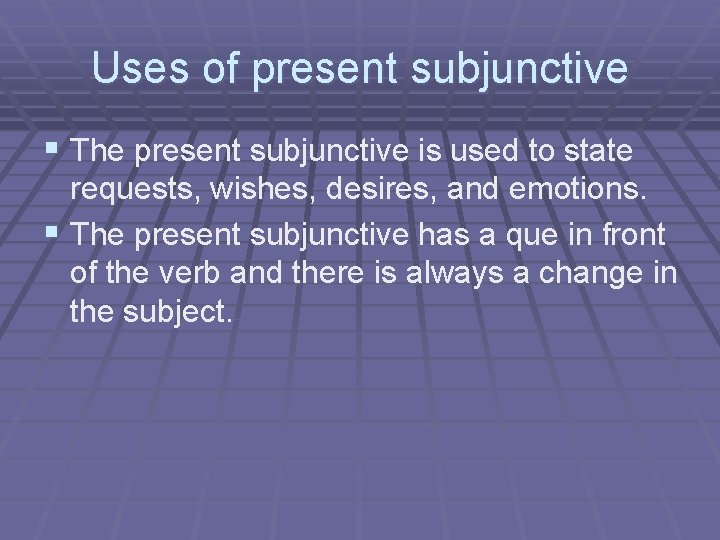
Uses of present subjunctive § The present subjunctive is used to state requests, wishes, desires, and emotions. § The present subjunctive has a que in front of the verb and there is always a change in the subject.
- Slides: 12