
Pressures inside outside the lungs Atmospheric Pressure 760
- Slides: 15
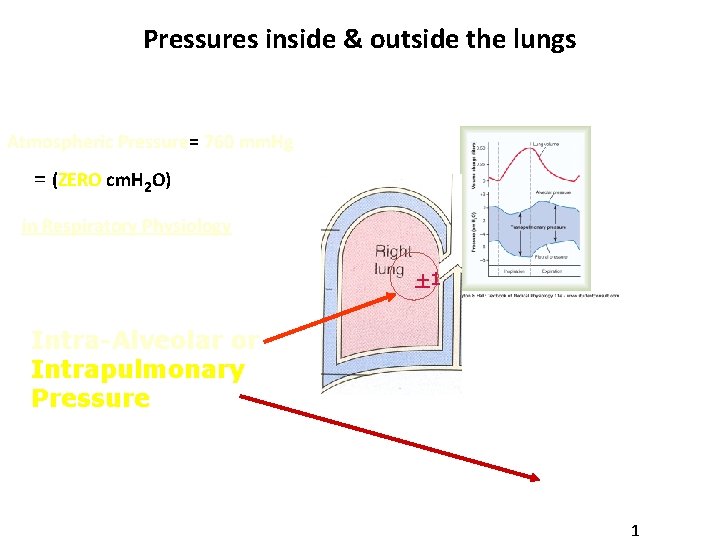
Pressures inside & outside the lungs Atmospheric Pressure= 760 mm. Hg = (ZERO cm. H 2 O) in Respiratory Physiology +1 Intra-Alveolar or Intrapulmonary Pressure 1
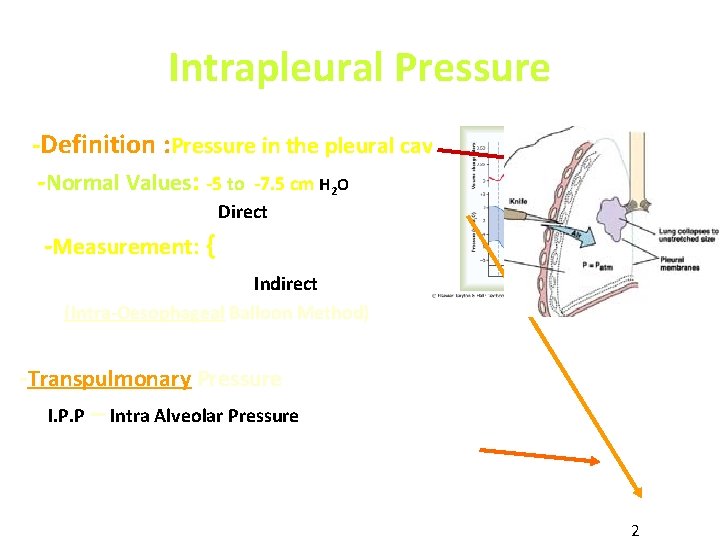
Intrapleural Pressure -Definition : Pressure in the pleural cavity -Normal Values: -5 to -7. 5 cm H 2 O Direct -Measurement: { Indirect (Intra-Oesophageal Balloon Method) -Transpulmonary Pressure I. P. P – Intra Alveolar Pressure 2
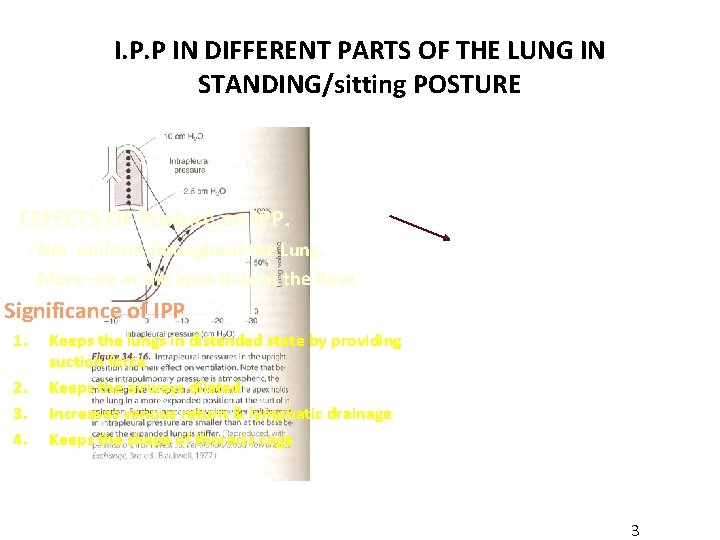
I. P. P IN DIFFERENT PARTS OF THE LUNG IN STANDING/sitting POSTURE EFFECTS OF Posture on IPP. - Not uniform throughout the Lung. - More –ve at the apex than at the Base Significance of IPP 1. 2. 3. 4. Keeps the lungs in distended state by providing suction force Keeps the airways dilated Increases venous return & lymphatic drainage Keeps the shape of thoracic cage 3
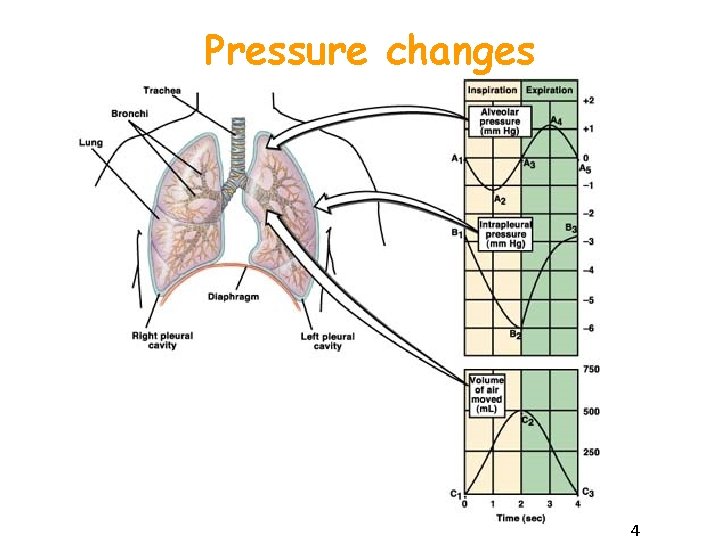
Pressure changes 4
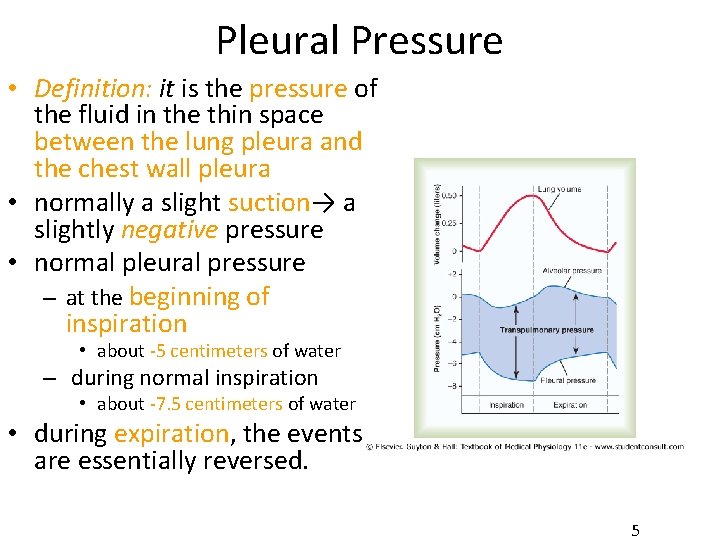
Pleural Pressure • Definition: it is the pressure of the fluid in the thin space between the lung pleura and the chest wall pleura • normally a slight suction→ a slightly negative pressure • normal pleural pressure – at the beginning of inspiration • about -5 centimeters of water – during normal inspiration • about -7. 5 centimeters of water • during expiration, the events are essentially reversed. 5
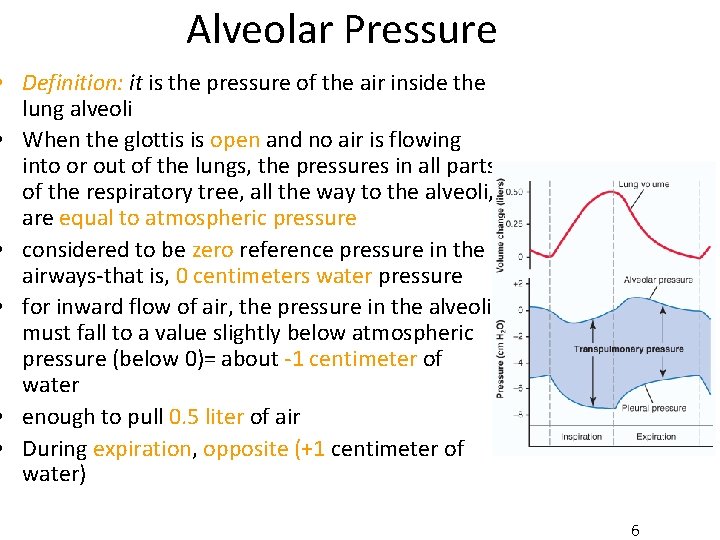
Alveolar Pressure • Definition: it is the pressure of the air inside the lung alveoli • When the glottis is open and no air is flowing into or out of the lungs, the pressures in all parts of the respiratory tree, all the way to the alveoli, are equal to atmospheric pressure • considered to be zero reference pressure in the airways-that is, 0 centimeters water pressure • for inward flow of air, the pressure in the alveoli must fall to a value slightly below atmospheric pressure (below 0)= about -1 centimeter of water • enough to pull 0. 5 liter of air • During expiration, opposite (+1 centimeter of water) 6
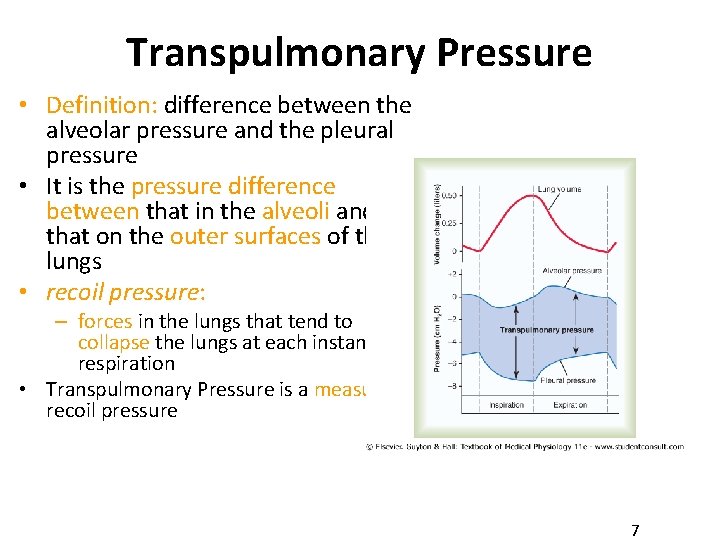
Transpulmonary Pressure • Definition: difference between the alveolar pressure and the pleural pressure • It is the pressure difference between that in the alveoli and that on the outer surfaces of the lungs • recoil pressure: – forces in the lungs that tend to collapse the lungs at each instant of respiration • Transpulmonary Pressure is a measure of recoil pressure 7
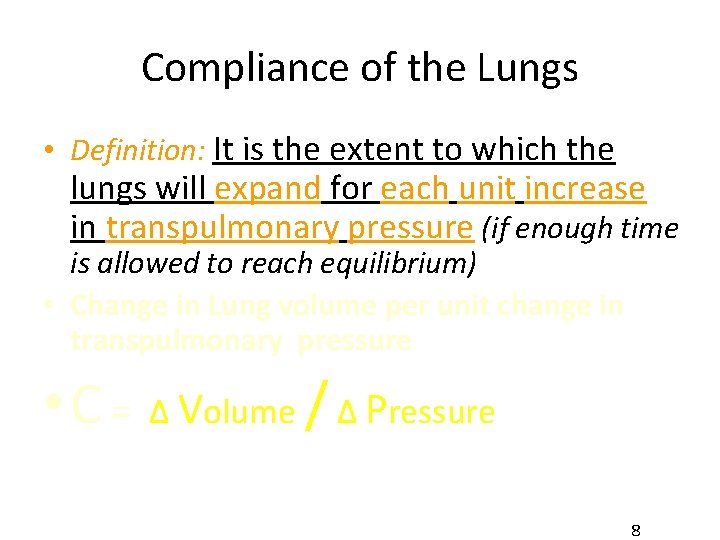
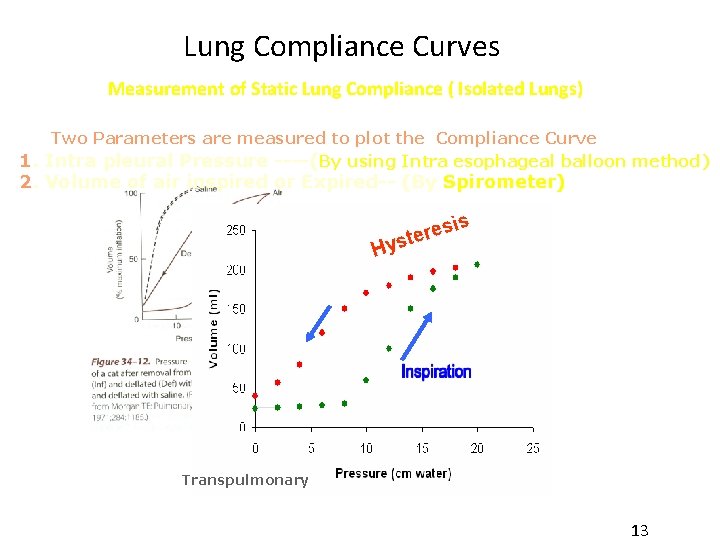
Compliance of the Lungs • Definition: It is the extent to which the lungs will expand for each unit increase in transpulmonary pressure (if enough time is allowed to reach equilibrium) • Change in Lung volume per unit change in transpulmonary pressure • C = Δ Volume / Δ Pressure 8
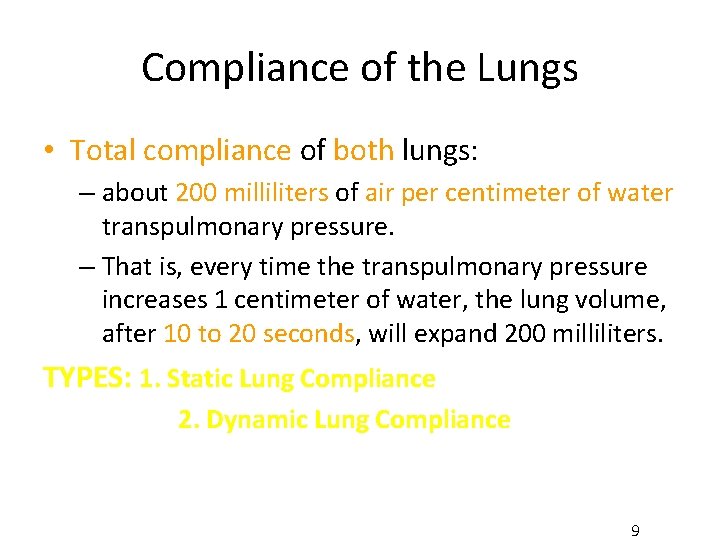
Compliance of the Lungs • Total compliance of both lungs: – about 200 milliliters of air per centimeter of water transpulmonary pressure. – That is, every time the transpulmonary pressure increases 1 centimeter of water, the lung volume, after 10 to 20 seconds, will expand 200 milliliters. TYPES: 1. Static Lung Compliance 2. Dynamic Lung Compliance 9
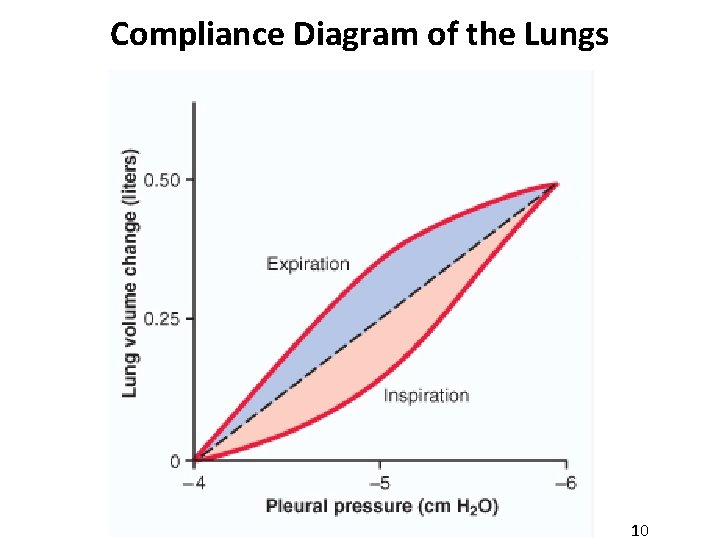
Compliance Diagram of the Lungs 10
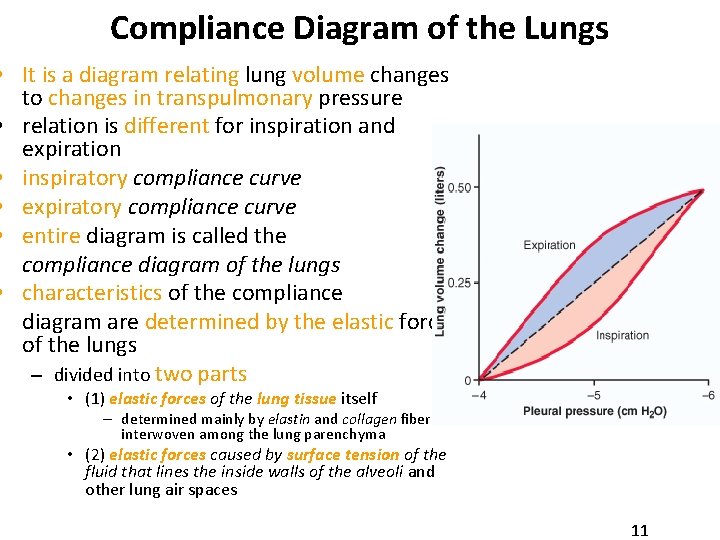
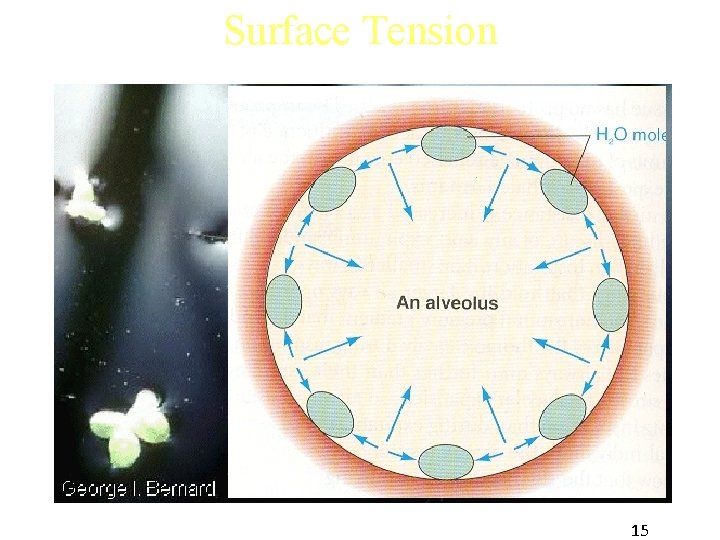
Compliance Diagram of the Lungs • It is a diagram relating lung volume changes to changes in transpulmonary pressure • relation is different for inspiration and expiration • inspiratory compliance curve • expiratory compliance curve • entire diagram is called the compliance diagram of the lungs • characteristics of the compliance diagram are determined by the elastic forces of the lungs – divided into two parts • (1) elastic forces of the lung tissue itself – determined mainly by elastin and collagen fibers interwoven among the lung parenchyma • (2) elastic forces caused by surface tension of the fluid that lines the inside walls of the alveoli and other lung air spaces 11
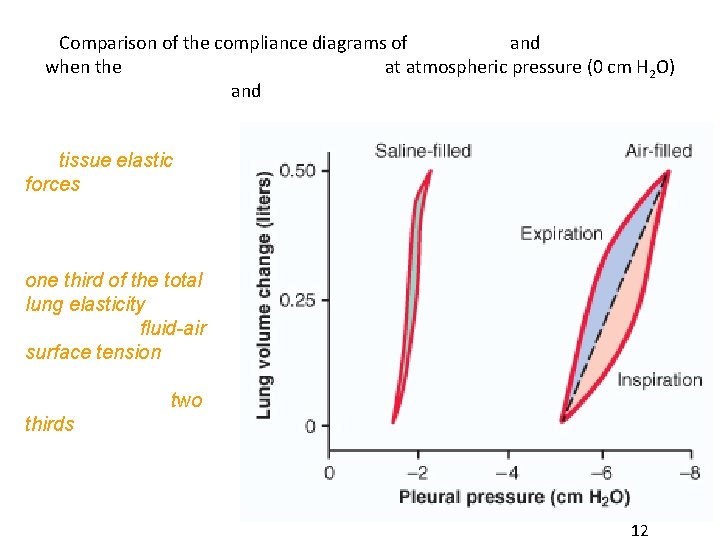
Comparison of the compliance diagrams of saline-filled and air-filled lungs when the alveolar pressure is maintained at atmospheric pressure (0 cm H 2 O) and pleural pressure is changed the tissue elastic forces tending to cause collapse of the air-filled lung represent only about one third of the total lung elasticity, whereas the fluid-air surface tension forces in the alveoli represent about two thirds 12
Lung Compliance Curves Measurement of Static Lung Compliance ( Isolated Lungs) Two Parameters are measured to plot the Compliance Curve 1. Intra pleural Pressure ----(By using Intra esophageal balloon method) 2. Volume of air inspired or Expired-- (By Spirometer) is es r e t ys H Transpulmonary 13
Roll of Surfactant in Compliance • Surfactant helps to decrease the fluid-air surface tension elastic forces of the lungs 14
Surface Tension 15