
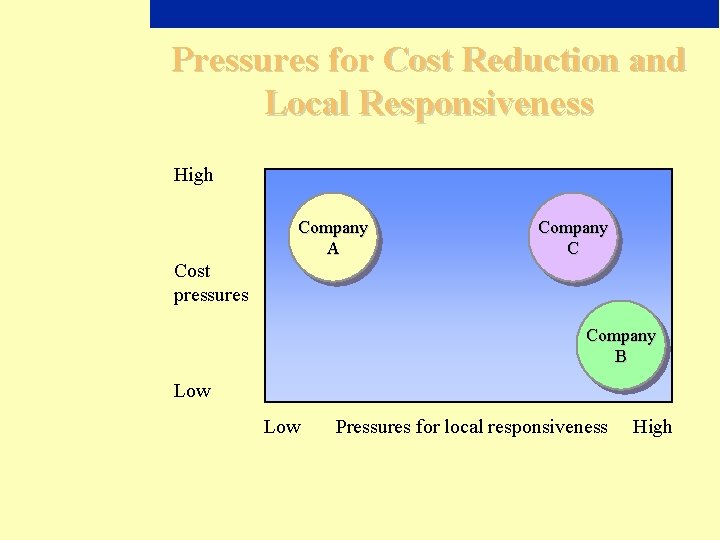
Pressures for Cost Reduction and Local Responsiveness High




- Slides: 21
Pressures for Cost Reduction and Local Responsiveness High Company A Company C Cost pressures Company B Low Pressures for local responsiveness High
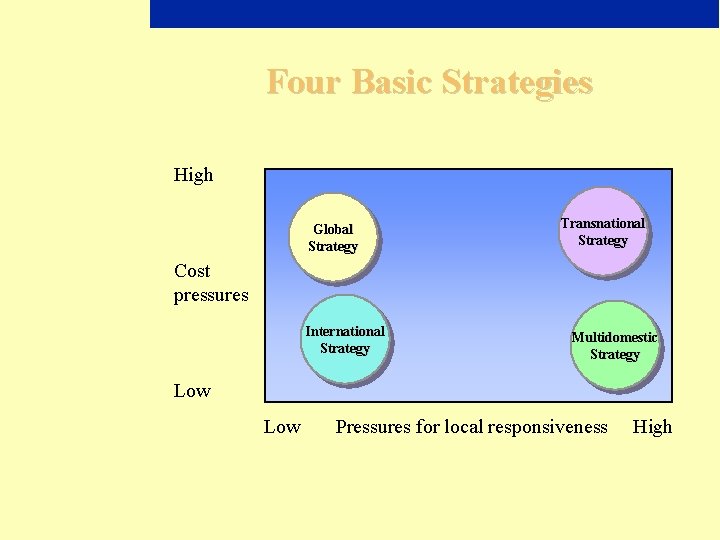
Four Basic Strategies High Global Strategy Transnational Strategy Cost pressures International Strategy Multidomestic Strategy Low Pressures for local responsiveness High
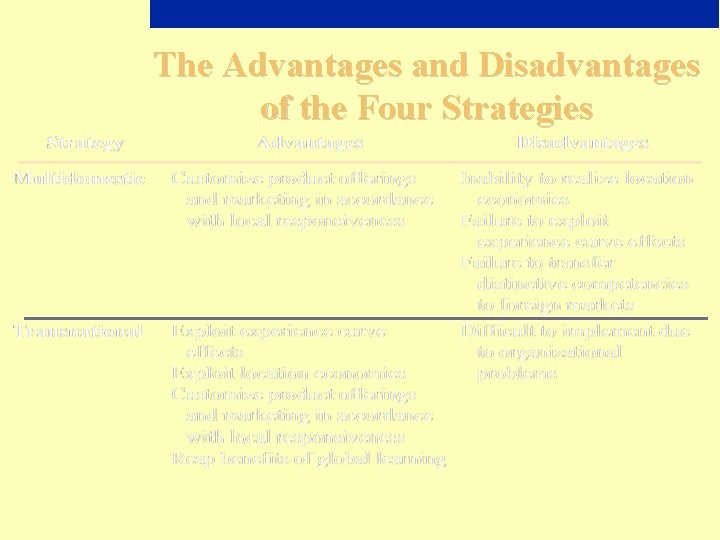
The Advantages and Disadvantages of the Four Strategies
The Advantages and Disadvantages of the Four Strategies
Advantages and Disadvantages of Entry Modes
Advantages and Disadvantages of Entry Modes CONTINUED
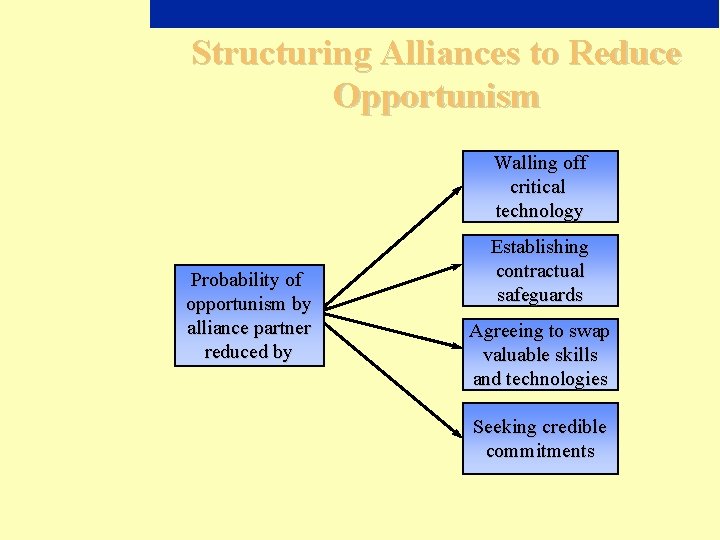
Structuring Alliances to Reduce Opportunism Walling off critical technology Probability of opportunism by alliance partner reduced by Establishing contractual safeguards Agreeing to swap valuable skills and technologies Seeking credible commitments
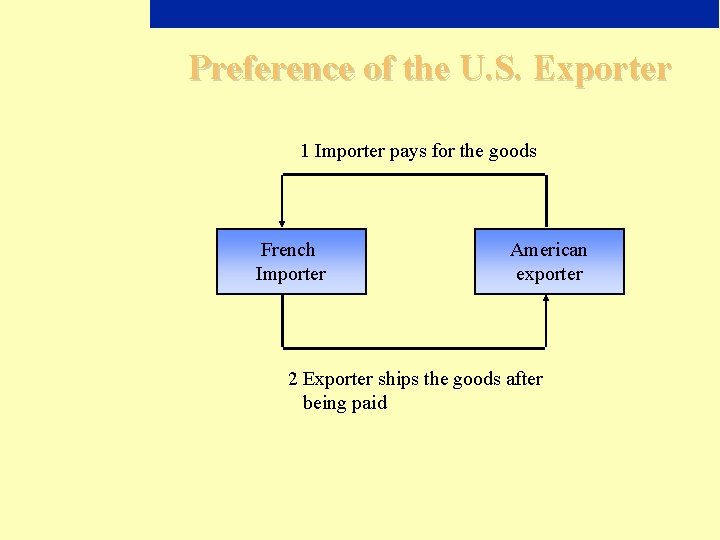
Preference of the U. S. Exporter 1 Importer pays for the goods French Importer American exporter 2 Exporter ships the goods after being paid
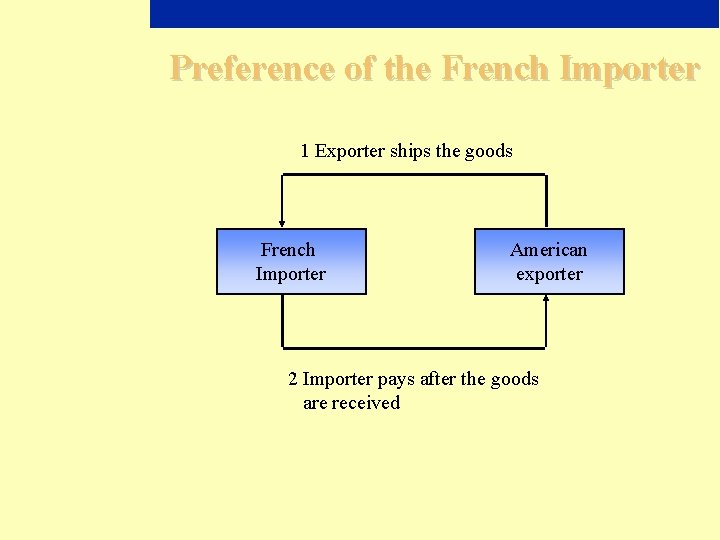
Preference of the French Importer 1 Exporter ships the goods French Importer American exporter 2 Importer pays after the goods are received
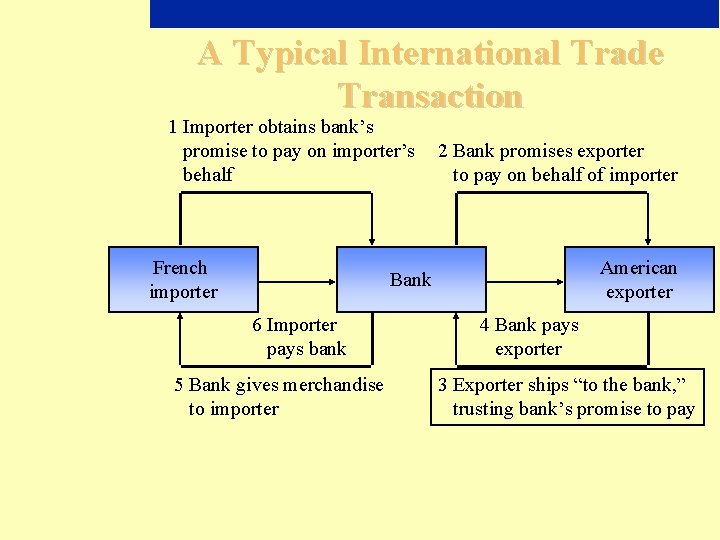
A Typical International Trade Transaction 1 Importer obtains bank’s promise to pay on importer’s behalf French importer 2 Bank promises exporter to pay on behalf of importer American exporter Bank 6 Importer pays bank 5 Bank gives merchandise to importer 4 Bank pays exporter 3 Exporter ships “to the bank, ” trusting bank’s promise to pay
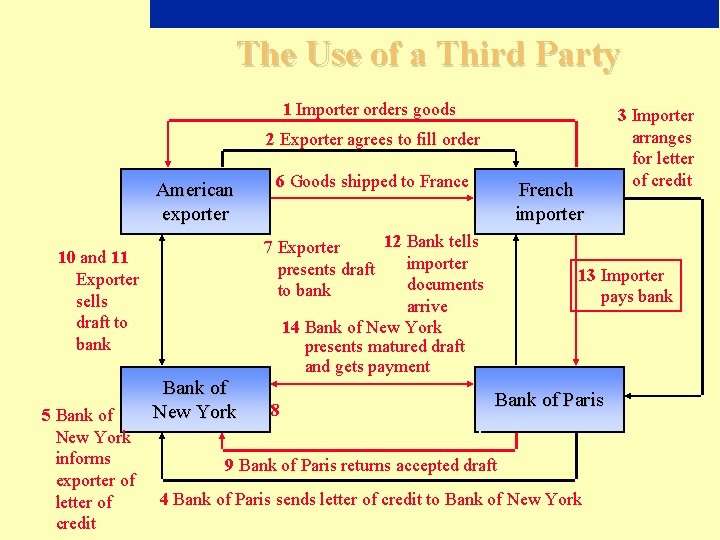
The Use of a Third Party 1 Importer orders goods 2 Exporter agrees to fill order American exporter French importer 12 Bank tells 7 Exporter importer presents draft documents to bank arrive 14 Bank of New York presents matured draft and gets payment 10 and 11 Exporter sells draft to bank 5 Bank of New York informs exporter of letter of credit 6 Goods shipped to France Bank of New York 8 Bank of New York 3 Importer arranges for letter of credit 13 Importer pays bank Bank of Paris presents draft to Bank of Paris 9 Bank of Paris returns accepted draft 4 Bank of Paris sends letter of credit to Bank of New York
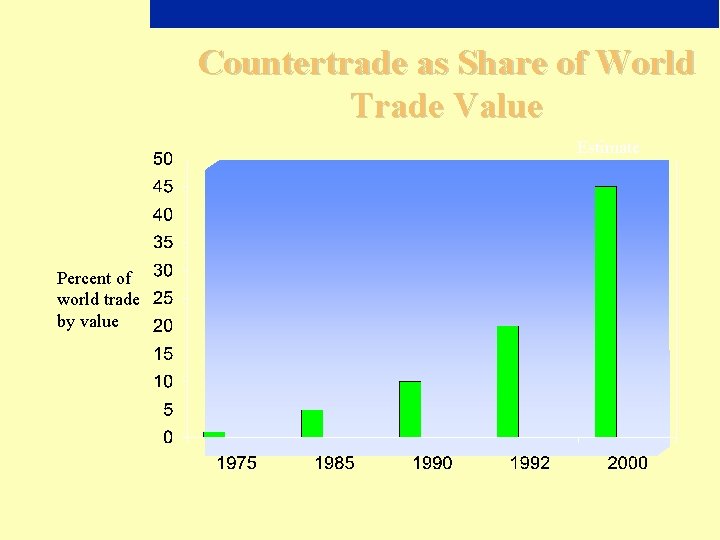
Countertrade as Share of World Trade Value Estimate Percent of world trade by value
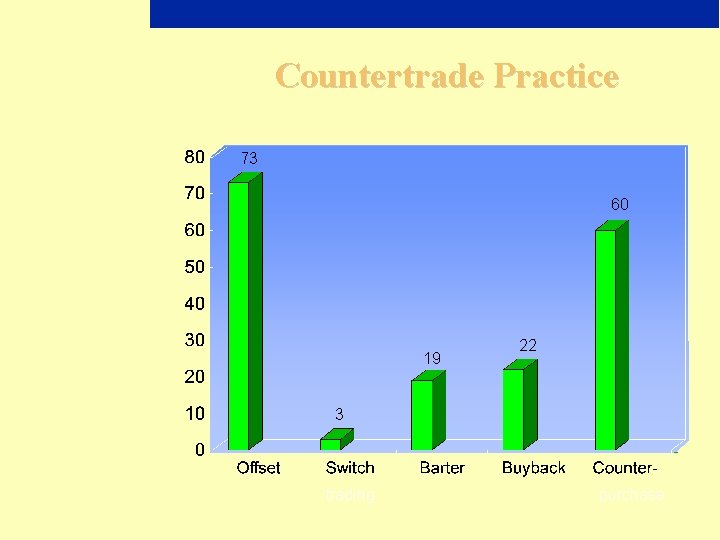
Countertrade Practice 73 60 Percent of companies engaged in each countertrade practice 19 22 3 trading purchase
International Marketing
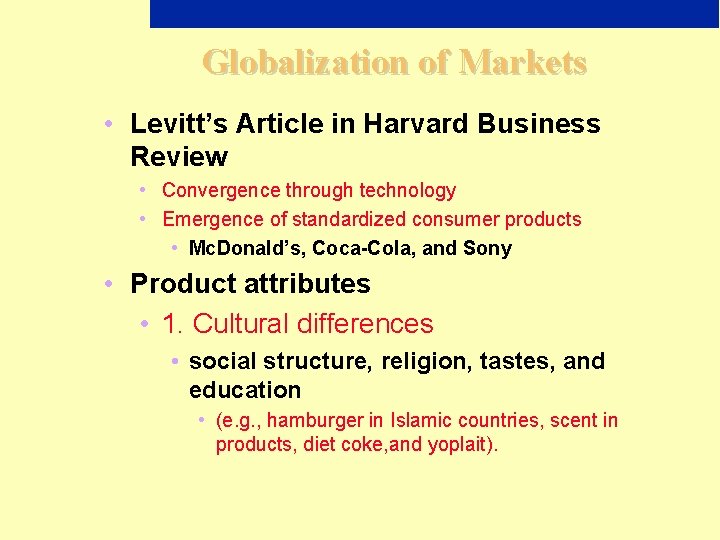
Globalization of Markets • Levitt’s Article in Harvard Business Review • Convergence through technology • Emergence of standardized consumer products • Mc. Donald’s, Coca-Cola, and Sony • Product attributes • 1. Cultural differences • social structure, religion, tastes, and education • (e. g. , hamburger in Islamic countries, scent in products, diet coke, and yoplait).
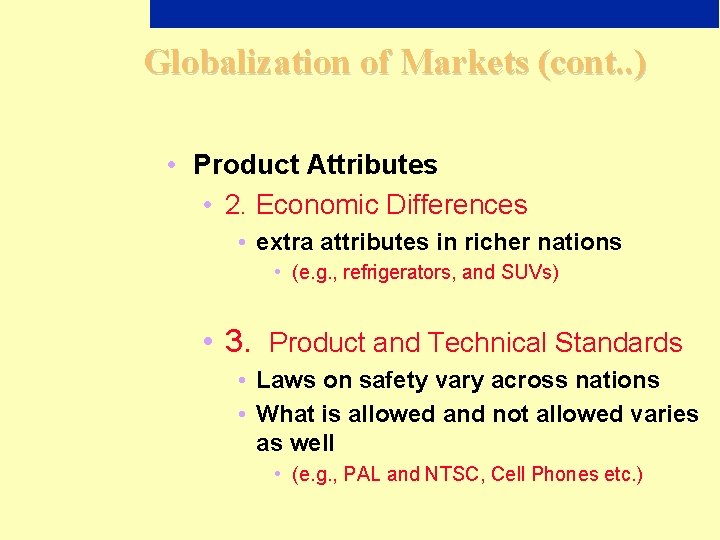
Globalization of Markets (cont. . ) • Product Attributes • 2. Economic Differences • extra attributes in richer nations • (e. g. , refrigerators, and SUVs) • 3. Product and Technical Standards • Laws on safety vary across nations • What is allowed and not allowed varies as well • (e. g. , PAL and NTSC, Cell Phones etc. )
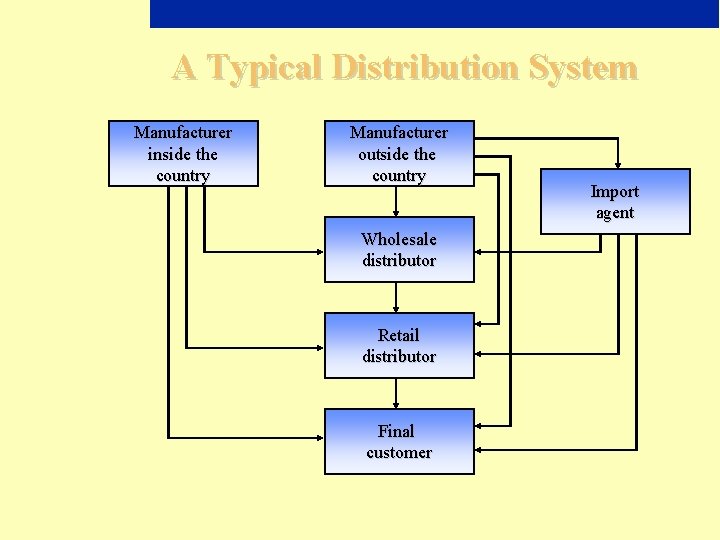
A Typical Distribution System Manufacturer inside the country Manufacturer outside the country Wholesale distributor Retail distributor Final customer Import agent
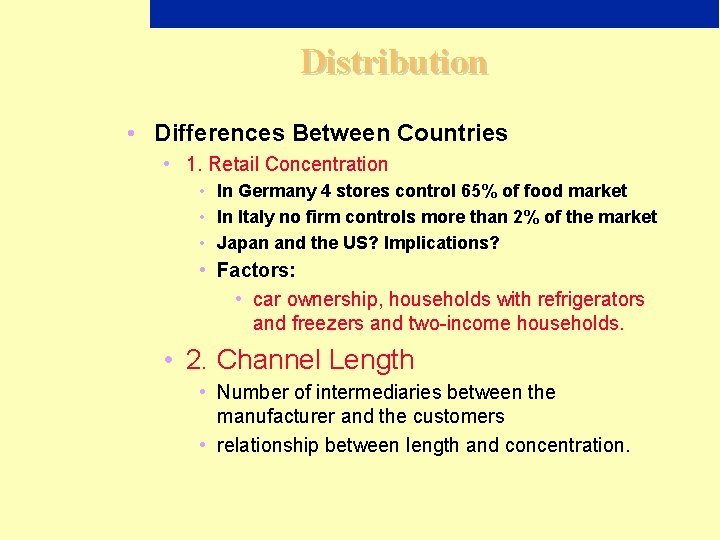
Distribution • Differences Between Countries • 1. Retail Concentration • In Germany 4 stores control 65% of food market • In Italy no firm controls more than 2% of the market • Japan and the US? Implications? • Factors: • car ownership, households with refrigerators and freezers and two-income households. • 2. Channel Length • Number of intermediaries between the manufacturer and the customers • relationship between length and concentration.
Distribution (Cont. . ) • 3. Channel Exclusivity • Shelf Space and exclusivity • Japan’s exclusive system • Choosing a Distribution Strategy • depends on channel length, cost, coverage, and existing relationships between retailers and agents.
Communication Strategy • Cultural barriers • Benneton ads, Camay in Japan, and ads with children • Source Effects • British Petroleum and BP, Honda and made in the US, French wine, Italian leather • Noise levels • number of other ads competing for attention • Media availability • Television state owned or restricted, same with radio, other types of media. Restriction on tobacco and alcohol.
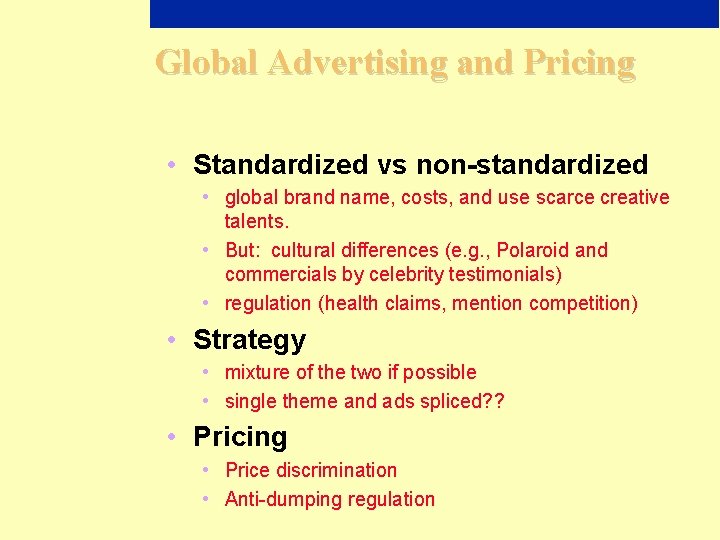
Global Advertising and Pricing • Standardized vs non-standardized • global brand name, costs, and use scarce creative talents. • But: cultural differences (e. g. , Polaroid and commercials by celebrity testimonials) • regulation (health claims, mention competition) • Strategy • mixture of the two if possible • single theme and ads spliced? ? • Pricing • Price discrimination • Anti-dumping regulation