
Pressure UlcersInjuries Assessment and Treatment Caryn Goolsby BSN
Pressure Ulcers/Injuries: Assessment and Treatment Caryn Goolsby BSN, CWOCN CHI Franciscan Wound Ostomy (Enterostomal Therapy) Department


Objectives To update/review on NPUAP (National Pressure Ulcer Advisory Panel) pressure injury staging system To update on NPUAP Support Surface Standards Initiative (S 3 I) information, as well as update on the new WOCN Society’s support surface algorithm To inform regarding simple wound care treatments that can be initiated or delegated post acute care
Overview Brief overview of Pressure ulcers/injury staging Prevention and Treatment Support Surfaces General information on moist wound healing
NPUAP staging system updated in 2016 Changed wording from ulcer to injury Made the wording integrate more with international staging system Clarified device related pressure injury and mucus membrane related pressure injury Took away the roman numerals; now standard numbers Some controversy over the changes Medicare and state DOH have not changed from the “ulcer” terminology yet possibly related to the controversy?

Pressure injury A pressure injury is localized damage to the skin and/or underlying soft tissue usually over a bony prominence or related to a medical or other device. The injury can present as intact skin or an open ulcer and may be painful. The injury occurs as a result of intense and/or prolonged pressure or pressure in combination with shear. The tolerance of soft tissue for pressure and shear may also be affected by microclimate, nutrition, perfusion, co-morbidities and condition of the soft tissue.
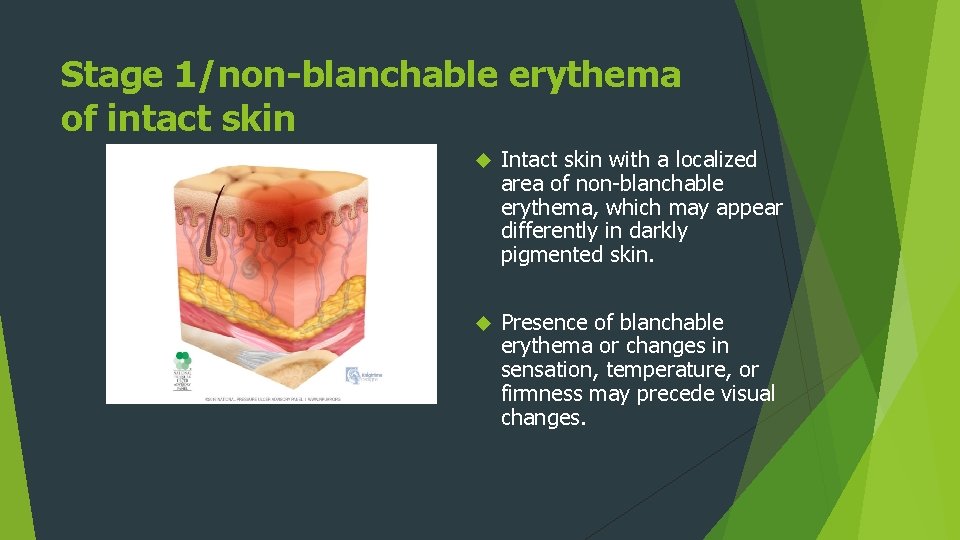
Stage 1/non-blanchable erythema of intact skin Intact skin with a localized area of non-blanchable erythema, which may appear differently in darkly pigmented skin. Presence of blanchable erythema or changes in sensation, temperature, or firmness may precede visual changes.

Non-blanchable Erythema Usually with clearly defined margins, can be indurated, may or may not be warmer/cooler than surrounding skin.
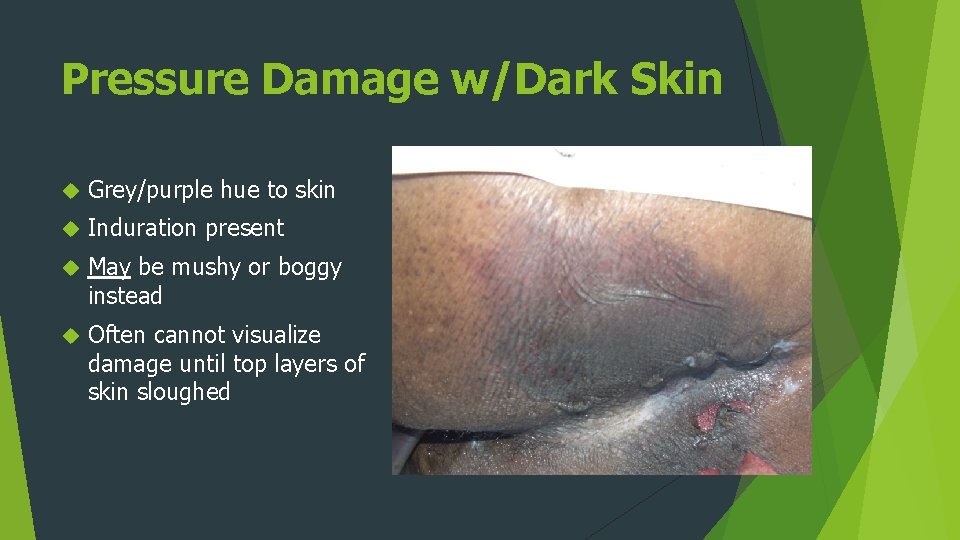
Pressure Damage w/Dark Skin Grey/purple hue to skin Induration present May be mushy or boggy instead Often cannot visualize damage until top layers of skin sloughed
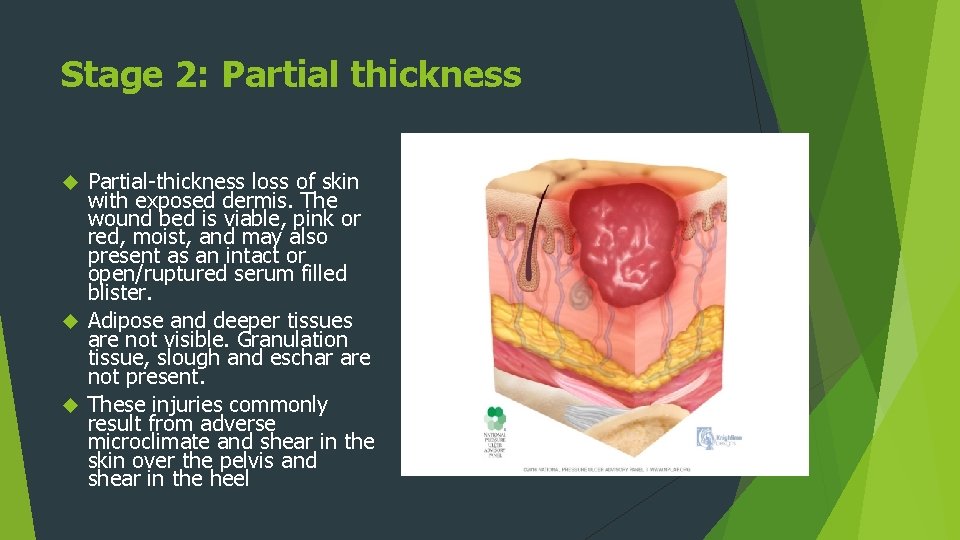
Stage 2: Partial thickness Partial-thickness loss of skin with exposed dermis. The wound bed is viable, pink or red, moist, and may also present as an intact or open/ruptured serum filled blister. Adipose and deeper tissues are not visible. Granulation tissue, slough and eschar are not present. These injuries commonly result from adverse microclimate and shear in the skin over the pelvis and shear in the heel
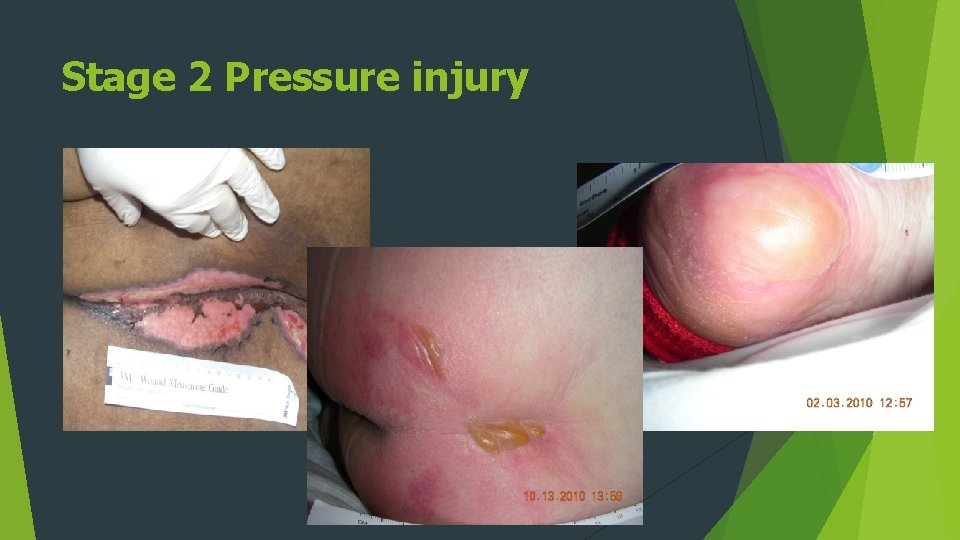
Stage 2 Pressure injury
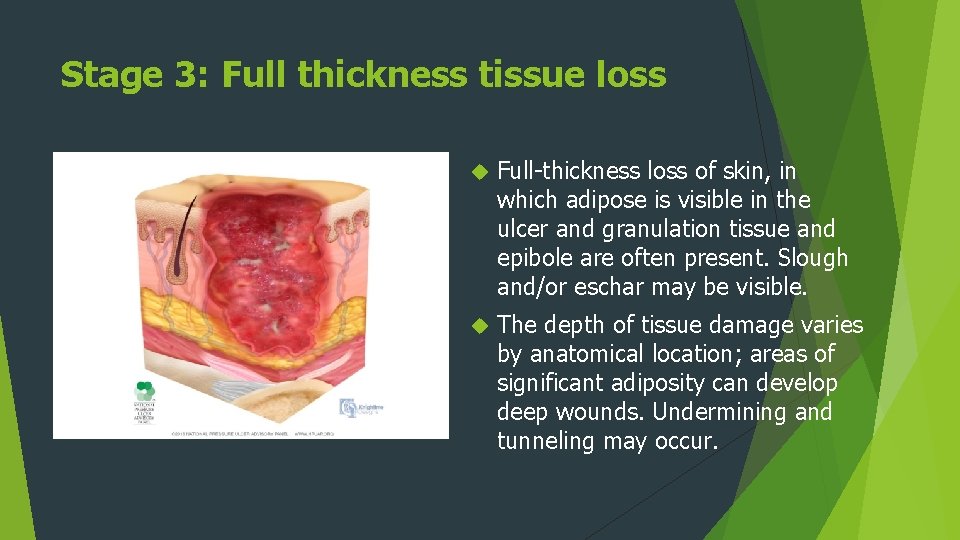
Stage 3: Full thickness tissue loss Full-thickness loss of skin, in which adipose is visible in the ulcer and granulation tissue and epibole are often present. Slough and/or eschar may be visible. The depth of tissue damage varies by anatomical location; areas of significant adiposity can develop deep wounds. Undermining and tunneling may occur.
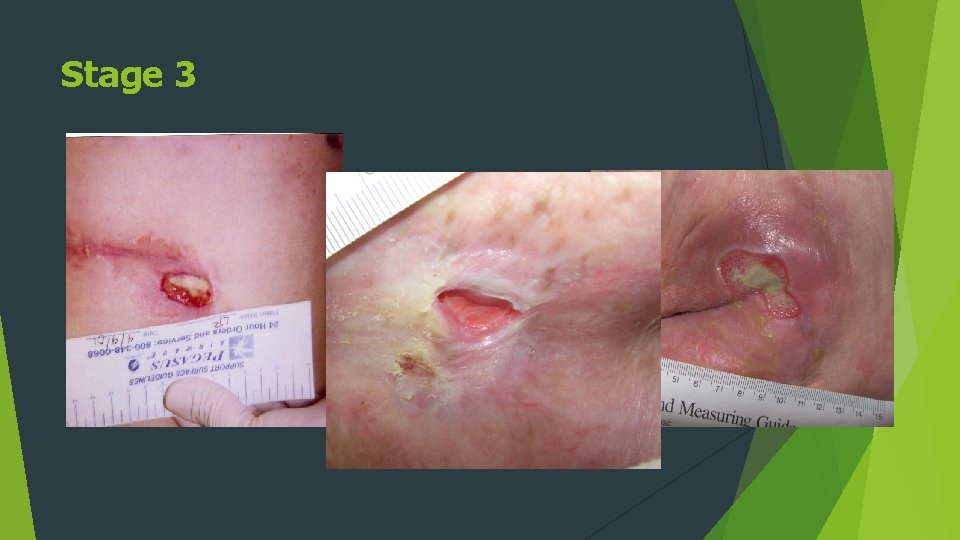
Stage 3
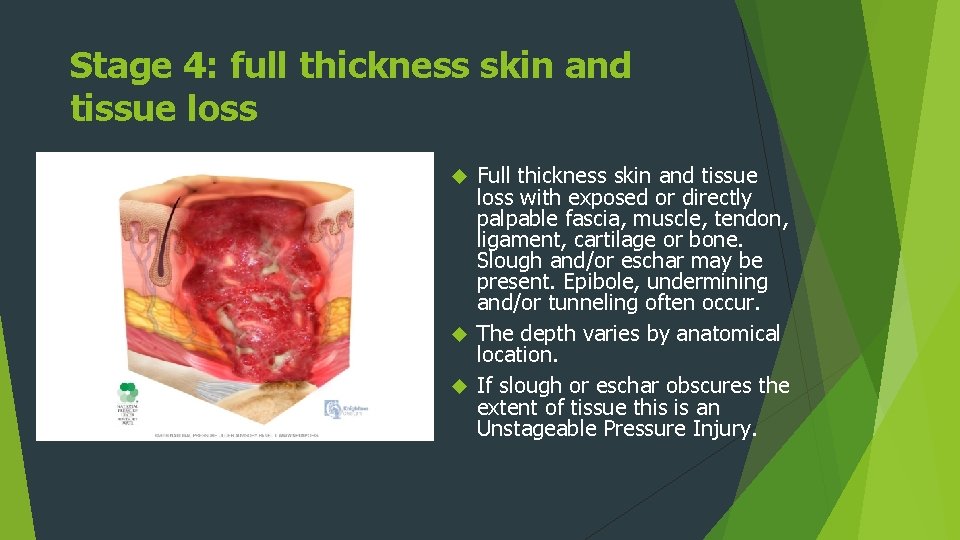
Stage 4: full thickness skin and tissue loss Full thickness skin and tissue loss with exposed or directly palpable fascia, muscle, tendon, ligament, cartilage or bone. Slough and/or eschar may be present. Epibole, undermining and/or tunneling often occur. The depth varies by anatomical location. If slough or eschar obscures the extent of tissue this is an Unstageable Pressure Injury.
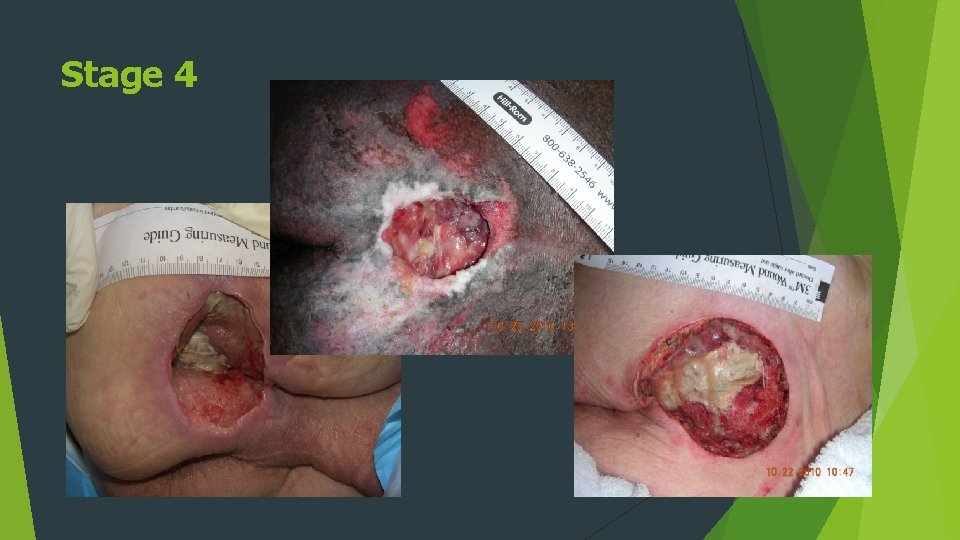
Stage 4
- Slides: 15