
Pressure Pascals Principle PRESSURE OF A FLUID air
- Slides: 19
Pressure; Pascal’s Principle
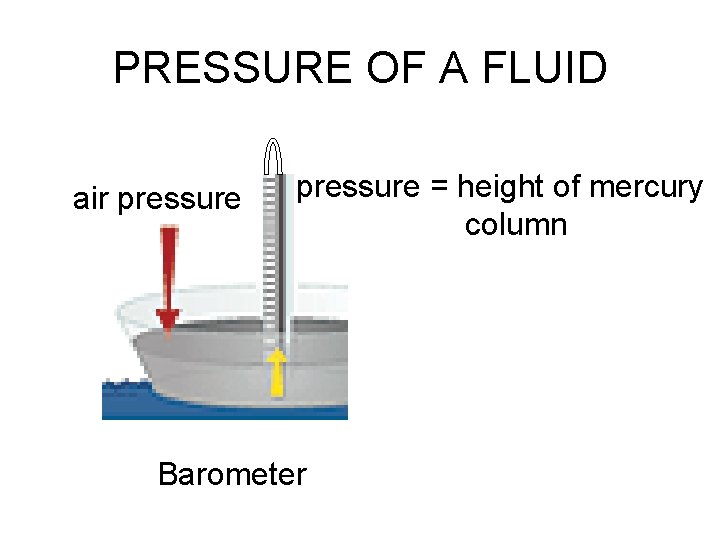
PRESSURE OF A FLUID air pressure = height of mercury column Barometer
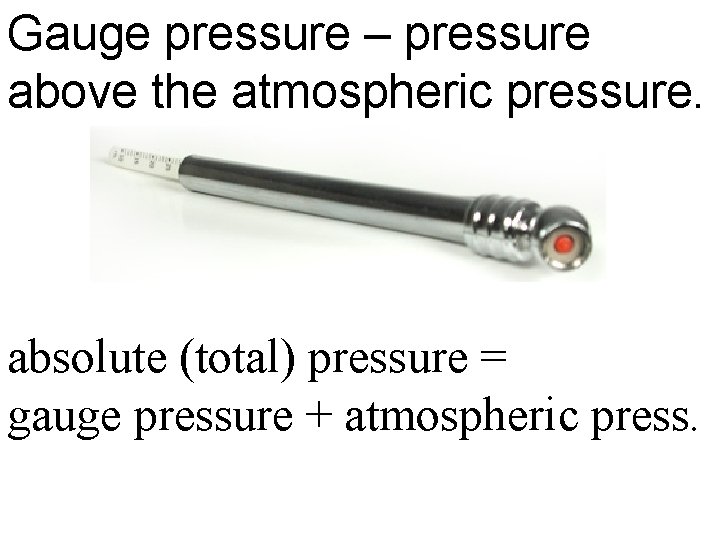
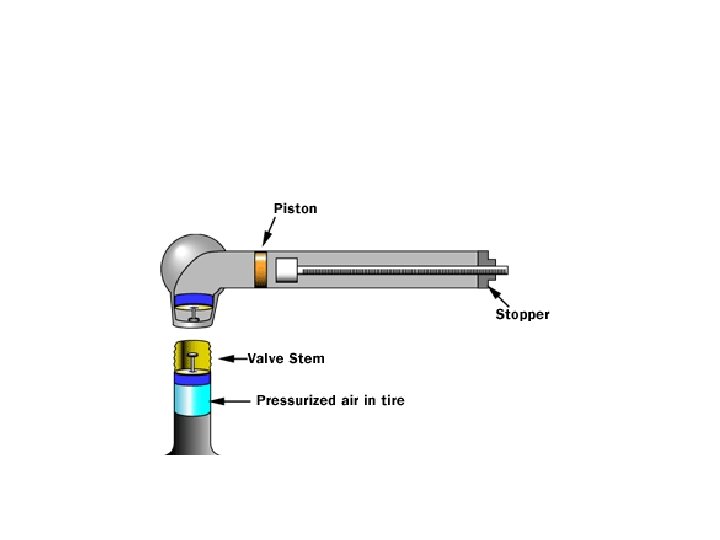
Gauge pressure – pressure above the atmospheric pressure. absolute (total) pressure = gauge pressure + atmospheric press.
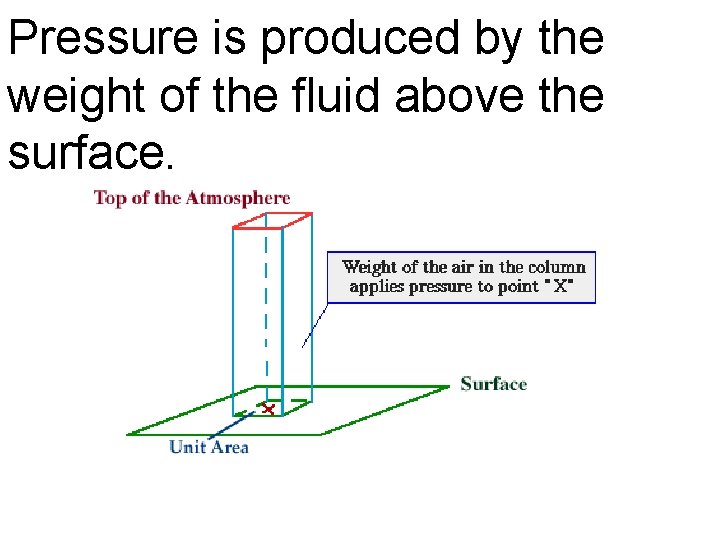
Pressure is produced by the weight of the fluid above the surface.
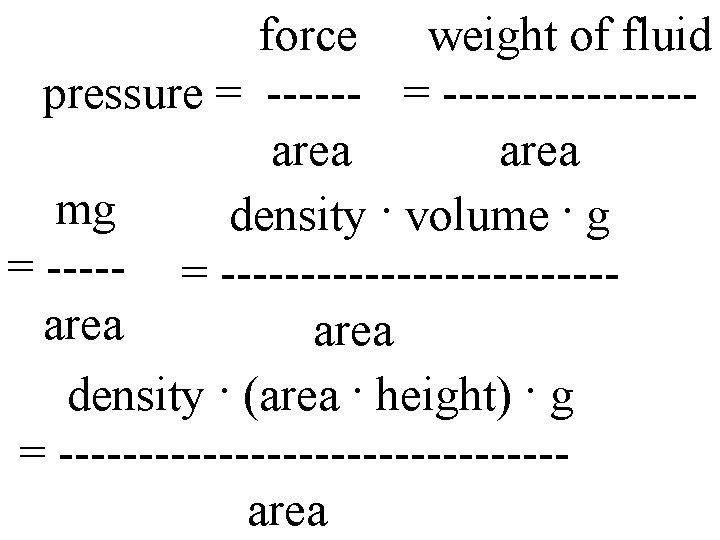
force weight of fluid pressure = -----------area mg density · volume · g = ---------------area density · (area · height) · g = ----------------area
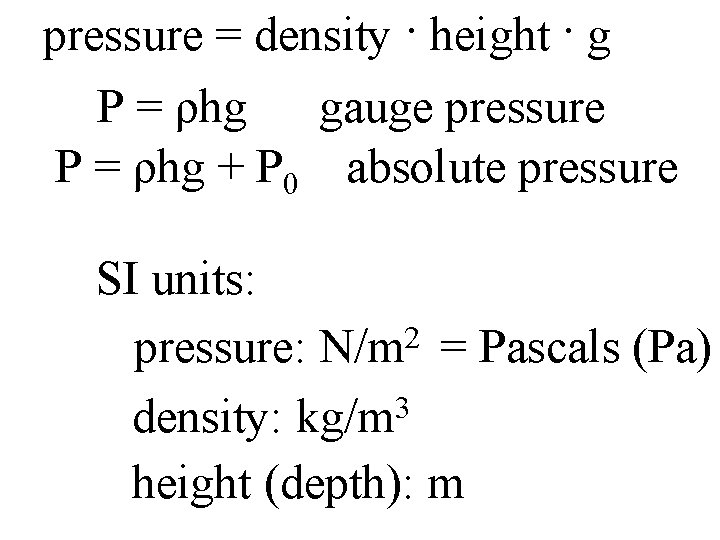
pressure = density · height · g P = ρhg gauge pressure P = ρhg + P 0 absolute pressure SI units: 2 pressure: N/m = Pascals (Pa) 3 density: kg/m height (depth): m
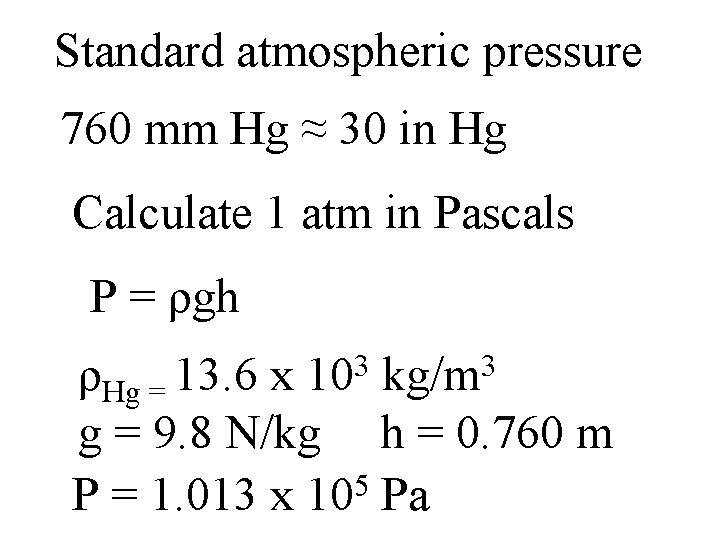
Standard atmospheric pressure 760 mm Hg ≈ 30 in Hg Calculate 1 atm in Pascals P = ρgh 3 10 3 kg/m ρHg = 13. 6 x g = 9. 8 N/kg h = 0. 760 m 5 P = 1. 013 x 10 Pa
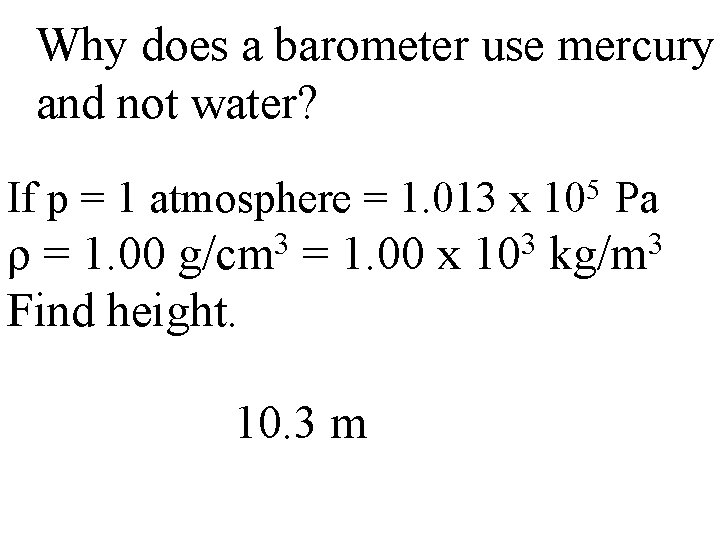
Why does a barometer use mercury and not water? If p = 1 atmosphere = 1. 013 x 3 g/cm ρ = 1. 00 Find height. = 1. 00 x 10. 3 m 3 10 5 10 Pa 3 kg/m
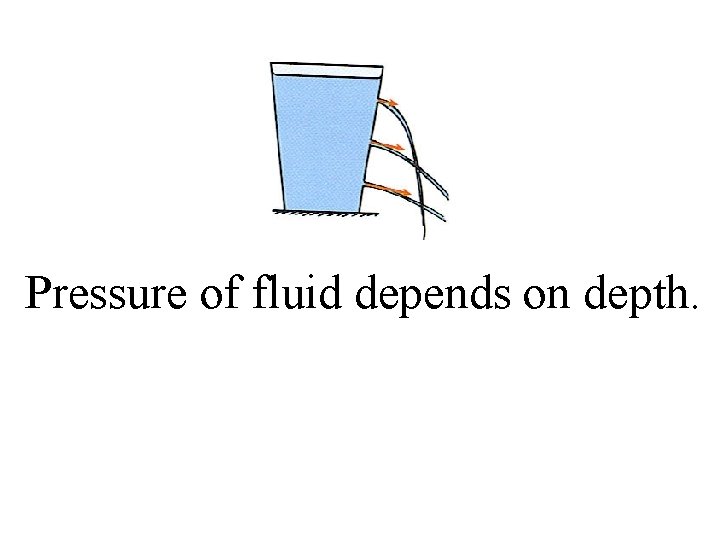
Pressure of fluid depends on depth.
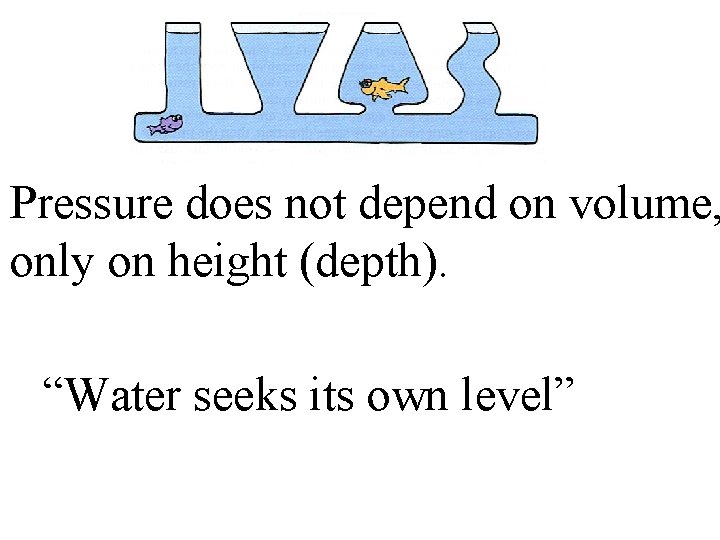
Pressure does not depend on volume, only on height (depth). “Water seeks its own level”
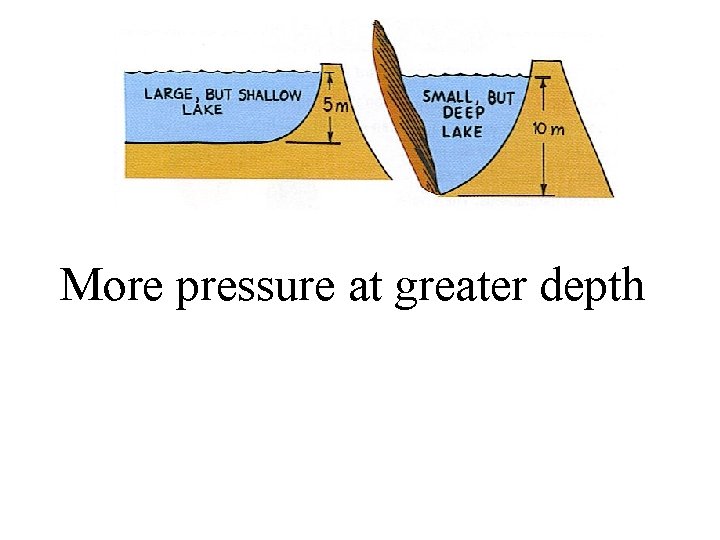
More pressure at greater depth
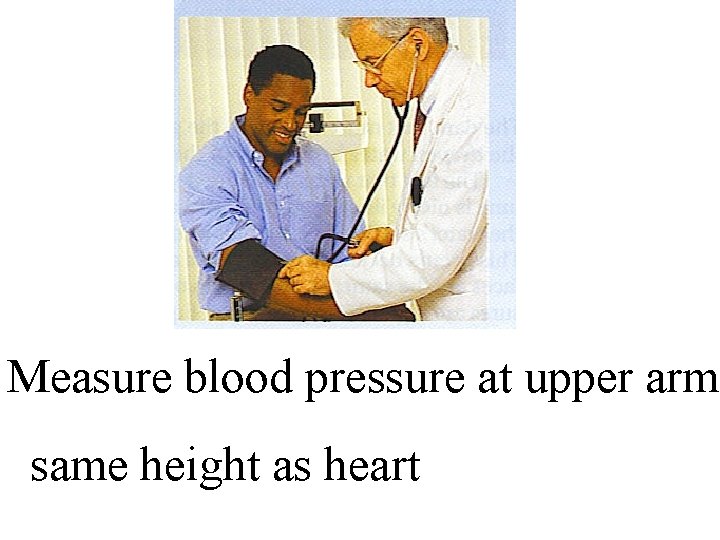
Measure blood pressure at upper arm same height as heart
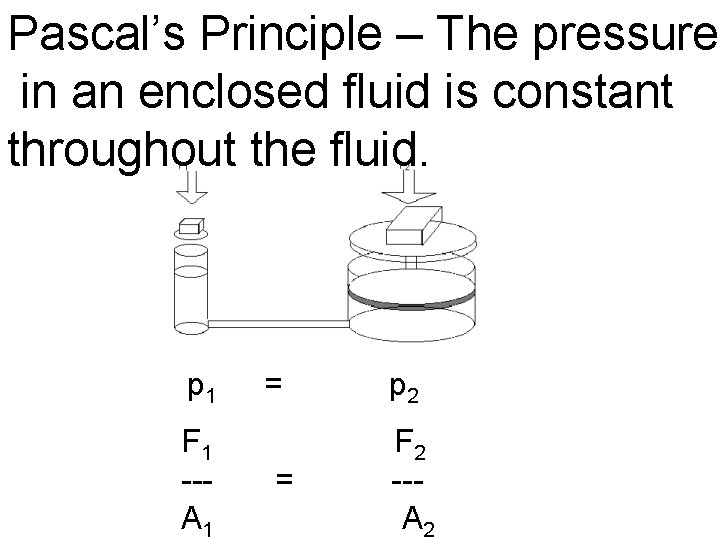
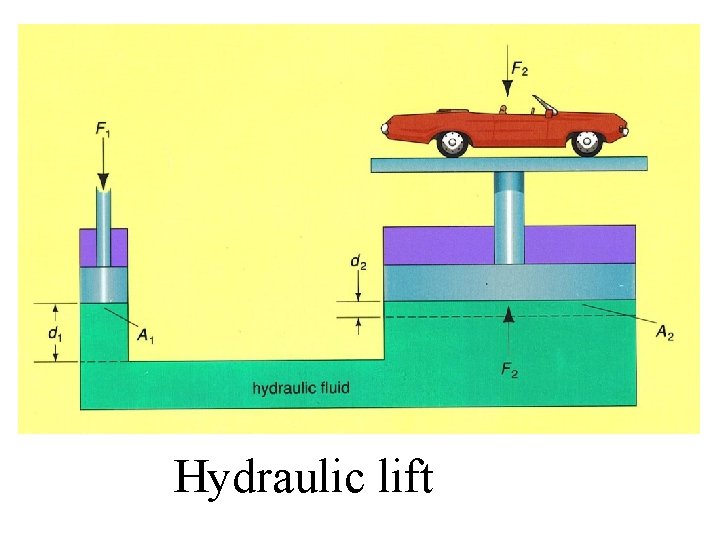
Pascal’s Principle – The pressure in an enclosed fluid is constant throughout the fluid. p 1 F 1 --A 1 = = p 2 F 2 --A 2
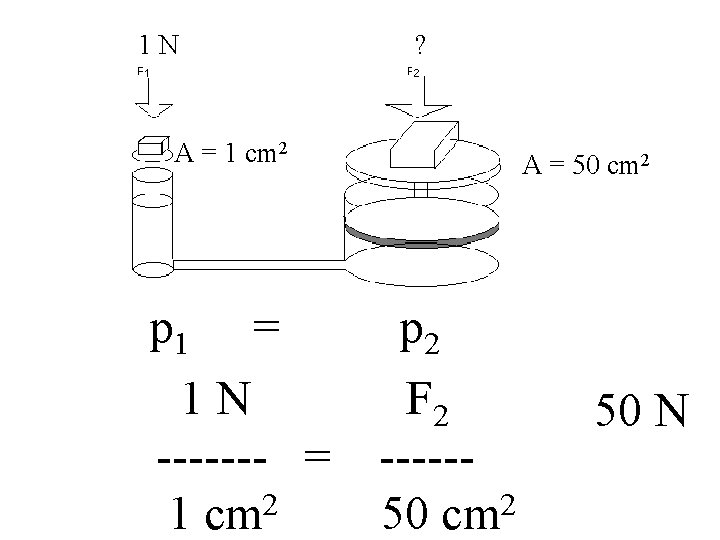
1 N ? A = 1 cm 2 p 1 = 1 N ------- = 2 1 cm A = 50 cm 2 p 2 F 2 -----2 50 cm 50 N
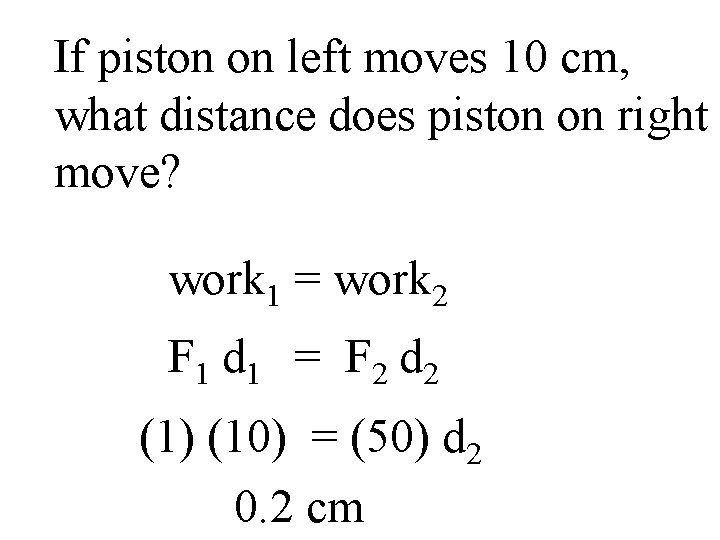
If piston on left moves 10 cm, what distance does piston on right move? work 1 = work 2 F 1 d 1 = F 2 d 2 (1) (10) = (50) d 2 0. 2 cm
Hydraulic lift
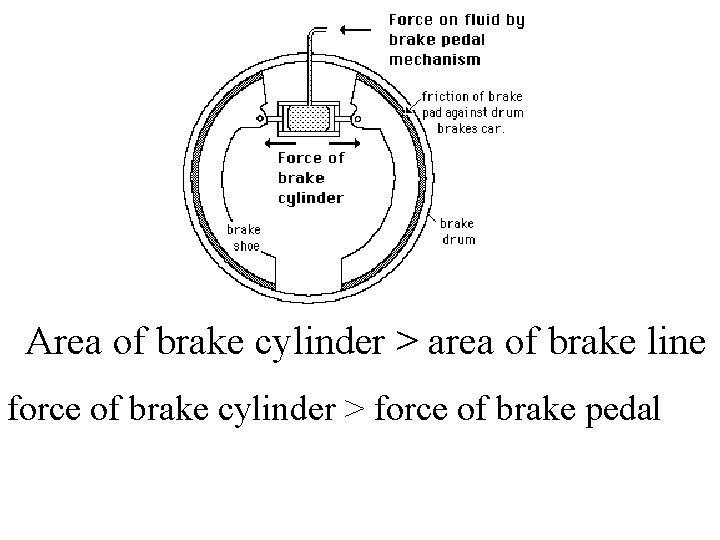
Area of brake cylinder > area of brake line force of brake cylinder > force of brake pedal
hydrostatic pressure