
Pressure in Fluids Pascals Law An important part





- Slides: 23
+ Pressure in Fluids Pascal’s Law
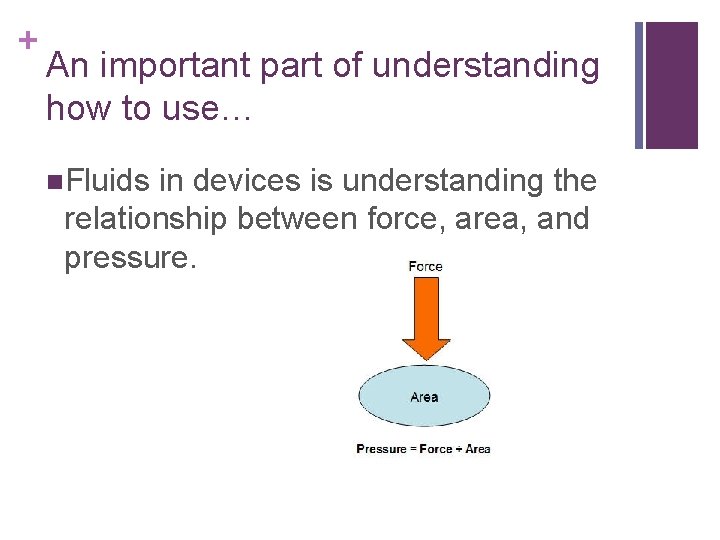
+ An important part of understanding how to use… n. Fluids in devices is understanding the relationship between force, area, and pressure.
+ Pressure: n. Is the amount of force applied to a given area. n. Pressure (Pa). is measured in pascals
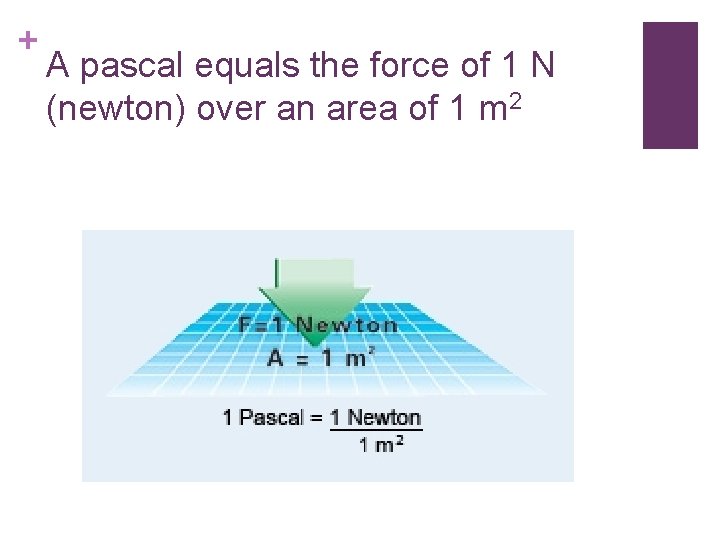
+ A pascal equals the force of 1 N (newton) over an area of 1 m 2
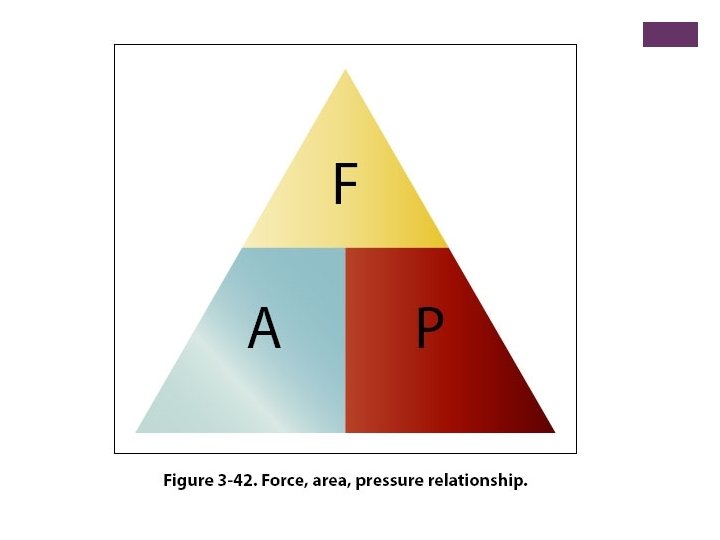
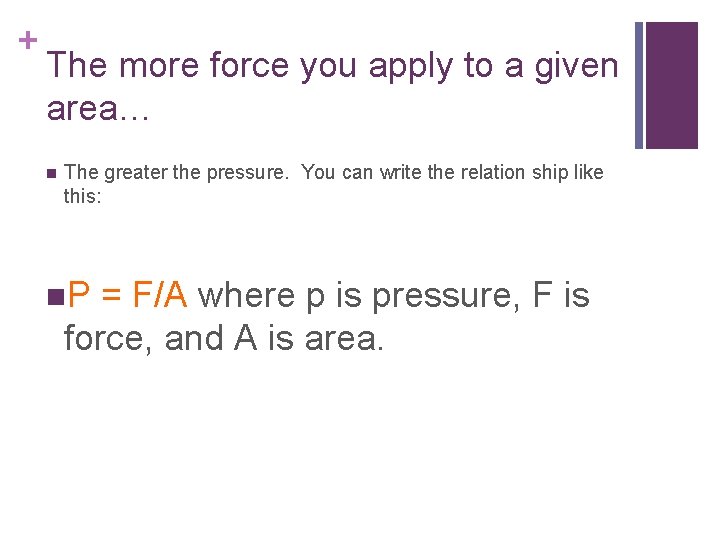
+ The more force you apply to a given area… n The greater the pressure. You can write the relation ship like this: n. P = F/A where p is pressure, F is force, and A is area.
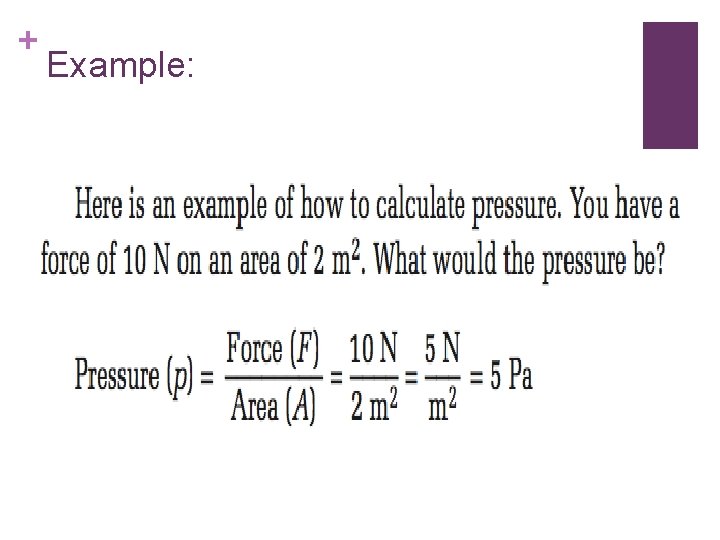
+ Example:
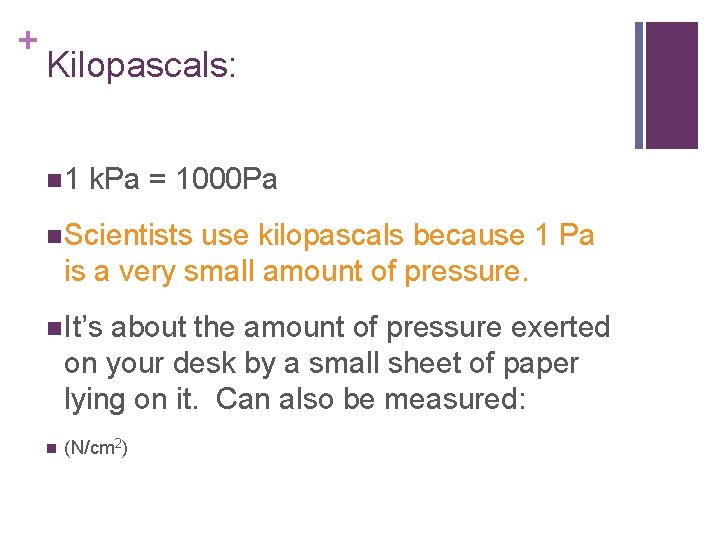
+ Kilopascals: n 1 k. Pa = 1000 Pa n Scientists use kilopascals because 1 Pa is a very small amount of pressure. n It’s about the amount of pressure exerted on your desk by a small sheet of paper lying on it. Can also be measured: n (N/cm 2)
+ Blaise Pascal Investigates n. Mid 1600 s, French scientist about how pressure is exerted in a fluid. n. Investigated the relationship between water pressure and depth.
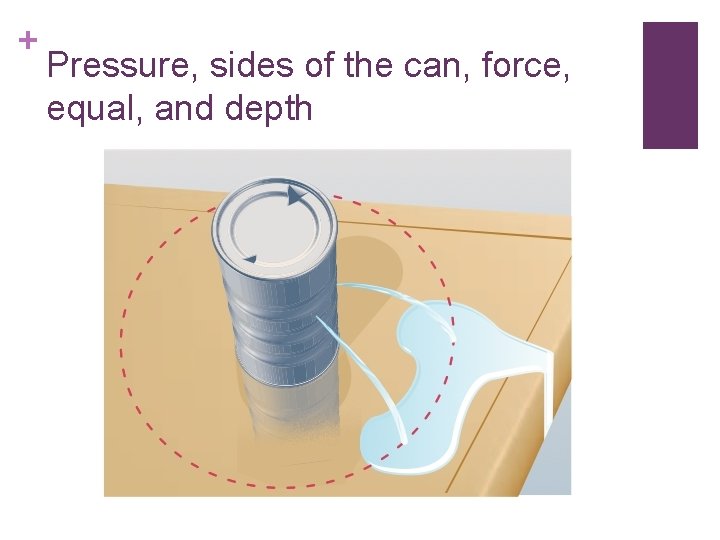
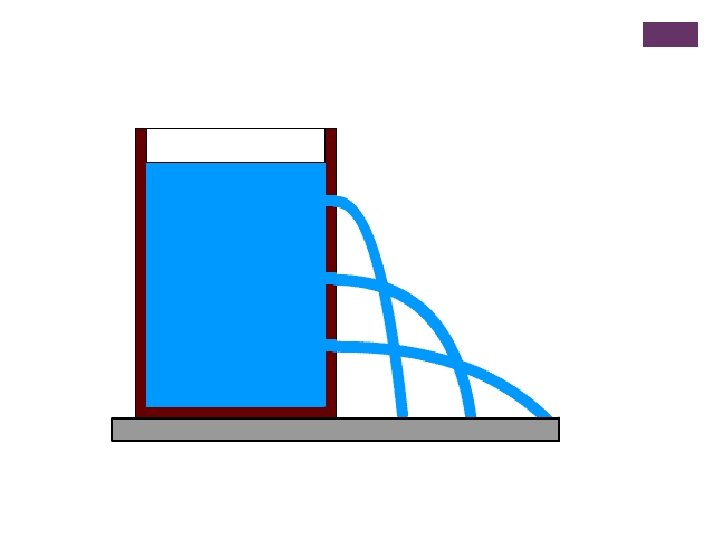
+ Why does water flow out of the can this way?
+ Pressure, sides of the can, force, equal, and depth
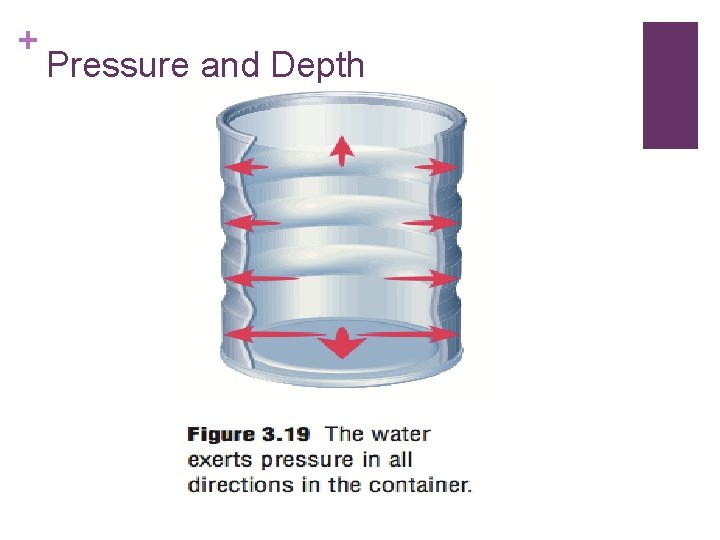
+ Pressure and Depth
+ The pressure of the water on the sides of the can. . n. Is equal at the same depth. n. You could infer this because the water than came out of the holes travelled the same distance before hitting the ground.
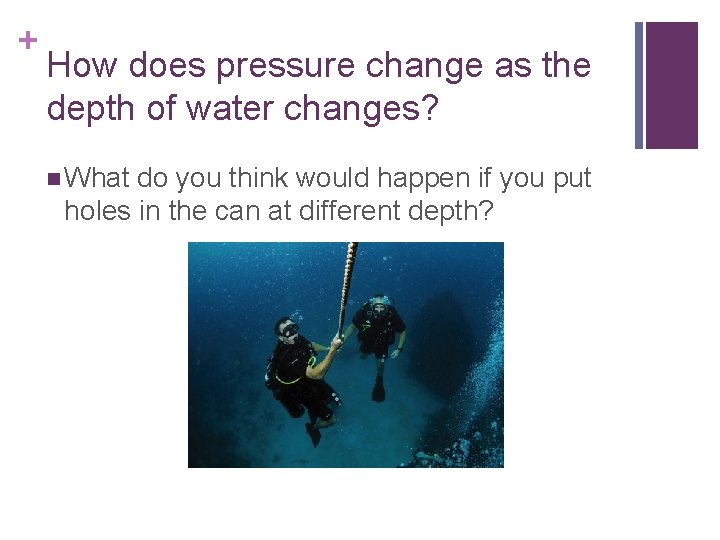
+ How does pressure change as the depth of water changes? n What do you think would happen if you put holes in the can at different depth?
+ Pascal’s Law n Occurs n. An in a closed system: enclosed fluid transmits pressure equally in all directions.
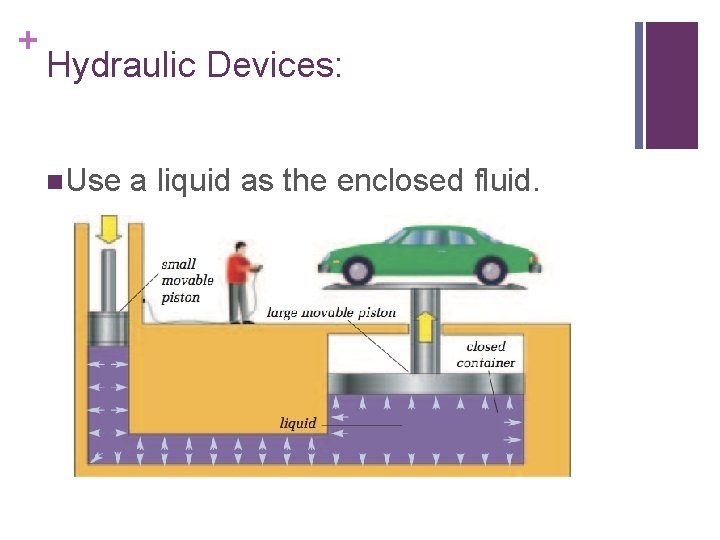
+ Hydraulic Devices: n. Use a liquid as the enclosed fluid.
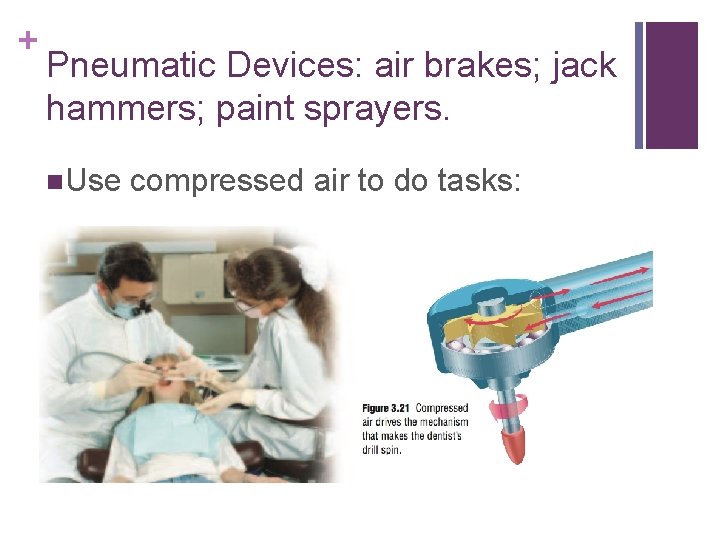
+ Pneumatic Devices: air brakes; jack hammers; paint sprayers. n. Use compressed air to do tasks:
+ Reasonable Cost and Safety: n. Are two advantages of pneumatic systems. n. Compressed n. Do air is cheap and safe. not create sparks (mine? ). n. Free of electrical hazards.
+ Maintaining the Pressure: n. For a hydraulic or pneumatic system to function properly, the system must be completely sealed.
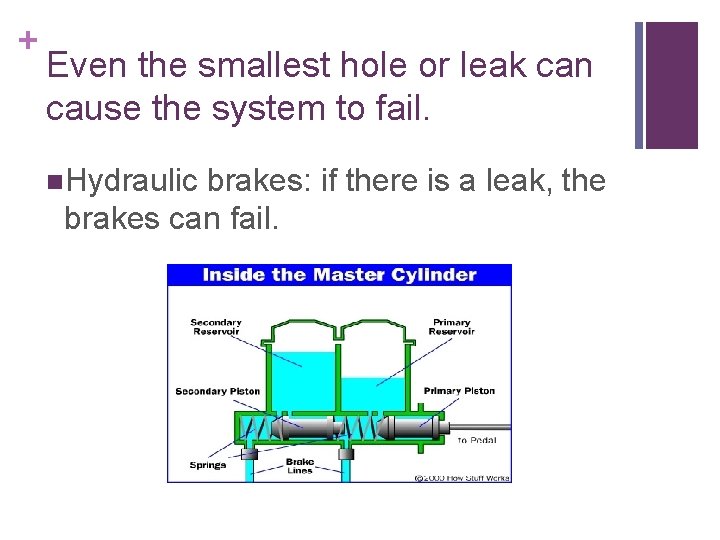
+ Even the smallest hole or leak can cause the system to fail. n. Hydraulic brakes: if there is a leak, the brakes can fail.
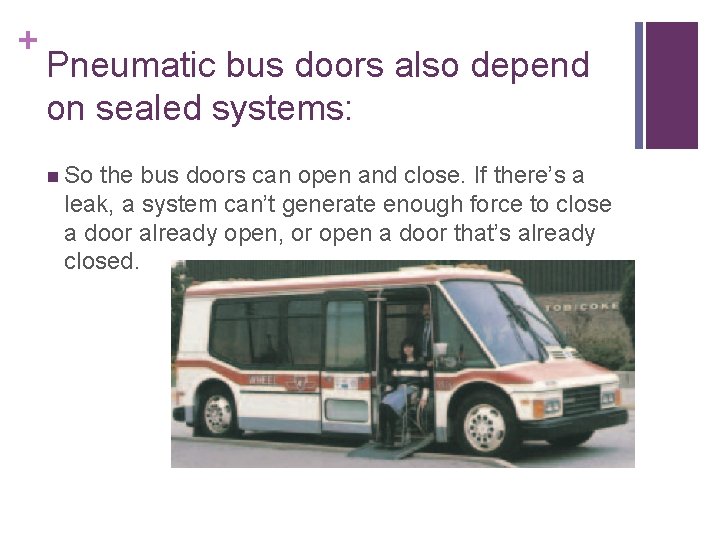
+ Pneumatic bus doors also depend on sealed systems: n So the bus doors can open and close. If there’s a leak, a system can’t generate enough force to close a door already open, or open a door that’s already closed.
+ Check & Reflect n. Page 60, #s 1 – 4.