
Pressure and Wind Impact of Temperature on Air

- Slides: 13
Pressure and Wind
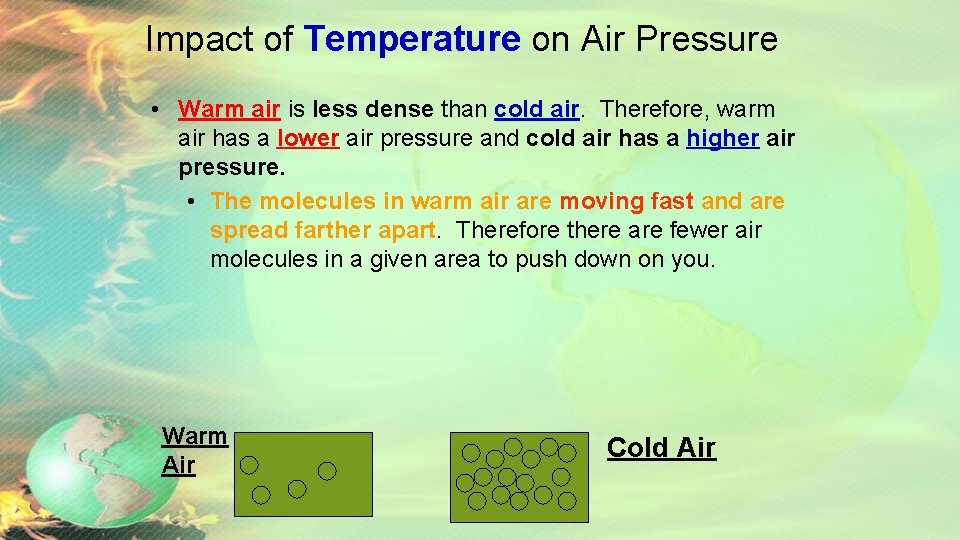
Impact of Temperature on Air Pressure • Warm air is less dense than cold air. Therefore, warm air has a lower air pressure and cold air has a higher air pressure. • The molecules in warm air are moving fast and are spread farther apart. Therefore there are fewer air molecules in a given area to push down on you. Warm Air Cold Air
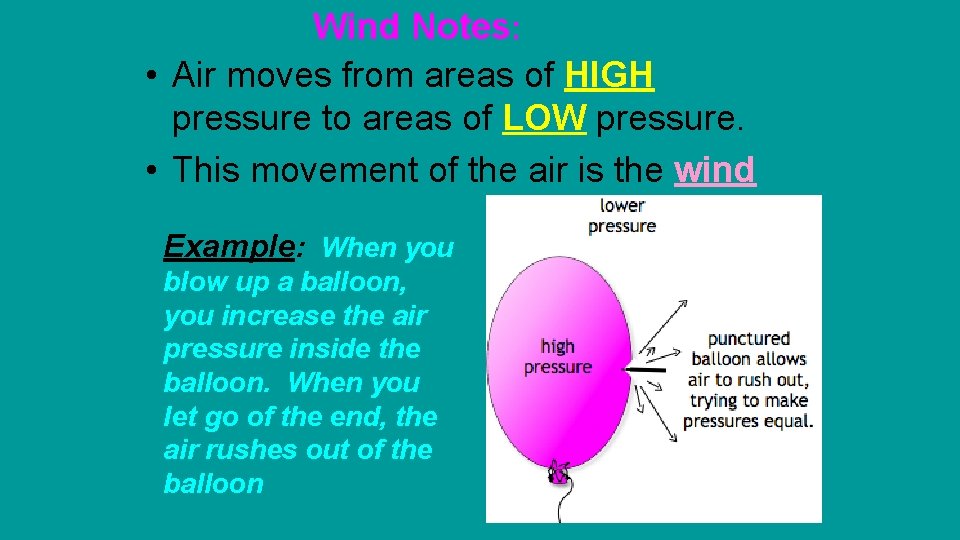
Wind Notes: • Air moves from areas of HIGH pressure to areas of LOW pressure. • This movement of the air is the wind Example: When you blow up a balloon, you increase the air pressure inside the balloon. When you let go of the end, the air rushes out of the balloon
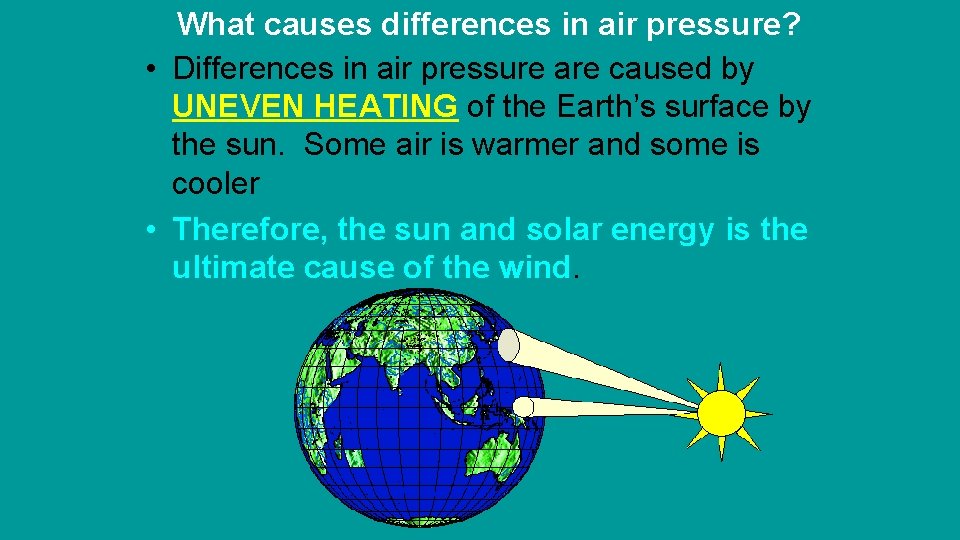
What causes differences in air pressure? • Differences in air pressure are caused by UNEVEN HEATING of the Earth’s surface by the sun. Some air is warmer and some is cooler • Therefore, the sun and solar energy is the ultimate cause of the wind.
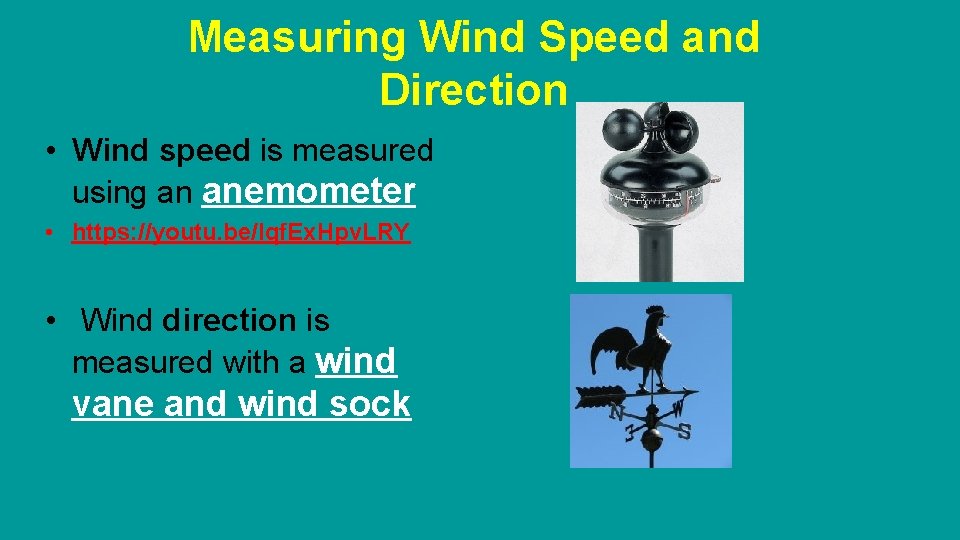
Measuring Wind Speed and Direction • Wind speed is measured using an anemometer • https: //youtu. be/lqf. Ex. Hpv. LRY • Wind direction is measured with a wind vane and wind sock
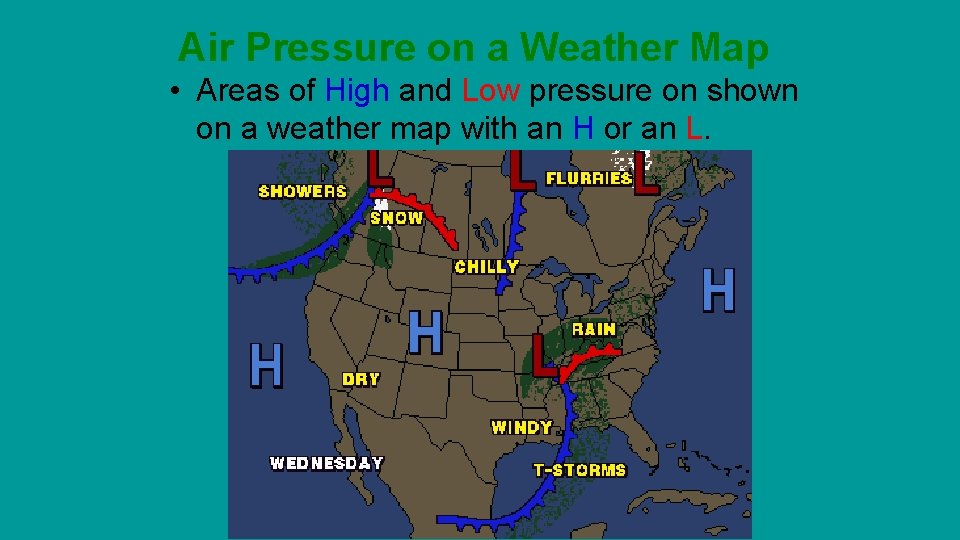
Air Pressure on a Weather Map • Areas of High and Low pressure on shown on a weather map with an H or an L.
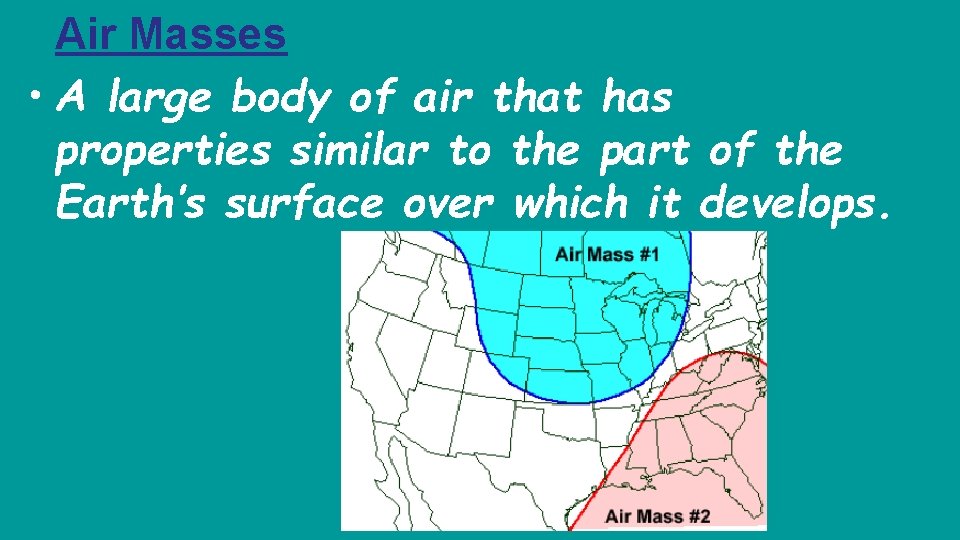
Air Masses • A large body of air that has properties similar to the part of the Earth’s surface over which it develops.
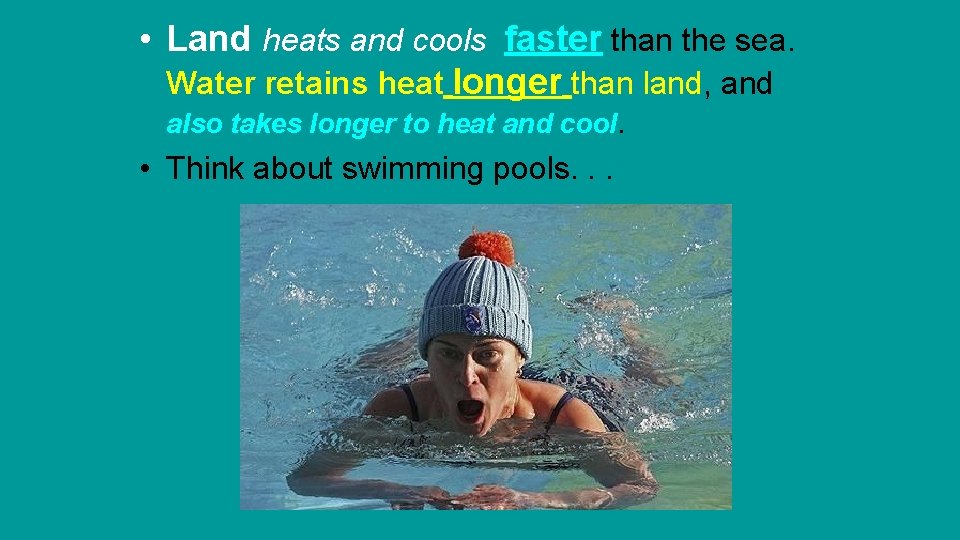
• Land heats and cools faster than the sea. Water retains heat longer than land, and also takes longer to heat and cool. • Think about swimming pools. . .
Water has a higher specific heat than land. Specific heat is the amount of heat (per unit mass) required to raise the temperature of a substance by 1° C Think about the way that land water can affect air masses? What happens to the beach during the day? Is it the same at night?
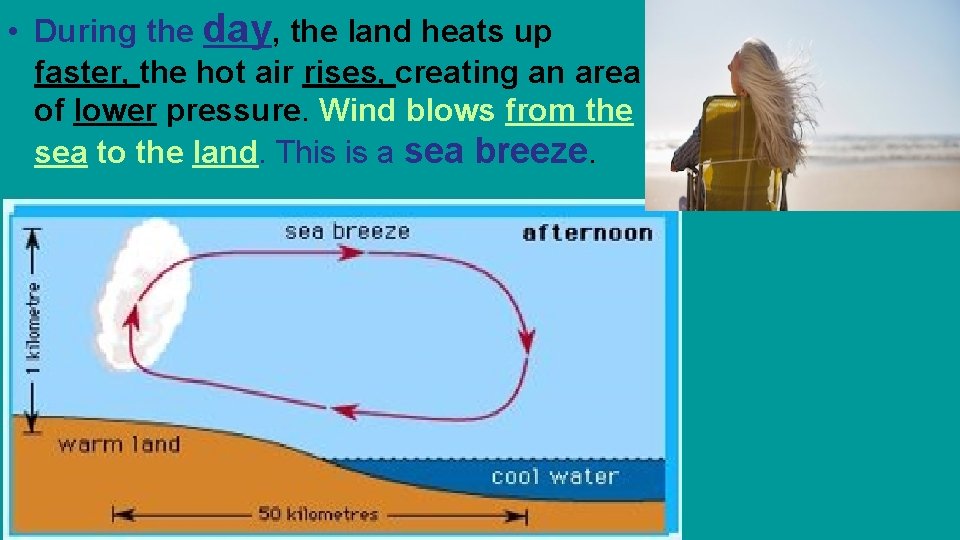
• During the day, the land heats up faster, the hot air rises, creating an area of lower pressure. Wind blows from the sea to the land. This is a sea breeze.
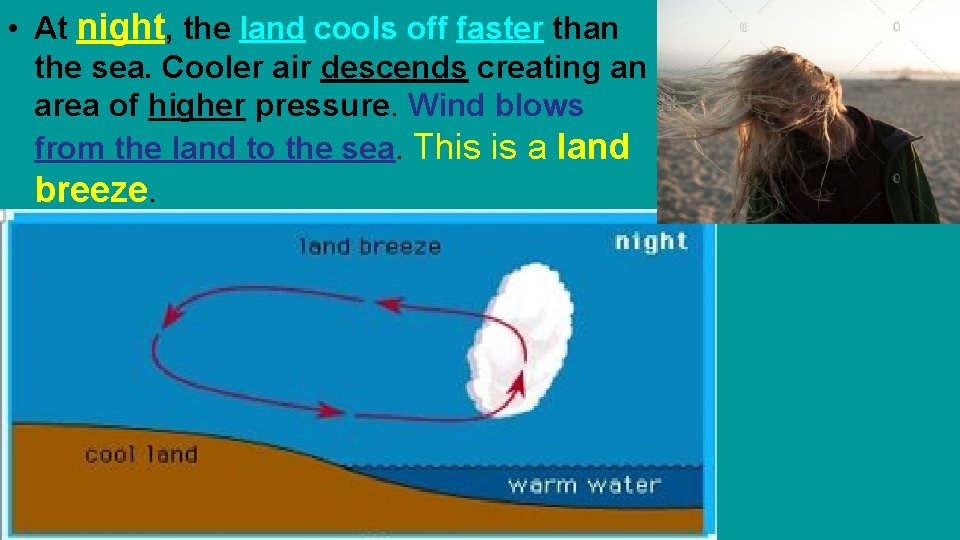
• At night, the land cools off faster than the sea. Cooler air descends creating an area of higher pressure. Wind blows from the land to the sea. This is a land breeze.
• Anenometer Lab