
Pressure and Resistance Fluid Recycling Water continuously moves

- Slides: 51
Pressure and Resistance • Fluid Recycling – Water continuously moves out of capillaries, and back into bloodstream via the lymphoid system and serves to • Ensure constant plasma and interstitial fluid communication • Accelerate distribution of nutrients, hormones, and dissolved gases through tissues • Transport insoluble lipids and tissue proteins that cannot cross capillary walls • Flush bacterial toxins and chemicals to immune system tissues
Pressure and Resistance • Capillary Dynamics – Hemorrhaging • Reduces CHP and NFP • Increases reabsorption of interstitial fluid (recall of fluids) – Dehydration • Increases BCOP • Accelerates reabsorption – Increase in CHP or BCOP • Fluid moves out of blood • Builds up in peripheral tissues (edema)
Cardiovascular Regulation • Tissue Perfusion – Blood flow through the tissues – Carries O 2 and nutrients to tissues and organs – Carries CO 2 and wastes away – Is affected by • Cardiac output • Peripheral resistance • Blood pressure
Cardiovascular Regulation • Cardiovascular regulation changes blood flow to a specific area – At an appropriate time – In the right area – Without changing blood pressure and blood flow to vital organs
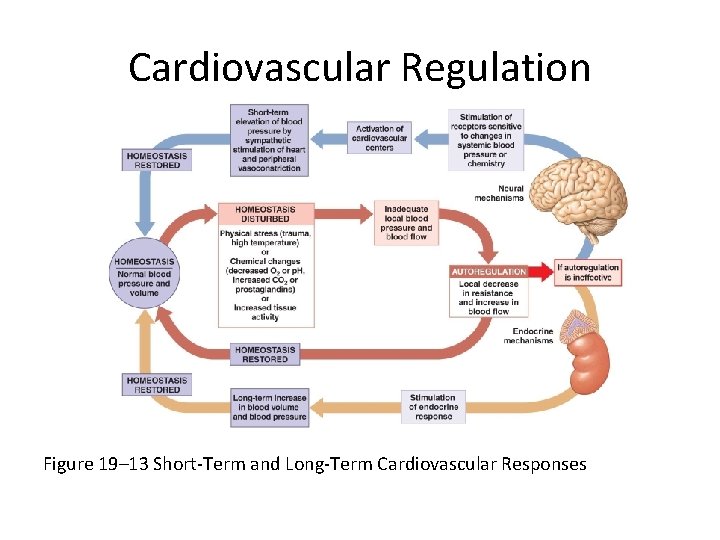
Cardiovascular Regulation Figure 19– 13 Short-Term and Long-Term Cardiovascular Responses
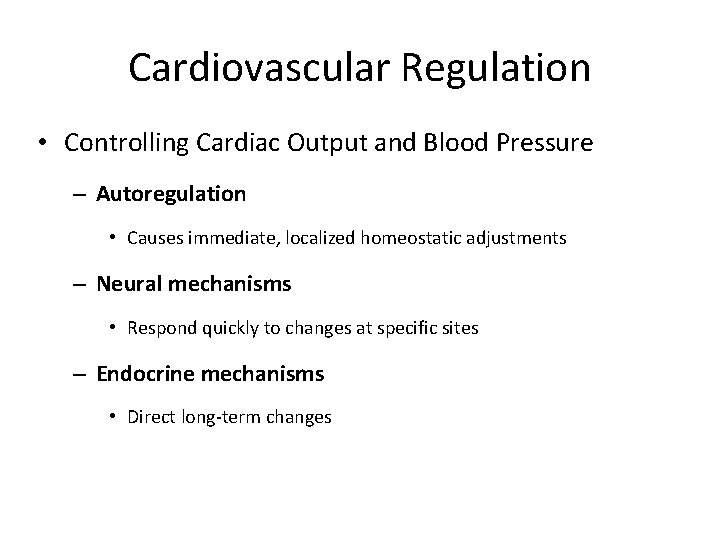
Cardiovascular Regulation • Controlling Cardiac Output and Blood Pressure – Autoregulation • Causes immediate, localized homeostatic adjustments – Neural mechanisms • Respond quickly to changes at specific sites – Endocrine mechanisms • Direct long-term changes
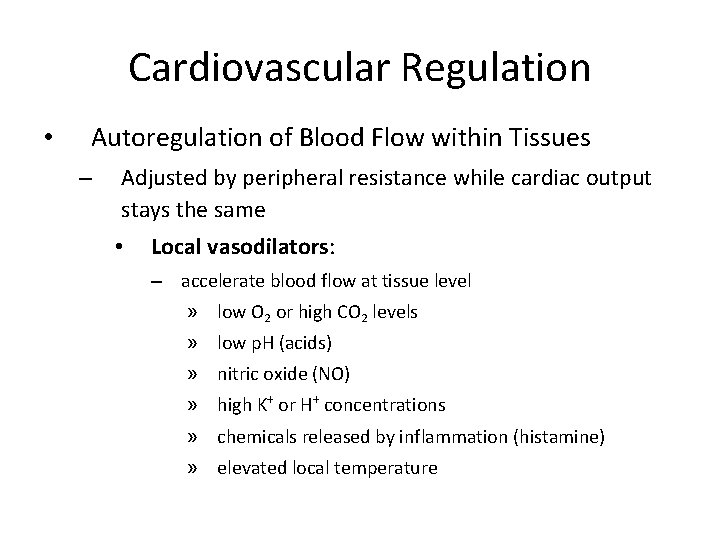
Cardiovascular Regulation • Autoregulation of Blood Flow within Tissues – Adjusted by peripheral resistance while cardiac output stays the same • Local vasodilators: – accelerate blood flow at tissue level » low O 2 or high CO 2 levels » low p. H (acids) » nitric oxide (NO) » high K+ or H+ concentrations » chemicals released by inflammation (histamine) » elevated local temperature
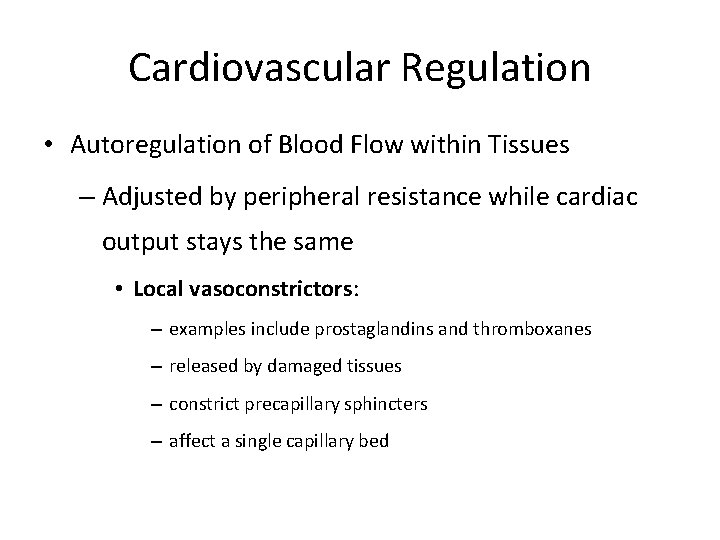
Cardiovascular Regulation • Autoregulation of Blood Flow within Tissues – Adjusted by peripheral resistance while cardiac output stays the same • Local vasoconstrictors: – examples include prostaglandins and thromboxanes – released by damaged tissues – constrict precapillary sphincters – affect a single capillary bed
Cardiovascular Regulation • Neural Mechanisms – Cardiovascular (CV) centers of the Medulla Oblongata • Cardiac centers: – cardioacceleratory center: increases cardiac output – cardioinhibitory center: reduces cardiac output • Vasomotor center: – vasoconstriction » controlled by adrenergic nerves (NE) » stimulates smooth muscle contraction in arteriole walls – vasodilation: » controlled by cholinergic nerves (NO) » relaxes smooth muscle
Cardiovascular Regulation • Vasomotor Tone – Produced by constant action of sympathetic vasoconstrictor nerves
Cardiovascular Regulation • Reflex Control of Cardiovascular Function – Cardiovascular centers monitor arterial blood • Baroreceptor reflexes: – respond to changes in blood pressure • Chemoreceptor reflexes: – respond to changes in chemical composition, particularly p. H and dissolved gases
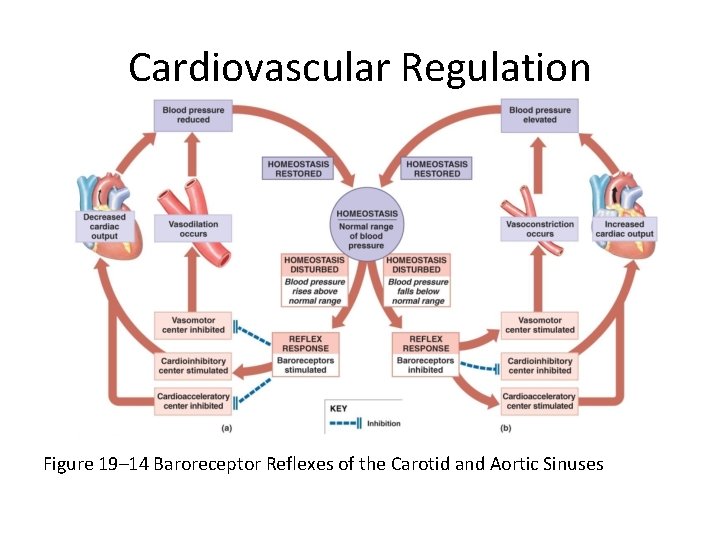
Cardiovascular Regulation • Baroreceptor Reflexes – Stretch receptors in walls of • Carotid sinuses: maintain blood flow to brain • Aortic sinuses: monitor start of systemic circuit • Right atrium: monitors end of systemic circuit – When blood pressure rises, CV centers • Decrease cardiac output • Cause peripheral vasodilation – When blood pressure falls, CV centers • Increase cardiac output • Cause peripheral vasoconstriction
Cardiovascular Regulation Figure 19– 14 Baroreceptor Reflexes of the Carotid and Aortic Sinuses
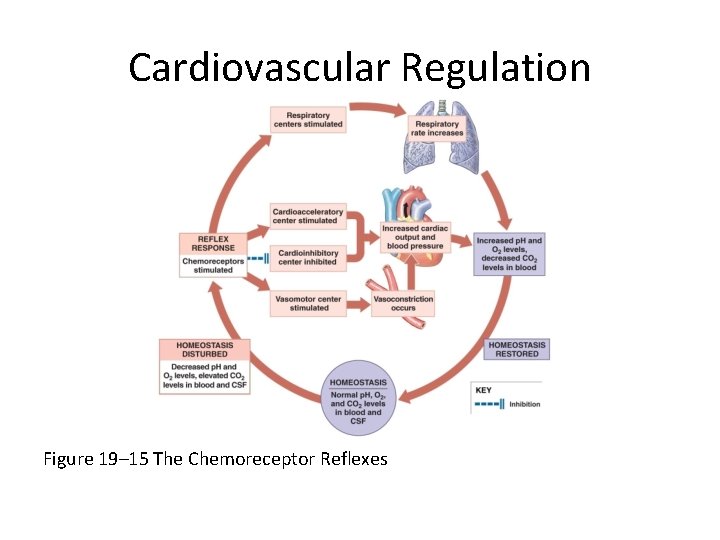
Cardiovascular Regulation • Chemoreceptor Reflexes – Peripheral chemoreceptors in carotid bodies and aortic bodies monitor blood – Central chemoreceptors below medulla oblongata • Monitor cerebrospinal fluid • Control respiratory function • Control blood flow to brain
Cardiovascular Regulation • Chemoreceptor Reflexes – Changes in p. H, O 2, and CO 2 concentrations – Produced by coordinating cardiovascular and respiratory activities
Cardiovascular Regulation Figure 19– 15 The Chemoreceptor Reflexes
Cardiovascular Regulation • CNS Activities and the Cardiovascular Centers – Thought processes and emotional states can elevate blood pressure by cardiac stimulation and vasoconstriction
Cardiovascular Regulation • Hormones and Cardiovascular Regulation – Hormones have short-term and long-term effects on cardiovascular regulation – For example, E and NE from suprarenal medullae stimulate cardiac output and peripheral vasoconstriction
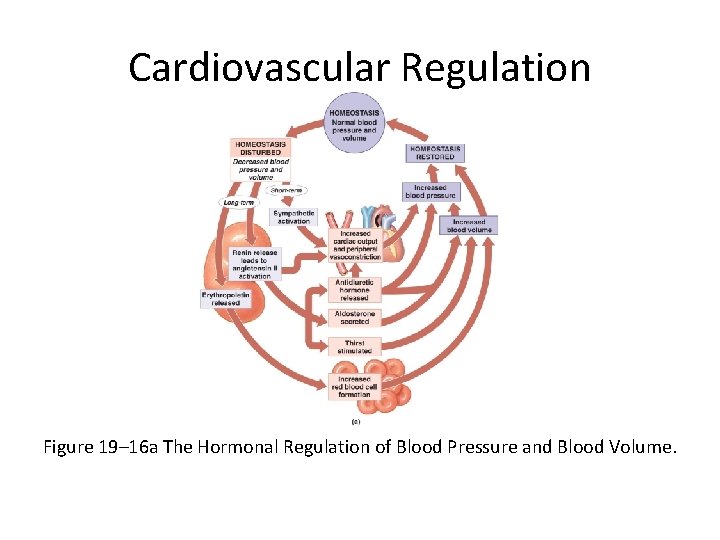
Cardiovascular Regulation • Antidiuretic Hormone (ADH) – Released by neurohypophysis (posterior lobe of pituitary) – Elevates blood pressure – Reduces water loss at kidneys – ADH responds to • Low blood volume • High plasma osmotic concentration • Circulating angiotensin II
Cardiovascular Regulation • Angiotensin II – Responds to fall in renal blood pressure – Stimulates • Aldosterone production • ADH production • Thirst • Cardiac output • Peripheral vasoconstriction
Cardiovascular Regulation • Erythropoietin (EPO) – Released at kidneys – Responds to low blood pressure, low O 2 content in blood – Stimulates red blood cell production
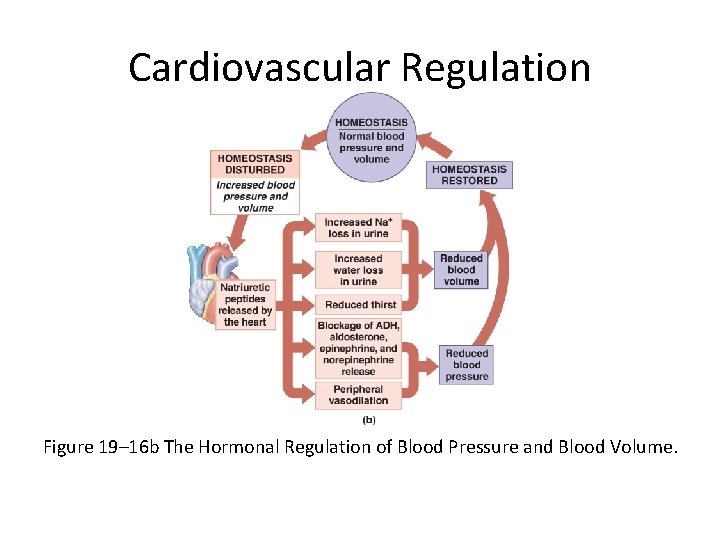
Cardiovascular Regulation • Natriuretic Peptides – Atrial natriuretic peptide (ANP) • Produced by cells in right atrium – Brain natriuretic peptide (BNP) • Produced by ventricular muscle cells – Respond to excessive diastolic stretching – Lower blood volume and blood pressure – Reduce stress on heart
Cardiovascular Regulation Figure 19– 16 a The Hormonal Regulation of Blood Pressure and Blood Volume.
Cardiovascular Regulation Figure 19– 16 b The Hormonal Regulation of Blood Pressure and Blood Volume.
Cardiovascular Adaptation • Blood, heart, and cardiovascular system – Work together as unit – Respond to physical and physiological changes (for example, exercise, blood loss) – Maintains homeostasis
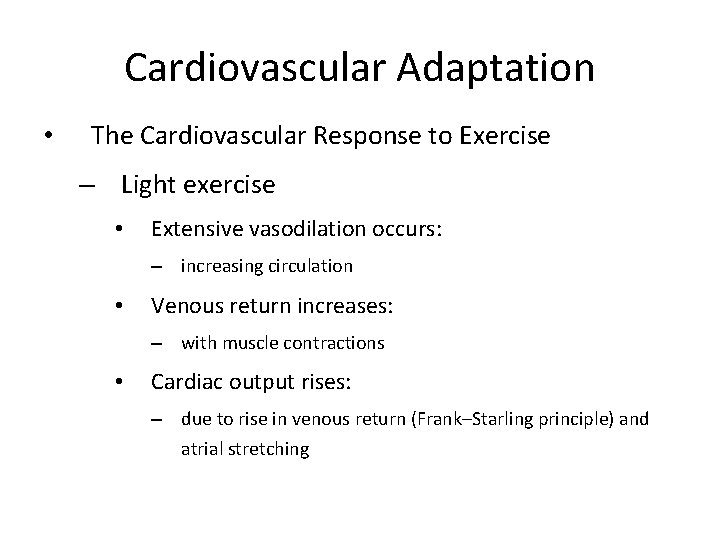
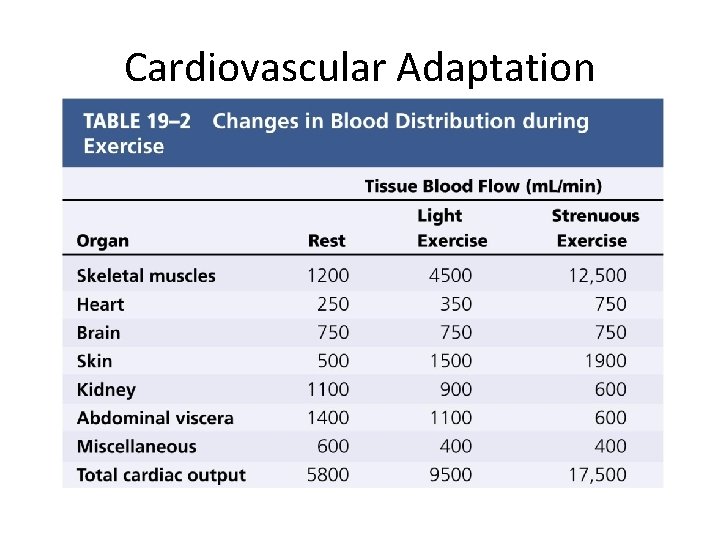
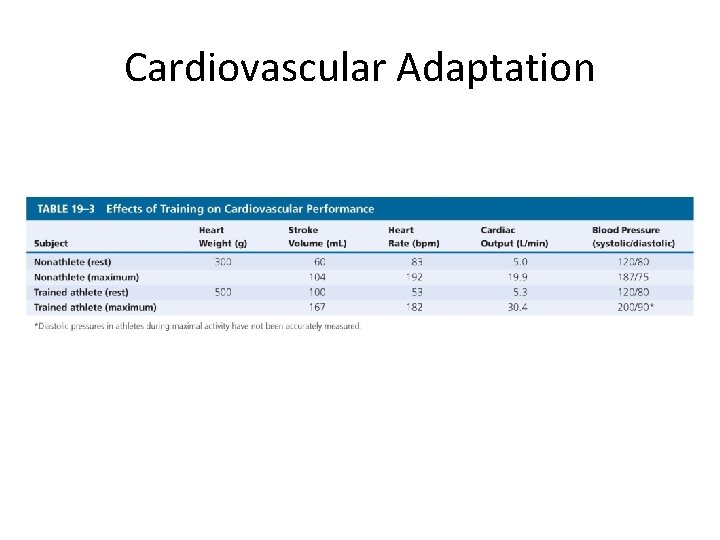
Cardiovascular Adaptation • The Cardiovascular Response to Exercise – Light exercise • Extensive vasodilation occurs: – increasing circulation • Venous return increases: – with muscle contractions • Cardiac output rises: – due to rise in venous return (Frank–Starling principle) and atrial stretching
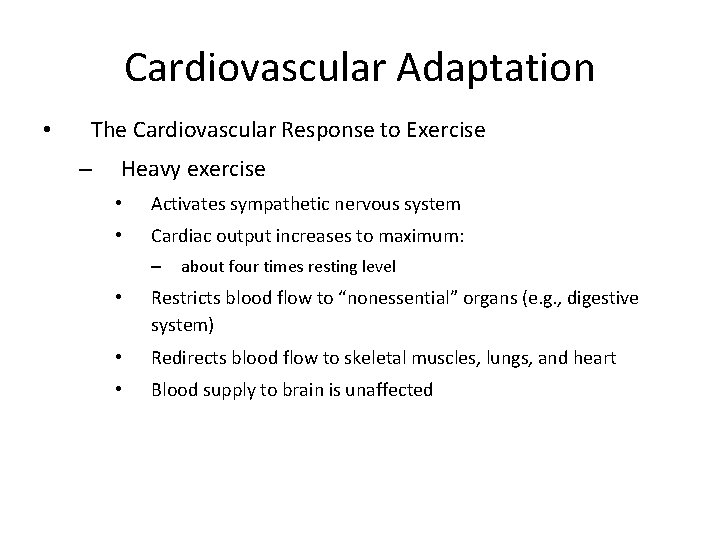
Cardiovascular Adaptation • The Cardiovascular Response to Exercise – Heavy exercise • Activates sympathetic nervous system • Cardiac output increases to maximum: – about four times resting level • Restricts blood flow to “nonessential” organs (e. g. , digestive system) • Redirects blood flow to skeletal muscles, lungs, and heart • Blood supply to brain is unaffected
Cardiovascular Adaptation
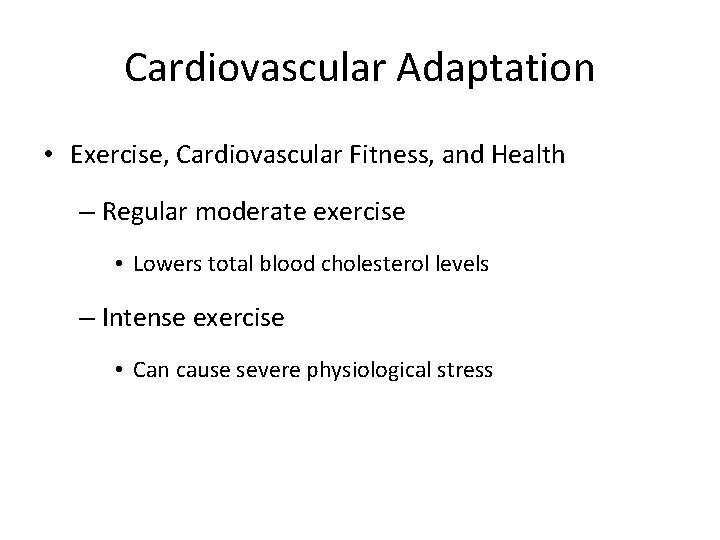
Cardiovascular Adaptation • Exercise, Cardiovascular Fitness, and Health – Regular moderate exercise • Lowers total blood cholesterol levels – Intense exercise • Can cause severe physiological stress
Cardiovascular Adaptation
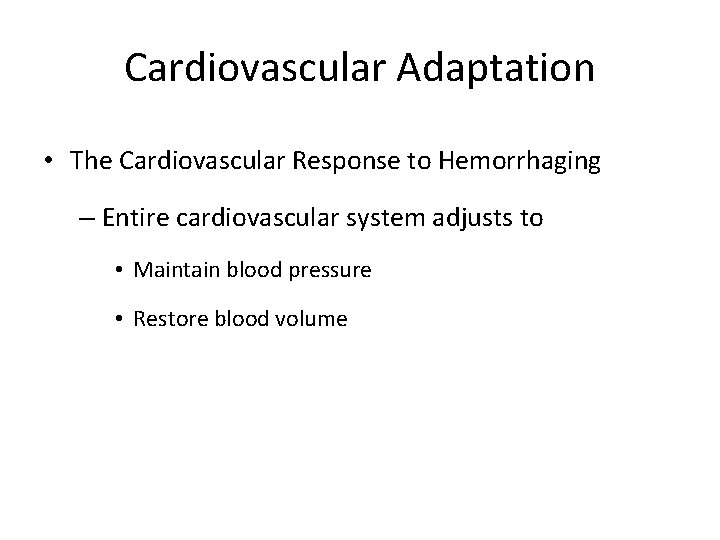
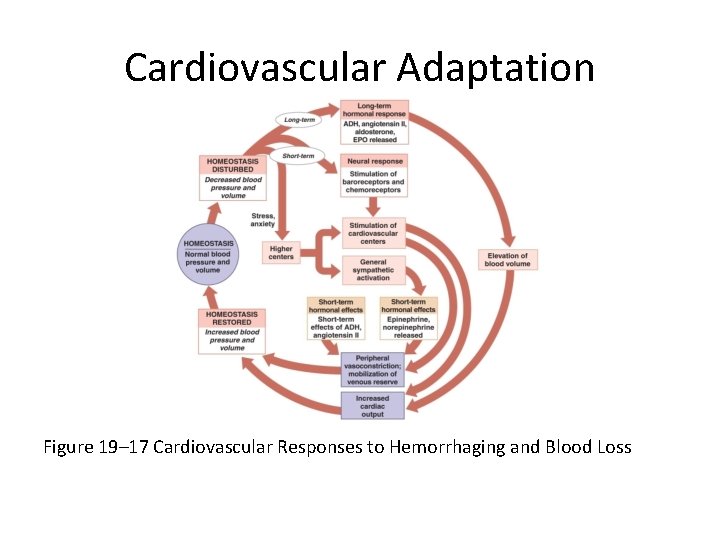
Cardiovascular Adaptation • The Cardiovascular Response to Hemorrhaging – Entire cardiovascular system adjusts to • Maintain blood pressure • Restore blood volume
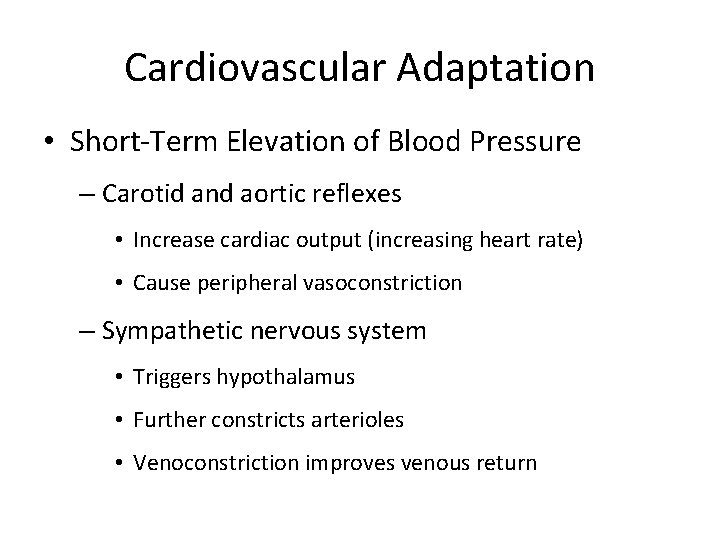
Cardiovascular Adaptation • Short-Term Elevation of Blood Pressure – Carotid and aortic reflexes • Increase cardiac output (increasing heart rate) • Cause peripheral vasoconstriction – Sympathetic nervous system • Triggers hypothalamus • Further constricts arterioles • Venoconstriction improves venous return
Cardiovascular Adaptation • Short-Term Elevation of Blood Pressure – Hormonal effects § Increase cardiac output § Increase peripheral vasoconstriction (E, NE, ADH, angiotensin II)
Cardiovascular Adaptation • Shock – Short-term responses compensate after blood losses of up to 20% of total blood volume – Failure to restore blood pressure results in shock Circulatory Shock
Cardiovascular Adaptation • Long-Term Restoration of Blood Volume – Recall of fluids from interstitial spaces – Aldosterone and ADH promote fluid retention and reabsorption – Thirst increases – Erythropoietin stimulates red blood cell production
Cardiovascular Adaptation Figure 19– 17 Cardiovascular Responses to Hemorrhaging and Blood Loss
Cardiovascular Adaptation • Vascular Supply to Special Regions – Through organs with separate mechanisms to control blood flow • Brain • Heart • Lungs
Cardiovascular Adaptation • Blood Flow to the Brain – Is top priority – Brain has high oxygen demand – When peripheral vessels constrict, cerebral vessels dilate, normalizing blood flow
Cardiovascular Adaptation • Stroke – Also called cerebrovascular accident (CVA) – Blockage or rupture in a cerebral artery – Stops blood flow
Cardiovascular Adaptation • Blood Flow to the Heart – Through coronary arteries – Oxygen demand increases with activity – Lactic acid and low O 2 levels • Dilate coronary vessels • Increase coronary blood flow – Epinephrine • Dilates coronary vessels • Increases heart rate • Strengthens contractions
Cardiovascular Adaptation • Heart Attack – A blockage of coronary blood flow – Can cause • Angina (chest pain) • Tissue damage • Heart failure • Death
Cardiovascular Adaptation • Blood Flow to the Lungs – Regulated by O 2 levels in alveoli – High O 2 content • Vessels dilate – Low O 2 content • Vessels constrict
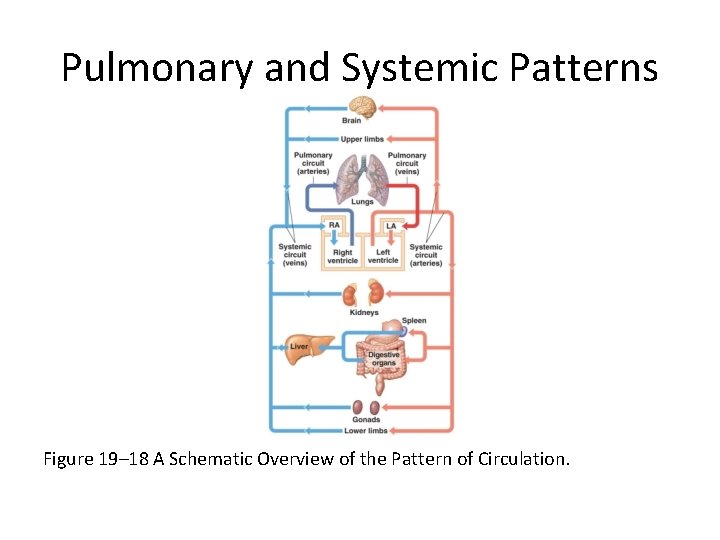
Pulmonary and Systemic Patterns Figure 19– 18 A Schematic Overview of the Pattern of Circulation.
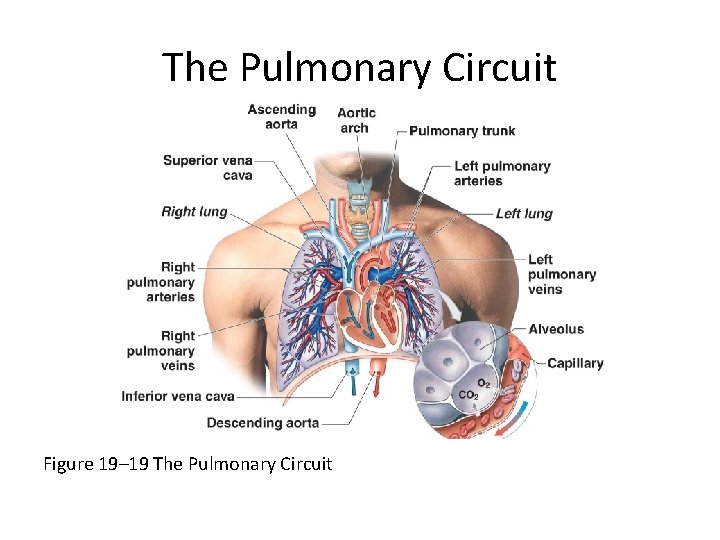
The Pulmonary Circuit 1. Deoxygenated blood arrives at heart from systemic circuit: – – Passes through right atrium and right ventricle Enters pulmonary trunk 2. At the lungs: – – CO 2 is removed O 2 is added 3. Oxygenated blood: – – Returns to the heart Is distributed to systemic circuit
The Pulmonary Circuit • Pulmonary Vessels – Pulmonary arteries • Carry deoxygenated blood • Pulmonary trunk: – branches to left and right pulmonary arteries • Pulmonary arteries: – branch into pulmonary arterioles • Pulmonary arterioles: – branch into capillary networks that surround alveoli
The Pulmonary Circuit • Pulmonary Vessels – Pulmonary veins • Carry oxygenated blood • Capillary networks around alveoli: – join to form venules • Venules: – join to form four pulmonary veins • Pulmonary veins: – empty into left atrium
The Pulmonary Circuit Figure 19– 19 The Pulmonary Circuit
The Systemic Circuit • Contains 84% of blood volume • Supplies entire body – Except for pulmonary circuit
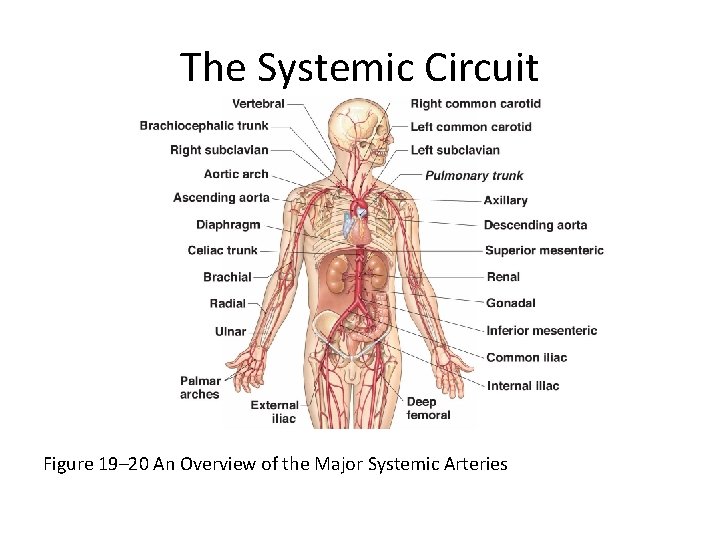
The Systemic Circuit • Systemic Arteries – Blood moves from left ventricle • Into ascending aorta – Coronary arteries • Branch from aortic sinus
The Systemic Circuit Figure 19– 20 An Overview of the Major Systemic Arteries