
PRESS PLAY TO CONTINUE PHYSICAL FEATURES OF THE

- Slides: 35
PRESS PLAY TO CONTINUE
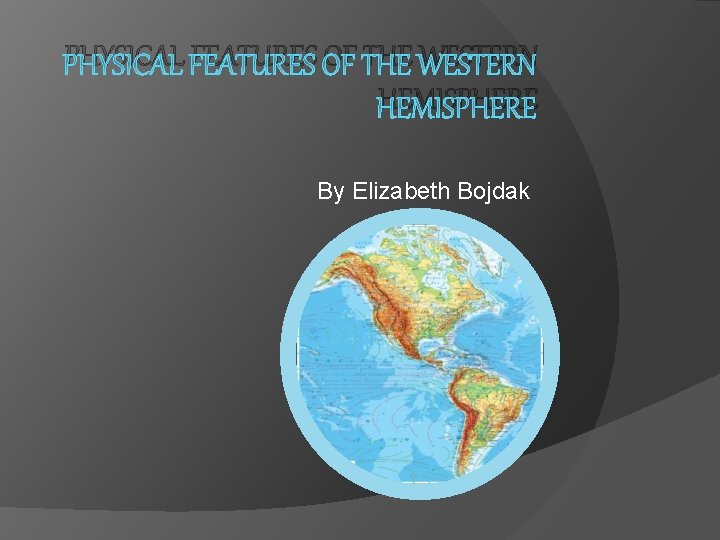
PHYSICAL FEATURES OF THE WESTERN HEMISPHERE By Elizabeth Bojdak
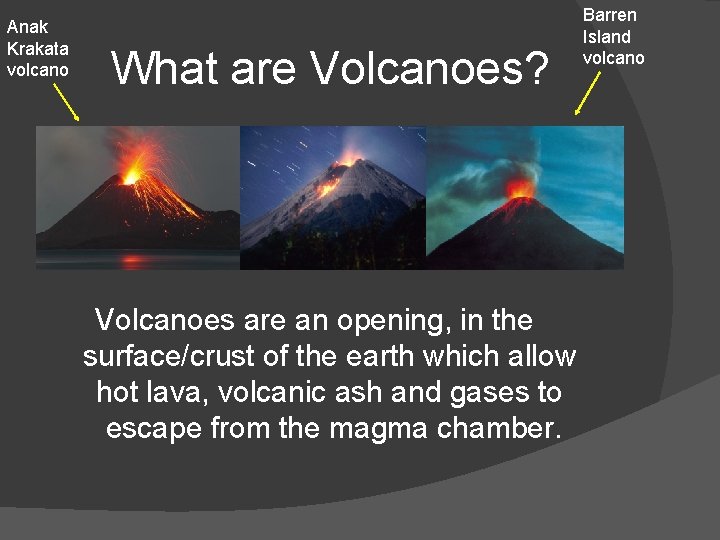
Anak Krakata volcano What are Volcanoes? Volcanoes are an opening, in the surface/crust of the earth which allow hot lava, volcanic ash and gases to escape from the magma chamber. Barren Island volcano
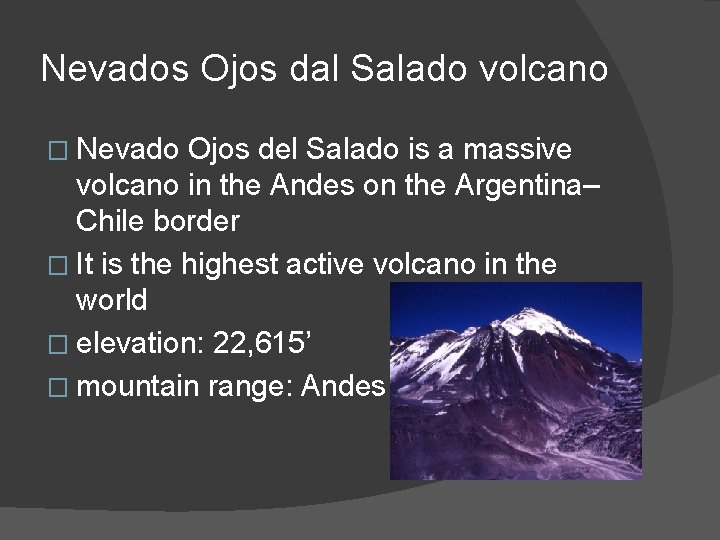
Nevados Ojos dal Salado volcano � Nevado Ojos del Salado is a massive volcano in the Andes on the Argentina– Chile border � It is the highest active volcano in the world � elevation: 22, 615’ � mountain range: Andes
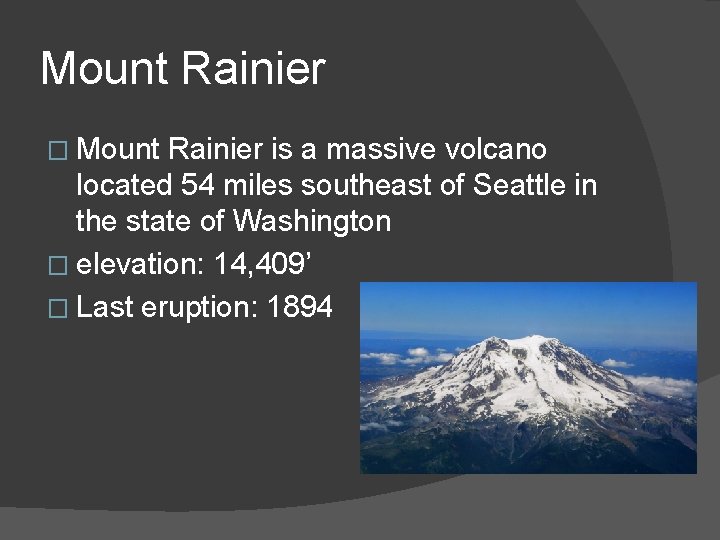
Mount Rainier � Mount Rainier is a massive volcano located 54 miles southeast of Seattle in the state of Washington � elevation: 14, 409’ � Last eruption: 1894
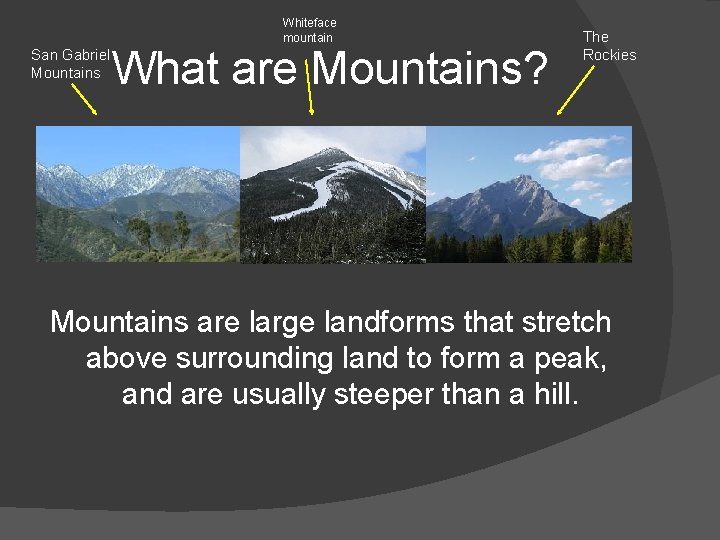
Whiteface mountain San Gabriel Mountains What are Mountains? The Rockies Mountains are large landforms that stretch above surrounding land to form a peak, and are usually steeper than a hill.
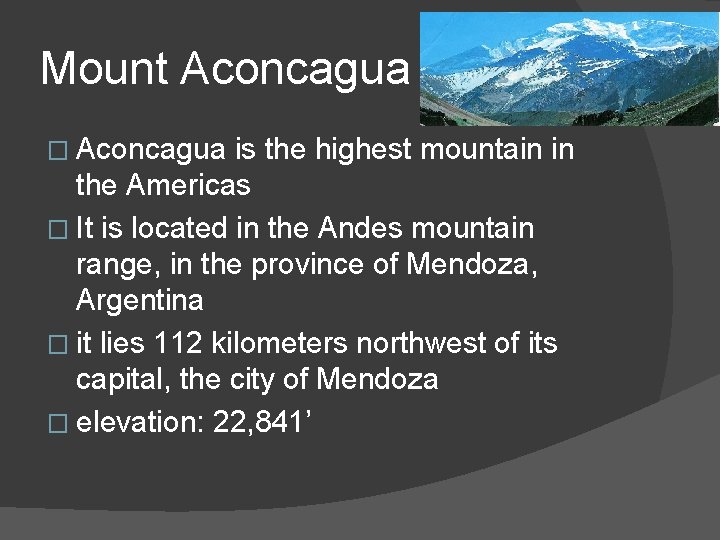
Mount Aconcagua � Aconcagua is the highest mountain in the Americas � It is located in the Andes mountain range, in the province of Mendoza, Argentina � it lies 112 kilometers northwest of its capital, the city of Mendoza � elevation: 22, 841’
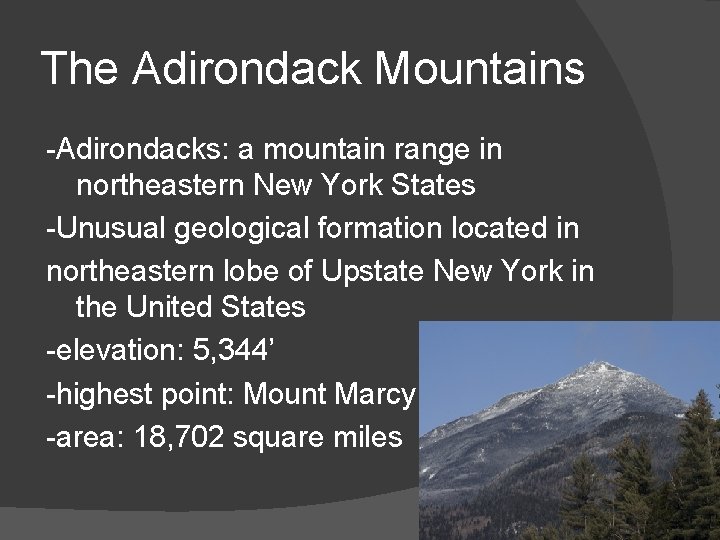
The Adirondack Mountains -Adirondacks: a mountain range in northeastern New York States -Unusual geological formation located in northeastern lobe of Upstate New York in the United States -elevation: 5, 344’ -highest point: Mount Marcy -area: 18, 702 square miles
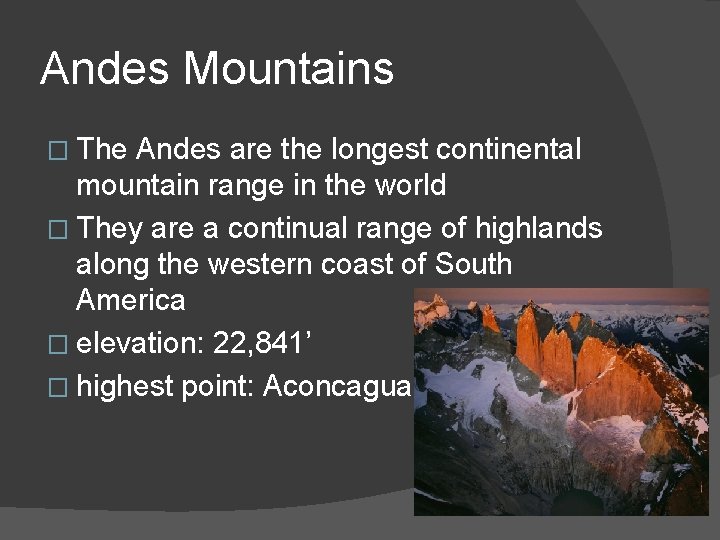
Andes Mountains � The Andes are the longest continental mountain range in the world � They are a continual range of highlands along the western coast of South America � elevation: 22, 841’ � highest point: Aconcagua
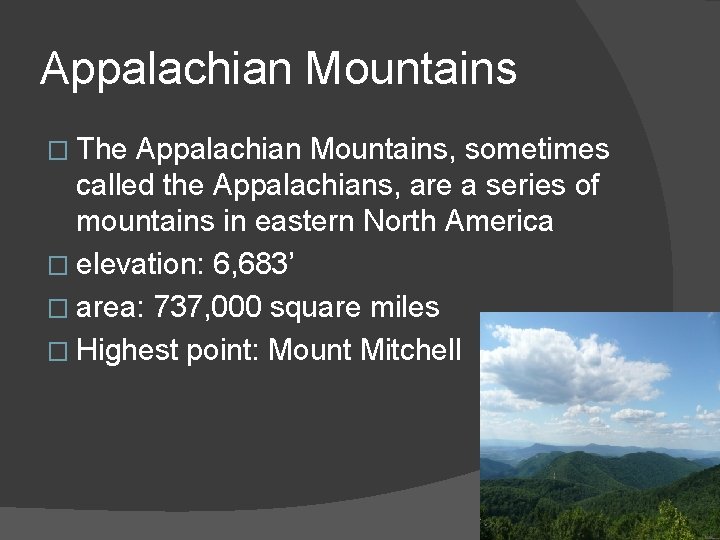
Appalachian Mountains � The Appalachian Mountains, sometimes called the Appalachians, are a series of mountains in eastern North America � elevation: 6, 683’ � area: 737, 000 square miles � Highest point: Mount Mitchell
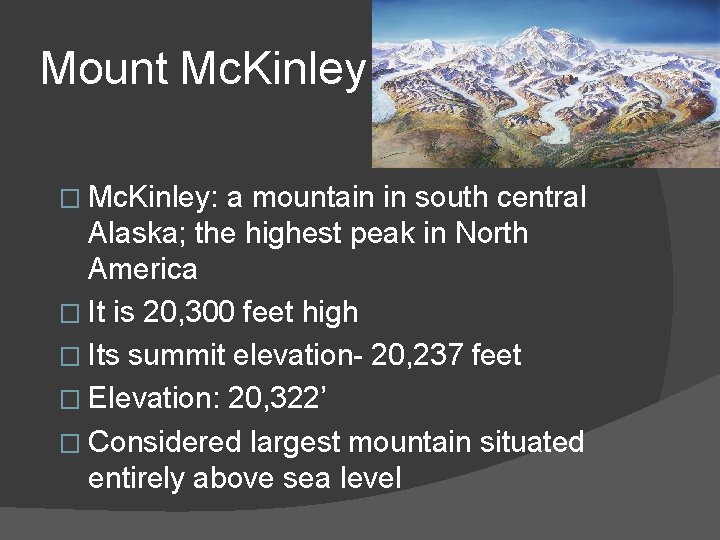
Mount Mc. Kinley � Mc. Kinley: a mountain in south central Alaska; the highest peak in North America � It is 20, 300 feet high � Its summit elevation- 20, 237 feet � Elevation: 20, 322’ � Considered largest mountain situated entirely above sea level
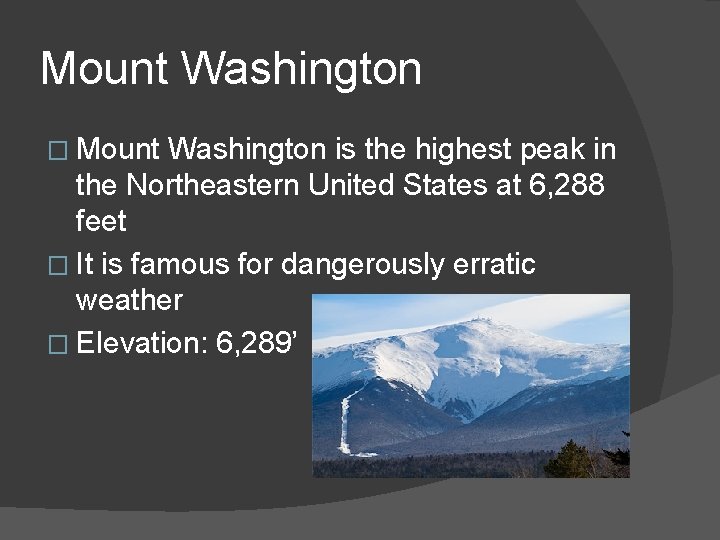
Mount Washington � Mount Washington is the highest peak in the Northeastern United States at 6, 288 feet � It is famous for dangerously erratic weather � Elevation: 6, 289’
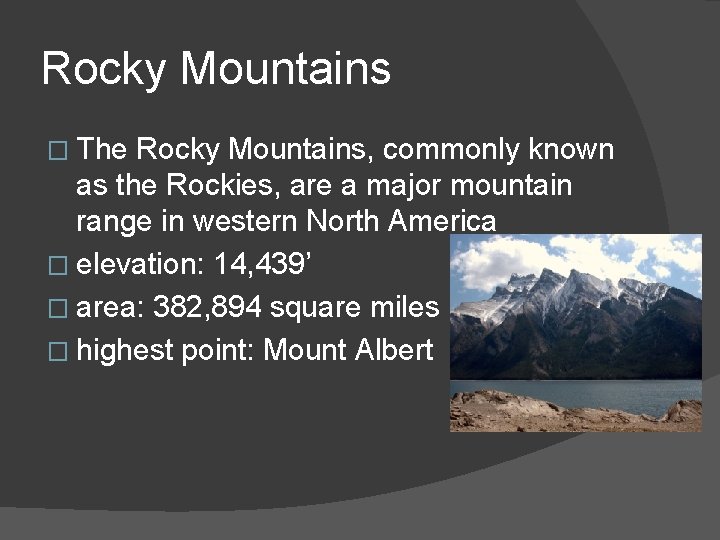
Rocky Mountains � The Rocky Mountains, commonly known as the Rockies, are a major mountain range in western North America � elevation: 14, 439’ � area: 382, 894 square miles � highest point: Mount Albert
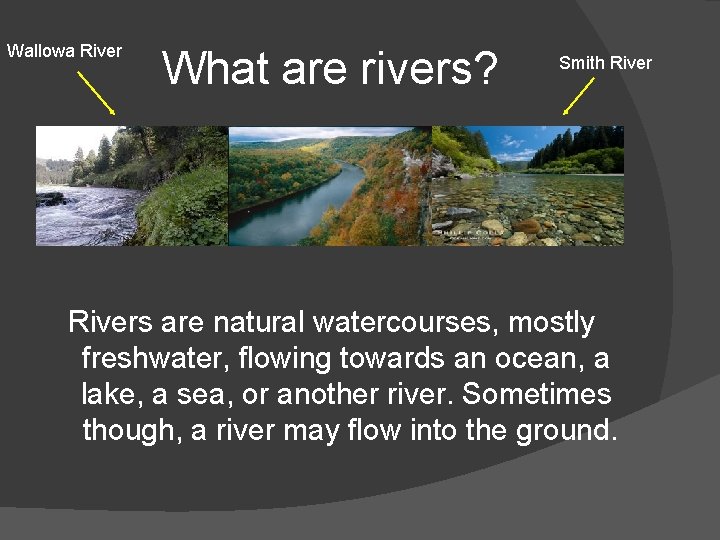
Wallowa River What are rivers? Smith Rivers are natural watercourses, mostly freshwater, flowing towards an ocean, a lake, a sea, or another river. Sometimes though, a river may flow into the ground.
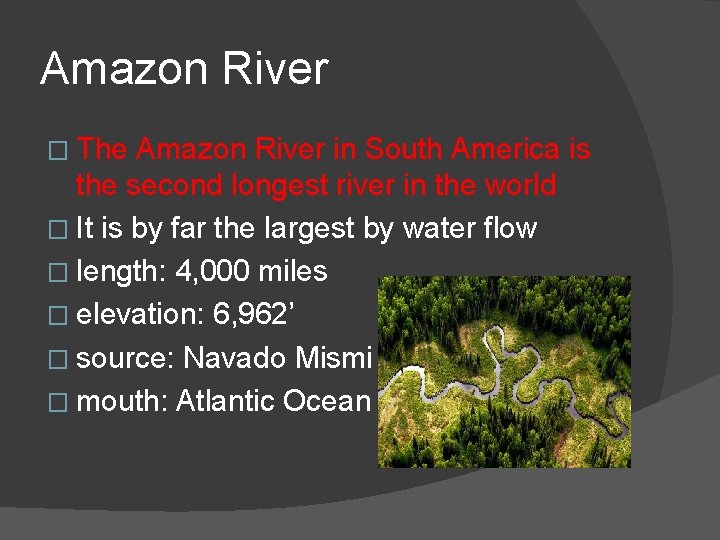
Amazon River � The Amazon River in South America is the second longest river in the world � It is by far the largest by water flow � length: 4, 000 miles � elevation: 6, 962’ � source: Navado Mismi � mouth: Atlantic Ocean
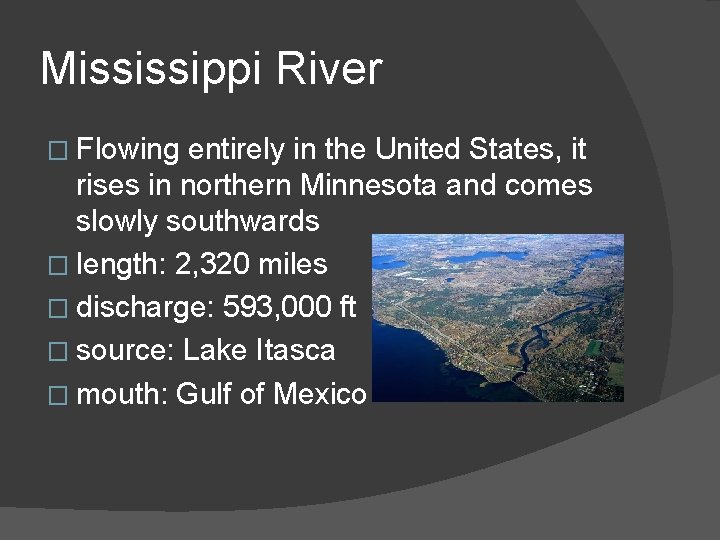
Mississippi River � Flowing entirely in the United States, it rises in northern Minnesota and comes slowly southwards � length: 2, 320 miles � discharge: 593, 000 ft � source: Lake Itasca � mouth: Gulf of Mexico
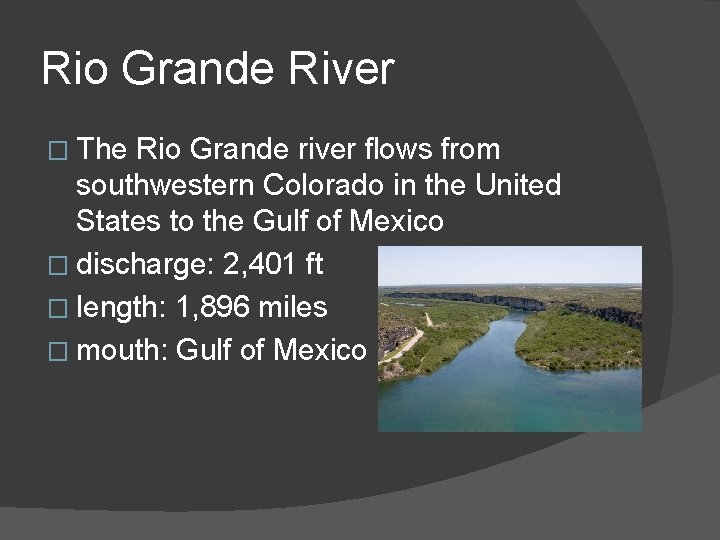
Rio Grande River � The Rio Grande river flows from southwestern Colorado in the United States to the Gulf of Mexico � discharge: 2, 401 ft � length: 1, 896 miles � mouth: Gulf of Mexico
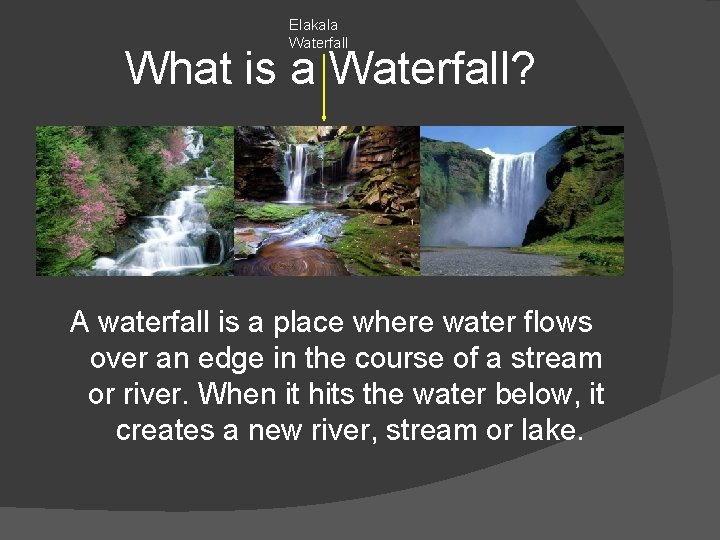
Elakala Waterfall What is a Waterfall? A waterfall is a place where water flows over an edge in the course of a stream or river. When it hits the water below, it creates a new river, stream or lake.
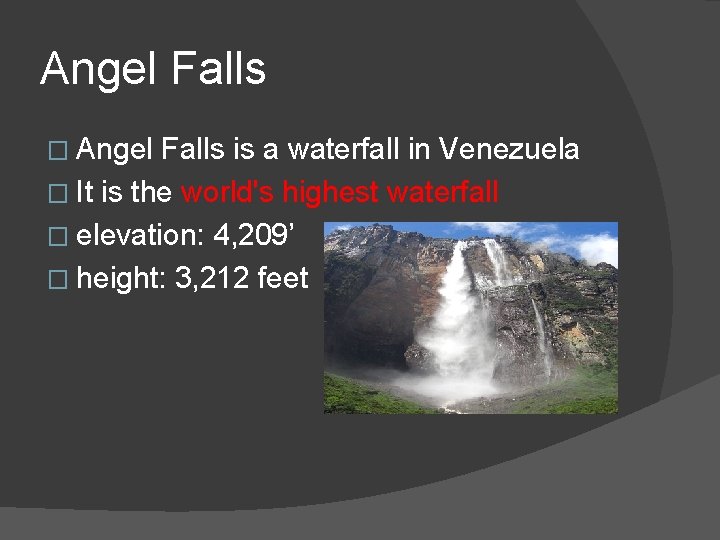
Angel Falls � Angel Falls is a waterfall in Venezuela � It is the world's highest waterfall � elevation: 4, 209’ � height: 3, 212 feet
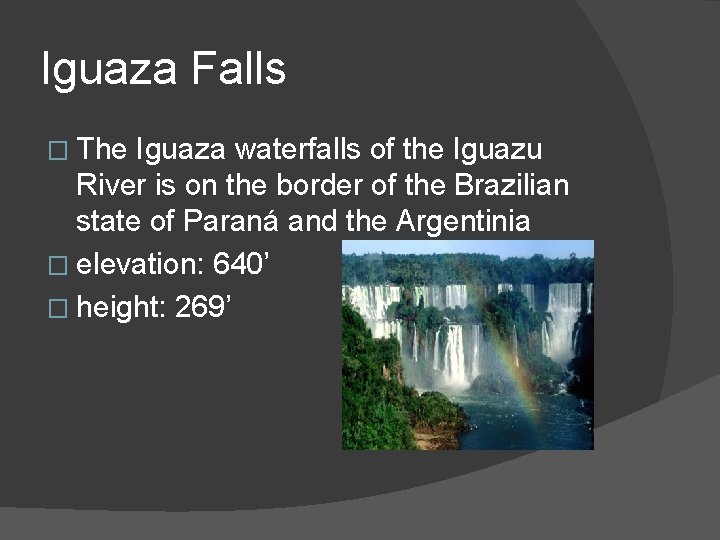
Iguaza Falls � The Iguaza waterfalls of the Iguazu River is on the border of the Brazilian state of Paraná and the Argentinia � elevation: 640’ � height: 269’
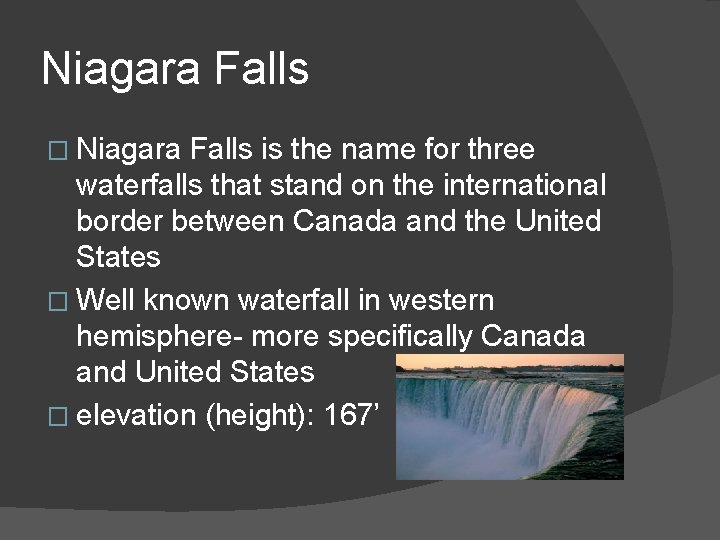
Niagara Falls � Niagara Falls is the name for three waterfalls that stand on the international border between Canada and the United States � Well known waterfall in western hemisphere- more specifically Canada and United States � elevation (height): 167’
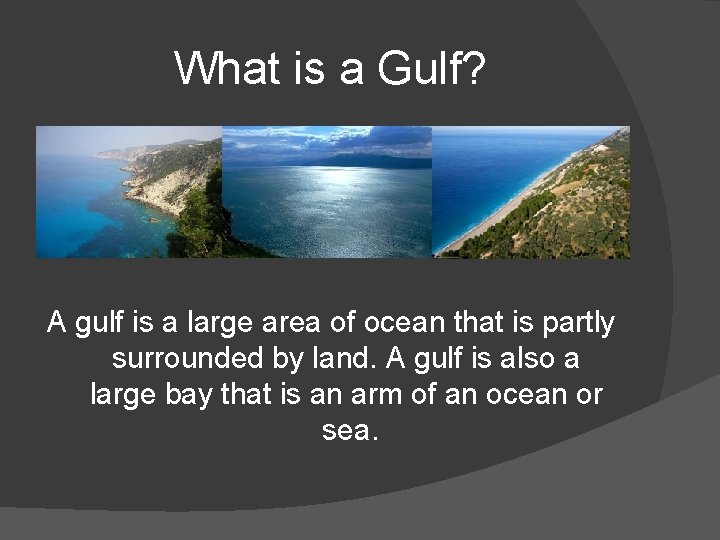
What is a Gulf? A gulf is a large area of ocean that is partly surrounded by land. A gulf is also a large bay that is an arm of an ocean or sea.
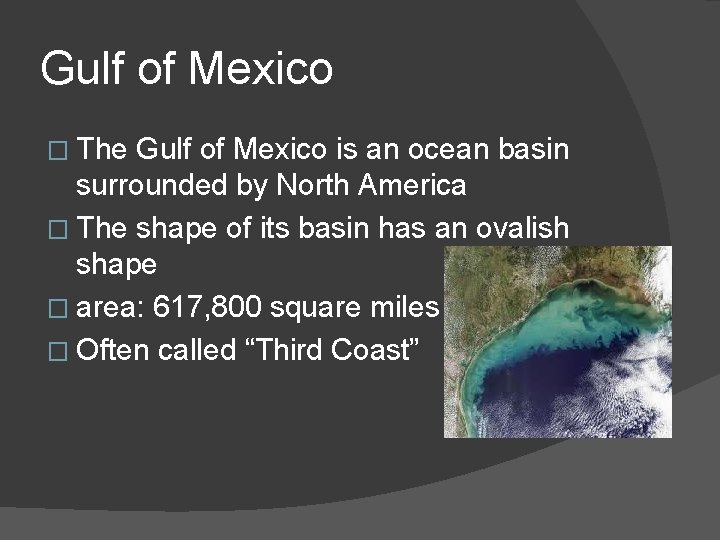
Gulf of Mexico � The Gulf of Mexico is an ocean basin surrounded by North America � The shape of its basin has an ovalish shape � area: 617, 800 square miles � Often called “Third Coast”
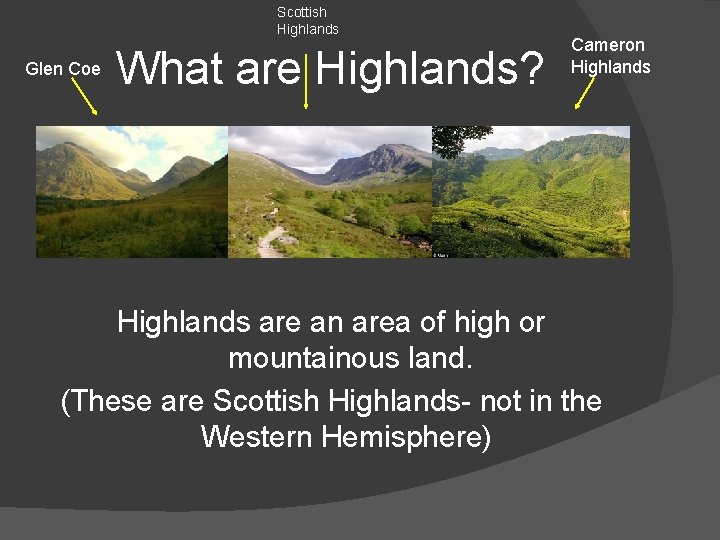
Scottish Highlands Glen Coe What are Highlands? Cameron Highlands are an area of high or mountainous land. (These are Scottish Highlands- not in the Western Hemisphere)
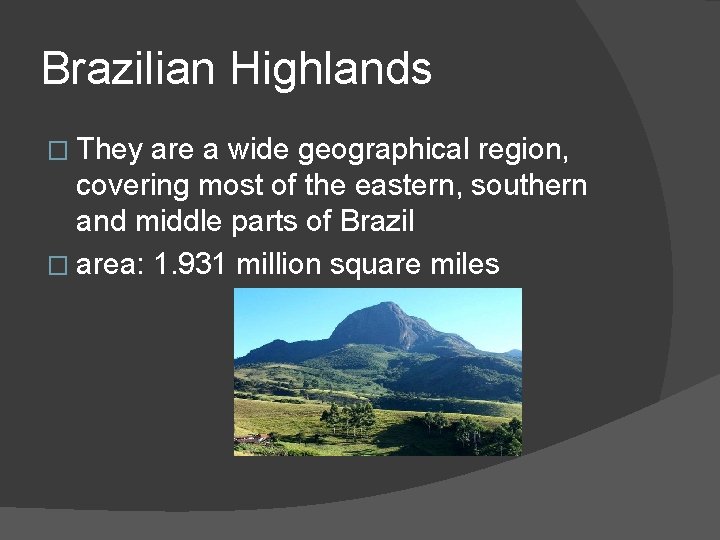
Brazilian Highlands � They are a wide geographical region, covering most of the eastern, southern and middle parts of Brazil � area: 1. 931 million square miles
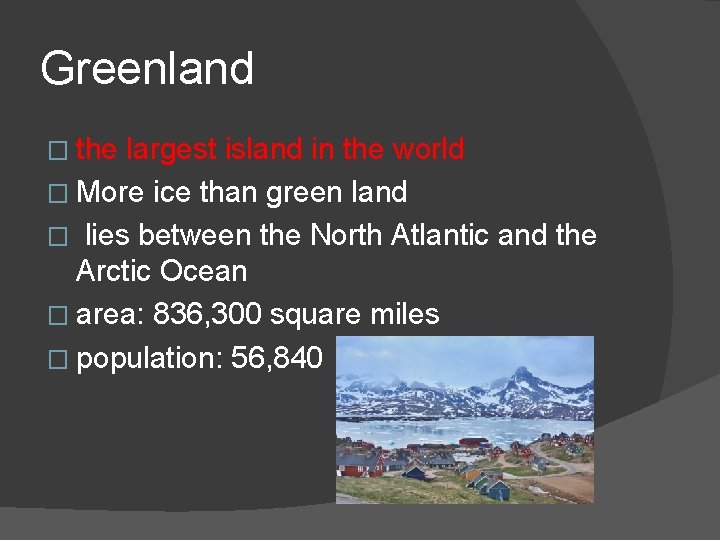
Greenland � the largest island in the world � More ice than green land � lies between the North Atlantic and the Arctic Ocean � area: 836, 300 square miles � population: 56, 840
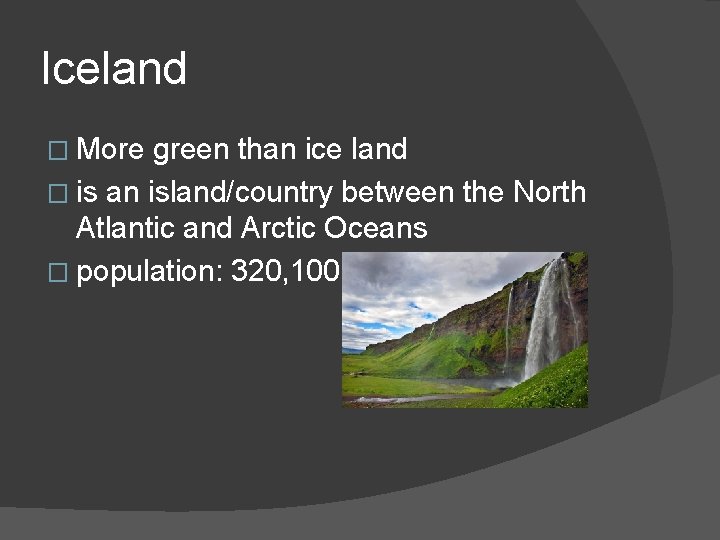
Iceland � More green than ice land � is an island/country between the North Atlantic and Arctic Oceans � population: 320, 100
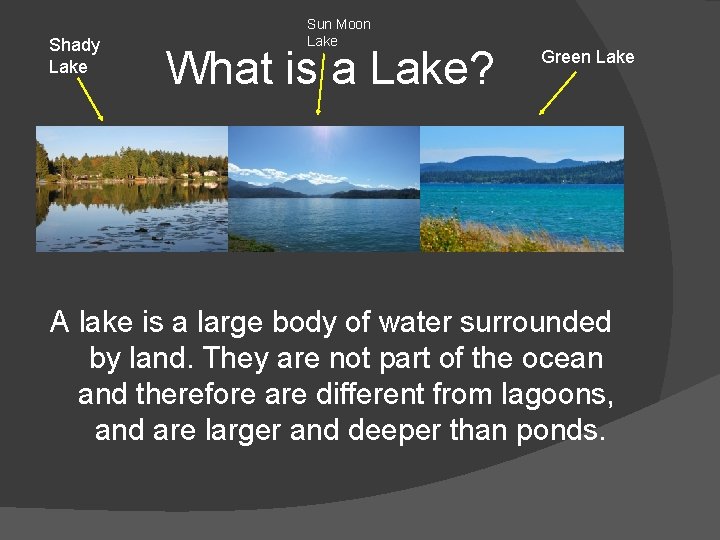
Shady Lake Sun Moon Lake What is a Lake? Green Lake A lake is a large body of water surrounded by land. They are not part of the ocean and therefore are different from lagoons, and are larger and deeper than ponds.
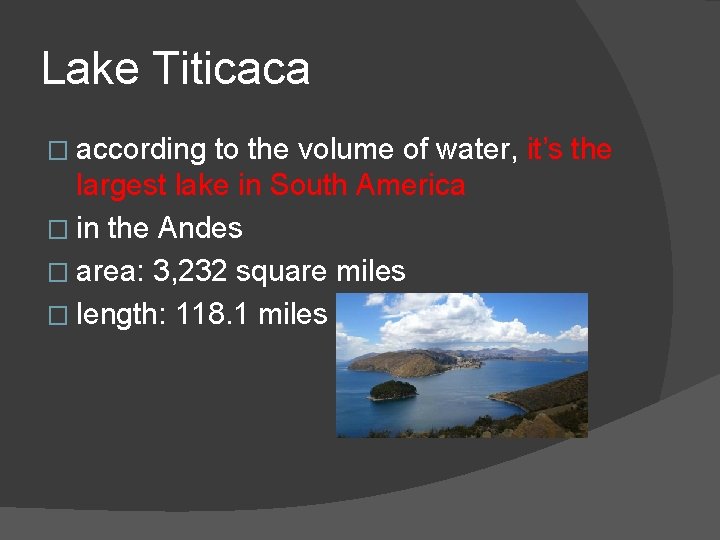
Lake Titicaca � according to the volume of water, it’s the largest lake in South America � in the Andes � area: 3, 232 square miles � length: 118. 1 miles
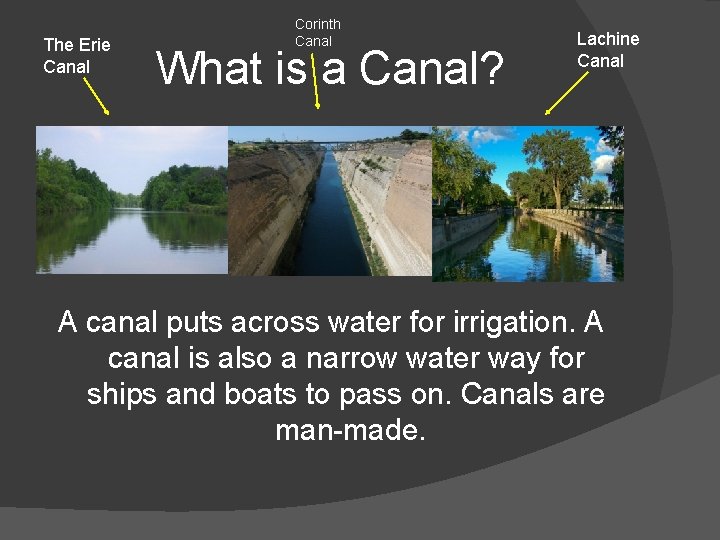
The Erie Canal Corinth Canal What is a Canal? Lachine Canal A canal puts across water for irrigation. A canal is also a narrow water way for ships and boats to pass on. Canals are man-made.
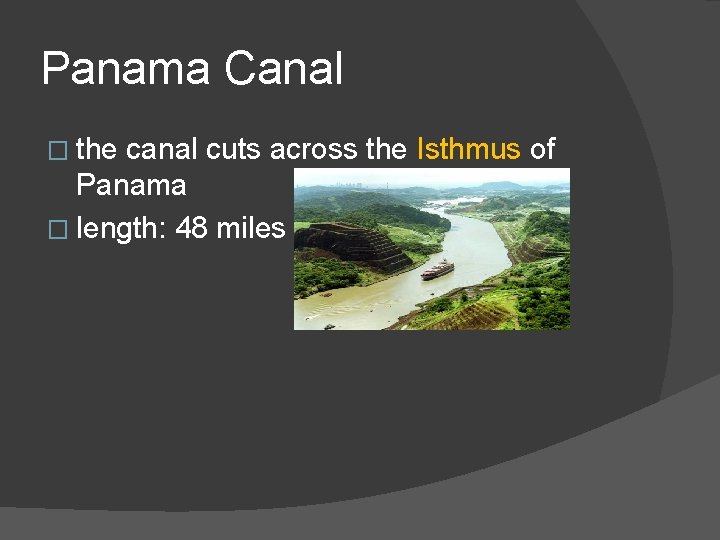
Panama Canal � the canal cuts across the Isthmus of Panama � length: 48 miles
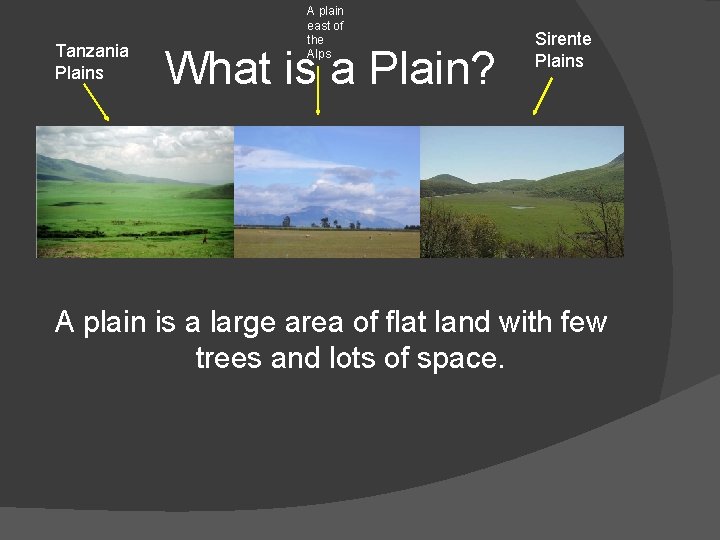
Tanzania Plains A plain east of the Alps What is a Plain? Sirente Plains A plain is a large area of flat land with few trees and lots of space.
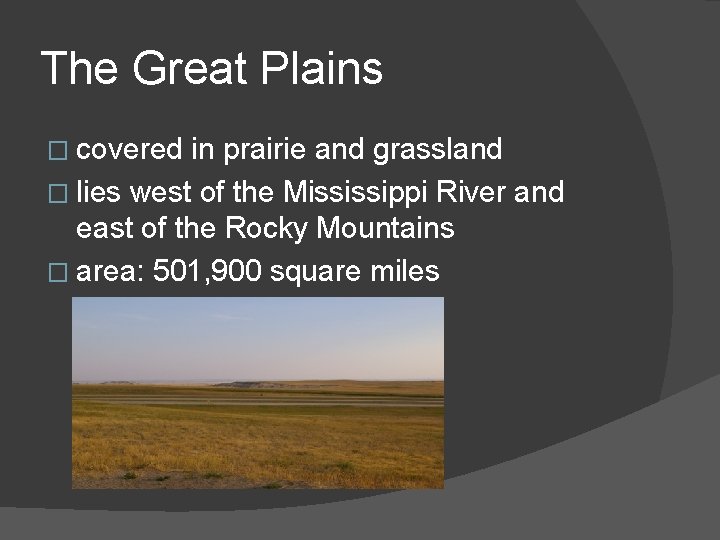
The Great Plains � covered in prairie and grassland � lies west of the Mississippi River and east of the Rocky Mountains � area: 501, 900 square miles
Thanks for watching, But I’m done now It’s about the climb.
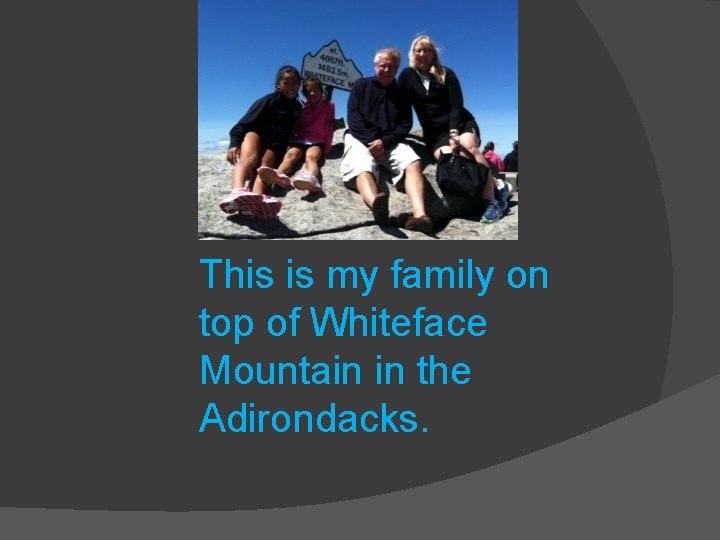
This is my family on top of Whiteface Mountain in the Adirondacks.