
Presidents PART II 1849 1897 SOURCE WWW WHITEHOUSE
- Slides: 16
Presidents PART II 1849 -1897 SOURCE: WWW. WHITEHOUSE. GOV
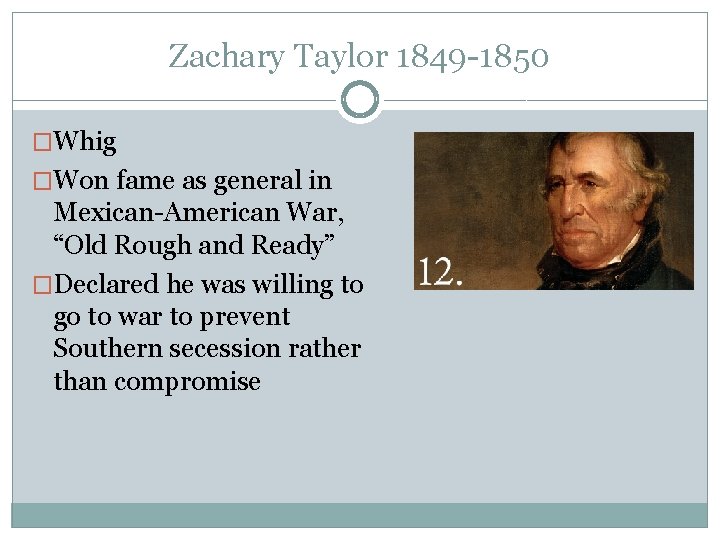
Zachary Taylor 1849 -1850 �Whig �Won fame as general in Mexican-American War, “Old Rough and Ready” �Declared he was willing to go to war to prevent Southern secession rather than compromise
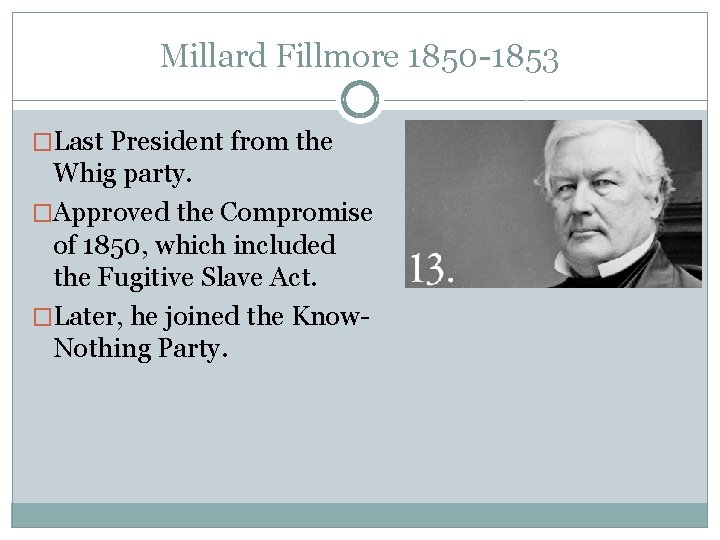
Millard Fillmore 1850 -1853 �Last President from the Whig party. �Approved the Compromise of 1850, which included the Fugitive Slave Act. �Later, he joined the Know. Nothing Party.
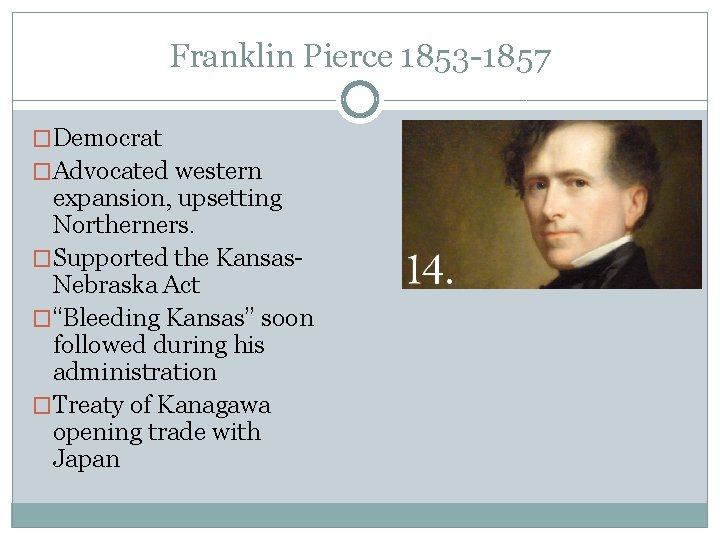
Franklin Pierce 1853 -1857 �Democrat �Advocated western expansion, upsetting Northerners. �Supported the Kansas. Nebraska Act �“Bleeding Kansas” soon followed during his administration �Treaty of Kanagawa opening trade with Japan
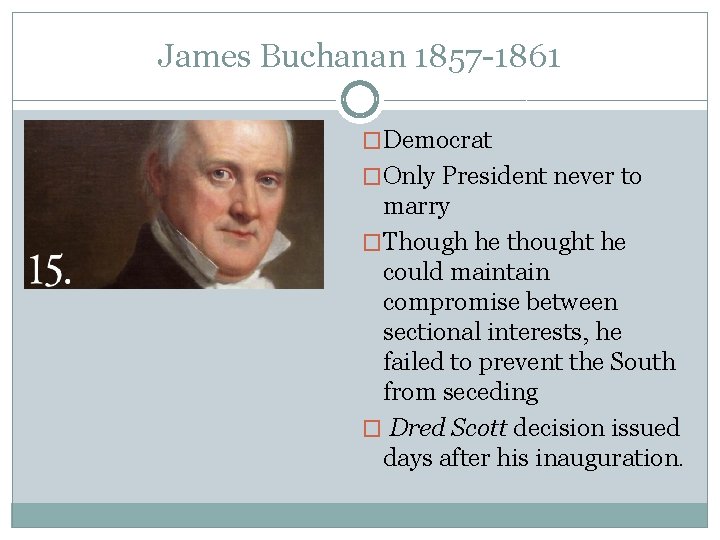
James Buchanan 1857 -1861 �Democrat �Only President never to marry �Though he thought he could maintain compromise between sectional interests, he failed to prevent the South from seceding � Dred Scott decision issued days after his inauguration.
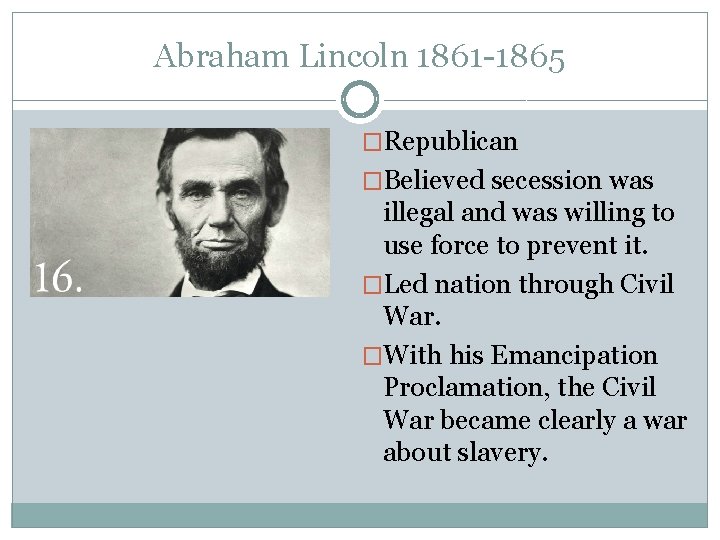
Abraham Lincoln 1861 -1865 �Republican �Believed secession was illegal and was willing to use force to prevent it. �Led nation through Civil War. �With his Emancipation Proclamation, the Civil War became clearly a war about slavery.
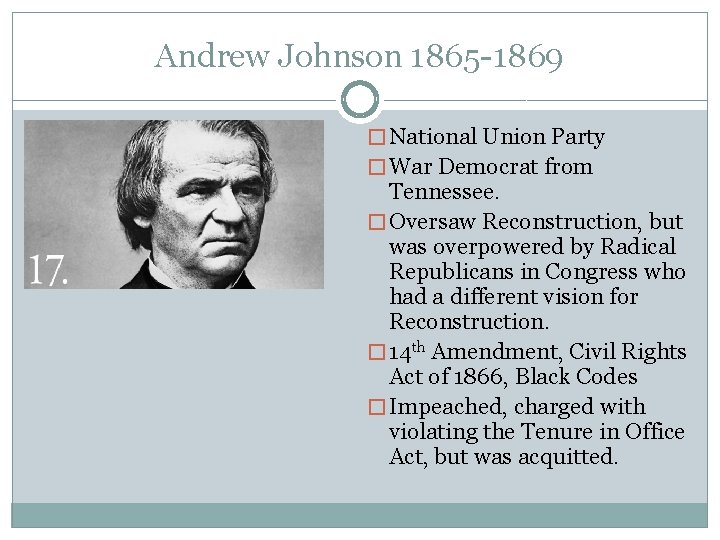
Andrew Johnson 1865 -1869 � National Union Party � War Democrat from Tennessee. � Oversaw Reconstruction, but was overpowered by Radical Republicans in Congress who had a different vision for Reconstruction. � 14 th Amendment, Civil Rights Act of 1866, Black Codes � Impeached, charged with violating the Tenure in Office Act, but was acquitted.
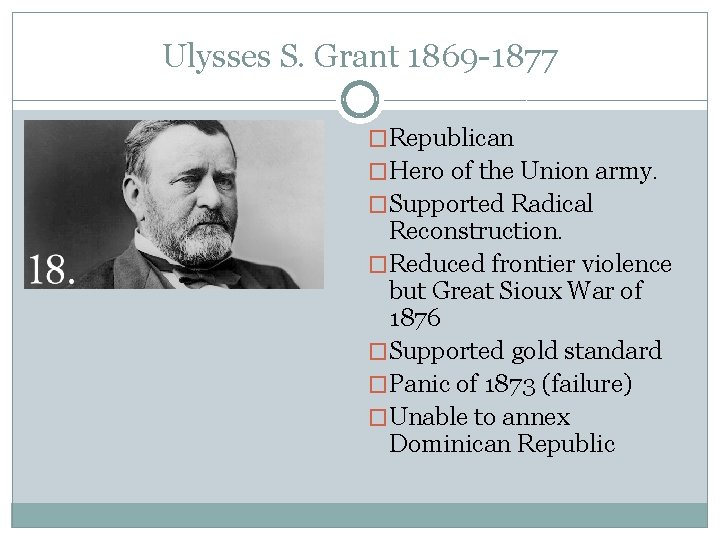
Ulysses S. Grant 1869 -1877 �Republican �Hero of the Union army. �Supported Radical Reconstruction. �Reduced frontier violence but Great Sioux War of 1876 �Supported gold standard �Panic of 1873 (failure) �Unable to annex Dominican Republic
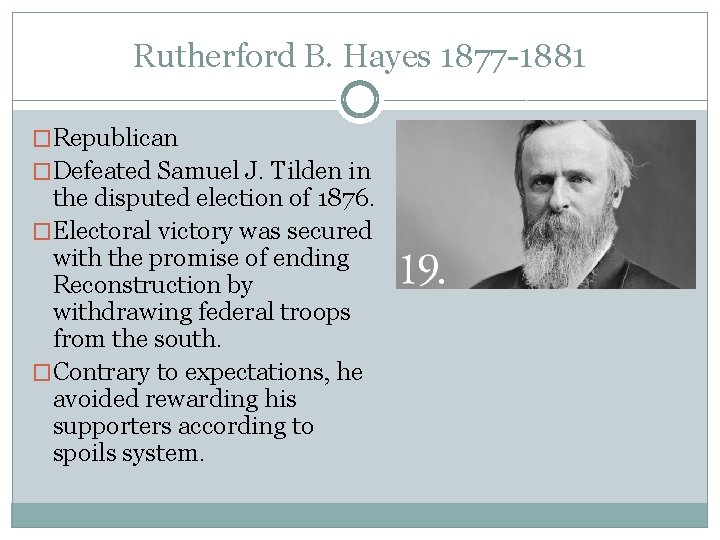
Rutherford B. Hayes 1877 -1881 �Republican �Defeated Samuel J. Tilden in the disputed election of 1876. �Electoral victory was secured with the promise of ending Reconstruction by withdrawing federal troops from the south. �Contrary to expectations, he avoided rewarding his supporters according to spoils system.
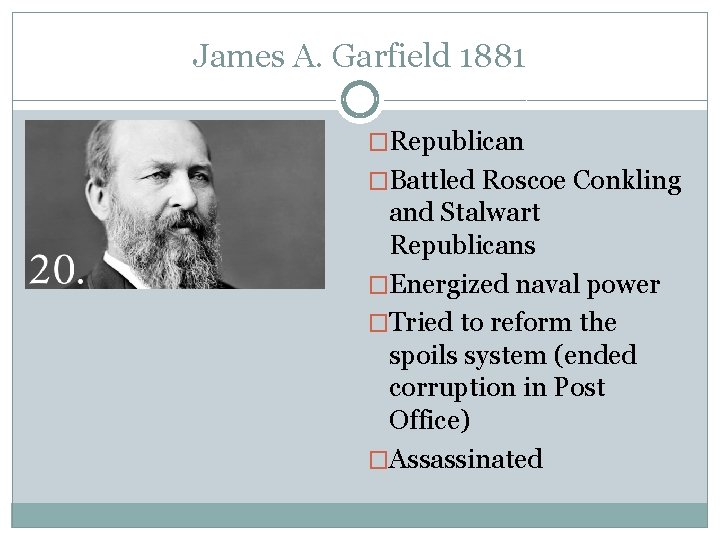
James A. Garfield 1881 �Republican �Battled Roscoe Conkling and Stalwart Republicans �Energized naval power �Tried to reform the spoils system (ended corruption in Post Office) �Assassinated
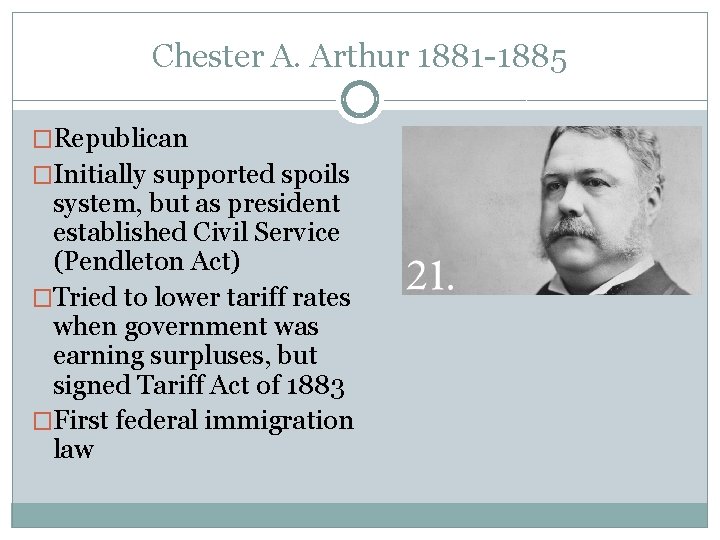
Chester A. Arthur 1881 -1885 �Republican �Initially supported spoils system, but as president established Civil Service (Pendleton Act) �Tried to lower tariff rates when government was earning surpluses, but signed Tariff Act of 1883 �First federal immigration law
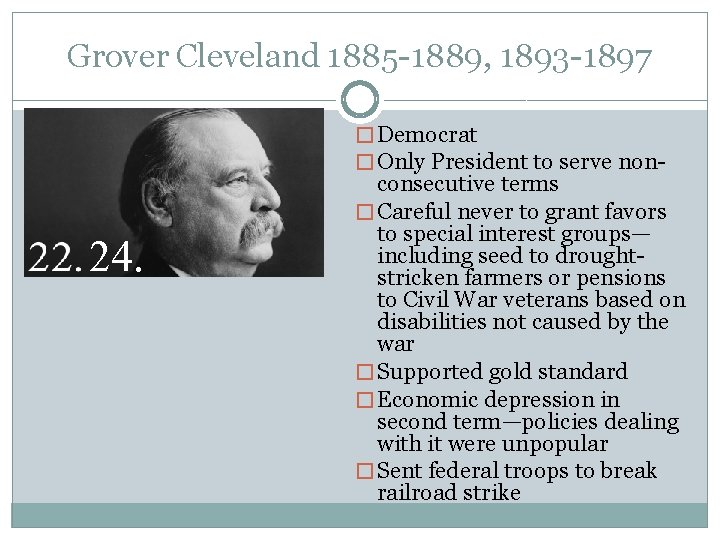
Grover Cleveland 1885 -1889, 1893 -1897 � Democrat � Only President to serve non- 24. consecutive terms � Careful never to grant favors to special interest groups— including seed to droughtstricken farmers or pensions to Civil War veterans based on disabilities not caused by the war � Supported gold standard � Economic depression in second term—policies dealing with it were unpopular � Sent federal troops to break railroad strike
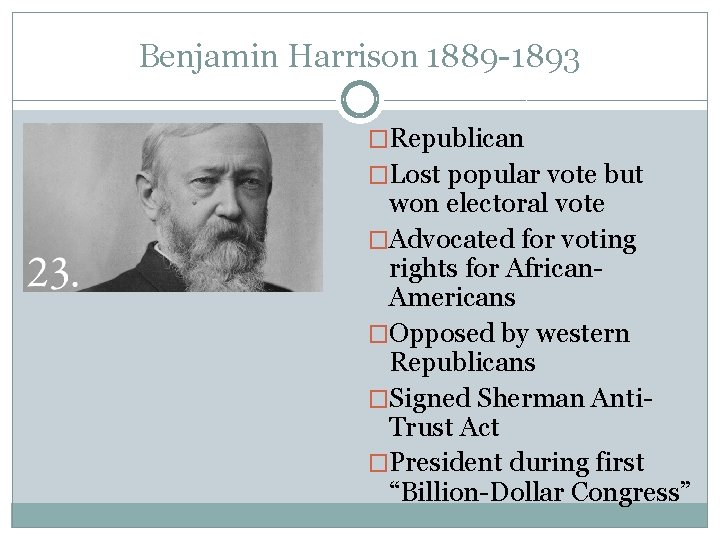
Benjamin Harrison 1889 -1893 �Republican �Lost popular vote but won electoral vote �Advocated for voting rights for African. Americans �Opposed by western Republicans �Signed Sherman Anti. Trust Act �President during first “Billion-Dollar Congress”
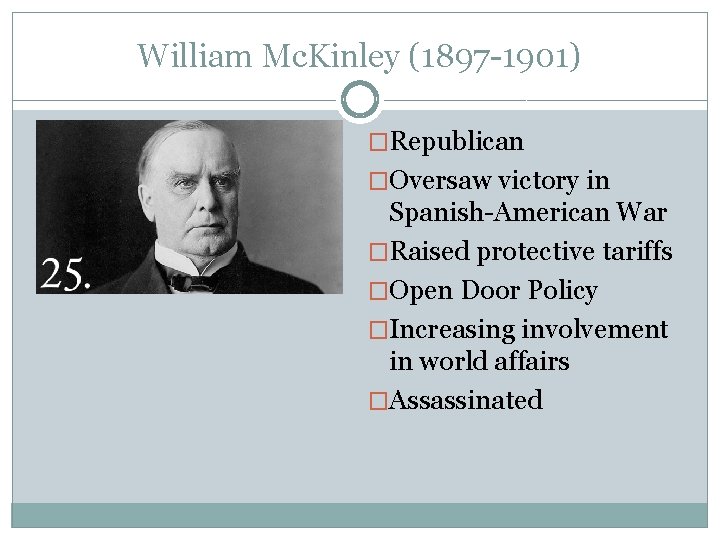
William Mc. Kinley (1897 -1901) �Republican �Oversaw victory in Spanish-American War �Raised protective tariffs �Open Door Policy �Increasing involvement in world affairs �Assassinated
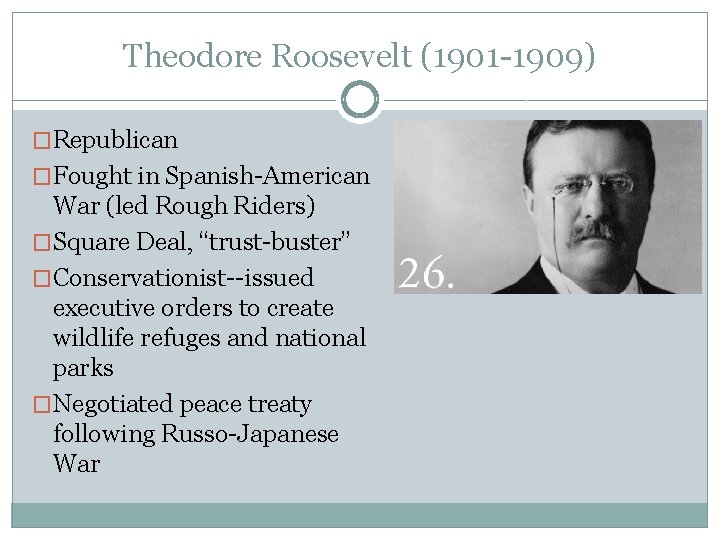
Theodore Roosevelt (1901 -1909) �Republican �Fought in Spanish-American War (led Rough Riders) �Square Deal, “trust-buster” �Conservationist--issued executive orders to create wildlife refuges and national parks �Negotiated peace treaty following Russo-Japanese War
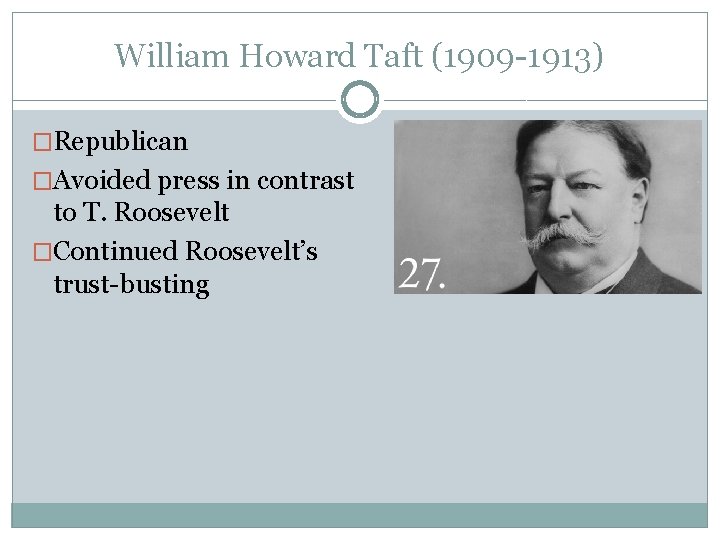
William Howard Taft (1909 -1913) �Republican �Avoided press in contrast to T. Roosevelt �Continued Roosevelt’s trust-busting