
President must be Natural born citizen 35 years
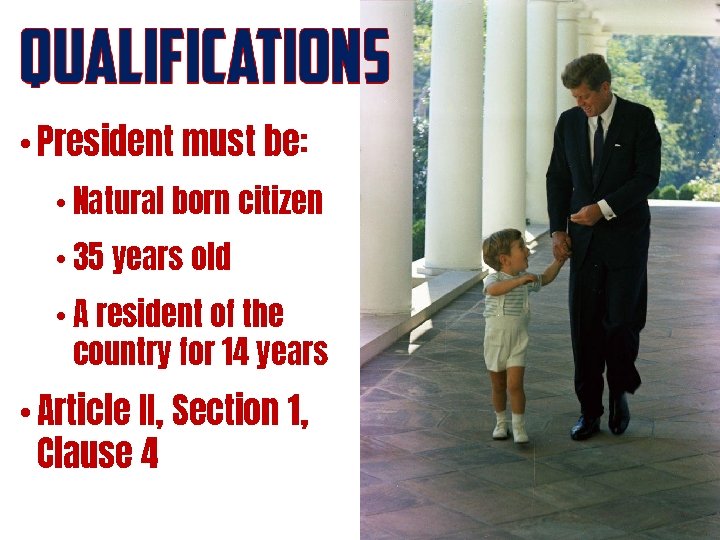
• President must be: • Natural born citizen • 35 years old • A resident of the country for 14 years • Article II, Section 1, Clause 4
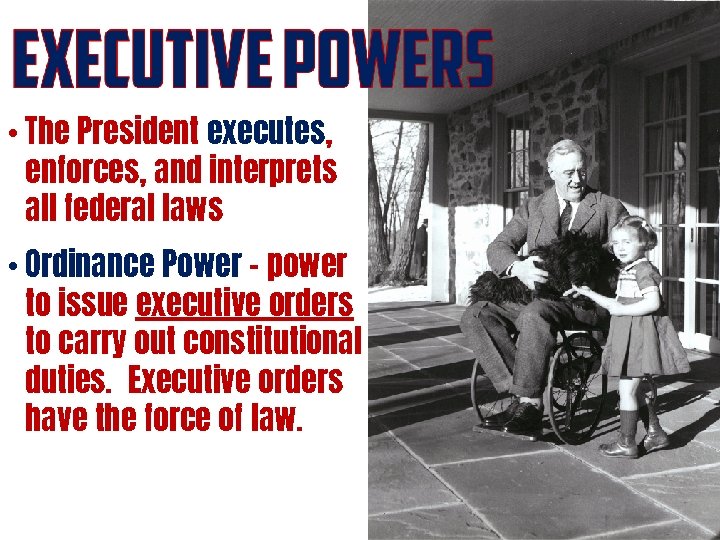
• The President executes, enforces, and interprets all federal laws • Ordinance Power - power to issue executive orders to carry out constitutional duties. Executive orders have the force of law.
• Appointment Power – appoints cabinet members, Ambassadors, diplomats, cabinet members, heads of agencies, federal judges, military officers • Senate confirms or rejects nominations
• Makes Treaties with foreign nations. Subject to Senate Approval (2/3 needed) • Executive Agreements- Pact between President and a foreign head of state. Doesn’t require Senate Approval. • Recognition- President recognizes foreign nations. Grants them legitimacy.
• Commander in Chief of the armed forces • Almost unlimited power to use troops without a declaration of war. (Korea, Vietnam) • War Powers Resolution Act of 1973: • President reports to Congress within 48 hours if forces committed to combat • Combat must be completed within 60 days if no Congressional Declaration has been made • 30 Days to pull out and return troops
• Recommends Legislation through State of the Union Address, Budget Message, & Economic Report • Checks on Legislative Branch: • Signs Bills into law • Veto- rejects a law, but may be over-ridden by 2/3 vote in both houses • Do Nothing- Becomes a law after 10 days w/out presidential signature • Pocket Veto- Bill dies if Congress ends its session w/in 10 days, w/out presidential
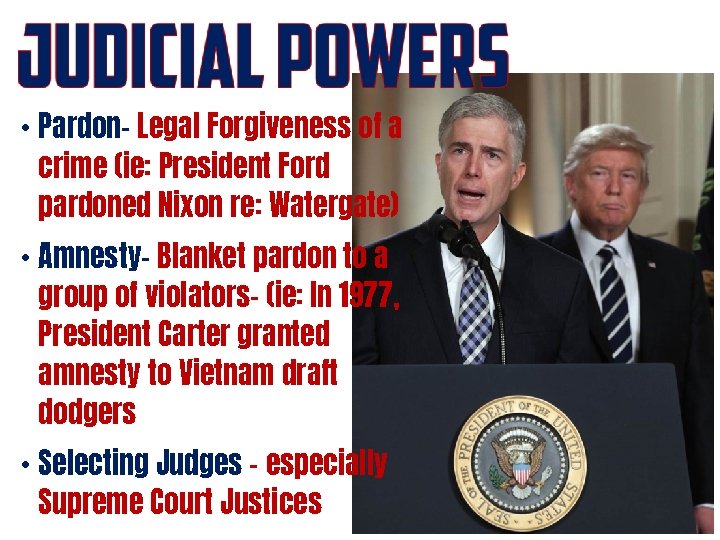
• Pardon- Legal Forgiveness of a crime (ie: President Ford pardoned Nixon re: Watergate) • Amnesty- Blanket pardon to a group of violators- (ie: In 1977, President Carter granted amnesty to Vietnam draft dodgers • Selecting Judges - especially Supreme Court Justices
• 2 term limit (22 nd Amendment) • Congressional investigations • Impeachment Power (House of Reps) • Impeachment Trial (Senate) • The Media as a watchdog
• Chief of State • Chief Executive • Chief Diplomat • Commander-In-Chief • Chief Legislator • Party Chief • Chief Guardian of the Economy
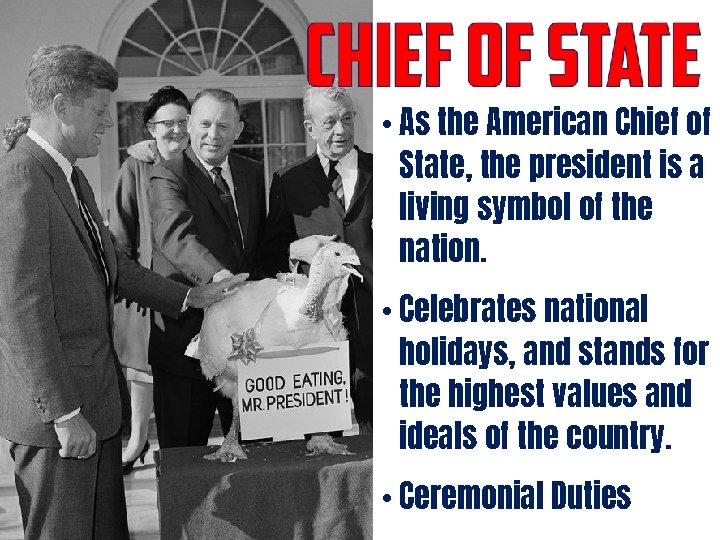
• As the American Chief of State, the president is a living symbol of the nation. • Celebrates national holidays, and stands for the highest values and ideals of the country. • Ceremonial Duties
• The president is “boss” for millions of government workers in the Executive Branch • Decides how the laws of the United States are to be enforced and selects officials and advisers to help run the Executive Branch
• Decides what diplomats and ambassadors shall say to foreign governments • Sets United States foreign policy • Receives foreign dignitaries • Represent the United States overseas
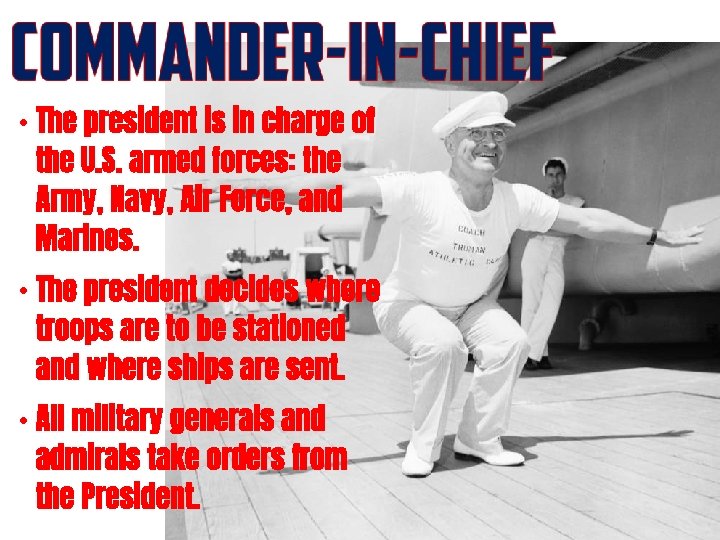
• The president is in charge of the U. S. armed forces: the Army, Navy, Air Force, and Marines. • The president decides where troops are to be stationed and where ships are sent. • All military generals and admirals take orders from the President.
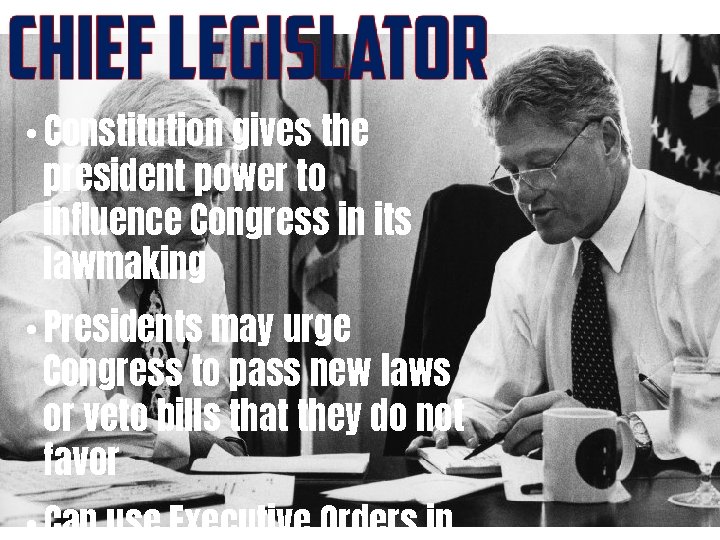
• Constitution gives the president power to influence Congress in its lawmaking • Presidents may urge Congress to pass new laws or veto bills that they do not favor • Can use Executive Orders in
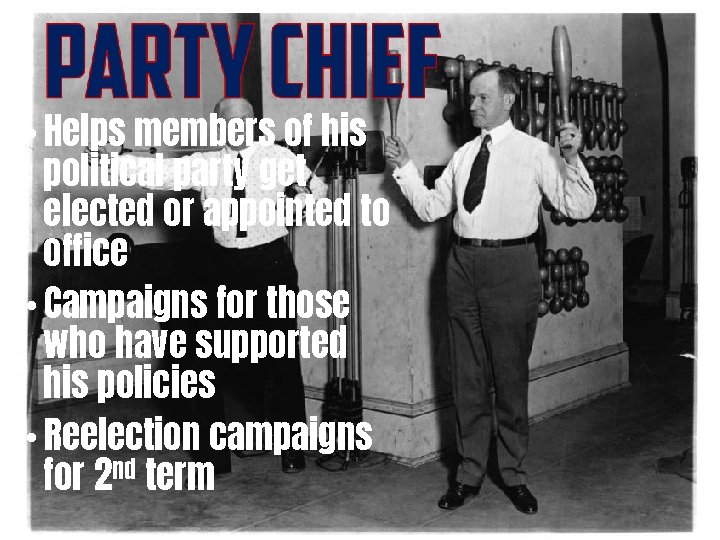
• Helps members of his political party get elected or appointed to office • Campaigns for those who have supported his policies • Reelection campaigns for 2 nd term
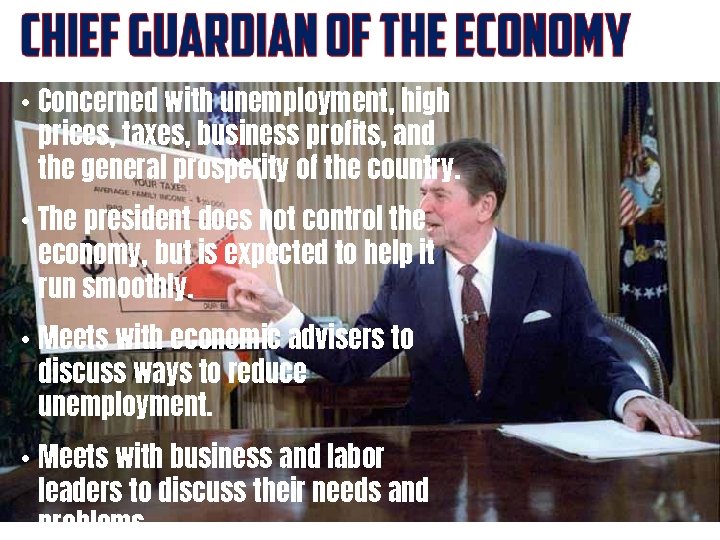
• Concerned with unemployment, high prices, taxes, business profits, and the general prosperity of the country. • The president does not control the economy, but is expected to help it run smoothly. • Meets with economic advisers to discuss ways to reduce unemployment. • Meets with business and labor leaders to discuss their needs and problems.
- Slides: 19