
Presenting a Presentation BY AARON WEST Eye Contact
Presenting a Presentation BY: AARON WEST
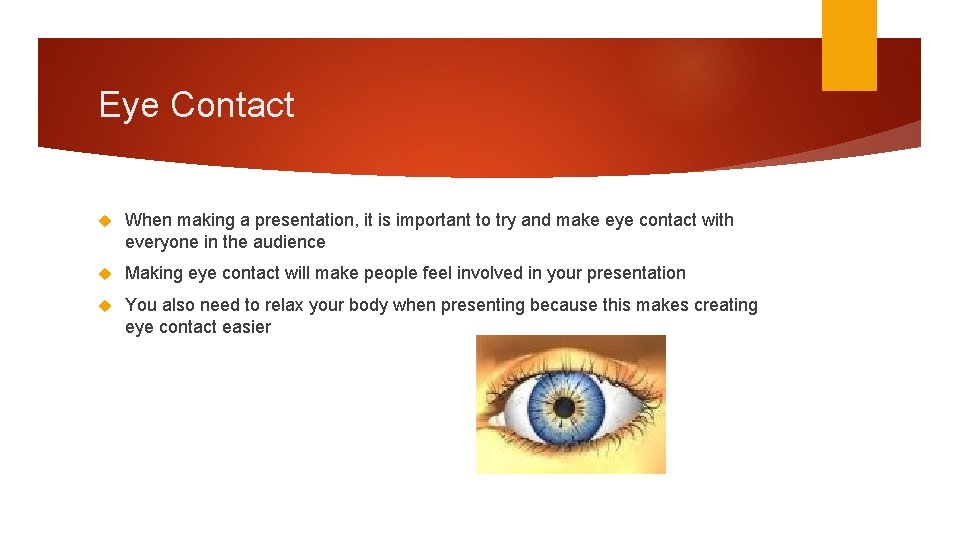
Eye Contact When making a presentation, it is important to try and make eye contact with everyone in the audience Making eye contact will make people feel involved in your presentation You also need to relax your body when presenting because this makes creating eye contact easier
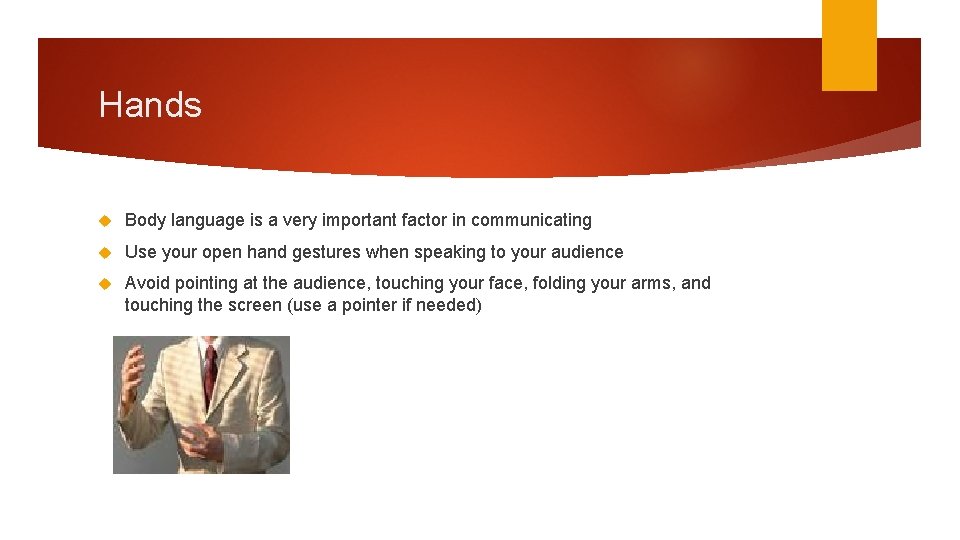
Hands Body language is a very important factor in communicating Use your open hand gestures when speaking to your audience Avoid pointing at the audience, touching your face, folding your arms, and touching the screen (use a pointer if needed)
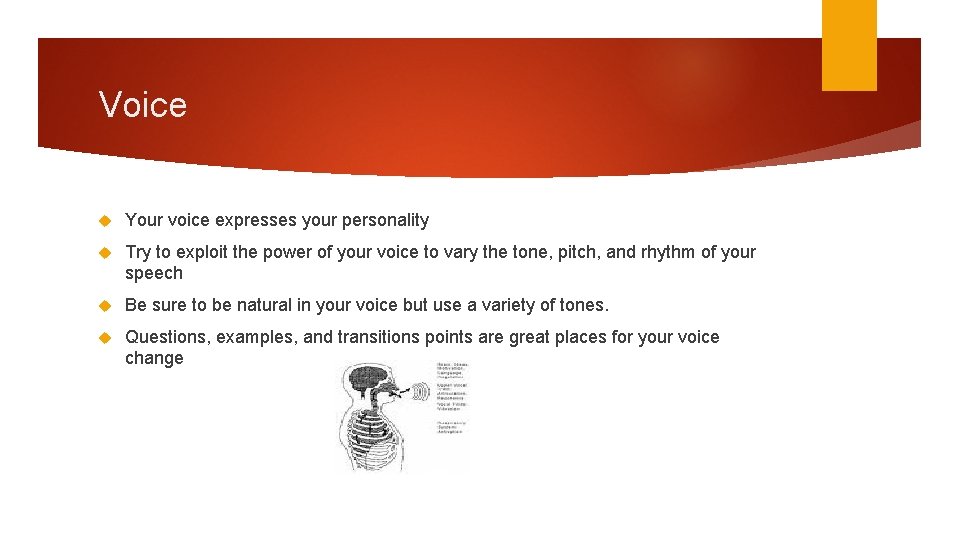
Voice Your voice expresses your personality Try to exploit the power of your voice to vary the tone, pitch, and rhythm of your speech Be sure to be natural in your voice but use a variety of tones. Questions, examples, and transitions points are great places for your voice change
Sequence and Transition It is easy to lose your train of though during a presentation, good transitioning and sequence will keep the audience following you and what you’re talking about Be sure to pause between the sections when you present In a longer presentation, use a visual aid near the start to show your audience how your material will be structured Sequencing will keep you from rushing through your presentation Remember that audiences need a 'lead in' to a topic Keep in mind that you may know everything about your presentation but the audience may know nothing about it
Clarity Audiences won’t remember everything from a presentation, so your images, key words, and headline ideas need to be very memorable Summaries are another way of focusing audience attention on a limited number of ideas or facts. In a longer presentation consider giving a 'midway' summary as well as a summary at the end Back-references ('as we saw earlier', 'as I mentioned a few moments ago') can also be effective in creating clarity.
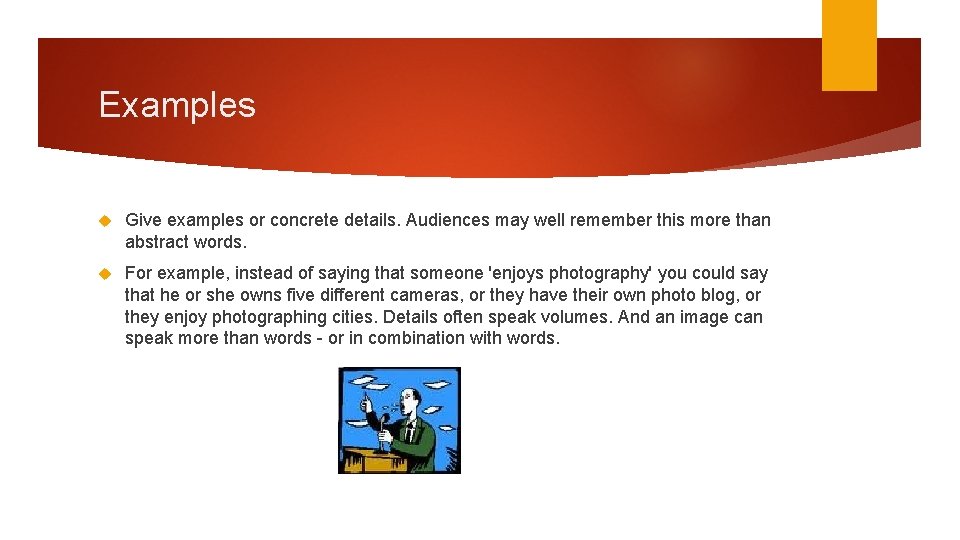
Examples Give examples or concrete details. Audiences may well remember this more than abstract words. For example, instead of saying that someone 'enjoys photography' you could say that he or she owns five different cameras, or they have their own photo blog, or they enjoy photographing cities. Details often speak volumes. And an image can speak more than words - or in combination with words.
- Slides: 7