
PRESENTER NOTES This Power Point contains information on
- Slides: 50
PRESENTER NOTES This Power. Point contains information on the strengths-based approach to development: how and why it evolved, the main principles that underpin it, and what it looks like in practice in Caritas Australia’s programs in Malawi and Tanzania. This approach to development strongly aligns with current research and practice related to the concept of resilience. It is an approach that can provide useful reflections for our own lives and that of our school communities. You will find suggested activities and further information in the slide notes section of each slide. Please refer to these to get the most out of this presentation.
FOR TEACHERS: Curriculum links Broadly, the Strength-based approach to community development will address the Cross Curricular Priorities and General Capabilities while providing rich content for teaching and learning in the Civics and Citizenship, Geography and Religious Education curriculums. For example: Civics and Citizenship: - While the curriculum strongly focuses on the Australian context, students also reflect on Australia’s position and international obligations and the role of citizens today, both within Australian and in an interconnected world. Geography - Explore programs designed to reduce the gap between differences in wellbeing. - The role of international and national government and non-government organisations' initiatives in improving human wellbeing in Australia and other countries (ACHGK 081). Source: Australian Curriculum, Assessment and Reporting Authority (ACARA) Religious Education: - Identify, analyse and communicate a clear understanding of the principles of Catholic Social Teaching. - Demonstrate an awareness of our responsibility to protect human dignity. - List a variety of ways in which the Church moves out in love to the world. - Demonstrate an understanding of a variety of groups that work for justice within the community. - Models of social action in the Church. - Explore individual and collaborative approaches to social action.
FOR TEACHERS: Curriculum links Asia and Australia’s Engagement with Asia: - By exploring the way transnational and intercultural collaboration supports the notion of shared and sustainable futures, students can reflect on how Australians can participate in the Asia region as active and informed citizens. Sustainability: - The sustainability of ecological, social and economic systems is achieved through informed individual and community action that values local and global equity and fairness across generations into the future. Ethical Understanding: - Identify and investigate the nature of ethical concepts, values and character traits, and understand how reasoning can assist ethical judgement. Intercultural Understanding: - Intercultural understanding involves students learning about and engaging with diverse cultures in ways that recognise commonalities and differences, create connections with others and cultivate mutual respect.
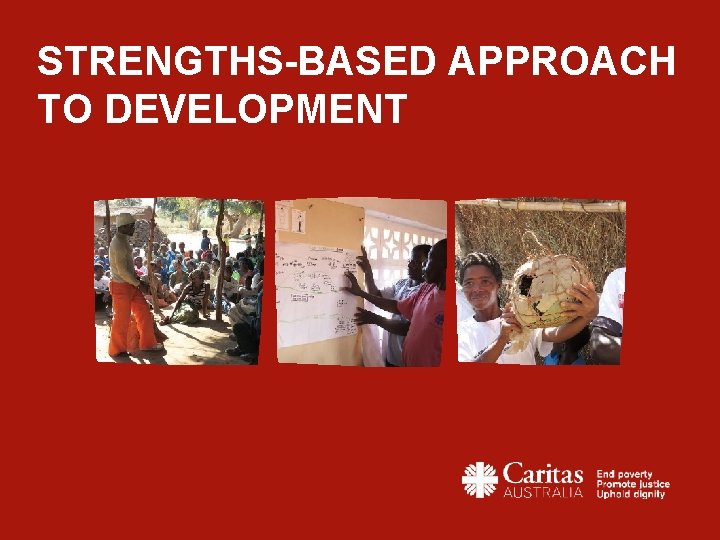
STRENGTHS-BASED APPROACH TO DEVELOPMENT
NEEDS VS STRENGTHS The Strengths-Based Approach to development (SBA), also known as Asset. Based Community Development (ABCD), emerged as a result of a growing critique of “problem solving” or “needs-based” approaches to development.
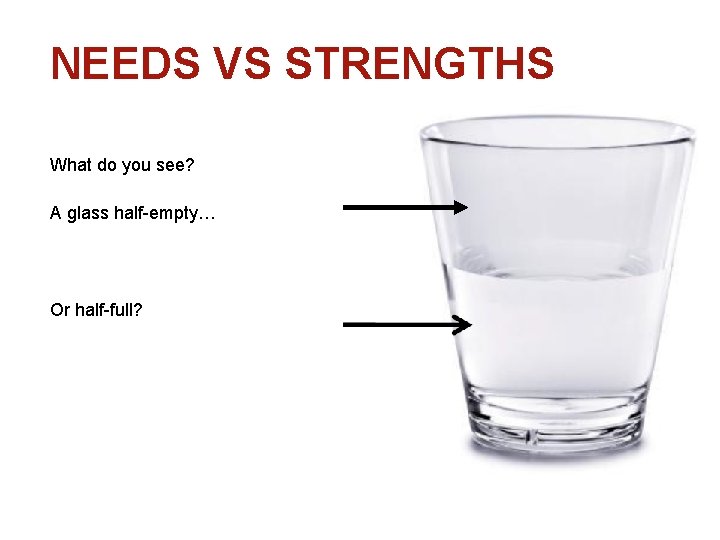
NEEDS VS STRENGTHS What do you see? A glass half-empty… Or half-full? Photo: Tropical Cyclone Pam has caused widespread destruction in Vanuatu. Credit: Adventist Development and Relief Agency.
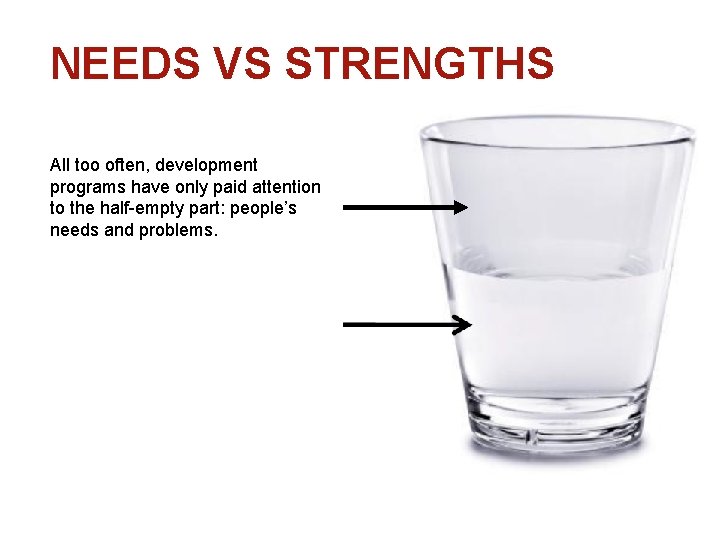
NEEDS VS STRENGTHS All too often, development programs have only paid attention to the half-empty part: people’s needs and problems. Photo: Tropical Cyclone Pam has caused widespread destruction in Vanuatu. Credit: Adventist Development and Relief Agency.
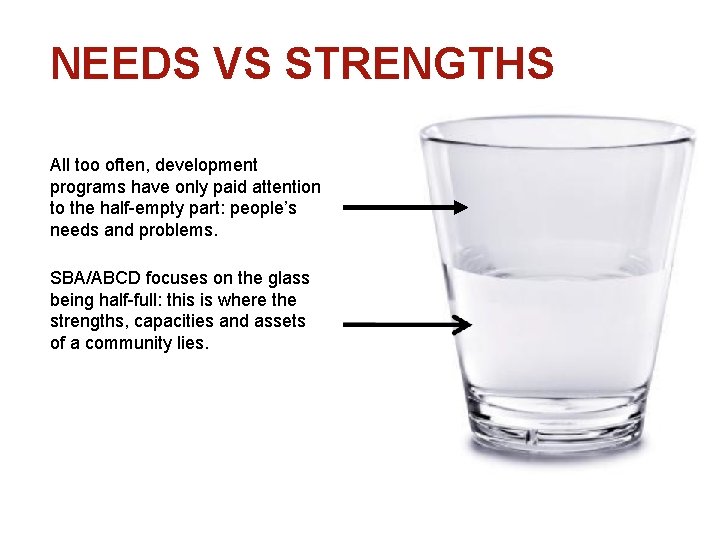
NEEDS VS STRENGTHS All too often, development programs have only paid attention to the half-empty part: people’s needs and problems. SBA/ABCD focuses on the glass being half-full: this is where the strengths, capacities and assets of a community lies. Photo: Tropical Cyclone Pam has caused widespread destruction in Vanuatu. Credit: Adventist Development and Relief Agency.
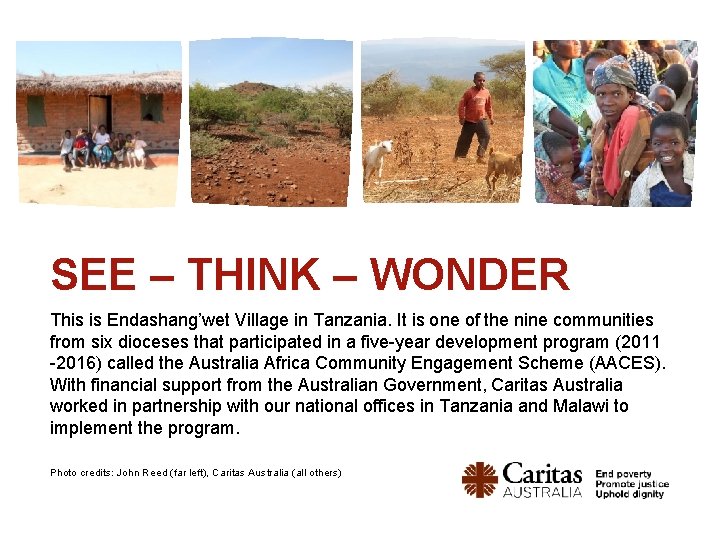
SEE – THINK – WONDER This is Endashang’wet Village in Tanzania. It is one of the nine communities from six dioceses that participated in a five-year development program (2011 -2016) called the Australia Africa Community Engagement Scheme (AACES). With financial support from the Australian Government, Caritas Australia worked in partnership with our national offices in Tanzania and Malawi to implement the program. Photo credits: John Reed (far left), Caritas Australia (all others)
Question: What thoughts and attitudes do you think this community would have if they viewed the glass as half-empty?
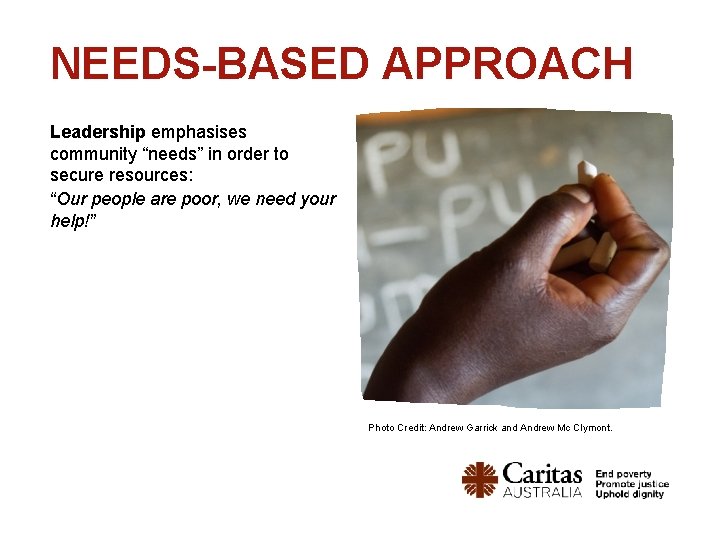
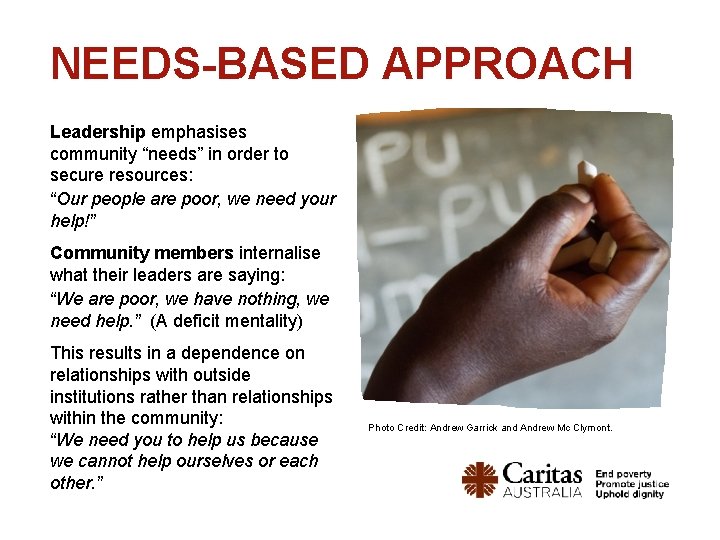
NEEDS-BASED APPROACH Leadership emphasises community “needs” in order to secure resources: “Our people are poor, we need your help!” Photo Credit: Andrew Garrick and Andrew Mc Clymont.
NEEDS-BASED APPROACH Leadership emphasises community “needs” in order to secure resources: “Our people are poor, we need your help!” Community members internalise what their leaders are saying: “We are poor, we have nothing, we need help. ” (A deficit mentality) Photo Credit: Andrew Garrick and Andrew Mc Clymont.
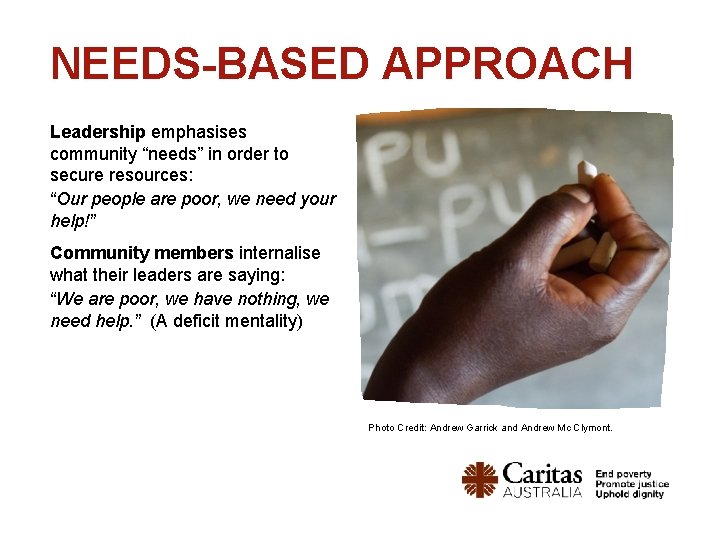
NEEDS-BASED APPROACH Leadership emphasises community “needs” in order to secure resources: “Our people are poor, we need your help!” Community members internalise what their leaders are saying: “We are poor, we have nothing, we need help. ” (A deficit mentality) This results in a dependence on relationships with outside institutions rather than relationships within the community: “We need you to help us because we cannot help ourselves or each other. ” Photo Credit: Andrew Garrick and Andrew Mc Clymont.
Question: What thoughts and attitudes do you think this community would have if they viewed the glass as half-full?
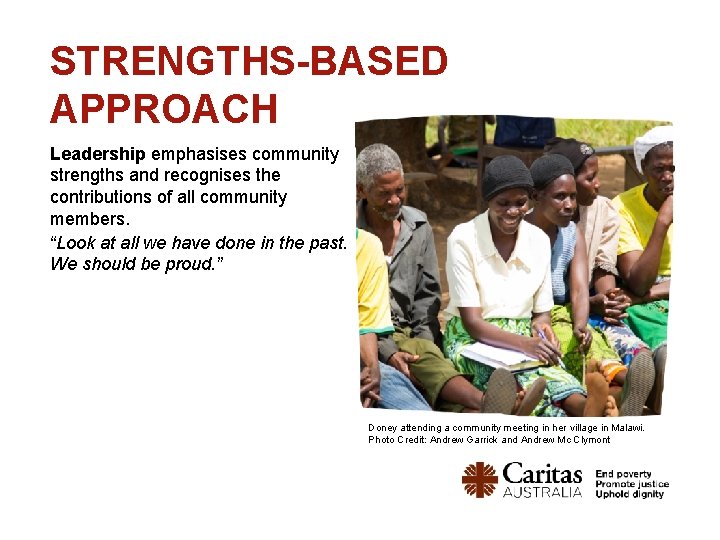
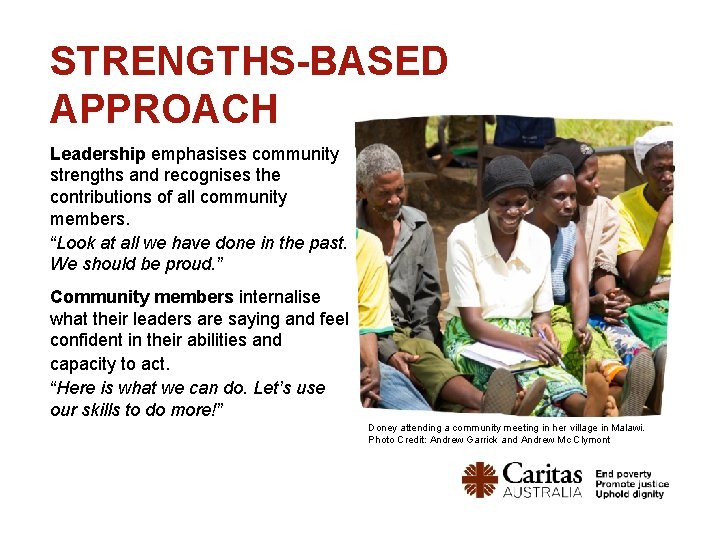
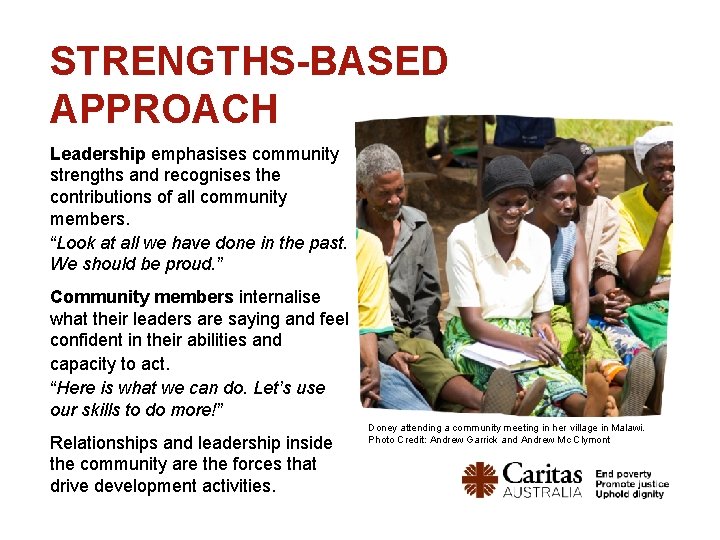
STRENGTHS-BASED APPROACH Leadership emphasises community strengths and recognises the contributions of all community members. “Look at all we have done in the past. We should be proud. ” Doney attending a community meeting in her village in Malawi. Photo Credit: Andrew Garrick and Andrew Mc Clymont
STRENGTHS-BASED APPROACH Leadership emphasises community strengths and recognises the contributions of all community members. “Look at all we have done in the past. We should be proud. ” Community members internalise what their leaders are saying and feel confident in their abilities and capacity to act. “Here is what we can do. Let’s use our skills to do more!” Doney attending a community meeting in her village in Malawi. Photo Credit: Andrew Garrick and Andrew Mc Clymont
STRENGTHS-BASED APPROACH Leadership emphasises community strengths and recognises the contributions of all community members. “Look at all we have done in the past. We should be proud. ” Community members internalise what their leaders are saying and feel confident in their abilities and capacity to act. “Here is what we can do. Let’s use our skills to do more!” Relationships and leadership inside the community are the forces that drive development activities. Doney attending a community meeting in her village in Malawi. Photo Credit: Andrew Garrick and Andrew Mc Clymont
‘NOBODY HAS NOTHING’ Caritas Australia works in regions of the world where people are marginalised and most vulnerable to experiencing poverty and injustice. Despite the many challenges people face, we believe in every individual’s inherent and God-given dignity and worth, and that each individual has unique gifts and talents. The strengths-based approach honours and upholds this dignity, and empowers all people to be architects of their own development. “Man is truly human only. . . if he is the architect of his own progress. ” Pope Paul VI, Populorum Progressio, 1967
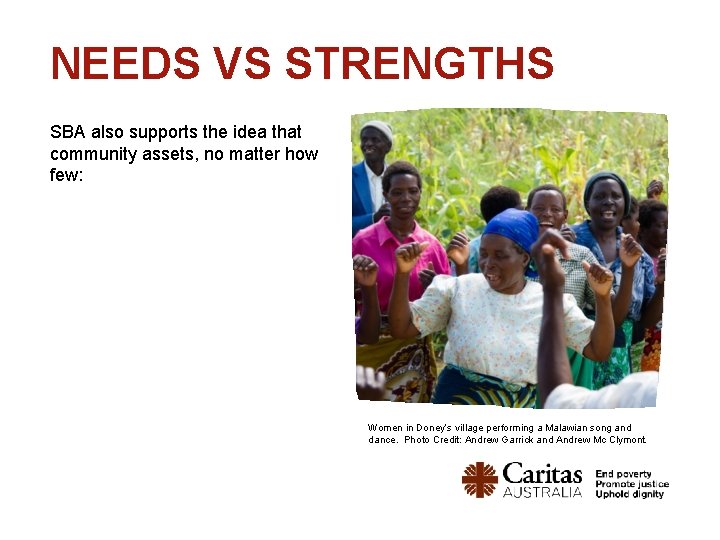
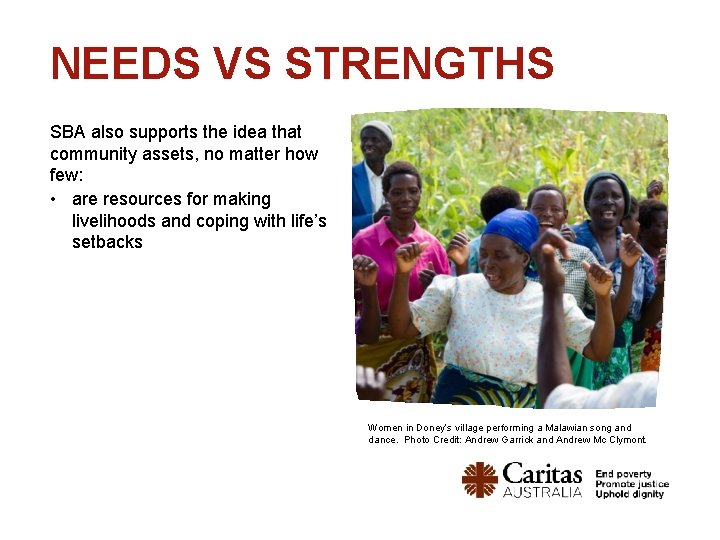
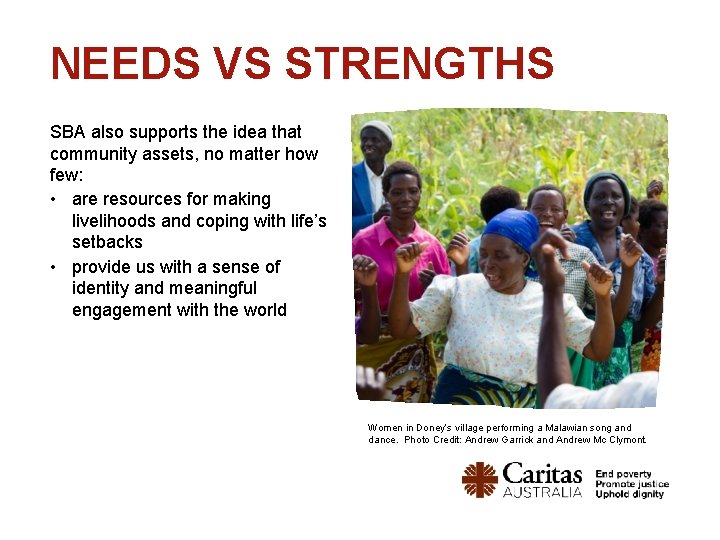
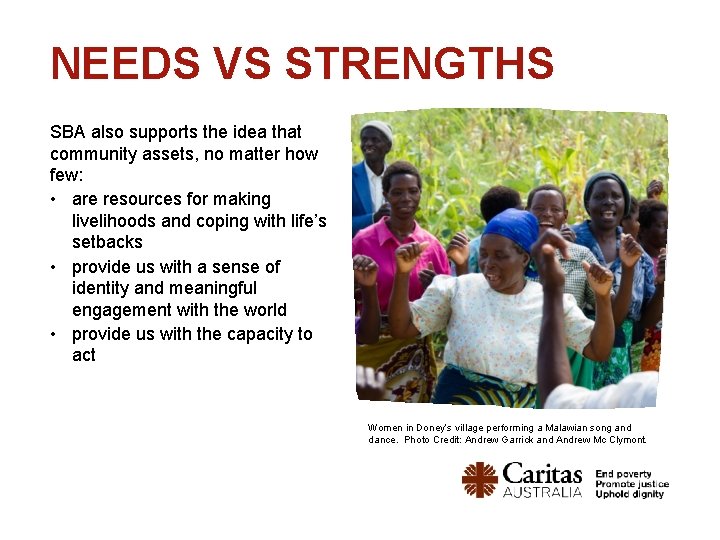
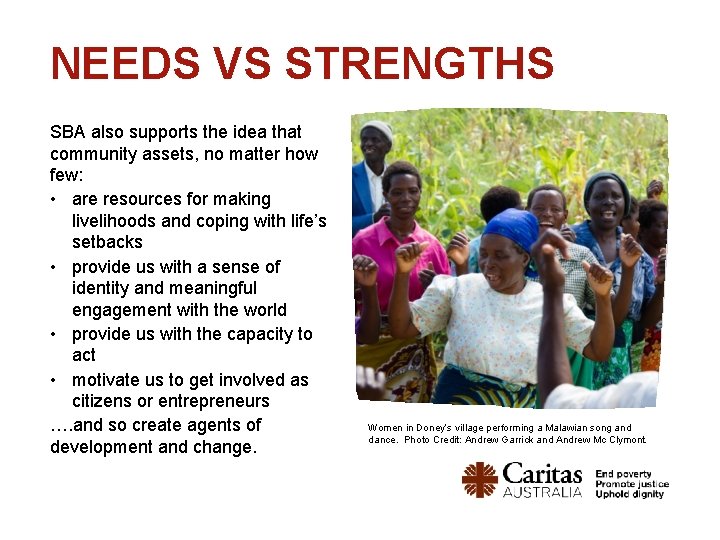
NEEDS VS STRENGTHS SBA also supports the idea that community assets, no matter how few: Women in Doney’s village performing a Malawian song and dance. Photo Credit: Andrew Garrick and Andrew Mc Clymont.
NEEDS VS STRENGTHS SBA also supports the idea that community assets, no matter how few: • are resources for making livelihoods and coping with life’s setbacks Women in Doney’s village performing a Malawian song and dance. Photo Credit: Andrew Garrick and Andrew Mc Clymont.
NEEDS VS STRENGTHS SBA also supports the idea that community assets, no matter how few: • are resources for making livelihoods and coping with life’s setbacks • provide us with a sense of identity and meaningful engagement with the world Women in Doney’s village performing a Malawian song and dance. Photo Credit: Andrew Garrick and Andrew Mc Clymont.
NEEDS VS STRENGTHS SBA also supports the idea that community assets, no matter how few: • are resources for making livelihoods and coping with life’s setbacks • provide us with a sense of identity and meaningful engagement with the world • provide us with the capacity to act Women in Doney’s village performing a Malawian song and dance. Photo Credit: Andrew Garrick and Andrew Mc Clymont.
NEEDS VS STRENGTHS SBA also supports the idea that community assets, no matter how few: • are resources for making livelihoods and coping with life’s setbacks • provide us with a sense of identity and meaningful engagement with the world • provide us with the capacity to act • motivate us to get involved as citizens or entrepreneurs …. and so create agents of development and change. Women in Doney’s village performing a Malawian song and dance. Photo Credit: Andrew Garrick and Andrew Mc Clymont.
Question: What do we mean by ‘community assets’?
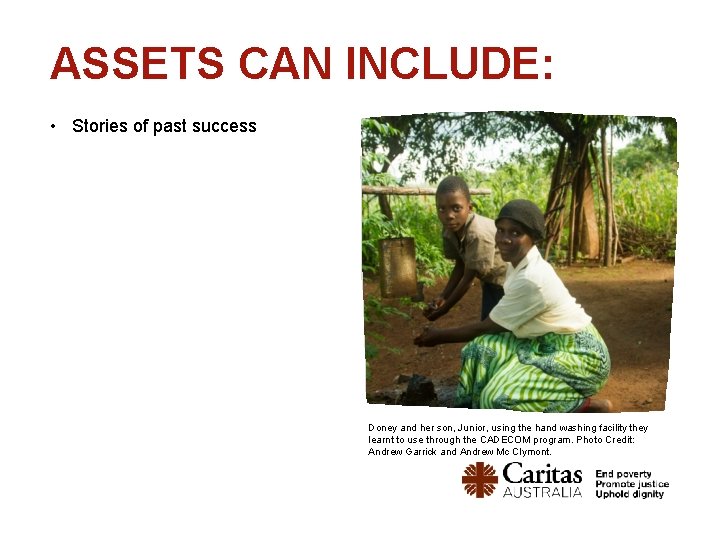
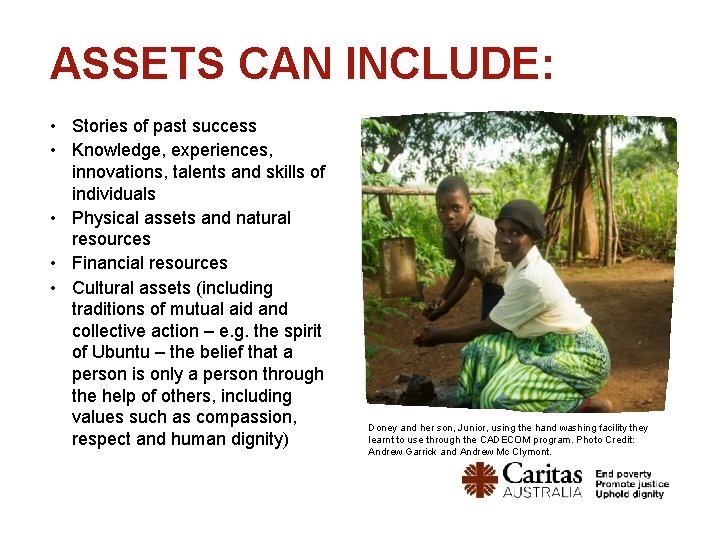
ASSETS CAN INCLUDE: • Stories of past success Doney and her son, Junior, using the hand washing facility they learnt to use through the CADECOM program. Photo Credit: Andrew Garrick and Andrew Mc Clymont.
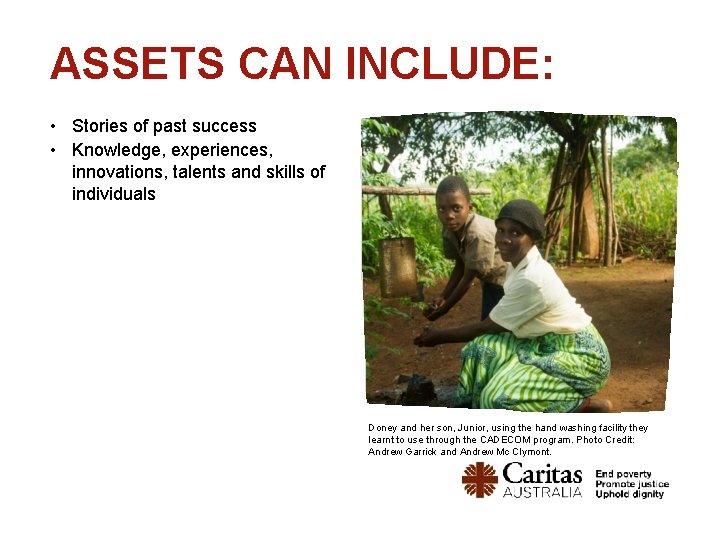
ASSETS CAN INCLUDE: • Stories of past success • Knowledge, experiences, innovations, talents and skills of individuals Doney and her son, Junior, using the hand washing facility they learnt to use through the CADECOM program. Photo Credit: Andrew Garrick and Andrew Mc Clymont.
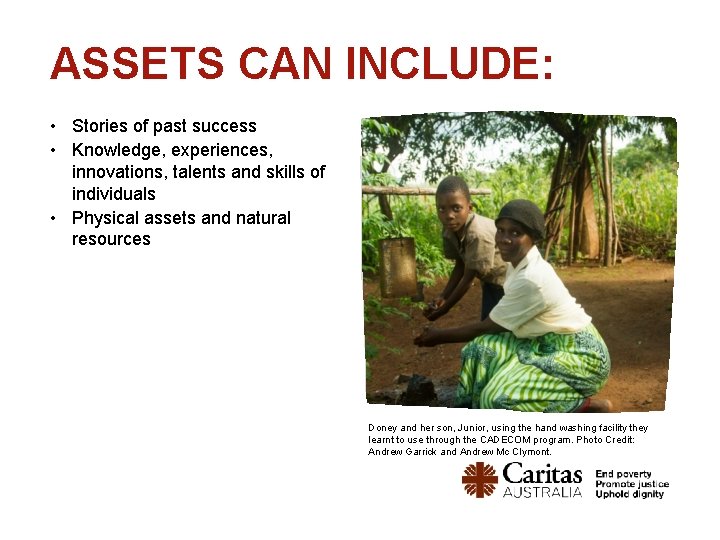
ASSETS CAN INCLUDE: • Stories of past success • Knowledge, experiences, innovations, talents and skills of individuals • Physical assets and natural resources Doney and her son, Junior, using the hand washing facility they learnt to use through the CADECOM program. Photo Credit: Andrew Garrick and Andrew Mc Clymont.
ASSETS CAN INCLUDE: • Stories of past success • Knowledge, experiences, innovations, talents and skills of individuals • Physical assets and natural resources • Financial resources Doney and her son, Junior, using the hand washing facility they learnt to use through the CADECOM program. Photo Credit: Andrew Garrick and Andrew Mc Clymont.
ASSETS CAN INCLUDE: • Stories of past success • Knowledge, experiences, innovations, talents and skills of individuals • Physical assets and natural resources • Financial resources • Cultural assets (including traditions of mutual aid and collective action – e. g. the spirit of Ubuntu – the belief that a person is only a person through the help of others, including values such as compassion, respect and human dignity) Doney and her son, Junior, using the hand washing facility they learnt to use through the CADECOM program. Photo Credit: Andrew Garrick and Andrew Mc Clymont.
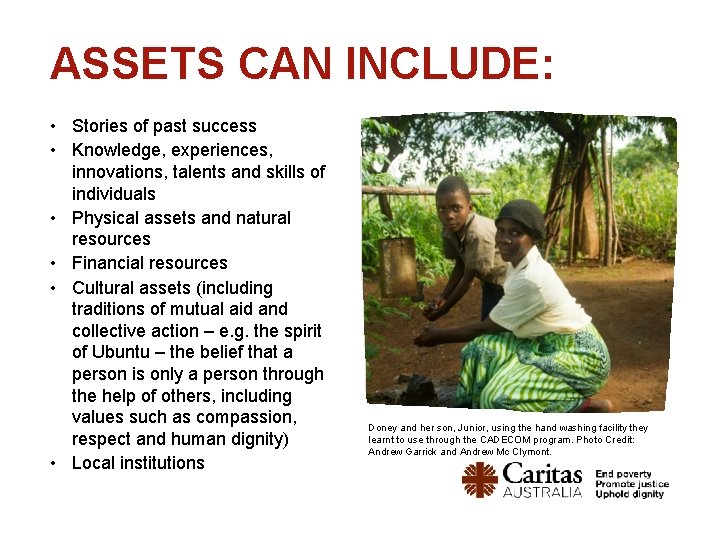
ASSETS CAN INCLUDE: • Stories of past success • Knowledge, experiences, innovations, talents and skills of individuals • Physical assets and natural resources • Financial resources • Cultural assets (including traditions of mutual aid and collective action – e. g. the spirit of Ubuntu – the belief that a person is only a person through the help of others, including values such as compassion, respect and human dignity) • Local institutions Doney and her son, Junior, using the hand washing facility they learnt to use through the CADECOM program. Photo Credit: Andrew Garrick and Andrew Mc Clymont.
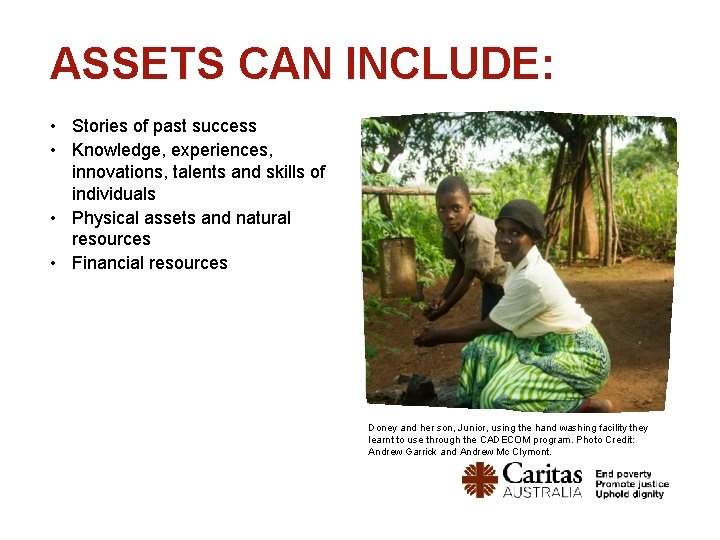
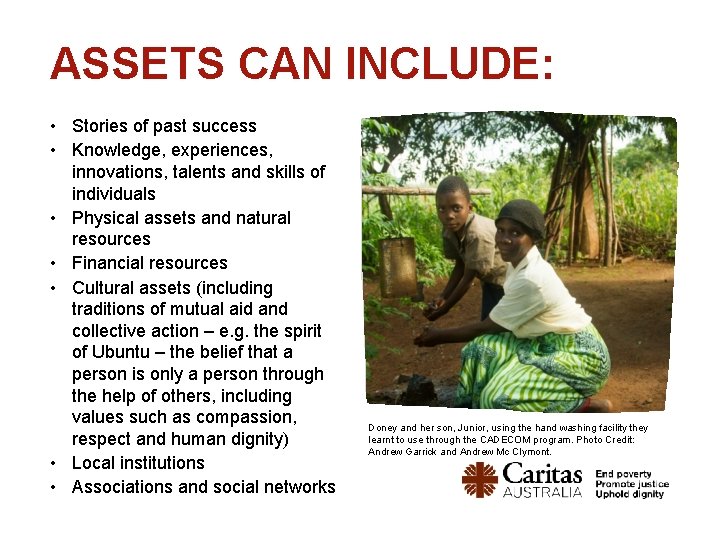
ASSETS CAN INCLUDE: • Stories of past success • Knowledge, experiences, innovations, talents and skills of individuals • Physical assets and natural resources • Financial resources • Cultural assets (including traditions of mutual aid and collective action – e. g. the spirit of Ubuntu – the belief that a person is only a person through the help of others, including values such as compassion, respect and human dignity) • Local institutions • Associations and social networks Doney and her son, Junior, using the hand washing facility they learnt to use through the CADECOM program. Photo Credit: Andrew Garrick and Andrew Mc Clymont.
‘Nobody has nothing’
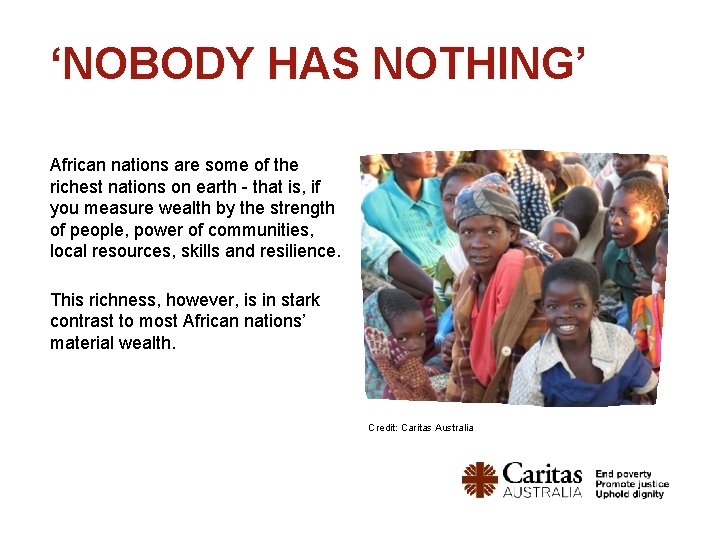
‘NOBODY HAS NOTHING’ African nations are some of the richest nations on earth - that is, if you measure wealth by the strength of people, power of communities, local resources, skills and resilience. This richness, however, is in stark contrast to most African nations’ material wealth. Credit: Caritas Australia
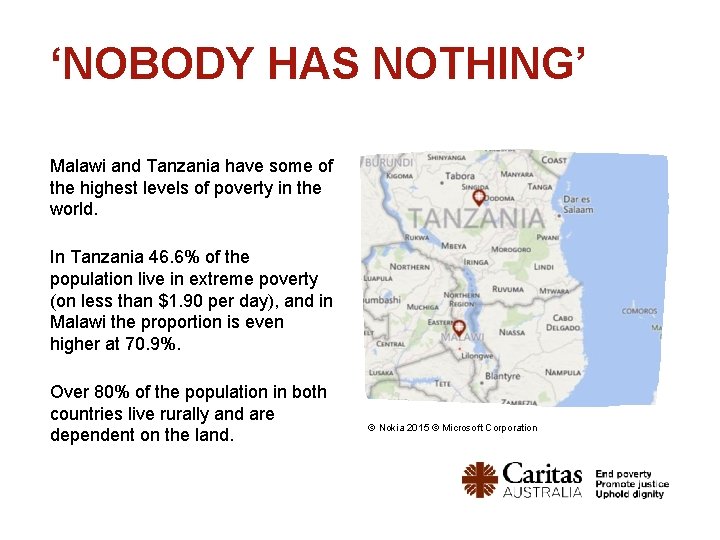
‘NOBODY HAS NOTHING’ Malawi and Tanzania have some of the highest levels of poverty in the world. In Tanzania 46. 6% of the population live in extreme poverty (on less than $1. 90 per day), and in Malawi the proportion is even higher at 70. 9%. Over 80% of the population in both countries live rurally and are dependent on the land. © Nokia 2015 © Microsoft Corporation
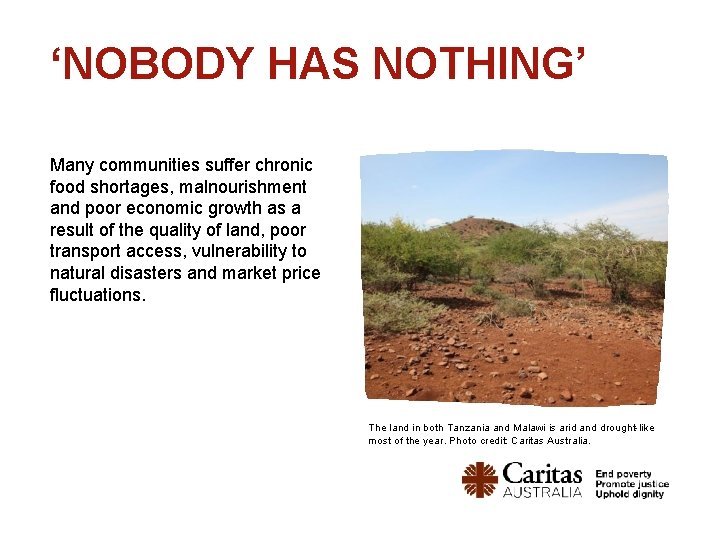
‘NOBODY HAS NOTHING’ Many communities suffer chronic food shortages, malnourishment and poor economic growth as a result of the quality of land, poor transport access, vulnerability to natural disasters and market price fluctuations. The land in both Tanzania and Malawi is arid and drought-like most of the year. Photo credit: Caritas Australia.
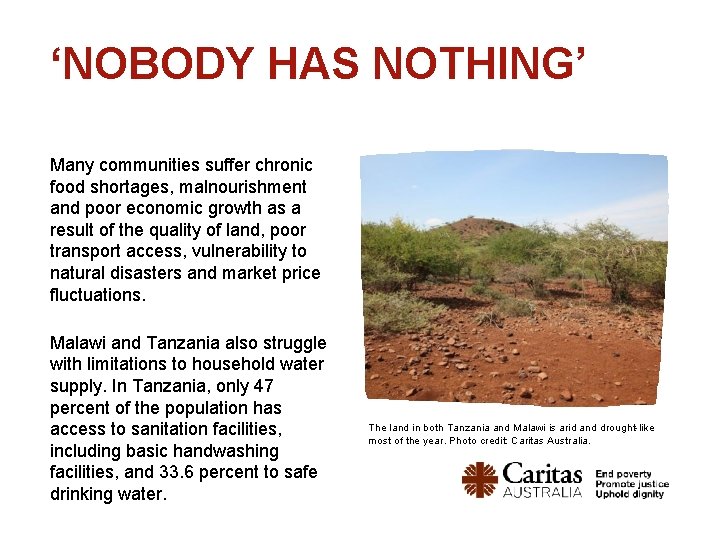
‘NOBODY HAS NOTHING’ Many communities suffer chronic food shortages, malnourishment and poor economic growth as a result of the quality of land, poor transport access, vulnerability to natural disasters and market price fluctuations. Malawi and Tanzania also struggle with limitations to household water supply. In Tanzania, only 47 percent of the population has access to sanitation facilities, including basic handwashing facilities, and 33. 6 percent to safe drinking water. The land in both Tanzania and Malawi is arid and drought-like most of the year. Photo credit: Caritas Australia.
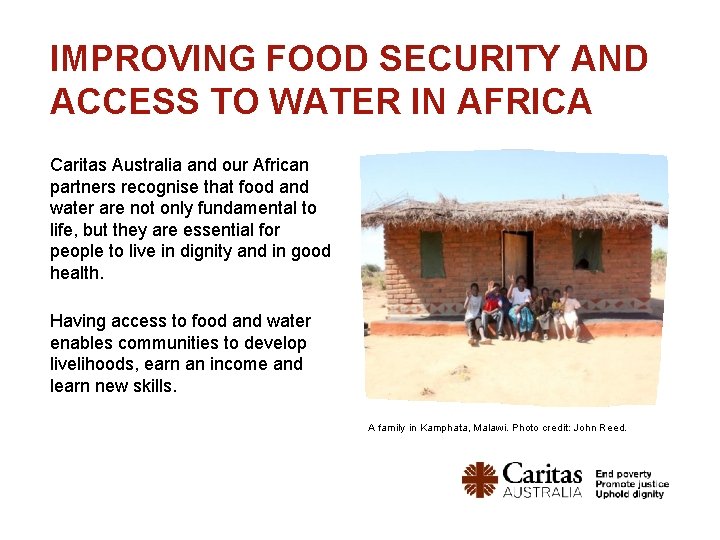
IMPROVING FOOD SECURITY AND ACCESS TO WATER IN AFRICA Caritas Australia and our African partners recognise that food and water are not only fundamental to life, but they are essential for people to live in dignity and in good health. Having access to food and water enables communities to develop livelihoods, earn an income and learn new skills. A family in Kamphata, Malawi. Photo credit: John Reed.
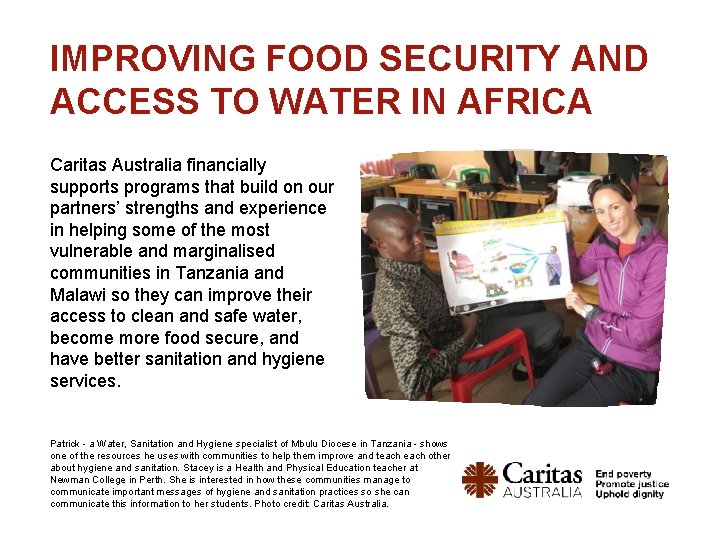
IMPROVING FOOD SECURITY AND ACCESS TO WATER IN AFRICA Caritas Australia financially supports programs that build on our partners’ strengths and experience in helping some of the most vulnerable and marginalised communities in Tanzania and Malawi so they can improve their access to clean and safe water, become more food secure, and have better sanitation and hygiene services. Patrick - a Water, Sanitation and Hygiene specialist of Mbulu Diocese in Tanzania - shows one of the resources he uses with communities to help them improve and teach other about hygiene and sanitation. Stacey is a Health and Physical Education teacher at Newman College in Perth. She is interested in how these communities manage to communicate important messages of hygiene and sanitation practices so she can communicate this information to her students. Photo credit: Caritas Australia.
START WITH A VISION – BUILD WITH STRENGTHS At the start of this program, each village developed its five year vision through strong community consultation and participation, with a particular focus on the most marginalised. Community members say that this process helps them to ‘dream in colour’. The Village Chief mentioned at one community meeting that before they adopted this approach, the “village was like a dead community. It did not have a human face. ”
START WITH A VISION – BUILD WITH STRENGTHS At the start of this program, each village developed its five year vision through strong community consultation and participation, with a particular focus on the most marginalised. Community members say that this process helps them to ‘dream in colour’. The strengths-based approach helps identify the community’s strengths and assets, including natural resources but most importantly their human potential, skills, strengths and abilities. The Village Chief mentioned at one community meeting that before they adopted this approach, the “village was like a dead community. It did not have a human face. ”
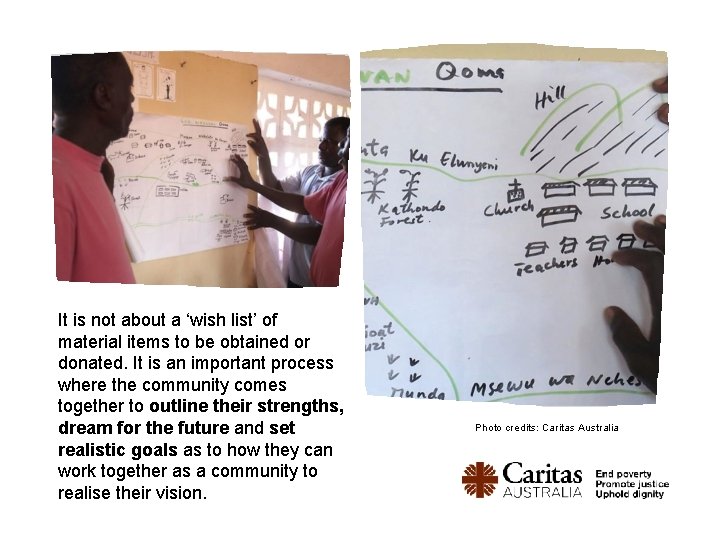
It is not about a ‘wish list’ of material items to be obtained or donated. It is an important process where the community comes together to outline their strengths, dream for the future and set realistic goals as to how they can work together as a community to realise their vision. Photo credits: Caritas Australia
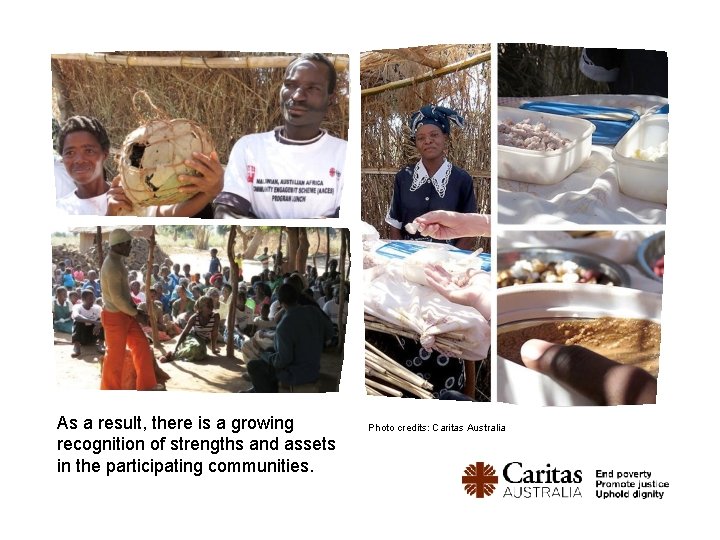
As a result, there is a growing recognition of strengths and assets in the participating communities. Photo credits: Caritas Australia
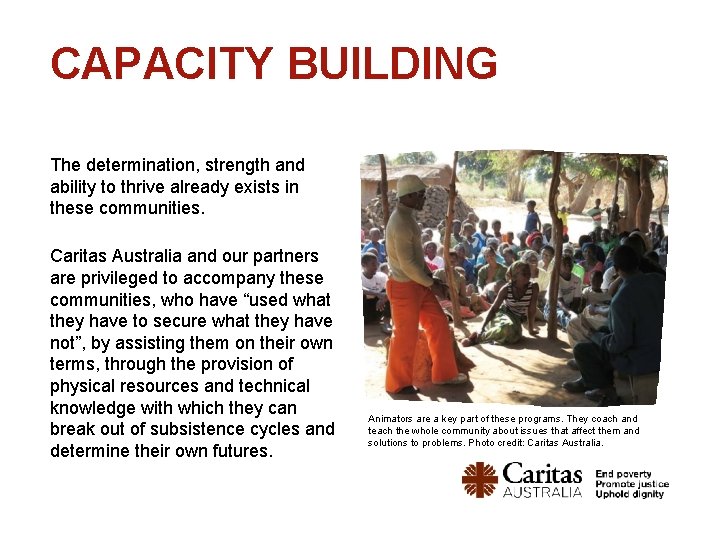
CAPACITY BUILDING The determination, strength and ability to thrive already exists in these communities. Caritas Australia and our partners are privileged to accompany these communities, who have “used what they have to secure what they have not”, by assisting them on their own terms, through the provision of physical resources and technical knowledge with which they can break out of subsistence cycles and determine their own futures. Animators are a key part of these programs. They coach and teach the whole community about issues that affect them and solutions to problems. Photo credit: Caritas Australia.
AMAZING RESULTS The AACES program in Malawi has as a result of an irrigation initiative already generated many benefits, • Some AACES communities have including: had the average number of • In just 6 months, one community hungry months reduced from saved over $150, 000 (USD) in five to just one their village saving loan scheme • Despite much of Malawi being • 12, 479 people have benefited food insecure, one AACES from the water, sanitation and community has been declared hygiene component of the food secure, with households program now eating three meals a day (compared to two previously) • Increased household income for 1, 000 farmers from the sale of vegetables in the past six months
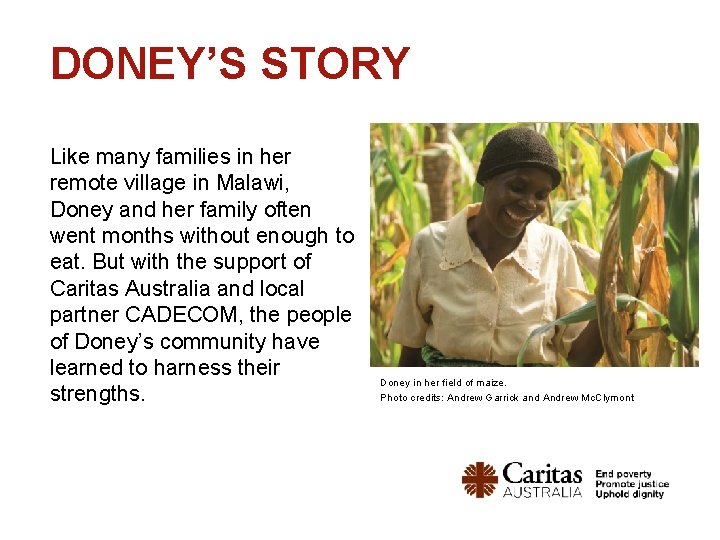
DONEY’S STORY Like many families in her remote village in Malawi, Doney and her family often went months without enough to eat. But with the support of Caritas Australia and local partner CADECOM, the people of Doney’s community have learned to harness their strengths. Doney in her field of maize. Photo credits: Andrew Garrick and Andrew Mc. Clymont
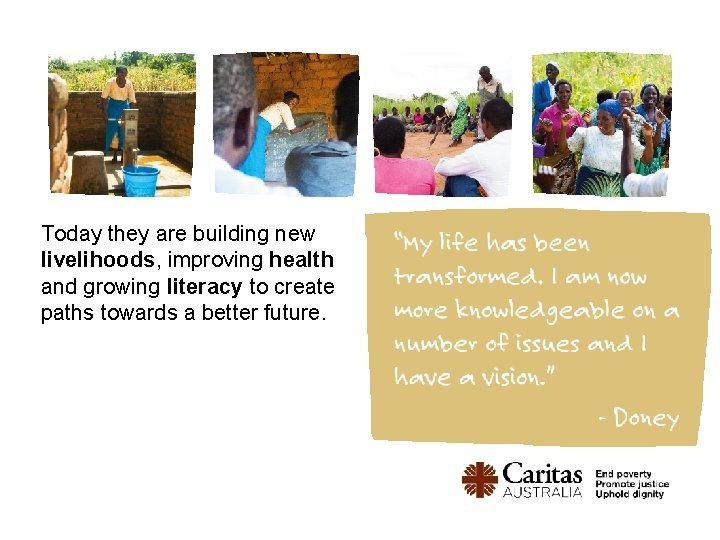
Today they are building new livelihoods, improving health and growing literacy to create paths towards a better future.
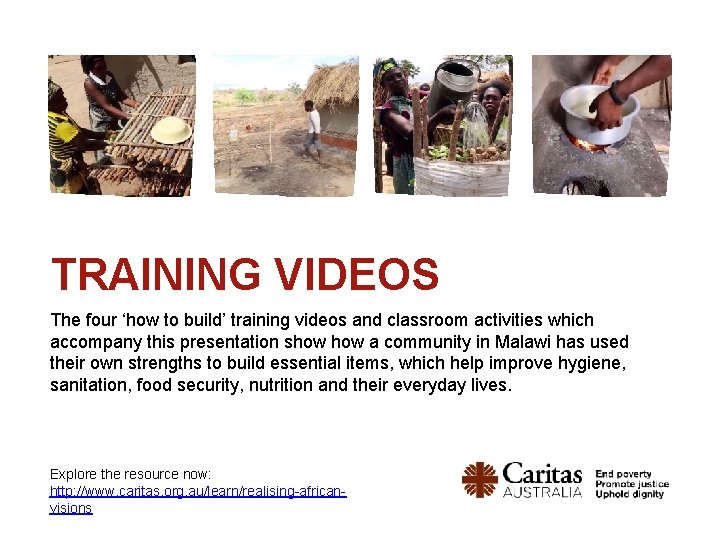
TRAINING VIDEOS The four ‘how to build’ training videos and classroom activities which accompany this presentation show a community in Malawi has used their own strengths to build essential items, which help improve hygiene, sanitation, food security, nutrition and their everyday lives. Explore the resource now: http: //www. caritas. org. au/learn/realising-africanvisions
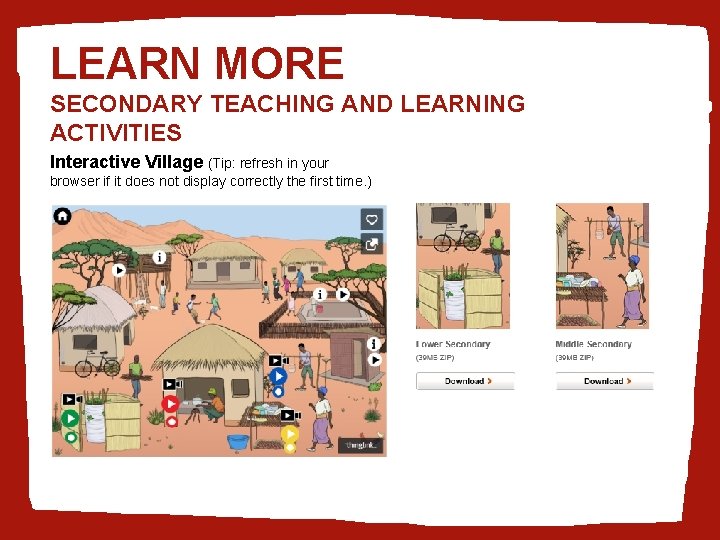
LEARN MORE SECONDARY TEACHING AND LEARNING ACTIVITIES Interactive Village (Tip: refresh in your browser if it does not display correctly the first time. )
CREDITS Content adapted in part and with permission from the Coady International Institute, St Francis Xavier University. Last updated July 2018
End poverty Promote justice Uphold dignity