
Presenter logo here The Unshakable Foundation of Safety
Presenter logo here The Unshakable Foundation of Safety Joint Leadership
What does being a leader mean? 2
1 • What is Joint Safety Leadership?
Joint Safety leadership is…. . 5
2 • Ground Rules, Purpose and Expectations
Purpose of Workshop • Why are you here today? • Expected outcomes: • What do you hope to get out of this session? 8
Purpose of Workshop • Provide information to enable joint leadership of Safety. Expected outcomes: • For you to gain knowledge • Begin to develop skills at using processes and tools to enable distinctive actions with business goals. • Making joint leadership a part of all your activities. • Build energy and a strategy to accomplish a change of your actions and all employees’/members actions. • Provide the ground work for joint safety leadership in your future. 9
Expectation • Remain open to new ideas. • Ask questions – Seek understanding • Joint leadership is to become “How we approach and do work. ” Gain an insight as to how you can make this happen. • Practice your increased capability in your everyday activities. 10
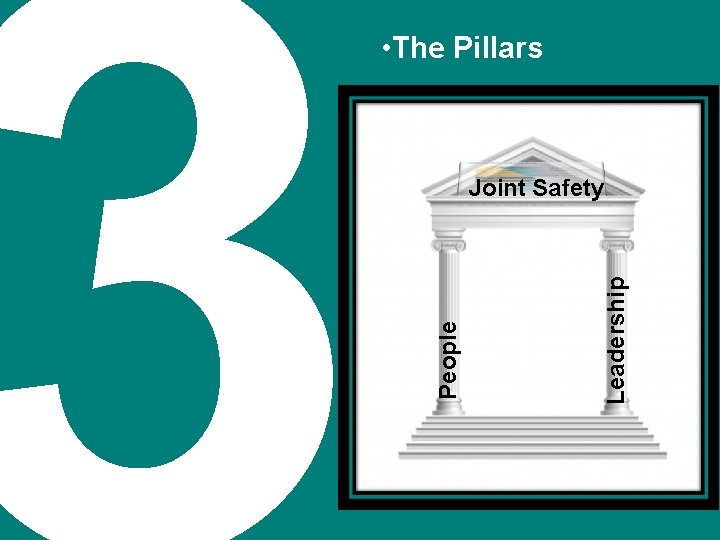
• The Pillars Leadership People Joint Safety
Group Task on Beliefs about People & Leadership • Leadership is based on shared values and beliefs. Beliefs create motivation and affect decisions. Write down some shared beliefs about people and leadership? • • 12 Be prepared to share with the larger group. Take ten minutes for this task. 12
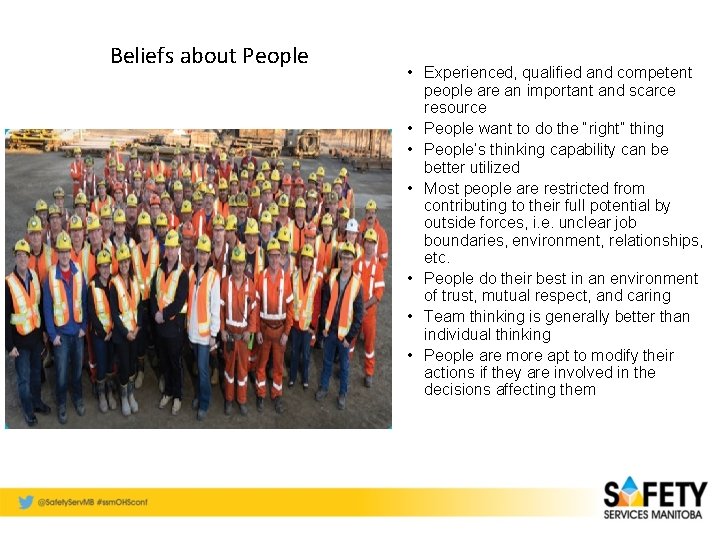
Beliefs about People • Experienced, qualified and competent people are an important and scarce resource • People want to do the “right” thing • People’s thinking capability can be better utilized • Most people are restricted from contributing to their full potential by outside forces, i. e. unclear job boundaries, environment, relationships, etc. • People do their best in an environment of trust, mutual respect, and caring • Team thinking is generally better than individual thinking • People are more apt to modify their actions if they are involved in the decisions affecting them
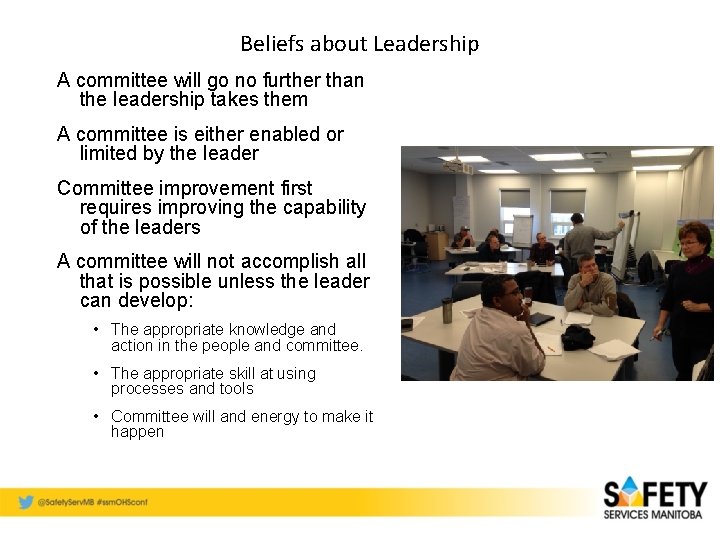
Beliefs about Leadership A committee will go no further than the leadership takes them A committee is either enabled or limited by the leader Committee improvement first requires improving the capability of the leaders A committee will not accomplish all that is possible unless the leader can develop: • The appropriate knowledge and action in the people and committee. • The appropriate skill at using processes and tools • Committee will and energy to make it happen
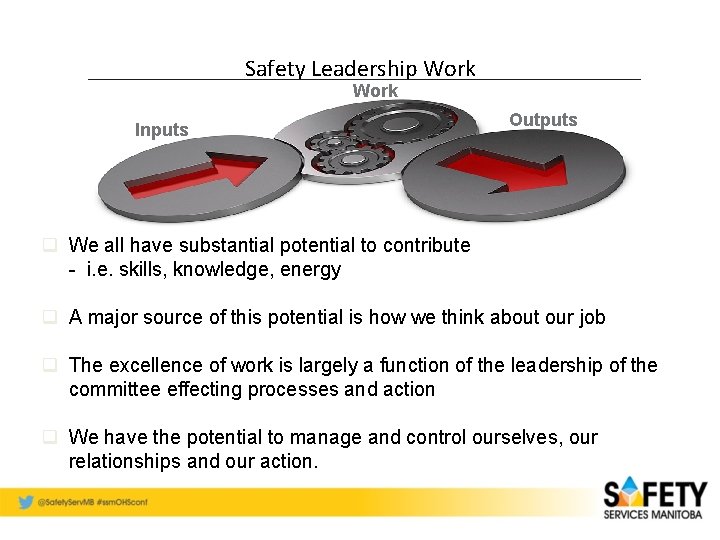
Safety Leadership Work Inputs Outputs WORK Outputs q We all have substantial potential to contribute - i. e. skills, knowledge, energy q A major source of this potential is how we think about our job q The excellence of work is largely a function of the leadership of the committee effecting processes and action q We have the potential to manage and control ourselves, our relationships and our action.
Task - Meaningful Joint Leadership Safety • Share with others some of your past work experiences • As a group answer and share with the larger group the following: 1. What has enabled you to contribute best in past work? 2. When was work most rewarding? • 16 Be prepared to share with the larger group. Take ten minutes for the task.
We Contribute Best When: • • We know we are individually important We are treated with dignity and respect We know and understand what is expected We accept responsibility and accountability We are recognized for achievements We are involved in decisions that affect us We receive feedback We are part of a successful team

• The What and How
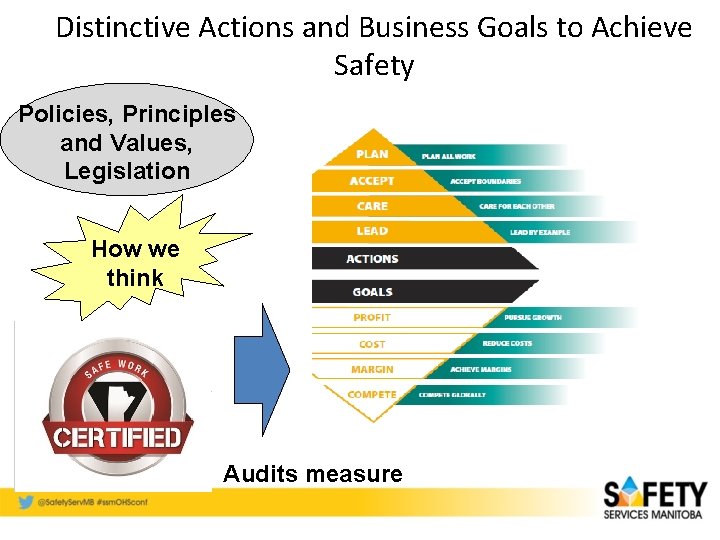
Distinctive Actions and Business Goals to Achieve Safety Policies, Principles and Values, Legislation How we think Audit Protocol Audits measure
Improving Organization Effectiveness • Requires promoting change and aligning – Strategic effectiveness – sets direction and defines distinctiveness to maximize returns – without a strategy, any action can be considered strategic – Leadership effectiveness – develops organization culture and achieves strategic direction – Operational effectiveness – improves thinking, problem solving and skills to improve the process and outputs 20 20
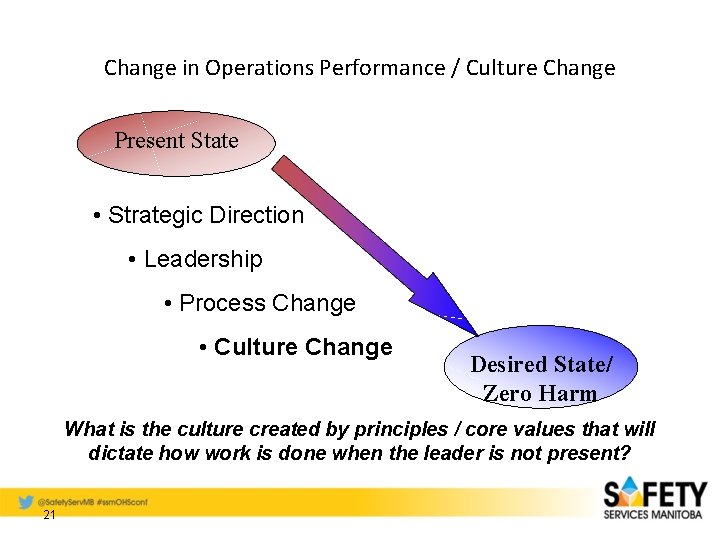
Change in Operations Performance / Culture Change Present State • Strategic Direction • Leadership • Process Change • Culture Change Desired State/ Zero Harm What is the culture created by principles / core values that will dictate how work is done when the leader is not present? 21
Task on Safety Leadership Strategic Direction Considering a strategy contains: • An objective that achieves excellence. • How the objective will be achieved. • The measurement of success, • What is the Safety Committee’s strategy? 22 ©W&M Kraft, Inc. 2008 All rights reserved 22
Joint Committee Strategic Direction Example • Objective • Achieve world class performance in Operations by continuing the journey towards “Zero Harm”. • How to accomplish • • The line organization will be accountable for Safety Programs and integrate risk management into all work striving for “Zero Harm” by managing risk to ALARA. Common best practices and proactive safety systems will be developed and implemented throughout all organizations. The best practices and safety systems will enable the distinctive actions – Plan, Accept, Care, and Lead. Safety Representatives will primarily be system expert and coach the line organization to achieve Safe. Production. An environment of caring, support and involvement will be established. • Measurements • Continual improvement of Safety Program success will be measured by leading, current and lagging indicators focusing on risk at ALARA. • • • 23
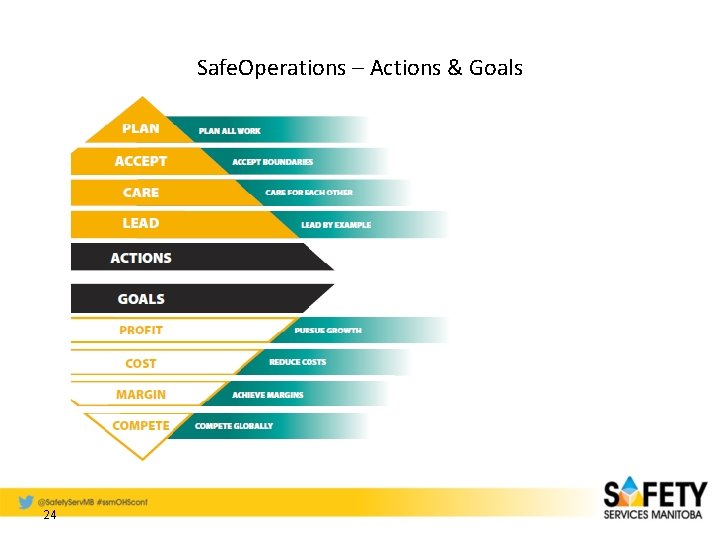
Safe. Operations – Actions & Goals 24
Execution for Excellence Essential elements – • Common values which provide a foundation of leadership • Shared beliefs in the endeavor • Realistic strategy including; – Clear objectives – Clear engaging direction on how to accomplish – Measurement and milestones • Plan to achieve the strategy with action, responsibility, timing and follow-up • Committee capability (sufficient knowledge, skill and motivation) • Accountability of the committee to achieve the objectives • Felt leadership - the committee responding positively to the leaders direction in an open, trusting, supportive environment 29 29

• The Three Platinum Tools
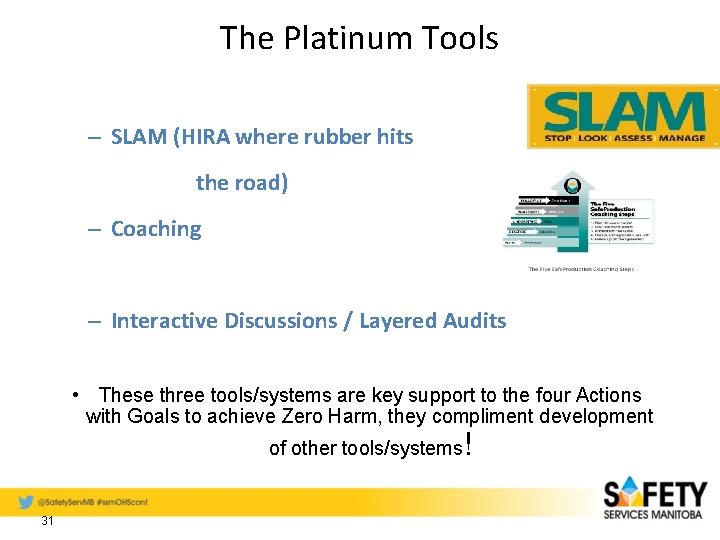
The Platinum Tools – SLAM (HIRA where rubber hits the road) – Coaching – Interactive Discussions / Layered Audits • These three tools/systems are key support to the four Actions with Goals to achieve Zero Harm, they compliment development of other tools/systems 31 !
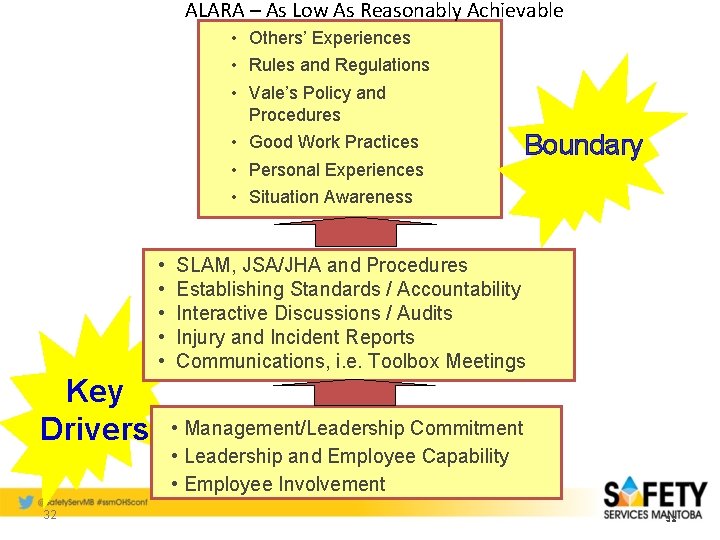
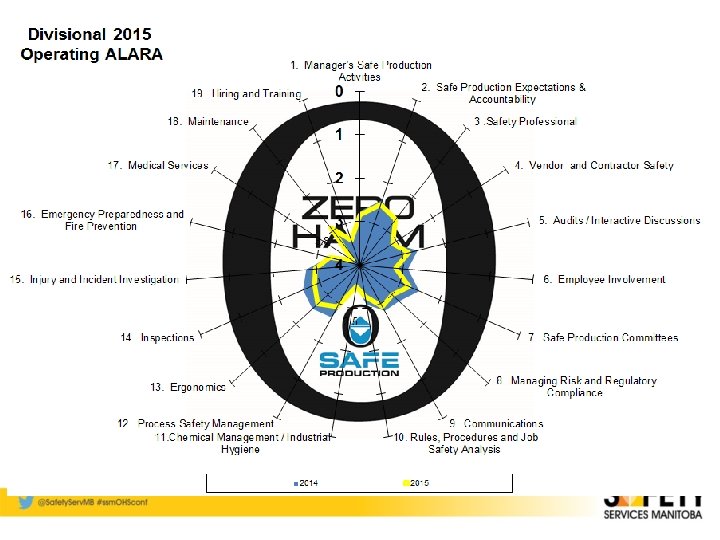
ALARA – As Low As Reasonably Achievable • Others’ Experiences • Rules and Regulations • Vale’s Policy and Procedures • Good Work Practices • Personal Experiences • Situation Awareness • • • Key Drivers 32 Boundary SLAM, JSA/JHA and Procedures Establishing Standards / Accountability Interactive Discussions / Audits Injury and Incident Reports Communications, i. e. Toolbox Meetings • Management/Leadership Commitment • Leadership and Employee Capability • Employee Involvement 32
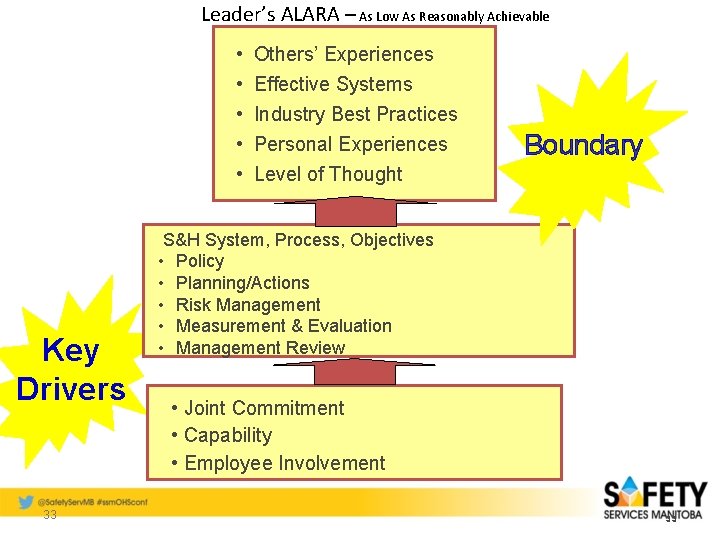
Leader’s ALARA – As Low As Reasonably Achievable • • • Key Drivers 33 Others’ Experiences Effective Systems Industry Best Practices Personal Experiences Level of Thought Boundary S&H System, Process, Objectives • Policy • Planning/Actions • Risk Management • Measurement & Evaluation • Management Review • Joint Commitment • Capability • Employee Involvement 33
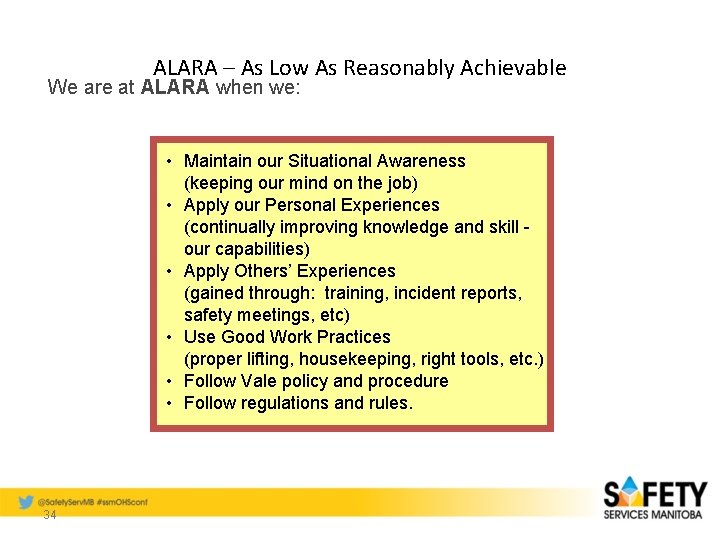
ALARA – As Low As Reasonably Achievable We are at ALARA when we: • Maintain our Situational Awareness (keeping our mind on the job) • Apply our Personal Experiences (continually improving knowledge and skill our capabilities) • Apply Others’ Experiences (gained through: training, incident reports, safety meetings, etc) • Use Good Work Practices (proper lifting, housekeeping, right tools, etc. ) • Follow Vale policy and procedure • Follow regulations and rules. 34
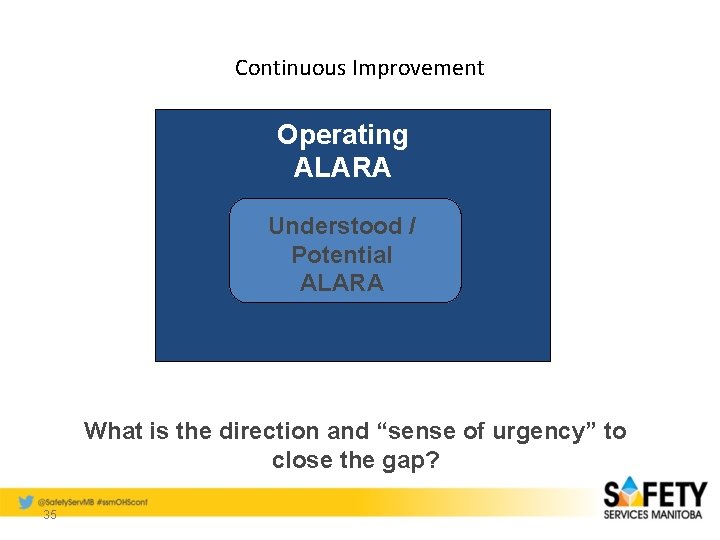
Continuous Improvement Operating ALARA Understood / Potential ALARA What is the direction and “sense of urgency” to close the gap? 35
6 • Responsibility • Accountability
Responsibility and Accountability – Responsibility • obligation to do the right thing – Accountability • that which you will be measured and held to account “If you see a problem and don’t proactively try to resolve it, you condone and share in the consequences of that problem” Examples - unsafe actions, poor housekeeping, un-repaired equipment, poor planning, inadequate information, etc. 38
Concept of Accepting Accountability Aspects of Accepting Accountability: – All leaders realize that achieving excellence is a never ending journey. – The committee understands that there may be failures, setbacks and errors. – However, it is understood that these are not OK and the committee will have accountability for achieving objectives. – The committee individually and collectively accepts accountability and will work together on improving the quality of how we approach and do work so that the results show continual improvement. 39
Individual Accepting Accountability • Proactively accomplishing job expectations with continual improvement through self-observation / self-reflection • • • 40 Important aspects: Clear understanding of expectations Capability (skill and knowledge) Receptive to coaching Realization that potential is ever increasing 40
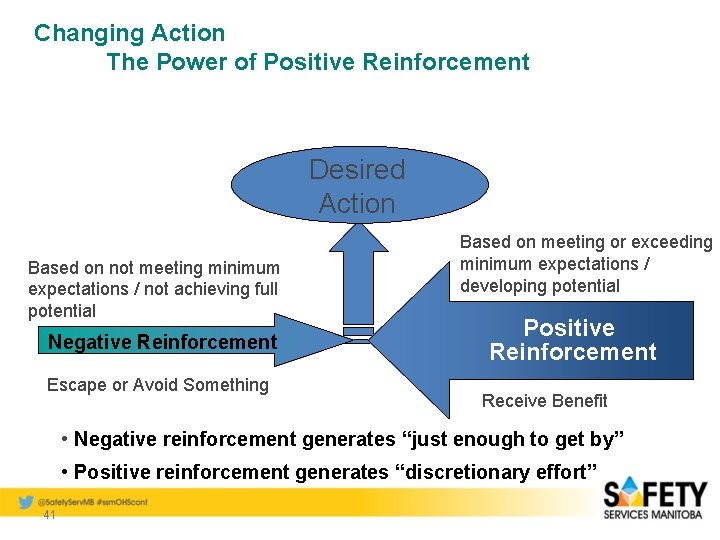
Changing Action The Power of Positive Reinforcement Desired Action Based on not meeting minimum expectations / not achieving full potential Negative Reinforcement Escape or Avoid Something Based on meeting or exceeding minimum expectations / developing potential Positive Reinforcement Receive Benefit • Negative reinforcement generates “just enough to get by” • Positive reinforcement generates “discretionary effort” 41
7 • Care for each other in open and trusting environment
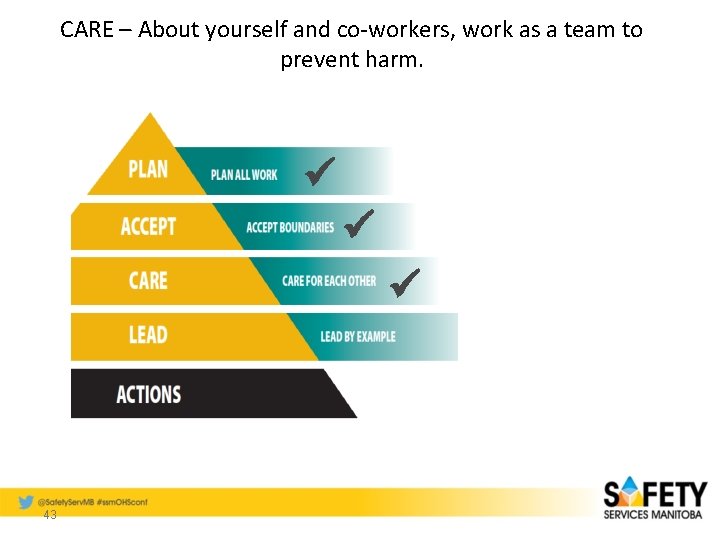
CARE – About yourself and co-workers, work as a team to prevent harm. 43
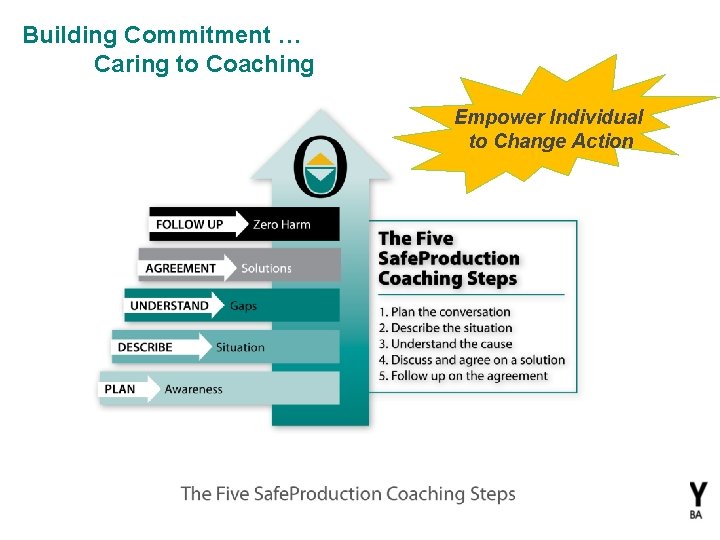
Building Commitment … Caring to Coaching Empower Individual to Change Action 44
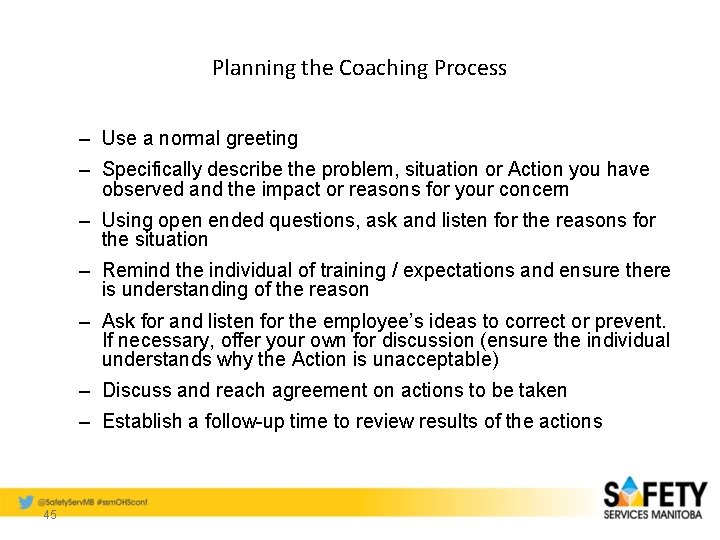
Planning the Coaching Process – Use a normal greeting – Specifically describe the problem, situation or Action you have observed and the impact or reasons for your concern – Using open ended questions, ask and listen for the reasons for the situation – Remind the individual of training / expectations and ensure there is understanding of the reason – Ask for and listen for the employee’s ideas to correct or prevent. If necessary, offer your own for discussion (ensure the individual understands why the Action is unacceptable) – Discuss and reach agreement on actions to be taken – Establish a follow-up time to review results of the actions 45
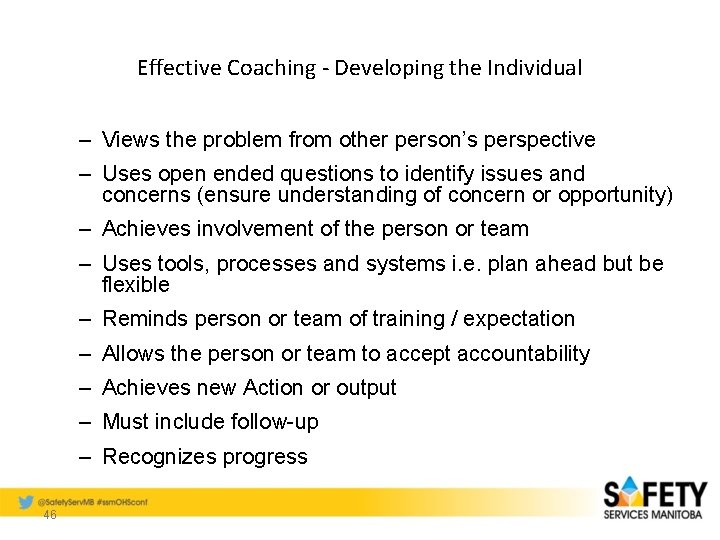
Effective Coaching - Developing the Individual – Views the problem from other person’s perspective – Uses open ended questions to identify issues and concerns (ensure understanding of concern or opportunity) – Achieves involvement of the person or team – Uses tools, processes and systems i. e. plan ahead but be flexible – Reminds person or team of training / expectation – Allows the person or team to accept accountability – Achieves new Action or output – Must include follow-up – Recognizes progress 46
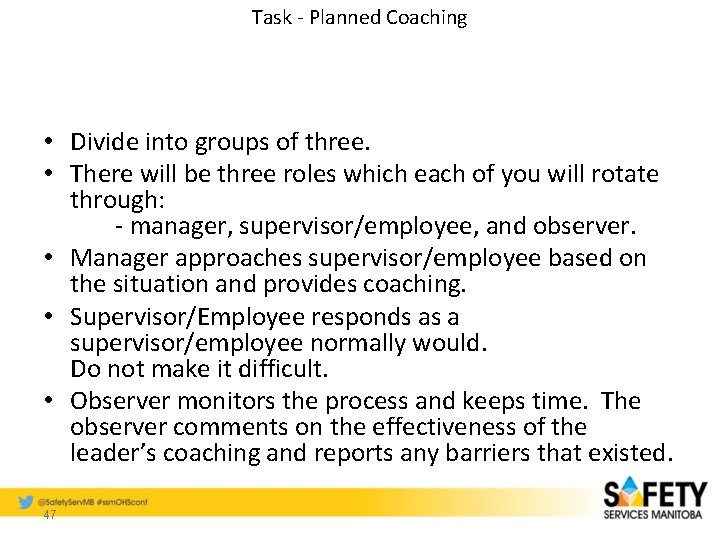
Task - Planned Coaching • Divide into groups of three. • There will be three roles which each of you will rotate through: - manager, supervisor/employee, and observer. • Manager approaches supervisor/employee based on the situation and provides coaching. • Supervisor/Employee responds as a supervisor/employee normally would. Do not make it difficult. • Observer monitors the process and keeps time. The observer comments on the effectiveness of the leader’s coaching and reports any barriers that existed. 47
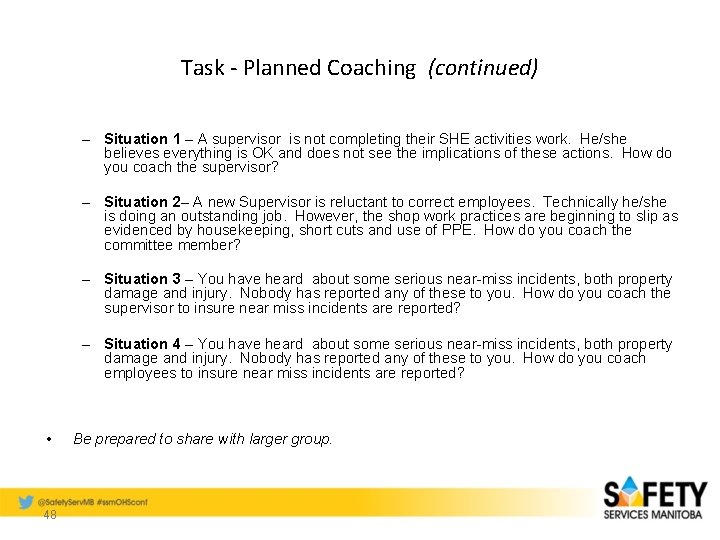
Task - Planned Coaching (continued) – Situation 1 – A supervisor is not completing their SHE activities work. He/she believes everything is OK and does not see the implications of these actions. How do you coach the supervisor? – Situation 2– A new Supervisor is reluctant to correct employees. Technically he/she is doing an outstanding job. However, the shop work practices are beginning to slip as evidenced by housekeeping, short cuts and use of PPE. How do you coach the committee member? – Situation 3 – You have heard about some serious near-miss incidents, both property damage and injury. Nobody has reported any of these to you. How do you coach the supervisor to insure near miss incidents are reported? – Situation 4 – You have heard about some serious near-miss incidents, both property damage and injury. Nobody has reported any of these to you. How do you coach employees to insure near miss incidents are reported? • 48 Be prepared to share with larger group.
8 • Active • Listening
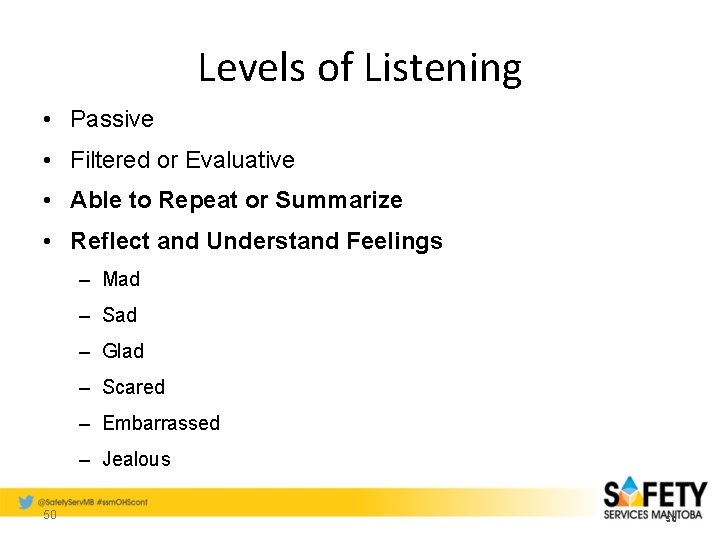
Levels of Listening • Passive • Filtered or Evaluative • Able to Repeat or Summarize • Reflect and Understand Feelings – Mad – Sad – Glad – Scared – Embarrassed – Jealous 50 50
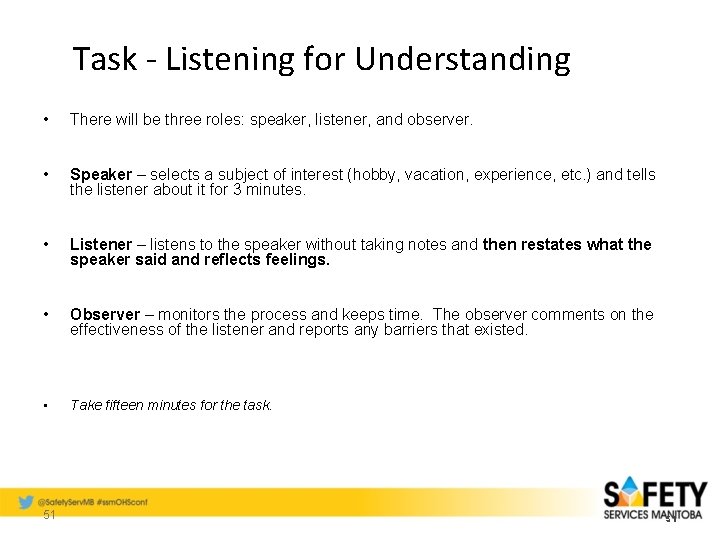
Task - Listening for Understanding • There will be three roles: speaker, listener, and observer. • Speaker – selects a subject of interest (hobby, vacation, experience, etc. ) and tells the listener about it for 3 minutes. • Listener – listens to the speaker without taking notes and then restates what the speaker said and reflects feelings. • Observer – monitors the process and keeps time. The observer comments on the effectiveness of the listener and reports any barriers that existed. • Take fifteen minutes for the task. 51 51
“A coach thinks of a person in terms of both performance and potential” Always keep the expectations in mind 52
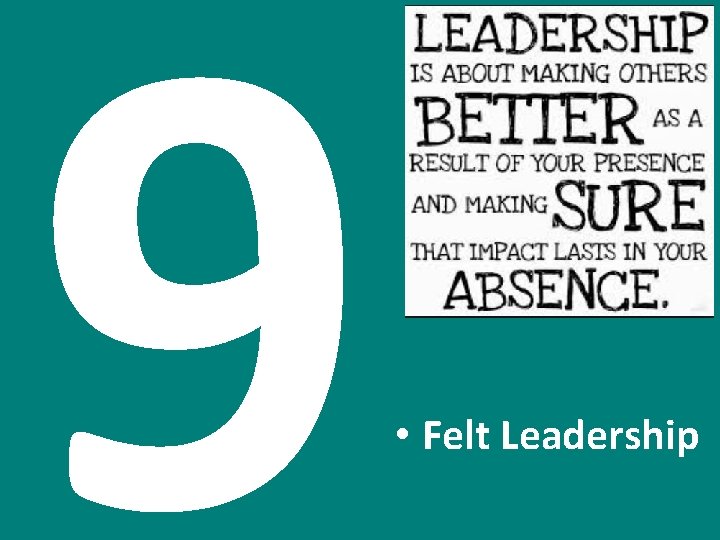
9 • Felt Leadership
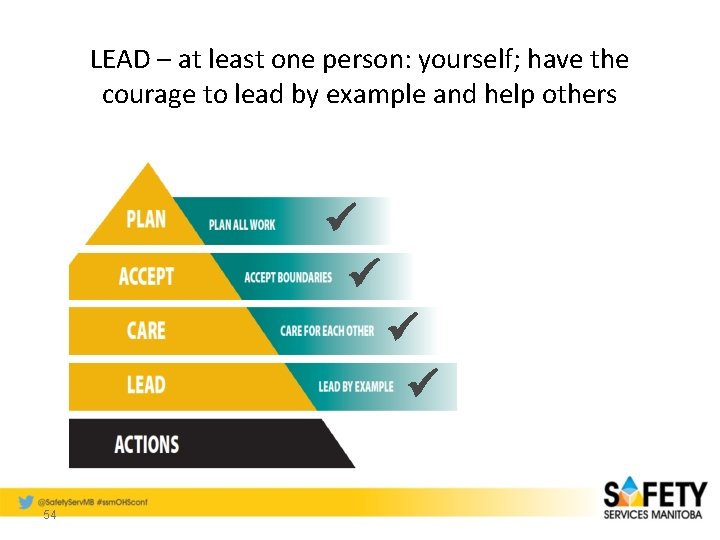
LEAD – at least one person: yourself; have the courage to lead by example and help others 54
Concept of Felt Leadership – The leader’s presence is felt in a way that the organization positively responds to the leader’s direction even if they are not there. – Leadership that delivers Vision, Goals, Accountability and Motivation with passion, will, energy, and caring in such a way that individuals positively respond to the direction while achieving peak performance. 55
Felt Leadership (continued) • Important aspects (some activities occurring): – Organization engaged in the vision – Clear engaging direction – be realistic – Knowing business specifics – Supportive organization – Increasing organization will and energy – Achieving All business success factors – Developing connections through involvement, values, relationships, etc. – know your people – Approach to people and business with active caring – Value and principle guided
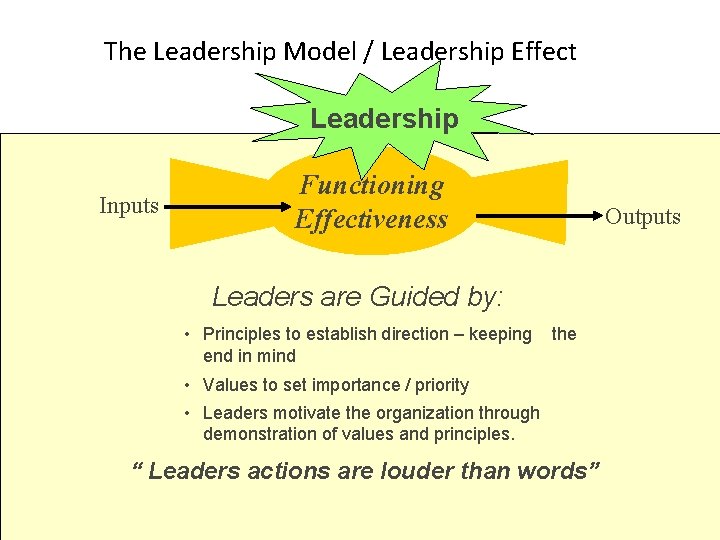
The Leadership Model / Leadership Effect Leadership Inputs Functioning Effectiveness Outputs Leaders are Guided by: • Principles to establish direction – keeping end in mind the • Values to set importance / priority • Leaders motivate the organization through demonstration of values and principles. “ Leaders actions are louder than words” 57
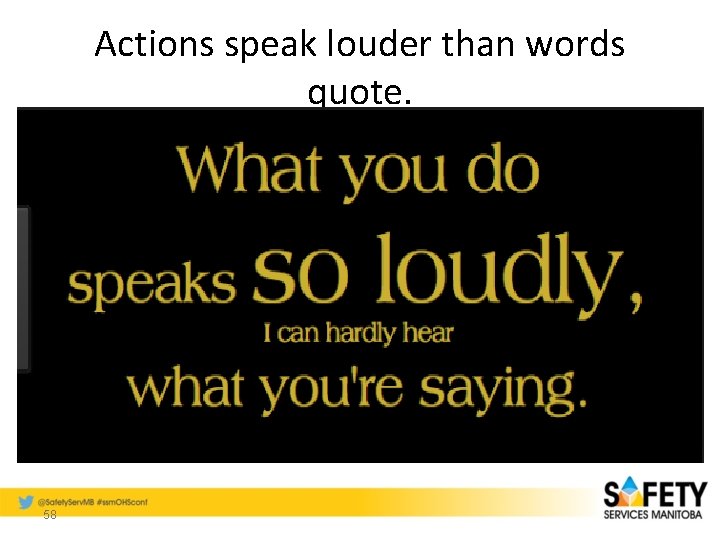
Actions speak louder than words quote. 58
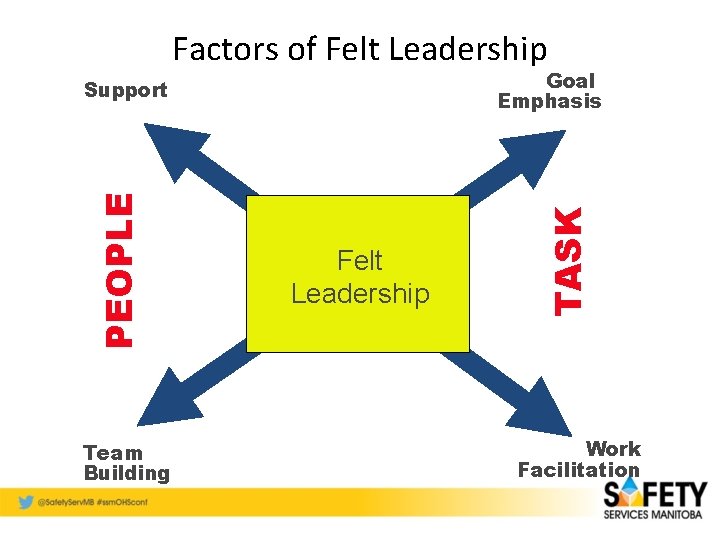
Factors of Felt Leadership PEOPLE Team Building Felt Leadership TASK Goal Emphasis Support Work Facilitation
10 • Measuring success
How to Measure Success in Connecting to People – I get requests for help – Person is relaxed or at ease working with me – I have a relationship with understanding – We both learn – We are comfortable sharing feelings – Results are realized through win-win 61
11 • Task for leaders!
Task - Interview on the Street • Write down in your own words the answer to the following question asked by someone who knows nothing about safety and health committees (two minute response). What do “Your employees/members” require of Leaders to achieve excellence in Safety? 63
Creating will and energy in the organization to achieve Safety Excellence • As leaders what do you now do to create joint leadership will and energy in the organization? • How do you as leaders affect the thinking of the organization around Safety? • How do you integrate safety, productivity/cost, and quality into your thinking around Safe. Operations? 64 64
Thank You! Kirk Regular • Mining Association of Manitoba Inc. Safety Committee Co Chair • Mine Rescue Organization Co Chair • Manager Central Engineering, Central Maintenance and Project Management group - Vale Canada Ltd. Manitoba Operations. • Safety and Health Co Chair - Vale Canada Ltd. Manitoba Operations.
- Slides: 60