
Presented by Dr Tina Rae Ways to Recovery
Presented by Dr Tina Rae Ways to Recovery through A Toolbox of Wellbeing 15. 7. 20. 1
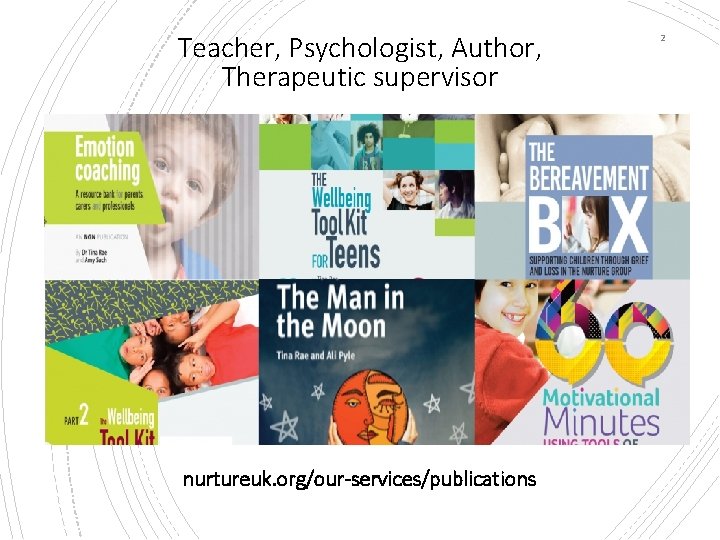
Teacher, Psychologist, Author, Therapeutic supervisor The role of the Mental health lead in schools nurtureuk. org/our-services/publications 2
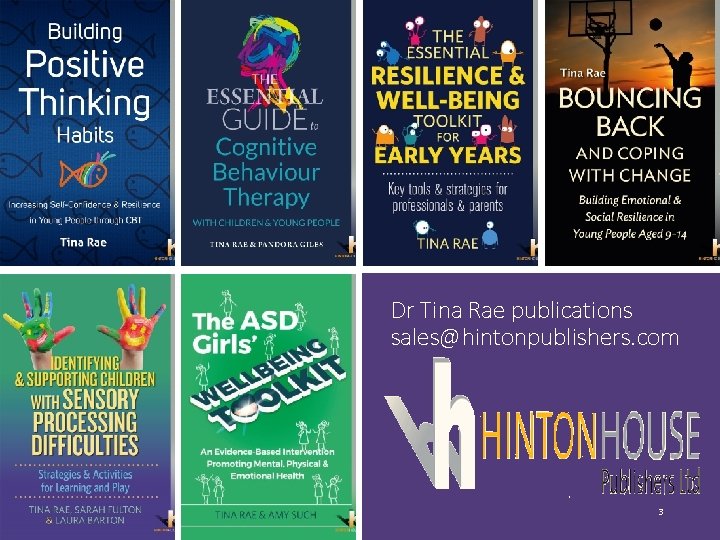
Dr Tina Rae publications sales@hintonpublishers. com 3
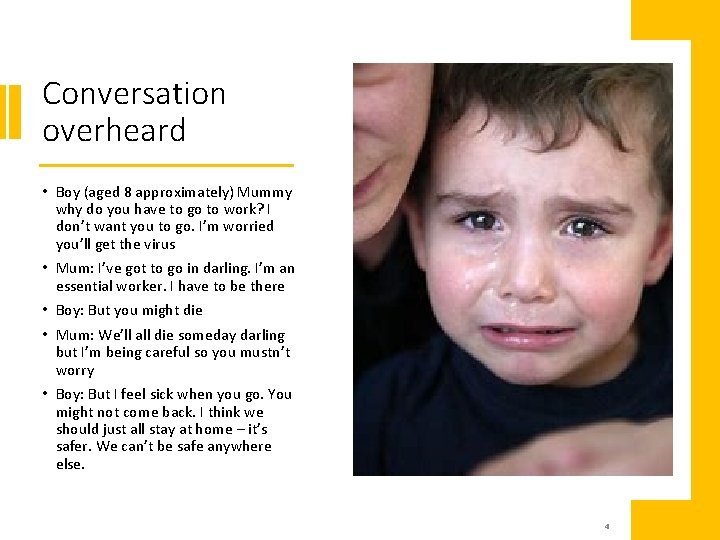
Conversation overheard • Boy (aged 8 approximately) Mummy why do you have to go to work? I don’t want you to go. I’m worried you’ll get the virus • Mum: I’ve got to go in darling. I’m an essential worker. I have to be there • Boy: But you might die • Mum: We’ll all die someday darling but I’m being careful so you mustn’t worry • Boy: But I feel sick when you go. You might not come back. I think we should just all stay at home – it’s safer. We can’t be safe anywhere else. 4
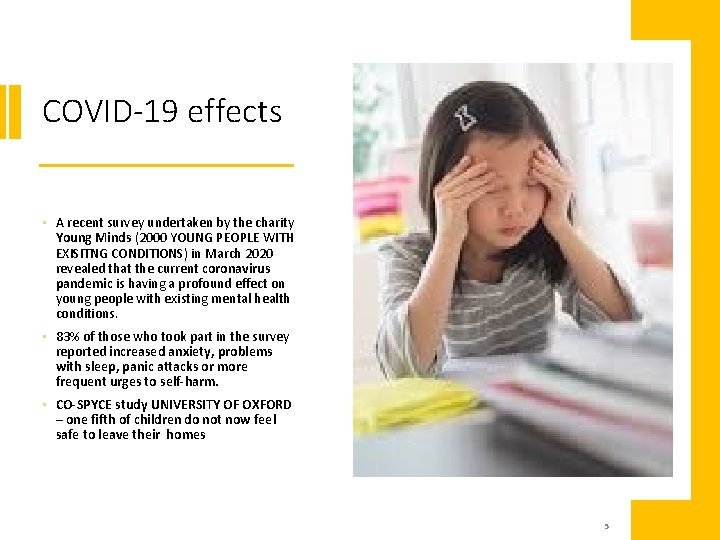
COVID-19 effects • A recent survey undertaken by the charity Young Minds (2000 YOUNG PEOPLE WITH EXISITNG CONDITIONS) in March 2020 revealed that the current coronavirus pandemic is having a profound effect on young people with existing mental health conditions. • 83% of those who took part in the survey reported increased anxiety, problems with sleep, panic attacks or more frequent urges to self-harm. • CO-SPYCE study UNIVERSITY OF OXFORD – one fifth of children do not now feel safe to leave their homes 5
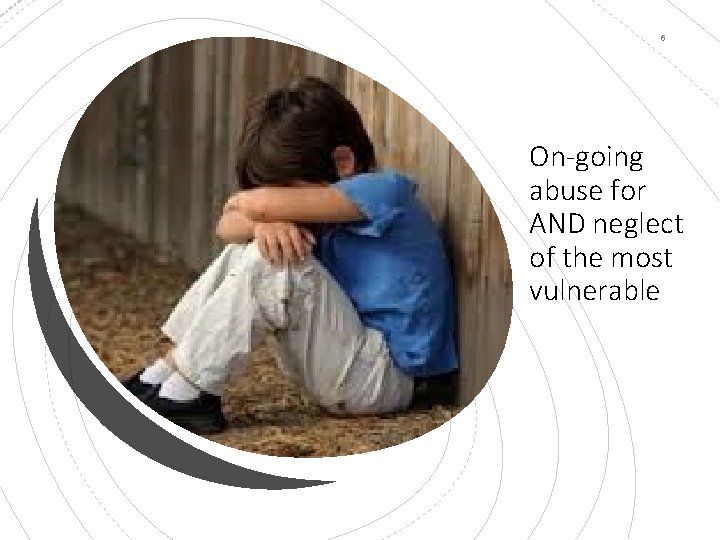
6 On-going abuse for AND neglect of the most vulnerable
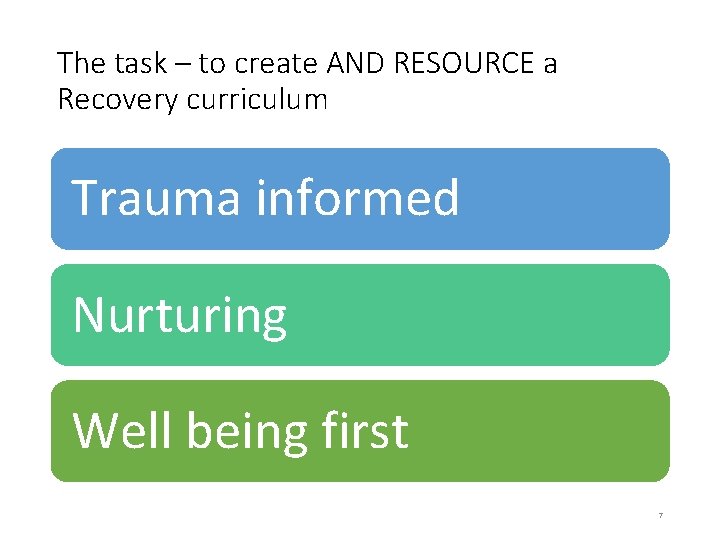
The task – to create AND RESOURCE a Recovery curriculum Trauma informed Nurturing Well being first 7
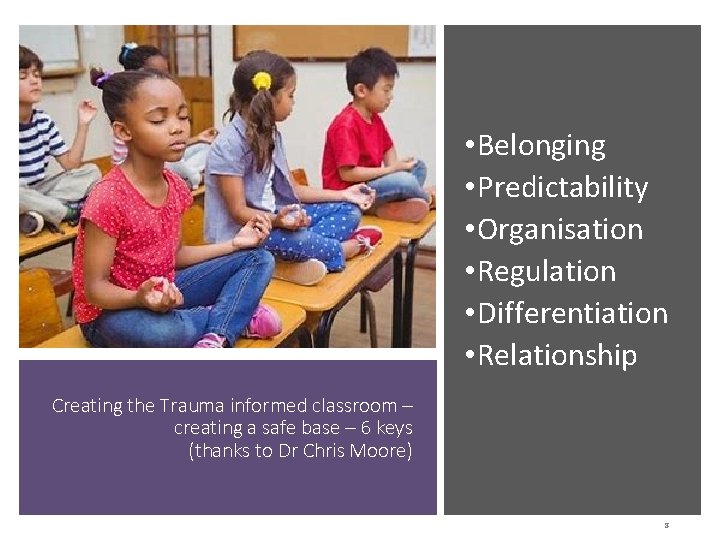
• Belonging • Predictability • Organisation • Regulation • Differentiation • Relationship Creating the Trauma informed classroom – creating a safe base – 6 keys (thanks to Dr Chris Moore) 8
Since we last met……. 9
My impetus • ‘Never has there been a time when knowing how to manage our own well-being and how to support our children in doing this has been so vital’. Tina Rae 10
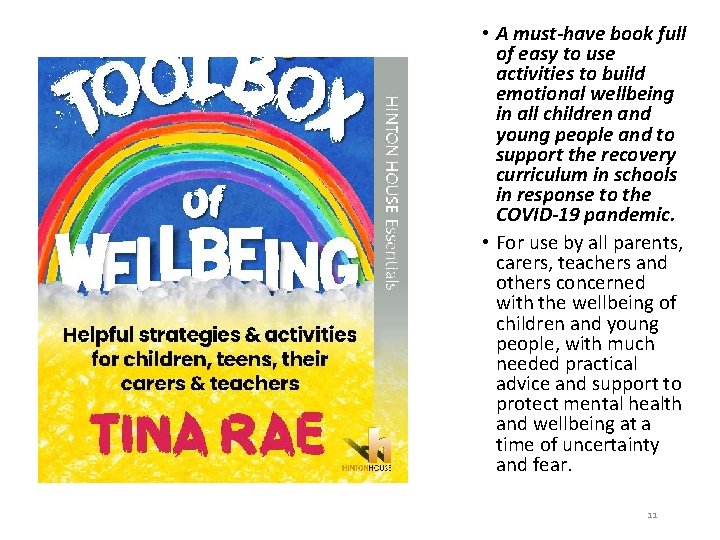
• A must-have book full of easy to use activities to build emotional wellbeing in all children and young people and to support the recovery curriculum in schools in response to the COVID-19 pandemic. • For use by all parents, carers, teachers and others concerned with the wellbeing of children and young people, with much needed practical advice and support to protect mental health and wellbeing at a time of uncertainty and fear. 11
• This little book will provide children, young people and their carers with user-friendly, easy to understand evidence-based strategies to build good mental health, and to build the resilience needed to move on from stressful situations and trauma – including those related to the current Coronavirus pandemic. 12
MY FRIEND AND NEIGHBOUR SAID……(or the need for adult self-regulation? ) • ‘Thank you so much…. I can pop this in my handbag and read it on the train on my way to work. It will be much better than reading the anxiety provoking newspaper - especially in terms of my mental health and that of my kids. All that gives me is an awareness that I have no control so I get stressed. This will help me take back some of that and maybe stop stressing about stuff I cannot control. ’ 13
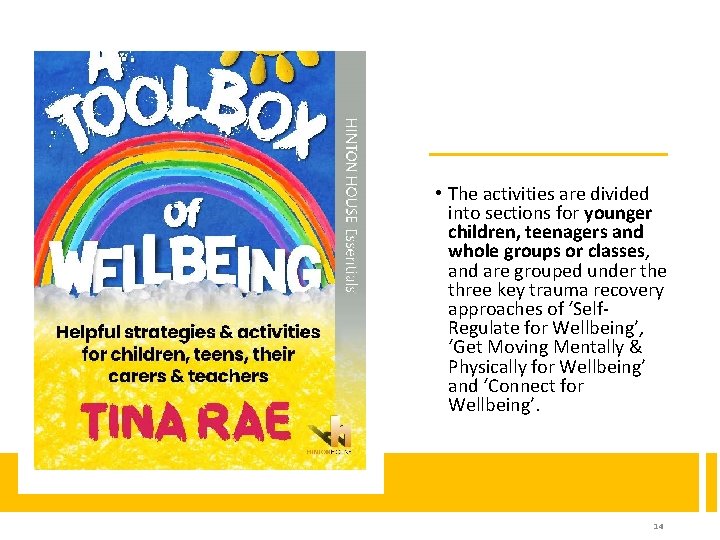
• The activities are divided into sections for younger children, teenagers and whole groups or classes, and are grouped under the three key trauma recovery approaches of ‘Self. Regulate for Wellbeing’, ‘Get Moving Mentally & Physically for Wellbeing’ and ‘Connect for Wellbeing’. 14
The need for us ALL to engage in the 3 Trauma Recovery approaches • Self-Regulate for Wellbeing • Get Moving Mentally & Physically for Wellbeing • Connect for Wellbeing 15
Part 1 Self-regulate for well being • identify and modulate emotions • control impulses • delay gratification • make thoughtful and conscious choices • and set goals and achieve them. 16
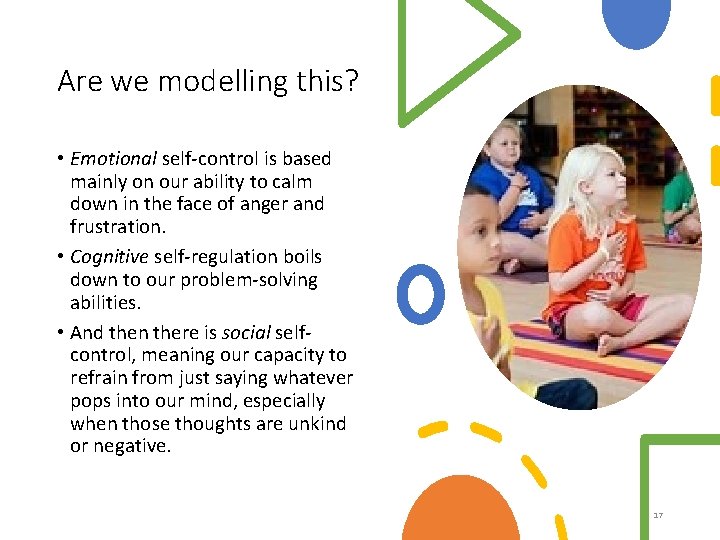
Are we modelling this? • Emotional self-control is based mainly on our ability to calm down in the face of anger and frustration. • Cognitive self-regulation boils down to our problem-solving abilities. • And then there is social selfcontrol, meaning our capacity to refrain from just saying whatever pops into our mind, especially when those thoughts are unkind or negative. 17
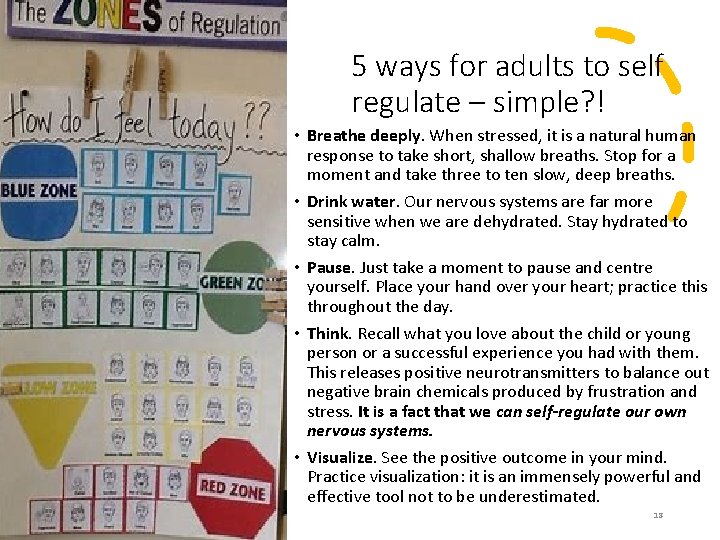
5 ways for adults to self regulate – simple? ! • Breathe deeply. When stressed, it is a natural human response to take short, shallow breaths. Stop for a moment and take three to ten slow, deep breaths. • Drink water. Our nervous systems are far more sensitive when we are dehydrated. Stay hydrated to stay calm. • Pause. Just take a moment to pause and centre yourself. Place your hand over your heart; practice this throughout the day. • Think. Recall what you love about the child or young person or a successful experience you had with them. This releases positive neurotransmitters to balance out negative brain chemicals produced by frustration and stress. It is a fact that we can self-regulate our own nervous systems. • Visualize. See the positive outcome in your mind. Practice visualization: it is an immensely powerful and effective tool not to be underestimated. 18
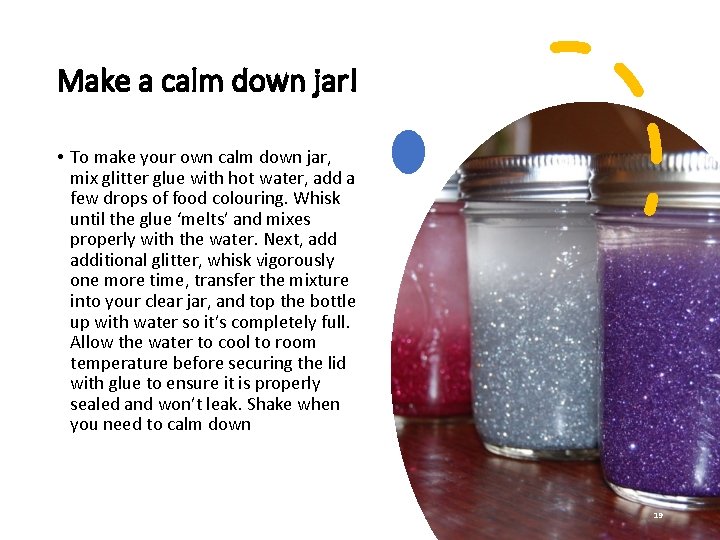
Make a calm down jar! • To make your own calm down jar, mix glitter glue with hot water, add a few drops of food colouring. Whisk until the glue ‘melts’ and mixes properly with the water. Next, additional glitter, whisk vigorously one more time, transfer the mixture into your clear jar, and top the bottle up with water so it’s completely full. Allow the water to cool to room temperature before securing the lid with glue to ensure it is properly sealed and won’t leak. Shake when you need to calm down 19
Try the 5 -4 -3 -2 -1 method • Working backward from 5, use your senses to list things you notice around you. For example, you might start by listing five things you hear, then four things you see, then three things you can touch from where you’re sitting, two things you can smell, and one thing you can taste. Try to notice the little things you might not always pay attention to, such as the colour of the flecks in the carpet or the hum of your computer. 20
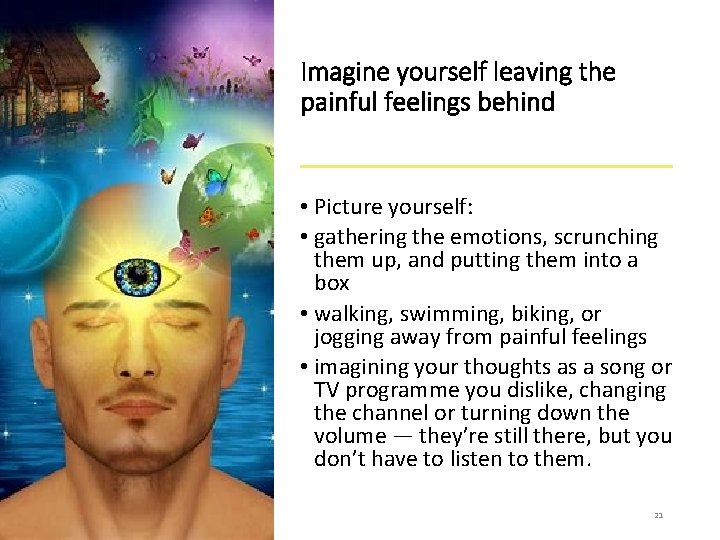
Imagine yourself leaving the painful feelings behind • Picture yourself: • gathering the emotions, scrunching them up, and putting them into a box • walking, swimming, biking, or jogging away from painful feelings • imagining your thoughts as a song or TV programme you dislike, changing the channel or turning down the volume — they’re still there, but you don’t have to listen to them. 21
Part 2 Get moving mentally and physically for well being • The mental agility in analysing and challenging our negative thinking patterns and the need to be agile physically in order to produce those feel good chemicals in the brain are the focus of the next section of the book. 22
CBT – RECOGNISING THINKING ERRORS! • Doing ourselves down – only focusing on the negatives and seeing bad things about ourselves. • Blowing things up or catastrophising – making things worse than they really are. • Predicting failure – setting your mind ready to predict failure whatever the situation. • Over emotional thoughts – this is when your emotions become extremely powerful and stop you thinking clearly. • Setting yourself up – setting yourself targets that are too high so that you know that you will fail. • Blaming yourself – thinking that everything that goes wrong is your own fault. 23
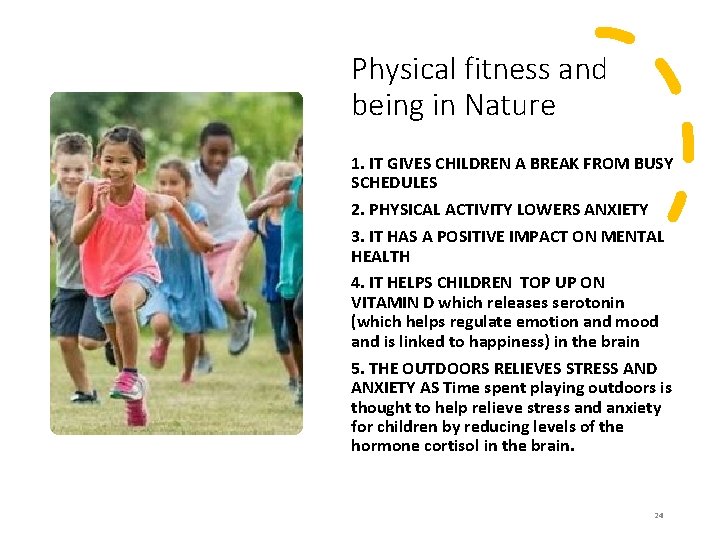
Physical fitness and being in Nature 1. IT GIVES CHILDREN A BREAK FROM BUSY SCHEDULES 2. PHYSICAL ACTIVITY LOWERS ANXIETY 3. IT HAS A POSITIVE IMPACT ON MENTAL HEALTH 4. IT HELPS CHILDREN TOP UP ON VITAMIN D which releases serotonin (which helps regulate emotion and mood and is linked to happiness) in the brain 5. THE OUTDOORS RELIEVES STRESS AND ANXIETY AS Time spent playing outdoors is thought to help relieve stress and anxiety for children by reducing levels of the hormone cortisol in the brain. 24
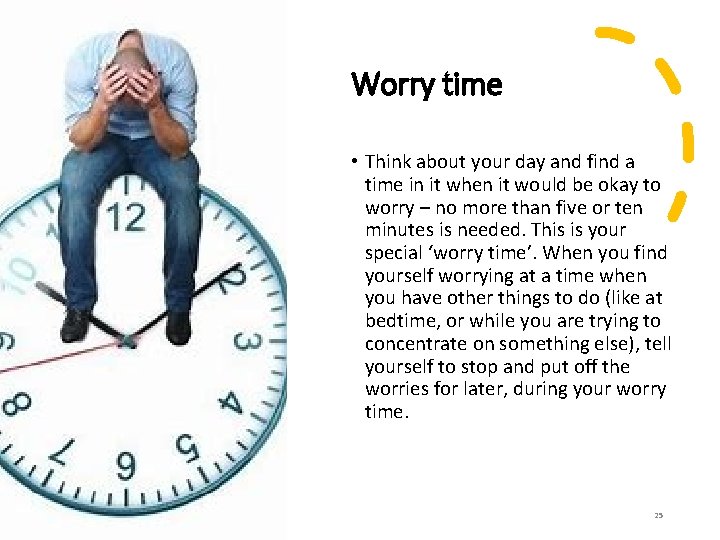
Worry time • Think about your day and find a time in it when it would be okay to worry – no more than five or ten minutes is needed. This is your special ‘worry time’. When you find yourself worrying at a time when you have other things to do (like at bedtime, or while you are trying to concentrate on something else), tell yourself to stop and put off the worries for later, during your worry time. 25
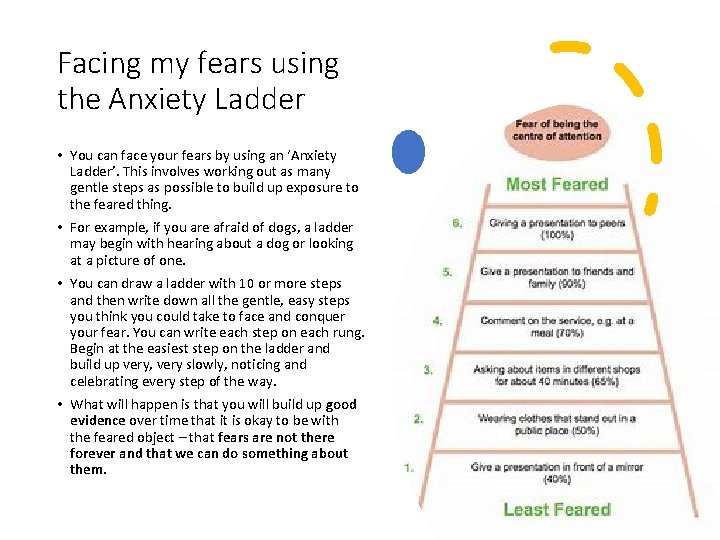
Facing my fears using the Anxiety Ladder • You can face your fears by using an ‘Anxiety Ladder’. This involves working out as many gentle steps as possible to build up exposure to the feared thing. • For example, if you are afraid of dogs, a ladder may begin with hearing about a dog or looking at a picture of one. • You can draw a ladder with 10 or more steps and then write down all the gentle, easy steps you think you could take to face and conquer your fear. You can write each step on each rung. Begin at the easiest step on the ladder and build up very, very slowly, noticing and celebrating every step of the way. • What will happen is that you will build up good evidence over time that it is okay to be with the feared object – that fears are not there forever and that we can do something about them. 26
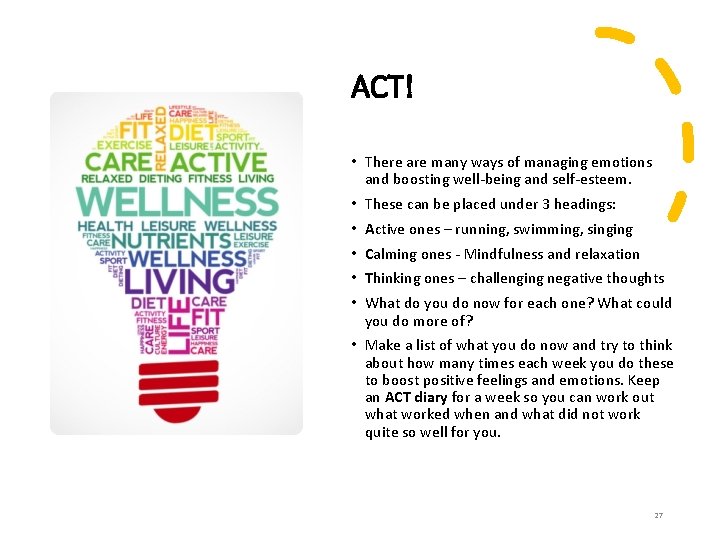
ACT! • There are many ways of managing emotions and boosting well-being and self-esteem. • These can be placed under 3 headings: • Active ones – running, swimming, singing • Calming ones - Mindfulness and relaxation • Thinking ones – challenging negative thoughts • What do you do now for each one? What could you do more of? • Make a list of what you do now and try to think about how many times each week you do these to boost positive feelings and emotions. Keep an ACT diary for a week so you can work out what worked when and what did not work quite so well for you. 27
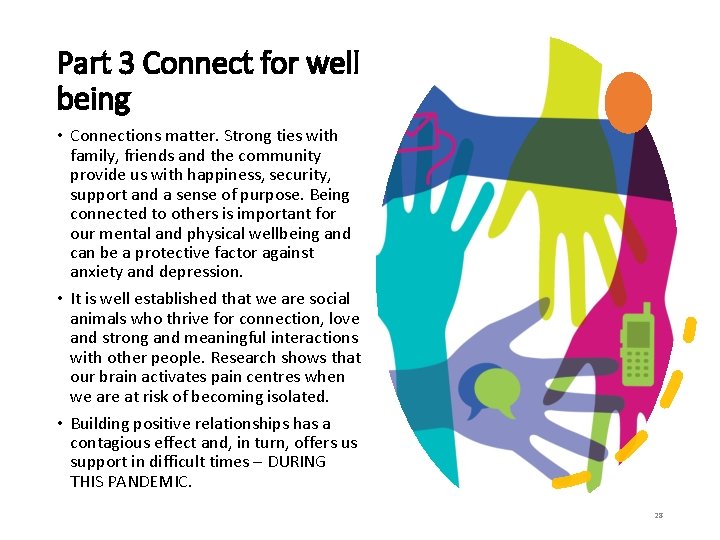
Part 3 Connect for well being • Connections matter. Strong ties with family, friends and the community provide us with happiness, security, support and a sense of purpose. Being connected to others is important for our mental and physical wellbeing and can be a protective factor against anxiety and depression. • It is well established that we are social animals who thrive for connection, love and strong and meaningful interactions with other people. Research shows that our brain activates pain centres when we are at risk of becoming isolated. • Building positive relationships has a contagious effect and, in turn, offers us support in difficult times – DURING THIS PANDEMIC. 28
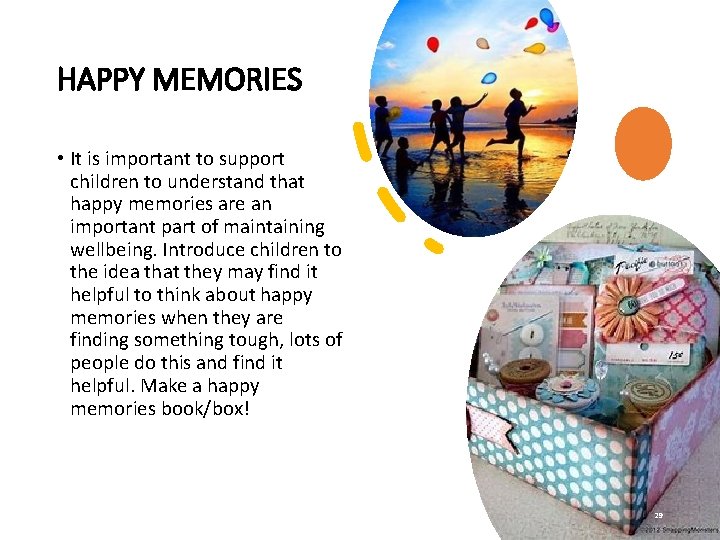
HAPPY MEMORIES • It is important to support children to understand that happy memories are an important part of maintaining wellbeing. Introduce children to the idea that they may find it helpful to think about happy memories when they are finding something tough, lots of people do this and find it helpful. Make a happy memories book/box! 29
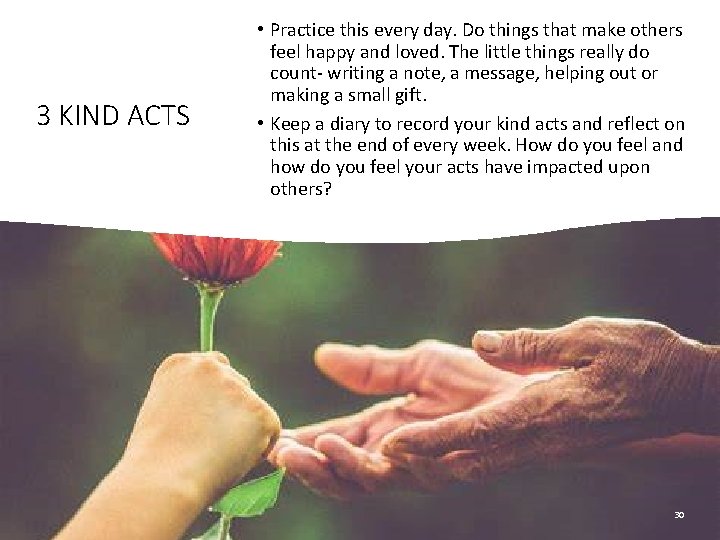
3 KIND ACTS • Practice this every day. Do things that make others feel happy and loved. The little things really do count- writing a note, a message, helping out or making a small gift. • Keep a diary to record your kind acts and reflect on this at the end of every week. How do you feel and how do you feel your acts have impacted upon others? 30
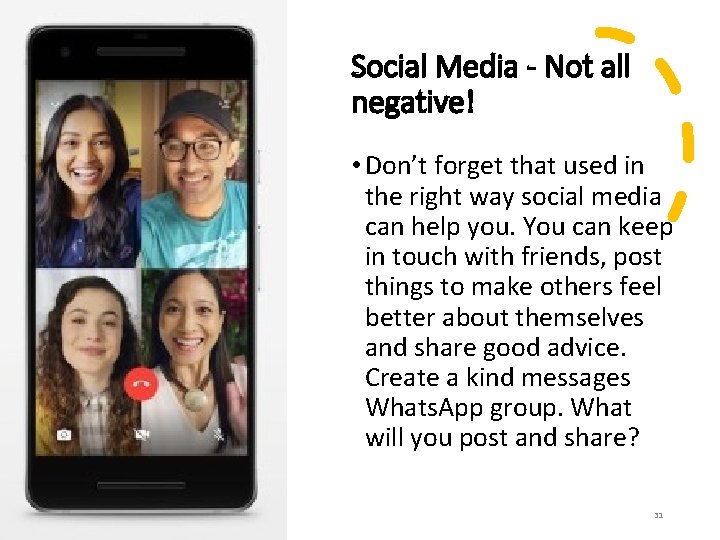
Social Media - Not all negative! • Don’t forget that used in the right way social media can help you. You can keep in touch with friends, post things to make others feel better about themselves and share good advice. Create a kind messages Whats. App group. What will you post and share? 31
THE NEED TO UNDERSTAND Trauma and anxiety 32
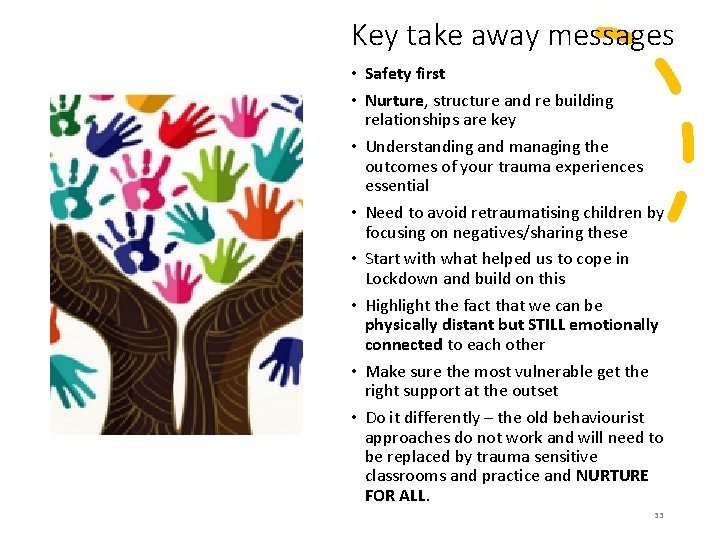
Key take away messages • Safety first • Nurture, structure and re building relationships are key • Understanding and managing the outcomes of your trauma experiences essential • Need to avoid retraumatising children by focusing on negatives/sharing these • Start with what helped us to cope in Lockdown and build on this • Highlight the fact that we can be physically distant but STILL emotionally connected to each other • Make sure the most vulnerable get the right support at the outset • Do it differently – the old behaviourist approaches do not work and will need to be replaced by trauma sensitive classrooms and practice and NURTURE FOR ALL. 33
Key take away messages FINALLY……. • Embed the 3 Trauma recovery approaches in your Recovery plan for the school both at a systems and curriculum level • Self-Regulate for Wellbeing • Get Moving Mentally & Physically for Wellbeing • Connect for Wellbeing 34
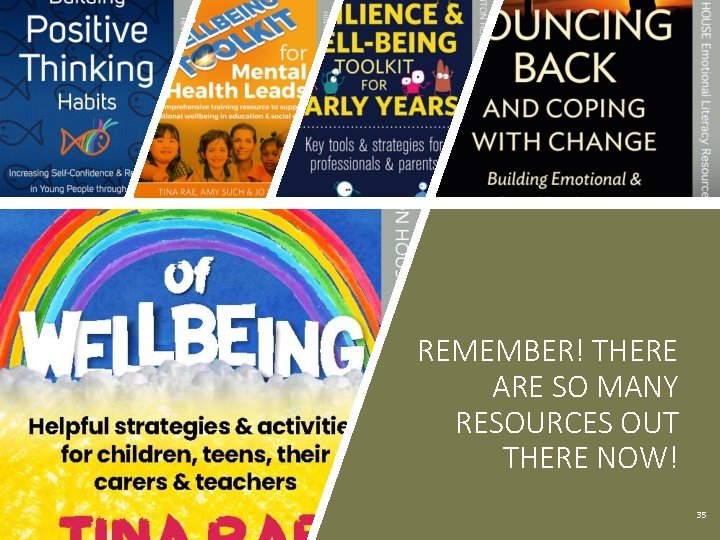
REMEMBER! THERE ARE SO MANY RESOURCES OUT THERE NOW! 35
• THANK YOU FOR LISTENING Dr Tina Rae tinarae@hotmail. co. uk @Dr. Tinarae 36
- Slides: 36