
Presented by CORE Collaboration for REMS Education Presented
Presented by CO*RE Collaboration for REMS Education Presented by CO*RE www. core-rems. org Collaboration for REMS Education www. corerems. org Collaborative for REMS Education

Faculty Information Bio: Dr. William "Beau" Clark is a native of Baton Rouge and graduated from St. Michael the Archangel High School. He graduated from Louisiana Tech University where he received his Bachelor of Science. He graduated from Louisiana State University School of Medicine in New Orleans and completed his residency in Emergency Medicine in Baton Rouge. He is board certified by the American Board of Emergency Medicine. DISCLOSURE: Dr. Clark has no relevant financial relationships with commercial interest to disclose. 2 | © CO*RE 2015 Collaborative for REMS Education
Acknowledgement: Presented by the Louisiana State Medical Society, a cooperating member of the Collaborative on REMS Education (CO*RE) interdisciplinary organizations working together to improve pain management and prevent adverse outcomes. RPC Commercial Support Disclosure Statement: This educational activity is supported by an independent educational grant from the R/LA Opioid Analgesic REMS Program Companies. Please see http: //ce. er-la-opioidrems. com/lwwg. CEUI/rems/pdf/List_of_RPC_Companies. pdf for a listing of the member companies. This activity is intended to be fully compliant with the ER/LA Opioid Analgesic. REMS education requirements issued by the US Food & Drug Administration. *This activity has been planned and implemented in accordance with requirements and policies of the Accreditation Council for Continuing Medical Education (ACCME) and the American Nurses Credentialing Center (ANCC) through the joint providership of LAMMICO and LSMS. LAMMICO is accredited by the ACCME to provide continuing medical education for physicians. LAMMICO is also accredited as a provider of continuing nursing education by the ANCC’s Commission on Accreditation. LAMMICO designates this live activity for a maximum of 2 AMA PRA Category 1 Credits™ or 2 continuing nursing education credits. Physicians and nurses should claim only the credit commensurate with the extent of their participation in this activity. 3 3 || © © CO*RE 2015 2013 Collaborative for REMS Education
Collaborative for REMS Education On July 9, 2012, the Food and Drug Administration (FDA) approved a Risk Evaluation and Mitigation Strategy (REMS) for extendedrelease (ER) and longacting (LA) opioid medications. Founded in June, 2010, the Collaborative on REMS Education (CO*RE), a multi-disciplinary team of 13 partners has designed a core curriculum based on needs assessment, practice gaps, clinical competencies, and learner self-assessment to meet the requirements of the FDA REMS Blueprint. www. core-rems. org 4 | © CO*RE 2015 Collaborative for REMS Education
Organizations Our Partners § American Pain Society (APS) • § American Academy of Hospice and Palliative Medicine (AAHPM) • § American Association of Nurse Practitioners (AANP) • § American Academy of Physician Assistants (AAPA) § American Osteopathic Association (AOA) § American Society of Addiction Medicine (ASAM) § California Academy of Family Physicians (CAFP) Healthcare Performance Consulting (HPC) Interstate Postgraduate Medical Association (IPMA) Nurse Practitioner Healthcare Foundation (NPHF) • Physicians Institute for Excellence in Medicine which coordinates 15 state medical societies • Medscape • American College of Emergency Physicians (ACEP) Collaborative for REMS Education

6 | © CO*RE 2015 Collaborative for REMS Education
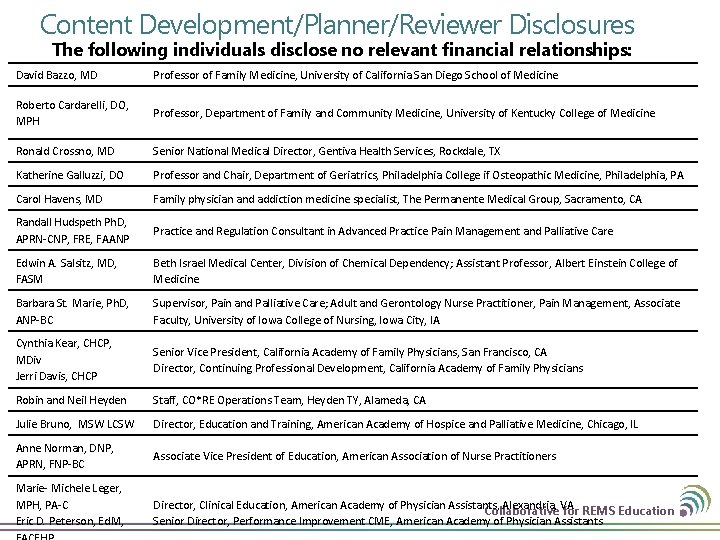
Content Development/Planner/Reviewer Disclosures The following individuals disclose no relevant financial relationships: David Bazzo, MD Professor of Family Medicine, University of California San Diego School of Medicine Roberto Cardarelli, DO, MPH Professor, Department of Family and Community Medicine, University of Kentucky College of Medicine Ronald Crossno, MD Senior National Medical Director, Gentiva Health Services, Rockdale, TX Katherine Galluzzi, DO Professor and Chair, Department of Geriatrics, Philadelphia College if Osteopathic Medicine, Philadelphia, PA Carol Havens, MD Family physician and addiction medicine specialist, The Permanente Medical Group, Sacramento, CA Randall Hudspeth Ph. D, APRN-CNP, FRE, FAANP Practice and Regulation Consultant in Advanced Practice Pain Management and Palliative Care Edwin A. Salsitz, MD, FASM Beth Israel Medical Center, Division of Chemical Dependency; Assistant Professor, Albert Einstein College of Medicine Barbara St. Marie, Ph. D, ANP-BC Supervisor, Pain and Palliative Care; Adult and Gerontology Nurse Practitioner, Pain Management, Associate Faculty, University of Iowa College of Nursing, Iowa City, IA Cynthia Kear, CHCP, MDiv Jerri Davis, CHCP Senior Vice President, California Academy of Family Physicians, San Francisco, CA Director, Continuing Professional Development, California Academy of Family Physicians Robin and Neil Heyden Staff, CO*RE Operations Team, Heyden TY, Alameda, CA Julie Bruno, MSW LCSW Director, Education and Training, American Academy of Hospice and Palliative Medicine, Chicago, IL Anne Norman, DNP, APRN, FNP-BC Associate Vice President of Education, American Association of Nurse Practitioners Marie- Michele Leger, MPH, PA-C Eric D. Peterson, Ed. M, Director, Clinical Education, American Academy of Physician Assistants, Alexandria, VA Collaborative for REMS Education Senior Director, Performance Improvement CME, American Academy of Physician Assistants
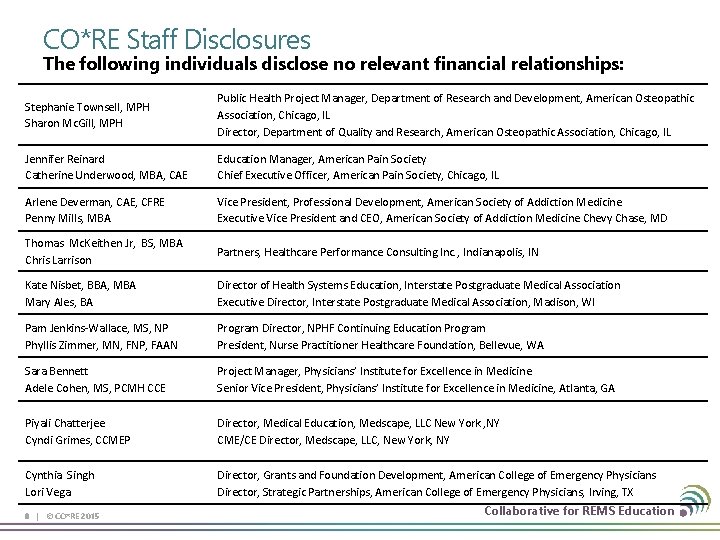
CO*RE Staff Disclosures The following individuals disclose no relevant financial relationships: Stephanie Townsell, MPH Sharon Mc. Gill, MPH Public Health Project Manager, Department of Research and Development, American Osteopathic Association, Chicago, IL Director, Department of Quality and Research, American Osteopathic Association, Chicago, IL Jennifer Reinard Catherine Underwood, MBA, CAE Education Manager, American Pain Society Chief Executive Officer, American Pain Society, Chicago, IL Arlene Deverman, CAE, CFRE Penny Mills, MBA Vice President, Professional Development, American Society of Addiction Medicine Executive Vice President and CEO, American Society of Addiction Medicine Chevy Chase, MD Thomas Mc. Keithen Jr, BS, MBA Chris Larrison Partners, Healthcare Performance Consulting Inc. , Indianapolis, IN Kate Nisbet, BBA, MBA Mary Ales, BA Director of Health Systems Education, Interstate Postgraduate Medical Association Executive Director, Interstate Postgraduate Medical Association, Madison, WI Pam Jenkins-Wallace, MS, NP Phyllis Zimmer, MN, FNP, FAAN Program Director, NPHF Continuing Education Program President, Nurse Practitioner Healthcare Foundation, Bellevue, WA Sara Bennett Adele Cohen, MS, PCMH CCE Project Manager, Physicians’ Institute for Excellence in Medicine Senior Vice President, Physicians’ Institute for Excellence in Medicine, Atlanta, GA Piyali Chatterjee Cyndi Grimes, CCMEP Director, Medical Education, Medscape, LLC New York , NY CME/CE Director, Medscape, LLC, New York, NY Cynthia Singh Lori Vega Director, Grants and Foundation Development, American College of Emergency Physicians Director, Strategic Partnerships, American College of Emergency Physicians, Irving, TX 8 | © CO*RE 2015 Collaborative for REMS Education
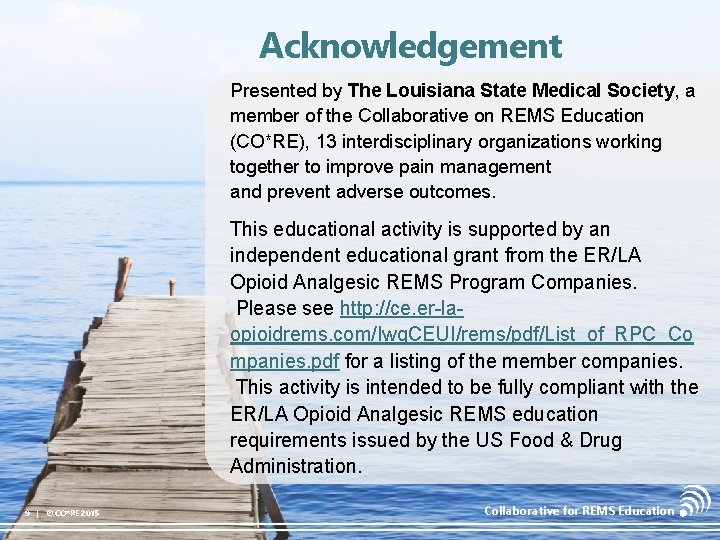
Acknowledgement Presented by The Louisiana State Medical Society, a member of the Collaborative on REMS Education (CO*RE), 13 interdisciplinary organizations working together to improve pain management and prevent adverse outcomes. This educational activity is supported by an independent educational grant from the ER/LA Opioid Analgesic REMS Program Companies. Please see http: //ce. er-laopioidrems. com/Iwg. CEUI/rems/pdf/List_of_RPC_Co mpanies. pdf for a listing of the member companies. This activity is intended to be fully compliant with the ER/LA Opioid Analgesic REMS education requirements issued by the US Food & Drug Administration. 9 9 || © © CO*RE 2015 2013 Collaborative for REMS Education
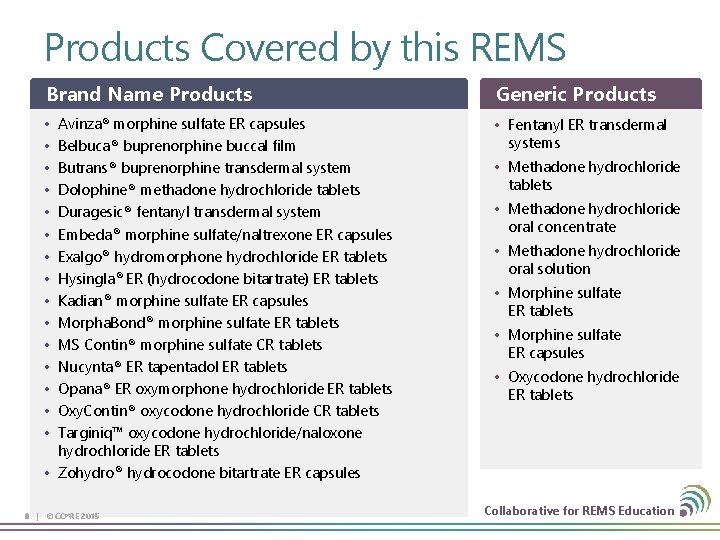
Products Covered by this REMS Brand Name Products Generic Products Avinza® morphine sulfate ER capsules Belbuca® buprenorphine buccal film Butrans® buprenorphine transdermal system Dolophine® methadone hydrochloride tablets Duragesic® fentanyl transdermal system Embeda® morphine sulfate/naltrexone ER capsules Exalgo® hydromorphone hydrochloride ER tablets Hysingla® ER (hydrocodone bitartrate) ER tablets Kadian® morphine sulfate ER capsules Morpha. Bond® morphine sulfate ER tablets MS Contin® morphine sulfate CR tablets Nucynta® ER tapentadol ER tablets Opana® ER oxymorphone hydrochloride ER tablets Oxy. Contin® oxycodone hydrochloride CR tablets Targiniq™ oxycodone hydrochloride/naloxone hydrochloride ER tablets • Zohydro® hydrocodone bitartrate ER capsules • Fentanyl ER transdermal systems • • • • 8 | © CO*RE 2015 • Methadone hydrochloride tablets • Methadone hydrochloride oral concentrate • Methadone hydrochloride oral solution • Morphine sulfate ER tablets • Morphine sulfate ER capsules • Oxycodone hydrochloride ER tablets Collaborative for REMS Education

© CO*RE 2014 WHY PRESCRIBER EDUCATION IS IMPORTANT Introduction 11 | © CO*RE 2015 Collaborative for REMS Education
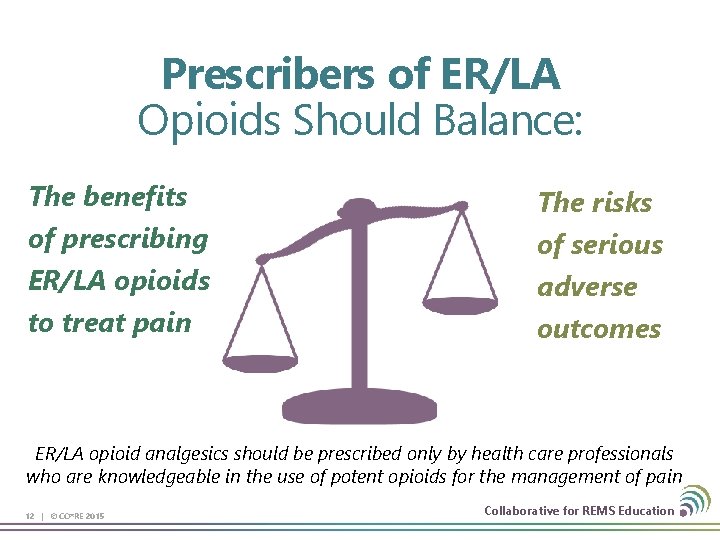
Prescribers of ER/LA Opioids Should Balance: The benefits of prescribing ER/LA opioids to treat pain The risks of serious adverse outcomes ER/LA opioid analgesics should be prescribed only by health care professionals who are knowledgeable in the use of potent opioids for the management of pain 12 | © CO*RE 2015 Collaborative for REMS Education
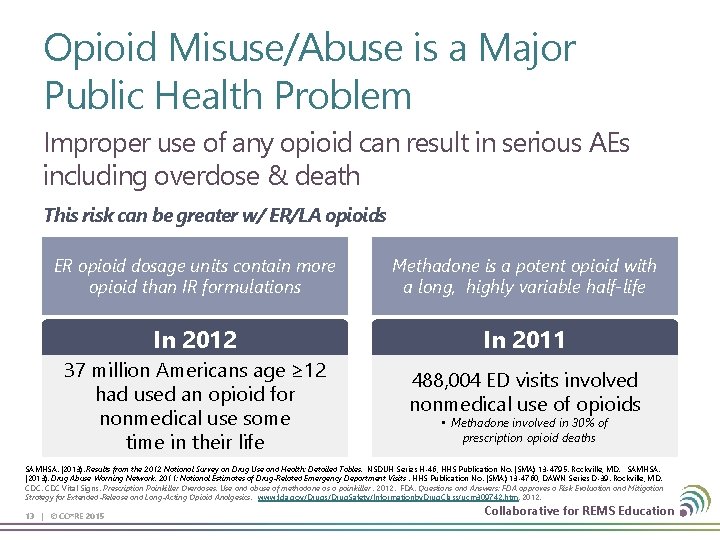
Opioid Misuse/Abuse is a Major Public Health Problem Improper use of any opioid can result in serious AEs including overdose & death This risk can be greater w/ ER/LA opioids ER opioid dosage units contain more opioid than IR formulations Methadone is a potent opioid with a long, highly variable half-life In 2012 In 2011 37 million Americans age ≥ 12 had used an opioid for nonmedical use some time in their life 488, 004 ED visits involved nonmedical use of opioids • Methadone involved in 30% of prescription opioid deaths SAMHSA. (2013). Results from the 2012 National Survey on Drug Use and Health: Detailed Tables. NSDUH Series H-46, HHS Publication No. (SMA) 13 -4795. Rockville, MD. SAMHSA. (2013). Drug Abuse Warning Network, 2011: National Estimates of Drug-Related Emergency Department Visits. HHS Publication No. (SMA) 13 -4760, DAWN Series D-39. Rockville, MD. CDC Vital Signs. Prescription Painkiller Overdoses. Use and abuse of methadone as a painkiller. 2012. FDA. Questions and Answers: FDA approves a Risk Evaluation and Mitigation Strategy for Extended-Release and Long-Acting Opioid Analgesics. www. fda. gov/Drugs/Drug. Safety/Informationby. Drug. Class/ucm 309742. htm. 2012. 13 | © CO*RE 2015 Collaborative for REMS Education
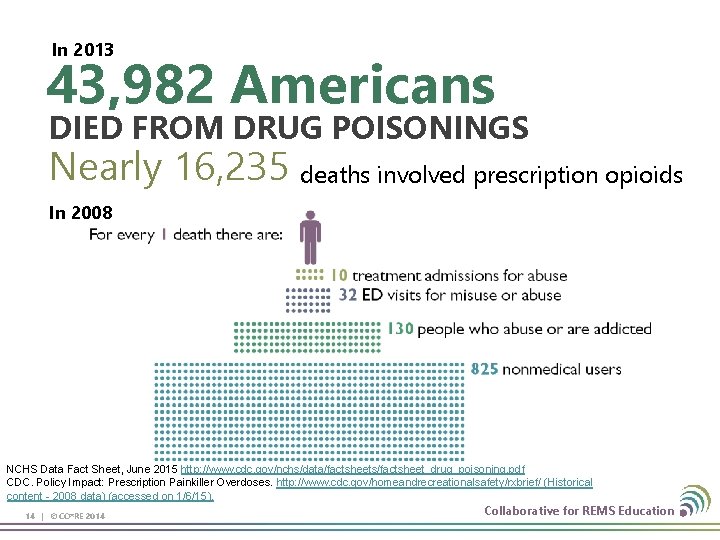
In 2013 43, 982 Americans DIED FROM DRUG POISONINGS Nearly 16, 235 deaths involved prescription opioids In 2008 NCHS Data Fact Sheet, June 2015 http: //www. cdc. gov/nchs/data/factsheets/factsheet_drug_poisoning. pdf CDC. Policy Impact: Prescription Painkiller Overdoses. http: //www. cdc. gov/homeandrecreationalsafety/rxbrief/ (Historical content - 2008 data) (accessed on 1/6/15). 14 | © CO*RE 2014 Collaborative for REMS Education
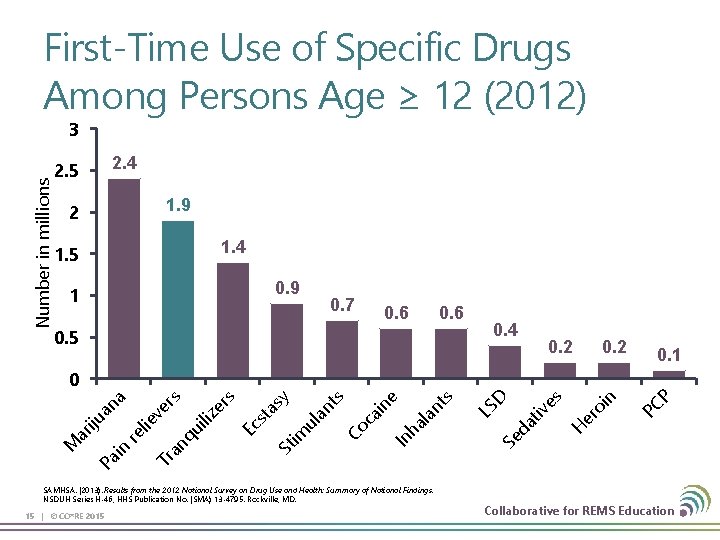
First-Time Use of Specific Drugs Among Persons Age ≥ 12 (2012) 3 Number in millions 2. 5 2 1. 5 1 2. 4 1. 9 1. 4 0. 9 0. 7 0. 6 0. 5 0. 4 0. 2 0. 1 SAMHSA. (2013). Results from the 2012 National Survey on Drug Use and Health: Summary of National Findings. NSDUH Series H-46, HHS Publication No. (SMA) 13 -4795. Rockville, MD. 15 | © CO*RE 2015 PC P n er oi H iv es da t D LS Se M ar iju an Pa a in re lie ve Tr rs an qu ili ze rs Ec st as y St im ul an ts Co ca in e In ha la nt s 0 Collaborative for REMS Education
Learning Objectives Describe appropriate patient assessment for treatment with ER/LA opioid analgesics, evaluating risks and potential benefits of ER/LA therapy, as well as possible misuse. Apply proper methods to initiate therapy, modify dose, and discontinue use of ER/LA opioid analgesics, applying best practices including accurate dosing and conversion techniques, as well as appropriate discontinuation strategies. Demonstrate accurate knowledge about how to manage ongoing therapy with ER/LA opioid analgesics and properly use evidence-based tools while assessing for adverse effects. Employ methods to counsel patients and caregivers about the safe use of ER/LA opioid analgesics, including proper storage and disposal. Review/assess general and product-specific drug information concerning ER/LA opioid analgesics and identifying potential adverse effects of ER/LA opioids. 16 | © CO*RE 2015 Collaborative for REMS Education
Misuse, abuse, divergence and overdose of ER/LA opioids is a major public health crisis. YOU and YOUR TEAM can have an immediate and positive impact on this crisis while also caring for your patients appropriately. 17 | © CO*RE 2015 Collaborative for REMS Education
© CO*RE 2014 ASSESSING PATIENTS FOR TREATMENT WITH ER/LA OPIOID ANALGESIC THERAPY Unit 1 18 | © CO*RE 2015 Collaborative for REMS Education
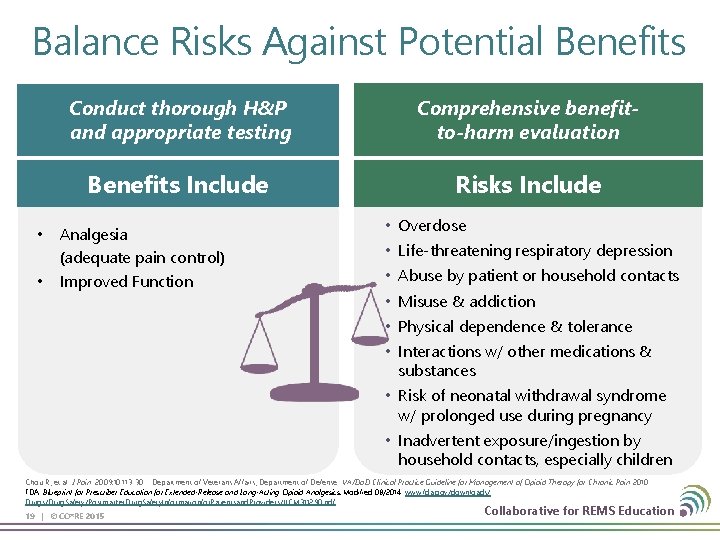
Balance Risks Against Potential Benefits • • Conduct thorough H&P and appropriate testing Comprehensive benefitto-harm evaluation Benefits Include Risks Include Analgesia (adequate pain control) Improved Function • Overdose • Life-threatening respiratory depression • Abuse by patient or household contacts • Misuse & addiction • Physical dependence & tolerance • Interactions w/ other medications & substances • Risk of neonatal withdrawal syndrome w/ prolonged use during pregnancy • Inadvertent exposure/ingestion by household contacts, especially children Chou R, et al. J Pain. 2009; 10: 113 -30. Department of Veterans Affairs, Department of Defense. VA/Do. D Clinical Practice Guideline for Management of Opioid Therapy for Chronic Pain. 2010. FDA. Blueprint for Prescriber Education for Extended-Release and Long-Acting Opioid Analgesics. Modified 08/2014. www. fda. gov/downloads/ Drugs/Drug. Safety/Postmarket. Drug. Safety. Informationfor. Patientsand. Providers/UCM 311290. pdf 19 | © CO*RE 2015 Collaborative for REMS Education
Adequately DOCUMENT all patient interactions, assessments, test results, & treatment plans 20 | © CO*RE 2015 Collaborative for REMS Education
Clinical Interview: Patient Medical History Illness relevant to (1) effects or (2) metabolism of opioids 1. Pulmonary disease, constipation, nausea, cognitive impairment 2. Hepatic, renal disease Illness possibly linked to substance abuse, e. g. : Hepatitis HIV Tuberculosis Cellulitis STIs Trauma, burns Cardiac disease Pulmonary disease Chou R, et al. J Pain. 2009; 10: 113 -30. Zacharoff KL, et al. Managing Chronic Pain with Opioids in Primary Care. 2 nd ed. Newton, MA: Inflexion, Inc. , 2010. Department of Veterans Affairs, Department of Defense. VA/Do. D Clinical Practice Guideline for Management of Opioid Therapy for Chronic Pain. 2010. 21 | © CO*RE 2015 Collaborative for REMS Education
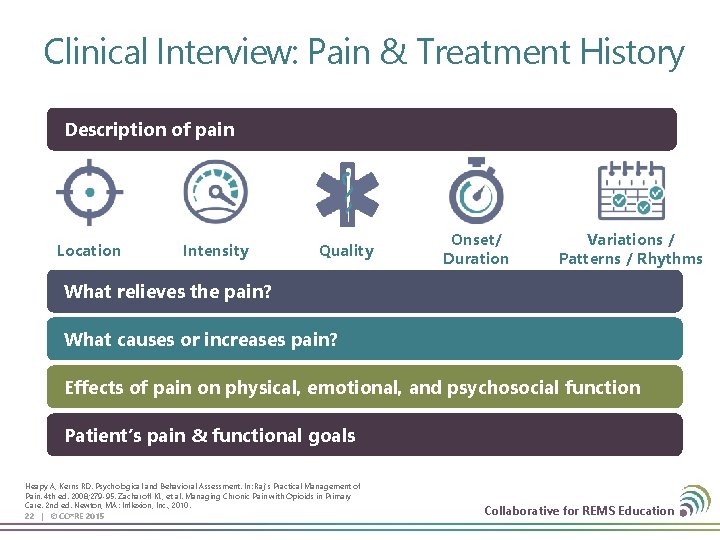
Clinical Interview: Pain & Treatment History Description of pain Location Intensity Quality Onset/ Duration Variations / Patterns / Rhythms What relieves the pain? What causes or increases pain? Effects of pain on physical, emotional, and psychosocial function Patient’s pain & functional goals Heapy A, Kerns RD. Psychological and Behavioral Assessment. In: Raj's Practical Management of Pain. 4 th ed. 2008; 279 -95. Zacharoff KL, et al. Managing Chronic Pain with Opioids in Primary Care. 2 nd ed. Newton, MA: Inflexion, Inc. , 2010. 22 | © CO*RE 2015 Collaborative for REMS Education
Clinical Interview: Pain & Treatment History, cont’d Pain Medications Past use Current use • Query state PDMP where available to confirm patient report • Contact past providers & obtain prior medical records • Conduct UDT Dosage • For opioids currently prescribed: opioid, dose, regimen, & duration ‒ Important to determine if patient is opioid tolerant General effectiveness Nonpharmacologic strategies & effectiveness 23 | © CO*RE 2015 Collaborative for REMS Education
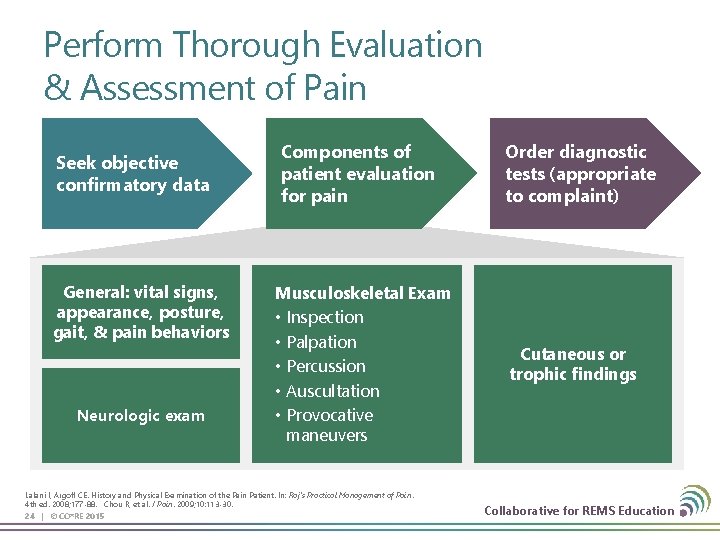
Perform Thorough Evaluation & Assessment of Pain Seek objective confirmatory data General: vital signs, appearance, posture, gait, & pain behaviors Neurologic exam Components of patient evaluation for pain Musculoskeletal Exam • Inspection • Palpation • Percussion • Auscultation • Provocative maneuvers Lalani I, Argoff CE. History and Physical Examination of the Pain Patient. In: Raj's Practical Management of Pain. 4 th ed. 2008; 177 -88. Chou R, et al. J Pain. 2009; 10: 113 -30. 24 | © CO*RE 2015 Order diagnostic tests (appropriate to complaint) Cutaneous or trophic findings Collaborative for REMS Education
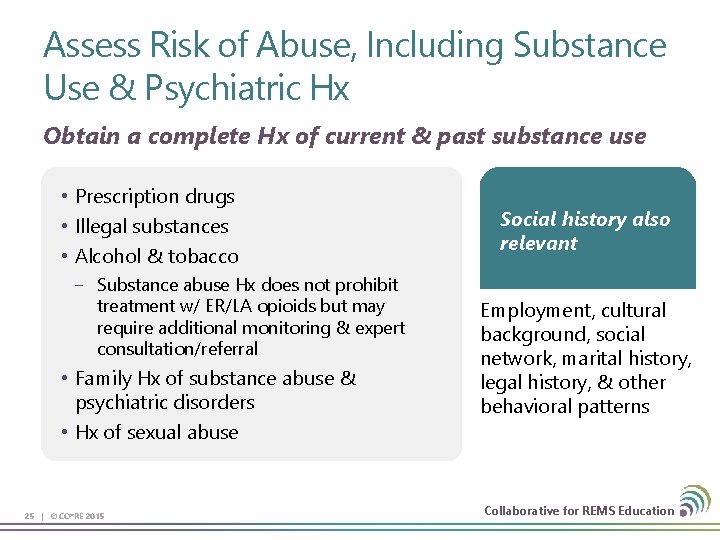
Assess Risk of Abuse, Including Substance Use & Psychiatric Hx Obtain a complete Hx of current & past substance use • Prescription drugs • Illegal substances • Alcohol & tobacco ‒ Substance abuse Hx does not prohibit treatment w/ ER/LA opioids but may require additional monitoring & expert consultation/referral • Family Hx of substance abuse & psychiatric disorders • Hx of sexual abuse 25 | © CO*RE 2015 Social history also relevant Employment, cultural background, social network, marital history, legal history, & other behavioral patterns Collaborative for REMS Education
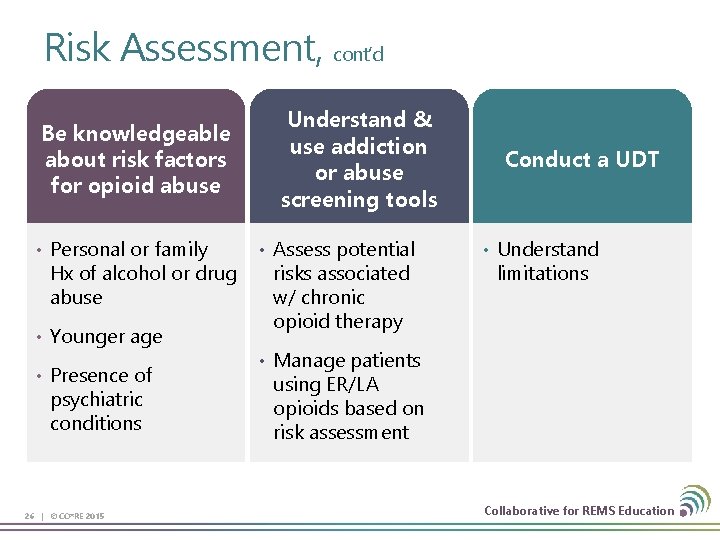
Risk Assessment, cont’d Be knowledgeable about risk factors for opioid abuse • Personal or family Hx of alcohol or drug abuse • Younger age • Presence of psychiatric conditions 26 | © CO*RE 2015 Understand & use addiction or abuse screening tools • Assess potential risks associated w/ chronic opioid therapy Conduct a UDT • Understand limitations • Manage patients using ER/LA opioids based on risk assessment Collaborative for REMS Education
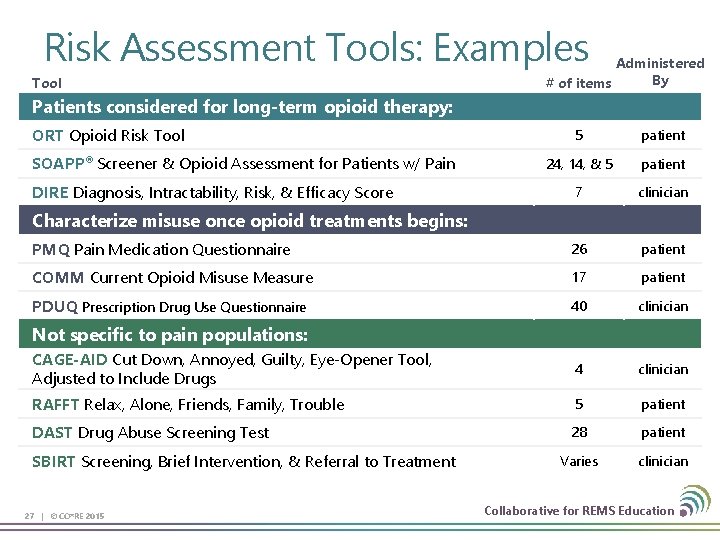
Risk Assessment Tools: Examples Tool Administered By # of items Patients considered for long-term opioid therapy: ORT Opioid Risk Tool 5 patient 24, 14, & 5 patient 7 clinician PMQ Pain Medication Questionnaire 26 patient COMM Current Opioid Misuse Measure 17 patient PDUQ Prescription Drug Use Questionnaire 40 clinician CAGE-AID Cut Down, Annoyed, Guilty, Eye-Opener Tool, Adjusted to Include Drugs 4 clinician RAFFT Relax, Alone, Friends, Family, Trouble 5 patient DAST Drug Abuse Screening Test 28 patient Varies clinician SOAPP® Screener & Opioid Assessment for Patients w/ Pain DIRE Diagnosis, Intractability, Risk, & Efficacy Score Characterize misuse once opioid treatments begins: Not specific to pain populations: SBIRT Screening, Brief Intervention, & Referral to Treatment 27 | © CO*RE 2015 Collaborative for REMS Education
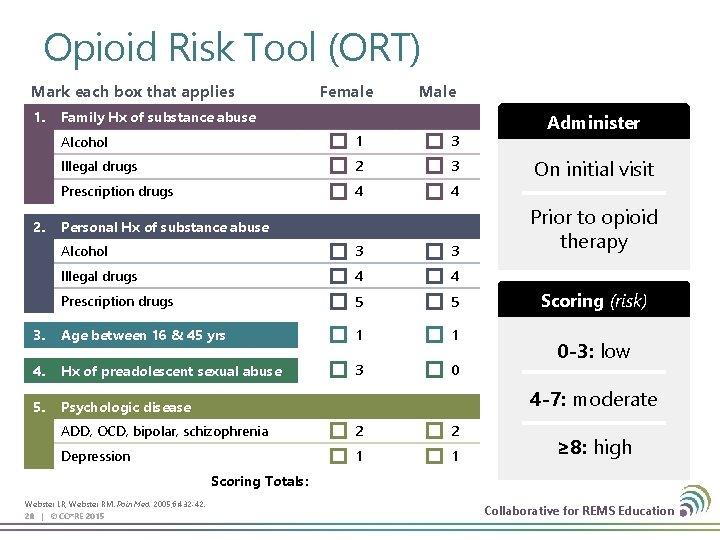
Opioid Risk Tool (ORT) Mark each box that applies 1. 2. Female Male Family Hx of substance abuse Alcohol 1 3 Illegal drugs 2 3 Prescription drugs 4 4 Personal Hx of substance abuse Alcohol 3 3 Illegal drugs 4 4 Prescription drugs 5 5 3. Age between 16 & 45 yrs 1 1 4. Hx of preadolescent sexual abuse 3 0 5. Psychologic disease Administer On initial visit Prior to opioid therapy Scoring (risk) 0 -3: low 4 -7: moderate ADD, OCD, bipolar, schizophrenia 2 2 Depression 1 1 ≥ 8: high Scoring Totals: Webster LR, Webster RM. Pain Med. 2005; 6: 432 -42. 28 | © CO*RE 2015 Collaborative for REMS Education
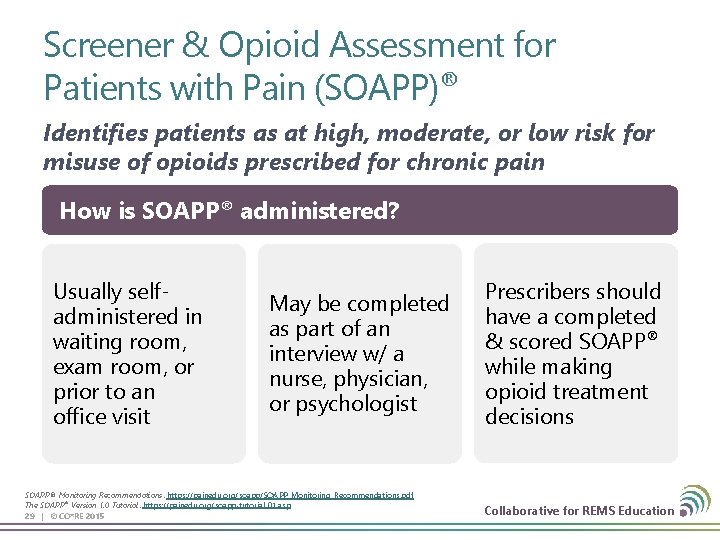
Screener & Opioid Assessment for Patients with Pain (SOAPP)® Identifies patients as at high, moderate, or low risk for misuse of opioids prescribed for chronic pain How is SOAPP® administered? Usually selfadministered in waiting room, exam room, or prior to an office visit May be completed as part of an interview w/ a nurse, physician, or psychologist SOAPP® Monitoring Recommendations. https: //painedu. org/soapp/SOAPP_Monitoring_Recommendations. pdf The SOAPP® Version 1. 0 Tutorial. https: //painedu. org/soapp-tutorial_01. asp 29 | © CO*RE 2015 Prescribers should have a completed & scored SOAPP® while making opioid treatment decisions Collaborative for REMS Education
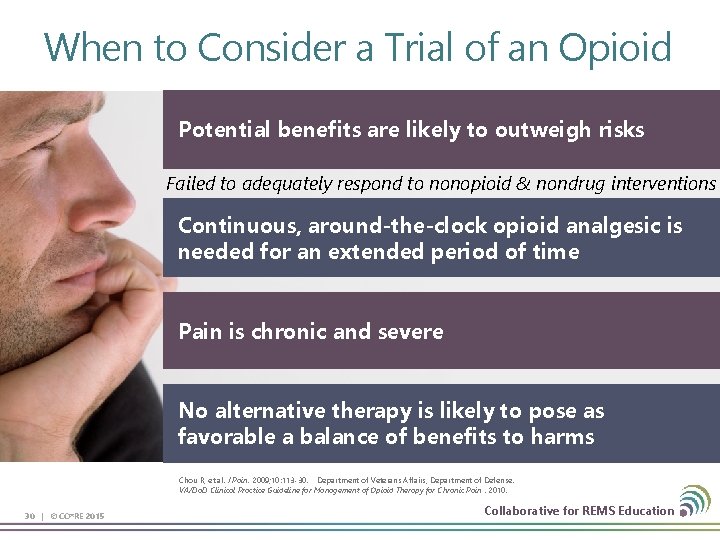
When to Consider a Trial of an Opioid Potential benefits are likely to outweigh risks Failed to adequately respond to nonopioid & nondrug interventions Continuous, around-the-clock opioid analgesic is needed for an extended period of time Pain is chronic and severe No alternative therapy is likely to pose as favorable a balance of benefits to harms Chou R, et al. J Pain. 2009; 10: 113 -30. Department of Veterans Affairs, Department of Defense. VA/Do. D Clinical Practice Guideline for Management of Opioid Therapy for Chronic Pain. 2010. 30 | © CO*RE 2015 Collaborative for REMS Education
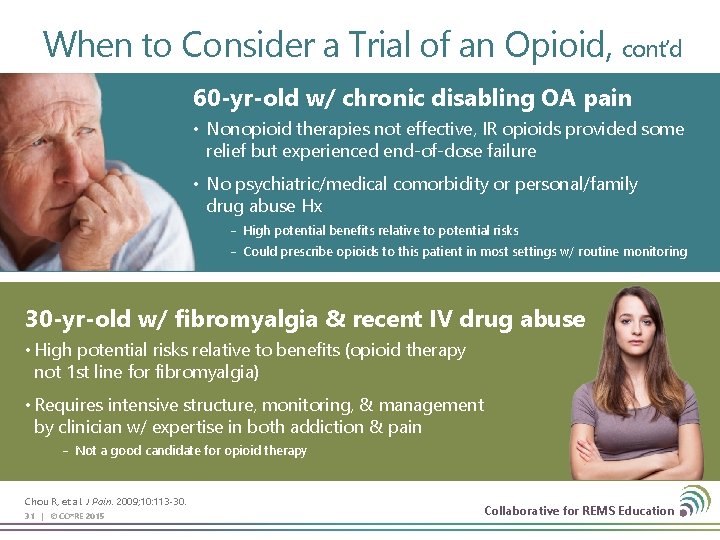
When to Consider a Trial of an Opioid, cont’d 60 -yr-old w/ chronic disabling OA pain • Nonopioid therapies not effective, IR opioids provided some relief but experienced end-of-dose failure • No psychiatric/medical comorbidity or personal/family drug abuse Hx ‒ High potential benefits relative to potential risks ‒ Could prescribe opioids to this patient in most settings w/ routine monitoring 30 -yr-old w/ fibromyalgia & recent IV drug abuse • High potential risks relative to benefits (opioid therapy not 1 st line for fibromyalgia) • Requires intensive structure, monitoring, & management by clinician w/ expertise in both addiction & pain ‒ Not a good candidate for opioid therapy Chou R, et al. J Pain. 2009; 10: 113 -30. 31 | © CO*RE 2015 Collaborative for REMS Education
When to Consider a Trial of an Opioid, cont’d Selection of patients between these 2 extremes requires: Careful assessment & characterization of patient risk Structuring of care to match risk In patients w/ Hx of substance abuse or a psychiatric comorbidity, this may require assistance from experts in managing pain, addiction, or other mental health concerns In some cases opioids may not be appropriate or should be deferred until the comorbidity has been adequately addressed ‒ Consider referral Chou R, et al. J Pain. 2009; 10: 113 -30. 32 | © CO*RE 2015 Collaborative for REMS Education
Referring High-Risk Patients Prescribers should Understand when to appropriately refer high-risk patients to pain management or addiction specialists Chou R, et al. J Pain. 2009; 10: 113 -30. 33 | © CO*RE 2015 Also check your state regulations for requirements Collaborative for REMS Education
Special Considerations: Elderly Patients Does patient have medical problems that increase risk of opioid-related AEs? Respiratory depression more likely in elderly, cachectic, or debilitated patients • Altered PK due to poor fat stores, muscle wasting, or altered clearance • Monitor closely, particularly when − Initiating & titrating ER/LA opioids − Given concomitantly w/ other drugs that depress respiration • Reduce starting dose to 1/3 to 1/2 the usual dosage in debilitated, nonopioid-tolerant patients • Titrate dose cautiously Older adults more likely to develop constipation • Routinely initiate a bowel regimen before it develops Is patient/caregiver likely to manage opioid therapy responsibly? American Geriatrics Society Panel on the Pharmacological Management of Persistent Pain in Older Persons. J Am Geriatr Soc. 2009; 57: 133146. Chou R, et al. J Pain. 2009; 10: 113 -30. 34 | © CO*RE 2015 Collaborative for REMS Education
Special Considerations: Pregnant Women Managing chronic pain in pregnant women is challenging, & affects both mother and fetus Potential risks of opioid therapy to the newborn include: • Low birth weight • Neonatal death • Premature birth • Prolonged QT syndrome • Hypoxic-ischemic brain injury • Neonatal opioid withdrawal syndrome Given these potential risks, clinicians should: • Counsel women of childbearing potential about risks & benefits of opioid therapy during pregnancy & after delivery • Encourage minimal/no opioid use during pregnancy, unless potential benefits outweigh risks If chronic opioid therapy is used during pregnancy, anticipate & manage risks to the patient and newborns Chou R, et al. J Pain. 2009; 10: 113 -30. 35 | © CO*RE 2015 Collaborative for REMS Education
Special Considerations: Children (<18 years) Safety & effectiveness of most ER/LA opioids unestablished Pediatric analgesic trials pose challenges Transdermal fentanyl approved in children aged ≥ 2 yrs Oxycodone ER dosing changes for children ≥ 11 yrs (see Unit 6) Most opioid studies focus on inpatient safety Opioids are common sources of drug error Opioid indications are primarily life-limiting conditions Few children with chronic pain due to non-life-limiting conditions should receive opioids When prescribing opioids to children: Consult pediatric palliative care team or pediatric pain specialist or refer to a specialized multidisciplinary pain clinic 36 | © CO*RE 2013 Berde CB, et al. Pediatrics. 2012; 129: 354 -64. Gregoire MC, et al. Pain Res Manag 2013; 18: 47 -50. Mc Donnell C. Pain Res Manag. 2011; 16: 93 -8. Slater ME, et al. Pain Med. 2010; 11: 207 -14. Collaborative for REMS Education
Challenge: The Friday Afternoon Patient Red Flag: Adjusting a prescription without performing appropriate evaluation or screening 37 | © CO*RE 2015 It is 4 pm on Friday and you are four patients behind schedule. Mr. Kingston asks you to increase his current dosage of hydrocodone, because he says it is not relieving his pain. It would take you two minutes to say yes. Action: Check your local PDMP. Employ practice management strategies that maximize efficiency. • Patient-administered screening tools • Office staff to administer and score tools, document results, and communicate to the prescriber Collaborative for REMS Education
Challenge: The Delayed Surgery Red Flag: Patient may be stalling to continue an opioid regimen Ms. Van Buskirk says she needs opioids to manage her pain until she can have surgery. She reports continued delays in getting to surgery. You phone the surgeon and discover that no date has been set and that she has cancelled several appointments. Action: Set expectations for time limitations. Offer non-medicine and nonopioid options for pain management. Consider referral to addiction specialist. 38 | © CO*RE 2015 Collaborative for REMS Education
Unit 1 Pearls for Practice Document EVERYTHING Conduct a Comprehensive H&P General and pain-specific Assess Risk of Abuse Compare Risks with Expected Benefits Determine Whether a Therapeutic Trial is Appropriate 39 | © CO*RE 2015 Collaborative for REMS Education
© CO*RE 2014 INITIATING THERAPY, MODIFYING DOSING, & DISCONTINUING USE OF ER/LA OPIOID ANALGESICS Unit II 40 | © CO*RE 2015 Collaborative for REMS Education
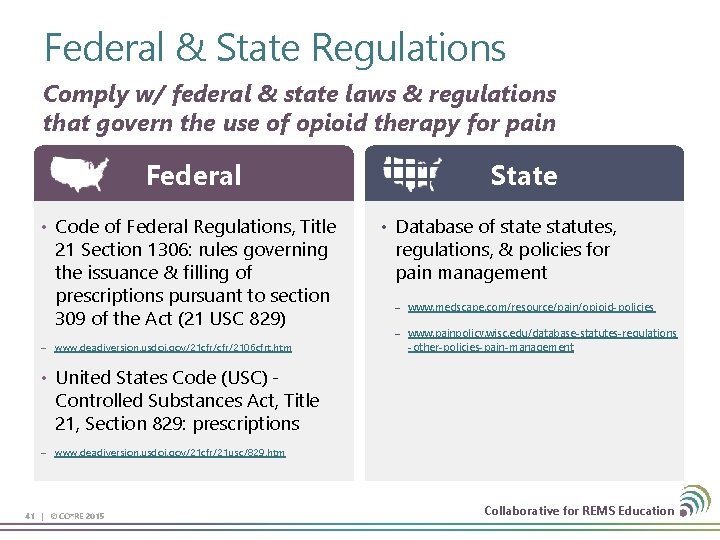
Federal & State Regulations Comply w/ federal & state laws & regulations that govern the use of opioid therapy for pain Federal • Code of Federal Regulations, Title 21 Section 1306: rules governing the issuance & filling of prescriptions pursuant to section 309 of the Act (21 USC 829) – www. deadiversion. usdoj. gov/21 cfr/2106 cfrt. htm State • Database of state statutes, regulations, & policies for pain management – www. medscape. com/resource/pain/opioid-policies – www. painpolicy. wisc. edu/database-statutes-regulations -other-policies-pain-management • United States Code (USC) - Controlled Substances Act, Title 21, Section 829: prescriptions – www. deadiversion. usdoj. gov/21 cfr/21 usc/829. htm 41 | © CO*RE 2015 Collaborative for REMS Education
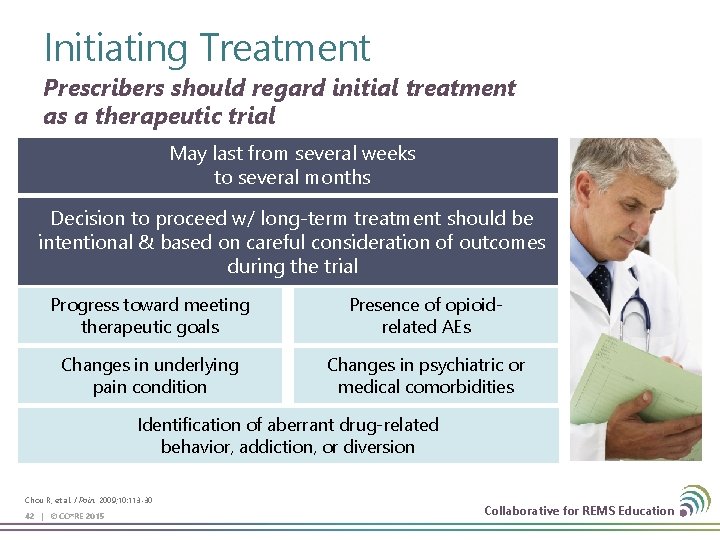
Initiating Treatment Prescribers should regard initial treatment as a therapeutic trial May last from several weeks to several months Decision to proceed w/ long-term treatment should be intentional & based on careful consideration of outcomes during the trial Progress toward meeting therapeutic goals Presence of opioidrelated AEs Changes in underlying pain condition Changes in psychiatric or medical comorbidities Identification of aberrant drug-related behavior, addiction, or diversion Chou R, et al. J Pain. 2009; 10: 113 -30 42 | © CO*RE 2015 Collaborative for REMS Education
ER/LA Opioid-Induced Respiratory Depression Chief hazard of opioid agonists, including ER/LA opioids • If not immediately recognized & treated, may lead to respiratory arrest & death • Greatest risk: initiation Manifested by reduced urge to breathe & decreased respiration rate • Shallow breathing • CO 2 retention can exacerbate opioid sedating effects of therapy or after dose increase Chou R, et al. J Pain. 2009; 10: 113 -30. FDA. Blueprint for Prescriber Education for Extended-Release and Long-Acting Opioid Analgesics. 08/2014. www. fda. gov/downloads/Drug. Safety/Postmarket. Drug. Safety Informationfor. Patientsand. Providers/UCM 311290. pdf 43 | © CO*RE 2015 Instruct patients/family members to call 911* • Managed w/ close observation, supportive measures, & opioid antagonists, depending on patient’s clinical status Collaborative for REMS Education
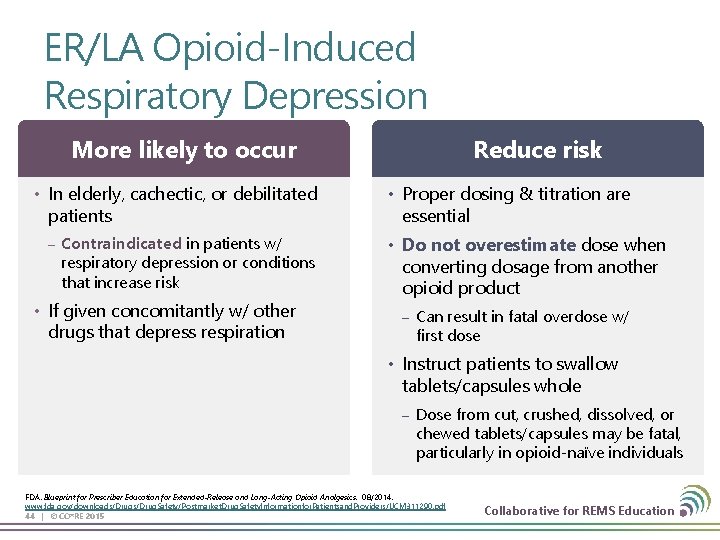
ER/LA Opioid-Induced Respiratory Depression More likely to occur • In elderly, cachectic, or debilitated patients – Contraindicated in patients w/ respiratory depression or conditions that increase risk • If given concomitantly w/ other drugs that depress respiration Reduce risk • Proper dosing & titration are essential • Do not overestimate dose when converting dosage from another opioid product – Can result in fatal overdose w/ first dose • Instruct patients to swallow tablets/capsules whole – Dose from cut, crushed, dissolved, or chewed tablets/capsules may be fatal, particularly in opioid-naïve individuals FDA. Blueprint for Prescriber Education for Extended-Release and Long-Acting Opioid Analgesics. 08/2014. www. fda. gov/downloads/Drug. Safety/Postmarket. Drug. Safety. Informationfor. Patientsand. Providers/UCM 311290. pdf 44 | © CO*RE 2015 Collaborative for REMS Education
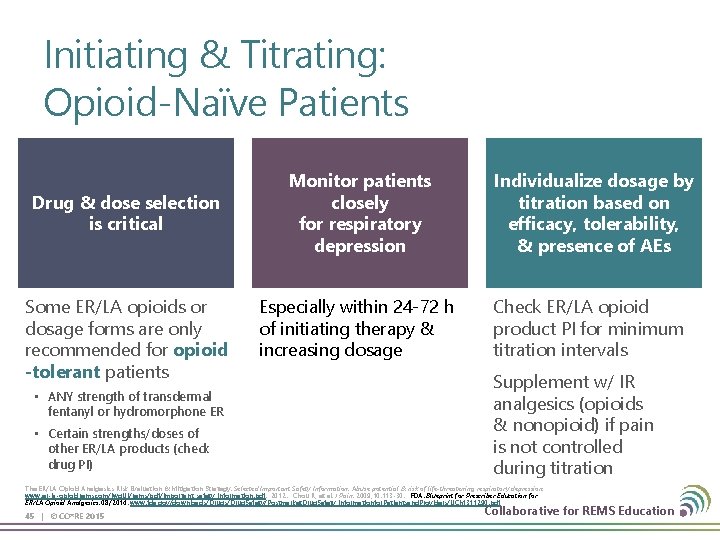
Initiating & Titrating: Opioid-Naïve Patients Drug & dose selection is critical Some ER/LA opioids or dosage forms are only recommended for opioid -tolerant patients • ANY strength of transdermal fentanyl or hydromorphone ER • Certain strengths/doses of other ER/LA products (check drug PI) Monitor patients closely for respiratory depression Especially within 24 -72 h of initiating therapy & increasing dosage Individualize dosage by titration based on efficacy, tolerability, & presence of AEs Check ER/LA opioid product PI for minimum titration intervals Supplement w/ IR analgesics (opioids & nonopioid) if pain is not controlled during titration The ER/LA Opioid Analgesics Risk Evaluation & Mitigation Strategy. Selected Important Safety Information. Abuse potential & risk of life-threatening respiratory depression. www. er-la-opioidrems. com/Iwg. UI/rems/pdf/important_safety_information. pdf. 2012. Chou R, et al. J Pain. 2009; 10: 113 -30. FDA. Blueprint for Prescriber Education for ER/LA Opioid Analgesics. 08/2014. www. fda. gov/downloads/Drug. Safety/Postmarket. Drug. Safety Informationfor. Patientsand. Providers/UCM 311290. pdf 45 | © CO*RE 2015 Collaborative for REMS Education
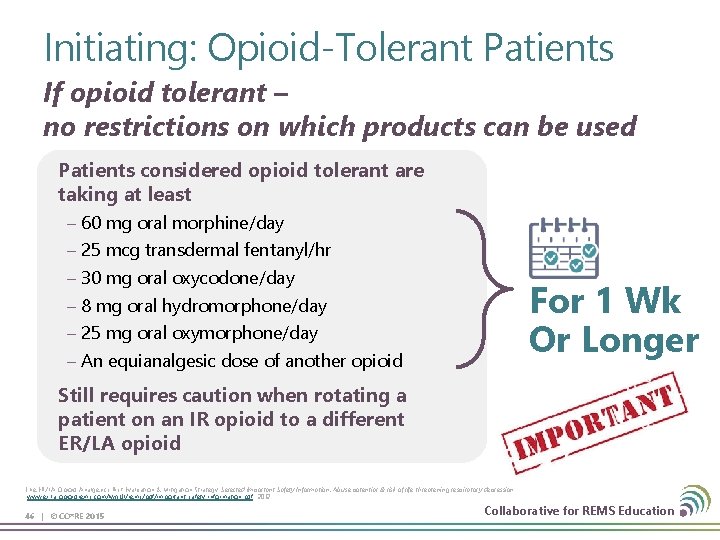
Initiating: Opioid-Tolerant Patients If opioid tolerant – no restrictions on which products can be used Patients considered opioid tolerant are taking at least – 60 mg oral morphine/day – 25 mcg transdermal fentanyl/hr – 30 mg oral oxycodone/day For 1 Wk Or Longer – 8 mg oral hydromorphone/day – 25 mg oral oxymorphone/day – An equianalgesic dose of another opioid Still requires caution when rotating a patient on an IR opioid to a different ER/LA opioid The ER/LA Opioid Analgesics Risk Evaluation & Mitigation Strategy. Selected Important Safety Information. Abuse potential & risk of life-threatening respiratory depression. www. er-la-opioidrems. com/Iwg. UI/rems/pdf/important_safety_information. pdf. 2012. 46 | © CO*RE 2015 Collaborative for REMS Education
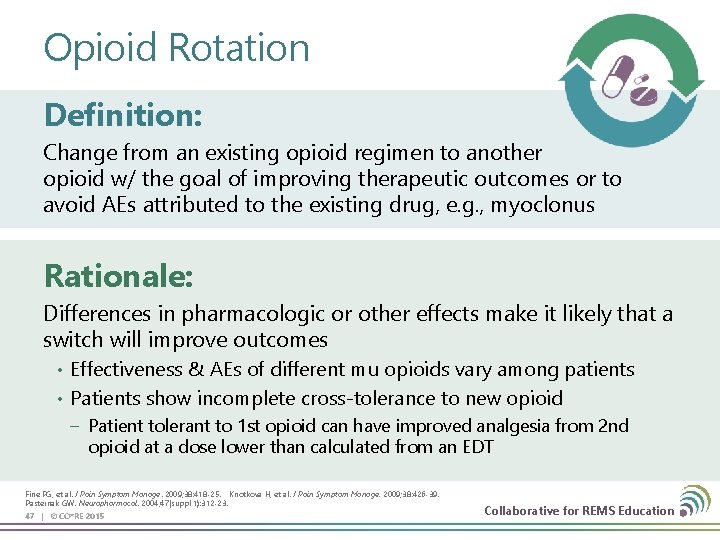
Opioid Rotation Definition: Change from an existing opioid regimen to another opioid w/ the goal of improving therapeutic outcomes or to avoid AEs attributed to the existing drug, e. g. , myoclonus Rationale: Differences in pharmacologic or other effects make it likely that a switch will improve outcomes • Effectiveness & AEs of different mu opioids vary among patients • Patients show incomplete cross-tolerance to new opioid – Patient tolerant to 1 st opioid can have improved analgesia from 2 nd opioid at a dose lower than calculated from an EDT Fine PG, et al. J Pain Symptom Manage. 2009; 38: 418 -25. Knotkova H, et al. J Pain Symptom Manage. 2009; 38: 426 -39. Pasternak GW. Neuropharmacol. 2004; 47(suppl 1): 312 -23. 47 | © CO*RE 2015 Collaborative for REMS Education
Equianalgesic Doses Opioid rotation requires calculation of an approximate equianalgesic dose Equianalgesic dose is a construct derived from relative opioid potency estimates • Potency refers to dose required to produce a given effect Relative potency estimates • Ratio of doses necessary to obtain roughly equivalent effects • Calculate across drugs or routes of administration • Relative analgesic potency is converted into an equianalgesic dose by applying the dose ratio to a standard 48 | © CO*RE 2015 Collaborative for REMS Education
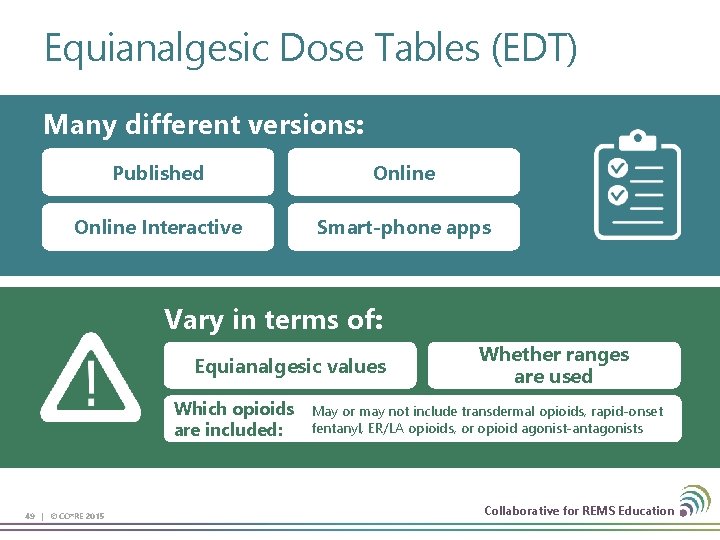
Equianalgesic Dose Tables (EDT) Many different versions: Published Online Interactive Smart-phone apps Vary in terms of: Equianalgesic values Which opioids are included: 49 | © CO*RE 2015 Whether ranges are used May or may not include transdermal opioids, rapid-onset fentanyl, ER/LA opioids, or opioid agonist-antagonists Collaborative for REMS Education
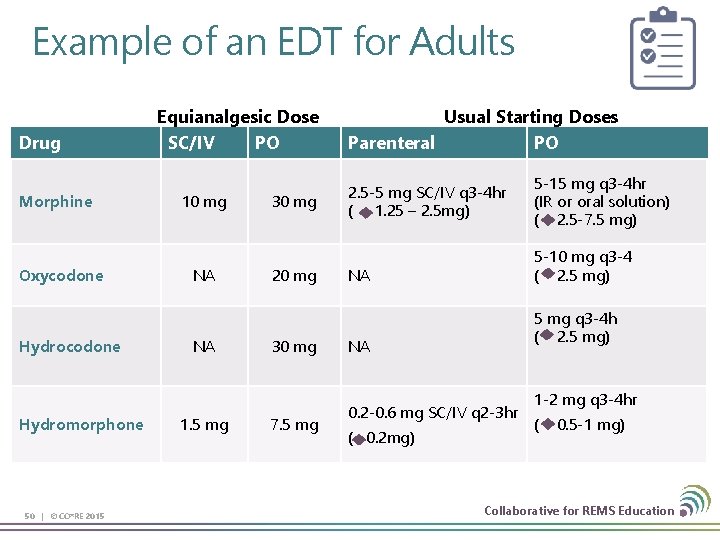
Example of an EDT for Adults Drug Morphine Oxycodone Hydromorphone 50 | © CO*RE 2015 Equianalgesic Dose SC/IV PO 10 mg NA NA 1. 5 mg 30 mg 20 mg 30 mg 7. 5 mg Usual Starting Doses Parenteral PO 2. 5 -5 mg SC/IV q 3 -4 hr ( 1. 25 – 2. 5 mg) 5 -10 mg q 3 -4 ( 2. 5 mg) NA 5 mg q 3 -4 h ( 2. 5 mg) NA 0. 2 -0. 6 mg SC/IV q 2 -3 hr ( 0. 2 mg) 5 -15 mg q 3 -4 hr (IR or oral solution) ( 2. 5 -7. 5 mg) 1 -2 mg q 3 -4 hr ( 0. 5 -1 mg) Collaborative for REMS Education
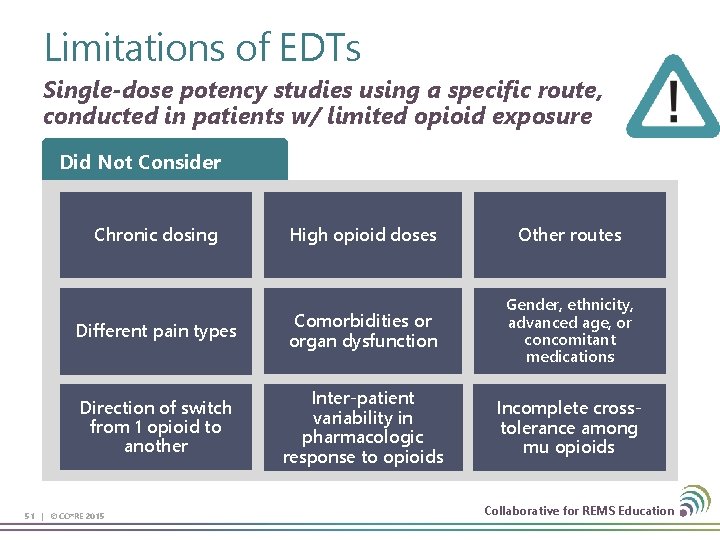
Limitations of EDTs Single-dose potency studies using a specific route, conducted in patients w/ limited opioid exposure Did Not Consider Chronic dosing High opioid doses Other routes Different pain types Comorbidities or organ dysfunction Gender, ethnicity, advanced age, or concomitant medications Direction of switch from 1 opioid to another Inter-patient variability in pharmacologic response to opioids Incomplete crosstolerance among mu opioids 51 | © CO*RE 2015 Collaborative for REMS Education
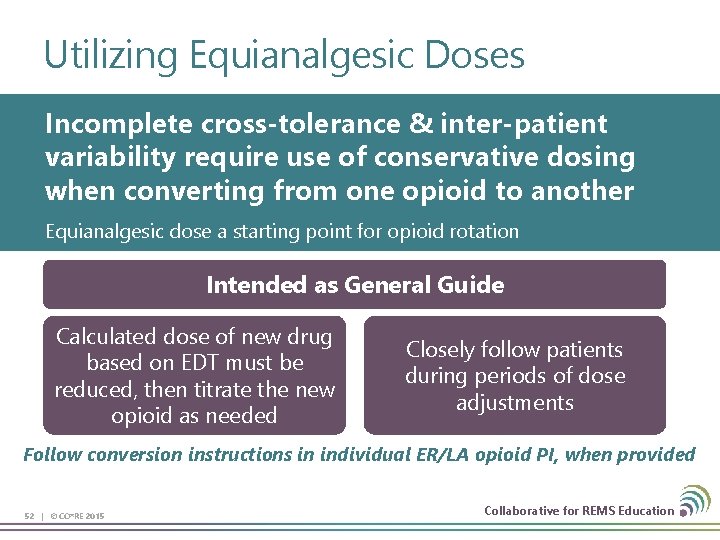
Utilizing Equianalgesic Doses Incomplete cross-tolerance & inter-patient variability require use of conservative dosing when converting from one opioid to another Equianalgesic dose a starting point for opioid rotation Intended as General Guide Calculated dose of new drug based on EDT must be reduced, then titrate the new opioid as needed Closely follow patients during periods of dose adjustments Follow conversion instructions in individual ER/LA opioid PI, when provided 52 | © CO*RE 2015 Collaborative for REMS Education
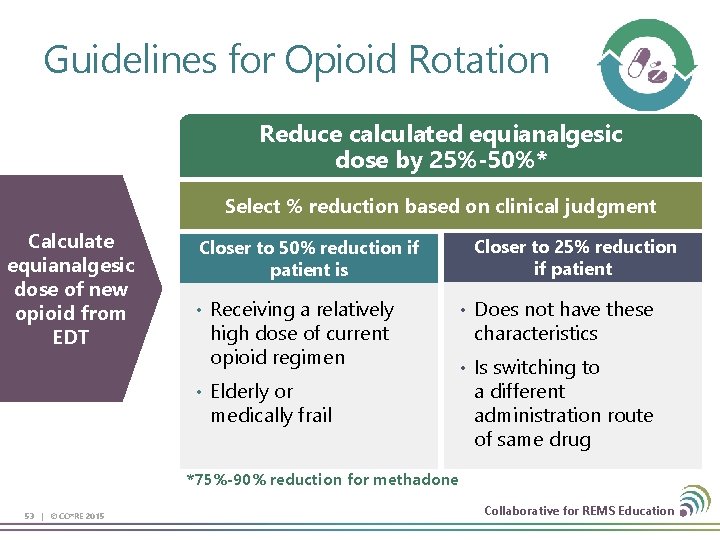
Guidelines for Opioid Rotation Reduce calculated equianalgesic dose by 25%-50%* Select % reduction based on clinical judgment Calculate equianalgesic dose of new opioid from EDT Closer to 50% reduction if patient is • Receiving a relatively high dose of current opioid regimen • Elderly or medically frail Closer to 25% reduction if patient • Does not have these characteristics • Is switching to a different administration route of same drug *75%-90% reduction for methadone 53 | © CO*RE 2015 Collaborative for REMS Education
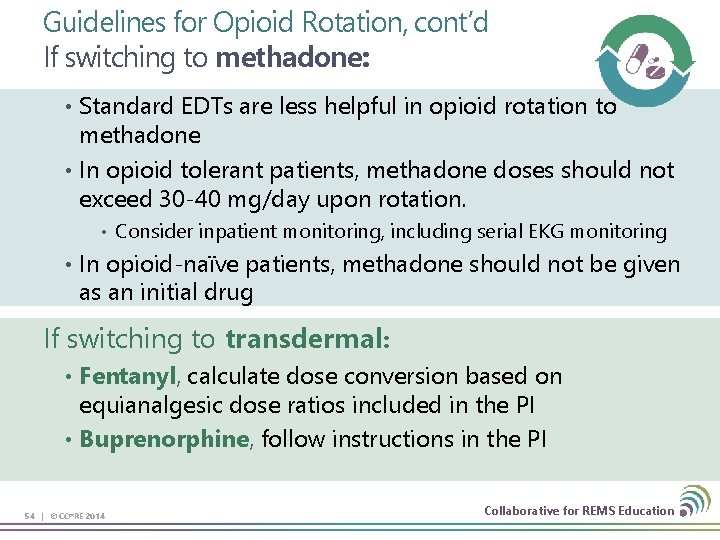
Guidelines for Opioid Rotation, cont’d If switching to methadone: • Standard EDTs are less helpful in opioid rotation to methadone • In opioid tolerant patients, methadone doses should not exceed 30 -40 mg/day upon rotation. • Consider inpatient monitoring, including serial EKG monitoring • In opioid-naïve patients, methadone should not be given as an initial drug If switching to transdermal: • Fentanyl, calculate dose conversion based on equianalgesic dose ratios included in the PI • Buprenorphine, follow instructions in the PI 54 | © CO*RE 2014 Collaborative for REMS Education
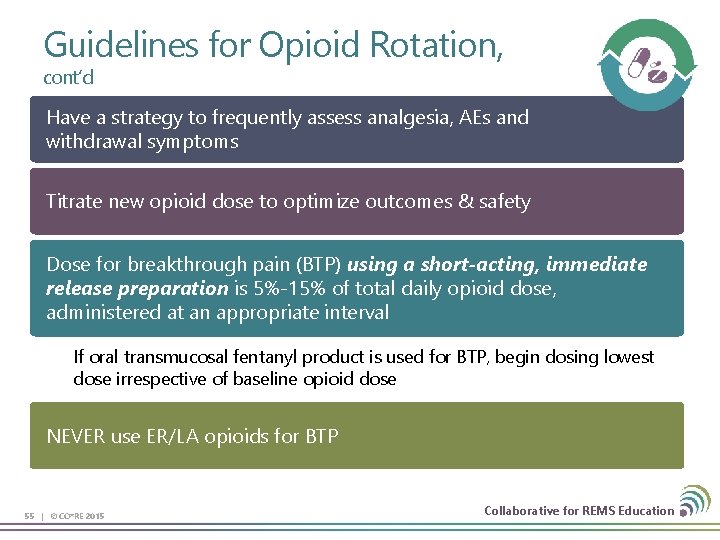
Guidelines for Opioid Rotation, cont’d Have a strategy to frequently assess analgesia, AEs and withdrawal symptoms Titrate new opioid dose to optimize outcomes & safety Dose for breakthrough pain (BTP) using a short-acting, immediate release preparation is 5%-15% of total daily opioid dose, administered at an appropriate interval If oral transmucosal fentanyl product is used for BTP, begin dosing lowest dose irrespective of baseline opioid dose NEVER use ER/LA opioids for BTP 55 | © CO*RE 2015 Collaborative for REMS Education
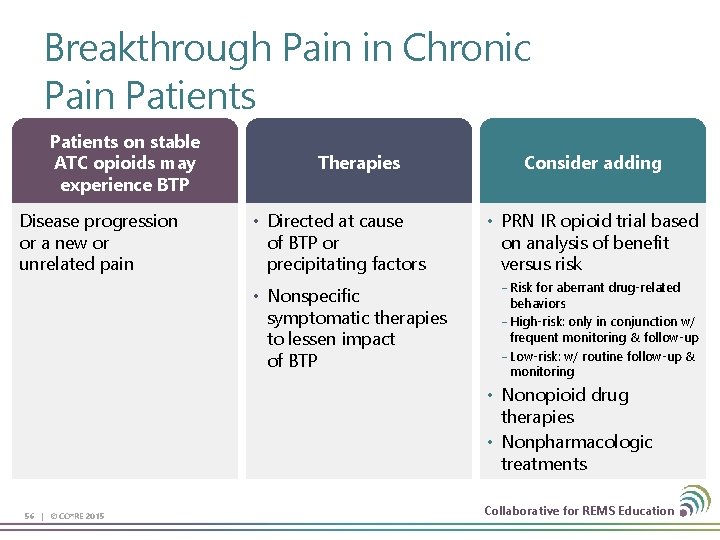
Breakthrough Pain in Chronic Pain Patients on stable ATC opioids may experience BTP Disease progression or a new or unrelated pain Therapies • Directed at cause of BTP or precipitating factors • Nonspecific symptomatic therapies to lessen impact of BTP Consider adding • PRN IR opioid trial based on analysis of benefit versus risk ‒ Risk for aberrant drug-related behaviors ‒ High-risk: only in conjunction w/ frequent monitoring & follow-up ‒ Low-risk: w/ routine follow-up & monitoring • Nonopioid drug therapies • Nonpharmacologic treatments 56 | © CO*RE 2015 Collaborative for REMS Education
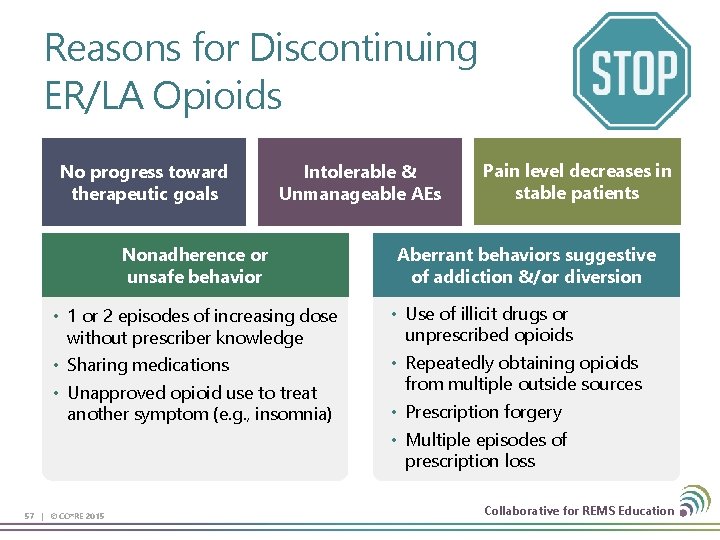
Reasons for Discontinuing ER/LA Opioids No progress toward therapeutic goals Intolerable & Unmanageable AEs Nonadherence or unsafe behavior • 1 or 2 episodes of increasing dose without prescriber knowledge • Sharing medications • Unapproved opioid use to treat another symptom (e. g. , insomnia) 57 | © CO*RE 2015 Pain level decreases in stable patients Aberrant behaviors suggestive of addiction &/or diversion • Use of illicit drugs or unprescribed opioids • Repeatedly obtaining opioids from multiple outside sources • Prescription forgery • Multiple episodes of prescription loss Collaborative for REMS Education
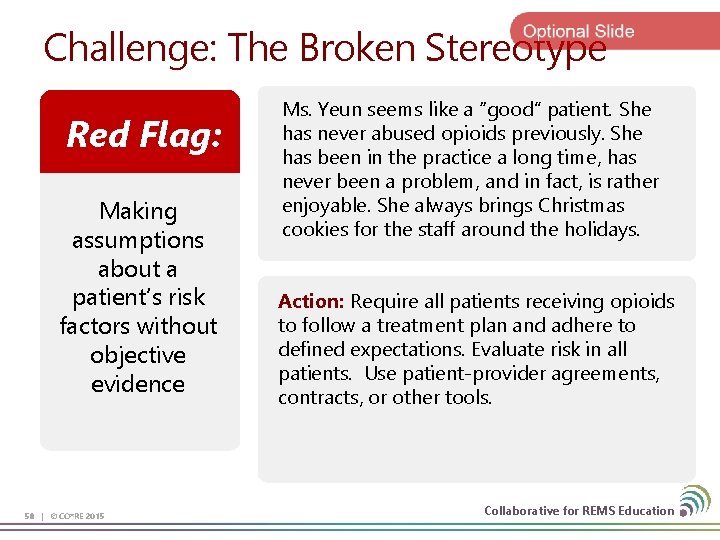
Challenge: The Broken Stereotype Red Flag: Making assumptions about a patient’s risk factors without objective evidence 58 | © CO*RE 2015 Ms. Yeun seems like a “good” patient. She has never abused opioids previously. She has been in the practice a long time, has never been a problem, and in fact, is rather enjoyable. She always brings Christmas cookies for the staff around the holidays. Action: Require all patients receiving opioids to follow a treatment plan and adhere to defined expectations. Evaluate risk in all patients. Use patient-provider agreements, contracts, or other tools. Collaborative for REMS Education
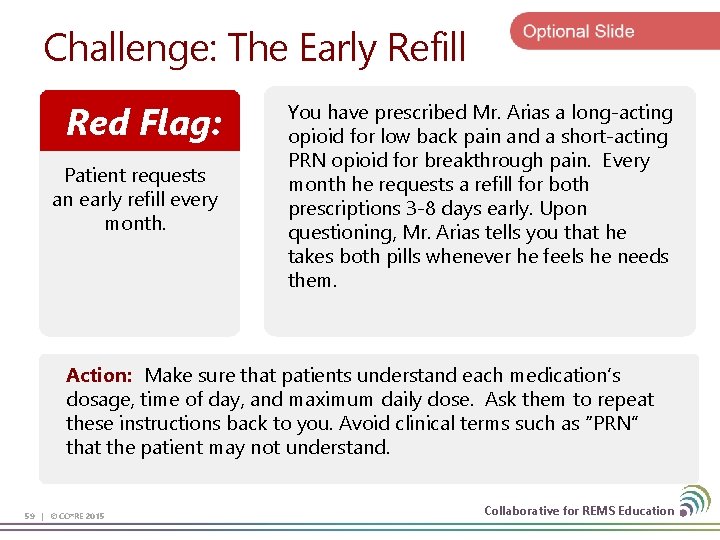
Challenge: The Early Refill Red Flag: Patient requests an early refill every month. You have prescribed Mr. Arias a long-acting opioid for low back pain and a short-acting PRN opioid for breakthrough pain. Every month he requests a refill for both prescriptions 3 -8 days early. Upon questioning, Mr. Arias tells you that he takes both pills whenever he feels he needs them. Action: Make sure that patients understand each medication’s dosage, time of day, and maximum daily dose. Ask them to repeat these instructions back to you. Avoid clinical terms such as “PRN” that the patient may not understand. 59 | © CO*RE 2015 Collaborative for REMS Education
Unit 2 Pearls for Practice Treat Initiation of Opioids as a Therapeutic Trial Anticipate ER/LA Opioid-Induced Respiratory Depression It can be immediately life-threatening Be Conservative and Thoughtful In Dosing When initiating, titrating, and rotating opioids First calculate equinalgesic dose, then reduce dose appropriately Discontinue ER/LA opioids slowly and safely 60 | © CO*RE 2015 Collaborative for REMS Education
© CO*RE 2014 MANAGING THERAPY WITH ER/LA OPIOID ANALGESICS Unit III 61 | © CO*RE 2015 Collaborative for REMS Education
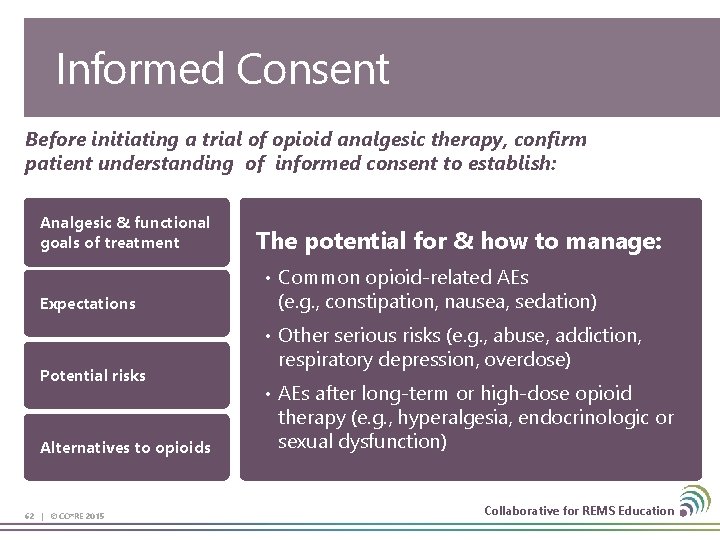
Informed Consent Before initiating a trial of opioid analgesic therapy, confirm patient understanding of informed consent to establish: Analgesic & functional goals of treatment The potential for & how to manage: • Common opioid-related AEs Expectations (e. g. , constipation, nausea, sedation) • Other serious risks (e. g. , abuse, addiction, Potential risks Alternatives to opioids 62 | © CO*RE 2015 respiratory depression, overdose) • AEs after long-term or high-dose opioid therapy (e. g. , hyperalgesia, endocrinologic or sexual dysfunction) Collaborative for REMS Education
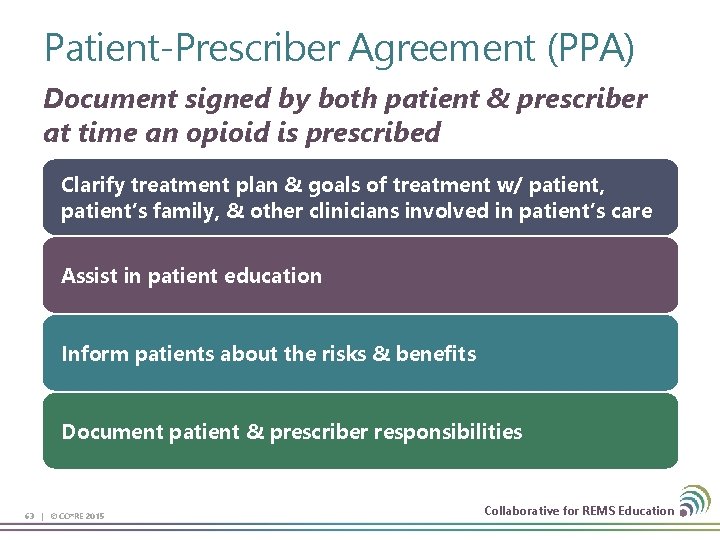
Patient-Prescriber Agreement (PPA) Document signed by both patient & prescriber at time an opioid is prescribed Clarify treatment plan & goals of treatment w/ patient, patient’s family, & other clinicians involved in patient’s care Assist in patient education Inform patients about the risks & benefits Document patient & prescriber responsibilities 63 | © CO*RE 2015 Collaborative for REMS Education
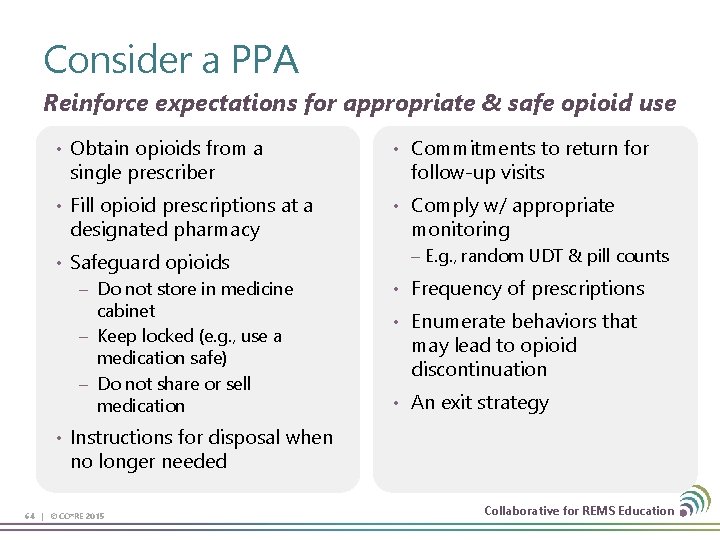
Consider a PPA Reinforce expectations for appropriate & safe opioid use • Obtain opioids from a • Commitments to return for • Fill opioid prescriptions at a • Comply w/ appropriate single prescriber designated pharmacy • Safeguard opioids – Do not store in medicine cabinet – Keep locked (e. g. , use a medication safe) – Do not share or sell medication follow-up visits monitoring – E. g. , random UDT & pill counts • Frequency of prescriptions • Enumerate behaviors that may lead to opioid discontinuation • An exit strategy • Instructions for disposal when no longer needed 64 | © CO*RE 2015 Collaborative for REMS Education
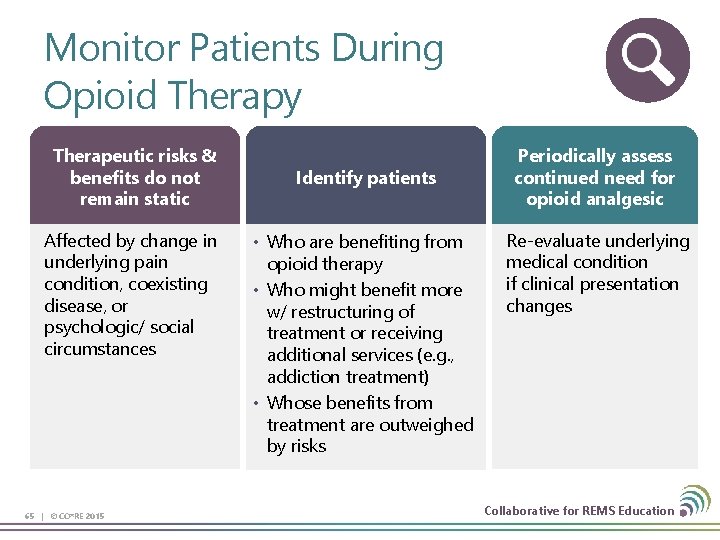
Monitor Patients During Opioid Therapy Therapeutic risks & benefits do not remain static Affected by change in underlying pain condition, coexisting disease, or psychologic/ social circumstances 65 | © CO*RE 2015 Identify patients • Who are benefiting from opioid therapy • Who might benefit more w/ restructuring of treatment or receiving additional services (e. g. , addiction treatment) • Whose benefits from treatment are outweighed by risks Periodically assess continued need for opioid analgesic Re-evaluate underlying medical condition if clinical presentation changes Collaborative for REMS Education
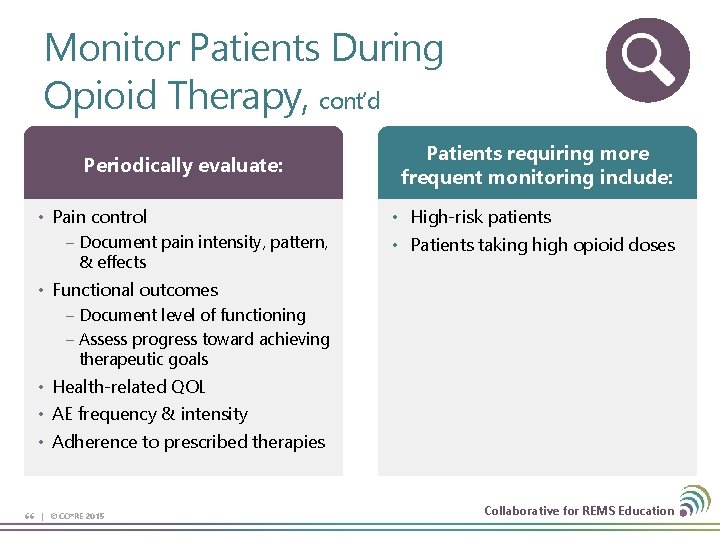
Monitor Patients During Opioid Therapy, cont’d Periodically evaluate: • Pain control – Document pain intensity, pattern, & effects Patients requiring more frequent monitoring include: • High-risk patients • Patients taking high opioid doses • Functional outcomes – Document level of functioning – Assess progress toward achieving therapeutic goals • Health-related QOL • AE frequency & intensity • Adherence to prescribed therapies 66 | © CO*RE 2015 Collaborative for REMS Education
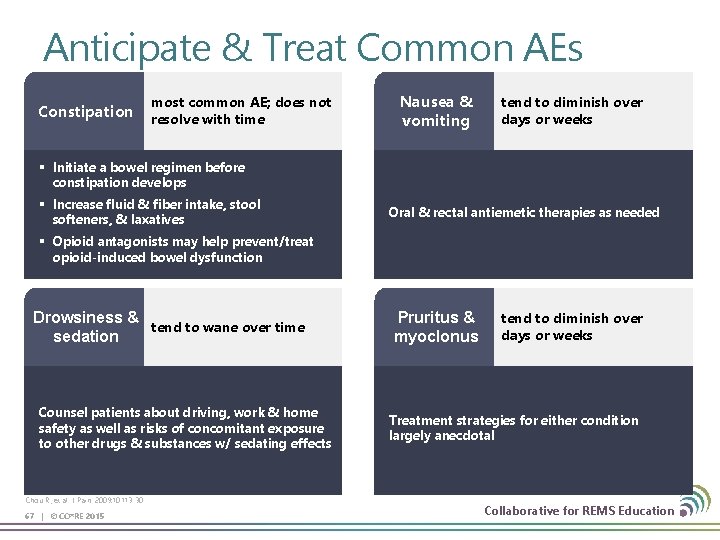
Anticipate & Treat Common AEs Constipation most common AE; does not resolve with time Nausea & vomiting tend to diminish over days or weeks § Initiate a bowel regimen before constipation develops § Increase fluid & fiber intake, stool softeners, & laxatives Oral & rectal antiemetic therapies as needed § Opioid antagonists may help prevent/treat opioid-induced bowel dysfunction Drowsiness & tend to wane over time sedation Counsel patients about driving, work & home safety as well as risks of concomitant exposure to other drugs & substances w/ sedating effects Chou R, et al. J Pain. 2009; 10: 113 -30 67 | © CO*RE 2015 Pruritus & myoclonus tend to diminish over days or weeks Treatment strategies for either condition largely anecdotal Collaborative for REMS Education
Monitor Adherence and Aberrant Behavior Routinely monitor patient adherence to treatment plan • Recognize & document aberrant drug-related behavior – In addition to patient self-report also use: • State PDMPs, where available • UDT – Positive for nonprescribed drugs – Positive for illicit substance – Negative for prescribed opioid • Family member or caregiver interviews • Monitoring tools such as the COMM, PADT, PMQ, or PDUQ • Medication reconciliation (e. g. , pill counts) PADT=Pain Assessment & Documentation Tool 68 | © CO*RE 2015 Collaborative for REMS Education
Address Aberrant Drug-Related Behavior outside the boundaries of agreed-on treatment plan: Behaviors that are less indicative of aberrancy Behaviors that are more indicative of aberrancy Unsanctioned dose escalations or other noncompliance w/ therapy on 1 or 2 occasions Multiple dose escalations or other noncompliance w/ therapy despite warnings Unapproved use of the drug to treat another symptom Prescription forgery Openly acquiring similar drugs from other medical sources Obtaining prescription drugs from nonmedical sources 69 | © CO*RE 2015 Collaborative for REMS Education
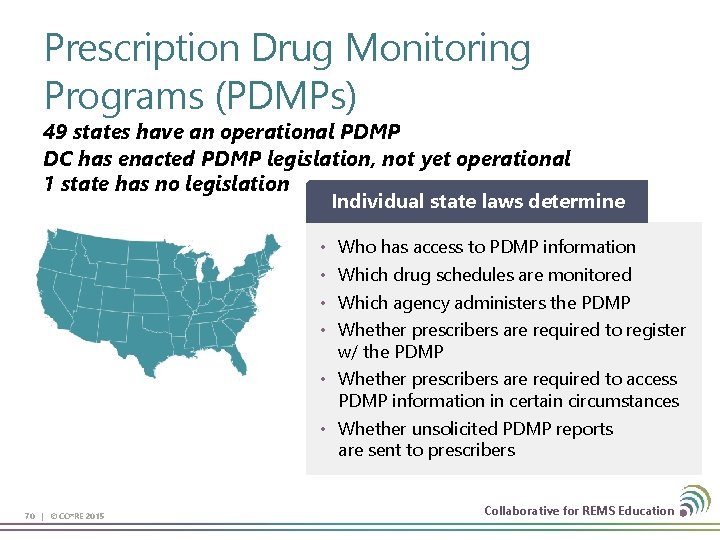
Prescription Drug Monitoring Programs (PDMPs) 49 states have an operational PDMP DC has enacted PDMP legislation, not yet operational 1 state has no legislation Individual state laws determine • Who has access to PDMP information • Which drug schedules are monitored • Which agency administers the PDMP • Whether prescribers are required to register w/ the PDMP • Whether prescribers are required to access PDMP information in certain circumstances • Whether unsolicited PDMP reports are sent to prescribers 70 | © CO*RE 2015 Collaborative for REMS Education
PDMP Benefits Record of a patient’s controlled substance prescriptions Provide warnings of potential misuse/abuse • Some are available • Existing prescriptions not • Opportunity to discuss • Multiple online 24/7 w/ patient reported by patient prescribers/pharmacies • Drugs that increase overdose risk when taken together • Patient pays for drugs of abuse w/ cash Prescribers can check their own prescribing Hx 71 | © CO*RE 2015 Collaborative for REMS Education
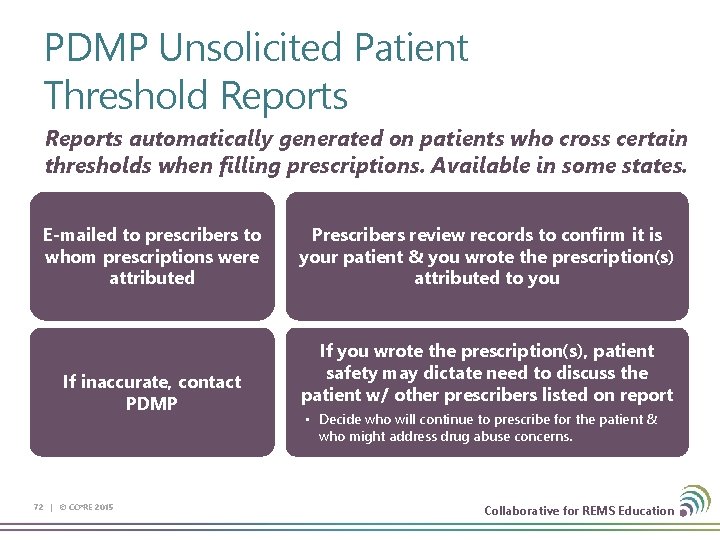
PDMP Unsolicited Patient Threshold Reports automatically generated on patients who cross certain thresholds when filling prescriptions. Available in some states. E-mailed to prescribers to whom prescriptions were attributed If inaccurate, contact PDMP 72 | © CO*RE 2015 Prescribers review records to confirm it is your patient & you wrote the prescription(s) attributed to you If you wrote the prescription(s), patient safety may dictate need to discuss the patient w/ other prescribers listed on report • Decide who will continue to prescribe for the patient & who might address drug abuse concerns. Collaborative for REMS Education
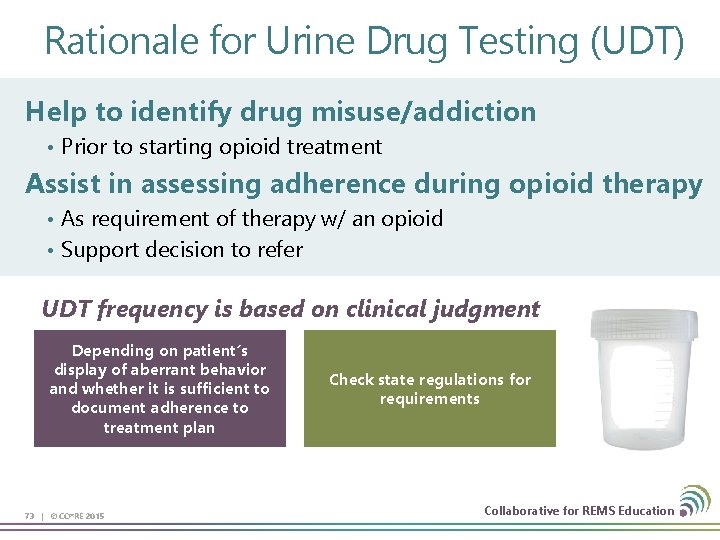
Rationale for Urine Drug Testing (UDT) Help to identify drug misuse/addiction • Prior to starting opioid treatment Assist in assessing adherence during opioid therapy • As requirement of therapy w/ an opioid • Support decision to refer UDT frequency is based on clinical judgment Depending on patient’s display of aberrant behavior and whether it is sufficient to document adherence to treatment plan 73 | © CO*RE 2015 Check state regulations for requirements Collaborative for REMS Education
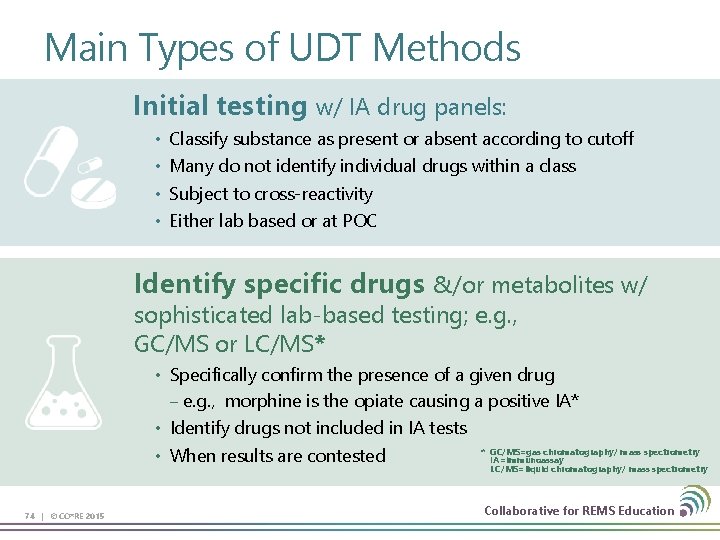
Main Types of UDT Methods Initial testing w/ IA drug panels: • Classify substance as present or absent according to cutoff • Many do not identify individual drugs within a class • Subject to cross-reactivity • Either lab based or at POC Identify specific drugs &/or metabolites w/ sophisticated lab-based testing; e. g. , GC/MS or LC/MS* • Specifically confirm the presence of a given drug – e. g. , morphine is the opiate causing a positive IA* • Identify drugs not included in IA tests • When results are contested 74 | © CO*RE 2015 * GC/MS=gas chromatography/ mass spectrometry IA=immunoassay LC/MS=liquid chromatography/ mass spectrometry Collaborative for REMS Education
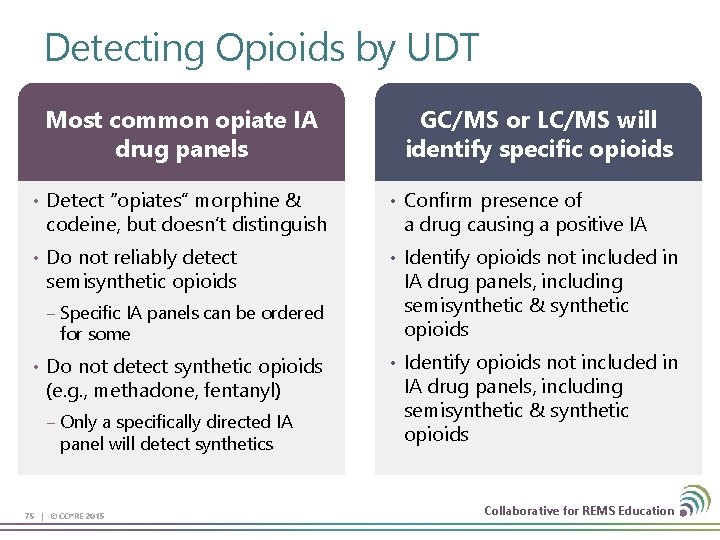
Detecting Opioids by UDT Most common opiate IA drug panels GC/MS or LC/MS will identify specific opioids • Detect “opiates” morphine & • Confirm presence of • Do not reliably detect • Identify opioids not included in codeine, but doesn’t distinguish semisynthetic opioids – Specific IA panels can be ordered for some • Do not detect synthetic opioids (e. g. , methadone, fentanyl) – Only a specifically directed IA panel will detect synthetics 75 | © CO*RE 2015 a drug causing a positive IA IA drug panels, including semisynthetic & synthetic opioids • Identify opioids not included in IA drug panels, including semisynthetic & synthetic opioids Collaborative for REMS Education
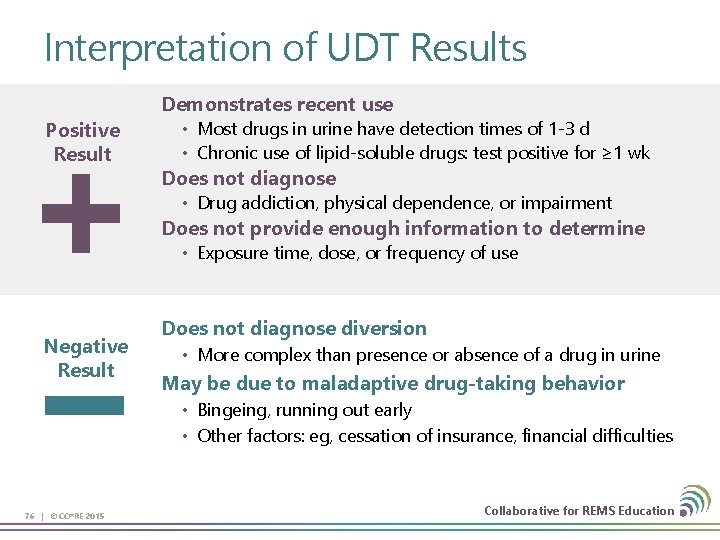
Interpretation of UDT Results Positive Result Demonstrates recent use • Most drugs in urine have detection times of 1 -3 d • Chronic use of lipid-soluble drugs: test positive for ≥ 1 wk Does not diagnose • Drug addiction, physical dependence, or impairment Does not provide enough information to determine • Exposure time, dose, or frequency of use Negative Result Does not diagnose diversion • More complex than presence or absence of a drug in urine May be due to maladaptive drug-taking behavior • Bingeing, running out early • Other factors: eg, cessation of insurance, financial difficulties 76 | © CO*RE 2015 Collaborative for REMS Education
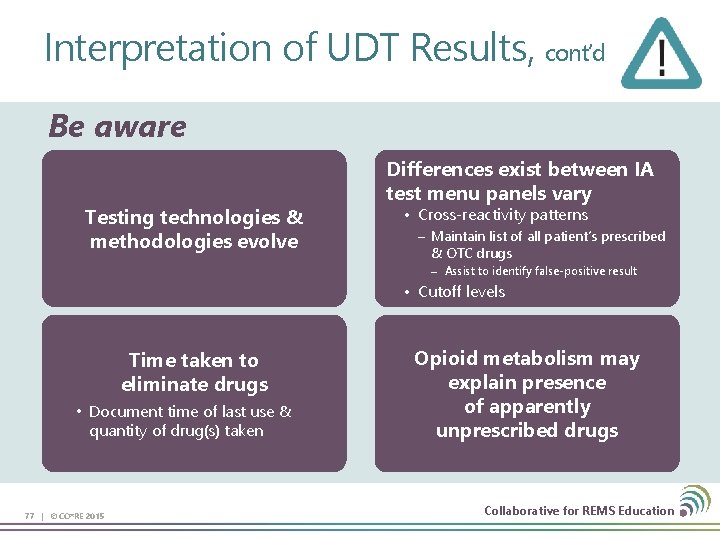
Interpretation of UDT Results, cont’d Be aware Testing technologies & methodologies evolve Differences exist between IA test menu panels vary • Cross-reactivity patterns – Maintain list of all patient’s prescribed & OTC drugs – Assist to identify false-positive result • Cutoff levels Time taken to eliminate drugs • Document time of last use & quantity of drug(s) taken 77 | © CO*RE 2015 Opioid metabolism may explain presence of apparently unprescribed drugs Collaborative for REMS Education
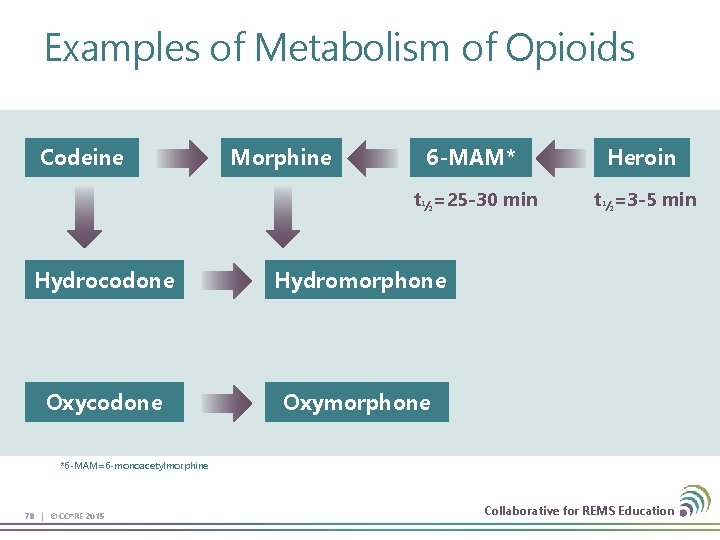
Examples of Metabolism of Opioids Codeine Morphine 6 -MAM* Heroin t½=25 -30 min t½=3 -5 min Hydrocodone Hydromorphone Oxycodone Oxymorphone *6 -MAM=6 -monoacetylmorphine 78 | © CO*RE 2015 Collaborative for REMS Education
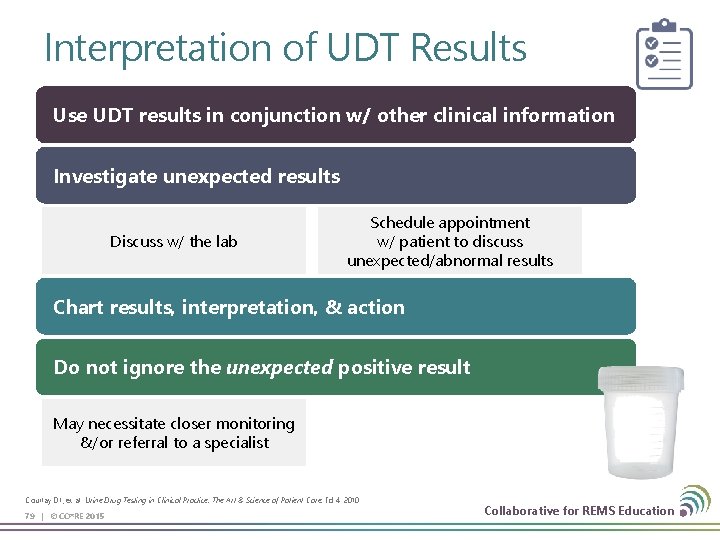
Interpretation of UDT Results Use UDT results in conjunction w/ other clinical information Investigate unexpected results Discuss w/ the lab Schedule appointment w/ patient to discuss unexpected/abnormal results Chart results, interpretation, & action Do not ignore the unexpected positive result May necessitate closer monitoring &/or referral to a specialist Gourlay DL, et al. Urine Drug Testing in Clinical Practice. The Art & Science of Patient Care. Ed 4. 2010. 79 | © CO*RE 2015 Collaborative for REMS Education
ER/LA Opioid Use in Pregnant Women No adequate & well-controlled studies Only use if potential benefit justifies the risk to the fetus Be aware of the pregnancy status of your patients • 80 | © CO*RE 2015 If prolonged use is required during pregnancy: Advise patient of risk of neonatal withdrawal syndrome • Ensure appropriate treatment will be available Collaborative for REMS Education
Be Ready to Refer Be familiar w/ referral sources for abuse or addiction that may arise from use of ER/LA opioids SAMHSA substance abuse treatment facility locator SAMHSA mental health treatment facility locator http: //findtreatment. samhsa. gov/Treatm ent. Locator/faces/quick. Search. jspx http: //findtreatment. samhsa. gov/MHTreat ment. Locator/faces/quick. Search. jspx 81 | © CO*RE 2015 Collaborative for REMS Education
Challenge: The Insistent Patient Red Flag: Patient refuses to consider non-opioid treatment options Mr. Lee’s daily function has improved significantly over the past two years. You suggest titrating his dosage down or trying alternative pain management options. He is extremely resistant and tells you “Nothing else relieves my pain. ” Action: Work with your patient to set treatment goals and expectations. Select and document a therapy plan or use a patientprovider agreement. Evaluate Mr. Lee for potential addiction; consider referral to psychiatry or addiction medicine. 82 | © CO*RE 2015 Collaborative for REMS Education
Unit 3 Pearls for Practice Anticipate and Treat Common Adverse Effects Use Informed Consent and Patient Provider Agreements Use UDT and PDMP as Valuable Sources of Data About your Patient However, know their limitations Monitor Patient Adherence, Side Effects, Aberrant Behaviors, and Clinical Outcomes Refer Appropriately if Necessary 83 | © CO*RE 2015 Collaborative for REMS Education
© CO*RE 2014 COUNSELING PATIENTS & CAREGIVERS ABOUT THE SAFE USE OF ER/LA OPIOID ANALGESICS Unit IV 84 | © CO*RE 2015 Collaborative for REMS Education
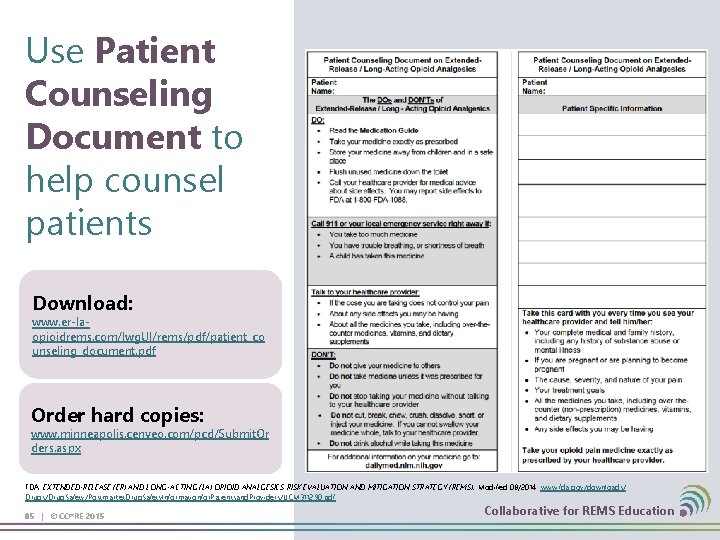
Use Patient Counseling Document to help counsel patients Download: www. er-laopioidrems. com/Iwg. UI/rems/pdf/patient_co unseling_document. pdf Order hard copies: www. minneapolis. cenveo. com/pcd/Submit. Or ders. aspx FDA. EXTENDED-RELEASE (ER) AND LONG-ACTING (LA) OPIOID ANALGESICS RISK EVALUATION AND MITIGATION STRATEGY (REMS). Modified 08/2014. www. fda. gov/downloads/ Drugs/Drug. Safety/Postmarket. Drug. Safety. Informationfor. Patientsand. Providers/UCM 311290. pdf 85 | © CO*RE 2015 Collaborative for REMS Education
Counsel Patients About Proper Use Explain • Product-specific information about the prescribed ER/LA opioid • How to take the ER/LA opioid as prescribed • Importance of adherence to dosing regimen, handling missed doses, & contacting their prescriber if pain cannot be controlled 86 | © CO*RE 2015 Instruct patients/ caregivers to • Read the ER/LA opioid Medication Guide received from pharmacy every time an ER/LA opioid is dispensed • At every medical appointment explain all medications they take Collaborative for REMS Education
Counsel Patients About Proper Use, cont’d Counsel patients/caregivers: • On the most common AEs of ER/LA opioids • About the risk of falls, working w/ heavy machinery, & driving • Call the prescriber for advice about managing AEs • Inform the prescriber about AEs Prescribers should report serious AEs to the FDA: www. fda. gov/downloads/About. FDA/Reports. Manuals. Forms /Forms/UCM 163919. pdf or 1 -800 -FDA-1088 87 | © CO*RE 2015 Collaborative for REMS Education
Warn Patients Never break, chew, crush or snort an oral ER/LA tablet/capsule, or cut or tear patches prior to use • May lead to rapid release of ER/LA opioid causing overdose & death • When a patient cannot swallow a capsule whole, prescribers should refer to PI to determine if appropriate to sprinkle contents on applesauce or administer via feeding tube Use of CNS depressants or alcohol w/ ER/LA opioids can cause overdose & death • Use with alcohol may result in rapid release & absorption of a potentially fatal opioid dose • Other depressants include sedative-hypnotics & anxiolytics, illegal drugs 88 | © CO*RE 2015 Collaborative for REMS Education
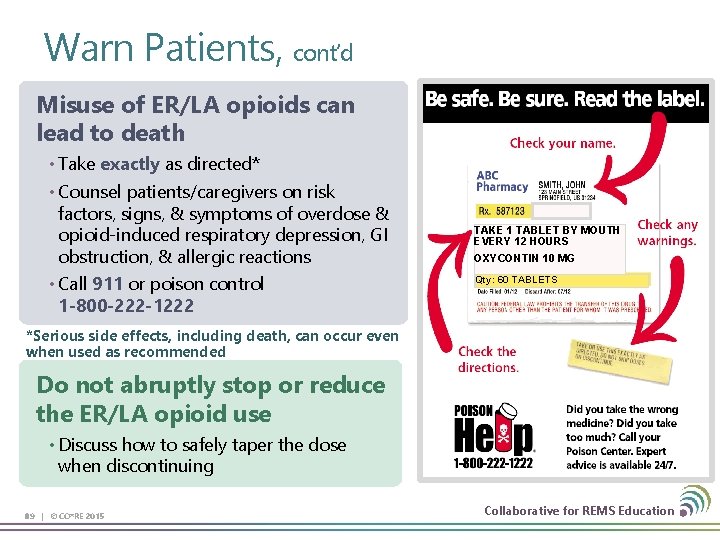
Warn Patients, cont’d Misuse of ER/LA opioids can lead to death • Take exactly as directed* • Counsel patients/caregivers on risk factors, signs, & symptoms of overdose & opioid-induced respiratory depression, GI obstruction, & allergic reactions • Call 911 or poison control TAKE 1 TABLET BY MOUTH EVERY 12 HOURS OXYCONTIN 10 MG Qty: 60 TABLETS 1 -800 -222 -1222 *Serious side effects, including death, can occur even when used as recommended Do not abruptly stop or reduce the ER/LA opioid use • Discuss how to safely taper the dose when discontinuing 89 | © CO*RE 2015 Collaborative for REMS Education
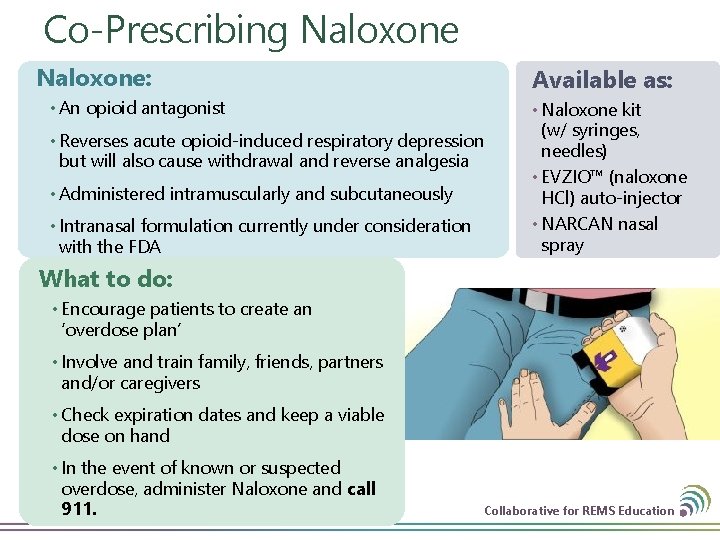
Co-Prescribing Naloxone: • An opioid antagonist • Reverses acute opioid-induced respiratory depression but will also cause withdrawal and reverse analgesia • Administered intramuscularly and subcutaneously • Intranasal formulation currently under consideration with the FDA Available as: • Naloxone kit (w/ syringes, needles) • EVZIO™ (naloxone HCl) auto-injector • NARCAN nasal spray What to do: • Encourage patients to create an ‘overdose plan’ • Involve and train family, friends, partners and/or caregivers • Check expiration dates and keep a viable dose on hand • In the event of known or suspected 90 | overdose, administer Naloxone and call 911. © CO*RE 2015 Collaborative for REMS Education
When to Consider Co-Prescribing Naloxone: Those at a higher risk for opioid overdose including… • Taking opioid high-doses for pain (50 mg/day equiv) • Receiving rotating opioid medication regimes (at risk for incomplete cross tolerance) • On opioid preparations with increased overdose risk • With respiratory disease (COPD, emphysema, asthma) • With renal or hepatic impairment • Concurrent benzodiazepine use 91 | © CO*RE 2015 Collaborative for REMS Education
Abuse Deterrent/Tamper Resistant Opioids • Response to growing nonmedical use problem • An ER/LA opioid with physical barrier to deter extraction • less likely to be crushed, injected, or snorted • Consider these formulations as one part of an overall REMS strategy • There is mixed evidence on the impact of ADF/TR on misuse • Remember overdose is still possible if taken orally in excessive amounts 92 | © CO*RE 2015 Collaborative for REMS Education
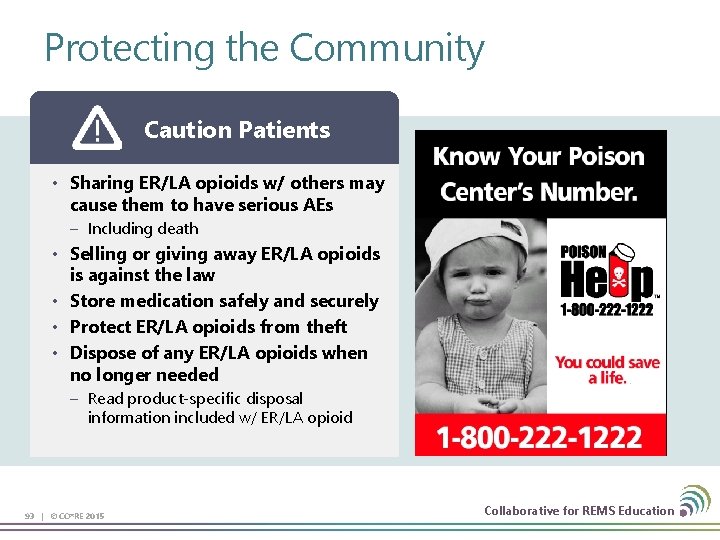
Protecting the Community Caution Patients • Sharing ER/LA opioids w/ others may cause them to have serious AEs – Including death • Selling or giving away ER/LA opioids is against the law • Store medication safely and securely • Protect ER/LA opioids from theft • Dispose of any ER/LA opioids when no longer needed – Read product-specific disposal information included w/ ER/LA opioid 93 | © CO*RE 2015 Collaborative for REMS Education
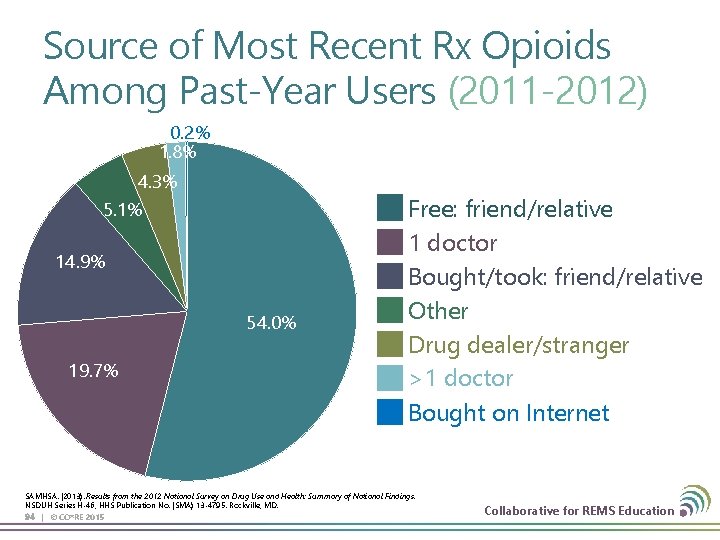
Source of Most Recent Rx Opioids Among Past-Year Users (2011 -2012) 0. 2% 1. 8% 4. 3% 5. 1% 14. 9% 54. 0% 19. 7% Free: friend/relative 1 doctor Bought/took: friend/relative Other Drug dealer/stranger >1 doctor Bought on Internet SAMHSA. (2013). Results from the 2012 National Survey on Drug Use and Health: Summary of National Findings. NSDUH Series H-46, HHS Publication No. (SMA) 13 -4795. Rockville, MD. 94 | © CO*RE 2015 Collaborative for REMS Education
Educate Parents: Not in My House Step 1: Monitor § Note how many pills in each prescription bottle or pill packet § Keep track of refills for all household members § If your teen has been prescribed a drug, coordinate & monitor dosages & refills § Make sure friends & relatives—especially grandparents— are aware of the risks § If your teen visits other households, talk to the families about safeguarding their medications 95 | © CO*RE 2015 Collaborative for REMS Education
Rx Opioid Disposal New “Disposal Act” expands ways for patients to dispose of unwanted/expired opioids Decreases amount of opioids introduced into the environment, particularly into water Collection receptacles Call DEA Registration Call Center at 1 -800 -882 -9539 to find a local collection receptacle Mail-back packages Obtained from authorized collectors Local take-back events • Conducted by Federal, State, tribal, or local law enforcement • Partnering w/ community groups Voluntarily maintained by: • Law enforcement • Authorized collectors, including: § Manufacturer § Distributer § Reverse distributer § Retail or hospital/clinic pharmacy • Including long-term care facilities DEA National Prescription Drug Take-Back Day on April 30, 2016 DEA. Federal Register. 2014; 79(174): 53520 -70. Final Rule. Disposal of Controlled Substances. [Docket No. DEA-316] www. deadiversion. usdoj. gov/fed_regs/rules/2014 -20926. pdf DEA. Disposal Act: General Public Fact Sheet. www. deadiversion. usdoj. gov/drug_disposal/fact_sheets/disposal_public. pdf 96 | © CO*RE 2015 Collaborative for REMS Education
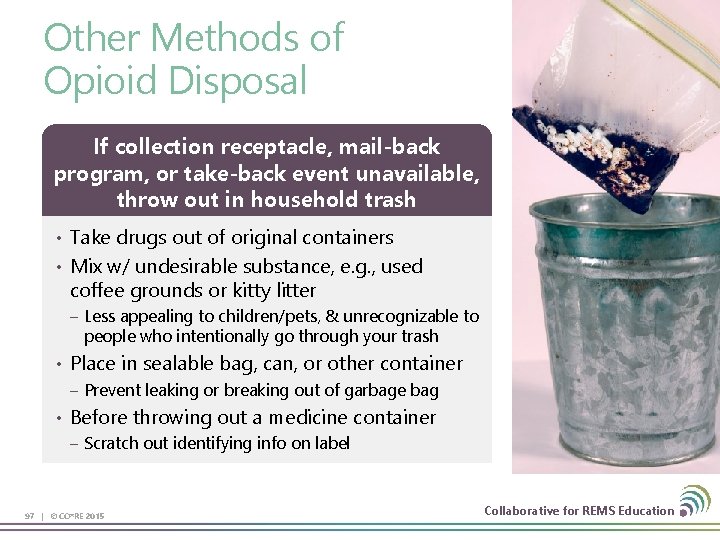
Other Methods of Opioid Disposal If collection receptacle, mail-back program, or take-back event unavailable, throw out in household trash • Take drugs out of original containers • Mix w/ undesirable substance, e. g. , used coffee grounds or kitty litter – Less appealing to children/pets, & unrecognizable to people who intentionally go through your trash • Place in sealable bag, can, or other container – Prevent leaking or breaking out of garbage bag • Before throwing out a medicine container – Scratch out identifying info on label 97 | © CO*RE 2015 Collaborative for REMS Education
Prescription Drug Disposal FDA lists especially harmful medicines – in some cases fatal w/ just 1 dose – if taken by someone other than the patient • Instruct patients to check medication guide Flush down sink/toilet if no collection receptacle, mail-back program, or take-back event available • As soon as they are no longer needed – So cannot be accidentally taken by children, pets, or others • Includes transdermal adhesive skin patches – Used patch worn for 3 d still contains enough opioid to harm/kill a child – Dispose of used patches immediately after removing from skin • Fold patch in half so sticky sides meet, then flush down toilet • Do NOT place used or unneeded patches in household trash – Exception is Butrans: can seal in Patch-Disposal Unit provided & dispose of in the trash 98 | © CO*RE 2015 Collaborative for REMS Education
Challenge: The Offended Patient Red Flag: You decide not to request routine risk assessment for fear of creating conflict Mrs. Jorgensen has been your patient for eight years and has never caused any problems. When you ask her to under urine drug testing, she becomes upset and accuses you of not trusting her. Action: Describe UDT as a routine part of medication monitoring rather than a “drug test”. Create an office policy for performing UDT on all ER/LA opioid patients. Practice by following universal precautions. Use a patient-provider agreement to clarify expectations of treatment. 99 | © CO*RE 2015 Collaborative for REMS Education
Challenge: The Daughter’s Party Red Flag: Patients do not safeguard their opioid medications correctly Your patient’s daughter, Jody, stole her father’s opioids from his bedside drawer to take to a “fishbowl party”. Her best friend consumed a mix of opioids and alcohol and died of an overdose. Action: Always counsel patients about safe drug storage; warn patients about the serious consequences of theft, misuse, and overdose. Tell your patients that taking another person’s medication, even once, is against the law. 100 | © CO*RE 2015 Collaborative for REMS Education
Unit 4 Pearls for Practice Establish Informed Consent Counsel Patients about Proper Use Appropriate use of medication Consequences of inappropriate use Educate the Whole Team Patients, families, caregivers Tools and Documents Can Help with Counseling Use them! 101 | © CO*RE 2015 Collaborative for REMS Education
© CO*RE 2014 GENERAL DRUG INFORMATION FOR ER/LA OPIOID ANALGESIC PRODUCTS Unit V 102 | © CO*RE 2015 Collaborative for REMS Education
General ER/LA Opioid Drug Information Prescribers should be knowledgeable about general characteristics, toxicities, & drug interactions for ER/LA opioid products: ER/LA opioid analgesic products are scheduled under the Controlled Substances Act & can be misused & abused 103 | © CO*RE 2015 Respiratory depression is the most serious opioid AE Constipation is the most common long-term AE Can be immediately life-threatening Should be anticipated Collaborative for REMS Education
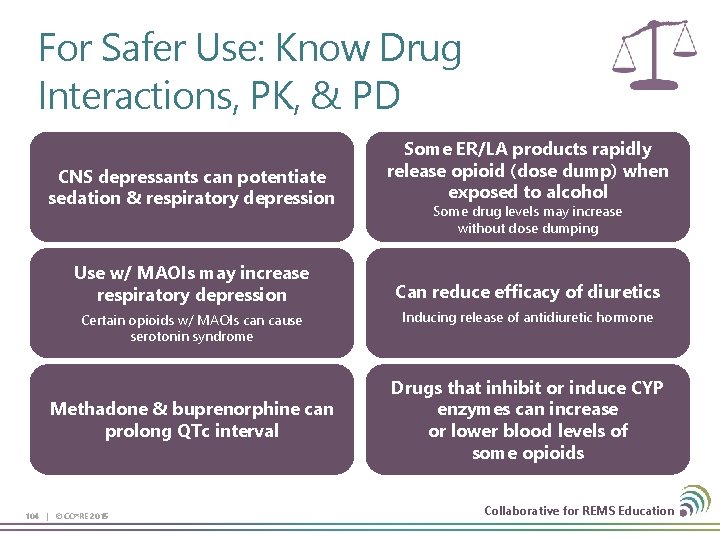
For Safer Use: Know Drug Interactions, PK, & PD CNS depressants can potentiate sedation & respiratory depression Some ER/LA products rapidly release opioid (dose dump) when exposed to alcohol Use w/ MAOIs may increase respiratory depression Can reduce efficacy of diuretics Certain opioids w/ MAOIs can cause serotonin syndrome Methadone & buprenorphine can prolong QTc interval 104 | © CO*RE 2015 Some drug levels may increase without dose dumping Inducing release of antidiuretic hormone Drugs that inhibit or induce CYP enzymes can increase or lower blood levels of some opioids Collaborative for REMS Education
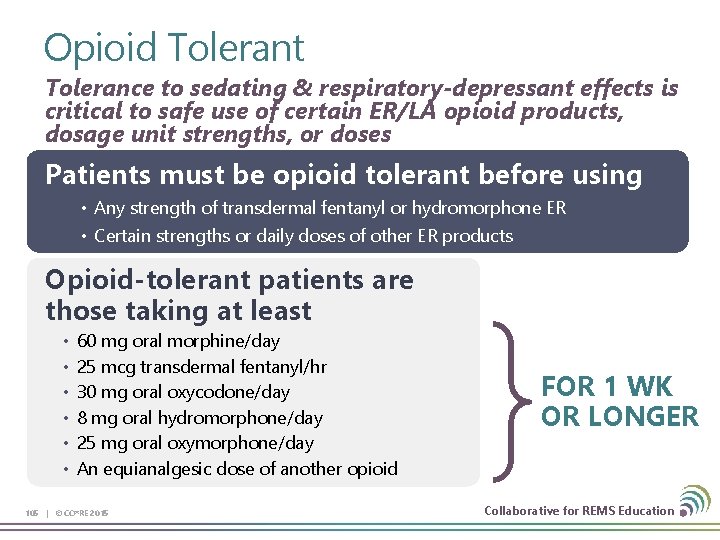
Opioid Tolerant Tolerance to sedating & respiratory-depressant effects is critical to safe use of certain ER/LA opioid products, dosage unit strengths, or doses Patients must be opioid tolerant before using • Any strength of transdermal fentanyl or hydromorphone ER • Certain strengths or daily doses of other ER products Opioid-tolerant patients are those taking at least • 60 mg oral morphine/day • 25 mcg transdermal fentanyl/hr • 30 mg oral oxycodone/day • 8 mg oral hydromorphone/day • 25 mg oral oxymorphone/day FOR 1 WK OR LONGER • An equianalgesic dose of another opioid 105 | © CO*RE 2015 Collaborative for REMS Education
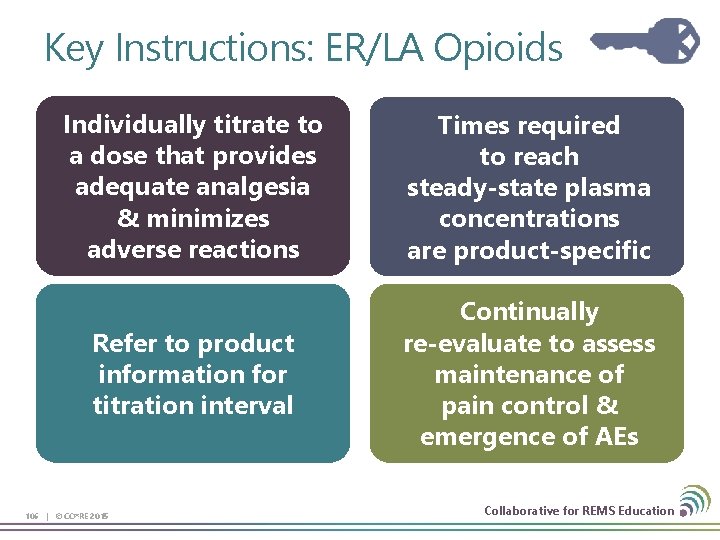
Key Instructions: ER/LA Opioids Individually titrate to a dose that provides adequate analgesia & minimizes adverse reactions Times required to reach steady-state plasma concentrations are product-specific Refer to product information for titration interval Continually re-evaluate to assess maintenance of pain control & emergence of AEs 106 | © CO*RE 2015 Collaborative for REMS Education
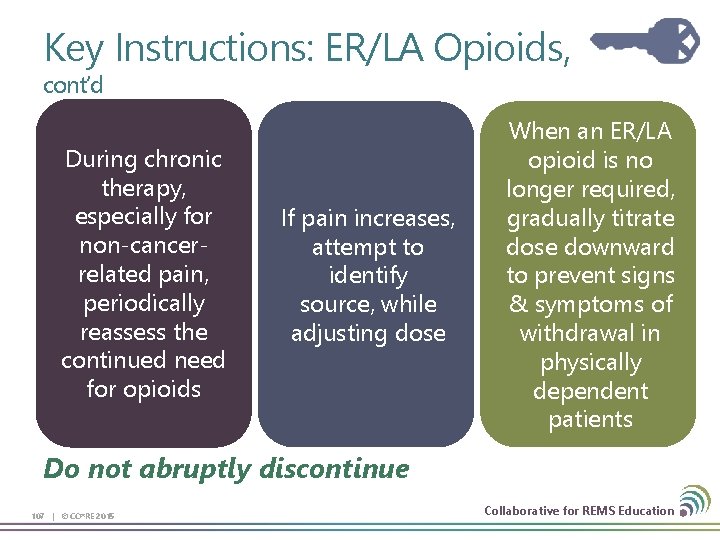
Key Instructions: ER/LA Opioids, cont’d During chronic therapy, especially for non-cancerrelated pain, periodically reassess the continued need for opioids If pain increases, attempt to identify source, while adjusting dose When an ER/LA opioid is no longer required, gradually titrate dose downward to prevent signs & symptoms of withdrawal in physically dependent patients Do not abruptly discontinue 107 | © CO*RE 2015 Collaborative for REMS Education
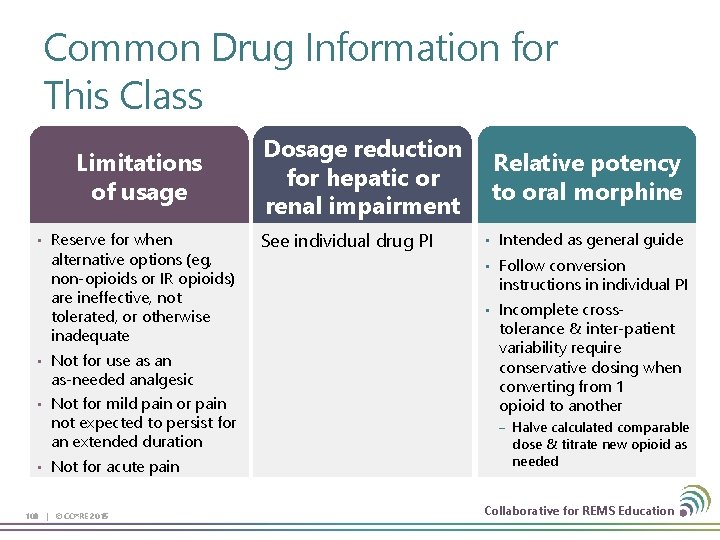
Common Drug Information for This Class Limitations of usage • Reserve for when alternative options (eg, non-opioids or IR opioids) are ineffective, not tolerated, or otherwise inadequate • Not for use as an as-needed analgesic • Not for mild pain or pain not expected to persist for an extended duration • Not for acute pain 108 | © CO*RE 2015 Dosage reduction for hepatic or renal impairment See individual drug PI Relative potency to oral morphine • Intended as general guide • Follow conversion instructions in individual PI • Incomplete cross- tolerance & inter-patient variability require conservative dosing when converting from 1 opioid to another – Halve calculated comparable dose & titrate new opioid as needed Collaborative for REMS Education
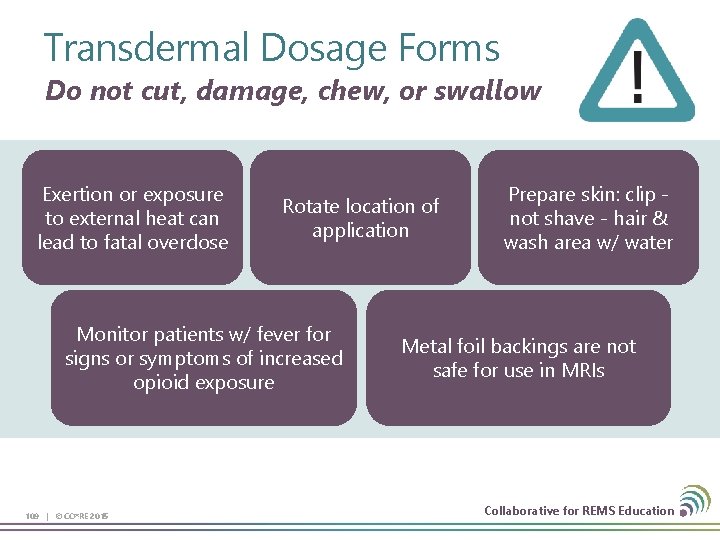
Transdermal Dosage Forms Do not cut, damage, chew, or swallow Exertion or exposure to external heat can lead to fatal overdose Rotate location of application Monitor patients w/ fever for signs or symptoms of increased opioid exposure 109 | © CO*RE 2015 Prepare skin: clip not shave - hair & wash area w/ water Metal foil backings are not safe for use in MRIs Collaborative for REMS Education
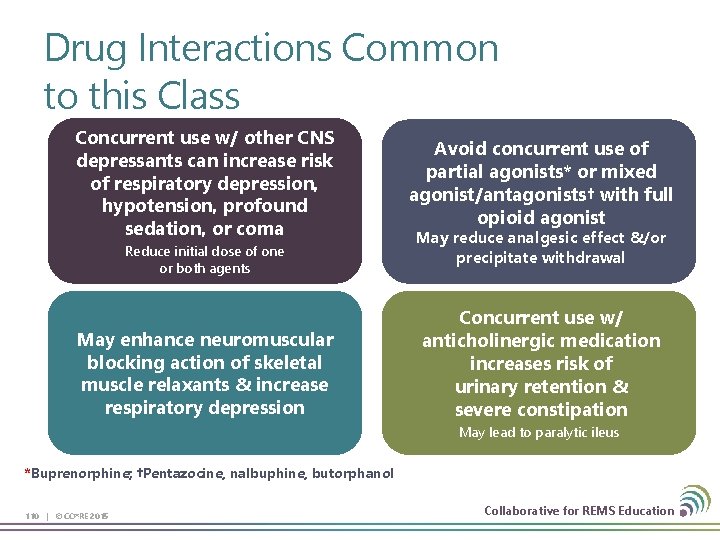
Drug Interactions Common to this Class Concurrent use w/ other CNS depressants can increase risk of respiratory depression, hypotension, profound sedation, or coma Reduce initial dose of one or both agents May enhance neuromuscular blocking action of skeletal muscle relaxants & increase respiratory depression Avoid concurrent use of partial agonists* or mixed agonist/antagonists† with full opioid agonist May reduce analgesic effect &/or precipitate withdrawal Concurrent use w/ anticholinergic medication increases risk of urinary retention & severe constipation May lead to paralytic ileus *Buprenorphine; †Pentazocine, nalbuphine, butorphanol 110 | © CO*RE 2015 Collaborative for REMS Education
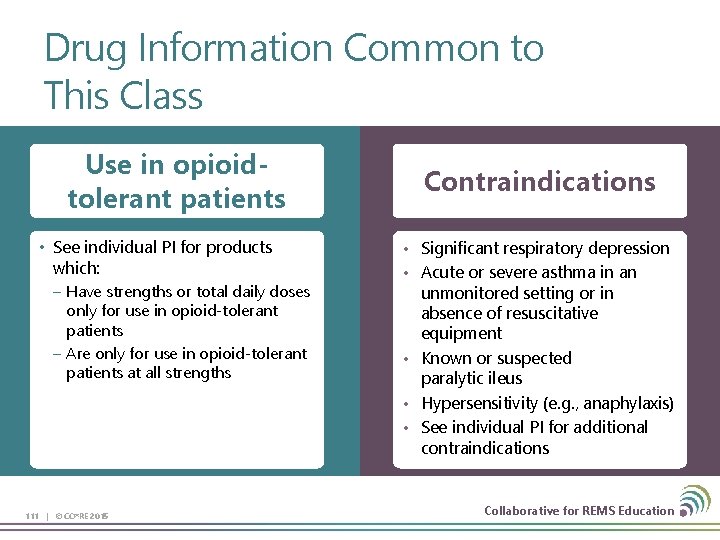
Drug Information Common to This Class Use in opioidtolerant patients • See individual PI for products which: – Have strengths or total daily doses only for use in opioid-tolerant patients – Are only for use in opioid-tolerant patients at all strengths 111 | © CO*RE 2015 Contraindications • Significant respiratory depression • Acute or severe asthma in an unmonitored setting or in absence of resuscitative equipment • Known or suspected paralytic ileus • Hypersensitivity (e. g. , anaphylaxis) • See individual PI for additional contraindications Collaborative for REMS Education
Unit 5 Pearls for Practice Patients MUST be opioid-tolerant in order to safely take most ER/LA opioid products Be familiar with drug-drug interactions, pharmacokinetics and pharmacodynamics of ER/LA opioids Central nervous system depressants (alcohol, sedatives, hypnotics, tranquilizers, tricyclic antidepressants) can have a potentiating effect on the sedation and respiratory depression caused by opioids. 112 | © CO*RE 2015 Collaborative for REMS Education
Challenge: The Patient in the ER Red Flag: You are woken by a telephone call at 2 am reporting that your patient, Mr. Diallo, is in the ER with apparent respiratory depression. 113 | © CO*RE 2015 Action: Be familiar with risk factors for respiratory depression and know when opioids are contra-indicated. Anticipate possible risks and develop contingency plans. Teach patients, family, and caregivers about respiratory depression and its symptoms. Collaborative for REMS Education
© CO*RE 2014 SPECIFIC DRUG INFORMATION FOR ER/LA OPIOID ANALGESIC PRODUCTS Unit VI 114 | © CO*RE 2015 Collaborative for REMS Education
Specific Characteristics Know for opioid products you prescribe: Drug substance Formulation Strength Dosing interval Key instructions Use in opioidtolerant patients Productspecific safety concerns Relative potency to morphine Specific information about product conversions, if available Specific drug interactions For detailed information, refer to online PI: Daily. Med at www. dailymed. nlm. nih. gov Drugs@FDA at www. fda. gov/drugsatfda 115 | © CO*RE 2015 Collaborative for REMS Education
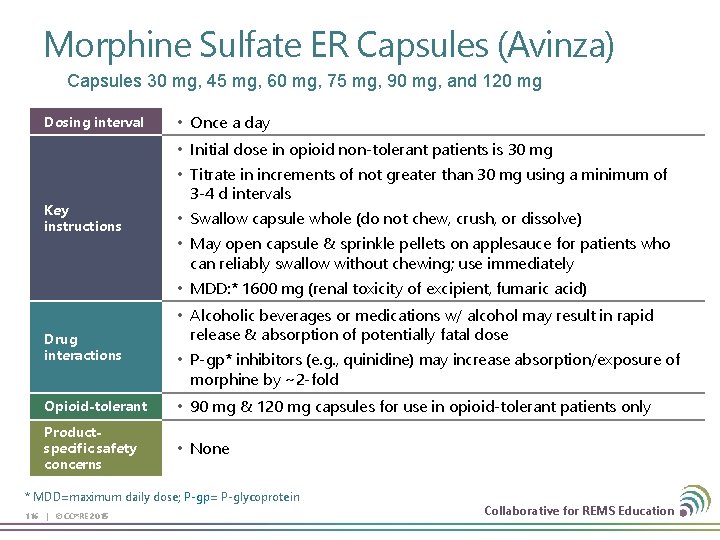
Morphine Sulfate ER Capsules (Avinza) Capsules 30 mg, 45 mg, 60 mg, 75 mg, 90 mg, and 120 mg Dosing interval • Once a day • Initial dose in opioid non-tolerant patients is 30 mg Key instructions • Titrate in increments of not greater than 30 mg using a minimum of 3 -4 d intervals • Swallow capsule whole (do not chew, crush, or dissolve) • May open capsule & sprinkle pellets on applesauce for patients who can reliably swallow without chewing; use immediately • MDD: * 1600 mg (renal toxicity of excipient, fumaric acid) Drug interactions • Alcoholic beverages or medications w/ alcohol may result in rapid release & absorption of potentially fatal dose • P-gp* inhibitors (e. g. , quinidine) may increase absorption/exposure of morphine by ~2 -fold Opioid-tolerant • 90 mg & 120 mg capsules for use in opioid-tolerant patients only Productspecific safety concerns • None * MDD=maximum daily dose; P-gp= P-glycoprotein 116 | © CO*RE 2015 Collaborative for REMS Education
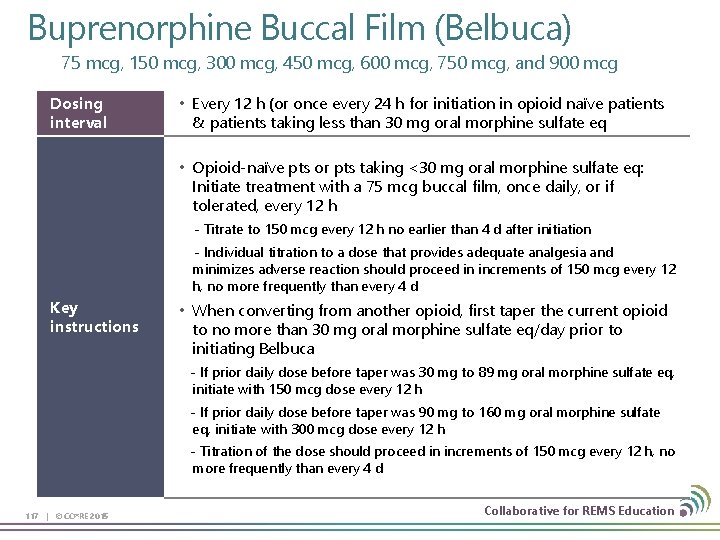
Buprenorphine Buccal Film (Belbuca) 75 mcg, 150 mcg, 300 mcg, 450 mcg, 600 mcg, 750 mcg, and 900 mcg Dosing interval • Every 12 h (or once every 24 h for initiation in opioid naïve patients & patients taking less than 30 mg oral morphine sulfate eq • Opioid-naïve pts or pts taking <30 mg oral morphine sulfate eq: Initiate treatment with a 75 mcg buccal film, once daily, or if tolerated, every 12 h - Titrate to 150 mcg every 12 h no earlier than 4 d after initiation - Individual titration to a dose that provides adequate analgesia and minimizes adverse reaction should proceed in increments of 150 mcg every 12 h, no more frequently than every 4 d Key instructions • When converting from another opioid, first taper the current opioid to no more than 30 mg oral morphine sulfate eq/day prior to initiating Belbuca - If prior daily dose before taper was 30 mg to 89 mg oral morphine sulfate eq, initiate with 150 mcg dose every 12 h - If prior daily dose before taper was 90 mg to 160 mg oral morphine sulfate eq, initiate with 300 mcg dose every 12 h - Titration of the dose should proceed in increments of 150 mcg every 12 h, no more frequently than every 4 d 117 | © CO*RE 2015 Collaborative for REMS Education
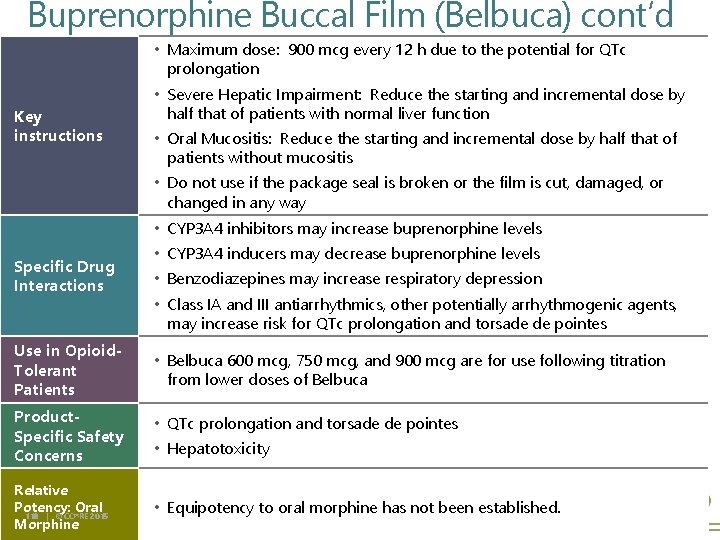
Buprenorphine Buccal Film (Belbuca) cont’d • Maximum dose: 900 mcg every 12 h due to the potential for QTc prolongation Key instructions • Severe Hepatic Impairment: Reduce the starting and incremental dose by half that of patients with normal liver function • Oral Mucositis: Reduce the starting and incremental dose by half that of patients without mucositis • Do not use if the package seal is broken or the film is cut, damaged, or changed in any way • CYP 3 A 4 inhibitors may increase buprenorphine levels Specific Drug Interactions Use in Opioid. Tolerant Patients Product. Specific Safety Concerns Relative Potency: Oral 118 | © CO*RE 2015 Morphine • CYP 3 A 4 inducers may decrease buprenorphine levels • Benzodiazepines may increase respiratory depression • Class IA and III antiarrhythmics, other potentially arrhythmogenic agents, may increase risk for QTc prolongation and torsade de pointes • Belbuca 600 mcg, 750 mcg, and 900 mcg are for use following titration from lower doses of Belbuca • QTc prolongation and torsade de pointes • Hepatotoxicity • Equipotency to oral morphine has not been established. Collaborative for REMS Education
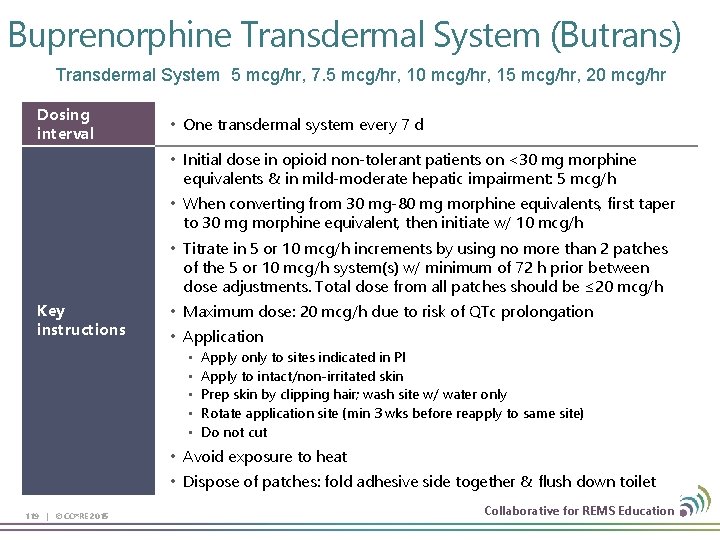
Buprenorphine Transdermal System (Butrans) Transdermal System 5 mcg/hr, 7. 5 mcg/hr, 10 mcg/hr, 15 mcg/hr, 20 mcg/hr Dosing interval • One transdermal system every 7 d • Initial dose in opioid non-tolerant patients on <30 mg morphine equivalents & in mild-moderate hepatic impairment: 5 mcg/h • When converting from 30 mg-80 mg morphine equivalents, first taper to 30 mg morphine equivalent, then initiate w/ 10 mcg/h • Titrate in 5 or 10 mcg/h increments by using no more than 2 patches of the 5 or 10 mcg/h system(s) w/ minimum of 72 h prior between dose adjustments. Total dose from all patches should be ≤ 20 mcg/h Key instructions • Maximum dose: 20 mcg/h due to risk of QTc prolongation • Application • • • Apply only to sites indicated in PI Apply to intact/non-irritated skin Prep skin by clipping hair; wash site w/ water only Rotate application site (min 3 wks before reapply to same site) Do not cut • Avoid exposure to heat • Dispose of patches: fold adhesive side together & flush down toilet 119 | © CO*RE 2015 Collaborative for REMS Education
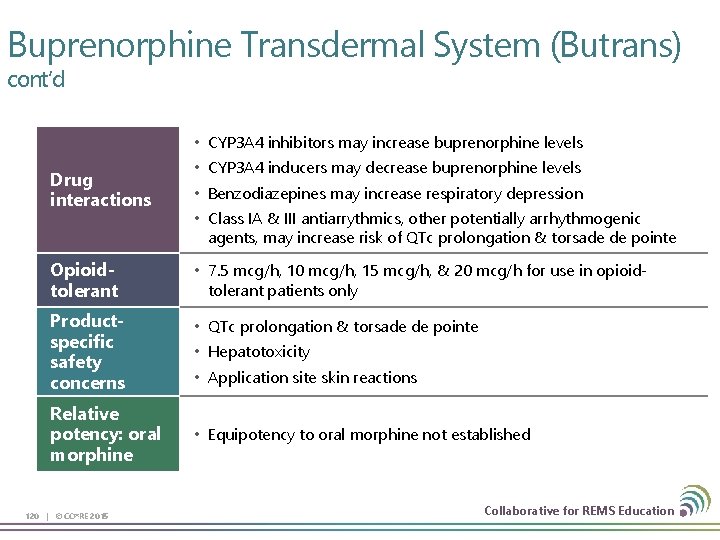
Buprenorphine Transdermal System (Butrans) cont’d • CYP 3 A 4 inhibitors may increase buprenorphine levels Drug interactions • CYP 3 A 4 inducers may decrease buprenorphine levels • Benzodiazepines may increase respiratory depression • Class IA & III antiarrythmics, other potentially arrhythmogenic agents, may increase risk of QTc prolongation & torsade de pointe Opioidtolerant • 7. 5 mcg/h, 10 mcg/h, 15 mcg/h, & 20 mcg/h for use in opioidtolerant patients only Productspecific safety concerns • QTc prolongation & torsade de pointe Relative potency: oral morphine 120 | © CO*RE 2015 • Hepatotoxicity • Application site skin reactions • Equipotency to oral morphine not established Collaborative for REMS Education
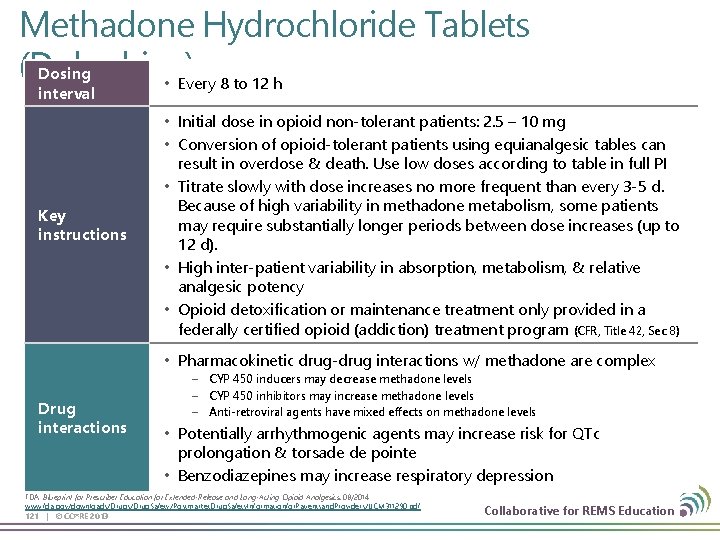
Methadone Hydrochloride Tablets (Dolophine) Dosing • Every 8 to 12 h interval Key instructions • Initial dose in opioid non-tolerant patients: 2. 5 – 10 mg • Conversion of opioid-tolerant patients using equianalgesic tables can result in overdose & death. Use low doses according to table in full PI • Titrate slowly with dose increases no more frequent than every 3 -5 d. Because of high variability in methadone metabolism, some patients may require substantially longer periods between dose increases (up to 12 d). • High inter-patient variability in absorption, metabolism, & relative analgesic potency • Opioid detoxification or maintenance treatment only provided in a federally certified opioid (addiction) treatment program (CFR, Title 42, Sec 8) • Pharmacokinetic drug-drug interactions w/ methadone are complex Drug interactions − CYP 450 inducers may decrease methadone levels − CYP 450 inhibitors may increase methadone levels − Anti-retroviral agents have mixed effects on methadone levels • Potentially arrhythmogenic agents may increase risk for QTc prolongation & torsade de pointe • Benzodiazepines may increase respiratory depression FDA. Blueprint for Prescriber Education for Extended-Release and Long-Acting Opioid Analgesics. 08/2014. www. fda. gov/downloads/Drug. Safety/Postmarket. Drug. Safety. Informationfor. Patientsand. Providers/UCM 311290. pdf 121 | © CO*RE 2013 Collaborative for REMS Education
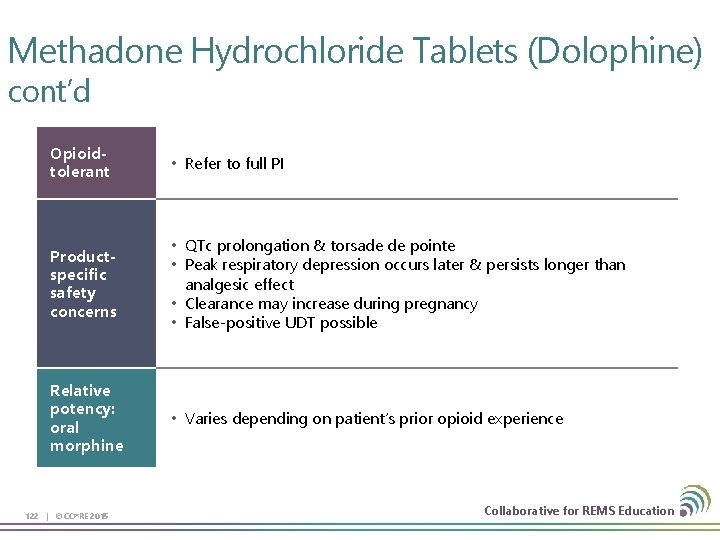
Methadone Hydrochloride Tablets (Dolophine) cont’d Opioidtolerant • Refer to full PI Productspecific safety concerns • QTc prolongation & torsade de pointe • Peak respiratory depression occurs later & persists longer than analgesic effect • Clearance may increase during pregnancy • False-positive UDT possible Relative potency: oral morphine • Varies depending on patient’s prior opioid experience 122 | © CO*RE 2015 Collaborative for REMS Education
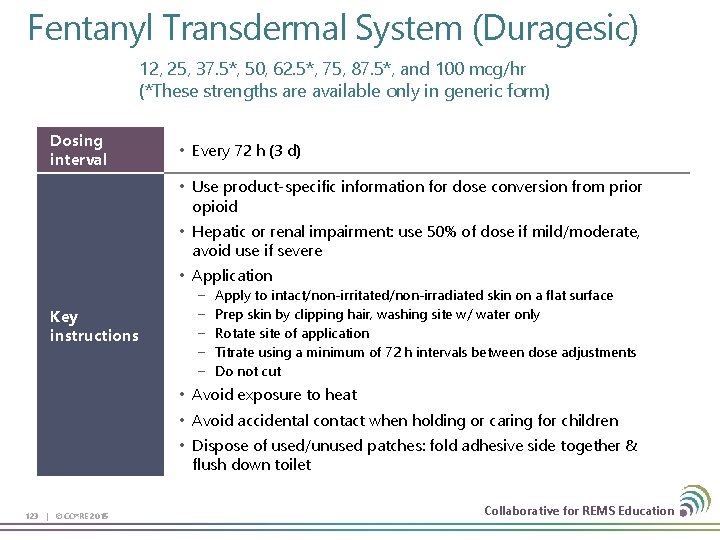
Fentanyl Transdermal System (Duragesic) 12, 25, 37. 5*, 50, 62. 5*, 75, 87. 5*, and 100 mcg/hr (*These strengths are available only in generic form) Dosing interval • Every 72 h (3 d) • Use product-specific information for dose conversion from prior opioid • Hepatic or renal impairment: use 50% of dose if mild/moderate, avoid use if severe • Application Key instructions − − − Apply to intact/non-irritated/non-irradiated skin on a flat surface Prep skin by clipping hair, washing site w/ water only Rotate site of application Titrate using a minimum of 72 h intervals between dose adjustments Do not cut • Avoid exposure to heat • Avoid accidental contact when holding or caring for children • Dispose of used/unused patches: fold adhesive side together & flush down toilet 123 | © CO*RE 2015 Collaborative for REMS Education
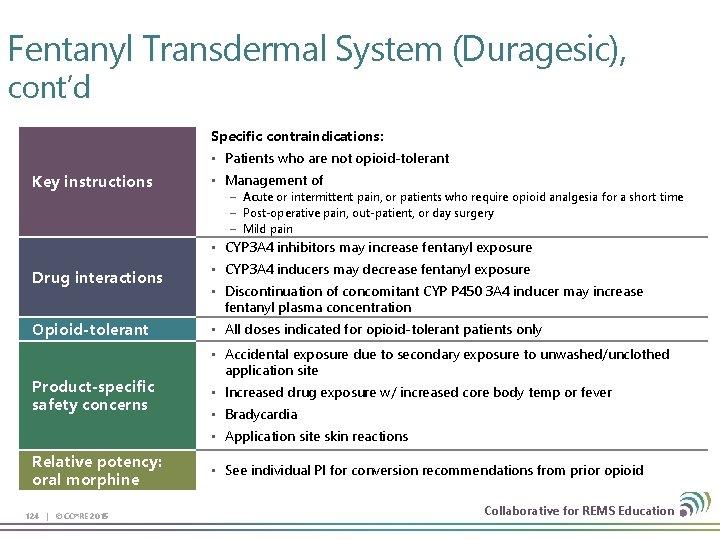
Fentanyl Transdermal System (Duragesic), cont’d Specific contraindications: • Patients who are not opioid-tolerant Key instructions • Management of − Acute or intermittent pain, or patients who require opioid analgesia for a short time − Post-operative pain, out-patient, or day surgery − Mild pain • CYP 3 A 4 inhibitors may increase fentanyl exposure Drug interactions • CYP 3 A 4 inducers may decrease fentanyl exposure Opioid-tolerant • All doses indicated for opioid-tolerant patients only Product-specific safety concerns • Discontinuation of concomitant CYP P 450 3 A 4 inducer may increase fentanyl plasma concentration • Accidental exposure due to secondary exposure to unwashed/unclothed application site • Increased drug exposure w/ increased core body temp or fever • Bradycardia • Application site skin reactions Relative potency: oral morphine 124 | © CO*RE 2015 • See individual PI for conversion recommendations from prior opioid Collaborative for REMS Education
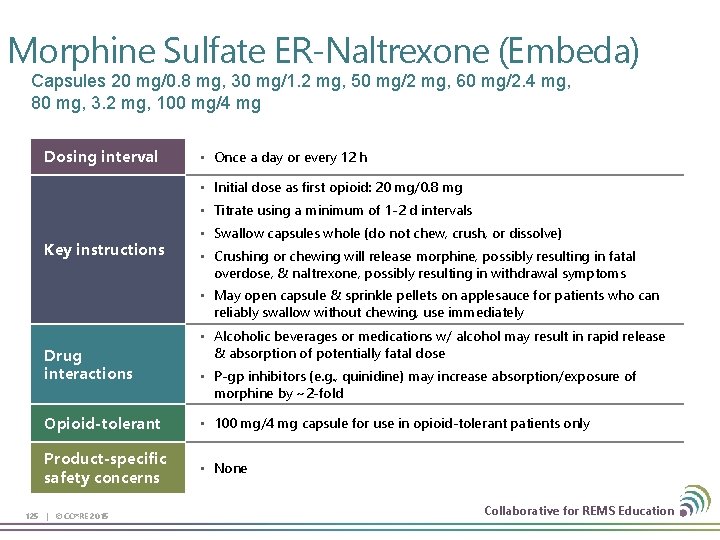
Morphine Sulfate ER-Naltrexone (Embeda) Capsules 20 mg/0. 8 mg, 30 mg/1. 2 mg, 50 mg/2 mg, 60 mg/2. 4 mg, 80 mg, 3. 2 mg, 100 mg/4 mg Dosing interval • Once a day or every 12 h • Initial dose as first opioid: 20 mg/0. 8 mg • Titrate using a minimum of 1 -2 d intervals Key instructions • Swallow capsules whole (do not chew, crush, or dissolve) • Crushing or chewing will release morphine, possibly resulting in fatal overdose, & naltrexone, possibly resulting in withdrawal symptoms • May open capsule & sprinkle pellets on applesauce for patients who can reliably swallow without chewing, use immediately Drug interactions • Alcoholic beverages or medications w/ alcohol may result in rapid release & absorption of potentially fatal dose • P-gp inhibitors (e. g. , quinidine) may increase absorption/exposure of morphine by ~2 -fold Opioid-tolerant • 100 mg/4 mg capsule for use in opioid-tolerant patients only Product-specific safety concerns • None 125 | © CO*RE 2015 Collaborative for REMS Education
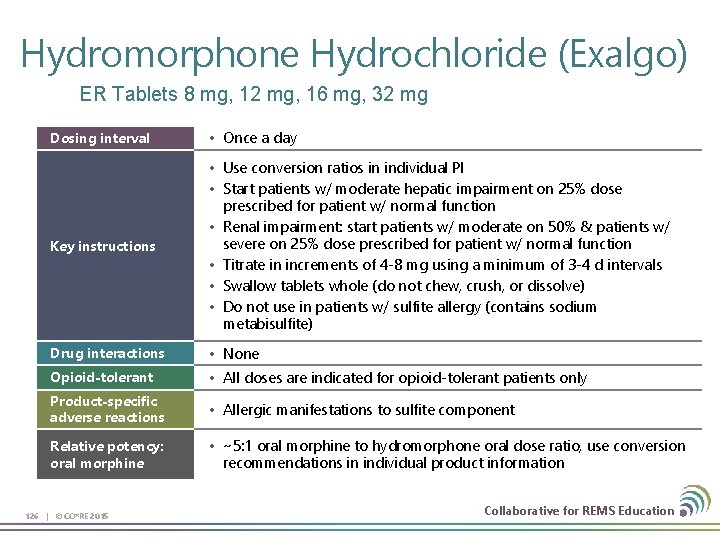
Hydromorphone Hydrochloride (Exalgo) ER Tablets 8 mg, 12 mg, 16 mg, 32 mg Dosing interval • Once a day Key instructions • Use conversion ratios in individual PI • Start patients w/ moderate hepatic impairment on 25% dose prescribed for patient w/ normal function • Renal impairment: start patients w/ moderate on 50% & patients w/ severe on 25% dose prescribed for patient w/ normal function • Titrate in increments of 4 -8 mg using a minimum of 3 -4 d intervals • Swallow tablets whole (do not chew, crush, or dissolve) • Do not use in patients w/ sulfite allergy (contains sodium metabisulfite) Drug interactions • None Opioid-tolerant • All doses are indicated for opioid-tolerant patients only Product-specific adverse reactions • Allergic manifestations to sulfite component Relative potency: oral morphine • ~5: 1 oral morphine to hydromorphone oral dose ratio, use conversion recommendations in individual product information 126 | © CO*RE 2015 Collaborative for REMS Education
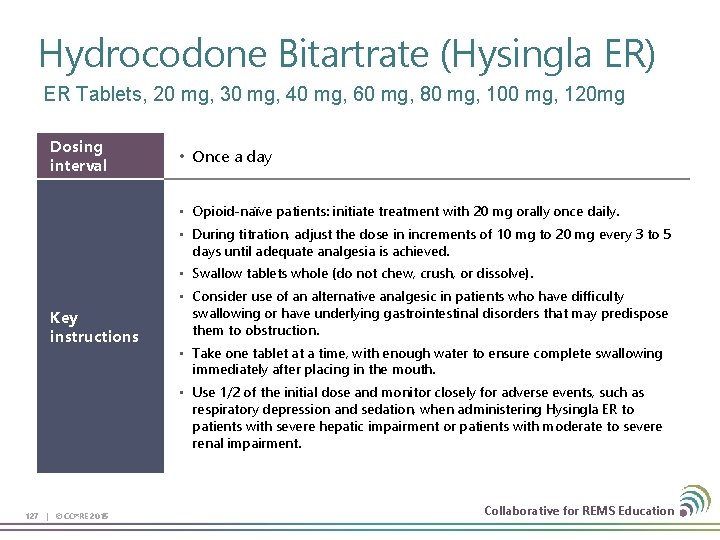
Hydrocodone Bitartrate (Hysingla ER) ER Tablets, 20 mg, 30 mg, 40 mg, 60 mg, 80 mg, 100 mg, 120 mg Dosing interval • Once a day • Opioid-naïve patients: initiate treatment with 20 mg orally once daily. • During titration, adjust the dose in increments of 10 mg to 20 mg every 3 to 5 days until adequate analgesia is achieved. • Swallow tablets whole (do not chew, crush, or dissolve). Key instructions • Consider use of an alternative analgesic in patients who have difficulty swallowing or have underlying gastrointestinal disorders that may predispose them to obstruction. • Take one tablet at a time, with enough water to ensure complete swallowing immediately after placing in the mouth. • Use 1/2 of the initial dose and monitor closely for adverse events, such as respiratory depression and sedation, when administering Hysingla ER to patients with severe hepatic impairment or patients with moderate to severe renal impairment. 127 | © CO*RE 2015 Collaborative for REMS Education
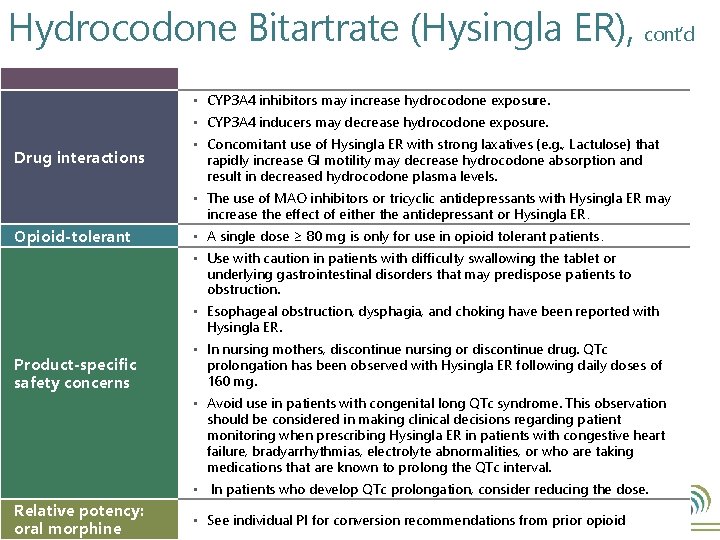
Hydrocodone Bitartrate (Hysingla ER), cont’d • CYP 3 A 4 inhibitors may increase hydrocodone exposure. • CYP 3 A 4 inducers may decrease hydrocodone exposure. Drug interactions • Concomitant use of Hysingla ER with strong laxatives (e. g. , Lactulose) that rapidly increase GI motility may decrease hydrocodone absorption and result in decreased hydrocodone plasma levels. • The use of MAO inhibitors or tricyclic antidepressants with Hysingla ER may increase the effect of either the antidepressant or Hysingla ER. Opioid-tolerant • A single dose ≥ 80 mg is only for use in opioid tolerant patients. • Use with caution in patients with difficulty swallowing the tablet or underlying gastrointestinal disorders that may predispose patients to obstruction. • Esophageal obstruction, dysphagia, and choking have been reported with Hysingla ER. Product-specific safety concerns • In nursing mothers, discontinue nursing or discontinue drug. QTc prolongation has been observed with Hysingla ER following daily doses of 160 mg. • Avoid use in patients with congenital long QTc syndrome. This observation should be considered in making clinical decisions regarding patient monitoring when prescribing Hysingla ER in patients with congestive heart failure, bradyarrhythmias, electrolyte abnormalities, or who are taking medications that are known to prolong the QTc interval. • In patients who develop QTc prolongation, consider reducing the dose. Relative potency: oral morphine Collaborative for REMS Education • See individual PI for conversion recommendations from prior opioid
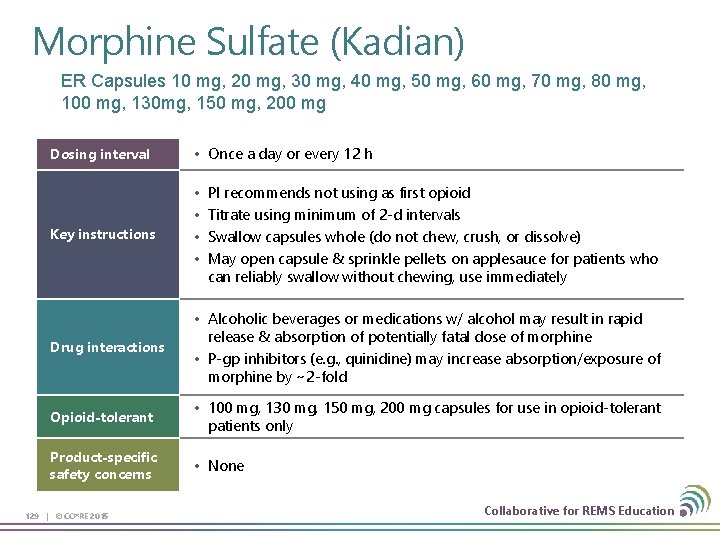
Morphine Sulfate (Kadian) ER Capsules 10 mg, 20 mg, 30 mg, 40 mg, 50 mg, 60 mg, 70 mg, 80 mg, 100 mg, 130 mg, 150 mg, 200 mg Dosing interval Key instructions • Once a day or every 12 h • • PI recommends not using as first opioid Titrate using minimum of 2 -d intervals Swallow capsules whole (do not chew, crush, or dissolve) May open capsule & sprinkle pellets on applesauce for patients who can reliably swallow without chewing, use immediately Drug interactions • Alcoholic beverages or medications w/ alcohol may result in rapid release & absorption of potentially fatal dose of morphine • P-gp inhibitors (e. g. , quinidine) may increase absorption/exposure of morphine by ~2 -fold Opioid-tolerant • 100 mg, 130 mg, 150 mg, 200 mg capsules for use in opioid-tolerant patients only Product-specific safety concerns • None 129 | © CO*RE 2015 Collaborative for REMS Education
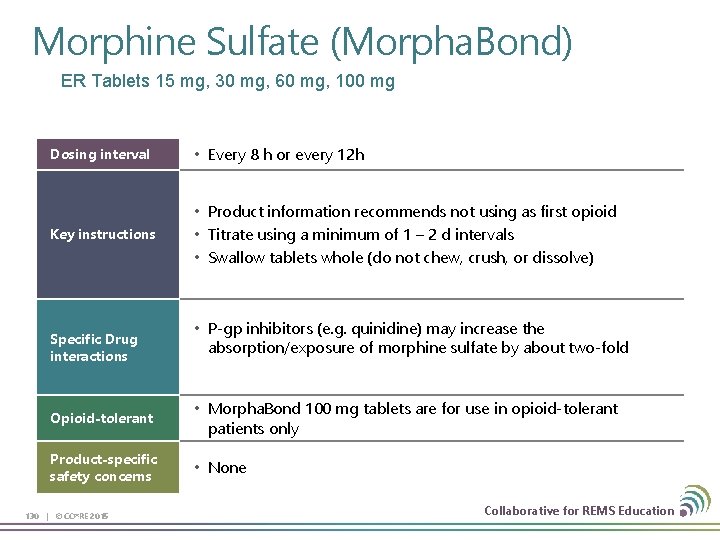
Morphine Sulfate (Morpha. Bond) ER Tablets 15 mg, 30 mg, 60 mg, 100 mg Dosing interval • Every 8 h or every 12 h Key instructions • Product information recommends not using as first opioid • Titrate using a minimum of 1 – 2 d intervals • Swallow tablets whole (do not chew, crush, or dissolve) Specific Drug interactions • P-gp inhibitors (e. g. quinidine) may increase the absorption/exposure of morphine sulfate by about two-fold Opioid-tolerant • Morpha. Bond 100 mg tablets are for use in opioid-tolerant patients only Product-specific safety concerns • None 130 | © CO*RE 2015 Collaborative for REMS Education
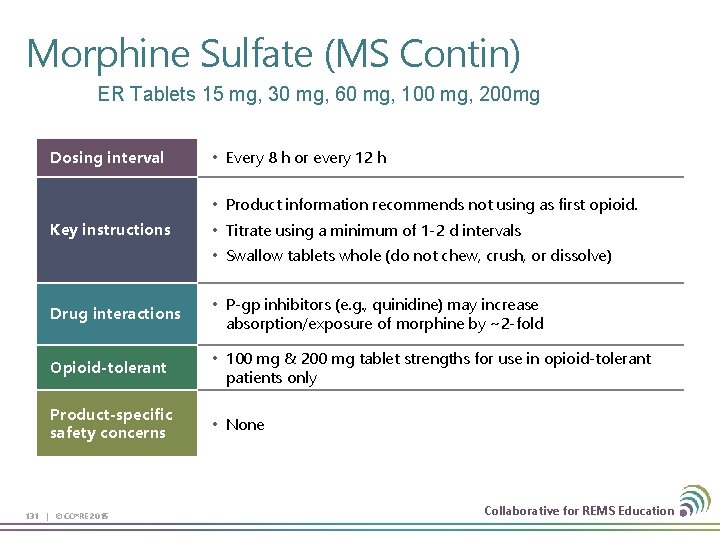
Morphine Sulfate (MS Contin) ER Tablets 15 mg, 30 mg, 60 mg, 100 mg, 200 mg Dosing interval • Every 8 h or every 12 h • Product information recommends not using as first opioid. Key instructions • Titrate using a minimum of 1 -2 d intervals • Swallow tablets whole (do not chew, crush, or dissolve) Drug interactions • P-gp inhibitors (e. g. , quinidine) may increase absorption/exposure of morphine by ~2 -fold Opioid-tolerant • 100 mg & 200 mg tablet strengths for use in opioid-tolerant patients only Product-specific safety concerns • None 131 | © CO*RE 2015 Collaborative for REMS Education
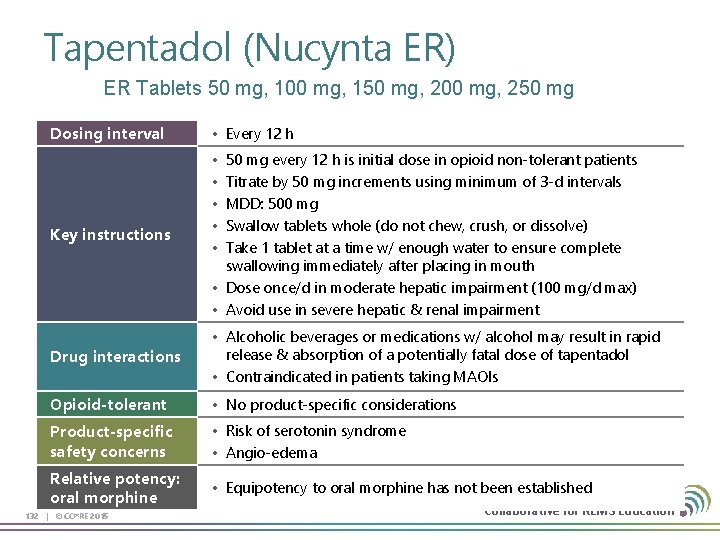
Tapentadol (Nucynta ER) ER Tablets 50 mg, 100 mg, 150 mg, 200 mg, 250 mg Dosing interval Key instructions • Every 12 h 50 mg every 12 h is initial dose in opioid non-tolerant patients Titrate by 50 mg increments using minimum of 3 -d intervals MDD: 500 mg Swallow tablets whole (do not chew, crush, or dissolve) Take 1 tablet at a time w/ enough water to ensure complete swallowing immediately after placing in mouth • Dose once/d in moderate hepatic impairment (100 mg/d max) • Avoid use in severe hepatic & renal impairment • • • Drug interactions • Alcoholic beverages or medications w/ alcohol may result in rapid release & absorption of a potentially fatal dose of tapentadol • Contraindicated in patients taking MAOIs Opioid-tolerant • No product-specific considerations Product-specific safety concerns • Risk of serotonin syndrome • Angio-edema Relative potency: oral morphine • Equipotency to oral morphine has not been established 132 | © CO*RE 2015 Collaborative for REMS Education
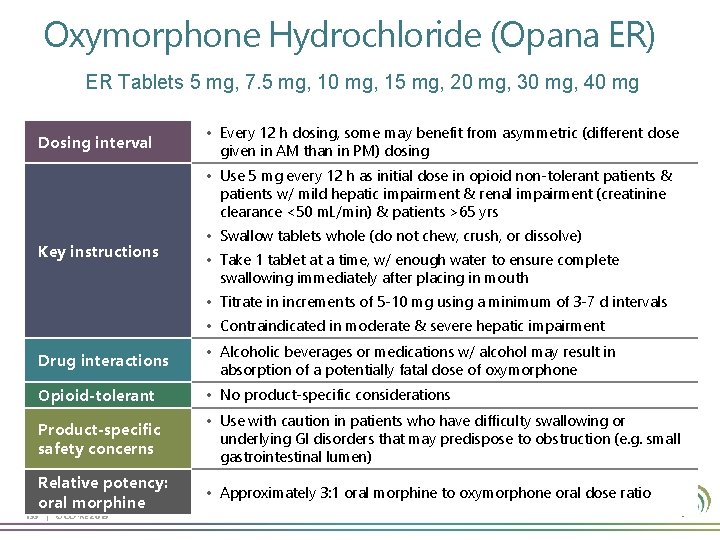
Oxymorphone Hydrochloride (Opana ER) ER Tablets 5 mg, 7. 5 mg, 10 mg, 15 mg, 20 mg, 30 mg, 40 mg Dosing interval • Every 12 h dosing, some may benefit from asymmetric (different dose given in AM than in PM) dosing • Use 5 mg every 12 h as initial dose in opioid non-tolerant patients & patients w/ mild hepatic impairment & renal impairment (creatinine clearance <50 m. L/min) & patients >65 yrs Key instructions • Swallow tablets whole (do not chew, crush, or dissolve) • Take 1 tablet at a time, w/ enough water to ensure complete swallowing immediately after placing in mouth • Titrate in increments of 5 -10 mg using a minimum of 3 -7 d intervals • Contraindicated in moderate & severe hepatic impairment Drug interactions • Alcoholic beverages or medications w/ alcohol may result in absorption of a potentially fatal dose of oxymorphone Opioid-tolerant • No product-specific considerations Product-specific safety concerns • Use with caution in patients who have difficulty swallowing or underlying GI disorders that may predispose to obstruction (e. g. small gastrointestinal lumen) Relative potency: oral morphine • Approximately 3: 1 oral morphine to oxymorphone oral dose ratio 133 | © CO*RE 2015 Collaborative for REMS Education
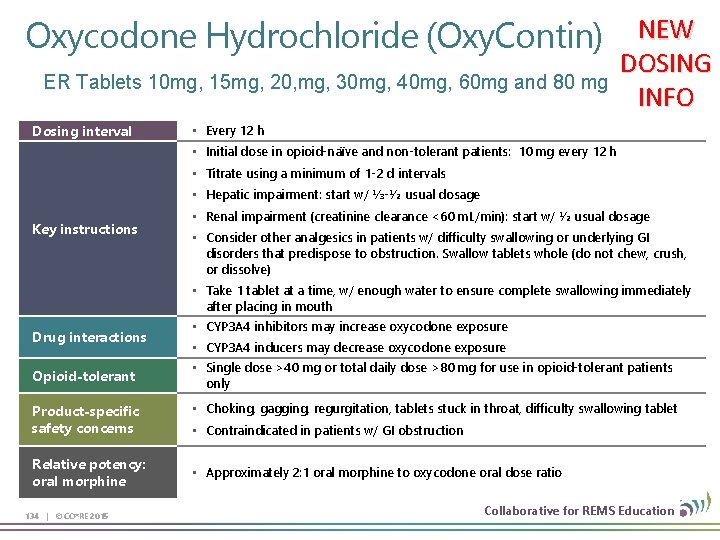
Oxycodone Hydrochloride (Oxy. Contin) NEW DOSING ER Tablets 10 mg, 15 mg, 20, mg, 30 mg, 40 mg, 60 mg and 80 mg INFO Dosing interval • Every 12 h • Initial dose in opioid-naïve and non-tolerant patients: 10 mg every 12 h • Titrate using a minimum of 1 -2 d intervals • Hepatic impairment: start w/ ⅓-½ usual dosage Key instructions Drug interactions Opioid-tolerant Product-specific safety concerns Relative potency: oral morphine 134 | © CO*RE 2015 • Renal impairment (creatinine clearance <60 m. L/min): start w/ ½ usual dosage • Consider other analgesics in patients w/ difficulty swallowing or underlying GI disorders that predispose to obstruction. Swallow tablets whole (do not chew, crush, or dissolve) • Take 1 tablet at a time, w/ enough water to ensure complete swallowing immediately after placing in mouth • CYP 3 A 4 inhibitors may increase oxycodone exposure • CYP 3 A 4 inducers may decrease oxycodone exposure • Single dose >40 mg or total daily dose >80 mg for use in opioid-tolerant patients only • Choking, gagging, regurgitation, tablets stuck in throat, difficulty swallowing tablet • Contraindicated in patients w/ GI obstruction • Approximately 2: 1 oral morphine to oxycodone oral dose ratio Collaborative for REMS Education
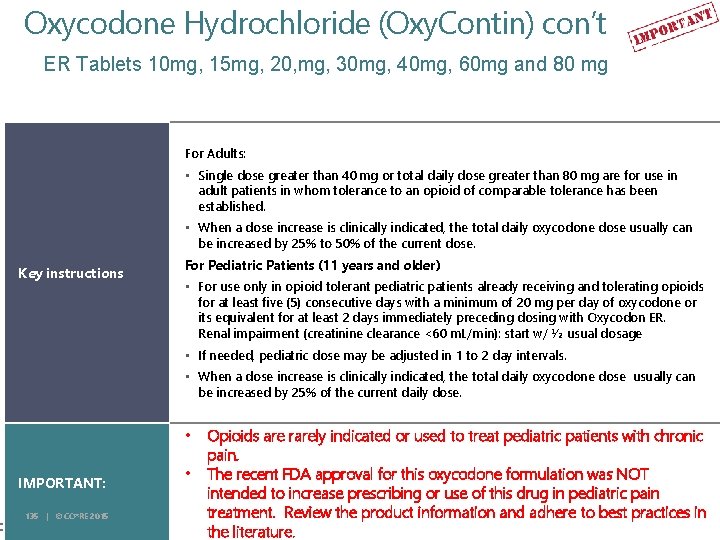
Oxycodone Hydrochloride (Oxy. Contin) con’t ER Tablets 10 mg, 15 mg, 20, mg, 30 mg, 40 mg, 60 mg and 80 mg For Adults: • Single dose greater than 40 mg or total daily dose greater than 80 mg are for use in adult patients in whom tolerance to an opioid of comparable tolerance has been established. • When a dose increase is clinically indicated, the total daily oxycodone dose usually can be increased by 25% to 50% of the current dose. Key instructions For Pediatric Patients (11 years and older) • For use only in opioid tolerant pediatric patients already receiving and tolerating opioids for at least five (5) consecutive days with a minimum of 20 mg per day of oxycodone or its equivalent for at least 2 days immediately preceding dosing with Oxycodon ER. Renal impairment (creatinine clearance <60 m. L/min): start w/ ½ usual dosage • If needed, pediatric dose may be adjusted in 1 to 2 day intervals. • When a dose increase is clinically indicated, the total daily oxycodone dose usually can be increased by 25% of the current daily dose. • IMPORTANT: 135 | © CO*RE 2015 • Opioids are rarely indicated or used to treat pediatric patients with chronic pain. The recent FDA approval for this oxycodone formulation was NOT intended to increase prescribing or use of this drug in pediatric pain Collaborative for to REMS treatment. Review the product information and adhere best. Education practices in the literature.
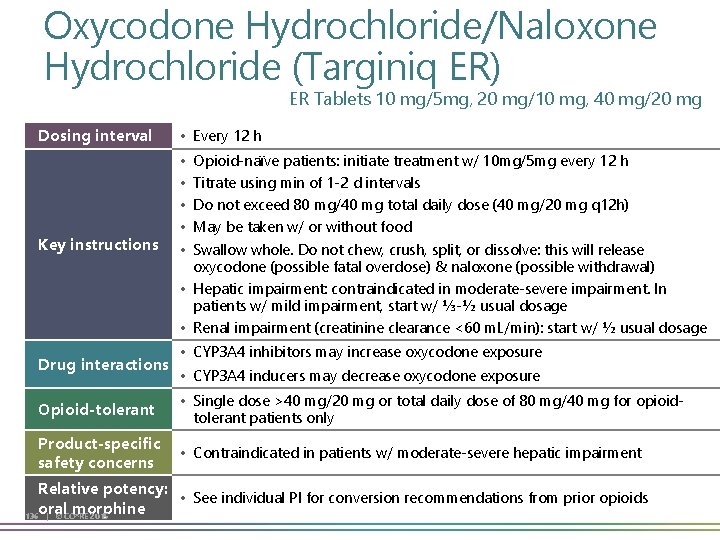
Oxycodone Hydrochloride/Naloxone Hydrochloride (Targiniq ER) ER Tablets 10 mg/5 mg, 20 mg/10 mg, 40 mg/20 mg Dosing interval • Every 12 h Key instructions • • • Drug interactions Opioid-naïve patients: initiate treatment w/ 10 mg/5 mg every 12 h Titrate using min of 1 -2 d intervals Do not exceed 80 mg/40 mg total daily dose (40 mg/20 mg q 12 h) May be taken w/ or without food Swallow whole. Do not chew, crush, split, or dissolve: this will release oxycodone (possible fatal overdose) & naloxone (possible withdrawal) • Hepatic impairment: contraindicated in moderate-severe impairment. In patients w/ mild impairment, start w/ ⅓-½ usual dosage • Renal impairment (creatinine clearance <60 m. L/min): start w/ ½ usual dosage • CYP 3 A 4 inhibitors may increase oxycodone exposure • CYP 3 A 4 inducers may decrease oxycodone exposure Opioid-tolerant • Single dose >40 mg/20 mg or total daily dose of 80 mg/40 mg for opioidtolerant patients only Product-specific safety concerns • Contraindicated in patients w/ moderate-severe hepatic impairment Relative potency: • See individual PI for conversion recommendations from prior opioids oral morphine Collaborative for REMS Education 136 | © CO*RE 2015
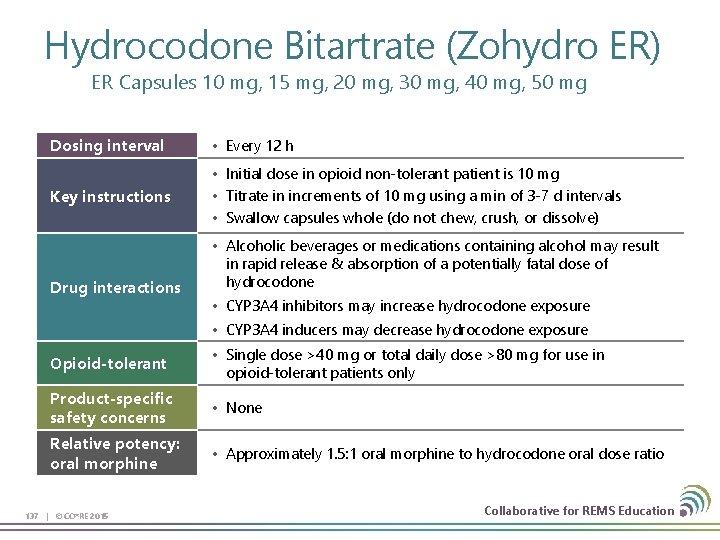
Hydrocodone Bitartrate (Zohydro ER) ER Capsules 10 mg, 15 mg, 20 mg, 30 mg, 40 mg, 50 mg Dosing interval • Every 12 h Key instructions • Initial dose in opioid non-tolerant patient is 10 mg • Titrate in increments of 10 mg using a min of 3 -7 d intervals • Swallow capsules whole (do not chew, crush, or dissolve) Drug interactions • Alcoholic beverages or medications containing alcohol may result in rapid release & absorption of a potentially fatal dose of hydrocodone • CYP 3 A 4 inhibitors may increase hydrocodone exposure • CYP 3 A 4 inducers may decrease hydrocodone exposure Opioid-tolerant • Single dose >40 mg or total daily dose >80 mg for use in opioid-tolerant patients only Product-specific safety concerns • None Relative potency: oral morphine • Approximately 1. 5: 1 oral morphine to hydrocodone oral dose ratio 137 | © CO*RE 2015 Collaborative for REMS Education
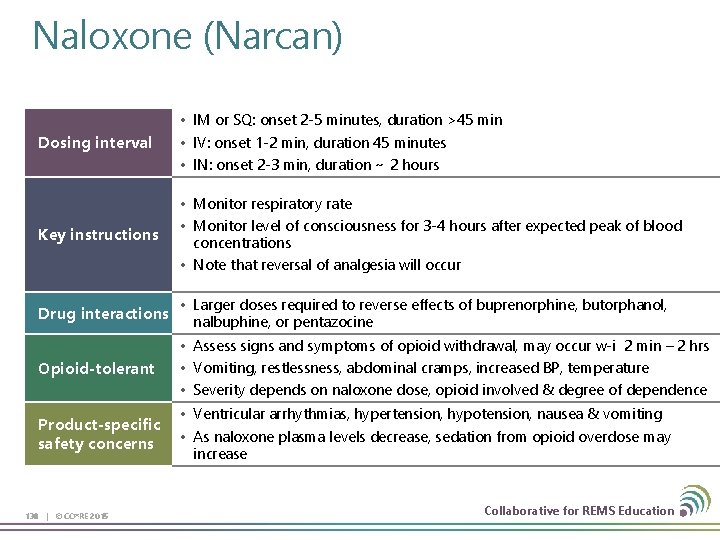
Naloxone (Narcan) Dosing interval • IM or SQ: onset 2 -5 minutes, duration >45 min • IV: onset 1 -2 min, duration 45 minutes • IN: onset 2 -3 min, duration ~ 2 hours Key instructions • Monitor respiratory rate • Monitor level of consciousness for 3 -4 hours after expected peak of blood concentrations • Note that reversal of analgesia will occur Drug interactions • Larger doses required to reverse effects of buprenorphine, butorphanol, nalbuphine, or pentazocine Opioid-tolerant • Assess signs and symptoms of opioid withdrawal, may occur w-i 2 min – 2 hrs • Vomiting, restlessness, abdominal cramps, increased BP, temperature • Severity depends on naloxone dose, opioid involved & degree of dependence Product-specific safety concerns • Ventricular arrhythmias, hypertension, hypotension, nausea & vomiting • As naloxone plasma levels decrease, sedation from opioid overdose may increase 138 | © CO*RE 2015 Collaborative for REMS Education
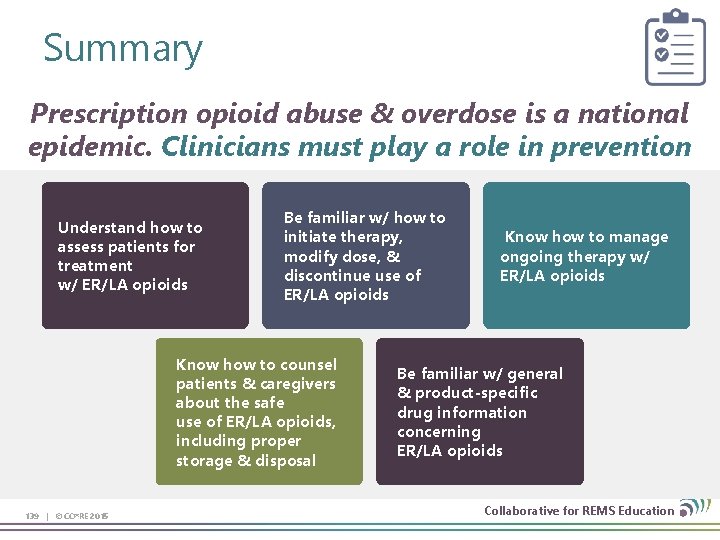
Summary Prescription opioid abuse & overdose is a national epidemic. Clinicians must play a role in prevention Understand how to assess patients for treatment w/ ER/LA opioids Be familiar w/ how to initiate therapy, modify dose, & discontinue use of ER/LA opioids Know how to counsel patients & caregivers about the safe use of ER/LA opioids, including proper storage & disposal 139 | © CO*RE 2015 Know how to manage ongoing therapy w/ ER/LA opioids Be familiar w/ general & product-specific drug information concerning ER/LA opioids Collaborative for REMS Education
IMPORTANT! Thank you for completing the post-activity assessment for this CO*RE session. Your participation in this assessment allows CO*RE to report de-identified numbers to the FDA. A strong show of engagement will demonstrate that clinicians have voluntarily taken this important education and are committed to patient safety and improved outcomes. THANK YOU! 140 | © CO*RE 2015 Collaborative for REMS Education

Thank you! www. core-rems. org 159 | © CO*RE 2015 Collaborative for REMS Education
- Slides: 141