
Presentations Structure and organization Lecture 19 Today From
- Slides: 58
Presentations: Structure and organization Lecture 19
Today �From “Effective Business Writing and Speaking” �Pages 87 -92
Today �Types of presentations �The communication process �Planning and structure �Quiz #3 Review
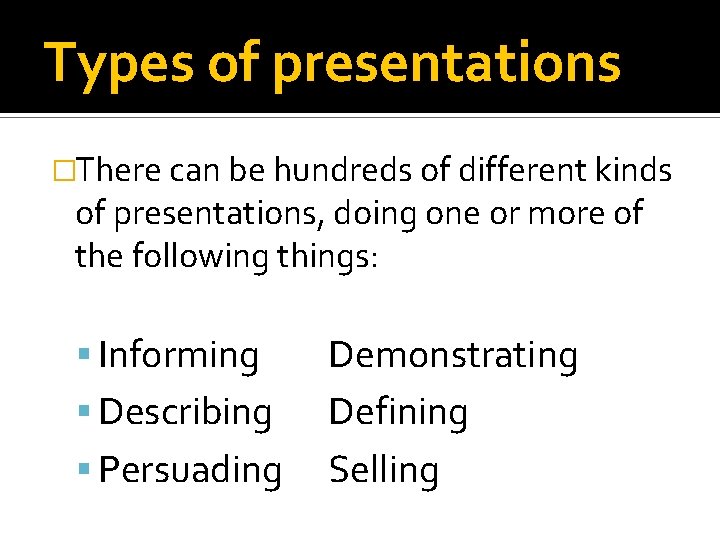
Types of presentations �There can be hundreds of different kinds of presentations, doing one or more of the following things: Informing Describing Persuading Demonstrating Defining Selling
Types of presentations �Impromptu – improvised �Memorized – recited �Manuscript – read
Types of presentations �Prepared – read with notes �Interviews – answering questions (TV or radio) �Group presentations – 2 or more members
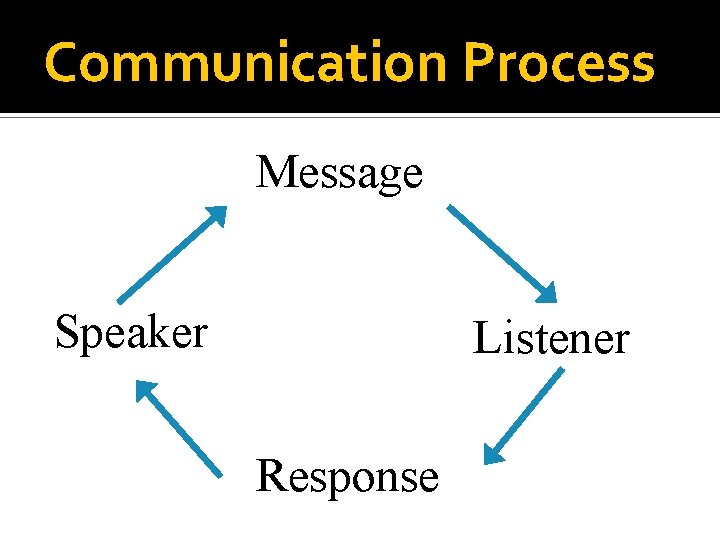
Communication Process �When doing a presentation, it is important to think of communication strategies:
Communication Process �Speaker �Message �Audience �Response
Communication Process Message Speaker Listener Response
Communication Process Speakers must be aware of all aspects of a presentation, NOT just how they are feeling at that moment … the speaker is only one part of the whole ….
Communication Process You have the audience and, more importantly, the message to think about. You must also think about the audience response. The speaker must be aware of all these things to give an effective presentation
Communication Process Speaker – The speaker wants to communicate an idea Message – The speaker puts the idea into a structured message Channel – The message is sent through a channel to the audience
Communication Process Audience– the audience receives and interprets the message Response – the audience responds to the message
Communication Strategies �The speaker must focus on words, attitude, tone, and outward appearance
Communication Strategies �The listener has needs which you, the speaker, are trying to meet �Just like you “write for your readers”, be sure to “speak for your listeners” and not for yourself
Communication Strategies �Message = content + form �Content = information �Form = structure/format
Communication Strategies �Response = the audiences reaction during and after your speech
Communication Strategies �Possible responses Non-verbal and verbal responses during the speech Questions right after the speech Questions and comments received later
Communication Strategies �Use these responses to become a better presenter in the future
Planning and Structure �The more you plan and practice, the better your presentation will be �Use the ROTGD outline for your presentations
Planning and Structure �Research �Organization �Text �Graphics �Delivery
Planning and Structure �Today Research Organization Text �Later Graphics Delivery
Planning and Structure �Research Who is the audience? What is the purpose? How much time? Know your topic
Planning and Structure �Organization Introduction Body Conclusion
Planning and Structure �Introduction �Attention/opener �Preview
Planning and Structure �Attention �Start by getting the audiences attention �Choose the best method by analyzing your audience
Planning and Structure �Attention �Get them interested Tell a story Show a picture Show an impressive statistic
Planning and Structure �Attention �Common ground Reference the audience Talk about something familiar to the audience that relates to the subject
Planning and Structure �Attention �Benefits Open by telling your audience how you and your presentation can help them
Planning and Structure �Attention �Credibility Make your audiences interested by making your audience trust you
Planning and Structure �Attention �Humour (be careful) Some presentations work by opening with a joke Be careful as some topics or audiences will be angry at the use of humour
Planning and Structure �Preview �Before discussing your main points, give a preview of your presentation
Planning and Structure �Preview �Types: Outline Agenda List of main points
Planning and Structure �“In the next 5 minutes, I will discuss projects in three regions: Shanghai, Beijing and Zhengzhou. ”
Planning and Structure �Body �State Main points clearly Should be organized and easy to follow
Planning and Structure �Body �Limit your main points Don’t try to say too much. Better to talk for longer on just a few main points
Planning and Structure �Body �Use explicit and long transitions “Let’s move on to the next region” “The second thing I’m going to discuss is. . ”
Planning and Structure �Body �Use internal summaries at the end of each section “Now that we have looked at the parts of the introduction: attention/opener and preview, let’s discuss the body. ”
Planning and Structure �Body �Keep audience interest high Use stories and situations your audience can relate to
Planning and Structure �Body (summary) �State main points clearly �Limit main points �Use long transitions �Use internal summaries �Keep audience interest high
Planning and Structure �Conclusion �Make sure to have a strong conclusion as your audience will remember the last things you say
Planning and Structure �Conclusion �Begin with a strong transition such as “in conclusion” or “to summarize” �The use one or more of the following techniques
Planning and Structure �Conclusion �Give a summary Good for explaining or instructing
Planning and Structure �Conclusion �Refer to your opening If you began with a story, go back to the story you used in the introduction
Planning and Structure �Conclusion �End with action steps For a persuasive report, make sure to tell your audience what to do at the end
Planning and Structure �Organization (summary) �Introduction �Body �Conclusion
Planning and Structure �Text �It would be difficult to memorize an entire presentation, so it is useful to make notes
Planning and Structure �Note cards should be: Easy to read (large text and lots of white space) Short (use key phrases, not whole sentences) Limited (don’t have lots of note cards. Each should have about 5 minutes of info.
Planning and Structure �Next time: �Visuals �Delivery (verbal/nonverbal)
Quiz Review �Lecture 15: Academic Essays �Lecture 16: Interviews pt. 1 �Lecture 17: Interviews pt. 2 �Lecture 18: Teamwork
Academic Essays �Introduction Opener Lead in Thesis
Academic Essays �Body Transition Topic Sentence Support �Conclusion
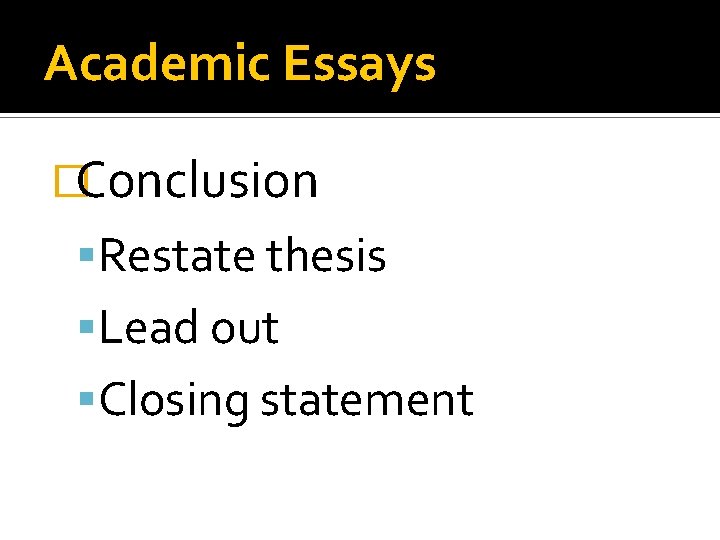
Academic Essays �Conclusion Restate thesis Lead out Closing statement
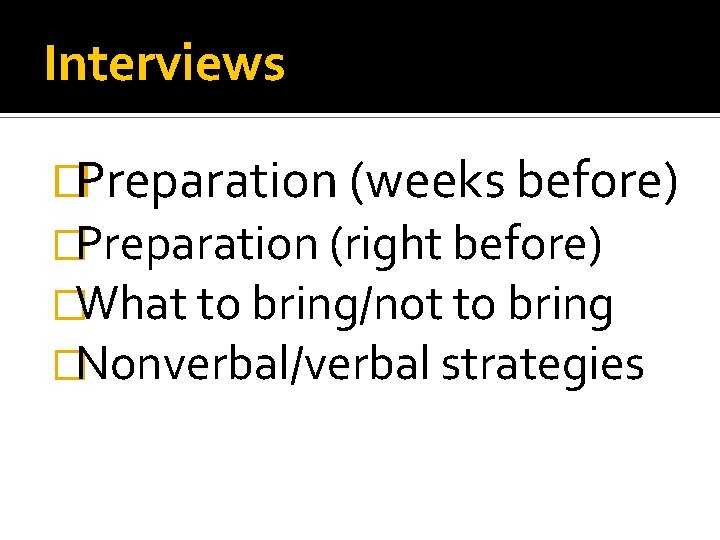
Interviews �Preparation (weeks before) �Preparation (right before) �What to bring/not to bring �Nonverbal/verbal strategies
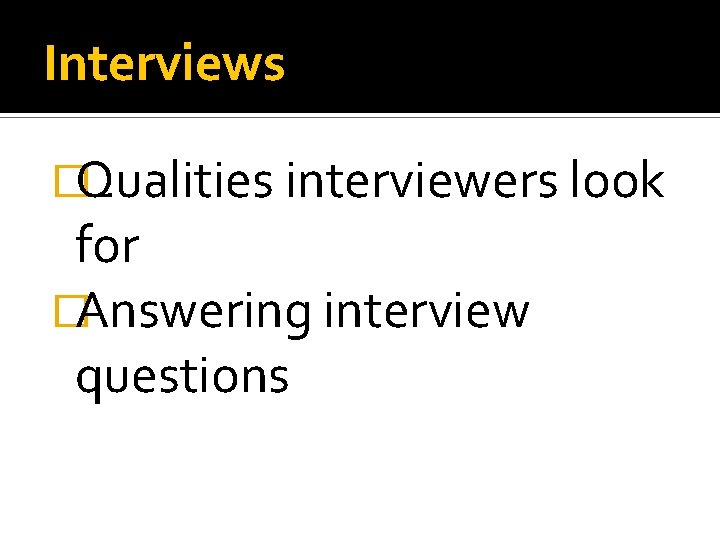
Interviews �Qualities interviewers look for �Answering interview questions
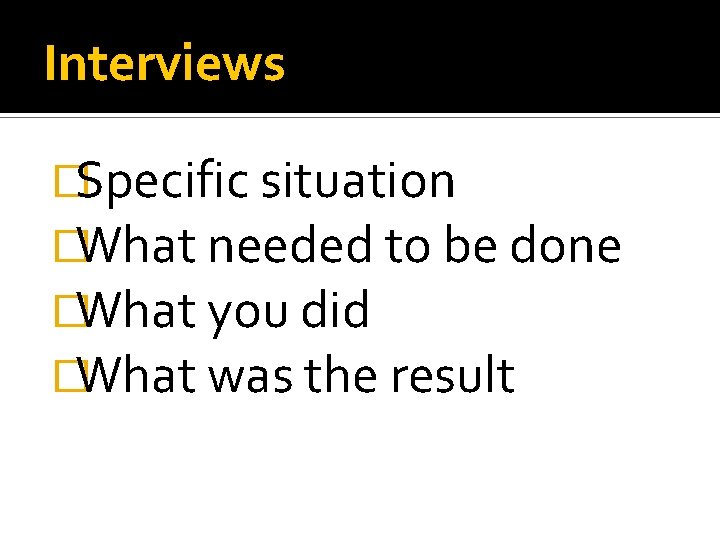
Interviews �Specific situation �What needed to be done �What you did �What was the result
Teamwork �Advantages/disadvantages �Team decision making �Conflict and conflict resolution �Good/bad conflict
Teamwork �Running a meeting �Qualities of an effective team