
Presentations Keys To A Successful Presentation Summary Introduction

- Slides: 14
Presentations Keys To A Successful Presentation
Summary • Introduction • Preparation • Equipment • Structure • Delivery
What Are You Trying to Achieve Through Your Presentation? Is the purpose of your presentation to: • inform • train • persuade • sell
The importance of preparation When preparing to give a presentation it is important to consider… • Audience • Venue • Time and length • Method • Content …AND…
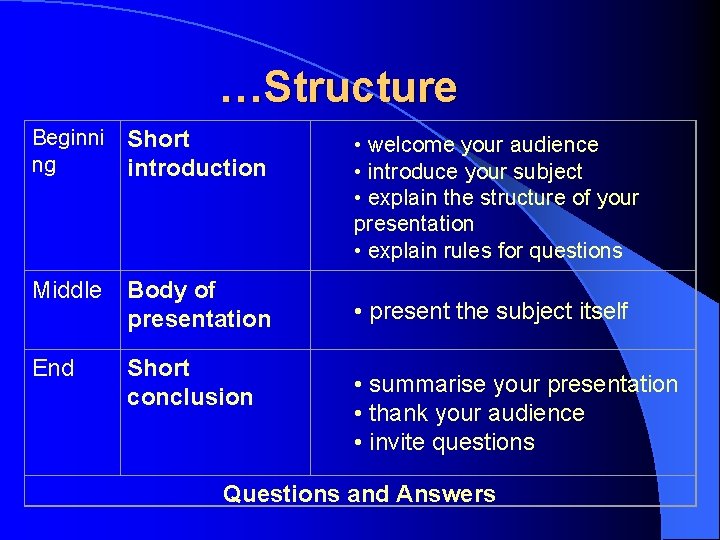
…Structure Beginni ng Short introduction Middle Body of presentation End Short conclusion • welcome your audience • introduce your subject • explain the structure of your presentation • explain rules for questions • present the subject itself • summarise your presentation • thank your audience • invite questions Questions and Answers
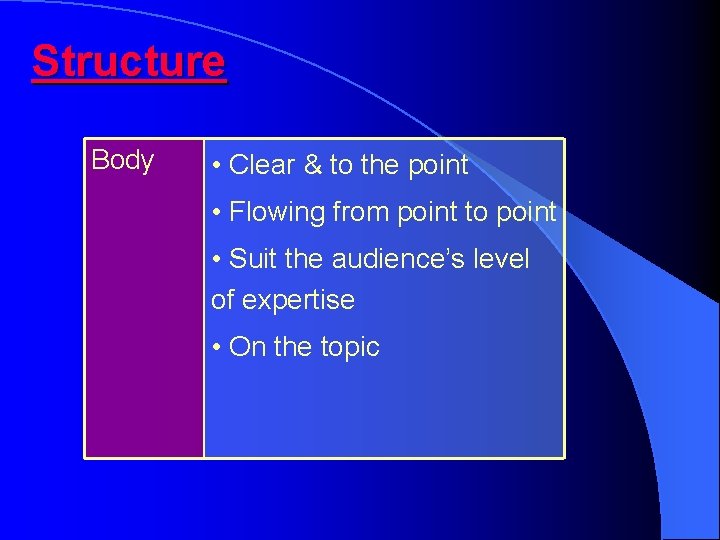
Structure Body • Clear & to the point • Flowing from point to point • Suit the audience’s level of expertise • On the topic
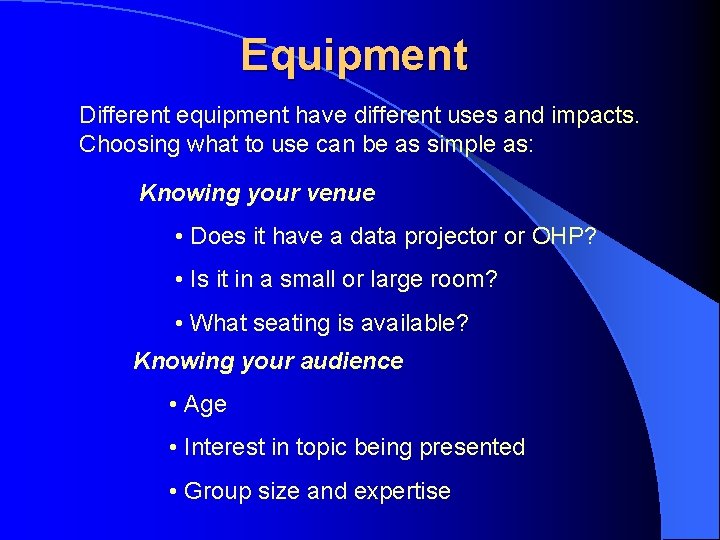
Equipment Different equipment have different uses and impacts. Choosing what to use can be as simple as: Knowing your venue • Does it have a data projector or OHP? • Is it in a small or large room? • What seating is available? Knowing your audience • Age • Interest in topic being presented • Group size and expertise
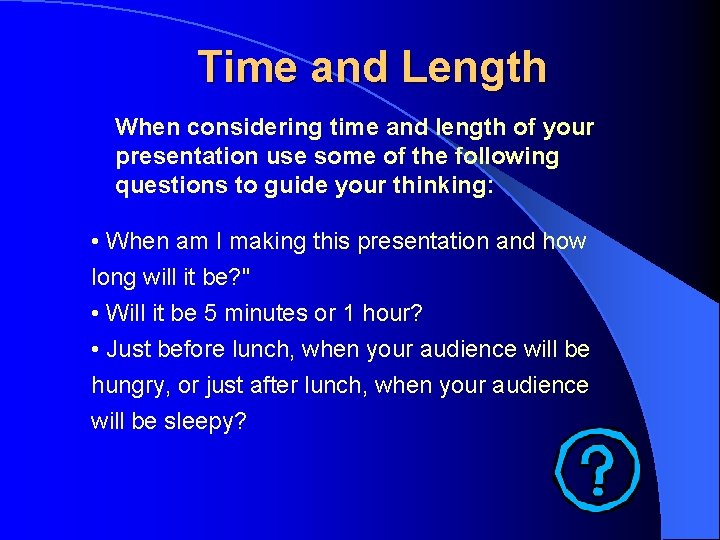
Time and Length When considering time and length of your presentation use some of the following questions to guide your thinking: • When am I making this presentation and how long will it be? " • Will it be 5 minutes or 1 hour? • Just before lunch, when your audience will be hungry, or just after lunch, when your audience will be sleepy?
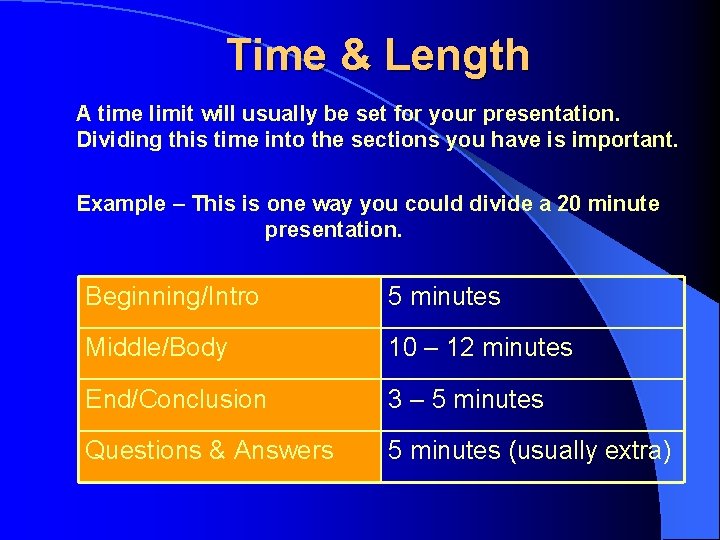
Time & Length A time limit will usually be set for your presentation. Dividing this time into the sections you have is important. Example – This is one way you could divide a 20 minute presentation. Beginning/Intro 5 minutes Middle/Body 10 – 12 minutes End/Conclusion 3 – 5 minutes Questions & Answers 5 minutes (usually extra)
Delivery • Nerves • Audience Rapport • Body Language • Cultural Considerations • Voice quality • Visual aids • Audience Reaction
Nerves - Pay special attention to your beginning - Relax, speak slowly and calmly - Attempt to learn your introduction by heart Audience Rapport - Build a warm relationship with your audience - Enthusiasm is contagious - Attempt ‘natural’ eye contact
Body language - Clothes, hair, glasses, expressions all help create first impressions - Avoid irritating gestures Cultural Considerations - Gestures may differ in cultures - Do not assume that you will be automatically understood.
Voice quality - speed - intonation - volume Visual aids - visual aids are an extremely effective means of communication - they can assist non-native English speakers to understand a point better
Learning Centre Manukau Institute of Technology © LJPHay 2003