
Presentation to VA DOE RPS Student Data Wednesday


- Slides: 39
Presentation to VA DOE RPS Student Data Wednesday, July 19, 2006 Presentation by Deborah Jewell-Sherman, Ed. D. Yvonne W. Brandon, Ed. D. Irving Jones, Ed. D. Larry Everette Kavansa Gardner
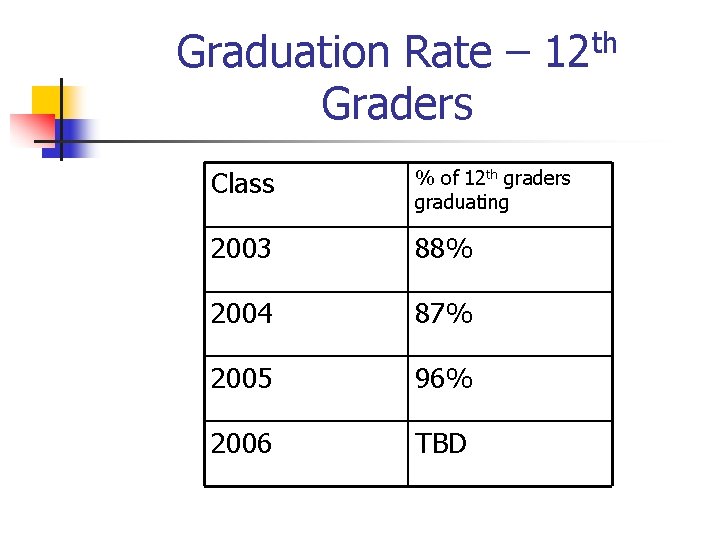
Graduation Rate – 12 th Graders Class % of 12 th graders graduating 2003 88% 2004 87% 2005 96% 2006 TBD
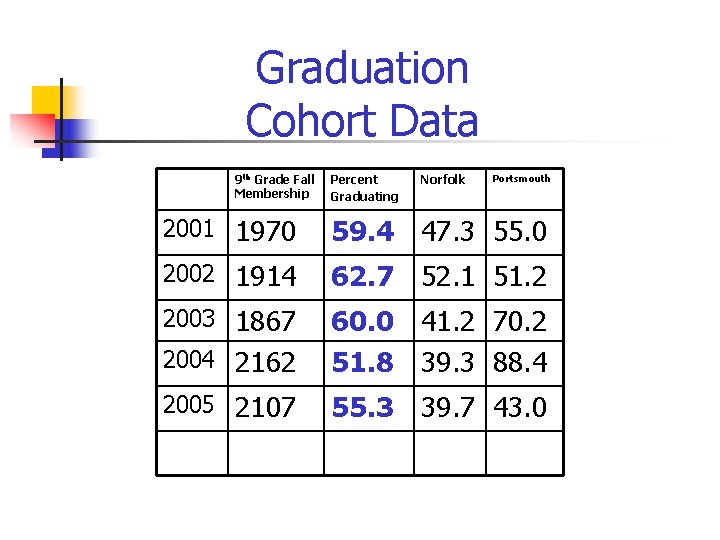
Graduation Cohort Data 9 th Grade Fall Membership Percent Graduating Norfolk Portsmouth 2001 1970 59. 4 47. 3 55. 0 2002 1914 62. 7 52. 1 51. 2 2003 1867 2004 2162 60. 0 41. 2 70. 2 51. 8 39. 3 88. 4 2005 2107 55. 3 39. 7 43. 0
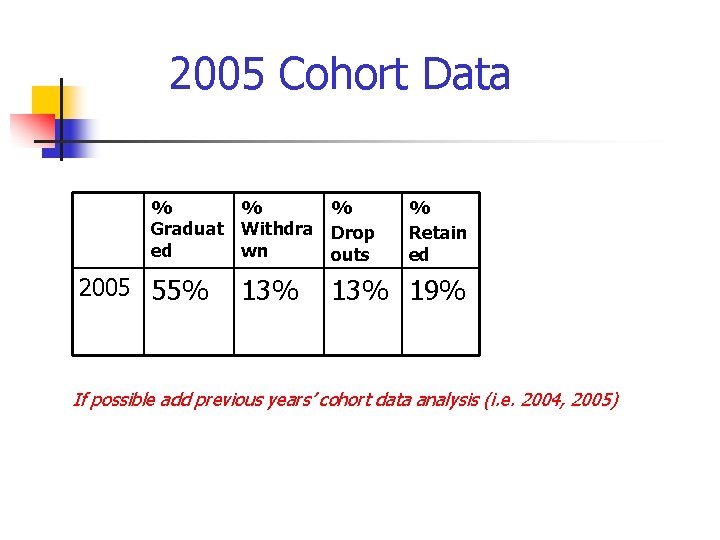
2005 Cohort Data % % % Graduat Withdra Drop ed wn outs 2005 55% 13% % Retain ed 13% 19% If possible add previous years’ cohort data analysis (i. e. 2004, 2005)
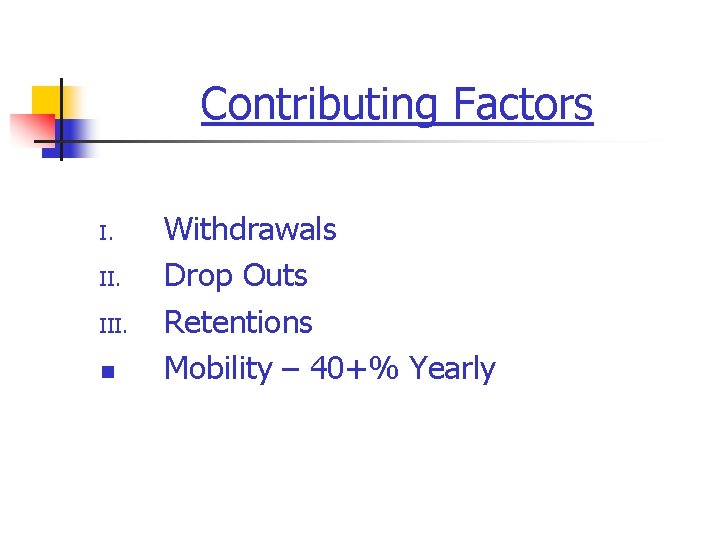
Contributing Factors I. III. n Withdrawals Drop Outs Retentions Mobility – 40+% Yearly
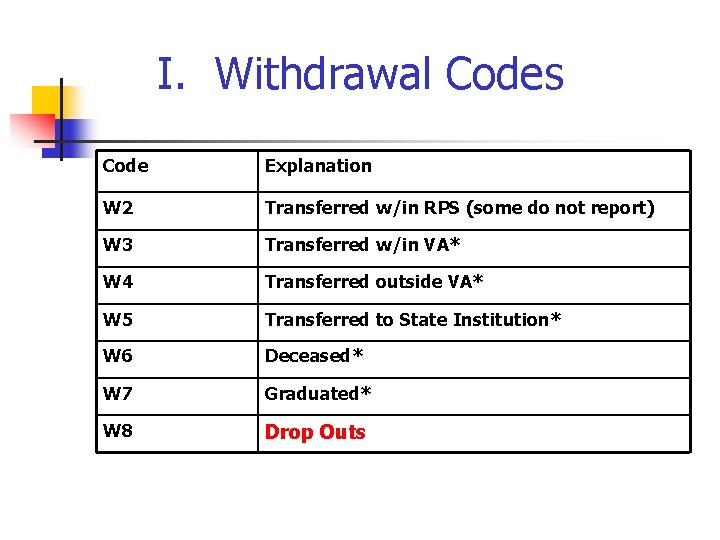
I. Withdrawal Codes Code Explanation W 2 Transferred w/in RPS (some do not report) W 3 Transferred w/in VA* W 4 Transferred outside VA* W 5 Transferred to State Institution* W 6 Deceased* W 7 Graduated* W 8 Drop Outs
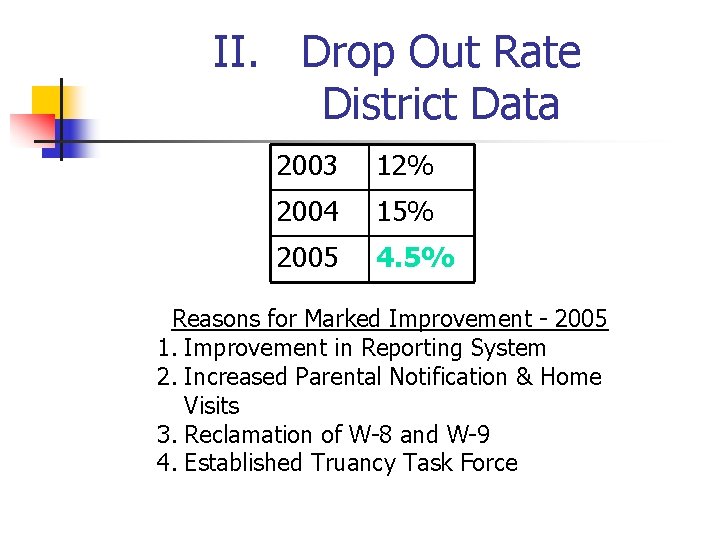
II. Drop Out Rate District Data 2003 12% 2004 15% 2005 4. 5% Reasons for Marked Improvement - 2005 1. Improvement in Reporting System 2. Increased Parental Notification & Home Visits 3. Reclamation of W-8 and W-9 4. Established Truancy Task Force
Contributing Factors Drop Out Rate Single Parents 13 -18+* 2003 483 2004 589 2005 506 2006 565 *Only includes those served by Public Health Homeless Students K-12 2004 625 2005 587 2006 645
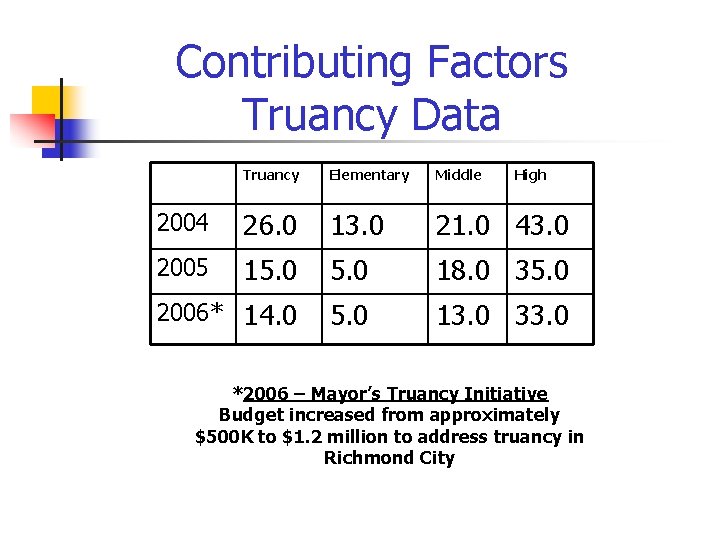
Contributing Factors Truancy Data Truancy Elementary Middle High 2004 26. 0 13. 0 21. 0 43. 0 2005 15. 0 18. 0 35. 0 2006* 14. 0 5. 0 13. 0 33. 0 *2006 – Mayor’s Truancy Initiative Budget increased from approximately $500 K to $1. 2 million to address truancy in Richmond City
Contributing Factors Group Homes FYI John Marshall High School serves students from 29 Group Homes in its Attendance Zone. These include students from across the region and the Commonwealth.
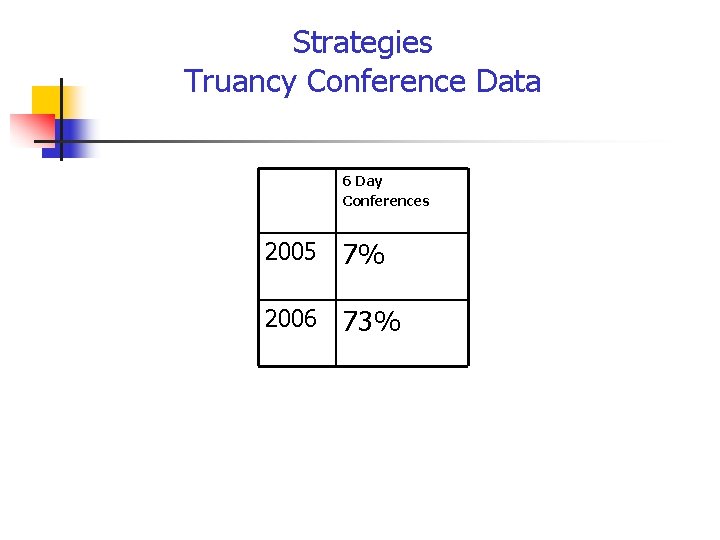
Strategies Truancy Conference Data 6 Day Conferences 2005 7% 2006 73%
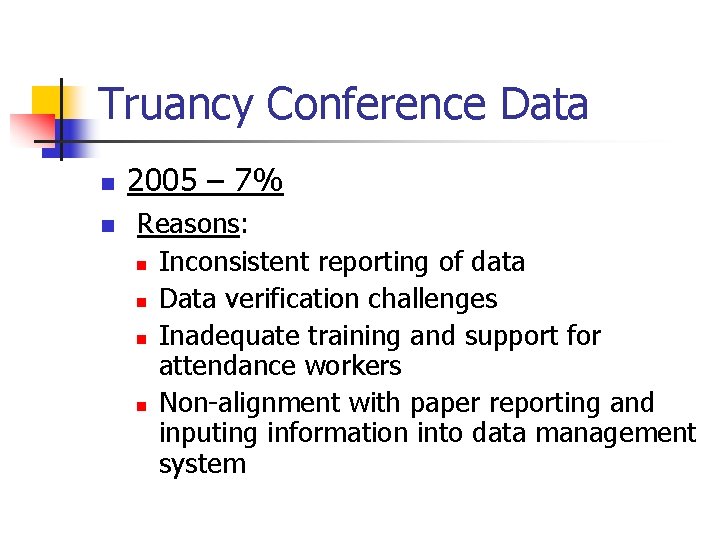
Truancy Conference Data n n 2005 – 7% Reasons: n Inconsistent reporting of data n Data verification challenges n Inadequate training and support for attendance workers n Non-alignment with paper reporting and inputing information into data management system
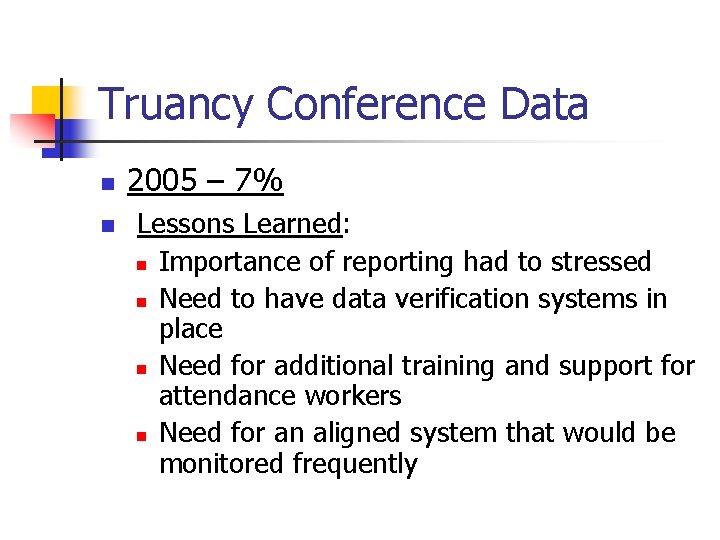
Truancy Conference Data n n 2005 – 7% Lessons Learned: n Importance of reporting had to stressed n Need to have data verification systems in place n Need for additional training and support for attendance workers n Need for an aligned system that would be monitored frequently
Truancy Conference Data n n 2006 – 73% Steps Taken: n Provided extensive training for attendance workers and SIS operators around reporting procedures, data input, and importance of accuracy and timeliness n Enhanced training for social workers on securing juvenile justice interventions n Piloted period based attendance in 6 secondary schools n RPS developed automated daily reporting system with funding from RPD
Truancy Conference Data n n 2006 – 73% Steps Taken: n n n Coordinated efforts with Mayor’s Truancy Initiative and submitted daily reports to RPS, RPD and JJS Enhanced oversight of school weekly attendance meetings that focused on absences and truancy conferencing Participated in weekly meetings with Truancy reduction partners
Truancy Conference Data n n 2006 – 73% Steps Taken: n Utilized VDOE’s new EIMS system n Aligned responsibilities of IT staff n Used grant funds to secure part-time “Home. School” liaisons for 13 schools with greatest need n Increased daily use of Parent Link (automated parent notification system) from one to two calls per student absence
Truancy Conference Data n 2006 – 73% n Steps Taken: n n n Used Parent Link to send parental notification letter out after the first absence if unable to reach parent by phone Used Parent Link to send parental notification letter out after 3 rd absence instead of after the 5 th absence Presentations to Juvenile Judges and City Council
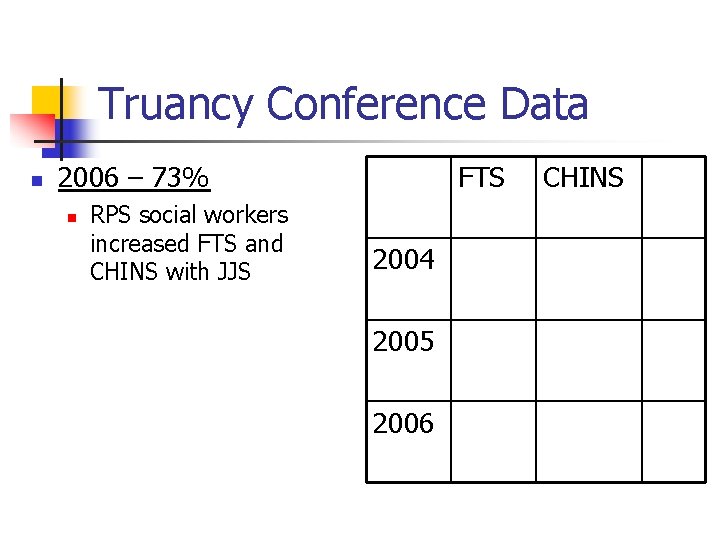
Truancy Conference Data n FTS 2006 – 73% n RPS social workers increased FTS and CHINS with JJS 2004 2005 2006 CHINS
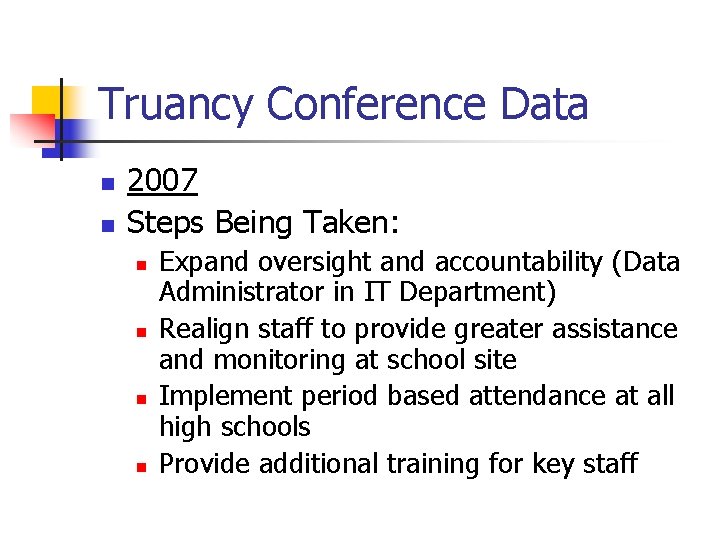
Truancy Conference Data n n 2007 Steps Being Taken: n n Expand oversight and accountability (Data Administrator in IT Department) Realign staff to provide greater assistance and monitoring at school site Implement period based attendance at all high schools Provide additional training for key staff
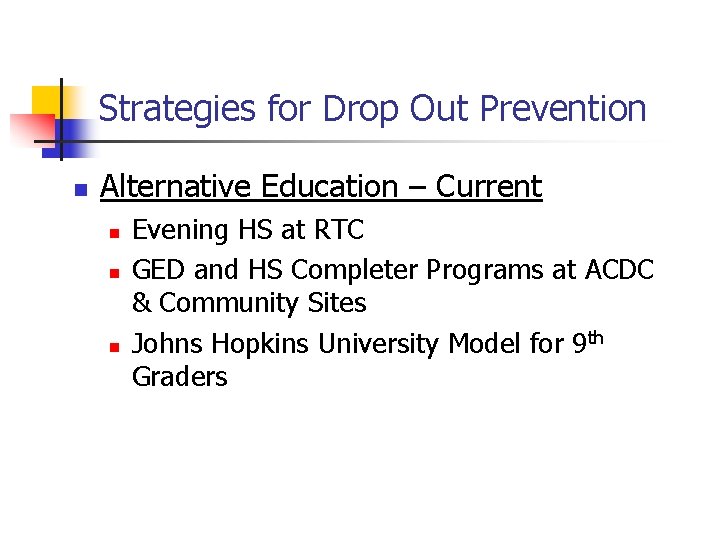
Strategies for Drop Out Prevention n Alternative Education – Current n n n Evening HS at RTC GED and HS Completer Programs at ACDC & Community Sites Johns Hopkins University Model for 9 th Graders
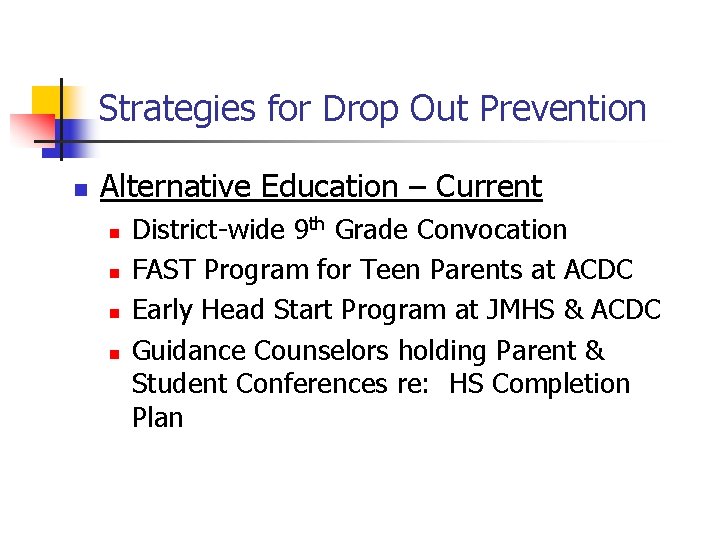
Strategies for Drop Out Prevention n Alternative Education – Current n n District-wide 9 th Grade Convocation FAST Program for Teen Parents at ACDC Early Head Start Program at JMHS & ACDC Guidance Counselors holding Parent & Student Conferences re: HS Completion Plan
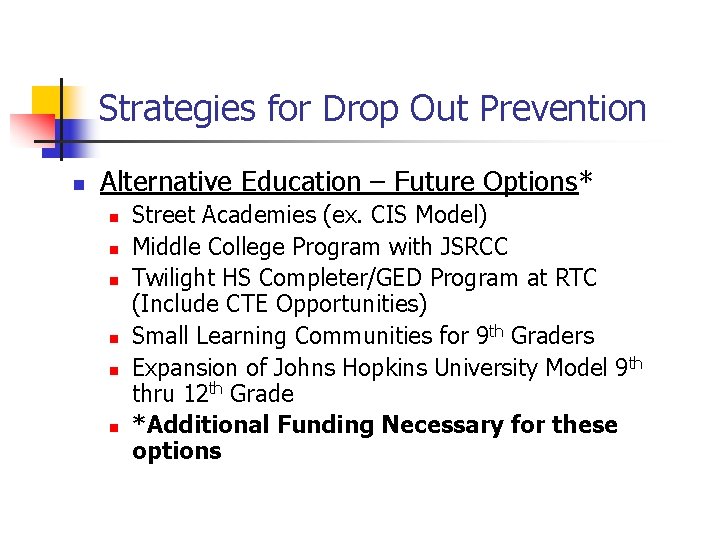
Strategies for Drop Out Prevention n Alternative Education – Future Options* n n n Street Academies (ex. CIS Model) Middle College Program with JSRCC Twilight HS Completer/GED Program at RTC (Include CTE Opportunities) Small Learning Communities for 9 th Graders Expansion of Johns Hopkins University Model 9 th thru 12 th Grade *Additional Funding Necessary for these options
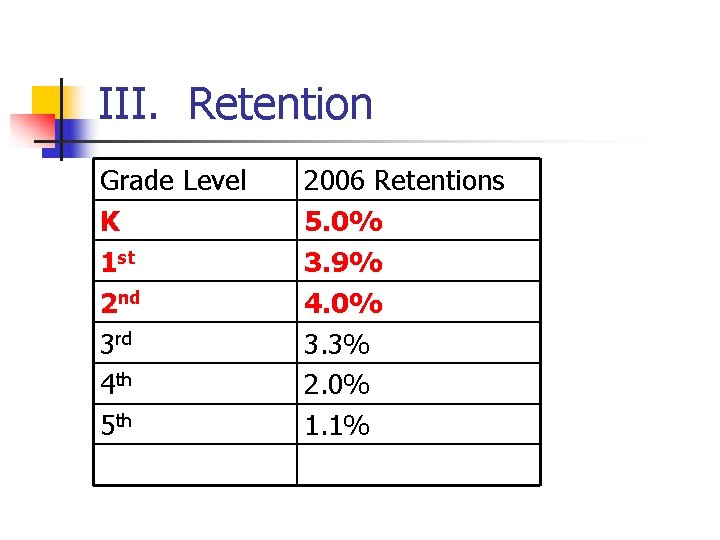
III. Retention Grade Level K 1 st 2 nd 3 rd 4 th 5 th 2006 Retentions 5. 0% 3. 9% 4. 0% 3. 3% 2. 0% 1. 1%
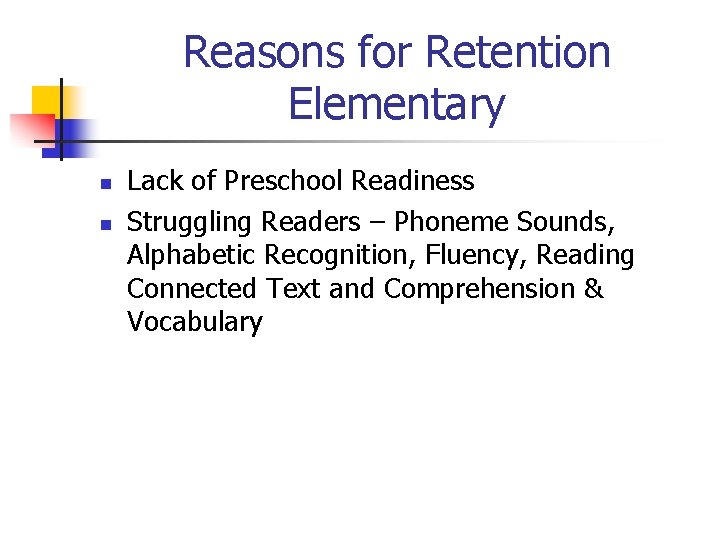
Reasons for Retention Elementary n n Lack of Preschool Readiness Struggling Readers – Phoneme Sounds, Alphabetic Recognition, Fluency, Reading Connected Text and Comprehension & Vocabulary
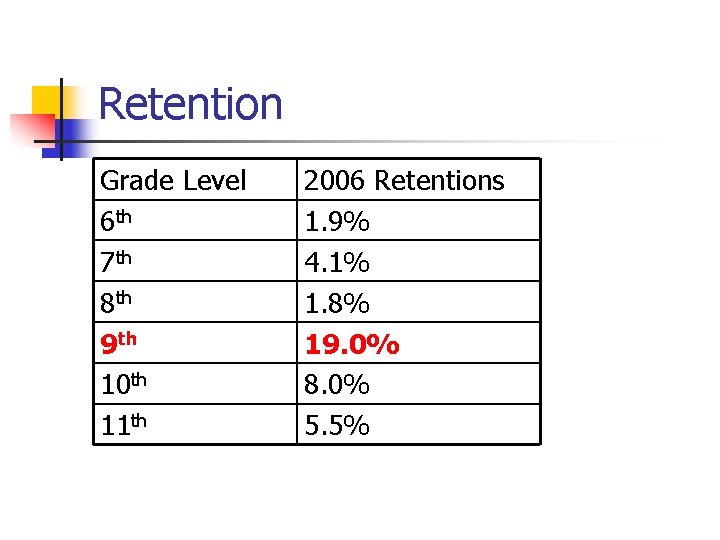
Retention Grade Level 6 th 7 th 8 th 9 th 10 th 11 th 2006 Retentions 1. 9% 4. 1% 1. 8% 19. 0% 8. 0% 5. 5%
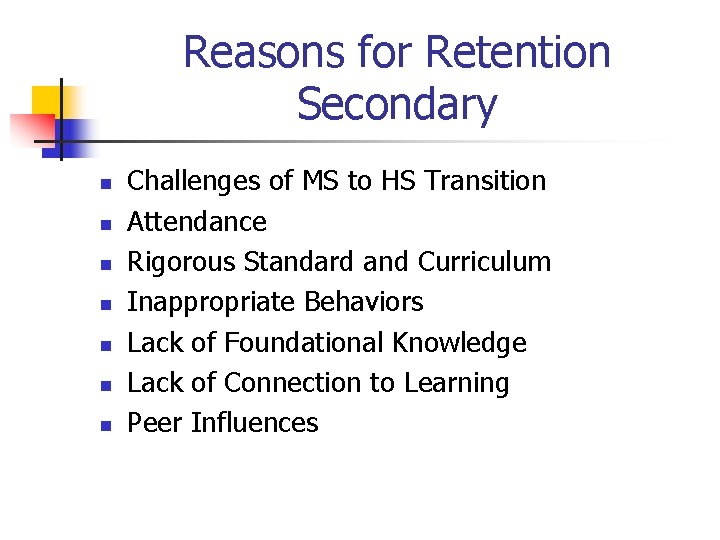
Reasons for Retention Secondary n n n n Challenges of MS to HS Transition Attendance Rigorous Standard and Curriculum Inappropriate Behaviors Lack of Foundational Knowledge Lack of Connection to Learning Peer Influences
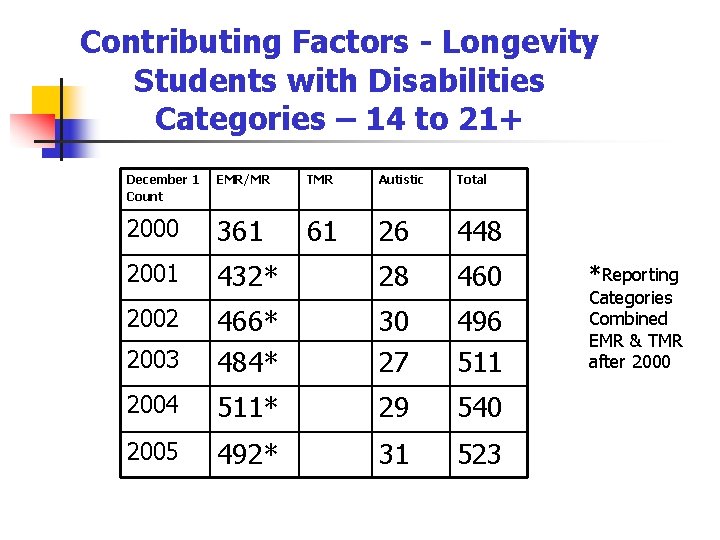
Contributing Factors - Longevity Students with Disabilities Categories – 14 to 21+ December 1 Count EMR/MR TMR Autistic Total 2000 361 61 26 448 2001 432* 28 460 2002 2003 466* 484* 30 27 496 511 2004 511* 29 540 2005 492* 31 523 *Reporting Categories Combined EMR & TMR after 2000
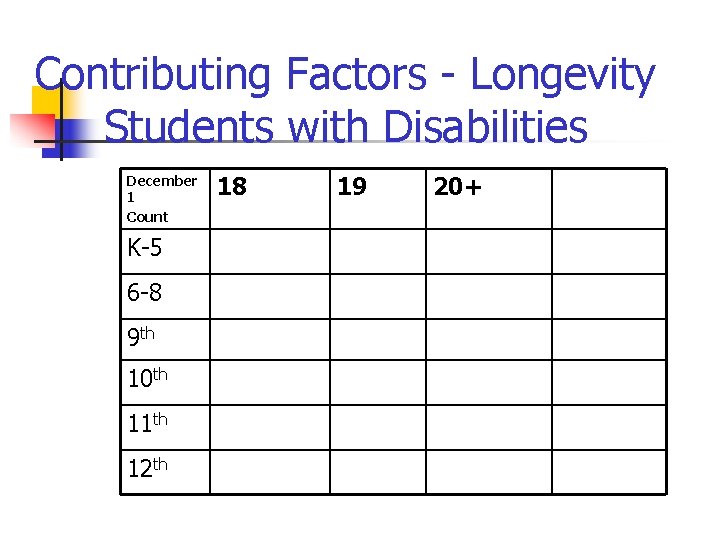
Contributing Factors – Longevity Students with Disabilities December 1 Count 18 19 20+ Total 2000 106 27 19 152 2001 118 48 21 187 2002 2003 164 120 44 42 34 21 242 183 2004 184 35 27 246 2005 188 59 23 270
Contributing Factors - Longevity Students with Disabilities December 1 Count K-5 6 -8 9 th 10 th 11 th 12 th 18 19 20+
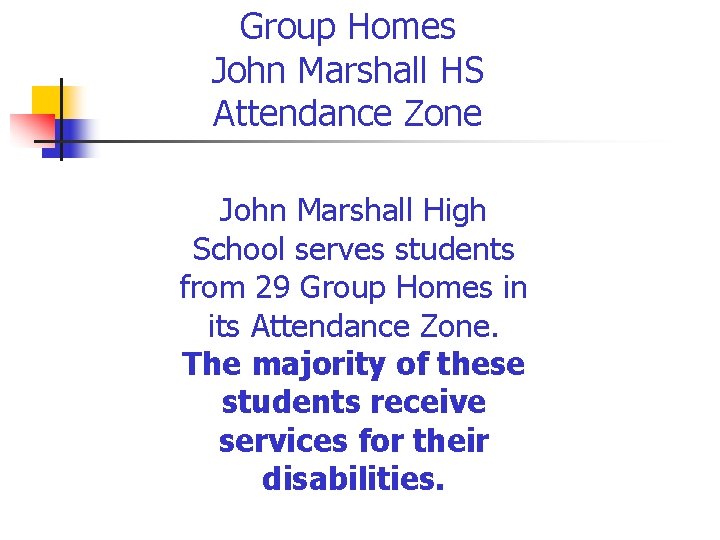
Group Homes John Marshall HS Attendance Zone John Marshall High School serves students from 29 Group Homes in its Attendance Zone. The majority of these students receive services for their disabilities.
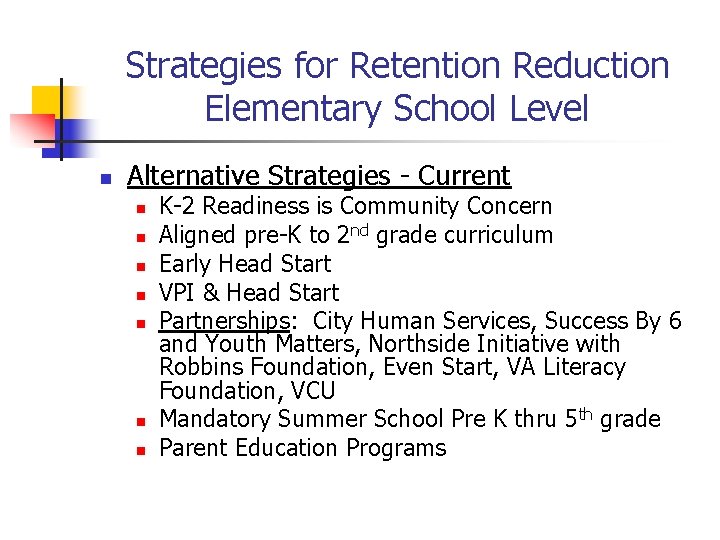
Strategies for Retention Reduction Elementary School Level n Alternative Strategies - Current n n n n K-2 Readiness is Community Concern Aligned pre-K to 2 nd grade curriculum Early Head Start VPI & Head Start Partnerships: City Human Services, Success By 6 and Youth Matters, Northside Initiative with Robbins Foundation, Even Start, VA Literacy Foundation, VCU Mandatory Summer School Pre K thru 5 th grade Parent Education Programs
Strategies for Retention Reduction Elementary School Level n Alternative Strategies – Current n Include strategies being used for SPED and ESL
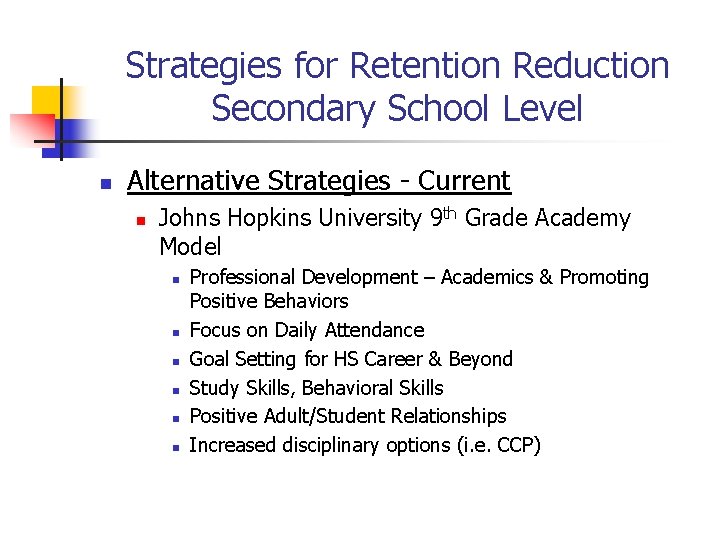
Strategies for Retention Reduction Secondary School Level n Alternative Strategies - Current n Johns Hopkins University 9 th Grade Academy Model n n n Professional Development – Academics & Promoting Positive Behaviors Focus on Daily Attendance Goal Setting for HS Career & Beyond Study Skills, Behavioral Skills Positive Adult/Student Relationships Increased disciplinary options (i. e. CCP)
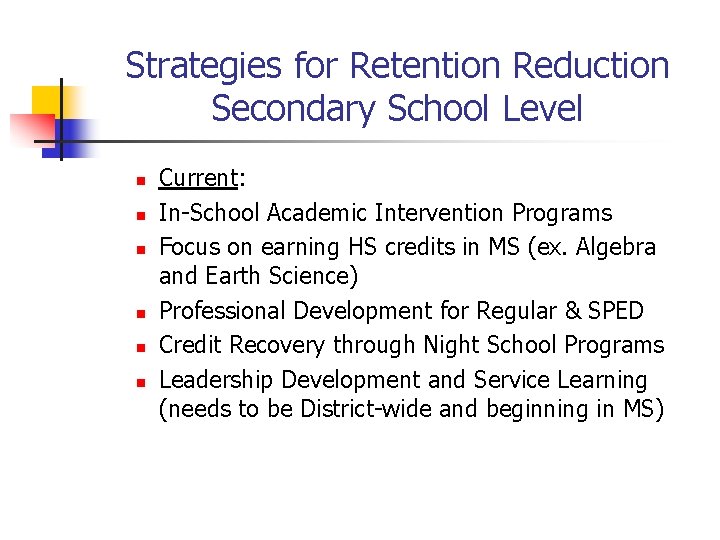
Strategies for Retention Reduction Secondary School Level n n n Current: In-School Academic Intervention Programs Focus on earning HS credits in MS (ex. Algebra and Earth Science) Professional Development for Regular & SPED Credit Recovery through Night School Programs Leadership Development and Service Learning (needs to be District-wide and beginning in MS)
Strategies for Retention Reduction Secondary School Level n Alternative Strategies - Current: n Include strategies for SPED and ESL students
Strategies for Retention Reduction Secondary School Level n Alternative Strategies – Future Options* n n n Incentives for strong 9 th grade teachers Intervention Specialists for 9 th graders Conflict Resolution & Peer Mediation Extended Day Options for students identified as academically at risk Male Mentoring & Female Mentoring (grades 6 -12) *These programs also will reduce drop outs.
Strategies for Retention Reduction Secondary School Level Future Options: n Reading Specialists for MS & HS n Pregnancy Prevention Programs n Expand Teen Parent Educational Opportunities with Child Care n Expansion of Career & Technical Education *These programs also will reduce drop outs. n
Summary n n n Graduation Rates, while showing improvements, need to increase. RPS, like other urban districts, face serious challenges: drop outs; retentions; teen pregnancies; transiency; societal, environmental and public health issues RPS has made this issue a priority as demonstrated by inclusion in the Balanced Score Card
Summary n n This is a community issue that requires buy-in by all and community needs to be part of the solution RPS, in partnership with some entities, is working diligently to increase cohort graduation rates and other indicators of student success Require continuation of State & Federal funds used to improve over the years Require additional funding to implement additional academic and social programs to address needs of students, staff and community